
Chris Robertson, the frontman of Black Stone Cherry, has tattoos across both arms, the backs of his hands and part of his chest. Guitar World portraits and live photos show portraits, script, small dark marks and patches of color. The lines and shading vary, with bare skin between pieces. The larger shaded forms take up more space on the upper arms; the finer marks sit closer to the wrists and hands.
The clearest personal details are the portrait of his late father, which Robertson calls his favourite tattoo, and the “Three Little Birds” lyrics Kerrang reports on his hand. Photos give a fuller view of the other designs than the interviews do.
Chris Robertson’s tattooed arms are a layered collection

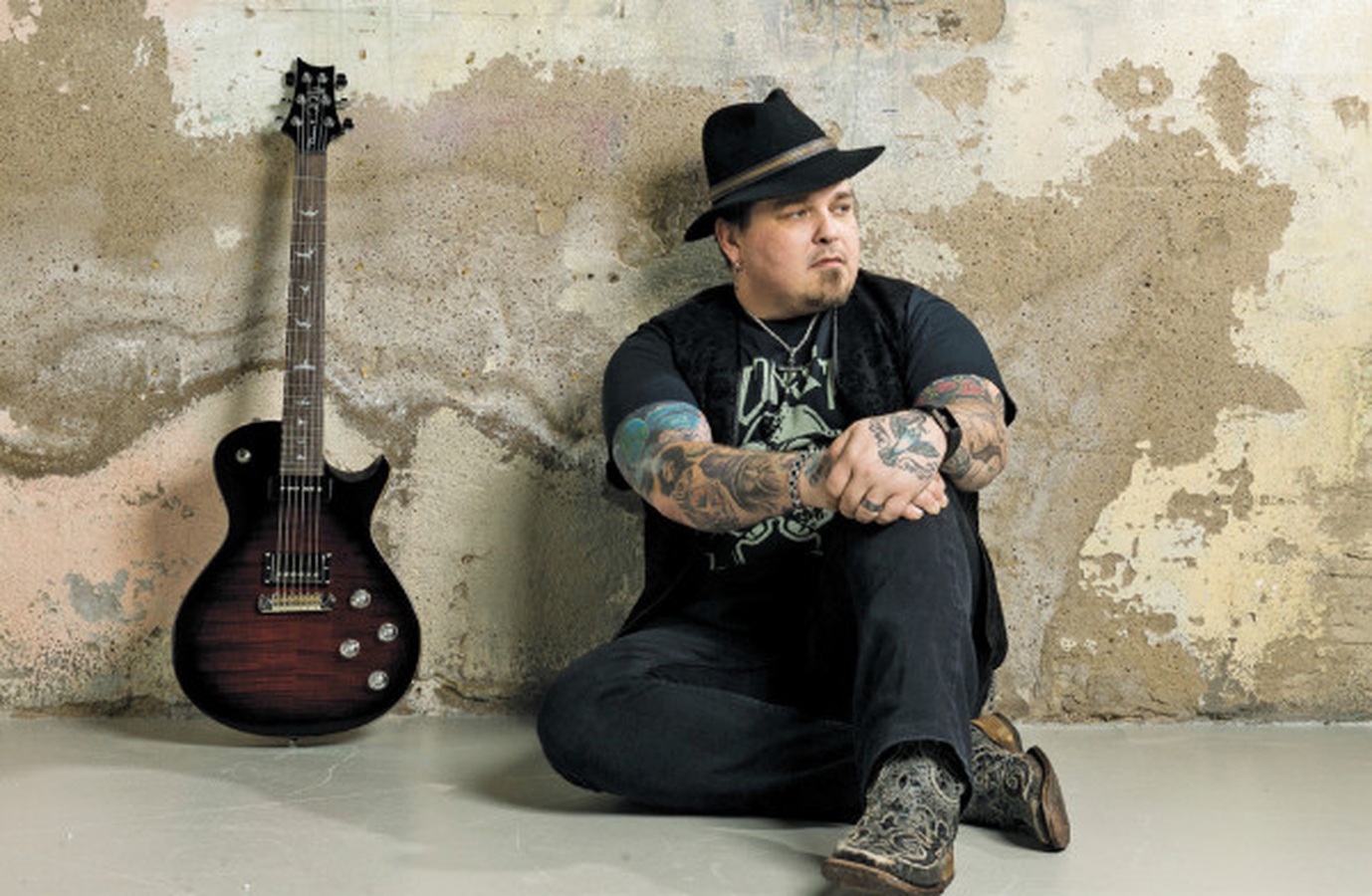
One Guitar World portrait gives a useful view of both arms. Robertson sits with a guitar across his lap, forearms uncovered. The upper arms have darker, denser sections. Toward the wrists, the marks get smaller and areas of bare skin interrupt the coverage. Some designs read from across a room; the hand details need a closer look.
His dark shirt and guitar frame the arms. The forearms rest across the instrument, which crosses the lower part of the photo while the upper-arm ink stays visible above it. Heavy shaded shapes sit next to outlines and lighter pieces, leaving visible breaks through the sleeve-like coverage.
The large portrait piece carries the clearest family meaning
Louder Sound reports that Robertson calls the portrait of his late father his favourite tattoo. It is the clearest meaning he has stated. The interview identifies the person in the portrait, but gives no dimensions or full description of the surrounding work.
A seated Guitar World photograph places the portrait among the other arm tattoos. The face sits in a darker area, outlined by bare skin and lighter lines. The guitar passes below it as Robertson holds the instrument, showing how the portrait reads within the larger grouping.
The top-of-hand lettering is tied to “Three Little Birds”

Kerrang’s “Songs That Changed My Life” feature reports Bob Marley’s “Three Little Birds” lyrics across the top of Robertson’s hand. The lettering appears in photographs of him playing guitar and holding a microphone.
Beside the guitar’s strings and controls, the words occupy a small strip of skin. When his fingers stretch across the instrument, the wrist turns and the top of his hand faces the camera. The lyric appears in the same playing shots as the forearm tattoos, although stage distance can soften the lines.
The forearms show different scales and textures
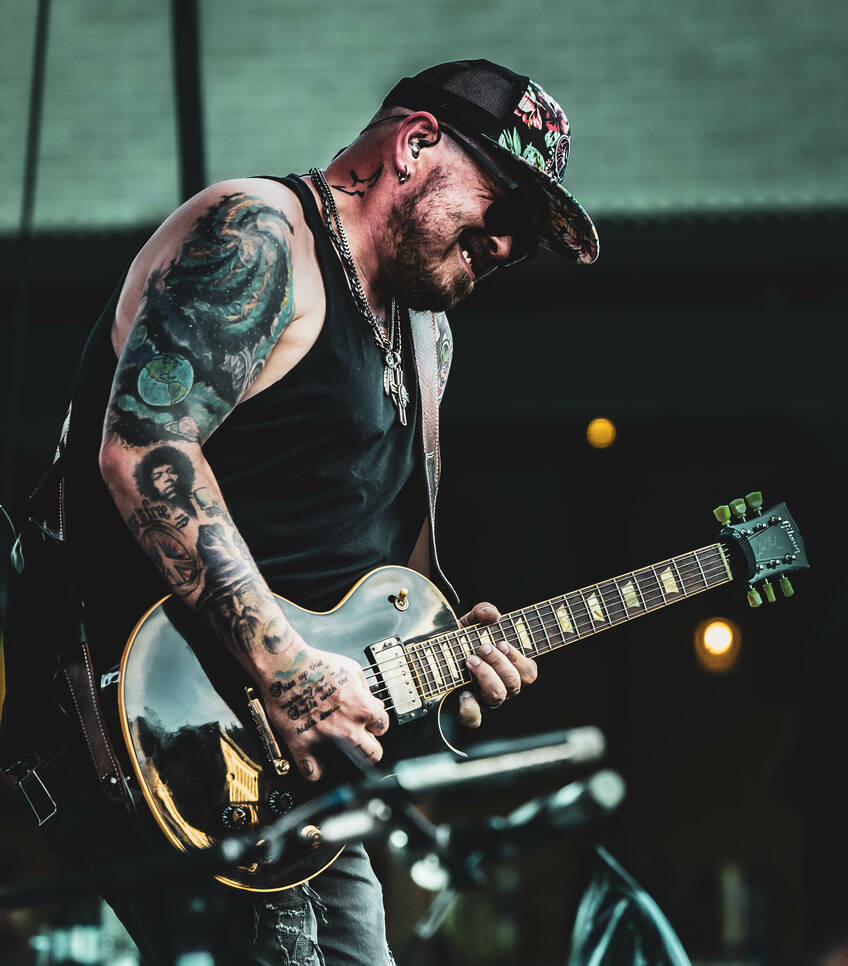
Live and editorial pictures show dark illustrative pieces alongside script, outlines and small symbols. Under stage lighting, the closest forearm often has the strongest contrast. When Robertson spreads his fingers across the guitar, smaller marks near the wrist and hand come into view.
The arm ink mixes filled black areas, rounded portraits, fine lines, lettering and gaps of bare skin. Line weight changes from piece to piece, and separate edges remain visible where tattoos sit close together. The sleeve-like coverage comes from different designs rather than one repeated pattern.
Color in Chris Robertson’s arm tattoos

Most of the tattoos read in black and grey, though performance photos reveal warmer color inside parts of the upper-arm work. It is concentrated in a few sections. Under blue stage lights, those tones stand out against Robertson’s dark shirt and guitar; a black-and-white portrait loses the difference.
In a live frame, his arm bends around the guitar and some designs overlap. As he changes position, their edges separate again. The seated portrait keeps the arm still enough to follow the pieces, while the stage shot shows them as he plays.
What the photographs reveal about placement
Photos show tattoos running from the upper arms down the forearms and onto the backs of Robertson’s hands. Open-shirt images catch marks or lettering on his chest, though only part of that area is visible. Sleeveless concert photos expose more of the upper-arm work; guitar shots bring the hands and wrists into the frame.
The different views give a sense of how the pieces sit across his body. Robertson’s hands are rarely still in guitar photographs: they move from fretting and picking to reaching across the instrument or holding a microphone. Wider concert shots show the placement alongside that movement, while closer portraits make the smaller marks easier to see. No single view offers the full collection at once.
Why the documented record stays focused on the confirmed details
Two tattoos have a specific story in the reporting: Robertson’s portrait of his father, which he calls his favourite, and the “Three Little Birds” lyrics on his hand. Photographs show other faces, symbols and lettering, but do not identify who or what every design depicts.
Open-shirt pictures reveal some chest ink, and the interviews do not provide a count for the full collection. The visible placement, shading, linework and color can be described. The personal meaning of the other pieces remains unstated in these sources.
A personal record in editorial photographs
The Guitar World portrait gives a steady view of the arm layout, with Robertson seated and his forearms resting across the guitar. A black-and-white performance frame compresses the tattoos into blocks of light and shade. A color stage photograph shows the warmer upper-arm sections against his skin, shirt and instrument. The pose and lighting make the same pieces look different.
The hand lettering stays in view as he plays. His fingers cross the strings, the palm turns, and the top of his hand appears when he lifts his arm. Larger portraits and shaded panels occupy more of the upper arms and forearms; the lyric and smaller marks sit close to the work of playing guitar.
The portrait and Marley lyrics have stated personal connections. Other designs add their own shapes and textures, though Robertson has not given each one a public story. In the photos, family remembrance and a song reference sit alongside the broader mix of arm work.
One thought on “Chris Robertson Tattoos: His Memorial Portrait and Arm Ink”