Cher’s published tattoo record spans several decades. Sources describe a collection that once reached six designs, while photographs clearly show an upper-arm mark and lower-back ink during her 1989 “If I Could Turn Back Time” performance. The count may reflect a past point in time; some tattoos were later changed or removed.
Three of the five photos below show tattooed skin. The other two are period portraits for context, not tattoo evidence.
Cher’s upper-arm tattoo in the performance photographs
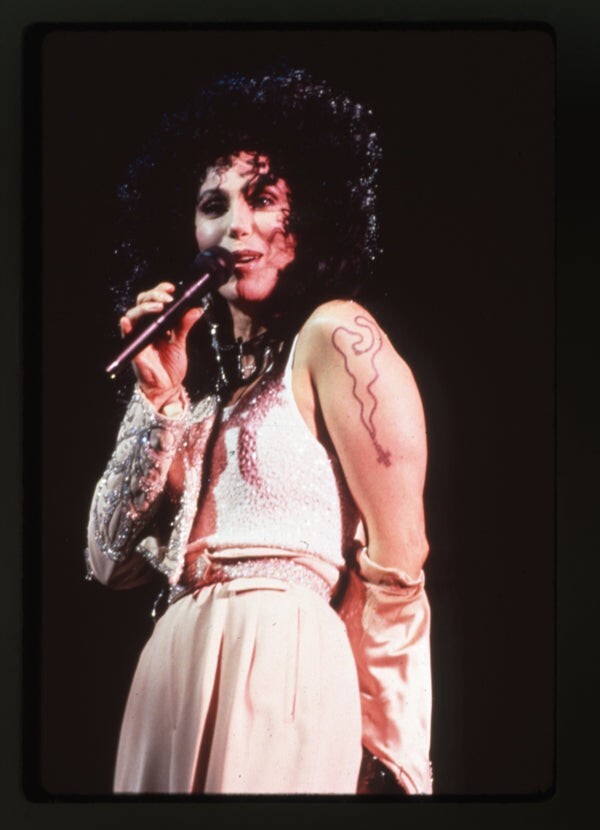
An All-Autographes concert photograph shows a fine, winding line on Cher’s upper arm, with small detail near its lower end. The mark follows the arm; the frame does not establish its artist, date or private meaning. Published accounts describe an upper-arm necklace or snake-like design, but the photo alone does not settle its name.

A second angle on the upper-arm mark
A second vintage performance photo shows the same general area from a wider angle. Cher’s arm turns differently toward the light, making the relation between shoulder and elbow easier to see. It is another original frame of the upper-arm tattoo, not a separate design.
The lower-back photographs from the 1989 performance
The 1989 performance of “If I Could Turn Back Time” made Cher’s lower-back and upper-buttock tattoos visible beneath her sheer costume. Mental Floss documents the backlash from broadcasters and Navy officials over the outfit. That public reaction explains why the image became widely discussed; it does not explain the tattoos’ personal meaning.
The photograph records the area visible during that performance, not a precise map of every mark.

A six-piece timeline
Vanity Fair and later interviews describe a collection that reached six tattoos, with her first in her late twenties. Published examples include the upper-arm design, a black orchid and a chrysanthemum. Some pieces were later altered or removed, so an older count should not be read as a definitive current total.
Cher’s public image
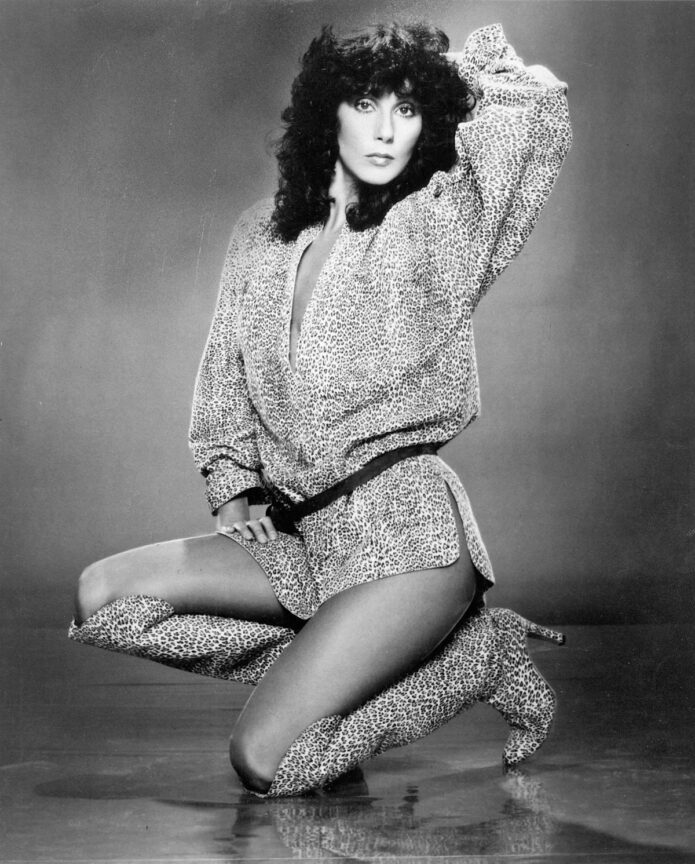
This separate studio portrait shows Cher’s face and upper body in another period style. It provides identity and visual context; no tattoo claim is drawn from it.

From stage to screen
A second contextual portrait uses the bright athletic styling associated with Cher’s 1980s fitness image. It shows the era’s look, not her body art. Covered skin or ink that is not visible here cannot establish whether a tattoo is present.

What the written sources can confirm
The written record supports three points: Cher got tattoos after reaching adulthood; profiles have described six designs at one stage; and the 1989 performance photos show lower-back ink. Sources also identify an upper-arm necklace or snake-like mark and report that some tattoos changed or were removed.
Those statements describe different moments and types of evidence. An old list is not a current inventory, and a photograph cannot supply an explanation Cher has not given.
How to read the photographs responsibly
The upper-arm frames are the clearest for the thin line and its placement. The 1989 image gives historical context for the lower-back tattoos, but costume, lighting and movement limit what can be read. These photographs can suggest placement or proportion; they are not a complete stencil for copying every line.
What remains unconfirmed
The available sources do not provide a complete list of tattoo artists, a definitive current count or a verified meaning for every design. Some profiles repeat older lists without saying when they applied. The upper-arm mark can be described by its visible shape, but the exact label remains unsettled; the lower-back tattoos are documented without a confirmed private meaning.
A concise visual record
Two distinct performance frames document Cher’s upper-arm mark, and the 1989 photograph records lower-back ink at a specific public event. The two other portraits provide period context only. Together with the written timeline, they show a collection that changed over time without pretending to identify every design now on her body.
Interview context and closing notes
The interview below adds career context. The photographs above remain the direct evidence for tattoo placement.