Chad Michael Murray’s tattoo history is visible in a small group of pieces that have appeared in interviews, older portraits and entertainment photography. The clearest documented designs include a shoulder tattoo with dark lettering and a colored central mark, a compact wrist inscription, and the cross tattoo he discussed on The Drew Barrymore Show. A separate photograph also shows a small arm design that has been photographed repeatedly over the years. The useful story is the record of the ink itself: where each mark sits, how the linework looks in photographs and what Murray has personally explained about its meaning.
Chad Michael Murray’s documented tattoo record
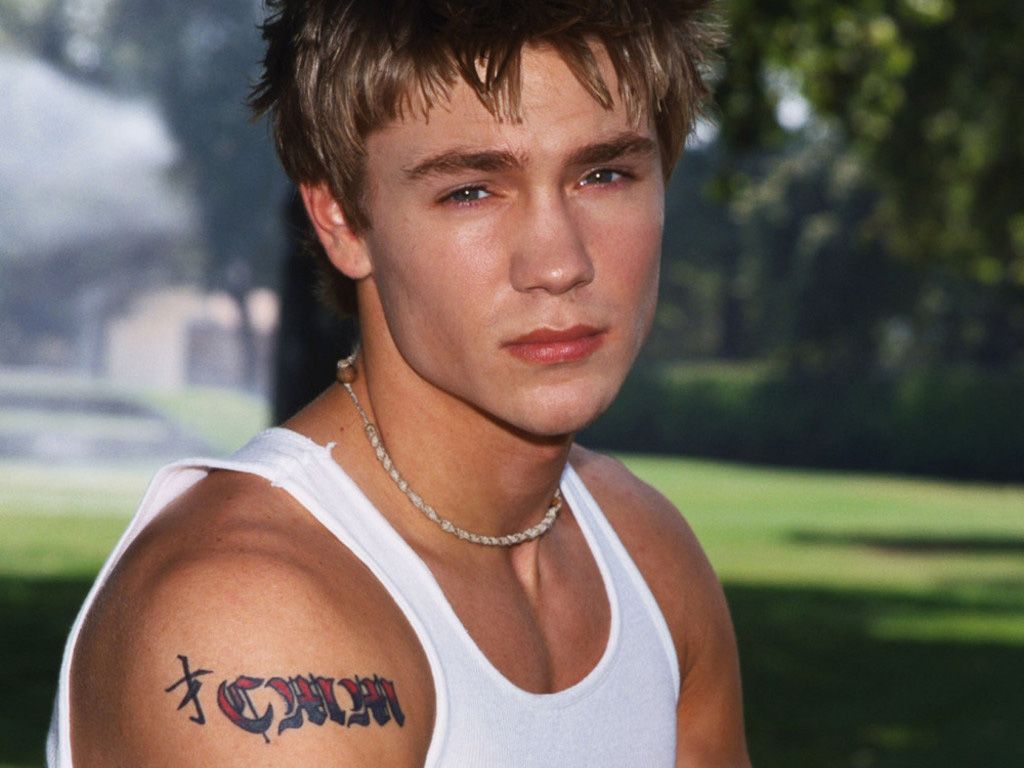
The most immediately recognizable tattoo in the older photographs sits high on Murray’s upper arm and shoulder. It is a compact horizontal design built from dark, block-like lettering and a central shape with red and blue colour. The lettering is not presented clearly enough in every photograph for a confident transcription, but the arrangement is consistent: a heavier black outline, tightly packed interior marks and a small coloured detail that gives the piece more visual weight than a plain text tattoo.
The placement matters because the tattoo is often visible in shirtless portraits while remaining partly covered by a T-shirt sleeve. That position makes it a recurring part of Murray’s early public image without turning the entire collection into a full sleeve. In the clearest available portrait, the tattoo follows the curve of the shoulder and sits close to the deltoid. Its scale is modest, but its dense lettering makes it read from a distance.
The shoulder lettering and its compact colour detail
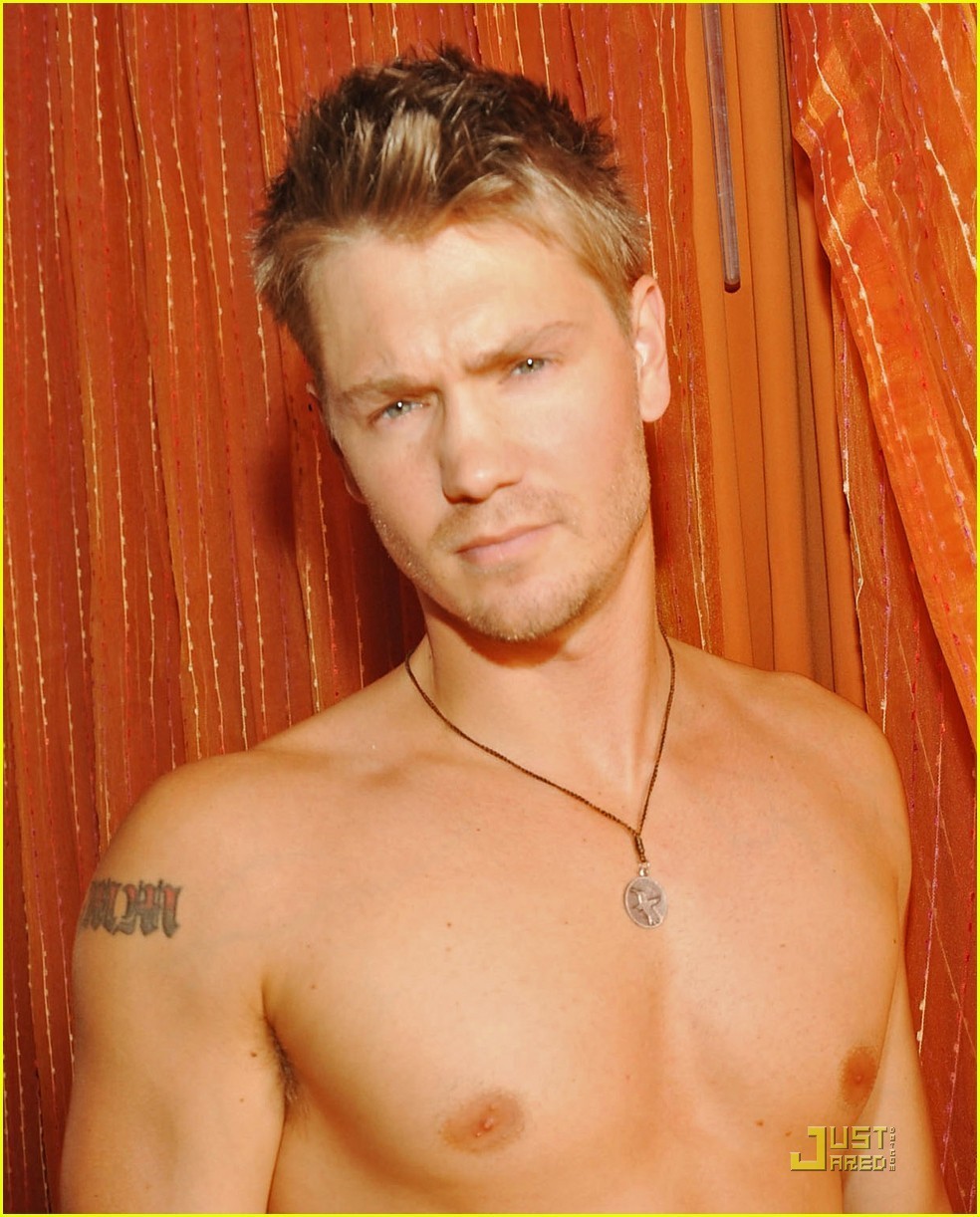
A second photograph gives the shoulder piece a warmer, more frontal view. The design appears darker at the edges than in the outdoor portrait, and the coloured section is easier to distinguish from the surrounding lettering. The image does not establish a new tattoo; it documents the same upper-arm piece from a different angle and shows how the design sits against the shoulder when Murray’s arm is relaxed.
That visual consistency is useful when separating the tattoo from jewellery or clothing details. The cross pendant visible in some portraits is an accessory, not the ink itself. The shoulder mark remains fixed high on the arm, with the main lettering running laterally and the small coloured motif interrupting the dark rhythm. The photographs support a description of the shape and placement, not an invented translation.
Photographed arm and wrist ink

In a 2024 appearance on The Drew Barrymore Show, Murray explained that the cross on his wrist dates to his twenty-fifth birthday. He described that moment as a decision to change the direction of his life and to become a better version of himself. The tattoo therefore has an unusually direct documented meaning: it marks a personal turning point rather than a design chosen only for decoration.
The wrist placement gives the cross a different visual character from the older shoulder lettering. It is small, exposed and easy to see when the hand moves, while the shoulder tattoo occupies a broader patch of skin and depends more on a sleeveless view. Murray’s explanation also places the cross inside a story about mentors, difficult choices and the values he wanted to build around his family life. That meaning comes from Murray’s own interview comments, so it can be separated from speculation about the less clearly identified pieces.
A smaller arm inscription in later photographs
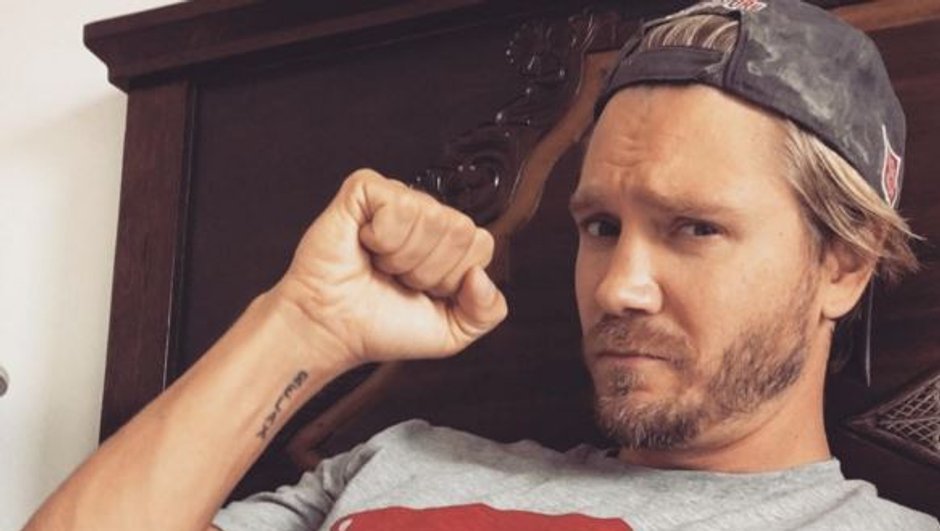
A later casual photograph shows a narrow inscription along the inside of Murray’s wrist or lower forearm. The lettering is too small in the available frame to read with confidence, but the placement is unmistakable: a slim vertical mark near the hand, separate from the larger shoulder design. The picture is valuable because it records another visible piece without forcing a guess at the words.
The small inscription also demonstrates why photographs need to be read carefully. A necklace, a shirt graphic or a shadow can appear near the skin, while the tattoo follows the arm’s surface and remains fixed between images. The safest description is therefore limited to the visible facts: narrow dark lettering, inner-wrist placement and a scale much smaller than the shoulder piece. The absence of a reliable transcription is part of the tattoo’s documented status.
How the photographs change with clothing and distance
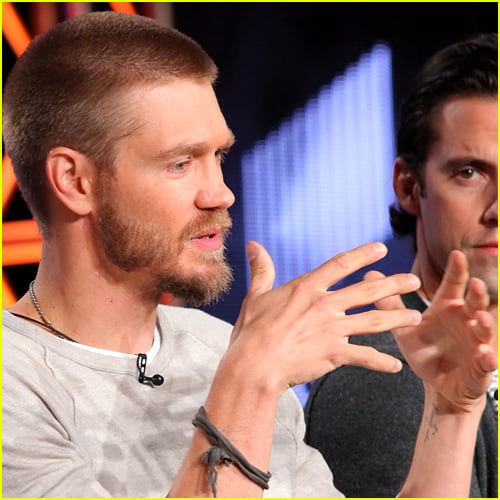
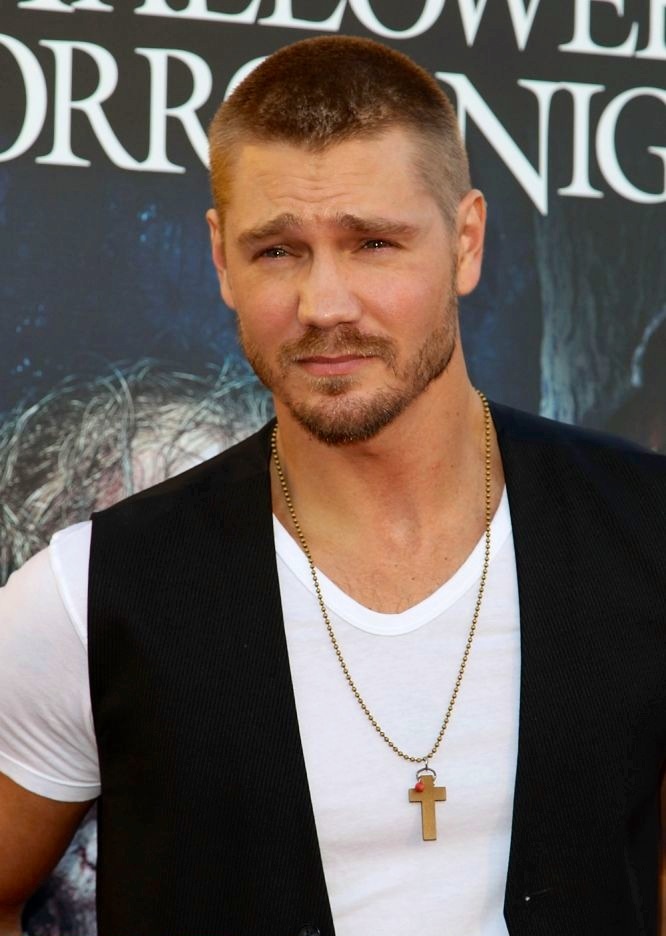
A separate face-visible portrait is included for identity and layout context only. It is not evidence for a tattoo claim, and the clothing in the frame does not reveal the shoulder or wrist designs. Keeping that portrait separate from the tattoo photographs prevents a generic celebrity image from being mistaken for documentation of the ink.
The tattoo photographs carry the visual evidence: the shoulder piece appears in sleeveless portraits, the inner-arm inscription is visible when the wrist is raised, and the interview reporting supplies Murray’s own explanation of the cross. Contextual imagery identifies the subject; tattoo imagery carries the tattoo claim.
Two visual treatments in the collection
Seen together, the tattoos form a collection of contrasting sizes and roles. The shoulder piece is dense and graphic, with dark lettering and a coloured centre. The cross is smaller and more openly discussed, tied to a birthday and a decision to redirect Murray’s life. The inner-wrist inscription is the least legible in the available photography, but its position and narrow form distinguish it from both designs.
Those differences keep the collection from reading as one uniform style. The shoulder tattoo is built for visual impact across a curved area. The cross works as a compact symbol on the wrist. The small inscription behaves like a private line of text that becomes visible only in close photographs. Each design carries a different balance of visibility, scale and documented meaning.
Changes in presentation
The older shirtless portraits place the shoulder design at the centre of the frame, while later casual photography gives more attention to the wrist and forearm. That change is partly a matter of clothing and partly a matter of the occasions being photographed. A red-carpet portrait tends to show the face and upper chest; a relaxed interview or social image may reveal an arm as it moves. The collection therefore appears in fragments rather than in one complete catalogue.
Those fragments still connect. The shoulder design retains its compact lettering and colour contrast, the wrist cross has a documented personal story, and the smaller inscription remains a narrow dark mark near the hand. The time difference between the photographs adds history without proving that every later image shows every earlier piece.
What the photographs establish
The photographs establish several concrete details: Murray has a prominent upper-arm tattoo with dark lettering and a coloured centre; he has a small cross on his wrist that he associates with his twenty-fifth birthday and a personal reset; and he has been photographed with a narrow inner-wrist or forearm inscription. The images also show that the visibility of each piece changes with clothing, pose and camera distance.
How the evidence should be read
They do not establish a complete count, a definitive reading of every letter or the meaning of designs that Murray has not explained publicly. Keeping those limits visible makes the tattoo history more accurate. The strongest account remains focused on the actual marks, their locations and the one story Murray has told directly. Chad Michael Murray’s documented tattoos are a visual record of symbols, lettering and a clearly remembered personal milestone.
The dating of the photographs also matters. The older images show the shoulder design when it was part of Murray’s early public look, while the later interview gives a direct account of the wrist cross. These are different kinds of evidence: one is visual documentation of form and placement, and the other is a first-person explanation of meaning. Neither should be stretched beyond what it can prove.
Read together, the images make the collection more specific rather than more crowded. They show a dark, compact shoulder design, a smaller arm inscription and a cross connected to a personal decision at twenty-five. The collection is therefore best understood through a few identifiable marks and their changing visibility, not through an unsupported total or a guessed reading of blurred letters.
The recurring shoulder photographs also show how a design can become part of a celebrity’s visual timeline. In one frame the lettering is read against a sunlit background; in another it sits against a warmer interior backdrop. The background changes, but the tattoo’s position and compact silhouette remain recognizable. That consistency is stronger evidence than a speculative reading of a partly blurred word.
Murray’s interview adds the only detailed explanation attached to a specific symbol. The cross is connected to a birthday, a period of self-assessment and the older influences he said helped him make different choices. The account gives the wrist piece a clear narrative while leaving the shoulder lettering and the small inscription described at the level the photographs support.
The result is a compact visual history rather than a catalogue of guesses.