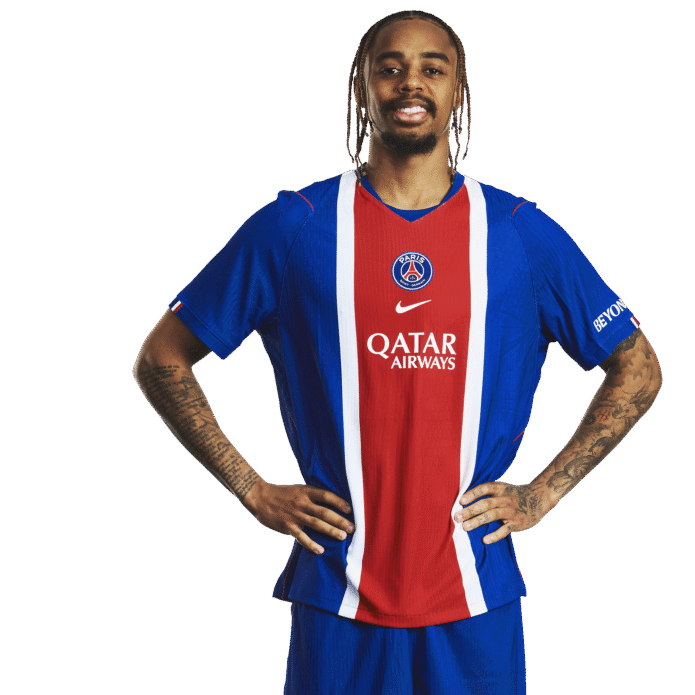
Bradley Barcola’s tattoos form a visual record of football, faith, manga and personal phrases gathered across his arms, wrists and back. The Paris Saint-Germain forward is often photographed in short sleeves, so the ink is part of his public appearance rather than a hidden detail. Recent coverage has made the back piece especially visible, while earlier French reporting documented the wrist phrase and the small lettering near his forearm. Taken together, the photographs show a collection that mixes dense black-and-grey imagery with smaller script and character-driven designs.
The available evidence comes from several different kinds of coverage. A detailed tattoo feature identifies the anime and horror-inspired figures across Barcola’s arms, French celebrity coverage records the words on his wrist and forearm, and football photography shows the scale of the newer back composition. The images do not establish a private explanation for every character. They do establish the placements, the visual subjects and the way the separate pieces sit together. That distinction is important because some reports describe the imagery with interpretation, while the photographs provide the clearest record of what is actually visible.
Barcola’s collection is therefore best read as a set of documented designs rather than a single theme. The full-back piece introduces a large Japanese-inspired composition, the arms carry manga and masked figures, and the wrists add compact text with a personal tone. A separate official portrait confirms his face and identity while keeping the tattooed arms in view. Across those sources, the strongest pattern is the contrast between large illustrative surfaces and small words that sit close to the hands.
Bradley Barcola’s full-back Japanese-inspired tattoo
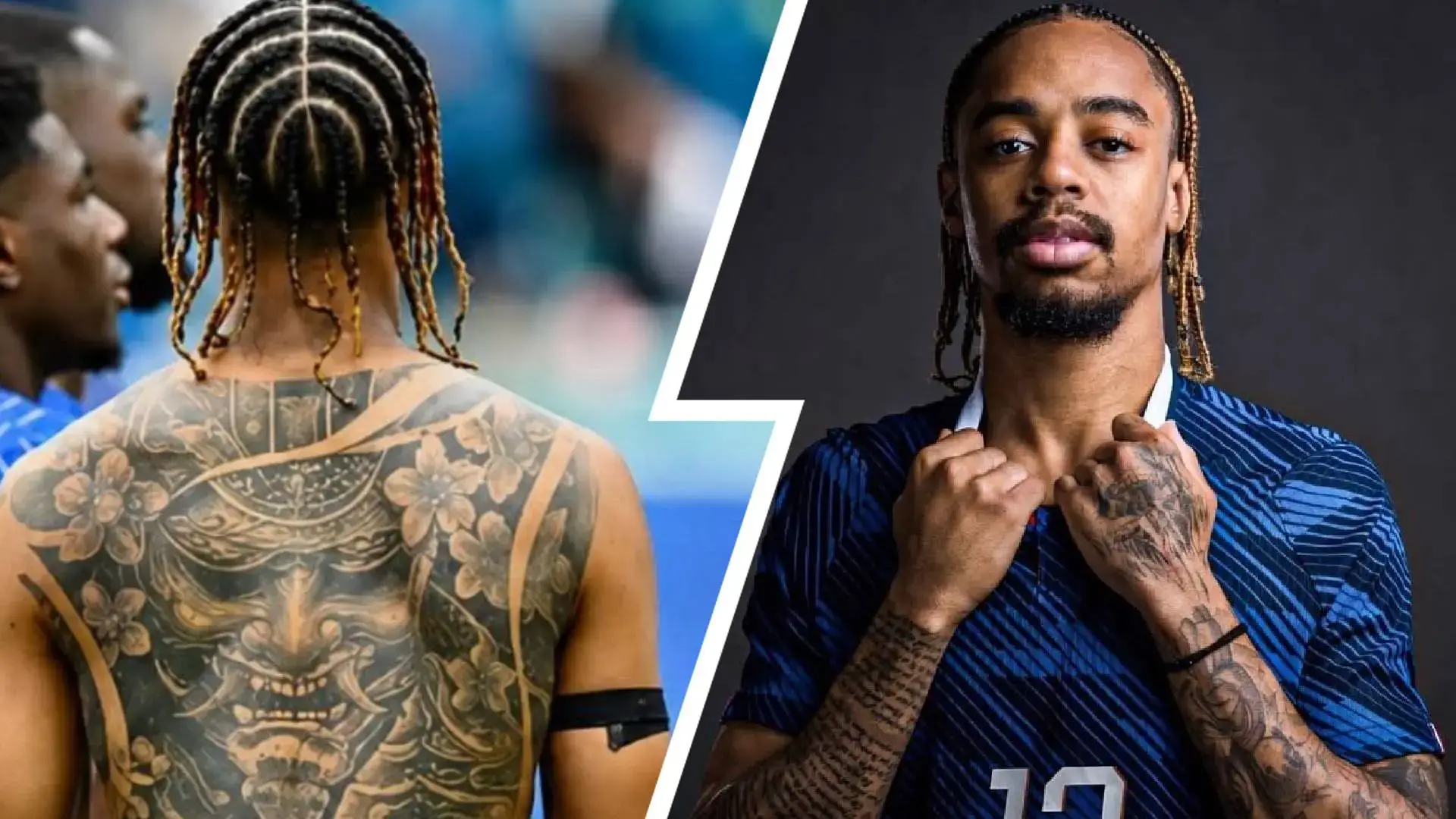
The most expansive tattoo in the current record covers much of Barcola’s back. The clearest published view shows a dark mask or face at the center, framed by sweeping black-and-grey shading and lighter areas that resemble a painted fresco. The composition reaches across the upper back and continues downward instead of remaining a small isolated emblem. Flowers, architectural or landscape-like shapes and curved ornamental forms appear around the central face, giving the piece the scale of a complete back panel.
Tribuna’s report identifies the central design as a Hannya-style mask and presents the tattoo as a striking new addition. Other football coverage describes the wider image with references to a samurai mask, a temple, a traditional landscape and a warrior. Those descriptions point to the same broad visual language, although the exact symbolic reading should not be treated as a confirmed statement from Barcola. What the photographs make clear is the presence of a large Japanese-influenced composition with a strong central face and layered background elements.
The back tattoo changes appearance with the angle of the camera. In a straight-on view, the dark central mask dominates the frame and creates an immediate focal point. In a wider jersey photograph, the piece reads as a broad field that follows the shoulder blades and the vertical line of the spine. Black shading gives the outer edges weight, while the lighter parts of the image separate the face from the surrounding ornamental work. That balance keeps the tattoo visible even when the photograph is taken from a distance.
Reports also connect the piece with Nautica Tattoo, a studio named in coverage of the large back session. The studio connection adds a documented production detail, but it does not change the visual evidence. Barcola’s back is now occupied by a substantial composition that is distinct from the smaller character tattoos on his arms. The scale is the defining feature: this is a full-back work with several linked parts, not simply one mask placed in the middle of otherwise open skin.
The cursive Bible text on his right forearm
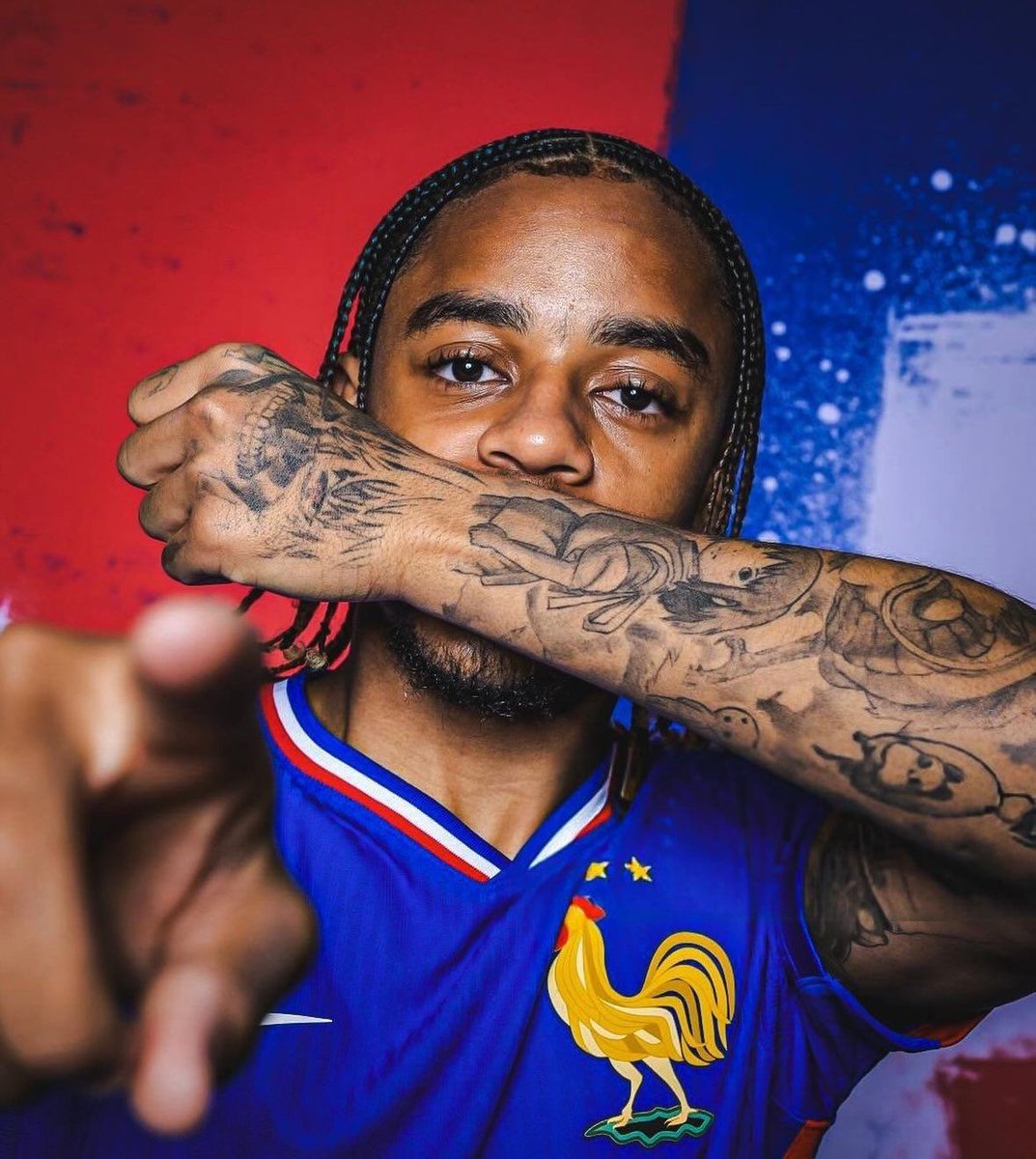
Barcola’s right forearm carries dense cursive writing that runs in a compact vertical field. The lettering is darker and more linear than the illustrated characters elsewhere on his arms. Close photographs show several lines of script gathered near the inner forearm, with the words following the length of the arm rather than spreading horizontally across it. French reporting describes this area as containing small Bible verses, which places the text within the religious side of his tattoo record.
The script tattoo is visually different from the large back mask because it depends on line density instead of a central image. From a distance, the forearm looks like a shaded column. At closer range, the repeated cursive strokes resolve into separate lines and letter forms. The writing also sits beside other arm imagery, so the cleanest view is one where the forearm is turned toward the camera and the surrounding designs do not merge into the background.
Faith is a recurring subject in the published descriptions of Barcola’s tattoos. Coverage of the back piece uses religious and protective language, while the French reports specifically identify Bible text on the forearm and a phrase thanking God on the wrist. The published reports support describing the lettering as religiously connected. They do not support assigning a separate private meaning to every line or claiming that every nearby design belongs to the same inscription.
The placement also creates a visual bridge between the hand and the upper arm. The script begins near the wrist area, where smaller lettering and symbols are visible, then meets the more pictorial tattoo field above. This makes the right forearm one of the clearest examples of how Barcola’s collection combines writing with character imagery. The text remains legible as its own tattoo, but it occupies the same narrow space as the surrounding illustrations.
Anime characters across the left arm
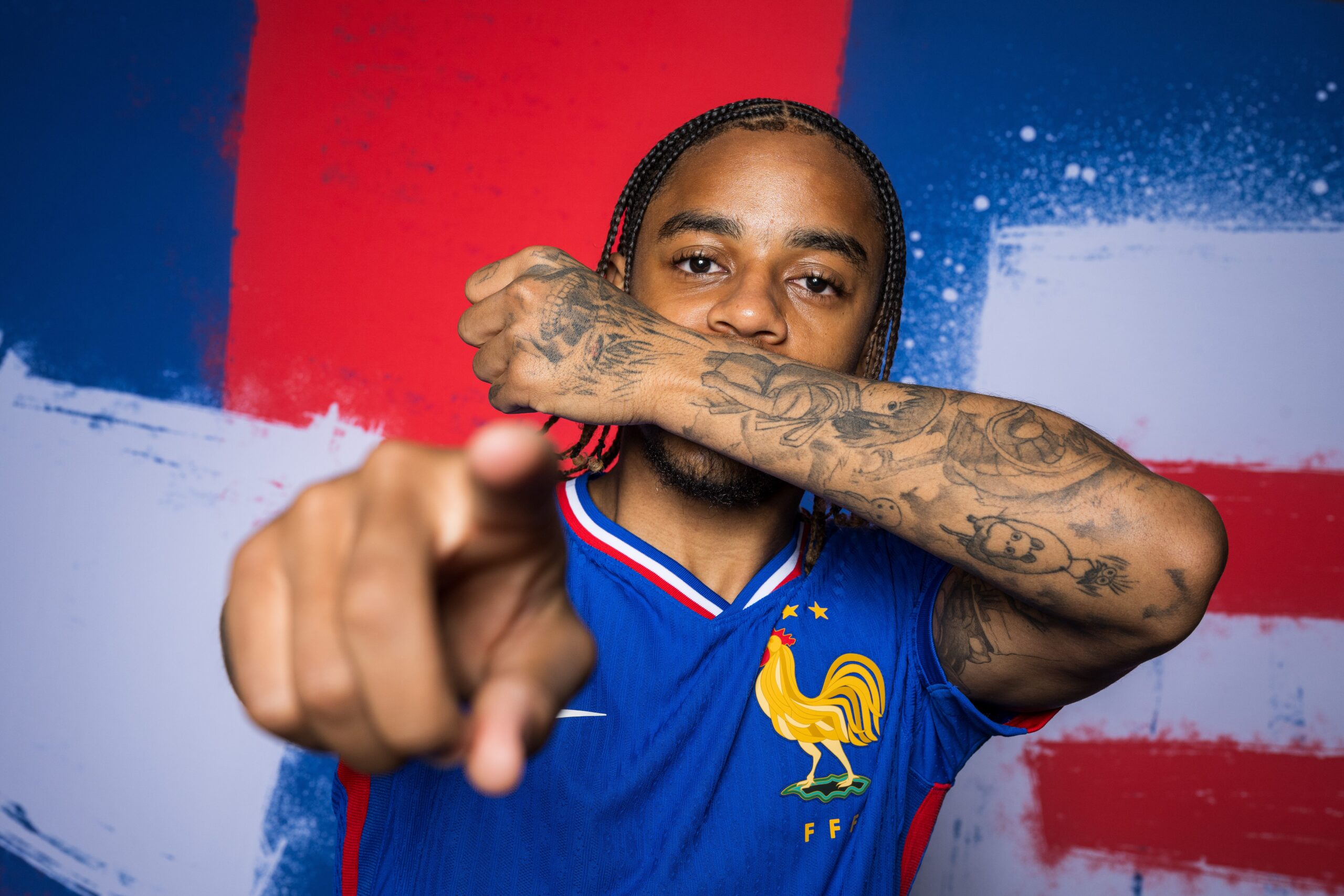
The left arm contains several of Barcola’s most recognizable character-based tattoos. Tattoo coverage identifies a version of Ryomen Sukuna from Jujutsu Kaisen on the left biceps and figures associated with Spirited Away, including Chihiro and Haku, on the left forearm. The references are specific enough to distinguish the pieces from generic manga imagery. They also explain why the arm looks more narrative than purely ornamental in close photographs.
Sukuna is presented as a large character image on the upper arm. The design is built around a face and body with strong black outlines, while darker shading gives the figure a more aggressive presence. Below it, the forearm imagery becomes more crowded and character-focused. Chihiro and Haku are described as separate figures within the same general area, creating a contrast between the fierce upper-arm subject and the more delicate animated forms lower down.
Close-up photography shows how these tattoos overlap with other designs. The linework does not leave a wide blank border around every character. Instead, figures, masks and shaded sections meet across the arm, making the collection feel layered. Some details are easy to identify only when the forearm is raised or turned toward the lens. This is why the high-resolution portrait matters: it preserves the position of the characters, the direction of the arm and the relationship between the separate pieces.
The anime references are documented visual identifications, not evidence that Barcola has publicly explained a personal connection to each story. The sources name the characters because the designs are recognizable, but they do not provide a confirmed statement from Barcola about why Sukuna, Chihiro or Haku were selected. The most reliable description is therefore direct: the left arm carries identifiable characters from two major Japanese animated or manga worlds, arranged among darker masks and smaller marks.
The grinning hand tattoo and the red cross
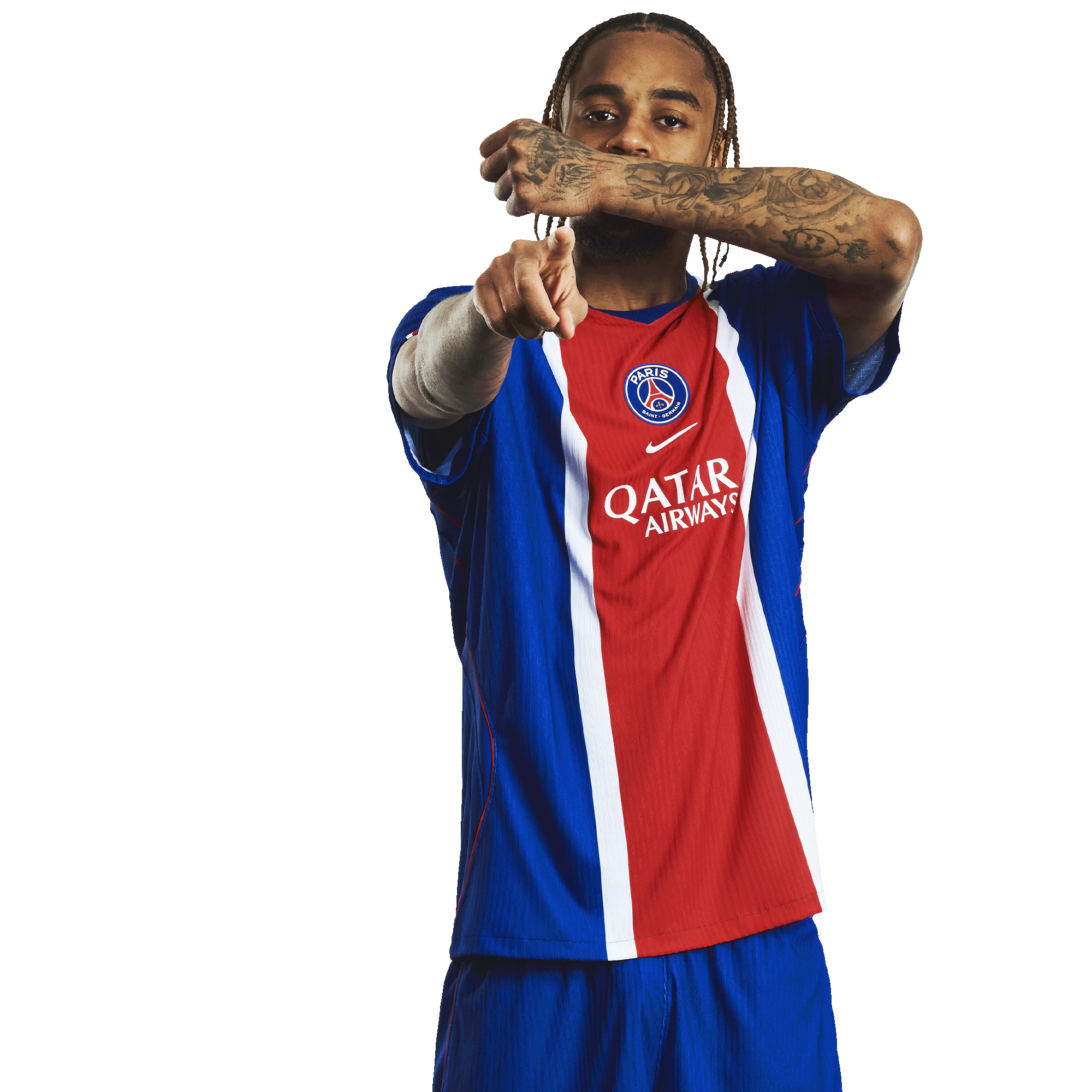
One of the most visually arresting small pieces appears on the back of Barcola’s left hand or fist. ThickAccent describes the image as a grinning ghoul-like mouth associated with Ken Kaneki from Tokyo Ghoul. A red cross sits above the dark mouth, adding a sharp color contrast to the surrounding black-and-grey work. In close photographs, the hand design reads immediately because the teeth and open shape create a strong horizontal mark across a small area.
The hand placement changes the effect of the design whenever Barcola raises his arms or celebrates a goal. Unlike the back tattoo, which is usually visible only in a turned-away photograph, the hand piece can face the camera during a gesture. The red cross is especially noticeable against the darker linework, while the mouth remains connected to the larger character and mask imagery running up the arm. The red cross gives this small tattoo a distinct accent within the broader black-and-grey field.
Sources describe the design as inspired by an existing fictional character, but the published reports do not establish a separate explanation for the cross. It is safer to identify what is visible than to turn the symbol into a claimed biography. The documented features are the ghoul-like grin, the hand placement, the red cross and the way the piece sits beside other anime-inspired tattoos. Those details are enough to explain why the small design is one of the most memorable elements in the collection.
The hand tattoo also demonstrates the range of scale in Barcola’s ink. The central mouth is compact, but its dark fill and bright red accent allow it to compete visually with much larger pieces. Around it, smaller lines and nearby arm designs create a dense transition toward the forearm. The result is not a standalone flash-style mark floating in open space. It is a small focal point inside a connected field of character tattoos.
The wrist phrase linked to a Dubai trip
French coverage documents a phrase on Barcola’s wrist that has been translated as “Thanks God Thanks Life Forever” and reported in French as “Merci mon dieu, merci la vie.” Closer Magazine says Barcola revealed the tattoo after a Dubai trip and linked it to a tattoo made with his girlfriend. French Football Weekly also records the wording and connects the wrist to a celebration gesture. These reports give the phrase a personal context that is more specific than the visual descriptions attached to the anime characters. The wrist phrase is the clearest example of a tattoo whose reported context is tied to a specific event.
The wrist lettering sits beneath a larger group of figures and dark masks on the arm. Closer Magazine describes a small manga-style girl and several mask-like characters above the phrase, while separate reporting identifies the right forearm’s Bible text. The placement is consequently a compact meeting point for words, characters and religious references. The lettering is close to the hand, so it remains visible in photographs where the rest of the arm is partly covered by clothing or movement.
The phrase has also become part of Barcola’s public celebration vocabulary. Reports note that he has kissed or pointed toward the wrist during goal celebrations, making the words more than a static detail in a tattoo photograph. That behavior is documented in sports coverage, while the exact private meaning beyond the reported wording remains his own. The reliable account is that the phrase thanks God and life, was connected by reporting to a Dubai trip, and is located on the wrist beneath other tattoo imagery.
Visually, the wrist phrase is quieter than the back mask and the hand grin. Its thin script is read at close range, while the surrounding characters provide darker shapes that remain visible from farther away. This contrast gives the lower arm a layered rhythm. The viewer sees a large illustrated field first, then the smaller words emerge near the wrist as the image is examined more closely.
How the tattoo collection reads across the arms and back
Barcola’s tattoo record is held together by placement as much as by subject. The arms carry the most detailed mixture of designs: cursive religious text, manga characters, masks, a hand mouth and a wrist phrase. The back then expands that visual language into a single large composition. The official UEFA portrait shows the arm coverage from a clean, face-visible angle, while the wider football photographs reveal how the newer back piece sits in relation to the shoulders and upper body.
There is also a clear contrast between script and image. The Bible-related text and wrist phrase use repeated lines and compact spacing. The Sukuna, Chihiro, Haku and ghoul-inspired designs depend on faces, silhouettes and recognizable character details. The back piece combines those approaches on a much larger scale, using a central mask and surrounding ornament rather than a sentence or one isolated figure. The religious script remains visually separate from the character work even where the pieces meet on the forearms.
The collection should not be described as a finished catalogue with every meaning publicly confirmed. Several reports identify designs by comparing them with known anime, manga and Japanese tattoo subjects. Other reports record direct words or specific events, particularly the wrist phrase and the Dubai connection. Keeping those categories separate makes the article more accurate. A visible design can be described with confidence, while an interpretation needs to stay tied to the source that supplied it.
What the photographs consistently show is a celebrity whose tattoos are concentrated around the arms, hands, wrists and back. Barcola’s face remains visible in official and editorial portraits, making the identity of the tattooed subject clear. The designs then supply a second layer of recognition: the back mask, the anime characters, the red cross and the lines of script create a distinctive visual signature across the player’s public images.
Barcola’s tattooed arms in football photography
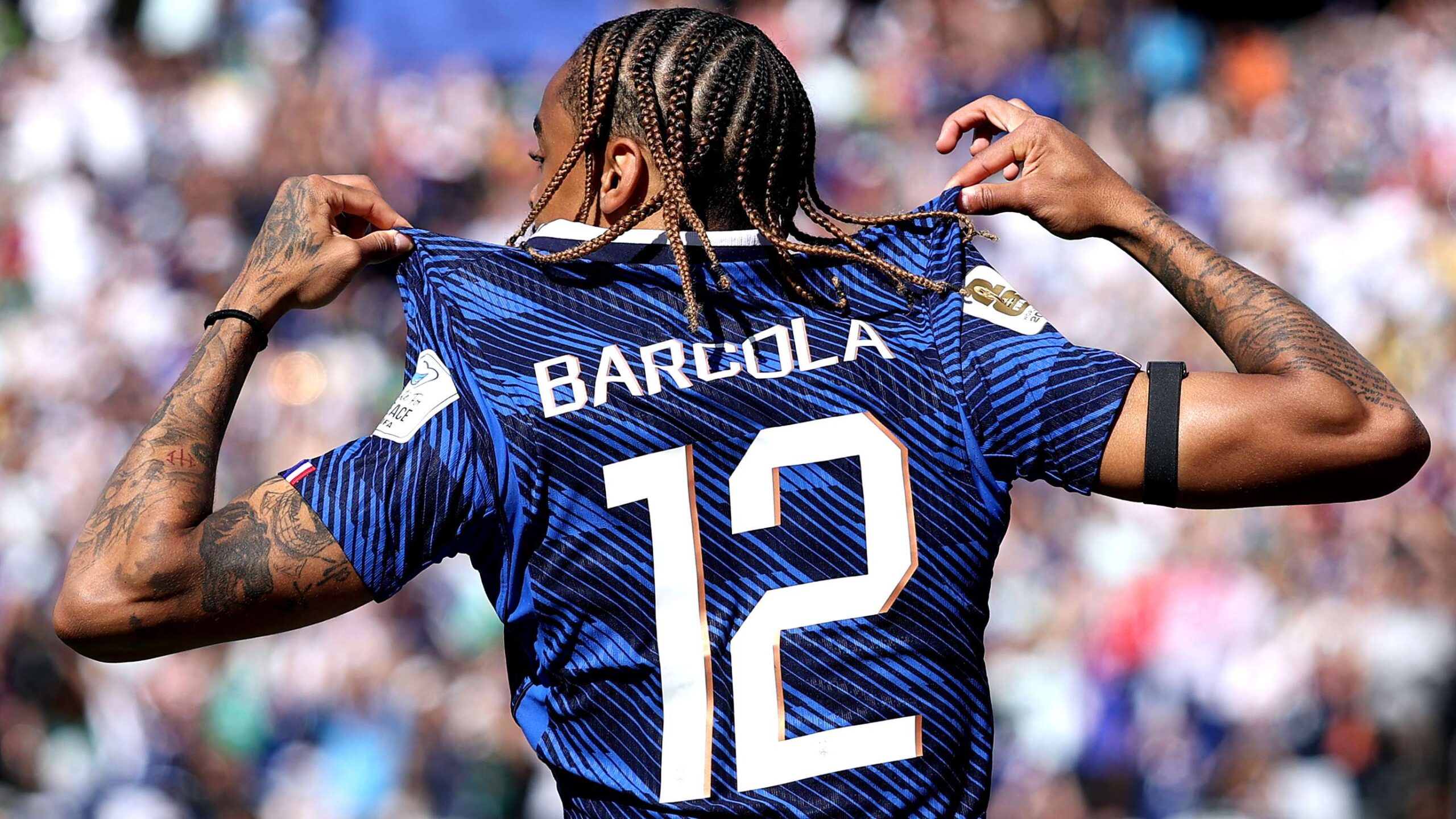
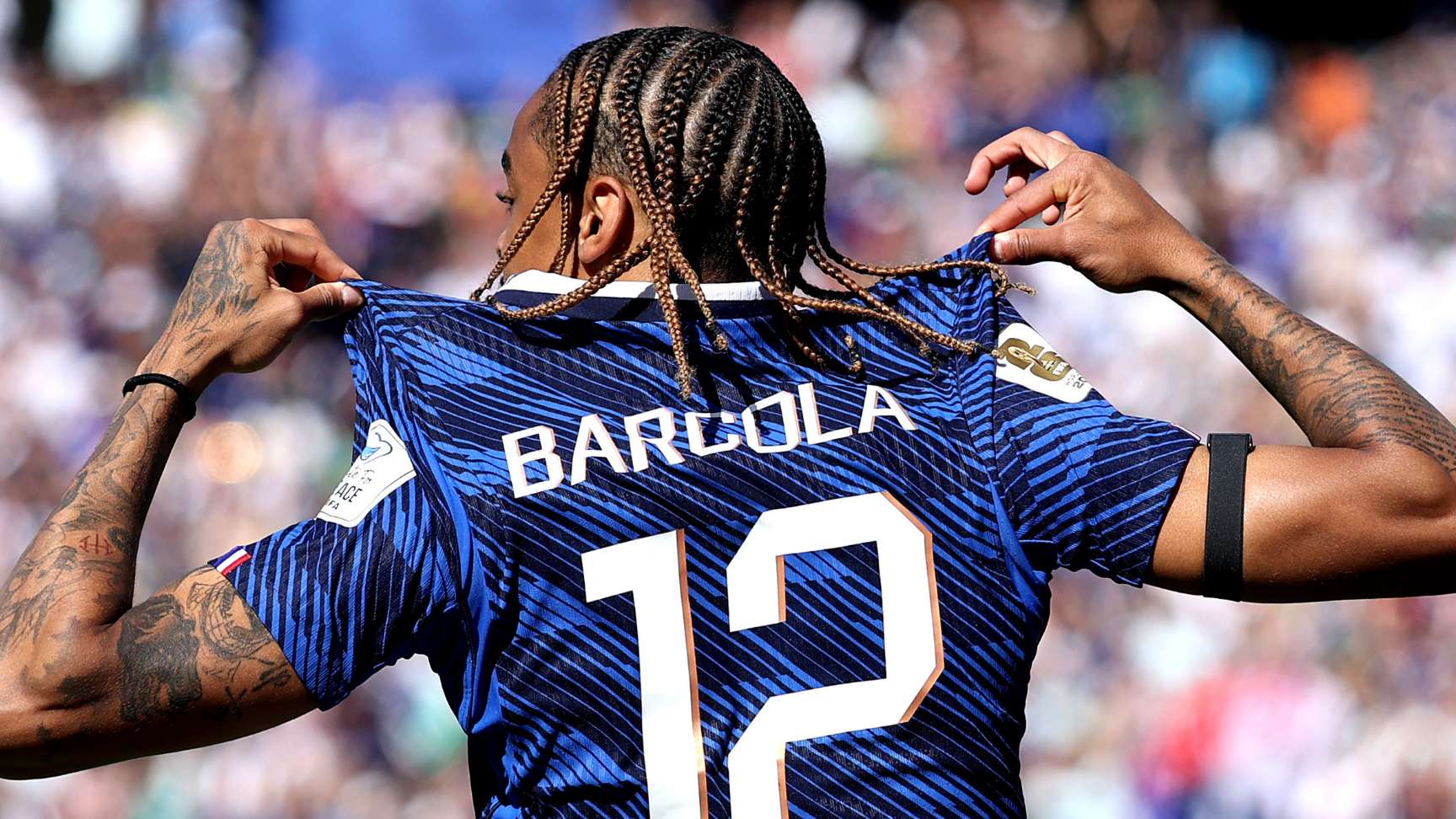
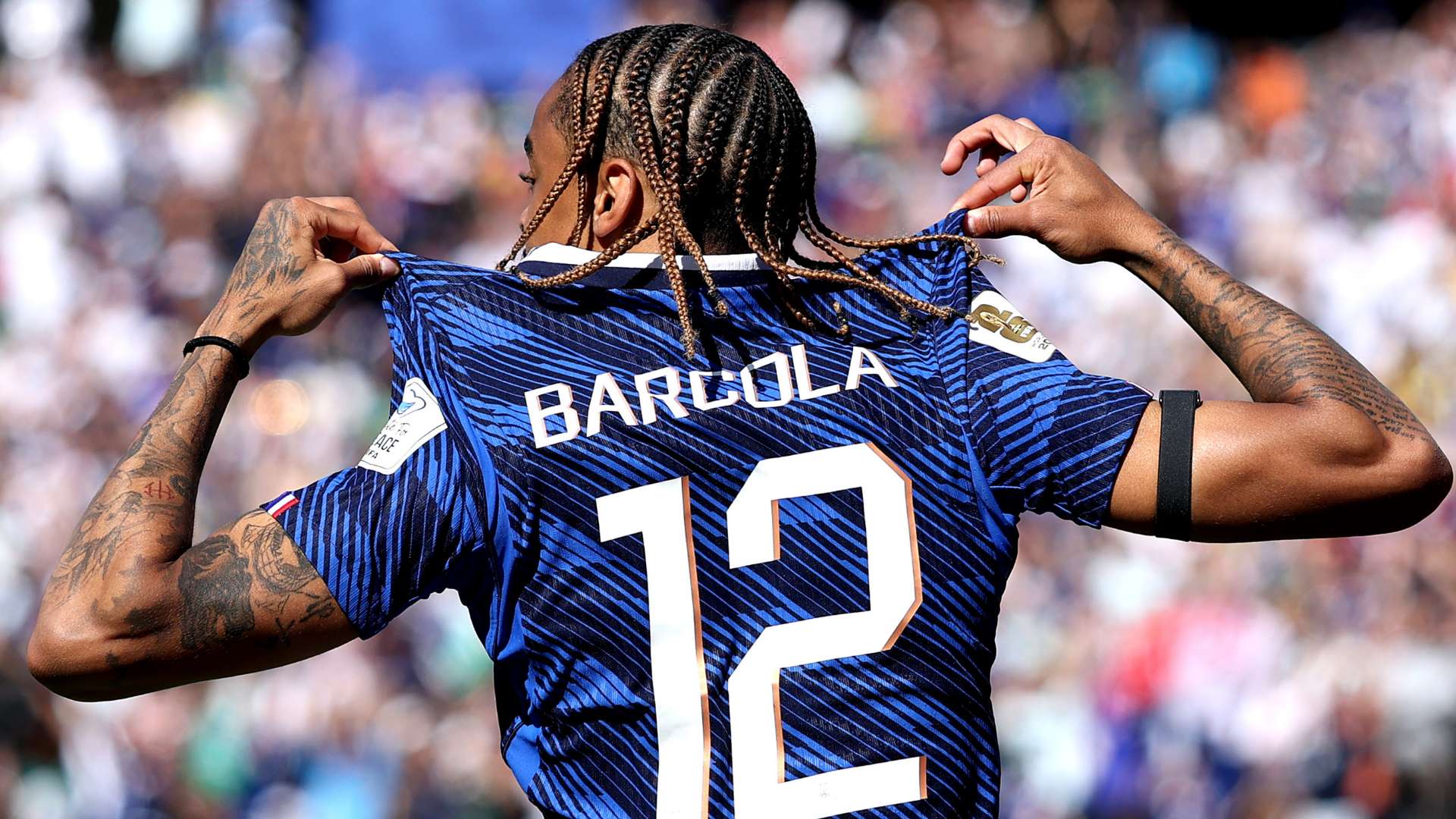
Match-day photography adds another view of the collection because Barcola’s arms move naturally around a shirt, a ball or a celebration. A high-resolution Getty photograph shows both forearms and hands as he lifts the back of his jersey. The left and right arms carry different densities of linework, with larger shaded shapes near the upper arms and smaller marks continuing toward the wrists. The image does not replace the close tattoo portraits, but it confirms that the collection remains visible in ordinary football settings.
The arms also show how clothing changes the apparent scale of the ink. A sleeve can cover part of the upper arm while leaving the forearm and hand exposed, so a photograph may show only fragments of the larger designs. When Barcola raises both arms, the tattooed surfaces become a pair of dark frames around the shirt. That repeated public view helps explain why his arm tattoos are often noticed before the more recently documented back piece.
Why Bradley Barcola’s tattoos stand out
The collection stands out because large Japanese-inspired imagery appears beside recognizable animation references, religious script and small personal lettering. The visual shift from the back mask to the wrist phrase is substantial, yet the pieces remain connected by the dark linework and the way they overlap across the arms.
The collection in context
Barcola’s public photographs record the tattoos at different stages and from different angles. Editorial close-ups identify specific characters, official portraits establish his face and arms, and football images show how the ink appears during matches and celebrations. That combination keeps the description grounded in visible details rather than a single promotional pose.
What is firmly documented about Bradley Barcola’s tattoos
The current record supports several specific observations. Barcola has a large black-and-grey Japanese-inspired tattoo covering much of his back. His arms include identifiable anime and manga-related characters, including Sukuna, Chihiro and Haku, alongside darker masks and a ghoul-like hand design. His right forearm contains dense cursive religious text described as Bible verses. His wrist carries a phrase reported as “Merci mon dieu, merci la vie” or “Thanks God Thanks Life Forever,” and French coverage connects that tattoo to a Dubai trip and a girlfriend.
The photographs add important visual evidence to those written accounts. The back composition has a central mask-like face, ornamental and landscape-like surroundings, and enough scale to cover the upper and middle back. The left arm is a crowded character field rather than one isolated image. The hand tattoo uses a dark grinning mouth and a red cross for contrast. The forearm lettering is dense and linear, while the wrist phrase is smaller and closer to the hand.
Meanings should remain limited to what the sources support. Faith is clearly present in the Bible text and the reported phrase thanking God. The anime and manga designs are identified by their visual resemblance and named references, but no private explanation from Barcola is supplied for each selection. The Hannya or Japanese-inspired description is supported by the published tattoo coverage, while stronger claims about protection or transformation belong to the reporting source rather than a confirmed personal statement.
Barcola’s documented tattoos are therefore a mixture of large-scale composition, character imagery, religious script and personal lettering. The back piece provides the broadest visual statement, while the hands and wrists preserve the smallest details. Together, those elements make the collection easy to recognize in football photography without reducing it to a single symbol or a single style.