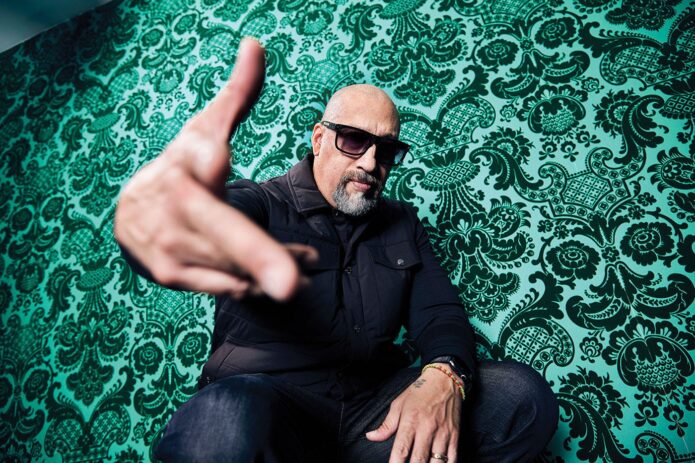
B-Real’s tattoos are easy to spot in performance photos. He often wears a cap, sunglasses and a T-shirt or vest, but the ink across his arms still stands out. Most of the visible work covers his forearms and upper arms, where shaded images, lettering and smaller details sit close together.
The tattoos fit the way he dresses and performs. They show when he’s holding a microphone or reaching toward the crowd, without needing a posed, shirtless photo. That makes his arm work useful to study if you’re thinking about how a tattoo will look while you move.
There isn’t a reliable public list explaining every design, so the photos are the best guide to placement and style. They show the larger shapes clearly, though they don’t confirm what every smaller mark means. Here’s what you can see in B-Real’s collection.
B-Real’s arm tattoos are the clearest part of his look
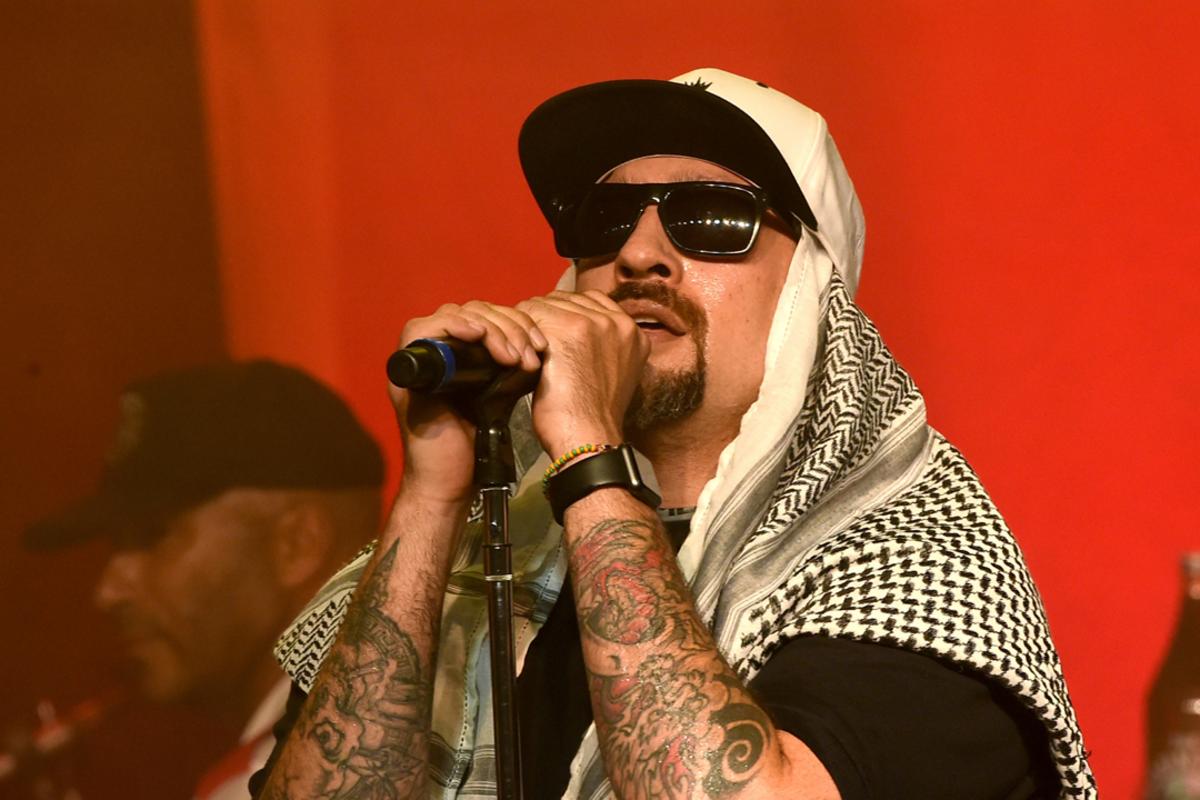
Most of B-Real’s visible ink is on his arms. Close performance shots show black-and-grey work on both forearms, with heavy outlines, shaded figures and smaller marks between the larger images. The designs wrap around the arms, so they change as he reaches for the mic or gestures to the audience.
The upper-arm pieces connect with the elbow and shoulder instead of reading as separate flash designs. Darker areas help the main shapes stand out, while lighter grey keeps the sleeve from looking like one solid block.
That balance is useful to notice when planning a sleeve. A strong central image needs enough lighter shading and smaller transitions around it. B-Real’s arms are densely covered, but the darker pieces still draw the eye first.
If you want a tattoo that reads from across a room, start with a clear silhouette and strong contrast. Fine detail can add interest, but the main shape should still make sense from a distance. B-Real’s arm tattoos stay readable even in colored concert light.
The Cypress Hill tattoo style stays bold on stage
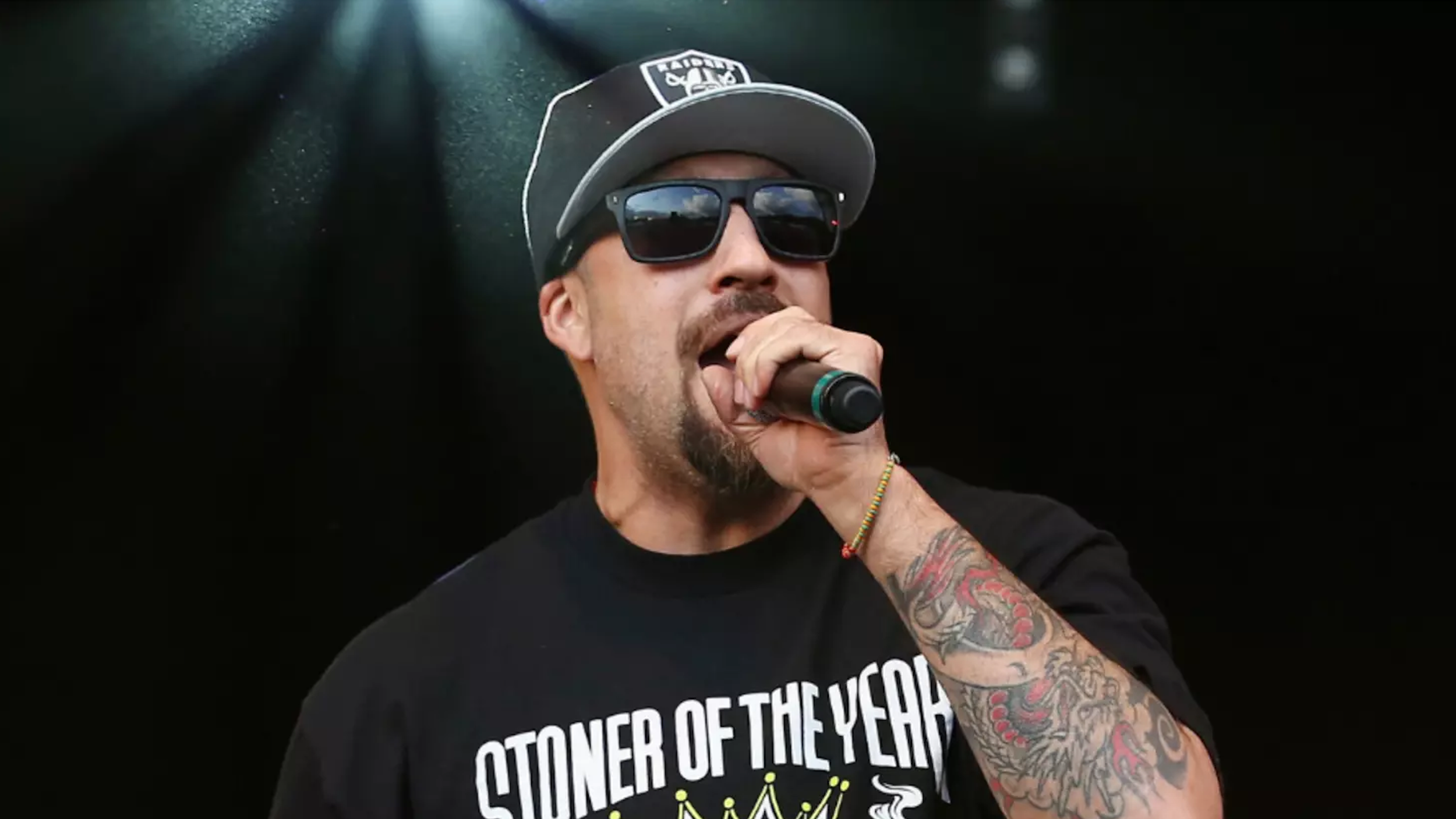
In live photos, B-Real’s forearms stand out against his dark clothes, hands and microphone. Warm red stage light brings out some parts of the ink; in daylight, a black shirt makes the outlines look sharper. The lighting changes, but the overall look remains clear.
The tattoos use bold outlines, traditional-looking shapes, some saturated color and grey shading. That high-contrast treatment fits Cypress Hill’s established visual style and holds up as he moves around onstage.
Not every part of a sleeve needs to be large. Smaller designs can sit around a bigger image, and a little open skin helps the arm keep its shape. The main image gives the eye somewhere to land; the other pieces fill in around it.
Use lighting and movement as part of the design test. Turn your arm, raise it and bend the elbow to see how the focal point shifts. In B-Real’s performance photos, the main shapes are still visible when his arms are angled or partly hidden by a microphone.
His tattoo placement works with caps, shades and tees
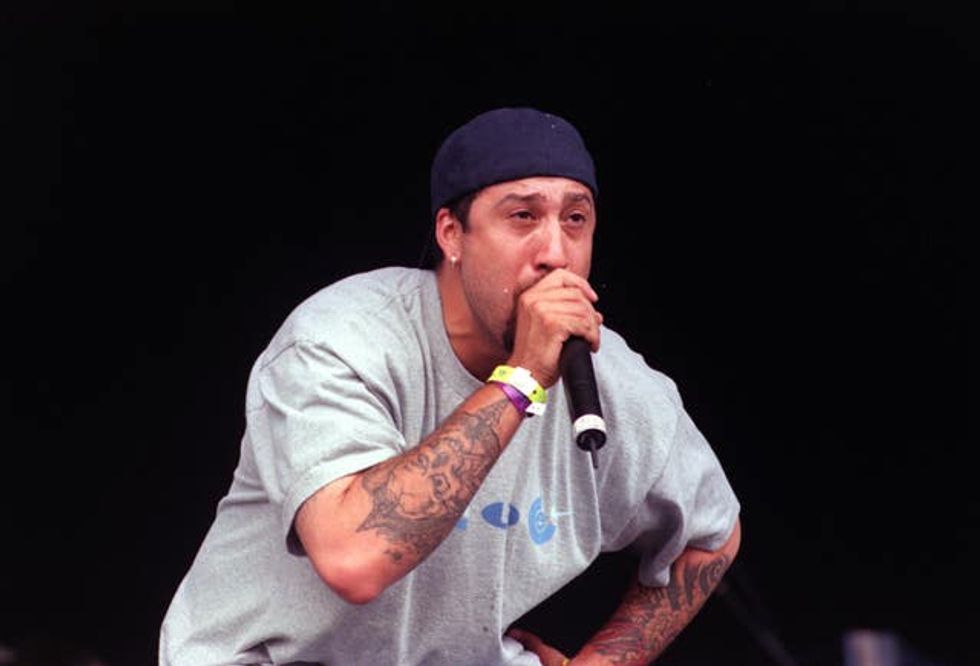
B-Real often wears caps and sunglasses, with short sleeves, vests or rolled-up layers that leave his forearms out. The ink sits lower than the accessories and has enough contrast to stand on its own.
His arms are in motion through much of a performance: he grips the mic, points, waves and reaches toward the crowd. That makes placement matter. A design on the part of the arm that faces the audience or camera will be seen more often than one under a sleeve.
For a forearm tattoo, consider how it looks from the front and from the wearer’s own point of view. Photos of B-Real show both the inner and outer parts of his arms, which helps explain how the designs connect around them.
Plan the tattoo around the clothes and gestures you actually use. If you usually wear short sleeves, a forearm piece will be visible most days. Think about how it looks when you bend your elbow or move your hands, especially if you play an instrument, train or perform.
B-Real’s ink reads best in close performance photos
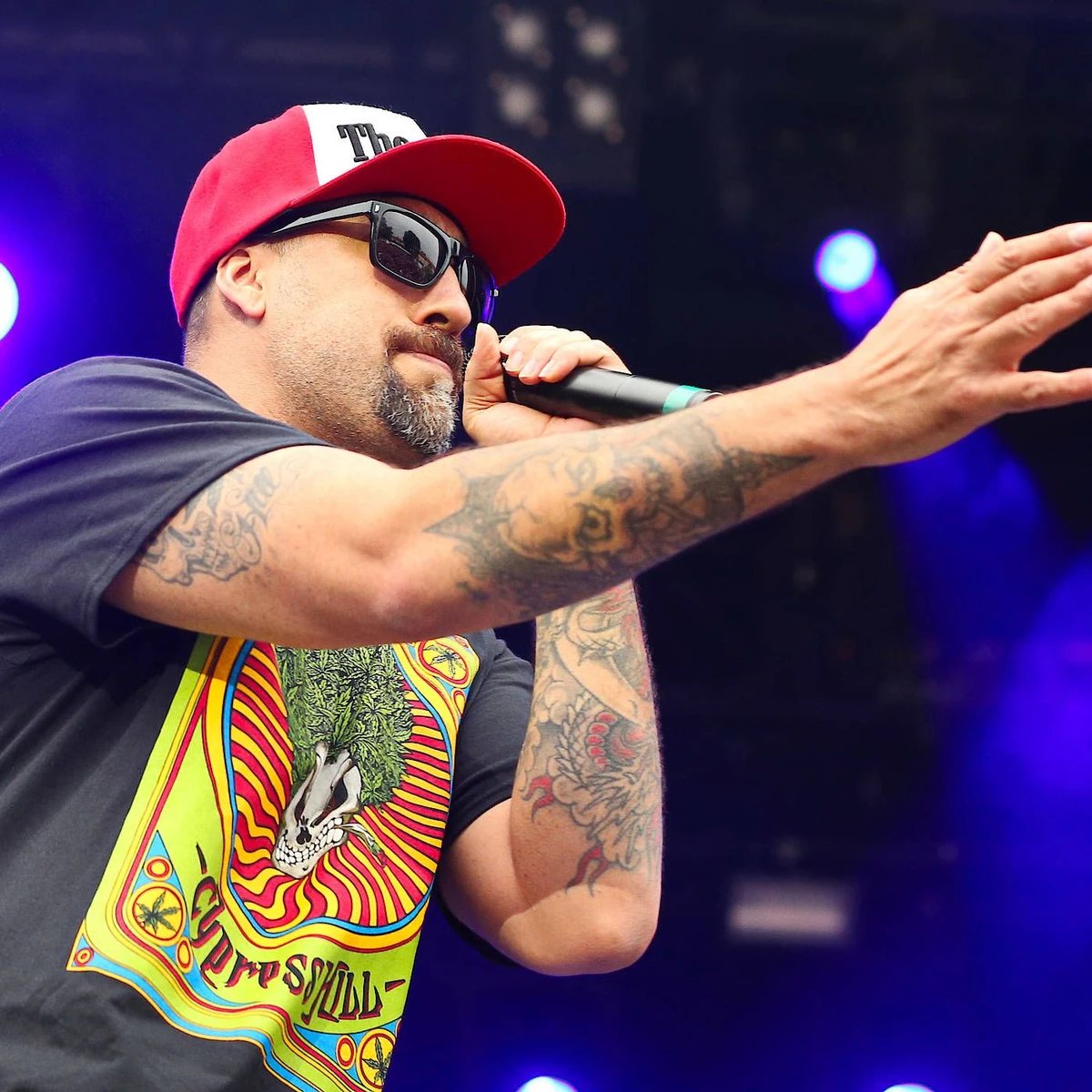
Close performance photos make the different shapes easier to see. A wide crowd shot shows that B-Real is tattooed; a closer view reveals curved lines around the forearms, darker patches near the elbows and lighter shading between them.
One photo may show one arm well and leave the other mostly hidden. A raised arm can reveal the outer forearm, while a side view may show the inner section near the elbow. Looking at several angles gives a better sense of how the pieces wrap around.
His caps, sunglasses and dark shirts also make a simple frame for the tattoos. The clothes don’t hide the placement, so the arms remain the focus in many performance shots.
When you collect reference photos, save different angles instead of five versions of the same pose. A front view may show the main image; a side view can show how the design wraps and how the shading sits around the arm.
What to take from B-Real tattoos without copying them
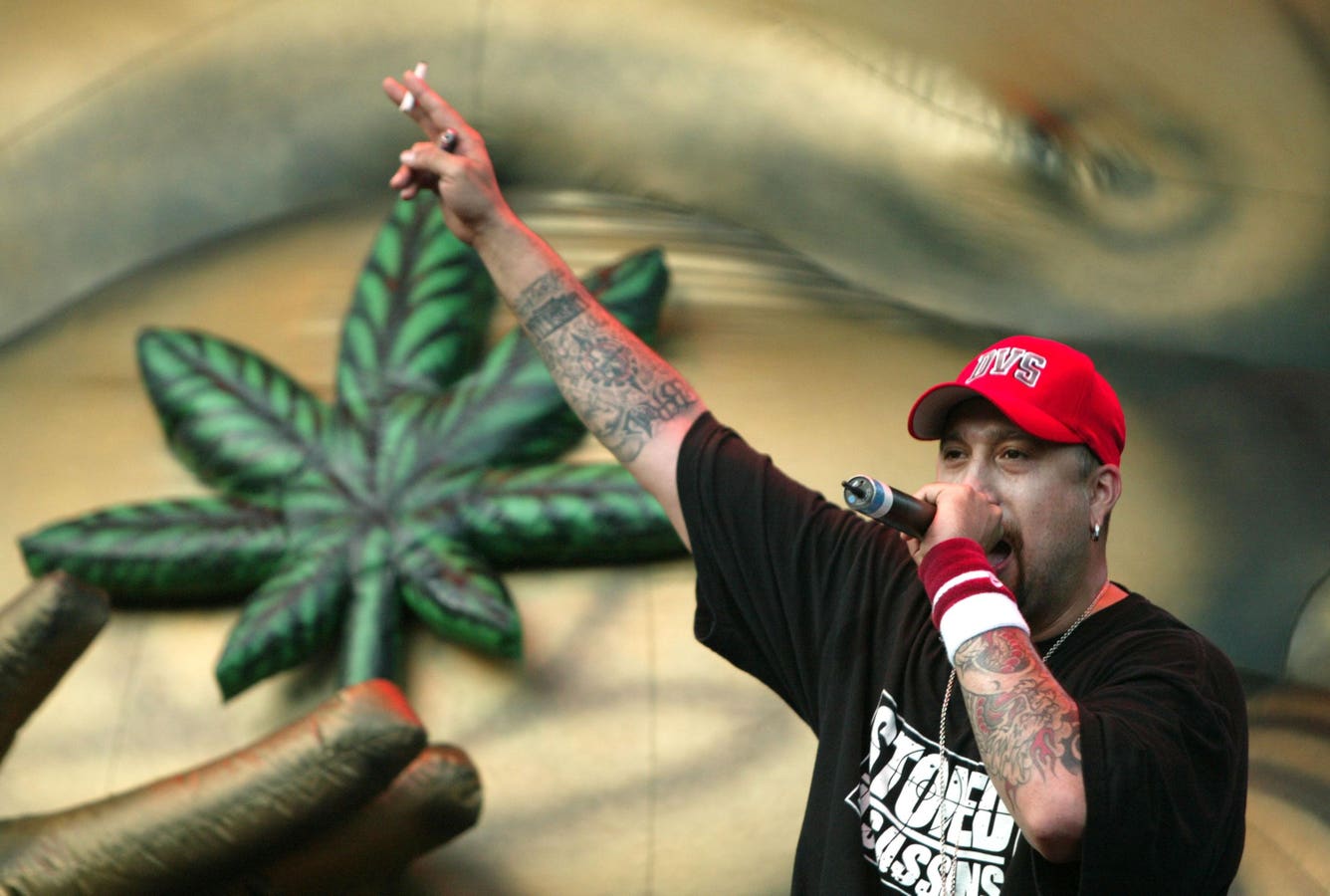
The clearest lesson in B-Real’s collection is its visual consistency: broad arm coverage, strong outlines and enough contrast for the designs to show in ordinary photos. You can use that approach with different subjects and less ink.
Start with one area. A forearm sleeve might have one main image, a few smaller pieces and some open skin around them. If you extend it up the arm later, connect the new work through its scale, direction or shading instead of filling every gap.
The photos show the placement and overall style, but they don’t tell us the private story behind every tattoo. That’s fine. You can study the line work and how the pieces fit together without knowing what each mark means to B-Real.
Use B-Real’s collection as a lesson in visual weight, not a stencil. Find an artist whose work fits the style you want, bring references from different angles and decide which part of the design should catch the eye first. The result will be your own because it reflects your choices, not because it copies a rapper’s sleeve.
B-Real’s arm tattoos remain visible when he performs, and the darker designs hold their shape under different lighting. The smaller details come through in close photos. Together, they fit the way he dresses and moves onstage, a look he’s carried through years of music and touring.
If you’re using B-Real’s tattoos for ideas, pay attention to the contrast, the way the designs wrap around the arm and how they look from different angles. Those choices can help you plan a tattoo that works for your own life.
Here’s a B-Real interview from the Cypress Hill era: