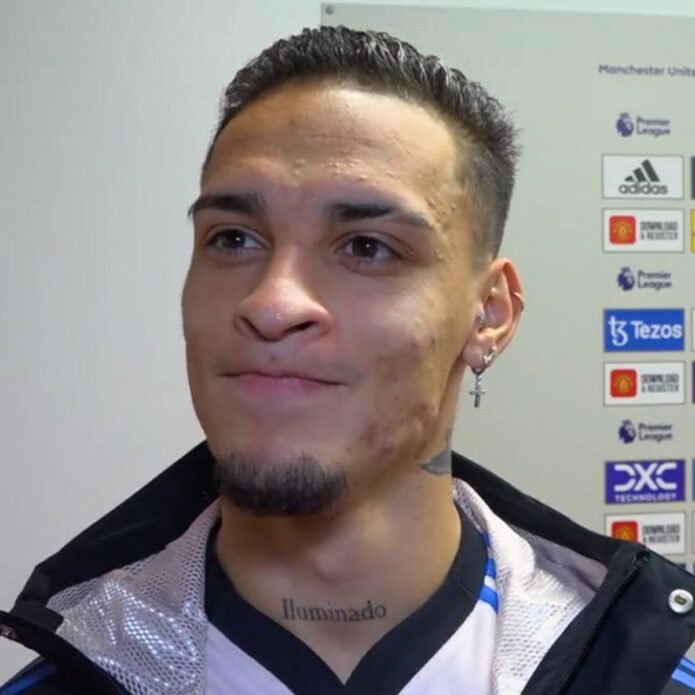
Antony’s tattoos read like a fast-moving photo album of where he has been. The Brazilian footballer wears a large back piece, a packed arm, lettering on his neck and a medal design on his thigh. There’s also a bird on the side of his neck, a lion on his arm and smaller words and symbols that show up when he celebrates or rolls up a sleeve.
That mix is what makes Antony tattoos interesting to study. His collection isn’t one neat, matching set. It moves between personal history, family, football, Brazil and the kind of bold black-and-gray work that still reads from the stands. The best design lesson is to let each tattoo carry a clear idea while using placement to make the whole collection feel connected.
Some of the meaning behind his most visible pieces has been discussed publicly, including the Olympic medal and the imagery tied to his upbringing. Other details are easiest to understand by looking closely at the lines, scale and placement. This guide sticks to what can be seen clearly and turns it into useful ideas for planning your own tattoo collection.
Antony’s neck tattoo keeps a small bird visible from every angle
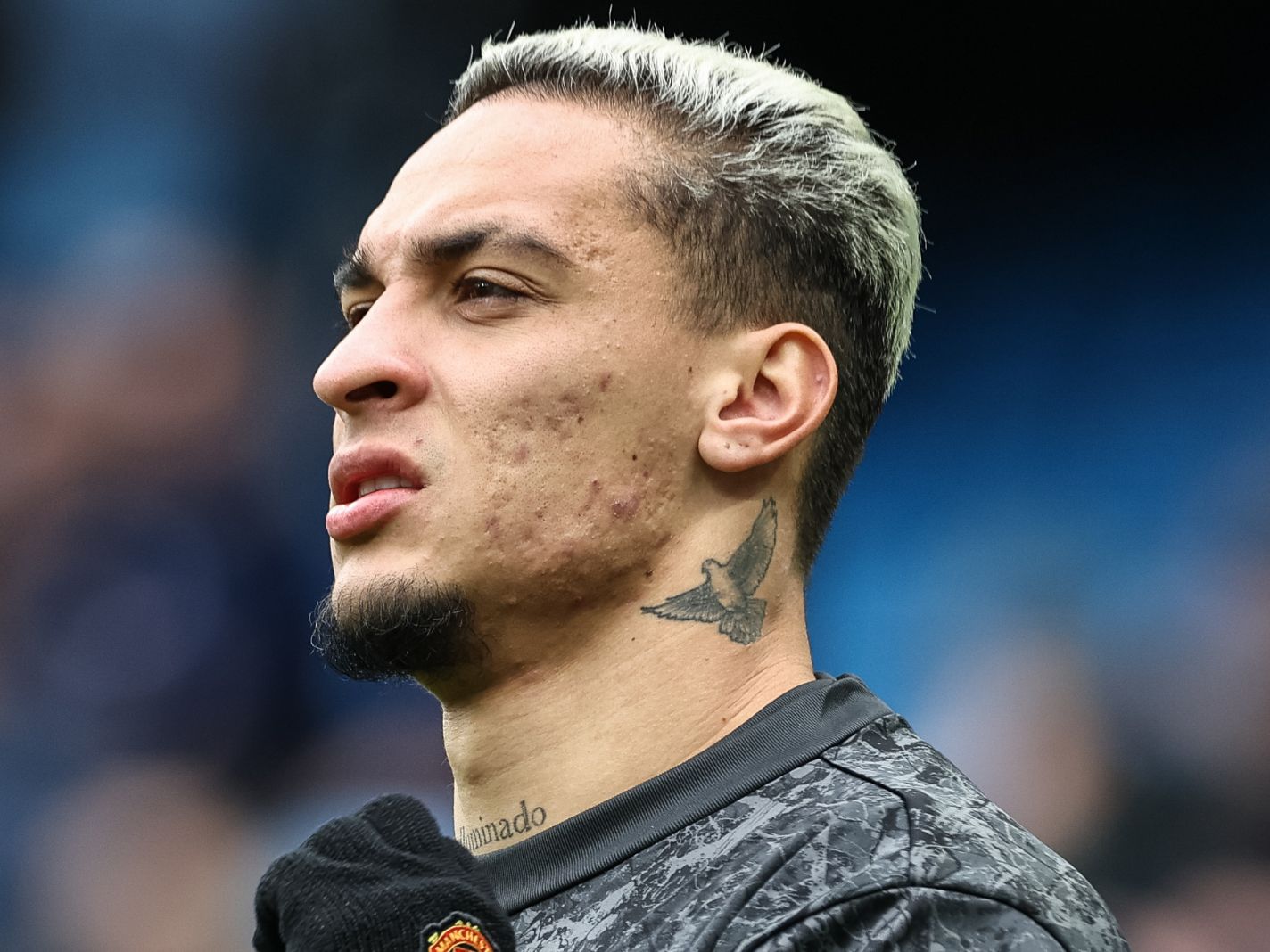
The small bird on Antony’s neck is one of his easiest tattoos to spot. It sits just below the jawline and stays visible whether he is wearing a football shirt, a training top or a jacket. Because it is placed on the side of the neck, the design changes with the angle of his head. From the front it feels like a compact symbol. From the side it becomes part of his profile.
A neck tattoo like this works because the shape is simple enough to survive a small placement. The wings and body have a clear outline, while the darker interior gives it enough contrast to hold up against skin, stubble and changing light. You don’t need a huge image for a neck tattoo to make an impression. You need a design that still makes sense when it is viewed from a few feet away.
Placement matters just as much as the drawing. The side of the neck gives a little more room than the front, but it still moves constantly. Talk with your artist about the natural turn of your head and how the design will sit when your shoulders are relaxed. A tattoo that looks balanced on a straight-on stencil can shift once the skin follows the curve of the neck.
If you like Antony’s approach, think about one strong silhouette rather than a crowded collection of tiny details. A bird, branch, flame or small animal can work well in this spot. Keep the line weight confident and leave breathing room around the image so the tattoo does not disappear into the surrounding skin.
Antony’s back tattoo turns personal history into a full-body scene
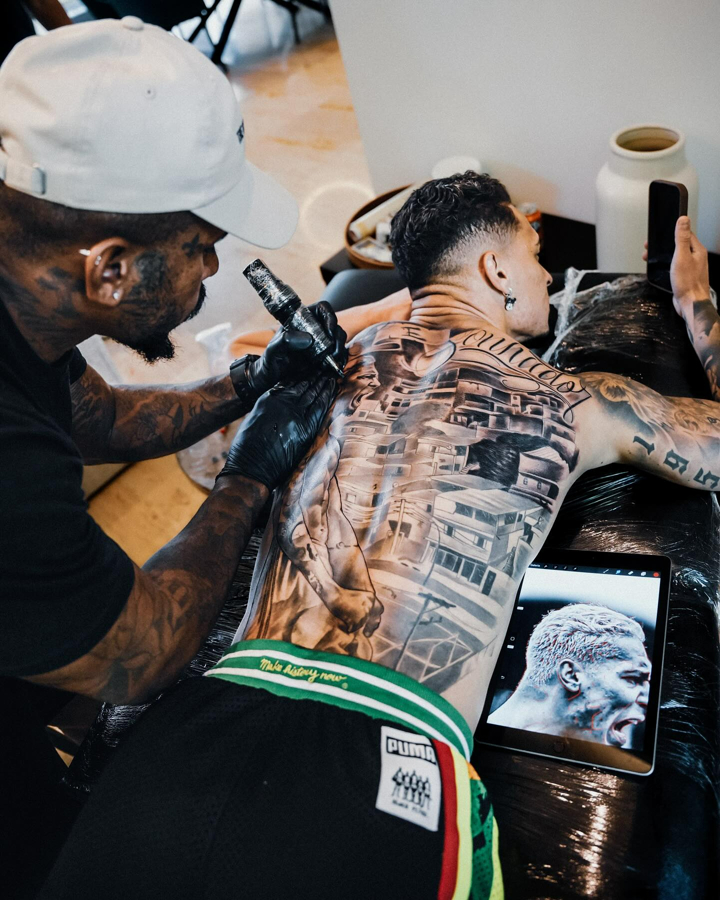
The back piece is the biggest visual statement in Antony’s collection. It covers a broad area instead of behaving like a small sticker, and the composition feels built for movement. Large shapes run across the shoulders and upper back, then flow down toward the lower part of the piece. That gives the tattoo a sense of direction when he turns or celebrates.
According to coverage of Antony’s tattoos, the favela where he grew up is an important part of the story behind his ink. That makes the back a natural place for a scene with several layers. A large canvas can hold buildings, figures, shadows and small details without forcing everything into one cramped symbol. It can show a place, a memory or a group of people in a way that a forearm tattoo simply can’t.
The practical lesson is to design the whole back before worrying about every tiny object. Start with the main flow. Decide where the eye should land first, how the shoulders connect to the spine and where the darkest areas will sit. After that, your artist can build supporting textures into the open spaces. Big tattoos look stronger when the overall shape works from across the room before you zoom in on the details.
A scene-based back tattoo also gives you room to grow. You can complete it in sessions, allowing the artist to adjust the next section to the healed work. Bring references for the mood and story you want, but leave enough freedom for the composition to fit your body instead of copying a picture that was designed for somebody else.
Antony’s sleeve tattoos mix animals, lettering and bold black shading
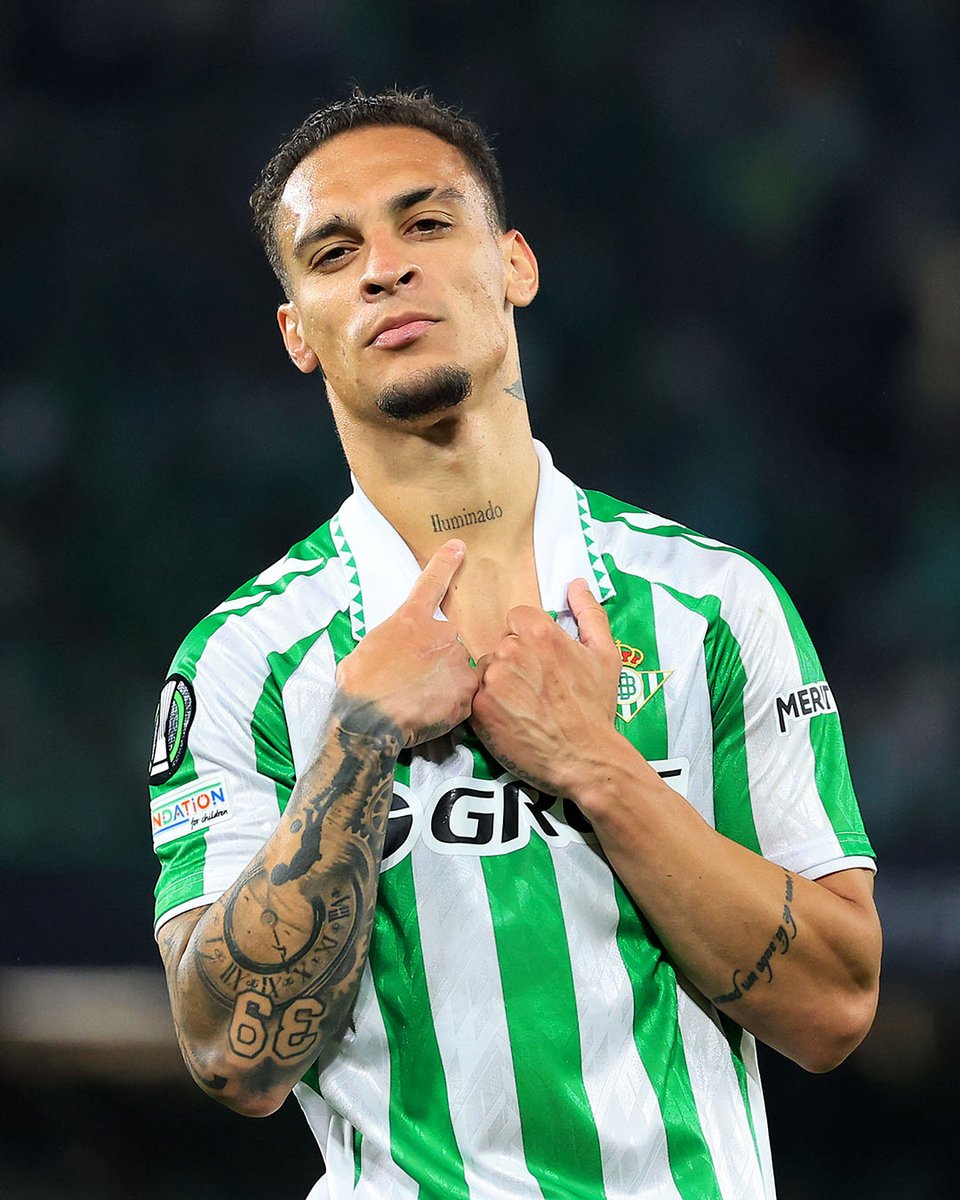
Antony’s arms carry the busiest part of the collection. A lion sits among the larger arm designs, while stars, lettering and other symbols fill the space around it. From a distance, the sleeve reads as a strong dark shape. Up close, the separate pieces become easier to pick out. That balance between impact and detail is what keeps a packed arm from turning into visual noise.
The sleeve also shows why a collection doesn’t need one subject to feel intentional. Animals, words and small symbols can live together when they share a similar level of contrast. The lion has enough weight to act as an anchor. Smaller tattoos can then sit around it without fighting for the same amount of attention.
If you’re planning a sleeve, choose the anchor piece first. It might be an animal, portrait, religious image or a favorite object. Then map the natural gaps around the shoulder, elbow and wrist. Elbows need flexible shapes, while the outer forearm is better for a design that you want people to read. Use the body’s natural landmarks as part of the layout instead of treating the arm like a flat poster.
Antony’s arm also has the relaxed, slightly rough feel of tattoos collected over time. You can keep that energy while still making smart choices. Repeat a black-and-gray palette, leave small areas of skin open and use filler only where it actually helps the flow. A sleeve feels more personal when every gap doesn’t get filled just because it exists.
Antony’s Olympic medal tattoo turns one achievement into a keepsake
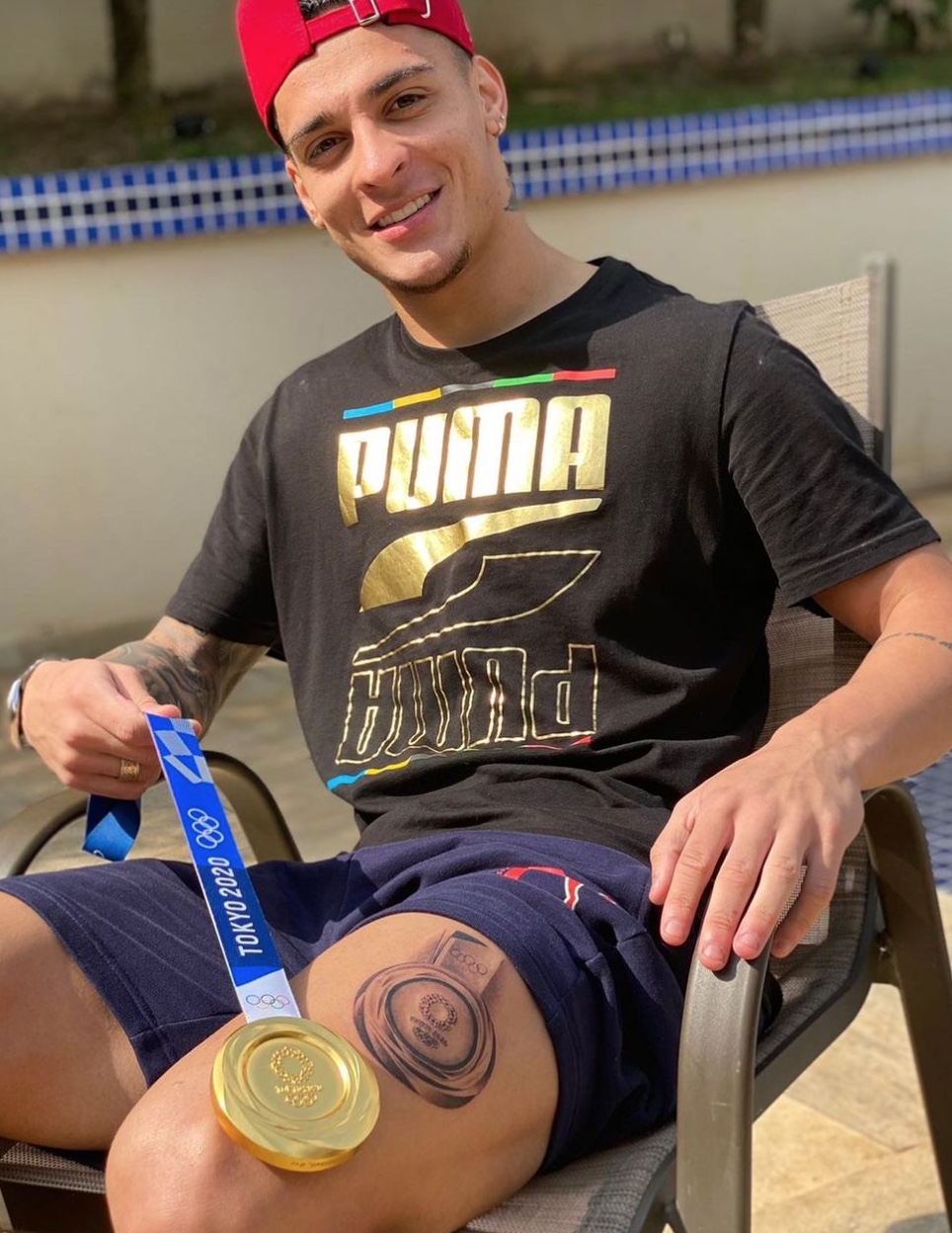
The Olympic medal tattoo on Antony’s thigh connects his body art to a very specific moment. He won gold with Brazil at the Tokyo Olympics, and the medal design gives that achievement a permanent place on his leg. It’s a clear example of how a tattoo can mark an event without relying on a generic date or trophy outline.
Thigh placement gives the design more space and more privacy than a hand or neck tattoo. It can be shown when he wants to show it, but it doesn’t have to be part of every public appearance. That makes the location useful for anyone who wants a meaningful piece that still feels personal. The thigh also offers a relatively broad surface, so circular shapes, medals and layered symbols can sit comfortably.
A commemorative tattoo works best when you decide what part of the memory matters most. Is it the medal, the country, the people who helped you get there or the feeling of surviving the journey? The answer will change the design. A realistic object may suit one story, while a group of symbols may say more with less detail.
Think about aging, too. A medal with fine lettering and tiny dates can soften over time. Ask your artist which lines need extra room and whether the design still reads when it is viewed from a normal standing distance. The goal isn’t to record every fact. It’s to keep the emotional center of the achievement clear.
Antony’s forearm lettering tattoos keep family and identity close
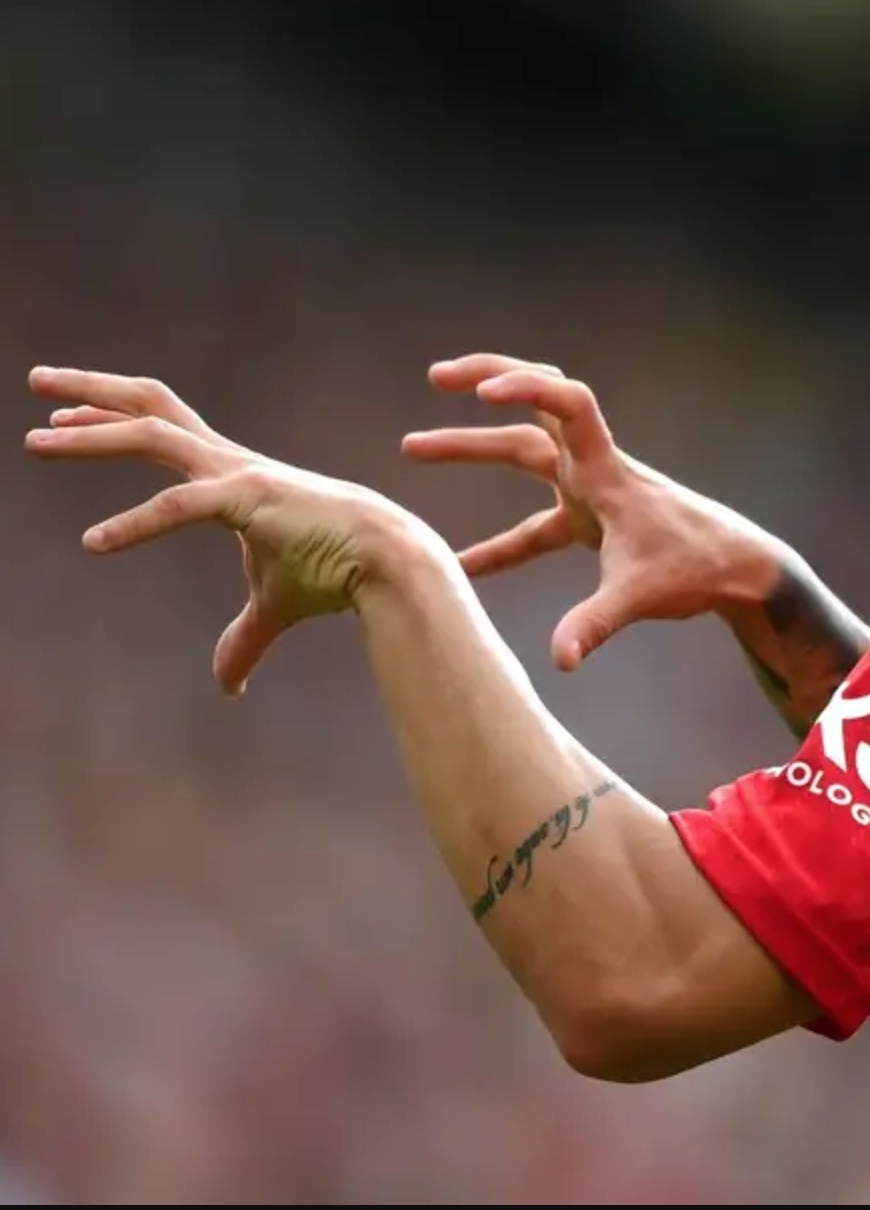
Words appear throughout Antony’s tattoo collection, especially on the forearm and lower neck. The lettering adds a different rhythm from the larger pictures. Instead of reading as a single image, it invites people to follow the shape of the letters and wonder about the story behind them. His forearm work is a good example of how script can sit beside heavy shading without needing to match it exactly.
Lettering on the forearm gives you a long, readable surface, but it still needs careful spacing. Long phrases can wrap around the arm or disappear when the wrist turns. Keep the most important words on the area that will face outward, then let the rest follow the curve. If the phrase is short, larger letters usually age better than trying to make a tiny sentence fit.
Antony’s tattoos also show how words can connect public identity with private memory. His collection includes references to Brazil, family, football and the path from his childhood to the professional game. You don’t have to explain every word to anyone else. The point is that the lettering means something to you even when a stranger only sees the shape.
Before committing to a script tattoo, read the exact spelling in several fonts and print it at the size you want. Check the design with your arm relaxed, flexed and turned sideways. Good lettering is more than a nice font. It is spacing, placement and enough breathing room for every word to stay legible.
Antony’s tattoos work because they move between big scenes and small reminders. The back piece carries a personal place and a broad story. The sleeve brings animals, stars and lettering into one busy arm. The neck bird stays simple and visible, while the Olympic medal gives a private corner of the body to a huge public achievement.
You can borrow that balance without copying any one image. Start with the story you want to keep, then choose a body area that fits the scale of the idea. Use a large placement for a scene, a thigh or upper arm for a milestone and a small neck or wrist design for a symbol you want close at hand. Give each tattoo enough room to breathe and let the collection grow at its own pace.
Before your appointment, talk through healing, contrast, future additions and how the tattoo will look from normal day-to-day angles. Bring your artist the feeling behind the design rather than asking for an exact replica. The best result will have the same honesty and energy while still looking unmistakably like your own life.