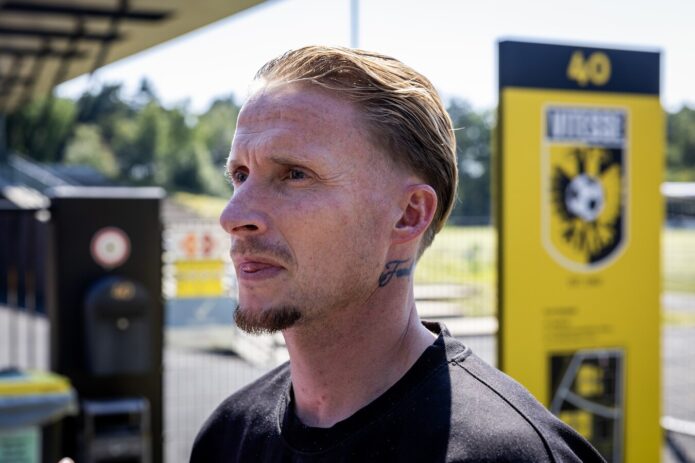
Alexander Büttner’s tattoos cover his arms, hands, neck and legs in dense black-and-grey work. The former Manchester United and Vitesse left-back has said the collection became part of him. His own stories point to two recurring subjects: family and Christian faith. The photographs also trace how quickly his relatively bare arms filled with layered designs.
His first tattoo was a cross he got with his brother at sixteen. He later described another cross from a trip to Ibiza, made with his brothers and nephew Giovanni. Some pieces mark those family moments; others were chosen because he liked how they looked.
Alexander Büttner’s number 28 and forearm dove tattoo
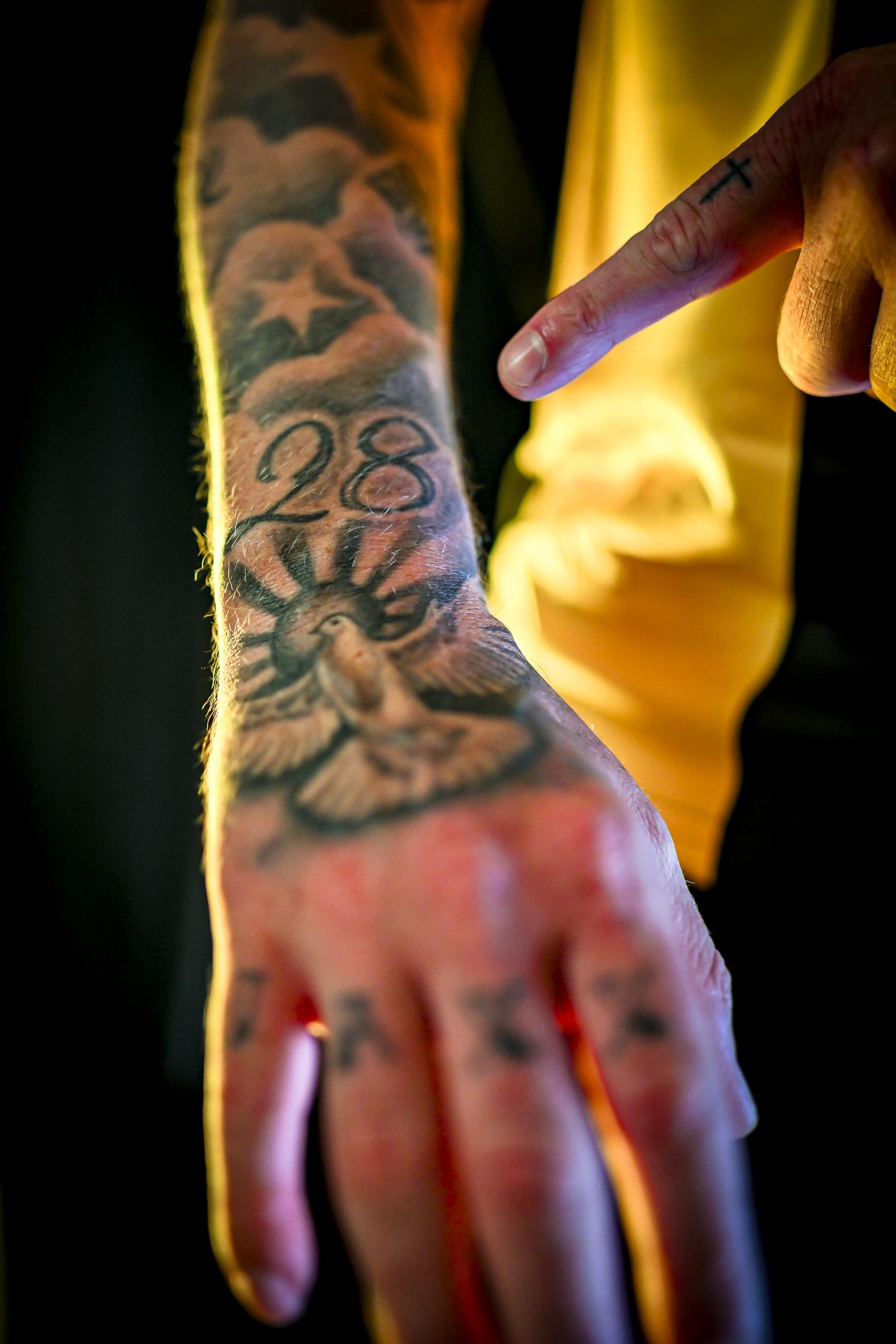
A close photograph shows the number 28 above a large black-and-grey dove. Dense shading gives the bird a dark body and softer feathered edges, while smaller marks fill the space around it toward the wrist.
Büttner told Sportnieuws that his brother was tattooing while the family joked around, and he asked for 28 under his foot. It was the number on his Vitesse shirt. The photo doesn’t show the sole of his foot, but the football reference and the family story are both part of the collection.
Small letters cross his fingers near the joints, so their shape shifts as his hand moves. Together with the number and dove, they make the hand part of the larger sleeve rather than a separate design.
Family lettering across the hand, neck and inner arm
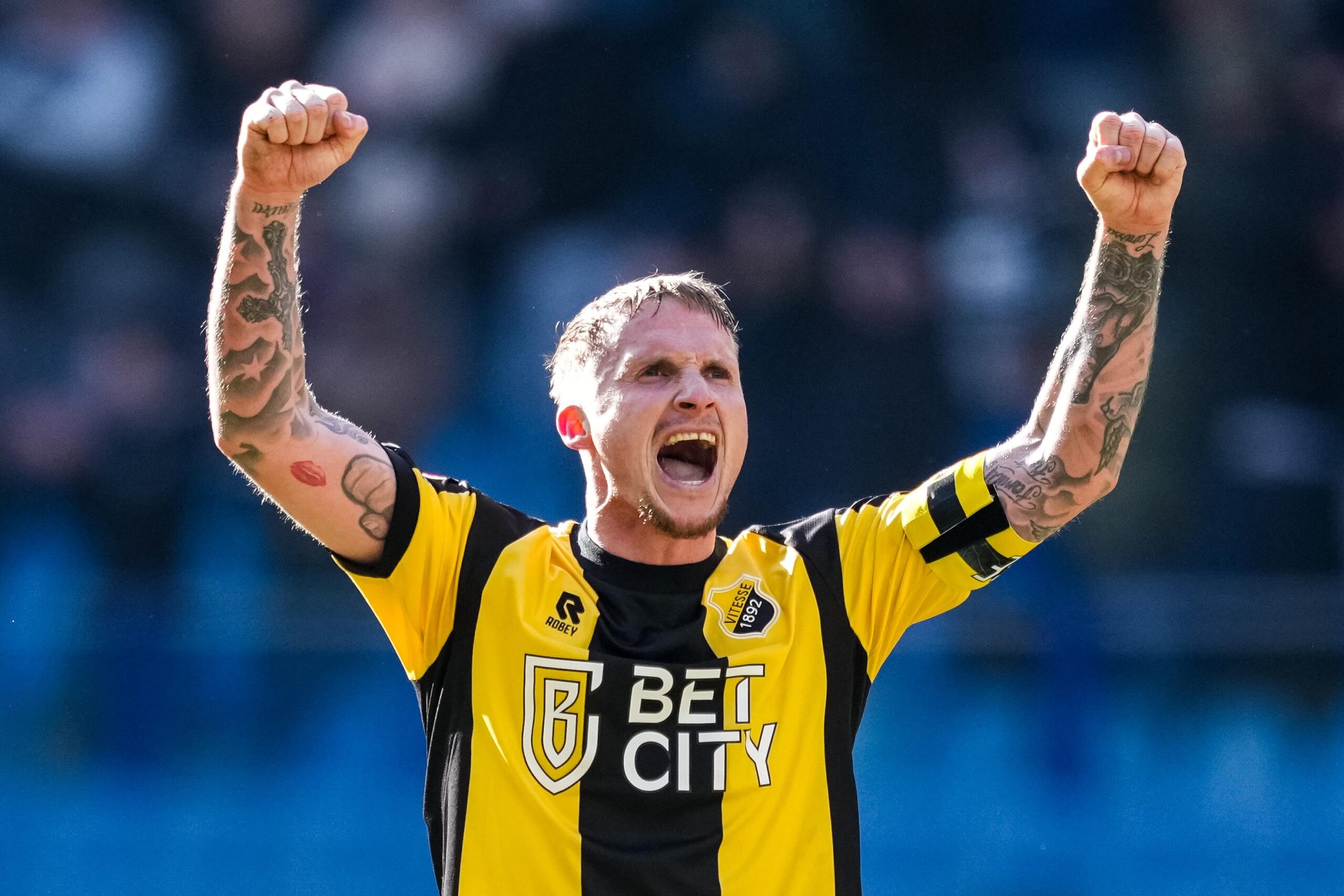
The Vitesse match photograph shows overlapping arm work and the word Family above the collar. Büttner has also explained several of the smaller marks: “Jaxx” across his right-hand knuckles for his son, “Larissa” on his right forearm for his partner, a kiss from his mother on the inside of an arm and a fist bump from his father.
Those details sit among portraits, curves and dark ornamental shading. The names can be hard to read from a distance, while the sleeve’s larger shapes remain visible. Büttner has said his mother disliked neck tattoos, but he returned to that area; the lettering shows when his collar opens or he turns his head.
The Manchester United photographs and Büttner’s full sleeves
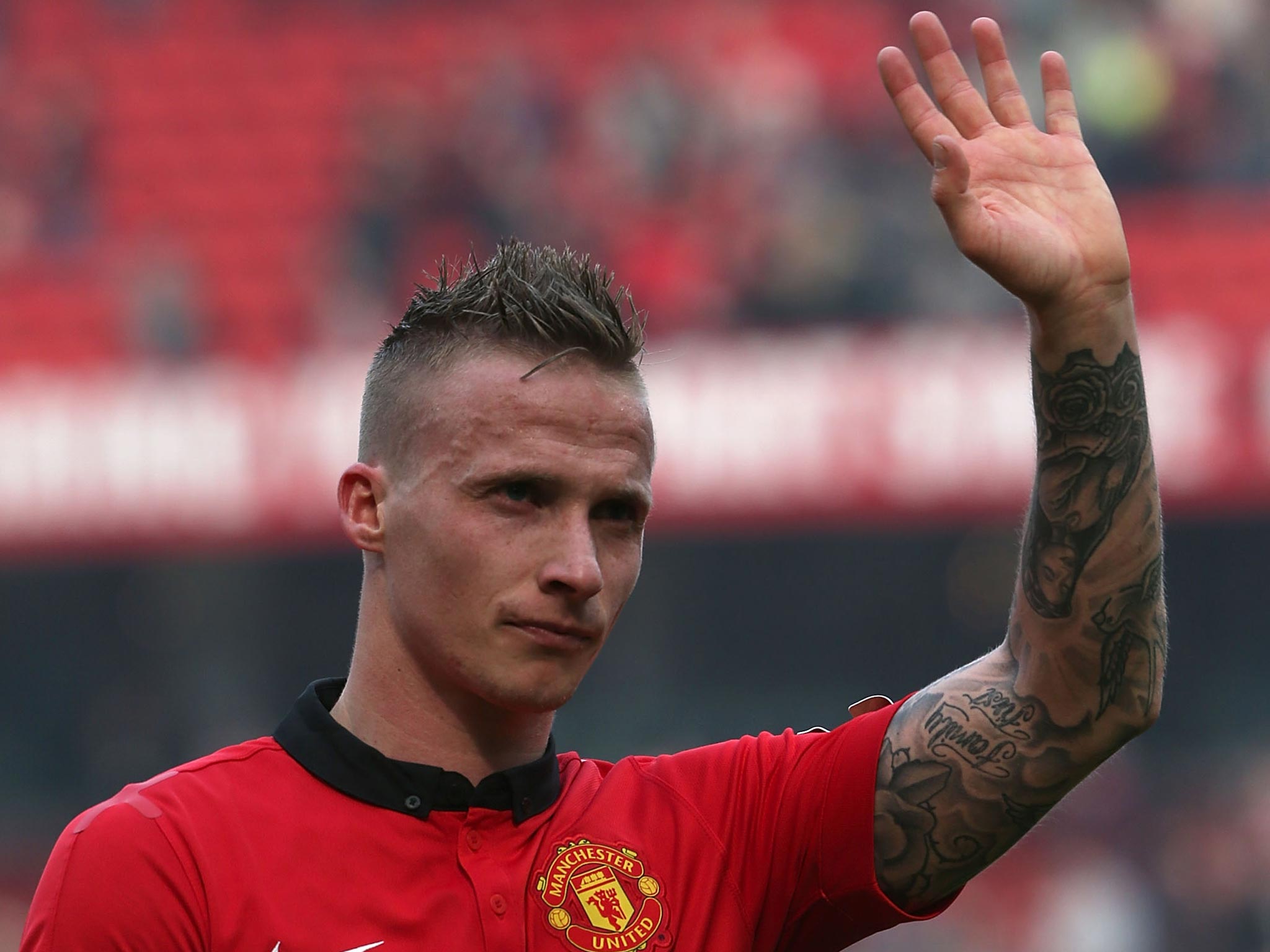
In this Old Trafford action shot, Büttner raises an arm and turns his forearm toward the camera. The ink runs from wrist to upper arm, with portrait-like faces, ornamental forms and dense shading between the elbow and shoulder. As the elbow bends, the separate pieces compress together, making the sleeve look different in motion.
The red Manchester United shirt makes the shading look heavier than it does against Vitesse’s yellow kit; lighting and camera distance also change how dark the work appears. In a Sportnieuws interview, Büttner recalled that his arms were empty when he first debuted for Vitesse and filled in over time. The wide match photo shows the coverage, while the close-up gives a clearer view of individual designs.
Religious imagery: the cross, Jesus, Mary and the angel
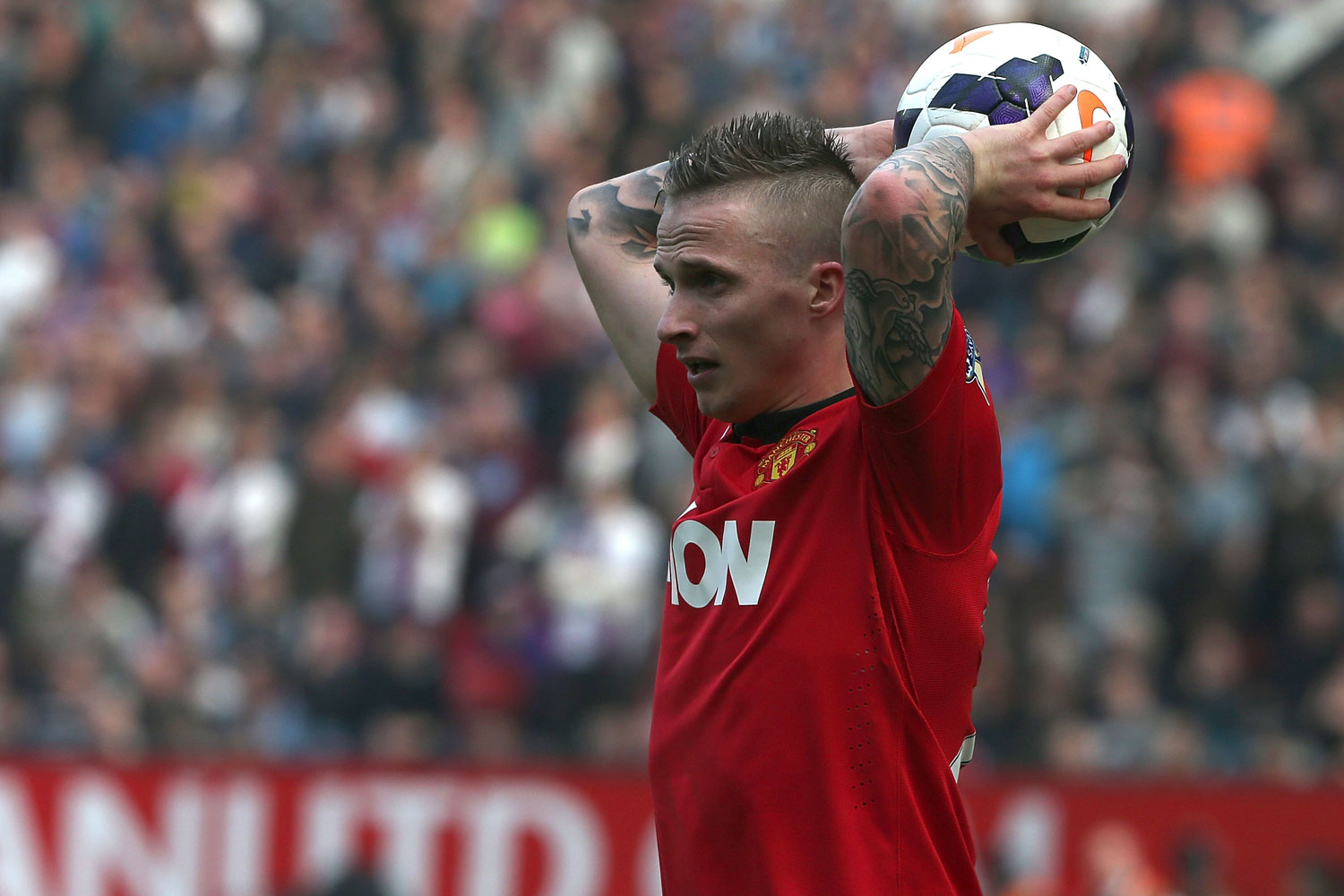
Büttner has described the cross he got with his brother as his first tattoo and connected it to their shared faith. Interviews also identify a large Jesus on his upper arm, an angel on his calf and an image of Mary on his arm. The sleeve photographs show these figures within a continuous field of black-and-grey portraits and shading.
The cross marks the start of the collection; the later figures take up more visible space. Where Büttner has explained a design’s meaning, his account provides the context. The photographs show the imagery, but don’t establish a separate story for every expression or detail.
Religious figures share space with family names, numbers and smaller symbols. The designs have built up over years, so the arm reads as one layered composition rather than a set of isolated pieces.
Vitesse return portrait: hand, neck and arm details
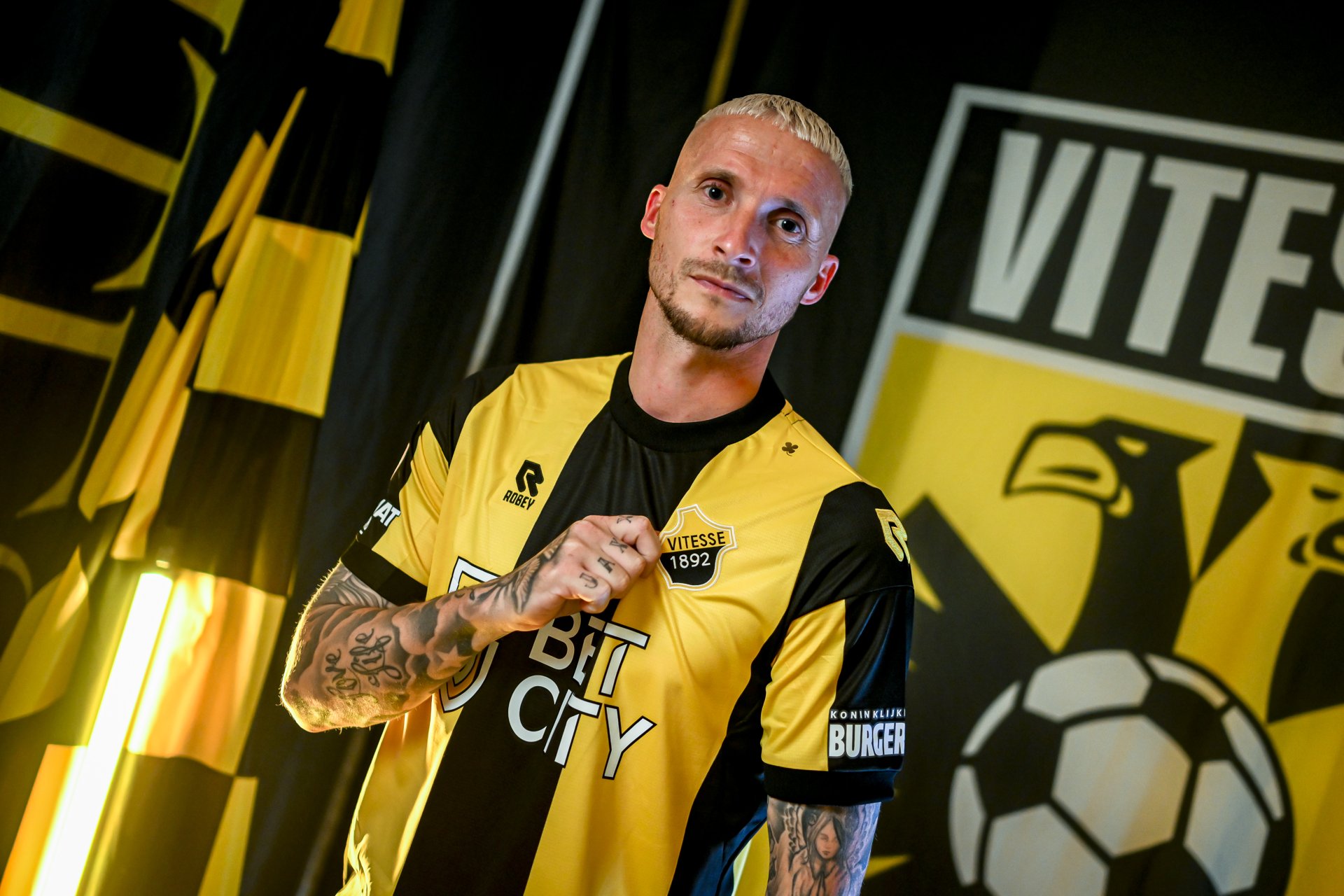
In the official Vitesse portrait, Büttner faces the camera in the club’s yellow-and-black shirt, one fist raised near his chest. Letters cross his fingers, and the lower arm shows portraits, words and compact symbols beneath the sleeve edge. The angle also makes the lettering on his neck easier to see.
The fist brings the hand closer to the camera, while the angled forearm reveals how the designs wrap from its inner side toward the wrist. It’s a calmer view than the action shots, though it still doesn’t show every mark. His hairstyle and club shirts changed over the years; the dove, names, crosses and shaded figures remained visible through those changes.
What the photographs reveal about the collection’s scale
The article’s five tattoo photographs show different parts of the collection: the forearm close-up isolates the 28 and dove, the Manchester United and Vitesse match shots show the sleeves, and the return portrait brings the hand and neck into view. A separate face portrait gives identity and facial context, but the tattoo images carry the detail. No single frame documents every mark.
Büttner has said he sometimes chose a design after looking through a tattoo-shop book and liking its appearance. That sits alongside pieces he connects to family or faith. A cropped arm can look like one dark block; a wider portrait separates the figures and lettering. Posture, light and clothing change the view, while the main subjects stay recognisable.
What Büttner has said about family and faith
Büttner says he hasn’t regretted any of his tattoos. He has described his longest sitting as about eight or nine hours, and named his son’s tattoo as a favourite because it marks the birth of his child. The cross with his brother, his mother’s kiss, his father’s fist bump and the word Family on his neck all carry personal associations he has shared publicly.
From a distance, the sleeves form a dense black-and-grey outline. Up close, the names, number and religious figures make it more specific. The photographs document the larger designs, while Büttner’s interviews explain why several of them matter to him.