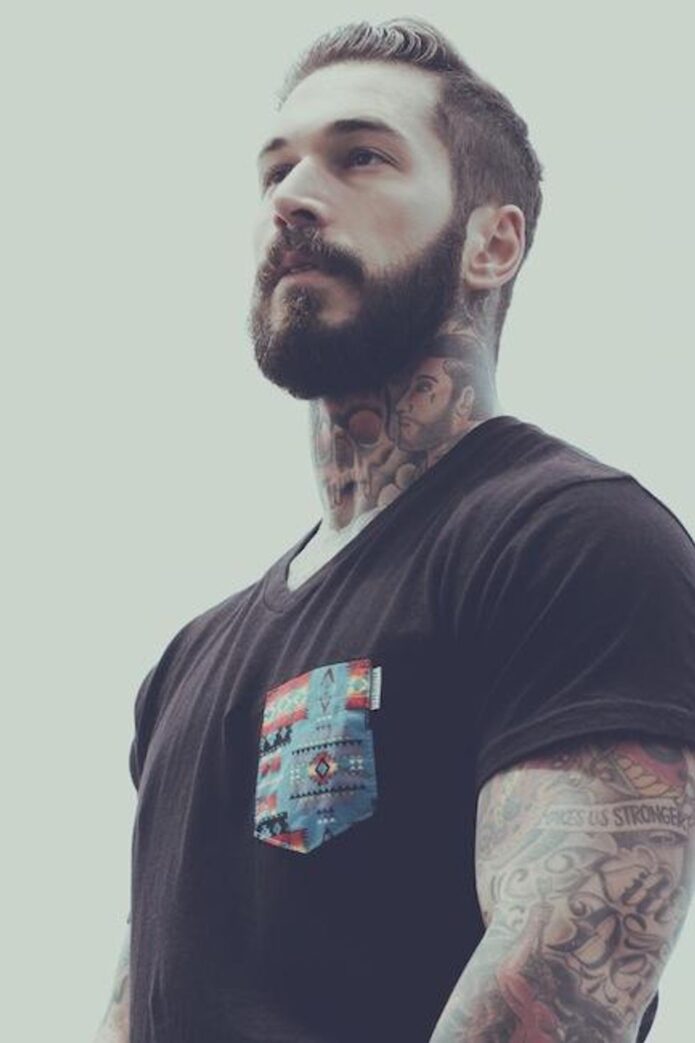
Alex Minsky’s tattoos cover his arms, shoulders, chest and neck, forming a large composition rather than a set of isolated marks. Editorial photographs show flowers, lettering, skulls and portrait-like figures. The chest banner reading “In Memory of Brother” is among the clearest details. Minsky hasn’t publicly explained every motif, so this guide sticks to what the pictures show and the parts of his story he has discussed.
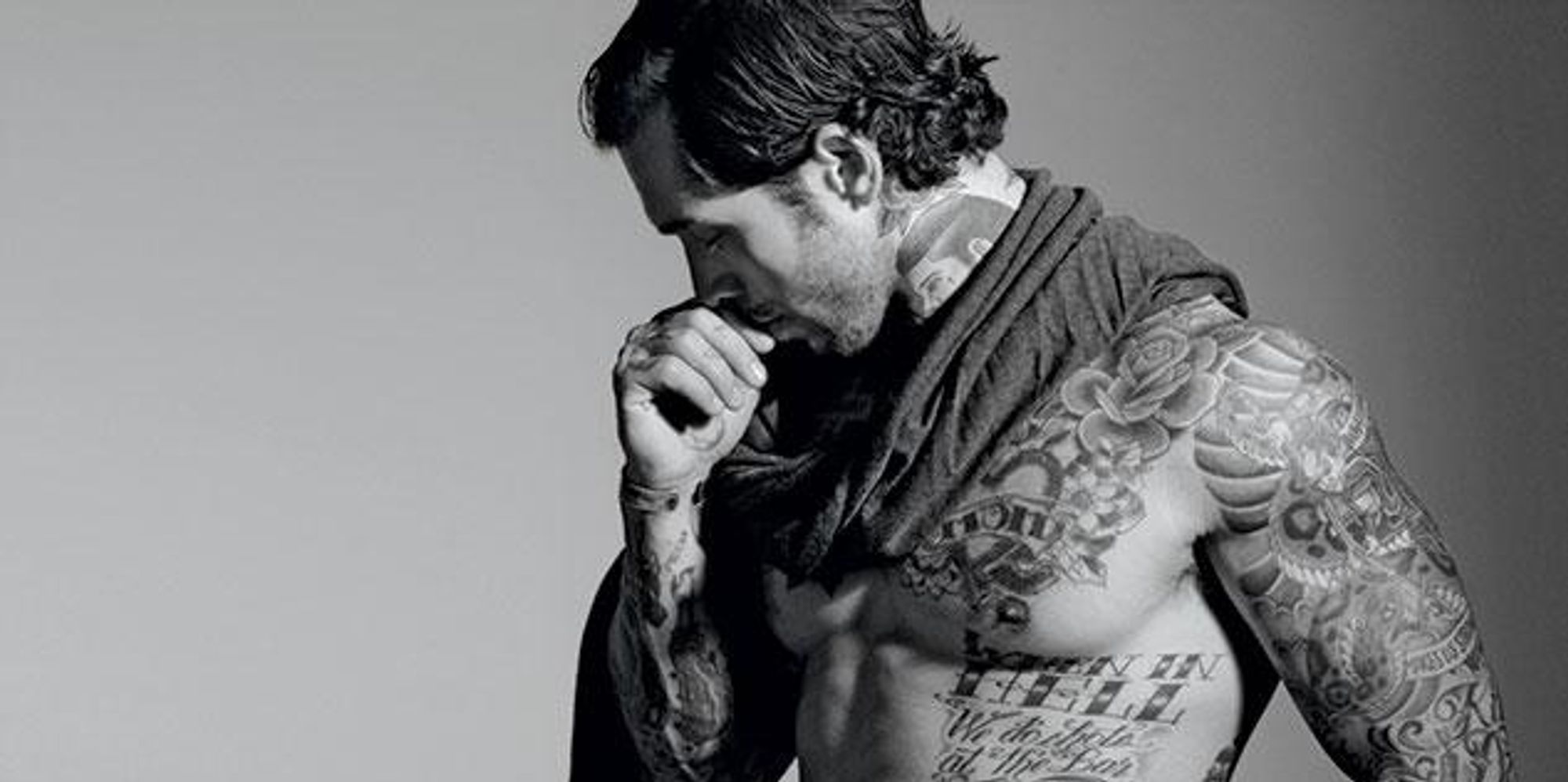
How the full tattoo composition comes together
Minsky’s ink spans broad connected areas. Flowers, shaded figures, lettering and darker shapes sit close together, so the tattoos read as a continuous illustrated surface. In a close crop, one detail may look like a separate piece; a wider view shows how the designs meet across the shoulder, chest and arm.
The color photographs help distinguish adjacent shapes, while black-and-white portraits bring out the outlines and shading. The work has an illustrative quality, with layered petals and portrait-like faces, but available reporting doesn’t reliably identify the artist or style behind every element. Those are visual observations, not attributions.
The chest memorial lettering
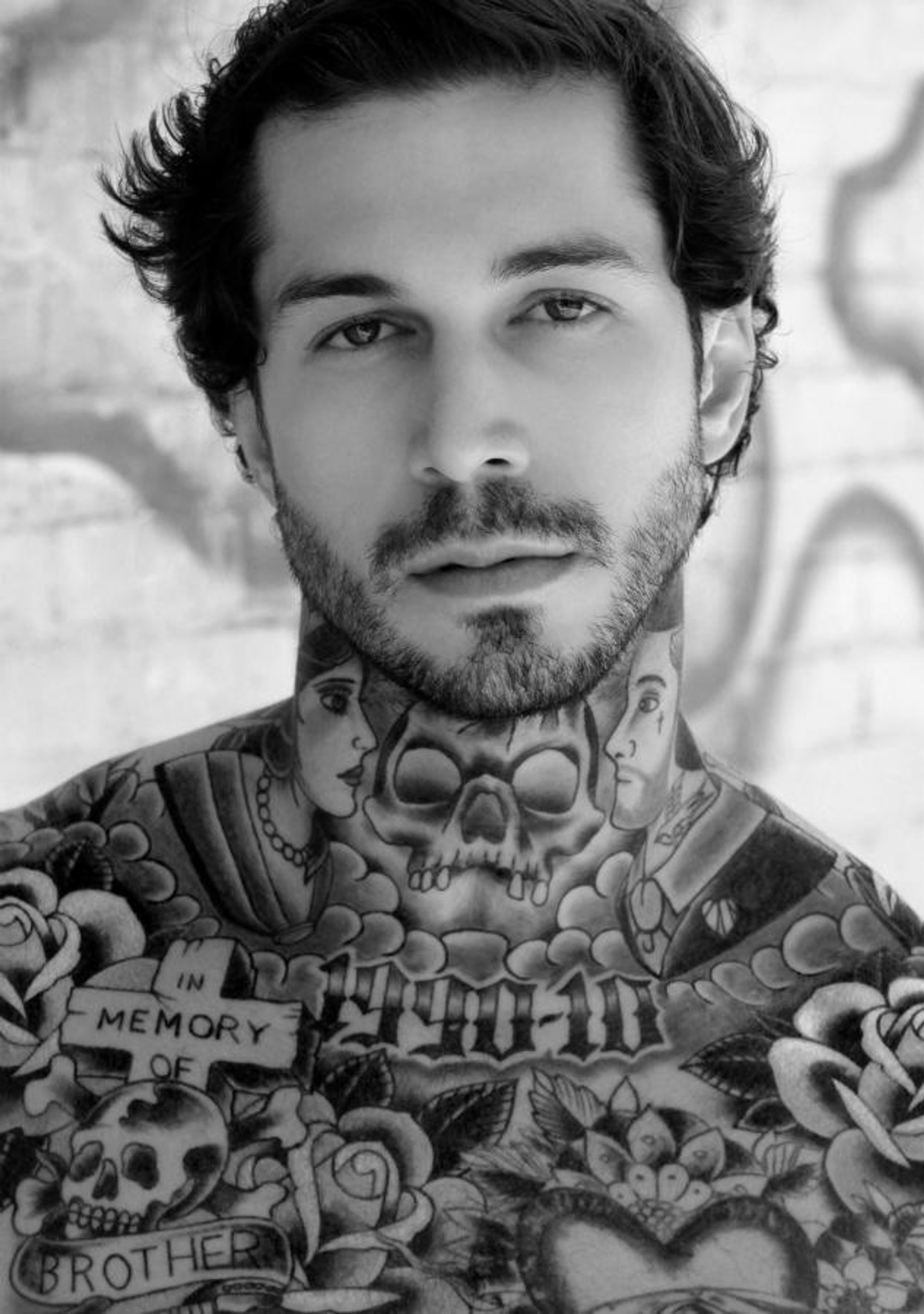
The banner reads “In Memory of Brother” and sits among skull and floral imagery. The photographs don’t identify the person or explain the circumstances behind the tribute. Without Minsky’s own account, the wording is as far as a reliable description can go.
The flowers soften the darker shapes around the banner, while the lettering gives the chest design an easy-to-read focal point. Its visibility changes with the pose: in a straight-on portrait the words are clear, but when he turns his shoulders the banner recedes and the adjoining pieces come forward. Light and camera angle also affect what a photograph reveals.
Portraits and lettering around the neck
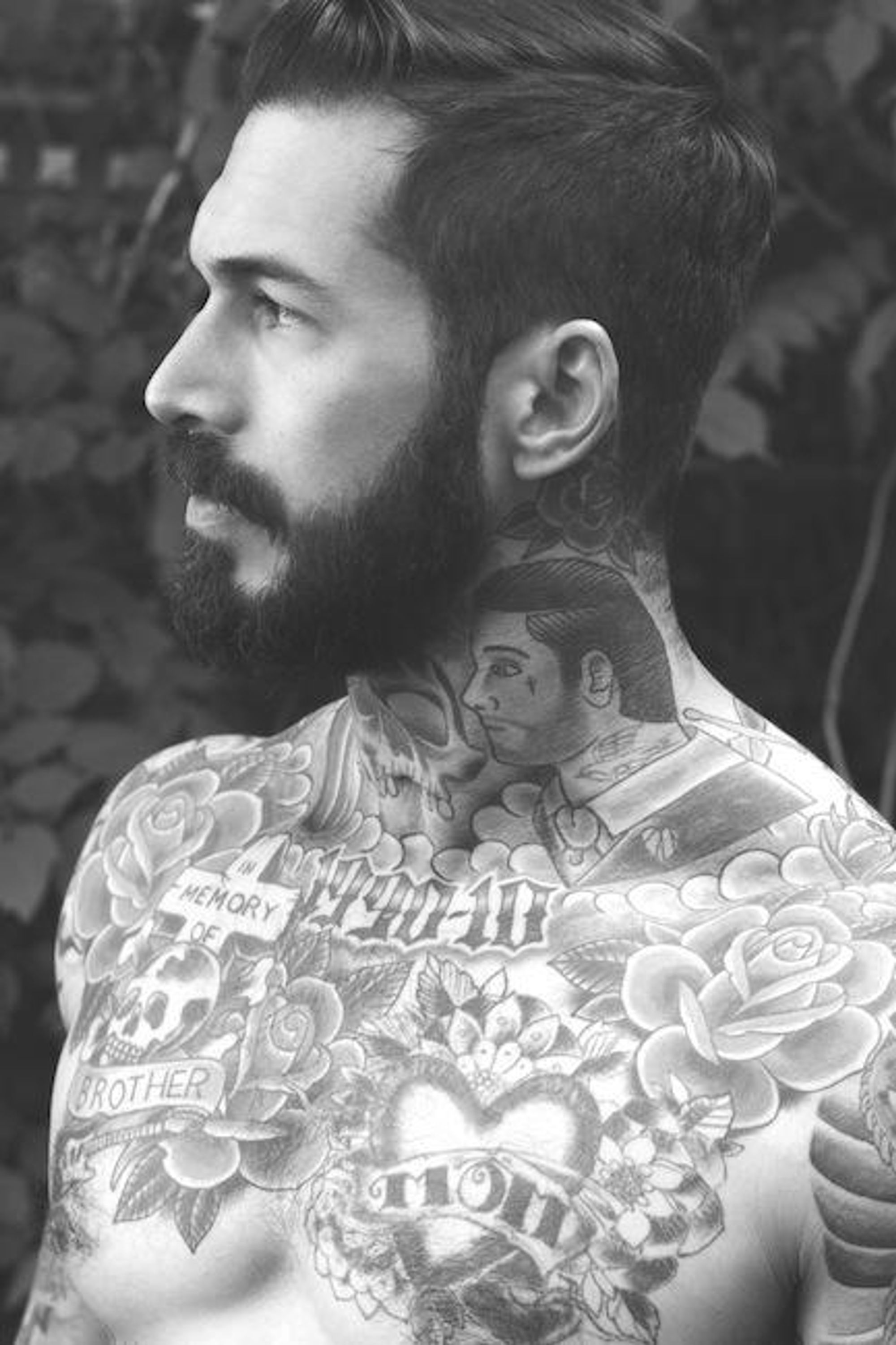
Portrait-like faces and shaded shapes run along the side of Minsky’s neck toward the shoulder. From the front, the ink frames his face; from the side, it links the head to the tattooed torso. The photographs show the placement, but don’t provide a reliable guide to the identities or meanings of the faces.
The side portrait keeps his face and the neck work in one frame. A cropped headshot could hide the ink, while a torso-only photograph would lose the connection between the neck, shoulder and chest.
Color, sleeves and the shoulder line
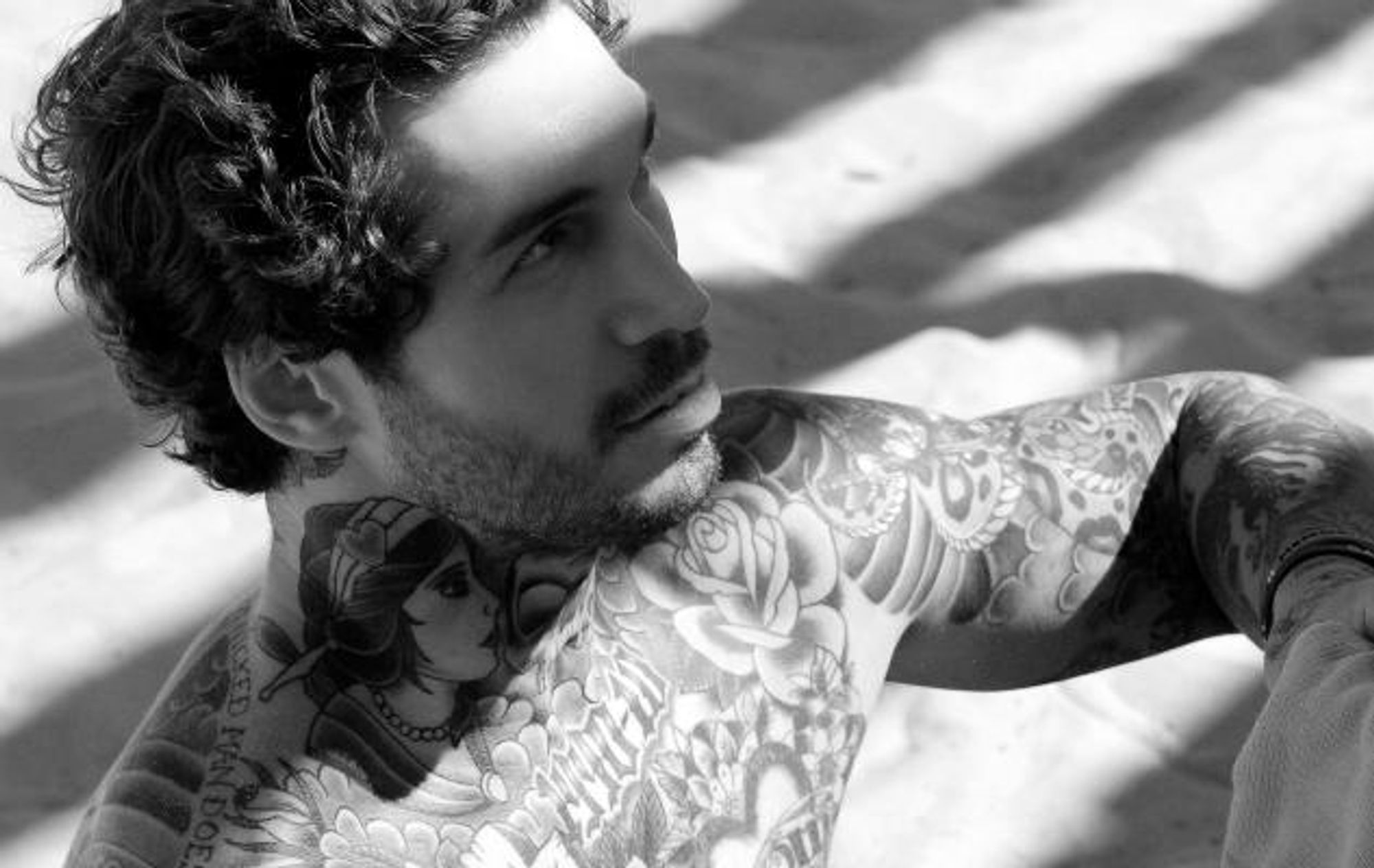
The sleeves wrap around the arms rather than sitting only on the front. Flowers, curved lines and darker blocks move toward the shoulder and meet the chest work. In a wide editorial image, color helps separate those shapes; in monochrome, the outlines, shading and contrast stand out instead. Neither treatment shows exactly how the ink looks in every setting.
A reclining pose turns the shoulder toward the camera and compresses the chest into a narrower plane. It makes the designs look connected, while also hiding some of the sleeve behind his body. Comparing this view with a standing portrait gives a fuller sense of how the tattoos wrap around him.
What the published record tells us about the photographs
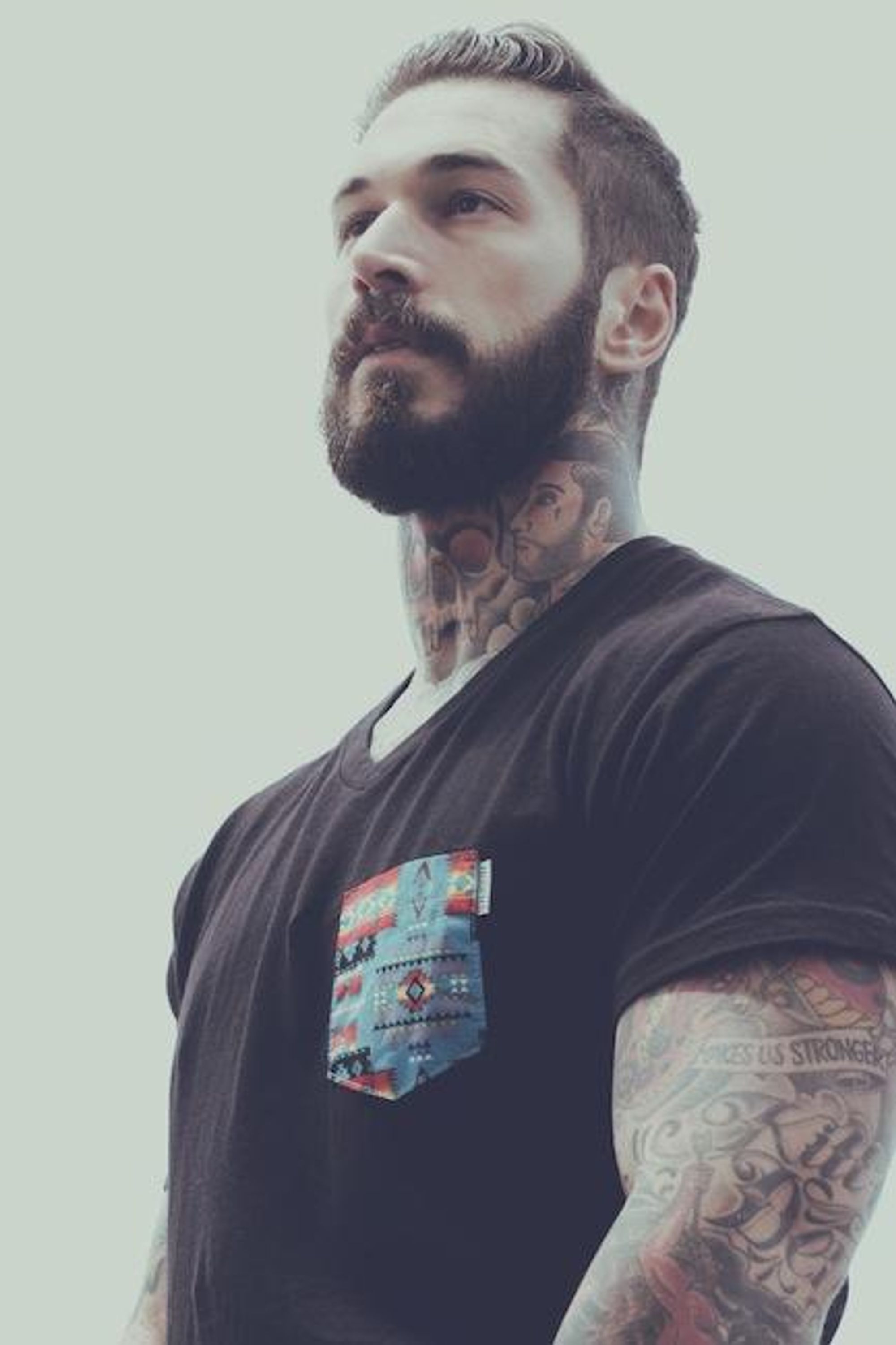
In a 2014 interview with Out, Minsky described a man approaching him at a gym and asking him to pose for photographs after he had decided to stop drinking. The magazine reported that, within months, underwear images of him were circulating online, showing his tattoos and prosthetic leg. A 2015 Out photo feature presented a portrait series by photographer Eric Pietrangolare as Minsky looked toward acting.
Those accounts explain why many of the clearest images are editorial portraits rather than casual snapshots. They document different presentations of the same collection, not a dated record of when each tattoo was done. Minsky has also said he named his prosthetic leg Clark. That detail belongs to the context of full-body portraits; it isn’t an explanation of the tattoos.
What can—and cannot—be said about the meanings
The photographs show chest lettering, skull imagery, flowers, portrait-like figures, neck work and sleeves that wrap around the arms. They don’t explain every rose, face, skull or line of script. Minsky’s published comments give context to his modelling photographs, but guessing at the meaning of each design would go beyond what he has shared.
The pictures are most useful when read as views of a three-dimensional composition: notice how the pieces meet and how posture, light and camera angle change what is visible. The memorial wording is clear; the private story behind it remains his to tell.