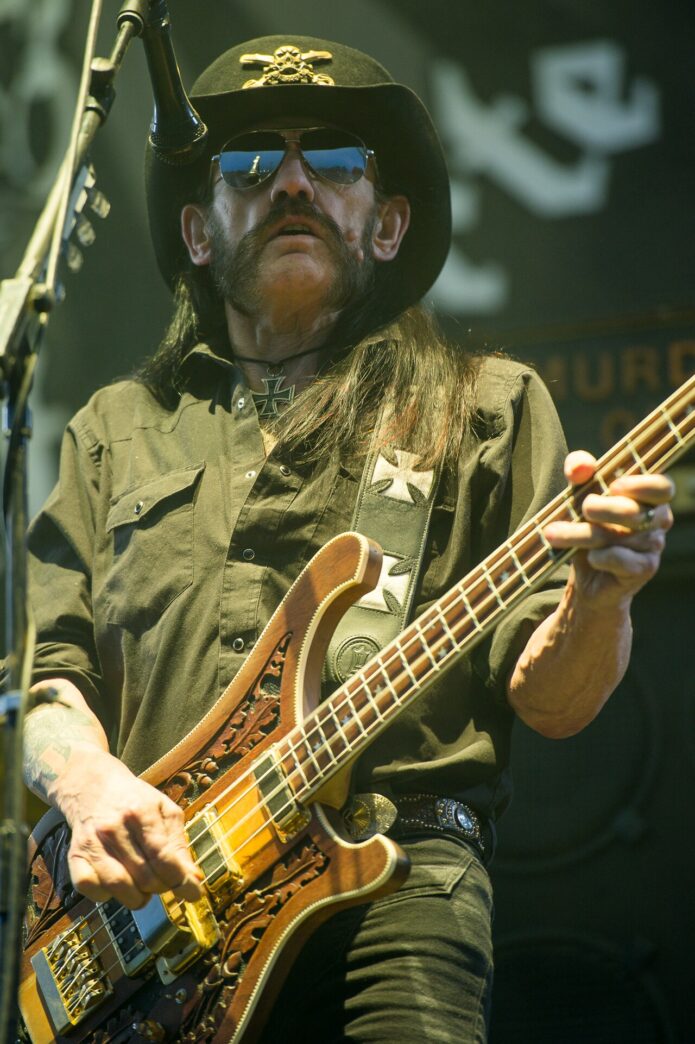
Lemmy Kilmister’s tattoos were never about looking polished. They fit the rest of him: the huge hat, the mutton chops, the black clothes and the very loud Motörhead attitude. Most people remember the Ace of Spades on his arm first, but the writing around it and the other pieces on his forearm matter just as much.
The hard part with Lemmy tattoo photos is that he spent most of his career in a shirt, vest or jacket. A lot of the time, only his lower arm is visible. That means the same few tattoos show up again and again, but from different angles and under very different lights. This guide sticks to the ink that can actually be seen clearly, rather than turning every dark patch in a concert photo into a mystery design.
The Ace of Spades tattoo is the one everyone remembers
The best-known piece in Lemmy’s collection is the Ace of Spades on his forearm. It’s a natural choice for the man who fronted Motörhead through the song that became the band’s calling card. The card and spade shape are easy to pick out in close photos, even when the rest of the arm is partly hidden by a microphone, bass or jacket sleeve.
It isn’t a tiny symbol tucked away near the wrist. The design has enough size and weight to hold its own when Lemmy is standing on a stage. In some shots it sits in a darker patch of surrounding ink. In others, the skin around it is lighter and the outline looks sharper. Either way, the ace is the bit most fans recognise straight away.

This close stage photo gives the tattoo some context. Lemmy’s arm is not being shown for a planned tattoo portrait. He’s playing bass, wearing his usual clothes and moving around under bright lights. The Ace of Spades is still clear enough to see, which says a lot about how bold the tattoo is.
“Born to Lose, Live to Win” is tied to the same rock-and-roll story
Photos and tattoo write-ups commonly point to the words Born to Lose, Live to Win as part of Lemmy’s arm ink. The line feels made for him. It has the same rough, no-excuses mood as the songs and interviews that made him such a memorable figure in heavy rock.
The lettering is much easier to read in a close-up than in a wide concert shot. From the crowd, it can blend into the shadows on his forearm. In a tighter photo, the old-school shapes and spacing stand out more. It also shows why it’s better to describe the visible lettering than to guess at every small mark around it.
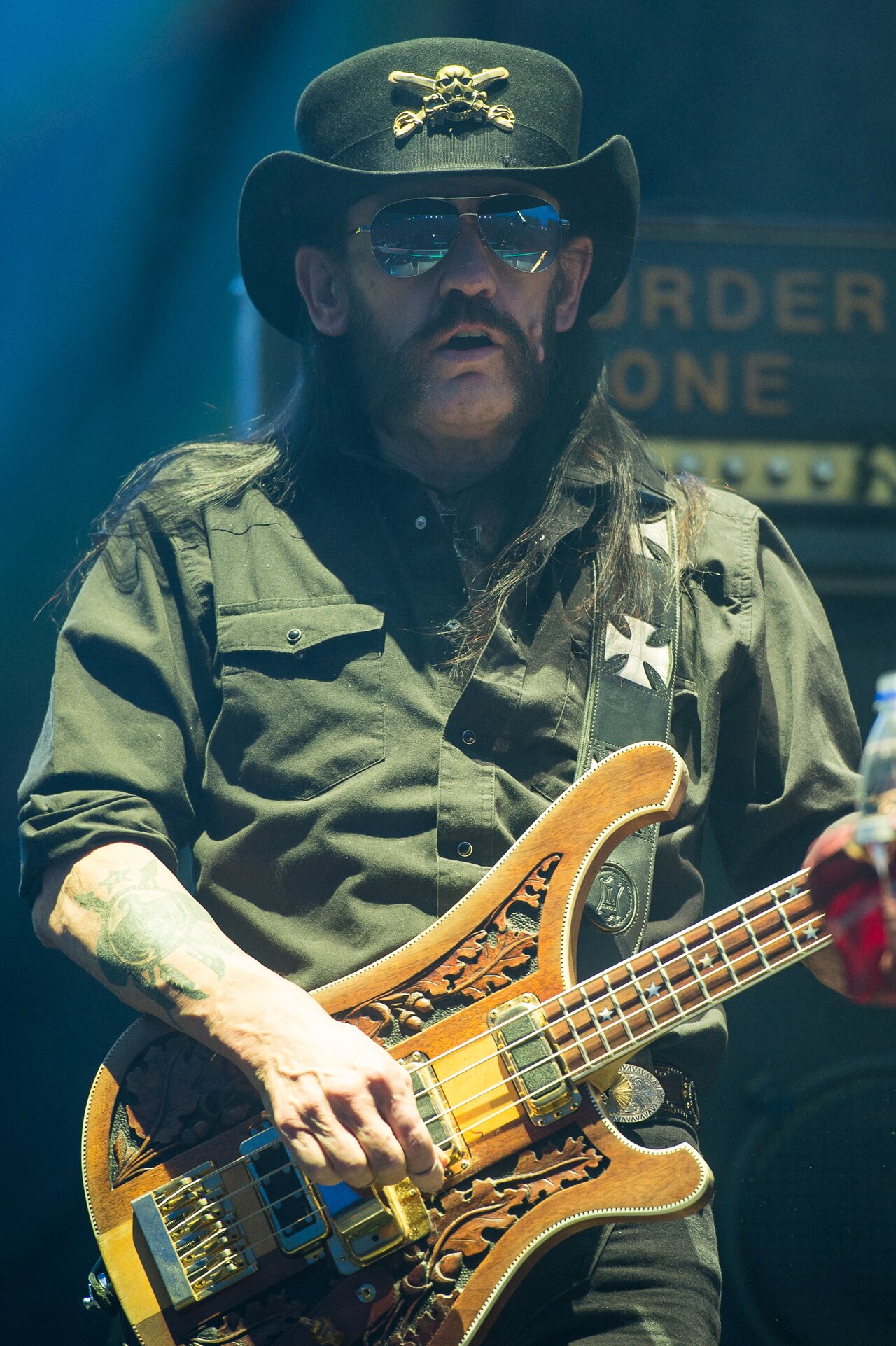
The close view above is one of the most useful ways to look at the writing. The arm is lit from the front, the tattoo isn’t covered by a guitar and the lines are sharp enough to follow. Lemmy’s ink doesn’t look like a clean, modern fine-line design. It has the heavier feel of classic biker and rock tattoos, which suits him much better.
His forearm tattoos were made to show up onstage
Lemmy’s tattoos work well in performance photos because they sit on the parts of his body that stayed visible. Even when he wore a black shirt, his forearms could still be seen around the instrument. That small strip of skin became one of the easiest ways to spot his ink during a Motörhead set.
There’s a practical side to that visibility too. A tattoo on the forearm will catch the light when a musician reaches for the strings or lifts a hand. Lemmy’s arm ink can look pale and greenish in one picture, then much darker in another. The tattoo hasn’t necessarily changed. The stage bulbs, camera flash and ageing photo all change how it reads.

This live shot shows the tattooed arm while Lemmy is working. It’s not a perfect close-up, but the forearm is still sharp enough to make out the dark work. The picture also captures the way his tattoos sat alongside the rest of his look. Nothing about the ink feels separate from the hat, the bass or the stage setup.
The same ink can look much darker under concert lights
Old concert photography is a little misleading when you’re trying to work out tattoo details. Red and yellow lights can turn skin orange, while deep shadows swallow the lighter parts of a design. A flash photo can do the opposite and make every line look harsh. That’s why a single image isn’t always enough to judge what is actually on Lemmy’s arm.
In the clearer pictures, you can see the difference between the main lettering and the smaller background work. The Ace of Spades has a strong shape that survives bad lighting. Tiny marks around it are less reliable. They may be real tattoo lines, but they can also disappear into a sleeve cuff or merge with the grain of an old photograph.

This longer stage frame is useful because it shows how small the tattoo can look when the whole performance is in view. The arm is still the place to look, but the design is no longer filling the screen. It’s a good reminder that a tattoo can be very clear in person and still become hard to read in a wide shot.
There was more arm ink than just the famous ace
The Ace of Spades gets all the attention, but it wasn’t the only mark on Lemmy’s arms. Different photos show extra shapes and lettering around the main design. Some are clearer than others, and the exact edges can be hard to separate when the arm is bent or partly covered.
What is safe to say is that the collection had a lived-in look. It wasn’t one fresh sleeve designed in a single sitting. The tattoos look like they were added over time, with space, shading and older lines sitting next to newer-looking marks. That makes the arm feel more personal than a perfectly matched flash sheet.
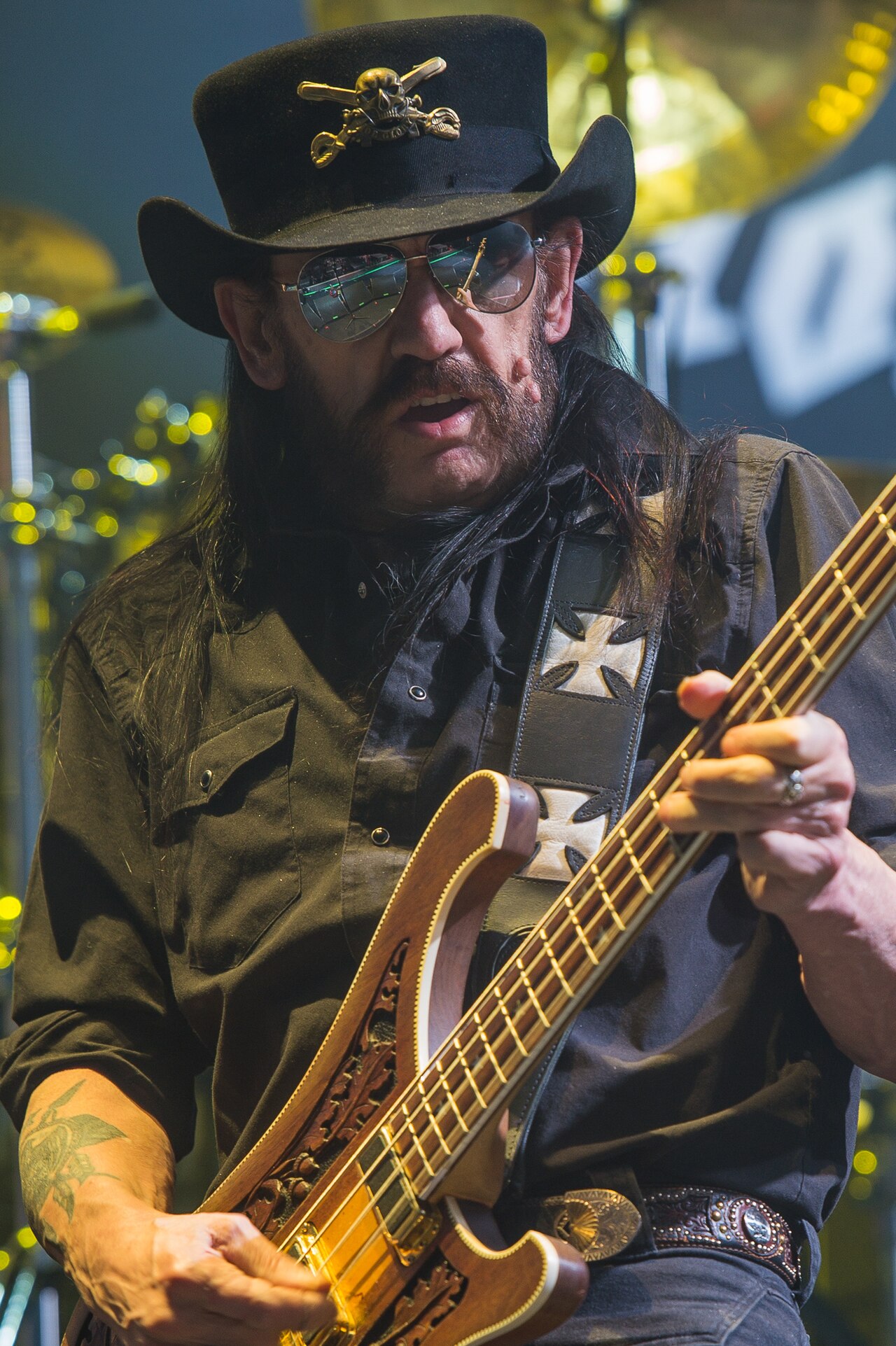
The arm close-up above shows that layered look. It also shows how easy it is to overstate what’s there. The large pieces are readable, but not every small mark has a confirmed meaning. A tattoo gallery should help people see the ink, not invent a story for every line.
What is actually confirmed about Lemmy’s tattoos?
The safest facts are the visible ones. Lemmy had the Ace of Spades on his arm, the “Born to Lose, Live to Win” wording is widely reported, and his forearm tattoos show up in years of concert and backstage photos. His collection is closely tied to Motörhead’s image, but that doesn’t mean every symbol has a public explanation.
There are also plenty of pictures where a cross necklace, guitar strap or shirt fold sits over his chest. Those things are not tattoos, and it’s easy to mistake them for ink when a photo is dark. The same goes for shadows around his beard and sleeves. The clearest arm photos are the best evidence.
If you’re comparing Lemmy’s old-school arm work with a newer musician’s much heavier face coverage, the Ghostemane tattoo gallery gives you a very different look. Lemmy’s ink is more about one famous symbol and the attitude around it. Ghostemane’s tattoos take over the whole face and neck.
A quick video look at Lemmy and Kat Von D
Lemmy also appeared in a short clip from L.A. Ink while Kat Von D worked on him. It’s a quick watch, but it helps show the difference between seeing a tattoo in a still concert photo and seeing the skin, tools and work up close.