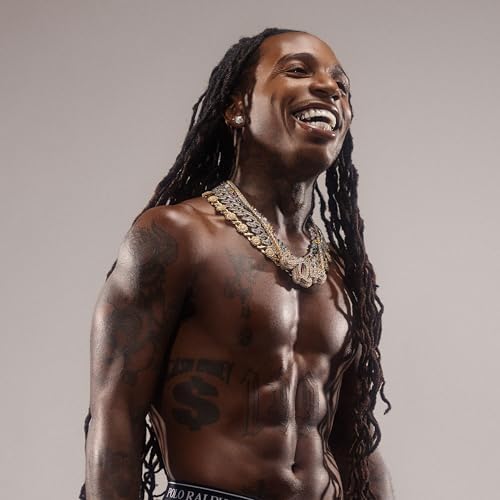
Jacquees does not describe his tattoos as one perfectly planned sleeve. In GQ’s Tattoo Tour, he moves from ink he chose as a teenager to family names, symbols and small jokes that came later. Together, they mark different ages, loyalties and turning points.
Some designs are clear in photographs, while others make most sense through Jacquees’s own account. The guide keeps those kinds of evidence apart so a visible symbol does not get a made-up meaning just because it looks dramatic.
Fear God was the hand tattoo he got at 15
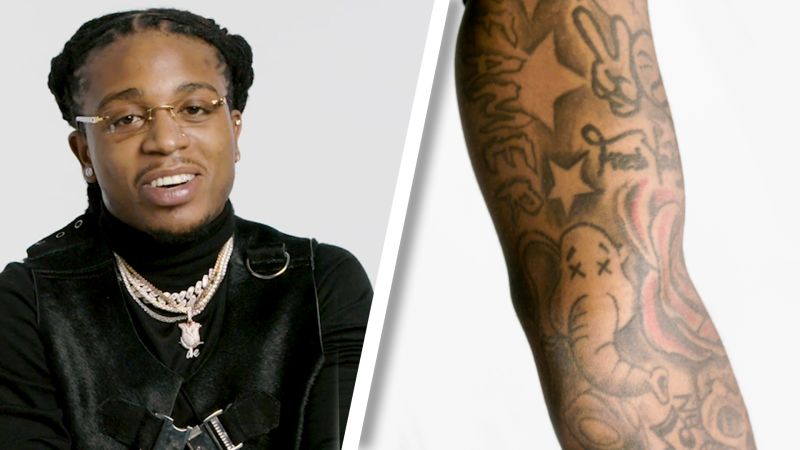
The hand lettering is the most recognisable tattoo in Jacquees’s public record. He says he got “Fear God” at about 15, after being influenced by Lil Wayne’s visible tattoos. The words sit across his hand where they can be read from a distance, but they are one part of a much larger collection.
Jacquees’s explanation is direct. He does not present the phrase as a code or a complicated private philosophy; it is a visible statement he chose young and kept. That timing puts it before the later family portraits, body symbols and career references. It is also one of the tattoos that shows how quickly he moved from experimenting with ink to making it part of his look.
The first neck tattoo was Que with notes and stars
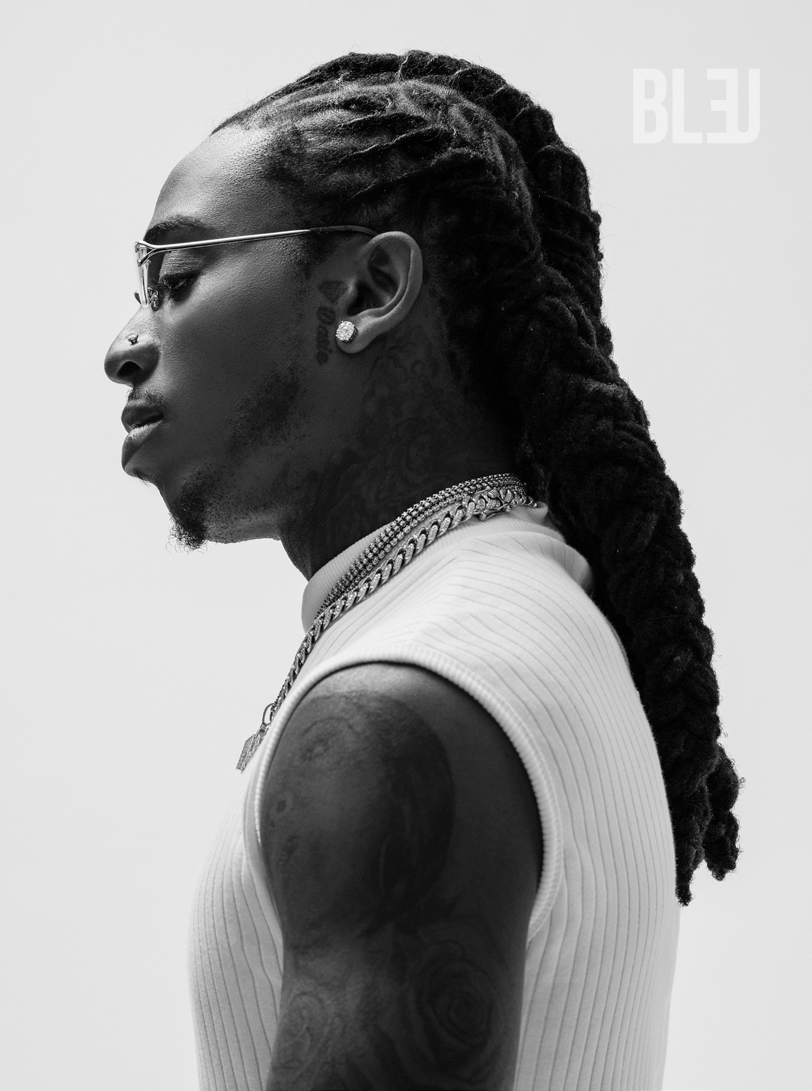
Jacquees says he got his first neck tattoo at 13 because he did not want to be the only kid at school without one. The original design was his nickname, “Que,” with music notes and stars around it. It connected his name with music, though the tattoo was later covered.
The cover-up belongs in the story, not just in a footnote. A tattoo chosen at 13 can feel like a permanent decision, but changing it later shows how his taste and public image developed. The neck is hard to hide, so putting his nickname there made an early experiment unusually visible. Photos show the location and later layers; Jacquees’s account explains why he got it.
Confidence, Jesus, the rose and doves built the neck sequence
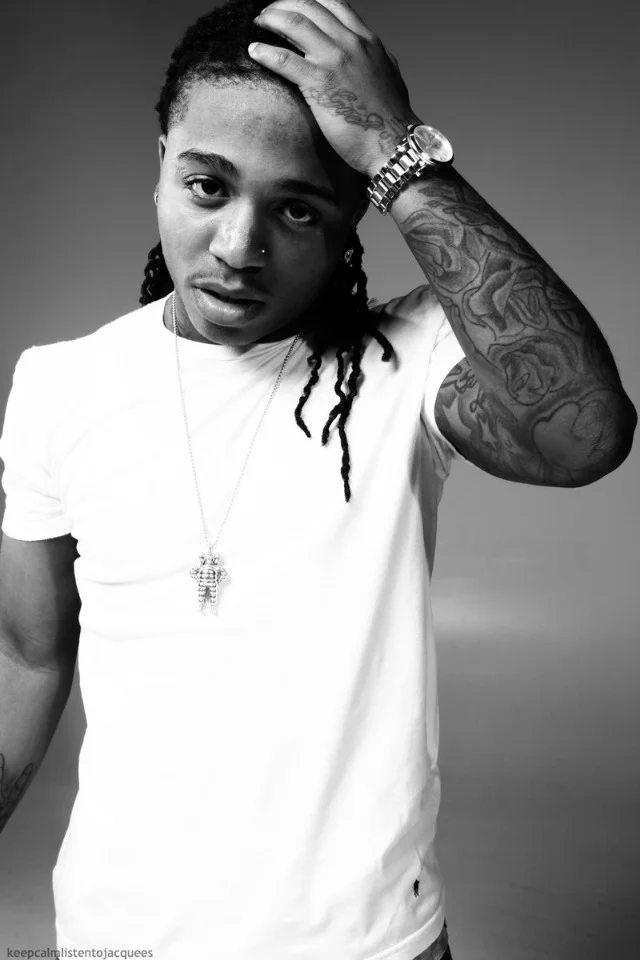
At 17, Jacquees added “Confidence is a stain they can’t wipe off” to his neck. He says the line stayed with him, and its length gives the area a different look from the compact nickname it replaced. The quote is worth keeping intact because it explains the tattoo; it explains the tattoo more clearly than a general claim about confidence would.
The neck later became home to several different ideas. Jacquees names a Jesus tattoo, a rose, the original Atlanta Braves sign, a heart at the back of his neck and doves associated with peace and love. They do not need to fit a single invented theme: the religious image, sports reference, flower and birds can simply sit alongside one another.
The way the neck looks changes across photographs. Hair, camera angle and lighting can hide part of a design or make lettering look heavier. The images establish placement and scale; Jacquees’s interview is what confirms which tattoos he identifies.
FYB, roses, the spaceship and the three wise monkeys fill out the arms
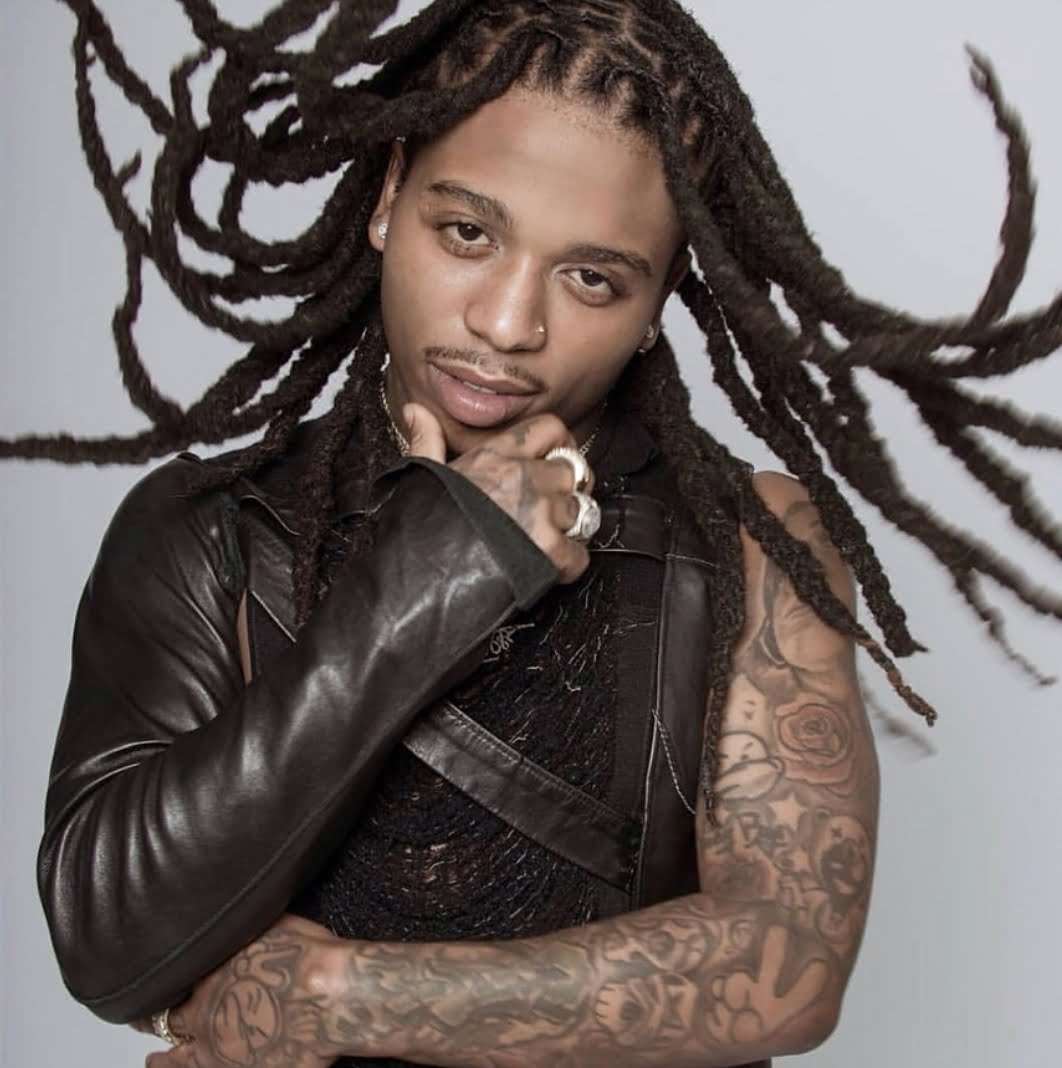
The arms carry more of the collection’s group identity. Jacquees says FYB, short for Fresh Young Boyz, appears more than once, including near his elbow. He also points to three roses on the East side, a spaceship that fits the phrase “I’m outta here,” and the see-no-evil, hear-no-evil and speak-no-evil monkeys.
Those designs do not all carry the same kind of meaning. FYB connects to the people around him, and the roses have a location reference. The spaceship turns a playful phrase into an image. Jacquees says he got the three monkeys around 18, but there is no need to assign a separate private confession to each one.
He also talks about the idea that no one sin is greater than another. That wording belongs with the design he describes; it does not mean every nearby religious or darker image represents the same idea. Keeping the statement tied to its source makes the tattoo record clearer.
Family names, portraits and the symbols on his face
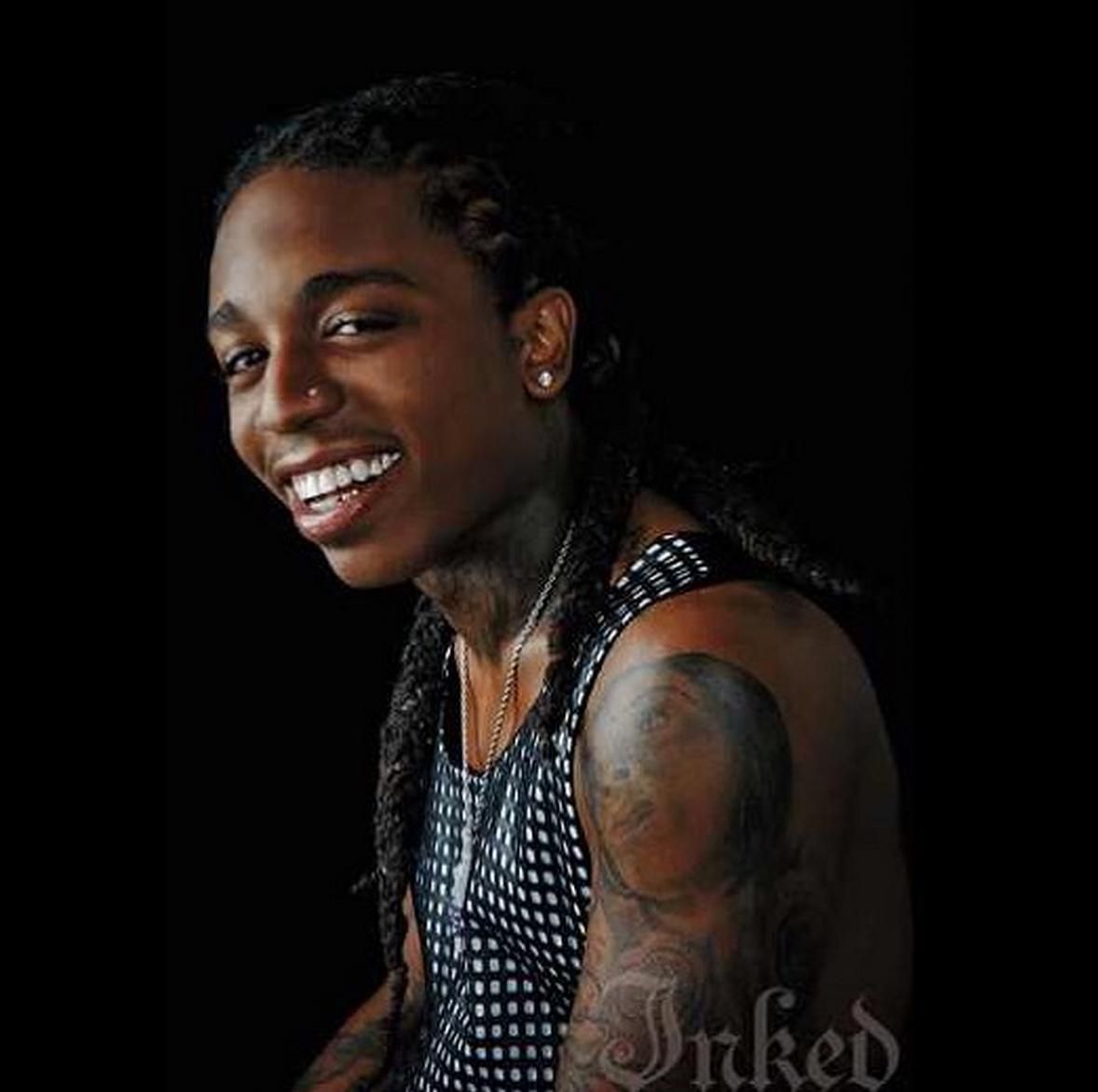
The family tattoos are among the most personal pieces. Jacquees names his grandmother Daisy, his mother Rosy, his sisters and his nephew Little Ray. He also mentions a cartoon version of himself on the back of his arm, a guardian angel and two angels with wings. Together they make the collection feel like a way of keeping people close, not simply a catalogue of fashionable designs.
When asked which tattoos matter most, Jacquees returns to the ones for his grandmother and mother, as well as FYB, long life and family names. That does not mean the mean the other tattoos are unimportant; it tells us which ones he chose to name as favourites. An inventory can identify a portrait or lettering, but the preference comes from his own answer.
Smaller details on his face and ears belong in the record too. Jacquees mentions a star on his ear from ninth grade, a diamond, a cheek tattoo linked to strength and courage, and other small marks. Small facial tattoos can be hard to read in a soft photograph, so it is safest to stick with designs he names instead of guessing at every line near his eye or cheek.
The collection also reaches his legs and torso. Jacquees identifies a king symbol on his leg, which he got at 18, along with CM for Cash Money and Rodriguez, his first name. He describes a triquetra as representing three things that cannot be untied, a design shared with his sisters.
Those pieces add another layer: the king is a statement about self-image, the Cash Money initials connect to his music world, and Rodriguez is direct family identity. The triquetra is the clearest example of a tattoo with a specific reported meaning: he says it stands for the bond between his siblings.
Jacquees says he wants room to grow and does not want to cover his body in ink. That helps explain why the collection can hold many separate designs without turning into one solid field of tattoos. The open skin is part of the look, leaving space for each piece to remain readable and for a future memory to be added.
What the tattoo tour confirms
The tattoo tour follows several stages of Jacquees’s life: a nickname at 13, a hand phrase at 15, a confidence quote at 17, then family names, music references and symbols added as his career developed. The strongest descriptions pair a close photograph with the explanation he gives himself.
His collection is best read as a changing record. Some tattoos remain clearly visible, some have been covered, and some meanings belong to the people who were there when the ink was chosen. That balance keeps the guide specific without filling in stories the photographs and interview do not tell.
One thought on “Jacquees’s tattoos, from Fear God to the family pieces”