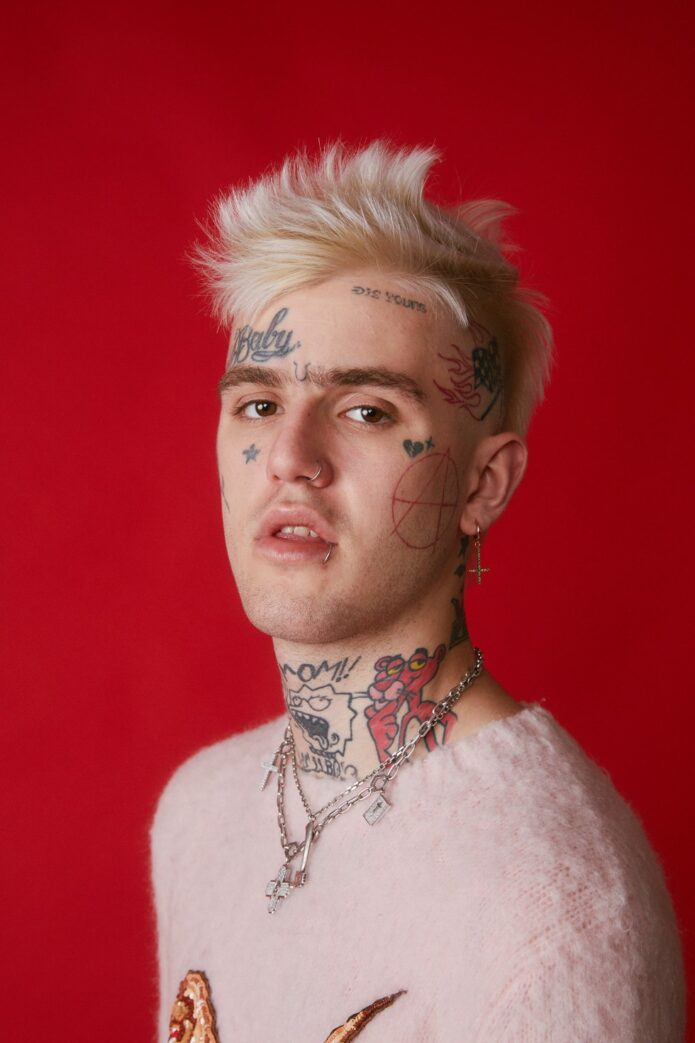
Lil Peep’s tattoos were not a finished branding exercise. He talked about getting some designs spontaneously, waking up with others and using face ink to make his appearance feel like his own. In the GQ Tattoo Tour filmed in 2017, he named family tattoos, spooky images, music references, a broken heart, a horseshoe and the word “crybaby.” He also explained why some of the smallest pieces mattered to him.
The surviving footage is the strongest guide because Peep identifies the designs himself. Photographs can show placement and style, but they cannot always explain whether a symbol was a joke, a personal reminder or simply something he wanted that day. The sections below keep those categories separate.
“Get cake, die young” and the Halloween details made the face a record
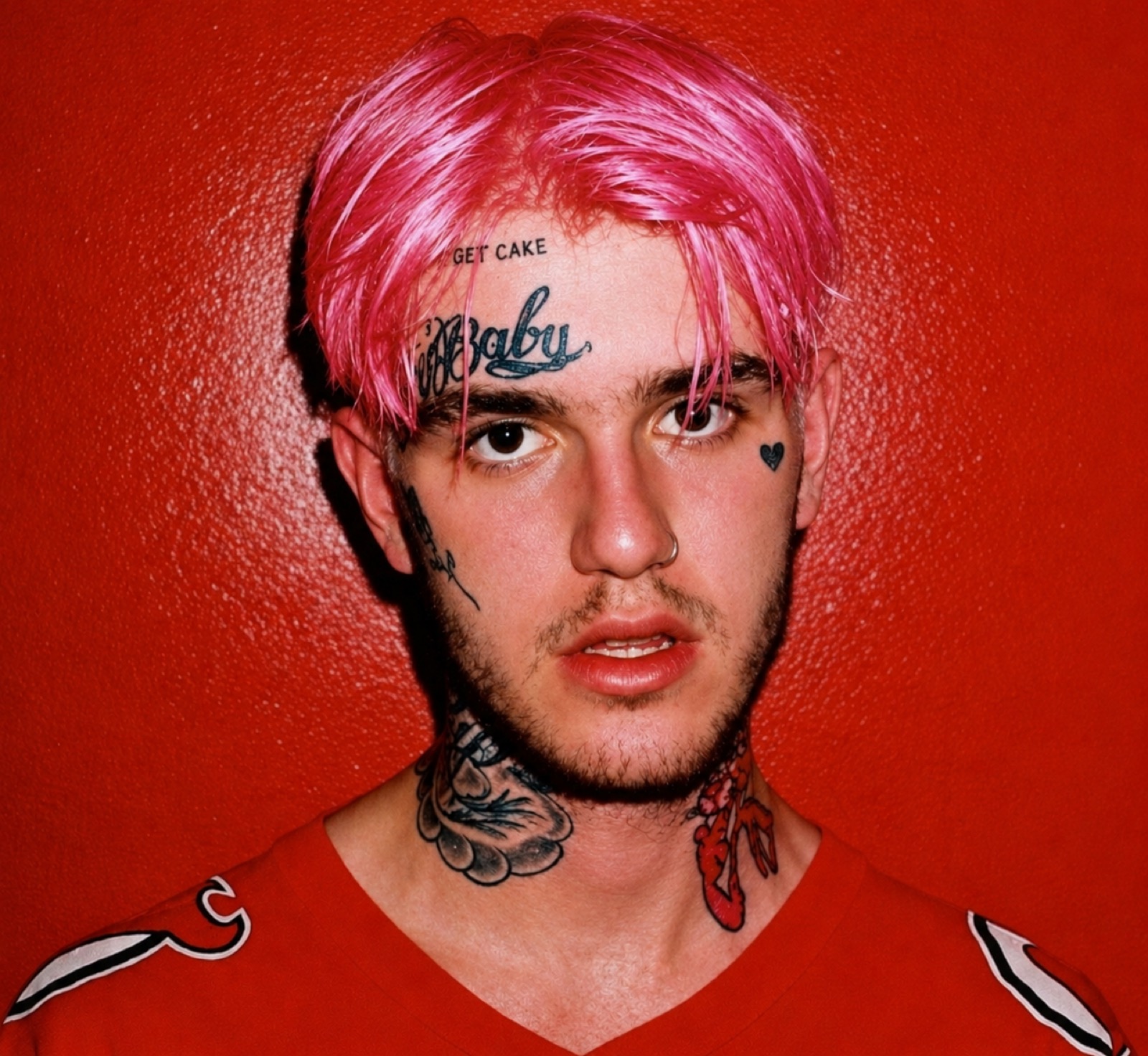
Peep begins by talking about the face tattoos he sometimes woke up with no memory of getting. One reads “get cake, die young.” He says he had been heavily intoxicated, woke up with the words already on his face and simply accepted that they were there. The story is intentionally absurd, but it also explains why the collection developed in such an unplanned way.
He identifies “11 1” as a reference to his birth around Halloween night, November 1. Around that idea are bats and a pumpkin, which fit the spooky visual language he says he enjoyed. He also points out a centipede, explaining that centipedes seemed to find and bother him so often that he decided to put one on his body. The reason is personal but not sentimental; the design turns an irritation into an image.
These details are important because they show how Peep built a visual world from small, recognisable objects. The bats and pumpkin support the Halloween association, while the centipede has its own explanation. They should not be collapsed into one vague “dark” tattoo category.
Family names, Lisa, Meep and Hellboy sit beside the early work
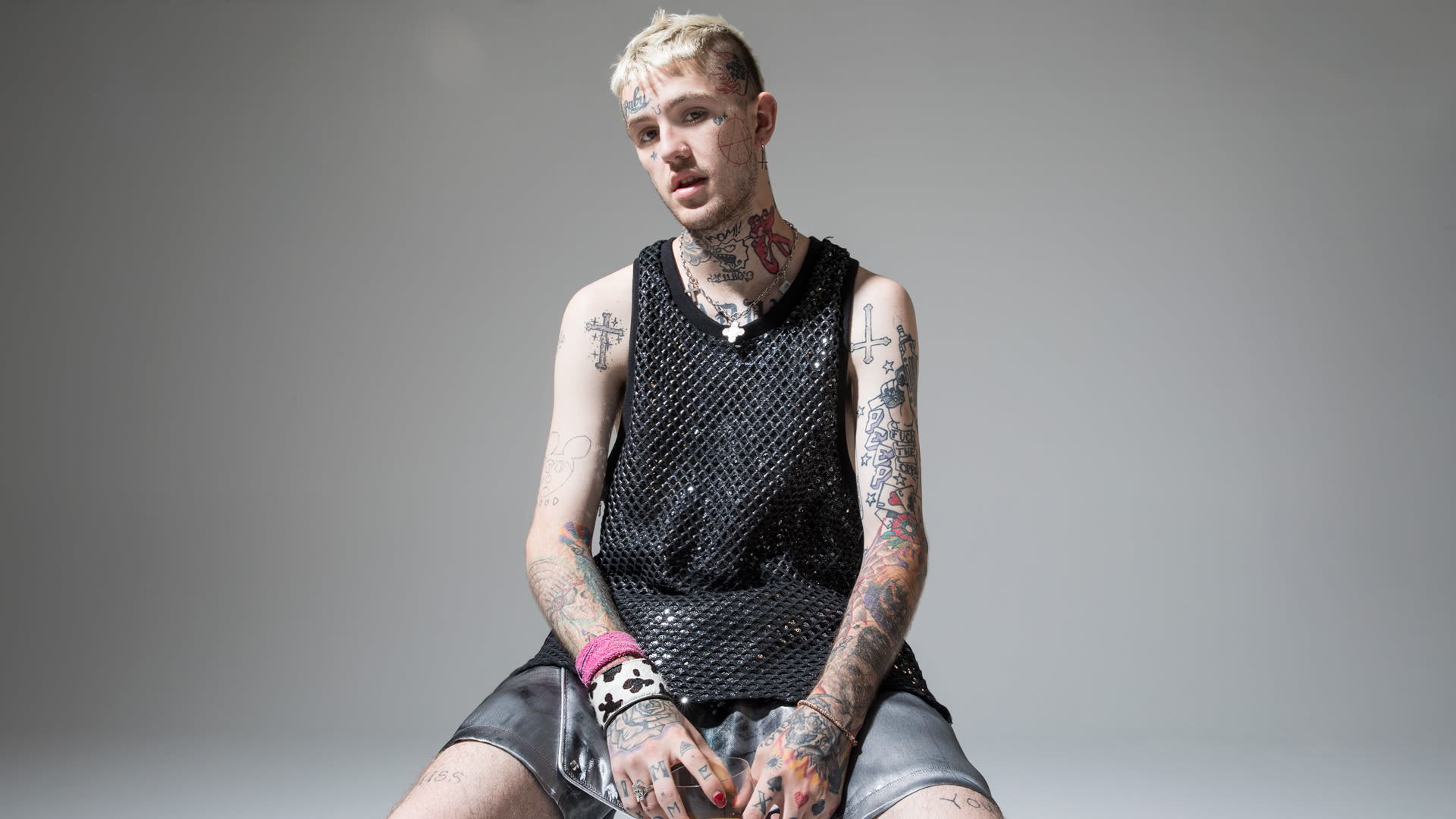
Peep says the first tattoo he got was a large piece connected to his mother’s birthday and initials. He was 14 and wanted a design that would not make her angry about his first tattoo. He also mentions having his grandfather, his mother and a friend tattooed on him, adding that his definition of family was wider than a standard family tree.
Another design shows his relationship with his mother in a deliberately direct way: Lisa shouting “Mom”. Peep explains that when life was going wrong or he was overwhelmed, he called his mother on the phone and stressed her out. The tattoo is therefore a visual joke about a real family dynamic, not just a name or portrait.
On his leg, Peep has a tattoo of Meep, a doll he bought with his former girlfriend. He calls the doll his son and says that was why he wanted the character on his body. The piece is playful, but it still belongs in the family section because the meaning comes from the relationship he describes.
Under that area, he points out “Hellboy,” the name of his first mixtape that attracted wider attention. He also says he loved the Hellboy comics and the character. The lettering is connected to both the music project and the comic-book influence, giving it a more specific history than a generic devil or horror tattoo.
The broken heart and “crybaby” tattoos turned pain into identity
Peep says he got the broken heart beneath his eye in 2015 while he was not feeling well. He describes the face placement as a push to succeed in music because visible face tattoos could make ordinary employment harder. That makes the tattoo a practical decision as well as an emotional one. It placed his appearance firmly outside a conventional career path.
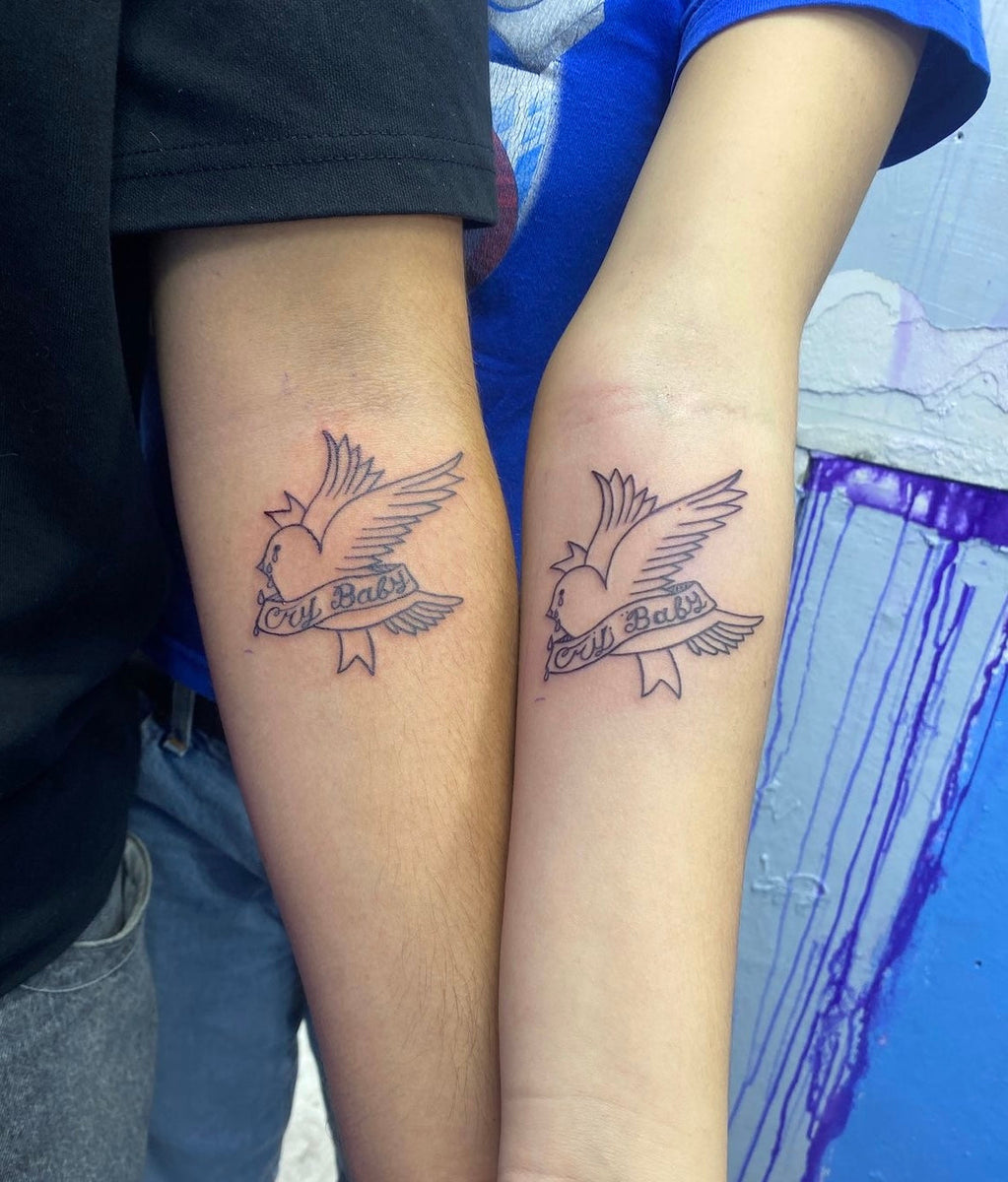
The large “crybaby” tattoo has a different explanation. Peep says he complained often and felt ungrateful despite having opportunities that many people would want. He chose the word as a reminder to appreciate what he had and to remember that other people faced much harder circumstances. He calls it one of his favourite tattoos, even while admitting that many people would regret such a visible piece.
He also describes a small “mood” tattoo as his eternal mood. He jokes that the image is low quality because his mood is low quality. That line is revealing because it shows how he used humour to own imperfect or impulsive work. The tattoo does not need a grand explanation; the joke is the explanation he offers.
On his fingers, Peep has “homesick.” He connects it with travelling as a musician, being young and still missing his mother. The word makes the hand itself part of the meaning: the lettering travels with him when he is away from home.
Pink Panther, anarchy, horseshoe and Ed Hardy pieces show his restless style
Peep says he got the Pink Panther after staying awake on mushrooms, taking an Uber to Venice Beach and deciding he needed to make the experience memorable. He walked into a random tattoo shop and got the character. It is one of his clearest examples of an impulsive tattoo chosen for the story around the moment rather than a carefully planned personal emblem.
His red anarchy symbol grew out of the same willingness to change his look whenever he felt especially punk or rebellious. He describes his style as difficult to pin down, shaped partly by growing up on Long Island and becoming frustrated when people copied what he wore in high school. The symbol is therefore part of a changing visual identity, although the interview does not establish a complete political programme behind it.
A horseshoe is described more simply as a lucky charm. Peep jokes that it was working well only sometimes. He also says Ed Hardy drew one design in London for an exhibition and that he decided to have the drawing tattooed there after shaving his head. The artist, place and timing are all documented details that make the design identifiable without requiring a speculative meaning.
Arm and body tattoos complete the Long Island collection
Peep repeatedly describes his collection as a work in progress, with plans to cover as much of his body as he could tolerate. He talks about the physical difference between tattoo locations, including the back of the head, and says the experience eventually made the tattoos feel like part of his face rather than an accessory he was constantly evaluating.
The broader arm and body work includes designs that are easier to see in close portraits than in performance photographs. A dated image may show one piece while hiding another behind clothing or hair. That is why the strongest inventory starts with designs Peep names: the family work, “Hellboy,” “homesick,” “crybaby,” the broken heart, the anarchy mark, the horseshoe, bats, pumpkin, centipede and Pink Panther.
His tattoo language mixes family, humour, music, horror imagery and deliberate discomfort. The face pieces made a conventional job less likely, while the music references tied the body to projects such as Hellboy and Crybaby. The small words and symbols made private jokes visible, but Peep did not pretend every tattoo carried a noble explanation.
That is the most accurate way to read Lil Peep’s tattoos. Some were memorial or family pieces, some were reminders, some were chosen because a picture looked cool and some were decisions he made in an altered state. Together they document a young artist who treated tattooing as part biography, part armour and part experiment.