Alan Ritchson’s tattoos are best understood through the few designs he has discussed directly rather than through an unverified list copied from image galleries. In GQ’s tattoo-tour feature, Ritchson says he has accumulated 23 tattoos in a relatively short period. The same feature connects his first tattoo to a matching design with his wife, Catherine, while later reporting identifies an “81” on his ribs and describes a large forearm project. This guide keeps those details separate, records what the sources actually establish and leaves private meanings open where Ritchson has not explained them.
What the GQ tattoo tour documents about Alan Ritchson’s tattoos
Ritchson’s first tattoo is associated with a matching piece shared with his wife, Catherine. The GQ tattoo tour places that decision in the early part of his tattoo history and presents it as a relationship-linked design rather than a piece chosen for a film role. That distinction matters because Ritchson is widely photographed for acting and fitness work, so older interviews and later set photography can make the chronology appear less clear than it is.
The available reporting confirms the matching origin, but it does not provide a complete description of every line in the design or a private explanation for each element. It is therefore safer to describe this as a couple’s matching tattoo and to avoid assigning a symbolic meaning that Ritchson has not stated. A photograph can show location and scale, while the GQ interview supplies the strongest evidence for why the tattoo entered his collection.
The design also marks a change in Ritchson’s approach. The first piece was connected to a specific person and a shared decision. His later work expanded into larger projects, but the matching tattoo remains useful as the beginning of the timeline because it is anchored by an interview rather than by a fan-made inventory.
Forearm lettering and the matching Hachiko tattoo
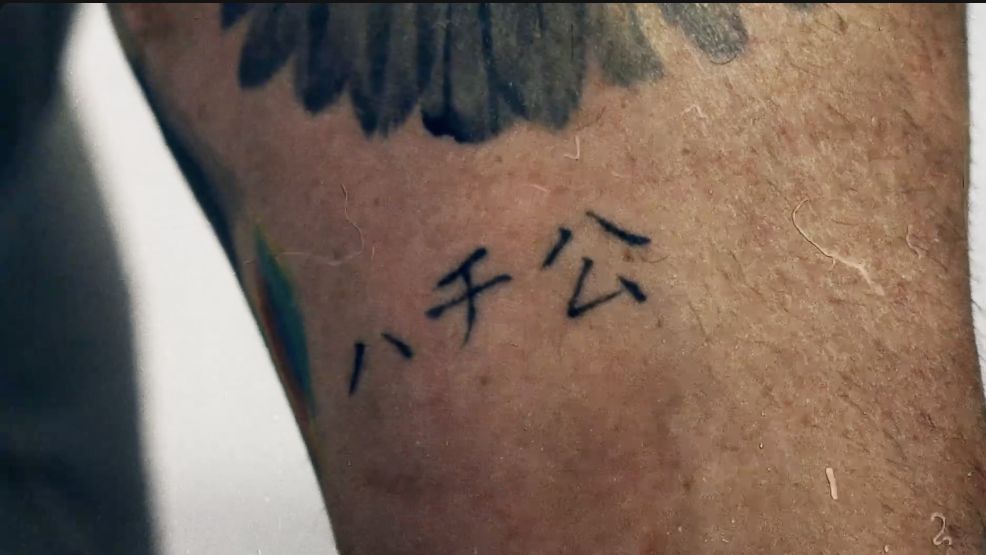
GQ’s tour also identifies tiny Japanese characters as Ritchson’s first tattoo and a matching Hachiko design shared with Catherine. He says he associates Hachiko with loyalty and lasting love. The same tour shows a cross and nearby handwritten wording, which he reads aloud as “boundaries, devotion and winter storms.” The image is a close view of arm lettering from that tour; it does not establish the wording of every mark.
Dove, flame and shield designs honour his sons
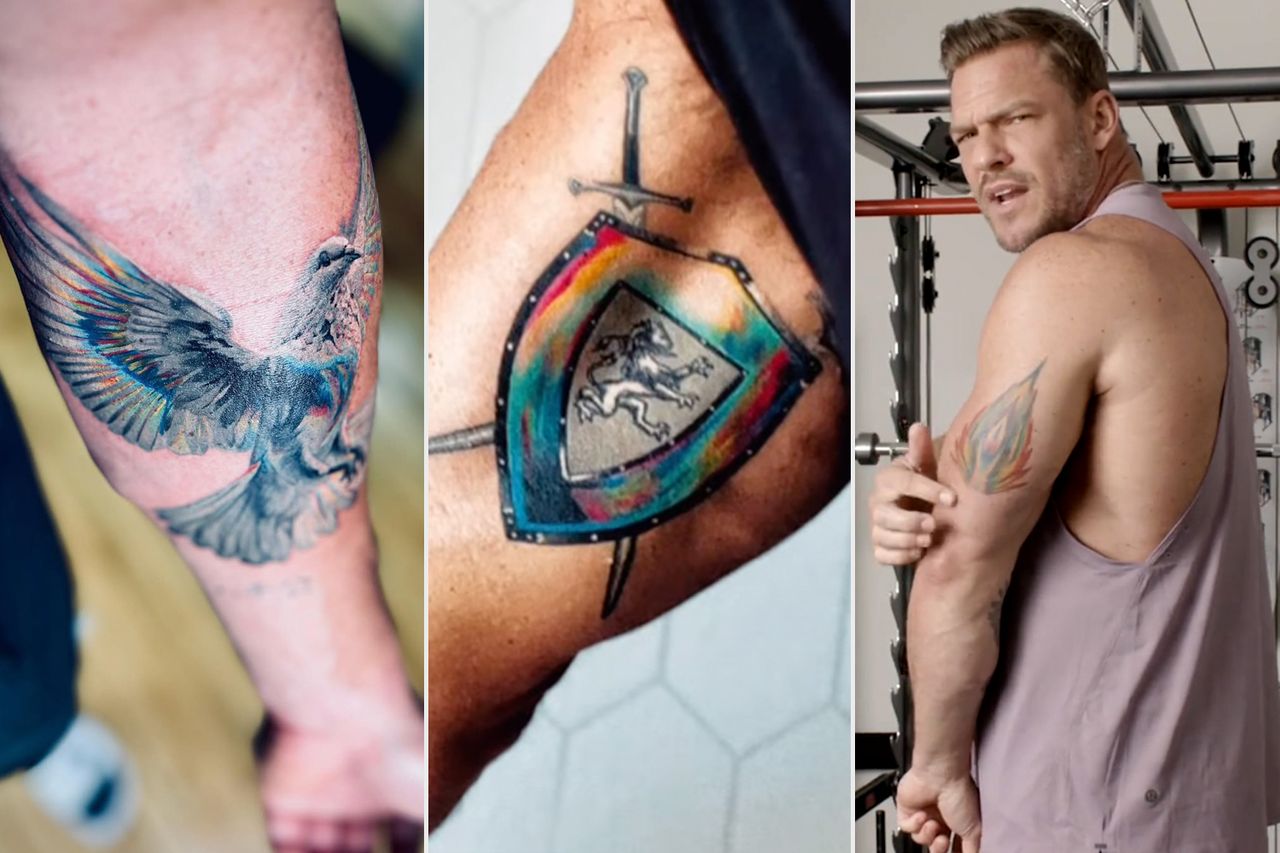
The family tattoos extend beyond the matching piece. Ritchson identifies a dove with his eldest son Calem, an abstract flame for Edan and a sword-and-shield crest for Amory. GQ explains the dove and flame in Ritchson’s own words; People’s reporting identifies the crest as Amory’s tribute. Together these are the clearest named designs tied to his children.
The “81” on Ritchson’s ribs
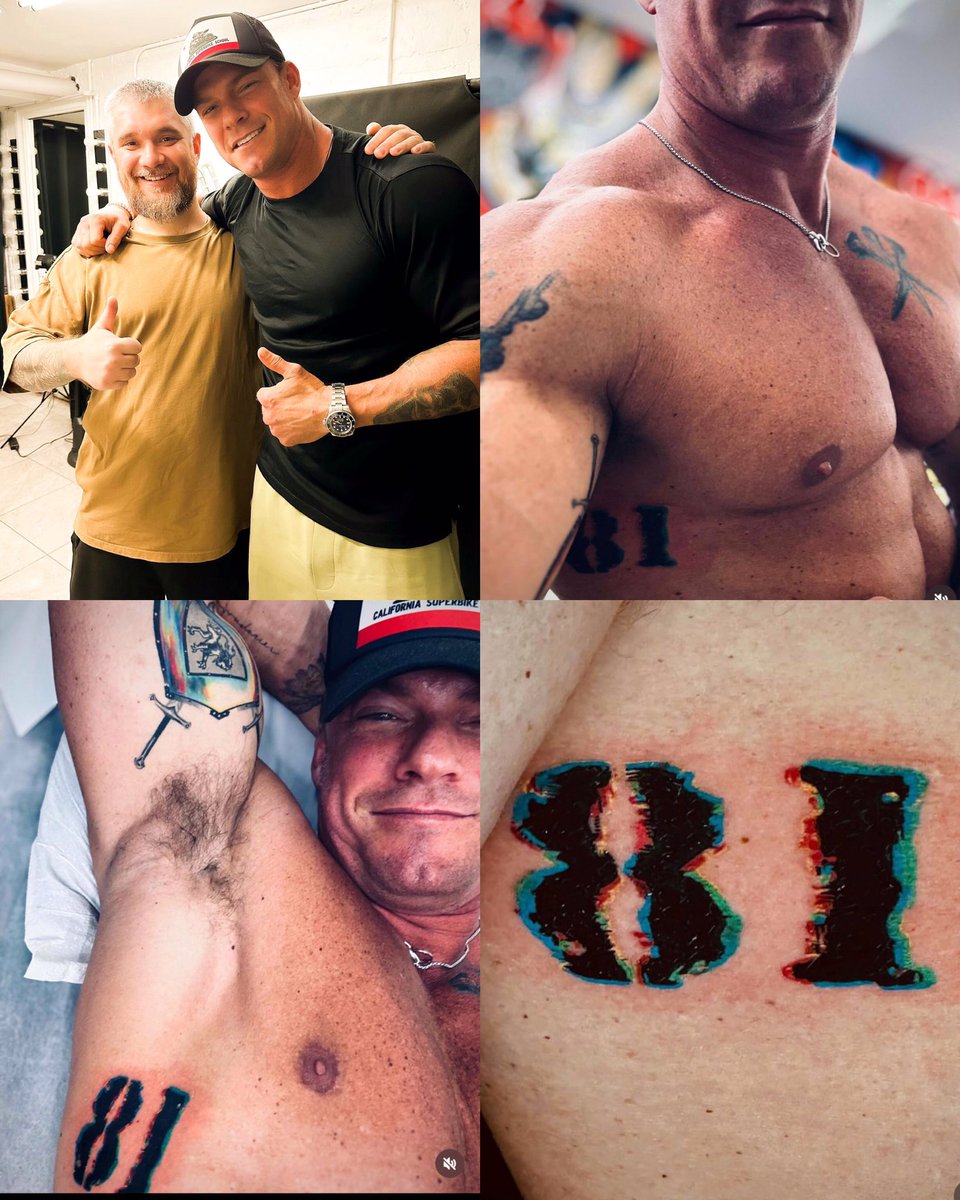
A separate tattoo documented in coverage of Ritchson’s collection is the number “81” on his ribs. The number is visible in discussions of his newer tattoos and is described as part of the group of pieces he added after the matching design. Its location is important: a rib tattoo may appear in one photograph and disappear in another depending on clothing, posture and camera angle.
The sources establish the number and placement more securely than they establish a single official meaning. Ritchson has spoken about the tattoo tour as a way to discuss his designs, but the available record does not support turning “81” into a definite biography without a direct explanation. A careful guide should therefore report the literal marking, its rib placement and its position in the later part of his tattoo timeline.
That caution is especially useful when comparing photographs from different periods. A number can look like a date, an address or a private reference to a viewer who has no context. None of those interpretations should be presented as fact unless Ritchson or a reliable interview source confirms it. The strongest description remains simple: “81” is a documented rib tattoo, while its complete personal meaning is not publicly established.
GQ connects the number to the making of War Machine: Ritchson says the project’s story moved him enough to mark 81 on his ribs, and he wanted to embody the spirit of the character.
The large forearm project and the tattoo-tour era
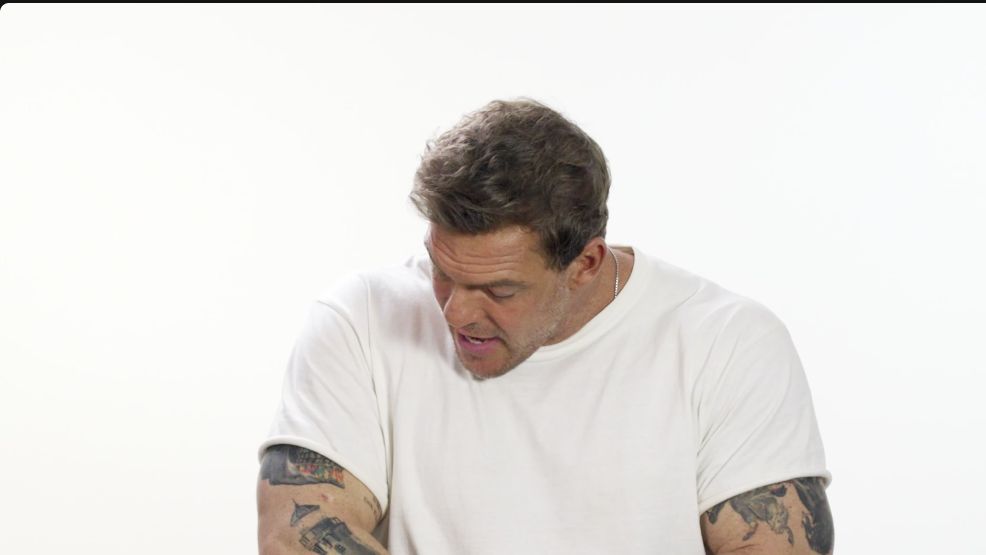
Ritchson’s forearm work represents the most visible expansion of his collection. British GQ and related entertainment coverage describe a tattoo artist spending roughly 16 hours covering the forearm. A separate account notes that Ritchson had to wait for the work to heal before a demanding Reacher water sequence. Those details connect the tattoo to a specific production period and show that the piece was substantial enough to affect his filming schedule.
The forearm project should not be treated as one universally named design unless a source identifies it that way. “Covering the forearm” describes scale and process, not every symbol contained in the finished composition. Photographs can reveal the black-and-grey arrangement or lettering, but they do not automatically establish who designed each part or what every mark means.
The timing also explains why different images can appear to show different versions of Ritchson’s arm. A fresh tattoo may be covered while it heals, hidden by wardrobe or shown at a different stage of the work. The result is a collection that needs dated comparison rather than a single definitive photograph. The GQ tour is valuable because Ritchson speaks about the work himself, while production reporting supplies useful context about healing and continuity.
GQ’s tour names a lighthouse on the arm and describes the unfinished forearm composition as Zeus throwing a lightning bolt, with a mountain and horses still to be completed. Those details make the tattoo more specific than a generic “sleeve” label. The feature also says artist Pasha Ink handled most of Ritchson’s work.
How the documented tattoos fit together
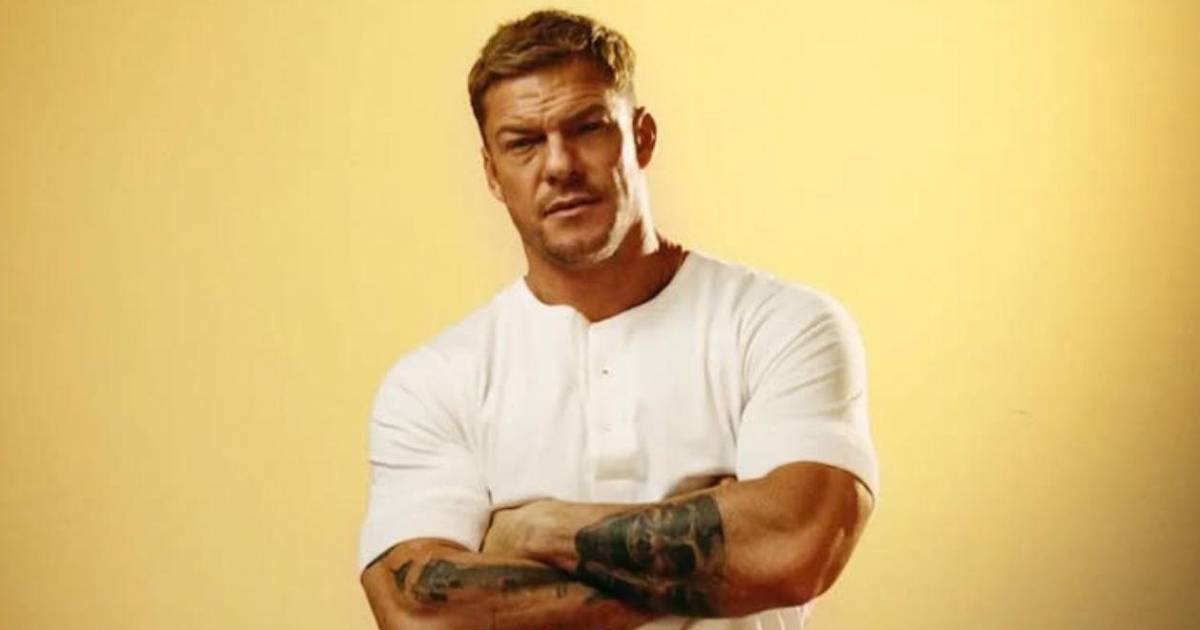
The known record suggests a clear sequence: a matching tattoo shared with Catherine, later additions including the rib number “81,” and a substantial forearm project connected with the period when Ritchson was filming Reacher. That sequence is more useful than an inflated list of unnamed marks. It gives readers a way to compare photographs while keeping confirmed information separate from visual guesses.
Ritchson’s collection is still developing, and the public record is not a complete catalogue. The number 23 comes from his own tattoo-tour discussion, but the sources do not identify all 23 designs with equal precision. Some may be small or private, and some may be difficult to distinguish in event photography. The responsible approach is to preserve the designs that can be tied to an interview or strong reporting and to label the rest as unconfirmed.
A useful way to read the photographs is to begin with the body area named by the source, then compare the date and setting. The matching piece belongs to the relationship history, the number belongs to the rib record and the forearm work belongs to the later production period. This order prevents a recent close-up from being used as evidence for an earlier appearance and keeps the guide anchored to designs that can be identified without guesswork.
The collection also shows why a tattoo count and a tattoo inventory are different things. A count can come from the celebrity’s own conversation, while an inventory requires a design, location and source for each entry. Ritchson’s public interviews support a useful beginning, but they do not turn every unseen piece into a confirmed catalogue item.
What remains unconfirmed
The public sources reviewed for this guide do not establish a complete list of meanings, a definitive artist credit for every tattoo or a reliable design-by-design map of Ritchson’s body. They also do not support treating every dark shape in a distant photograph as a named tattoo. Future interviews or clearer images may add detail, but the current evidence is strongest for the matching tattoo, the “81” rib marking and the large forearm project.