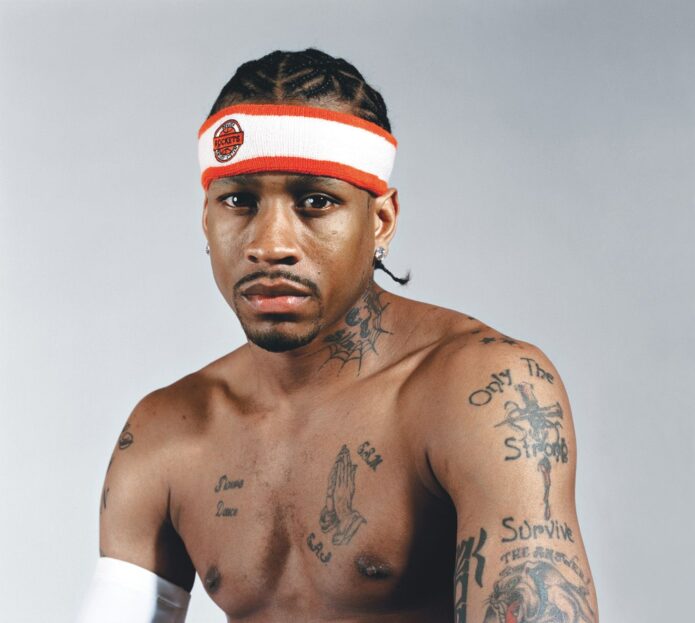
Allen Iverson’s tattoos were never just decoration. They became part of the same look as his cornrows, headband and loose fit, and they matched the fearless way he played. His ink gave people a sense of where he came from before he said a word, and became part of the image that set him apart in the NBA.
Iverson has more than 20 tattoos. Many connect to family, friends, faith, survival, or the people and places that shaped him. Some are always visible; others show only when he takes off a jersey or turns his head toward a camera. The pieces below have the clearest stories, with a few notes on designs whose meanings are harder to pin down.
“Fear No One” on his left arm
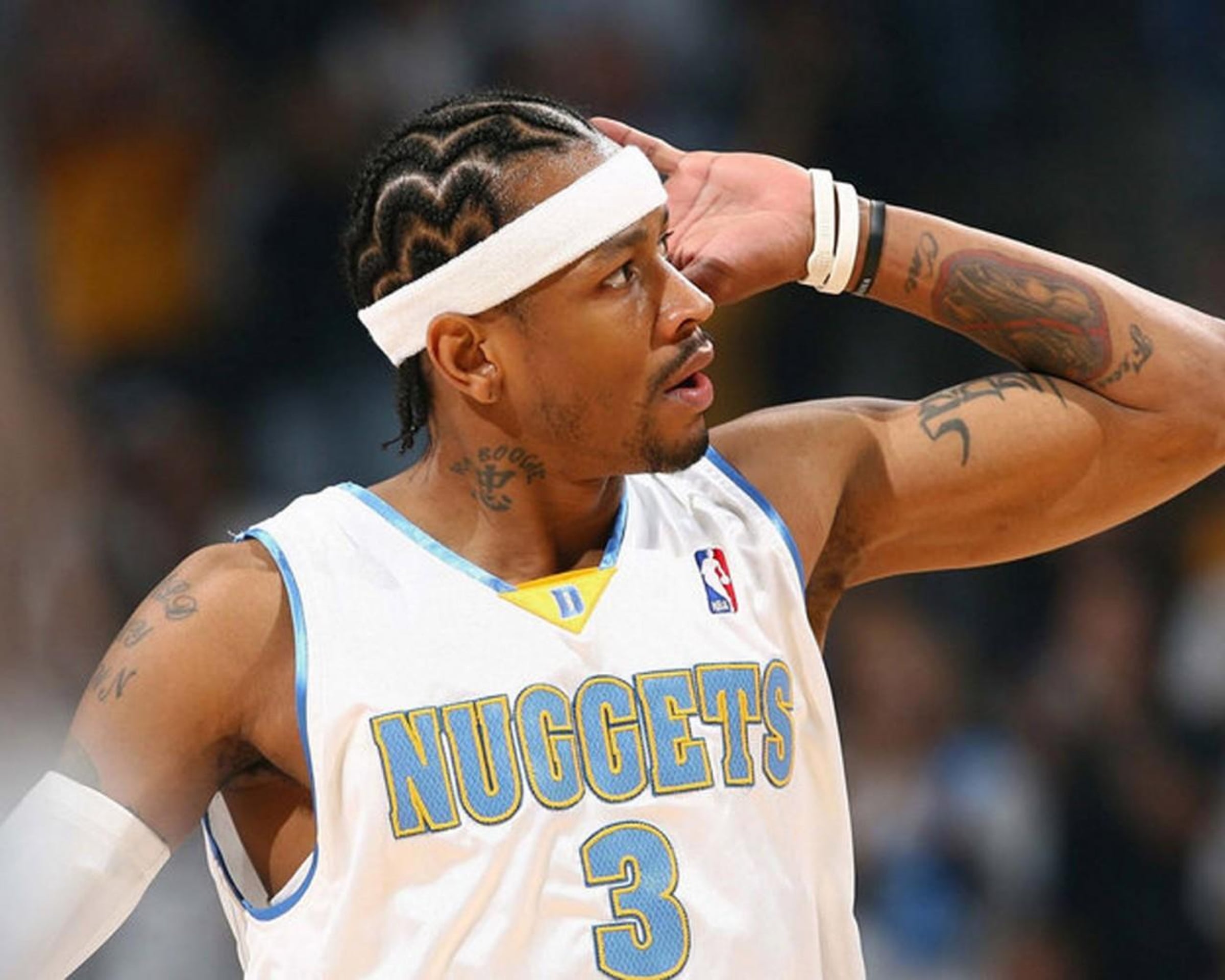
The words “Fear No One” sit on Iverson’s left arm. They fit his public image: one of the smallest stars on the court, he played as if no defender could intimidate him. The phrase reads like a personal rule, not a slogan added for the cameras.
His tattoos weren’t only about looking tough. “Fear No One” can also be read alongside the pressure he faced as a young guard, the criticism of his style and the expectation that he prove his size wouldn’t limit his game. It’s a short, direct message, much like the way Iverson played.
The lettering can blend into the other tattoos on his arm in photographs. Once you know it’s there, though, it’s one of the clearest pieces in the collection.
“Only the Strong Survive” and the cross of daggers
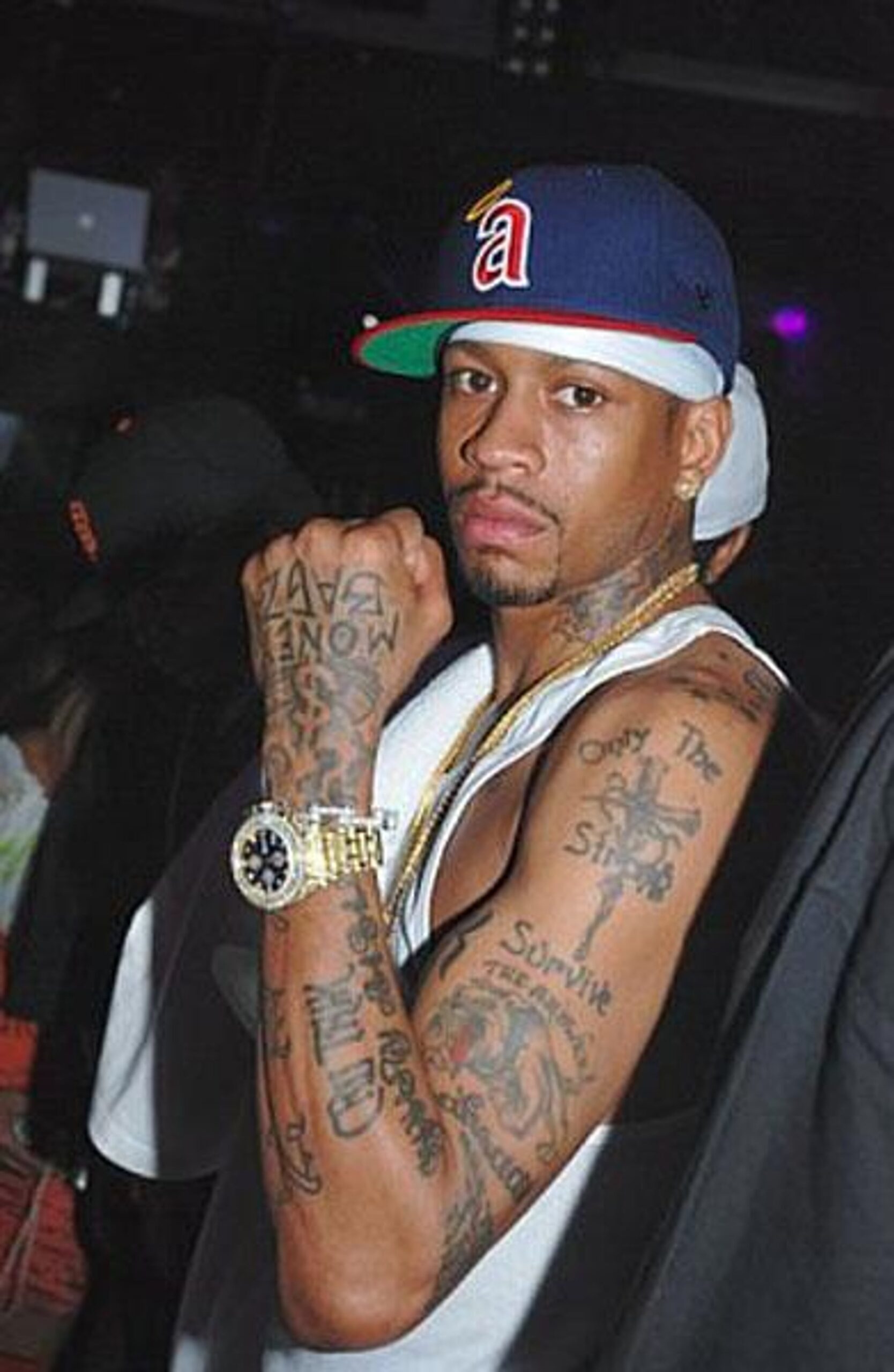
Iverson has “Only the Strong Survive” on his left shoulder, alongside a cross made from daggers. He has spoken about this design and called the phrase the one true thing he learned in life. That gives the words a more personal meaning than a general motivational slogan.
The message fits the career fans watched. Iverson took hard fouls, heard constant questions about his height and faced doubts about whether his style could lead a team. He kept coming back. The cross and daggers add a tougher look, but the phrase is about enduring what’s meant to stop you.
Reebok later used the words in Iverson campaigns and on special releases, bringing the tattoo into his wider visual identity. But it began as Iverson’s own belief, not as a brand line borrowed for a shoe.
“RA Boogie” keeps Rashaan’s memory close
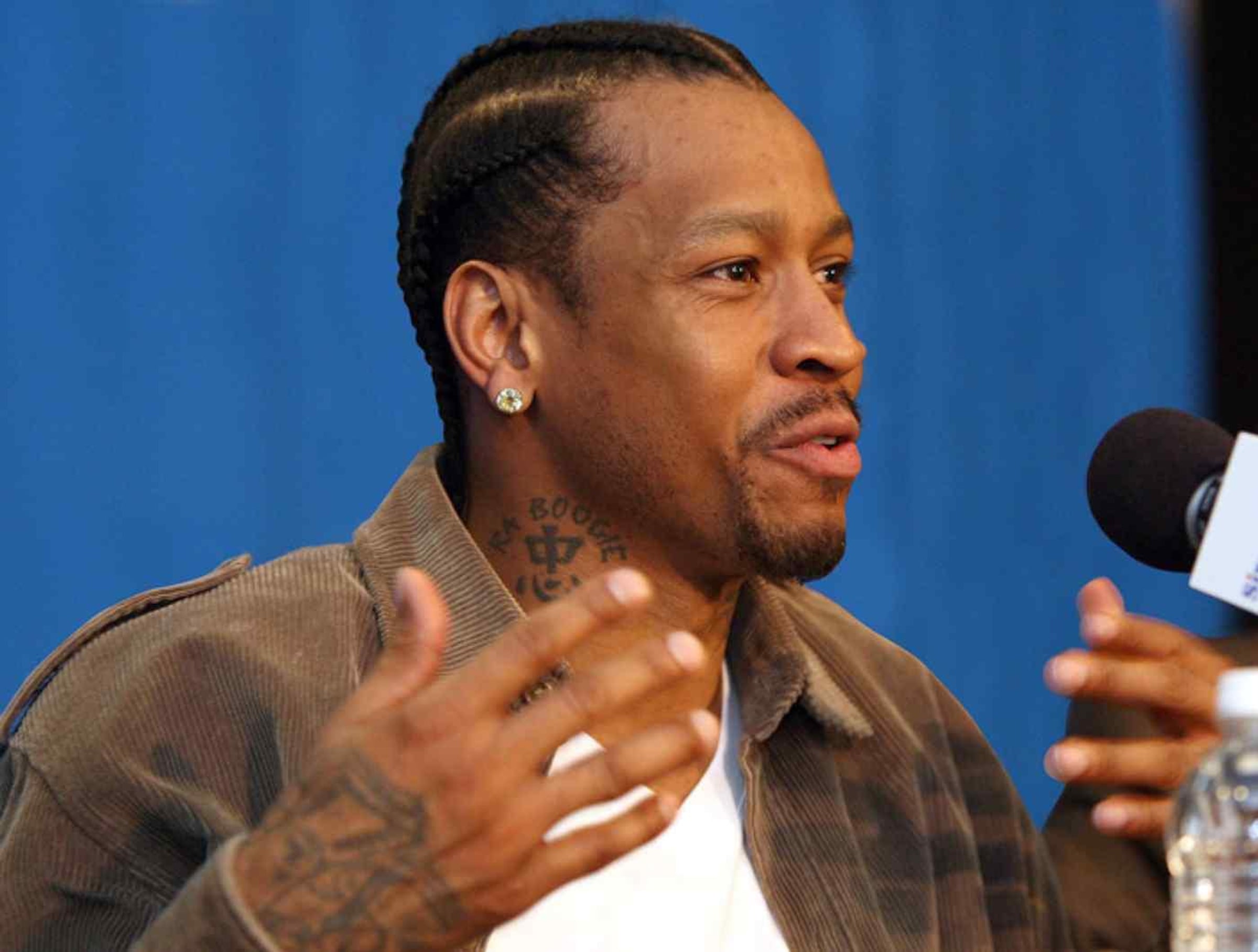
The words “RA Boogie” on the left side of Iverson’s neck honor his childhood friend Rashaan. Reports say Rashaan was shot and killed. The tattoo keeps someone from Iverson’s life before the NBA close to him.
A neck tattoo is hard to hide, and Iverson wears this one in plain view. It’s a name he chose to carry with him. Some of his ink is about style, but this piece is about memory and loyalty.
The lettering can look soft in older photos, especially when Iverson turns his head, but the placement is clear. It sits beside his other neck designs and gives that part of the collection a personal center. “RA Boogie” is one of the clearest examples of Iverson marking where he came from.
His mother’s and grandmother’s initials with praying hands
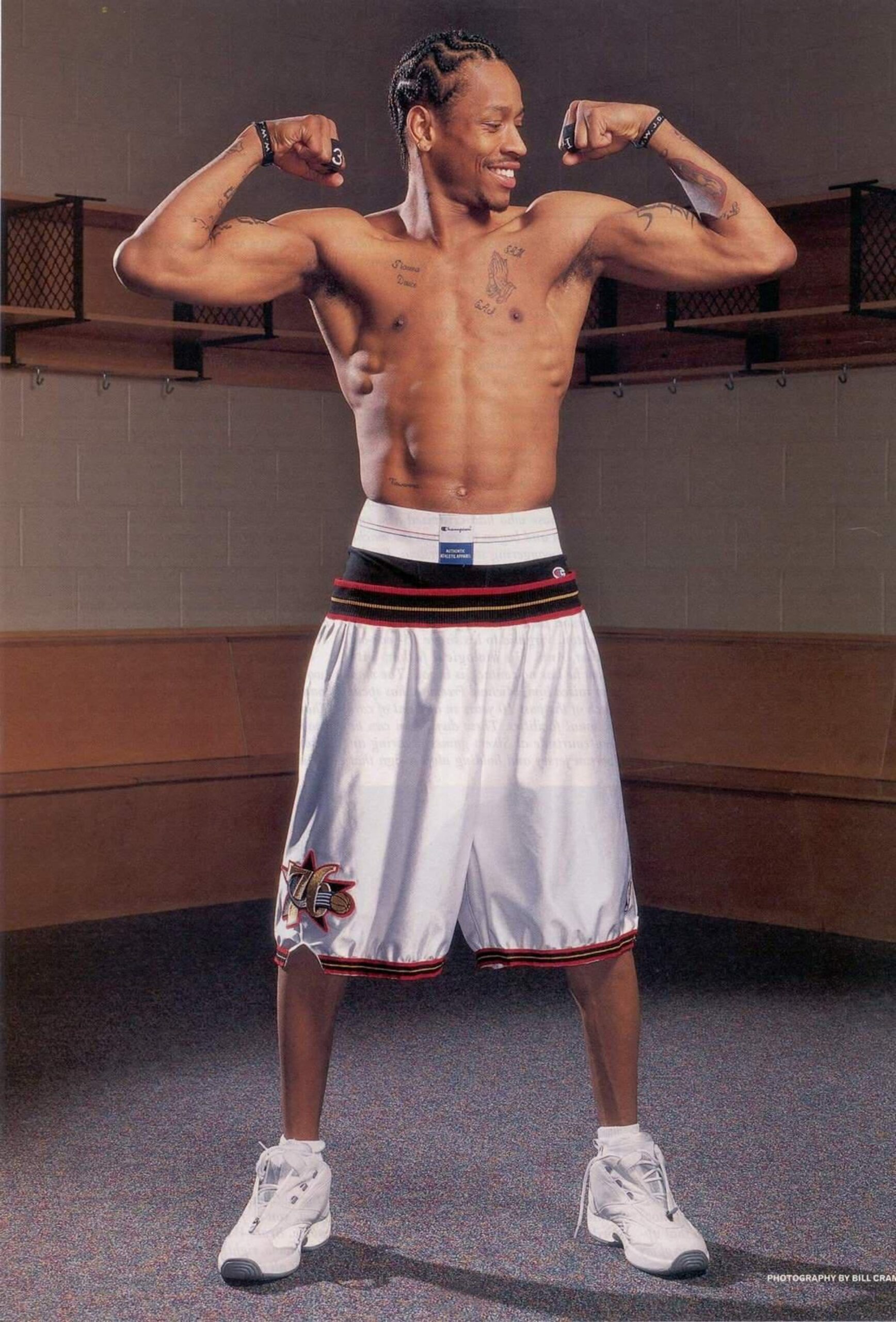
Iverson has his mother’s and grandmother’s initials on his chest, near a praying-hands design. The placement puts family close to the center of his collection. The initials are a reminder of the women who were important to him before the trophies and magazine covers.
The praying hands add faith and gratitude to the piece without making it feel formal. Much of Iverson’s ink uses bold lettering and heavier imagery; this chest tattoo brings a gentler note to the same story.
It’s easiest to see in shirtless photos or portraits with his chest uncovered. A jersey hides it, which is why casual fans may know his arm tattoos better. Still, it’s one of the important pieces for understanding what family means in his collection.
“Hold My Own” is a personal motto
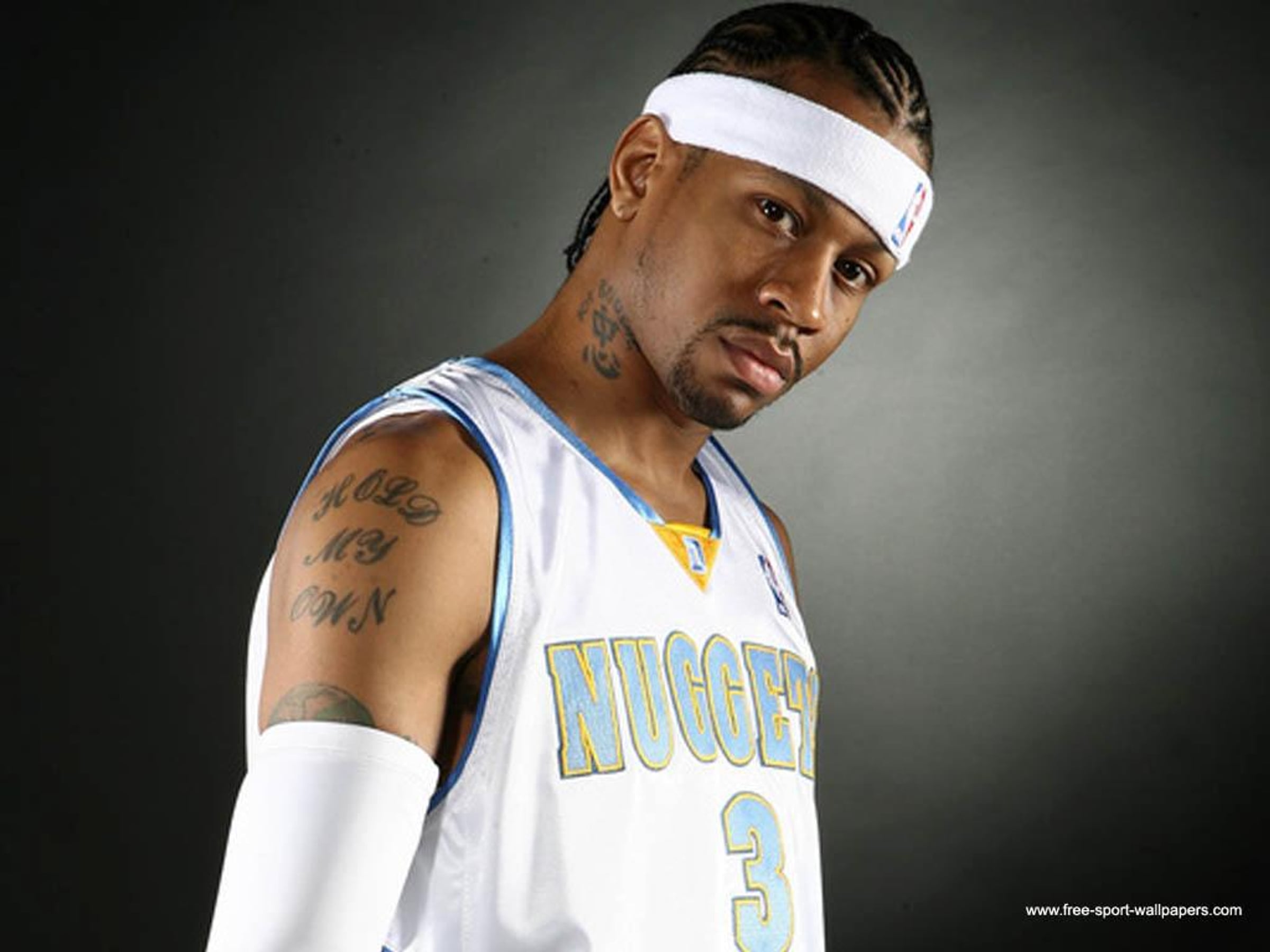
“Hold My Own” is written across Iverson’s right shoulder. The phrase speaks to independence and fits the player fans watched. He didn’t wait for permission, and he resisted attempts to fit him into a safer image.
It can mean standing up for yourself, taking care of your responsibilities or staying with your own choices when people disagree. All three readings fit his career, which he built by making room where others saw limits.
The tattoo is mostly lettering, so it can be easy to miss next to larger designs. It’s a short statement with plenty of context behind it. “Hold My Own” says Iverson’s identity was his to define.
The Georgetown bulldog and “The Answer”
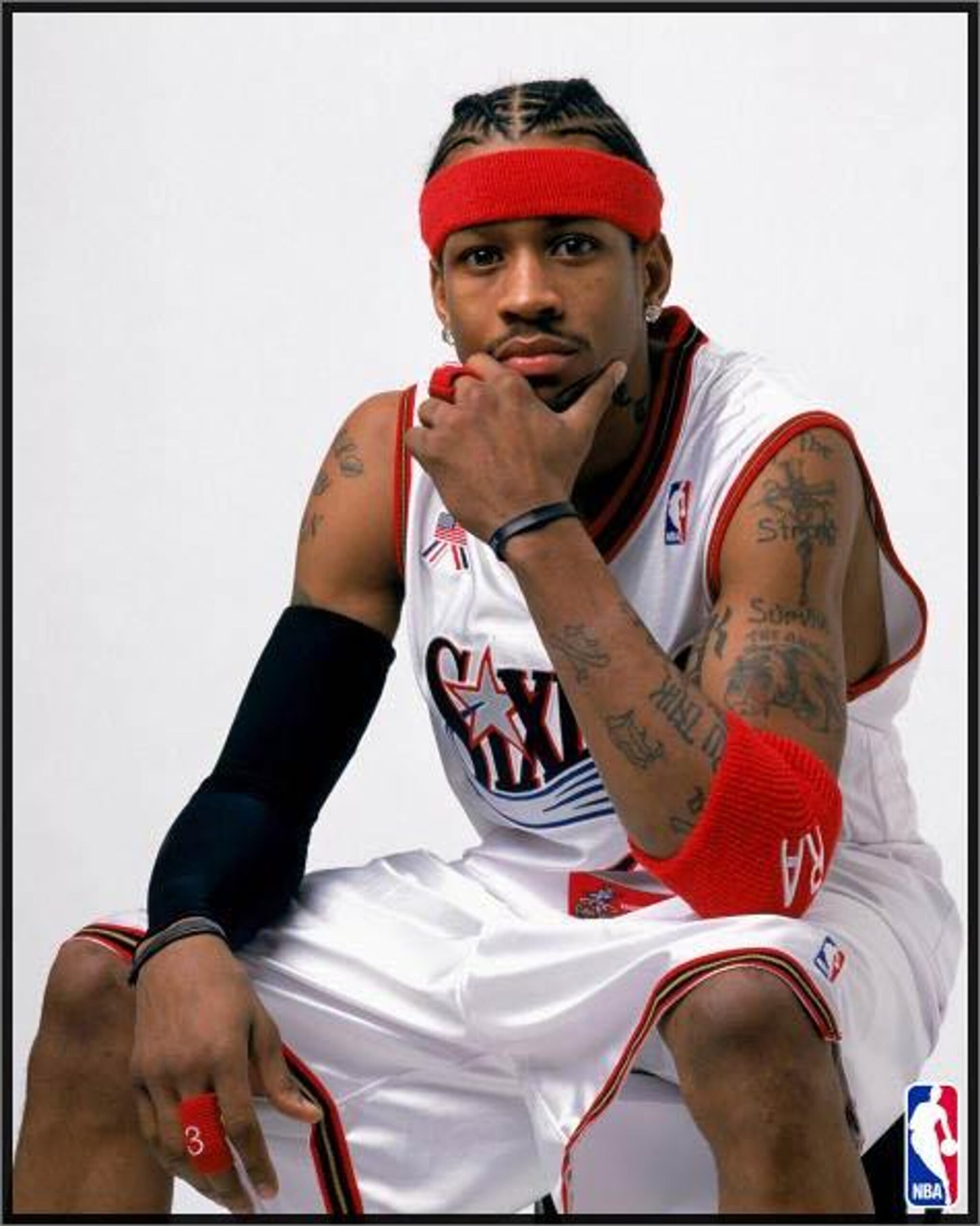
Two familiar tattoos on Iverson’s arm point back to Georgetown: a bulldog, the school’s mascot, and the nickname “The Answer.” The bulldog connects him to the college program that helped launch his career. “The Answer” became the name people used throughout his NBA years.
The nickname was more than a marketing label. Iverson played with the confidence to take on the defense in front of him, even when the whole team was trying to stop him. Having it inked made the name part of his identity.
The bulldog carries a different kind of connection: it points to a school and a team. The two designs put college, nickname and professional life in the same visual space.
This arm also shows how his collection grew. Older tattoos sit beside newer ones, and some lines have softened over time. They give the sleeve a lived-in look that fits the story behind it.
The Chinese symbol for loyalty
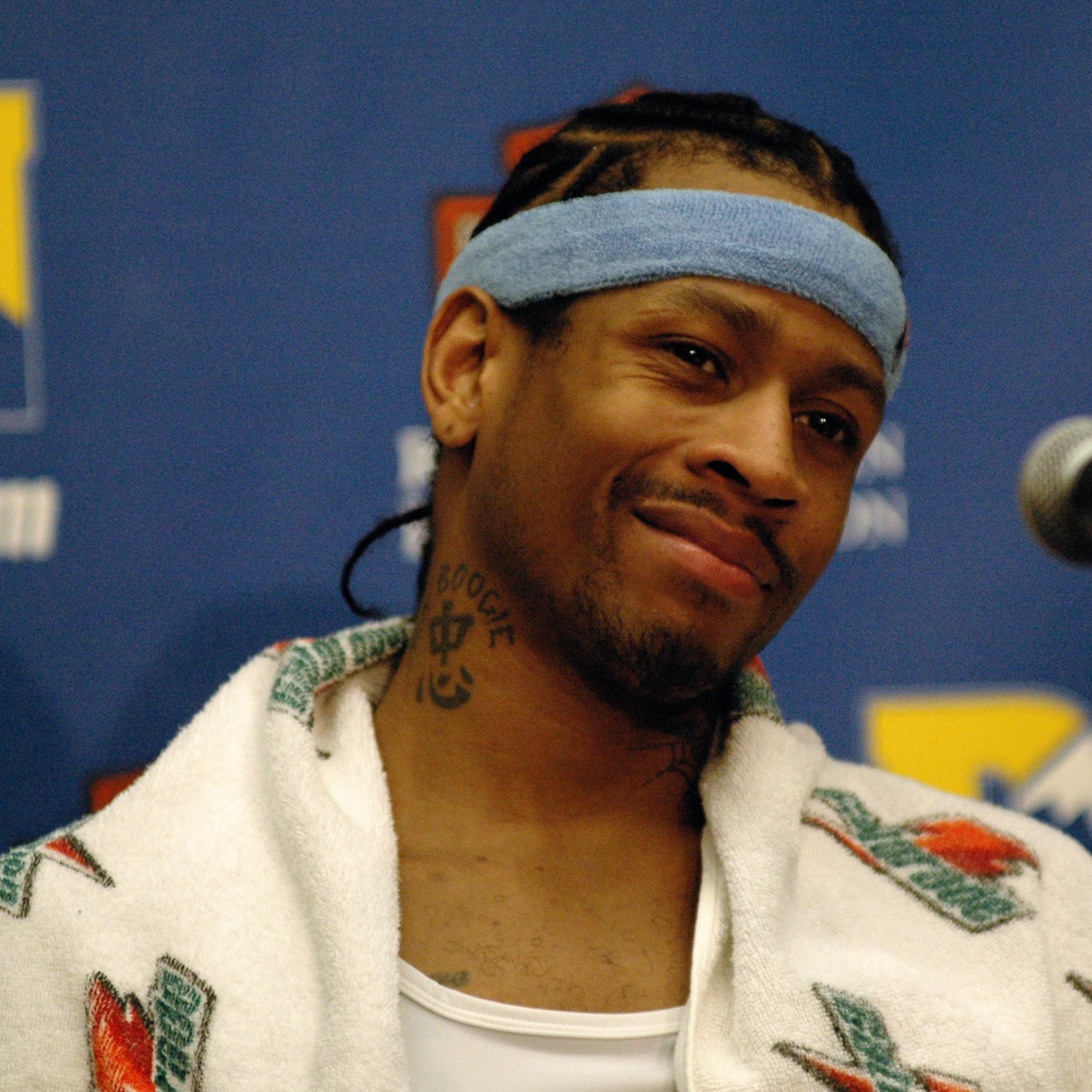
Iverson has a Chinese character for loyalty on his neck. The meaning fits with other tattoos in his collection, including his family initials and the tribute to Rashaan. Here, loyalty connects to people who stayed close and places that shaped him.
The character is easy to miss among the other neck tattoos. In close-up photos, it sits beside the “RA Boogie” tribute and other lettering. Together, they make his neck ink read like a set of promises.
There’s plenty of bold language in Iverson’s collection, but this piece is quieter. It’s less about fearlessness or proving a point and more about the people he remembers. That gives the tattoo a different feel from some of his tougher phrases.
What the rest of Allen Iverson’s ink says about him
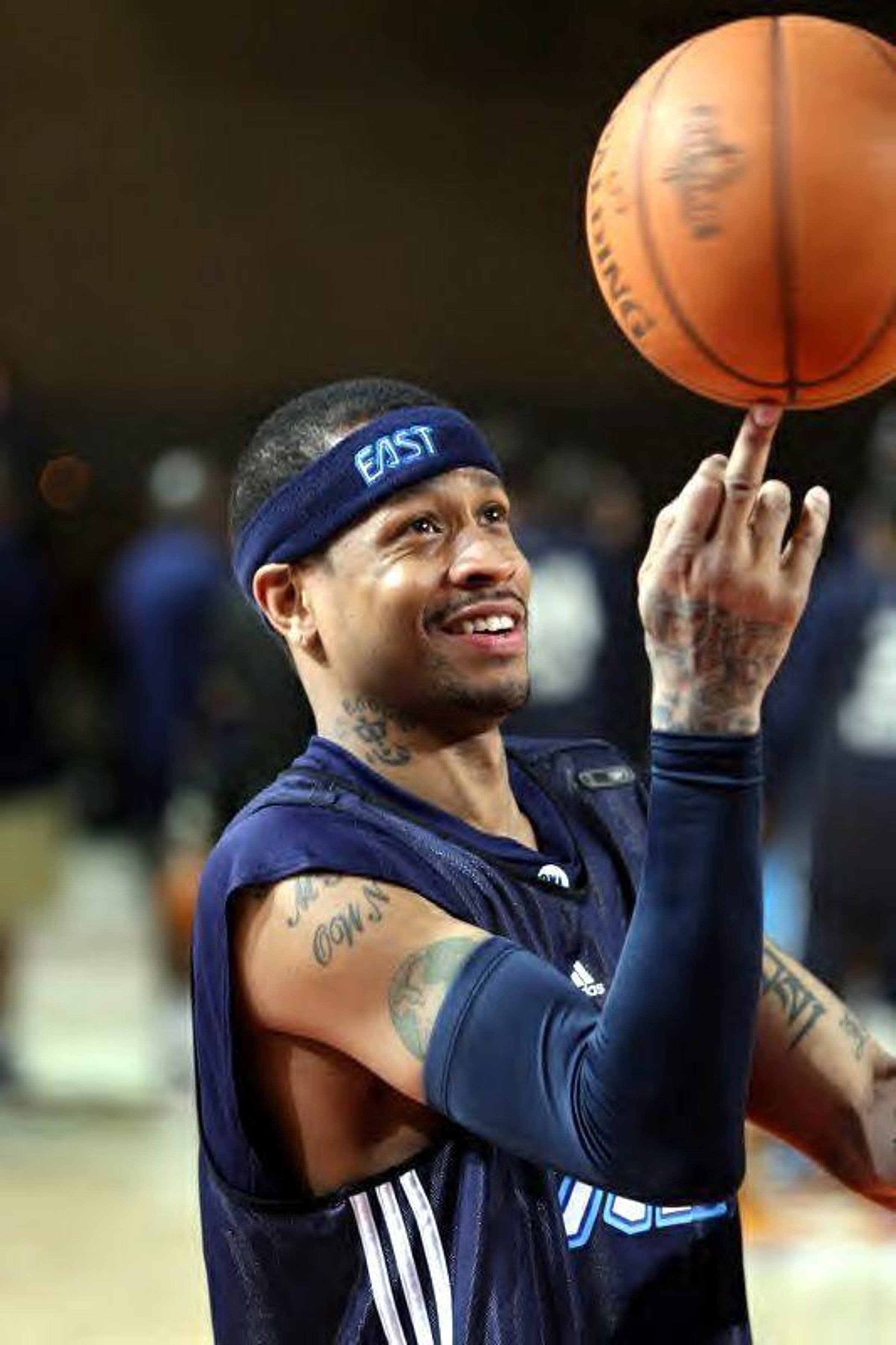
Ranker’s gallery lists around 20 Iverson tattoos, including “FAME,” a skull soldier, a black panther and other lettering linked to his crew, CRU THIK. Not every design has a detailed public explanation, so it’s better to leave those meanings open than guess.
A pattern does emerge: family, friendship, survival, faith and basketball identity come up again and again. Even the tougher-looking designs connect to parts of his life. The ink feels personal before it feels theatrical.
That helps explain why the NBA’s discomfort with tattoos became part of Iverson’s story. His body art came with the same directness as his clothes and voice. He didn’t soften it for a boardroom; he wore it as his own.
If you like comparing NBA ink, take a look at Jordan Clarkson’s tattoos. Clarkson’s collection has a different feel, but both players use tattoos to hold memories, influences and identity together.
Iverson’s tattoos still stand out because they feel tied to the person fans remember. Some are rough around the edges or hard to read, and their references make more sense once you know the story. The collection doesn’t look designed to be perfect. It looks gathered over the years Iverson was becoming himself.
Watch Allen Iverson discuss the “Only the Strong Survive” tattoo