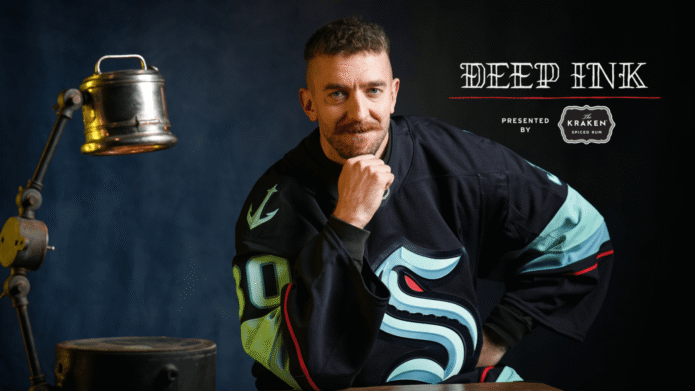
Matt Murray does not have a large collection, but each tattoo has a clear reason behind it. The Seattle Kraken goaltender has used ink to mark two Stanley Cup wins, keep his wife close and carry a reminder of how he wants to handle pressure.
There is no full sleeve here. The numbers on his fingers sit beside his championship rings, the tattoo for his wife rests under a watch, and “The Man in the Arena” sits on his left bicep, mostly out of sight during games.
Murray has spoken about what the tattoos mean without turning each one into a public statement. They are a few permanent reminders that fit into everyday life.
The 16 and 17 finger tattoos remember Pittsburgh’s Cup runs
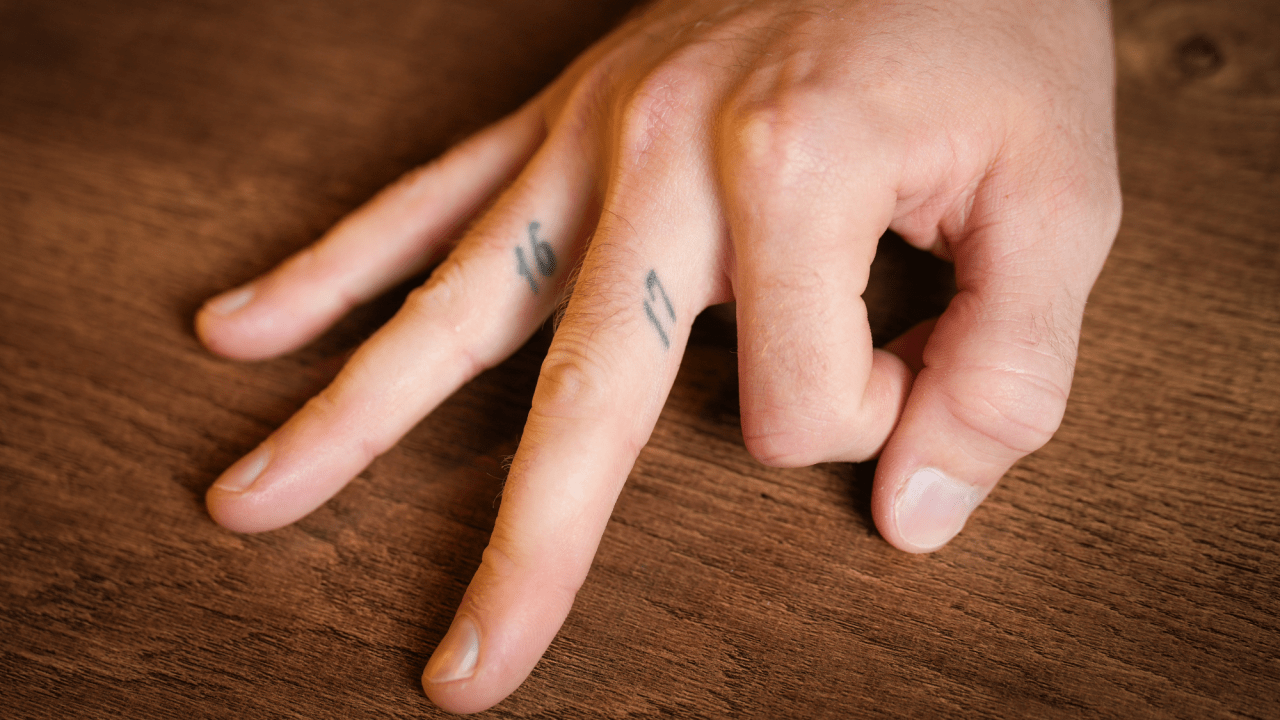
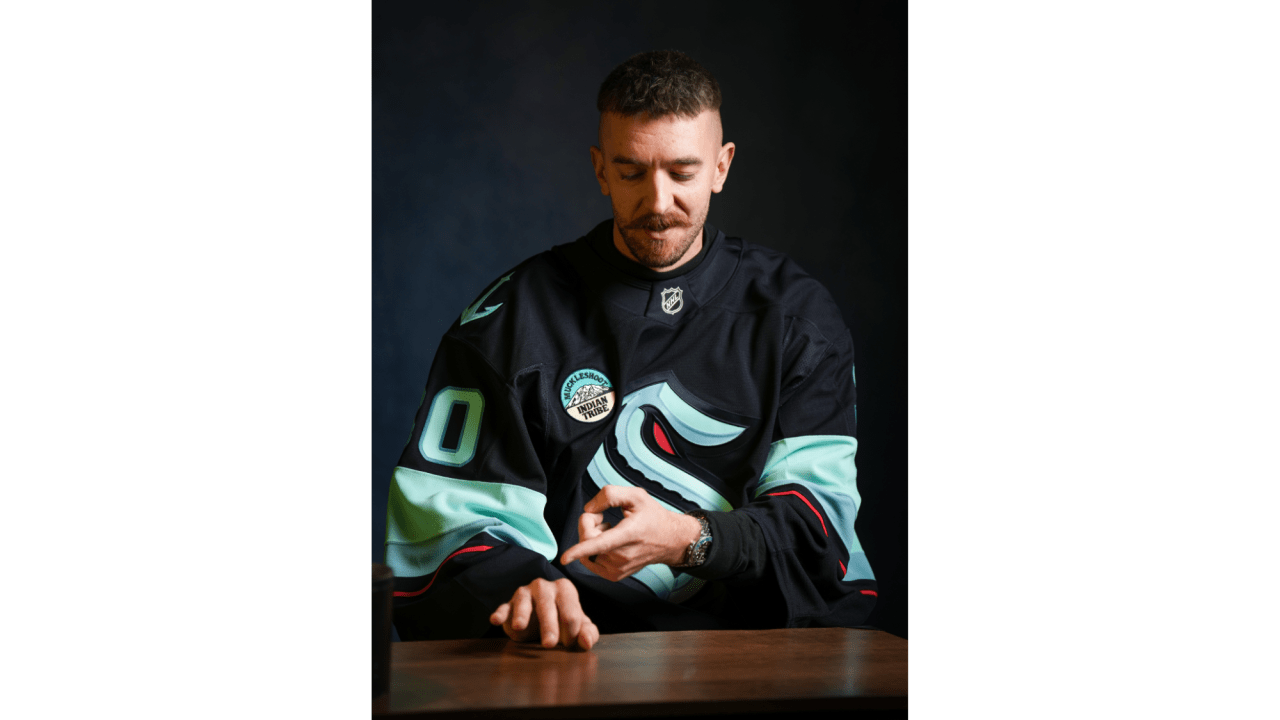
An official close-up shows how small the numbers on Murray’s fingers are. They sit beside the creases of his hand, so they can disappear in a game photo but line up with the rings he won in those seasons.
Murray’s first tattoo marked two of the biggest achievements early in his NHL career. He has a 17 on the inside of his right middle finger and a 16 on the inside of his right ring finger. They refer to the Pittsburgh Penguins’ back-to-back Stanley Cup wins in 2016 and 2017, when Murray helped the team reach the top.
The placement was deliberate. Murray said the tattoos sit on the same fingers where he wears his championship rings. They work as quiet reminders alongside the physical trophies; he even joked that the rings are different sizes, so he knows which number goes with which finger.
They feel less like a display and more like a private filing system. A fan might notice the numbers in a close-up, but they are easy to miss during a game. Murray can look down and remember those seasons without a date or trophy taking over his arm.
The timing matters too. Murray said he got his first tattoo in 2018, after he had already experienced the two Cup runs. He did not rush to mark the wins while everything was still unfolding. The design came later, once the achievements had settled into his life.
The numbers look simple enough to be mistaken for ordinary finger ink, which is part of why they work. They point to two seasons and let the memory do the rest. Some of the most personal sports tattoos look almost meaningless to everyone else.
They also sit in the hands that matter so much in hockey. A goaltender depends on repetition, small movements and focus. The tattoos share space with the rings and gloves, close to the hands that helped make those memories.
A C, rose and crown keep his wife close
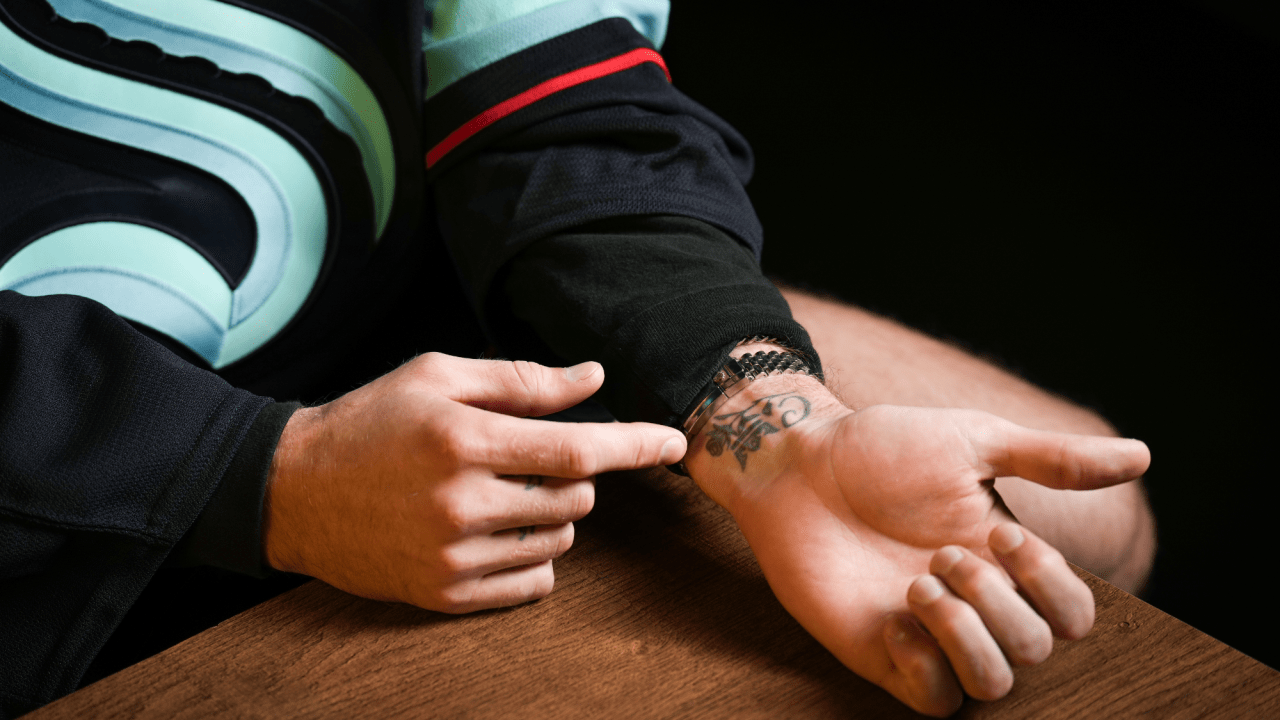
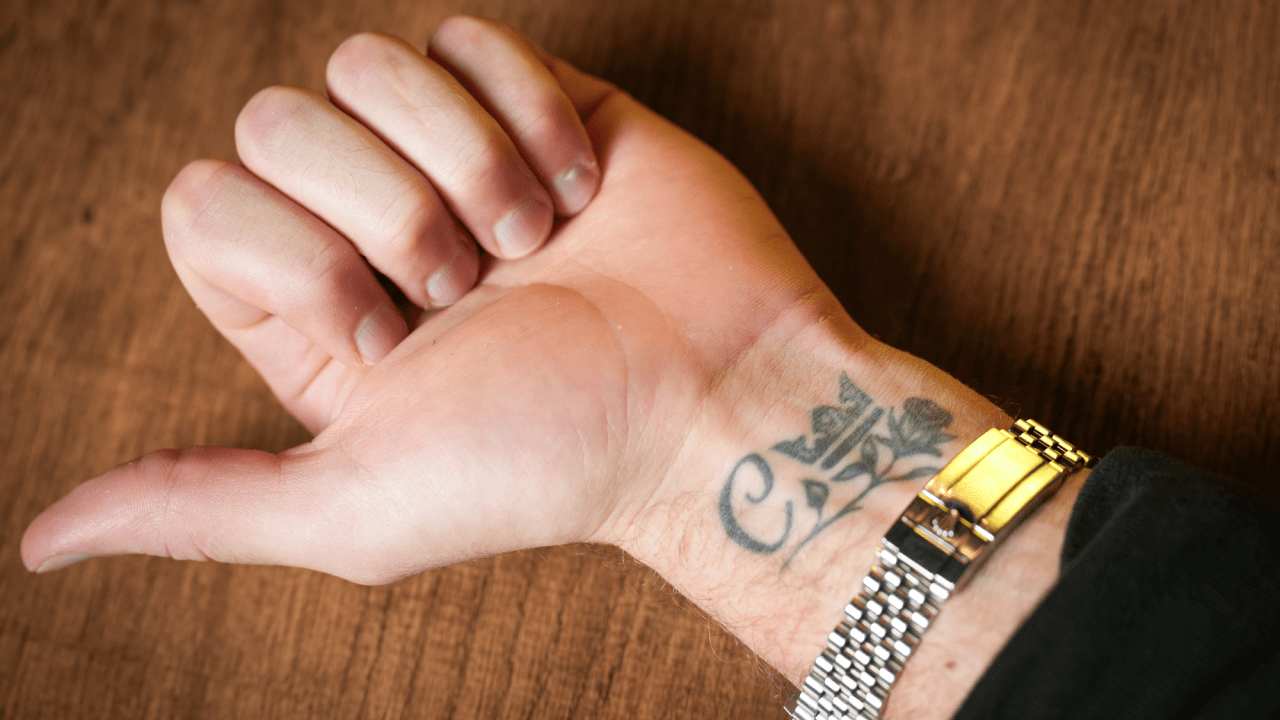
After getting the championship numbers, Murray returned to the tattoo shop for a design dedicated to Christina, who was his girlfriend at the time and later became his wife. The tattoo includes a C for her name, a rose and a crown. Murray called it a tribute to her and said the crown represents her being the queen.
It sits on the inside of his left wrist. Murray has said he chose the spot because he wanted to glance down and see it when he was thinking about her, not because of a complicated placement rule. That direct reason gives the tattoo its charm.
The rose and crown make the design easy to recognise, but the C is what makes it personal. Anyone can read the flower as a love symbol; the initial points to one particular person.
Murray also said the tattoo fits neatly beside his watch. It was not placed for dramatic photographs; it works with something he already wears and stays close to his routine.
There is a quiet contrast between this wrist piece and the numbers on his other hand. The finger tattoos mark public achievements, while the rose and crown point toward home. One set remembers the seasons that shaped his career; the other keeps someone close while he is away playing.
The tattoo also came together with care. Murray went to an artist recommended by former Penguins teammate Kris Letang, then asked Christina what she might like. It was meant as a surprise and a tribute, but he wanted the final design to reflect her taste too.
The Man in the Arena sits on his left bicep
Murray’s most openly motivational tattoo is on his left bicep. It reads “The Man in the Arena,” a phrase from Theodore Roosevelt’s 1910 speech “Citizenship in a Republic.” Murray first noticed the phrase on LeBron James’s sneakers, then looked up the speech it came from.
The passage praises someone who steps into the arena, risks failure and keeps trying, rather than watching from a safe distance. For a professional goaltender, that idea fits. Every game brings pressure, mistakes and criticism, but Murray can only make a save by staying involved.
He has said the tattoo reminds him to dare greatly and not dwell on the people watching. A person in the arena may lose, but there is value in being the one who showed up and tried. That makes the piece more specific than a generic motivational phrase.
The left bicep is a practical place for those words. They can stay under a jersey, but Murray can still see them when he wants to. The tattoo is private first and public second; fans know about it because he chose to explain it, not because it is always visible on the ice.
It rounds out the other pieces. The 16 and 17 look back at what Murray achieved, the Christina tribute keeps someone close in the present, and “The Man in the Arena” sets a standard for what comes next.
Why Murray’s small collection still tells a full story
Murray has said that after getting his first tattoo, he understood why people often want more. Even so, the pieces he has discussed remain a controlled collection. He has talked about adding his children’s names and birthdays one day, perhaps alongside something based on the first family picture they draw. That would continue the family theme without changing the feel of the existing work.
Very little of the collection is there simply to be shown off. The finger numbers are subtle, the wrist tattoo was placed for a quick private glance, and the bicep quote stays covered during games. None needs to dominate a photograph to matter.
That does not make the tattoos dull. Each has a clear subject and a reason Murray has shared. They are not a catalogue of passing trends; they are reminders of people and moments he wants to keep close.
There is an easygoing quality to the way he talks about them. Murray has laughed about not remembering his first artist’s last name, said the pain was less than he expected and left room for future ideas. He enjoys tattoos without needing every piece to carry a dramatic life lesson.
In the end, the ink is about the things Murray wants nearby: two championships, his wife and a reminder to step into difficult moments. It is a small collection, but the reasons behind it are easy to see.