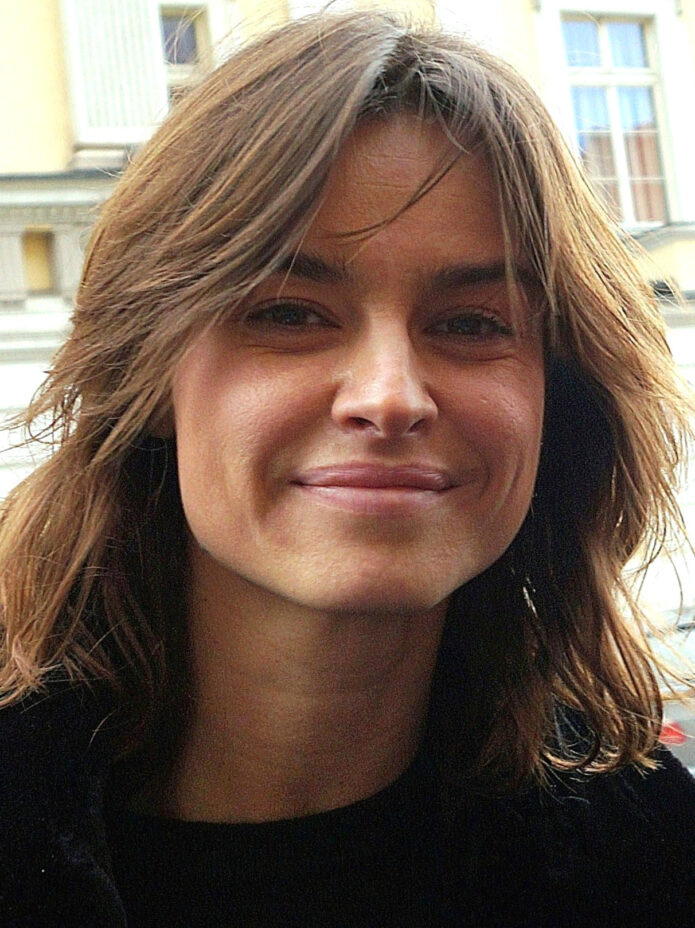
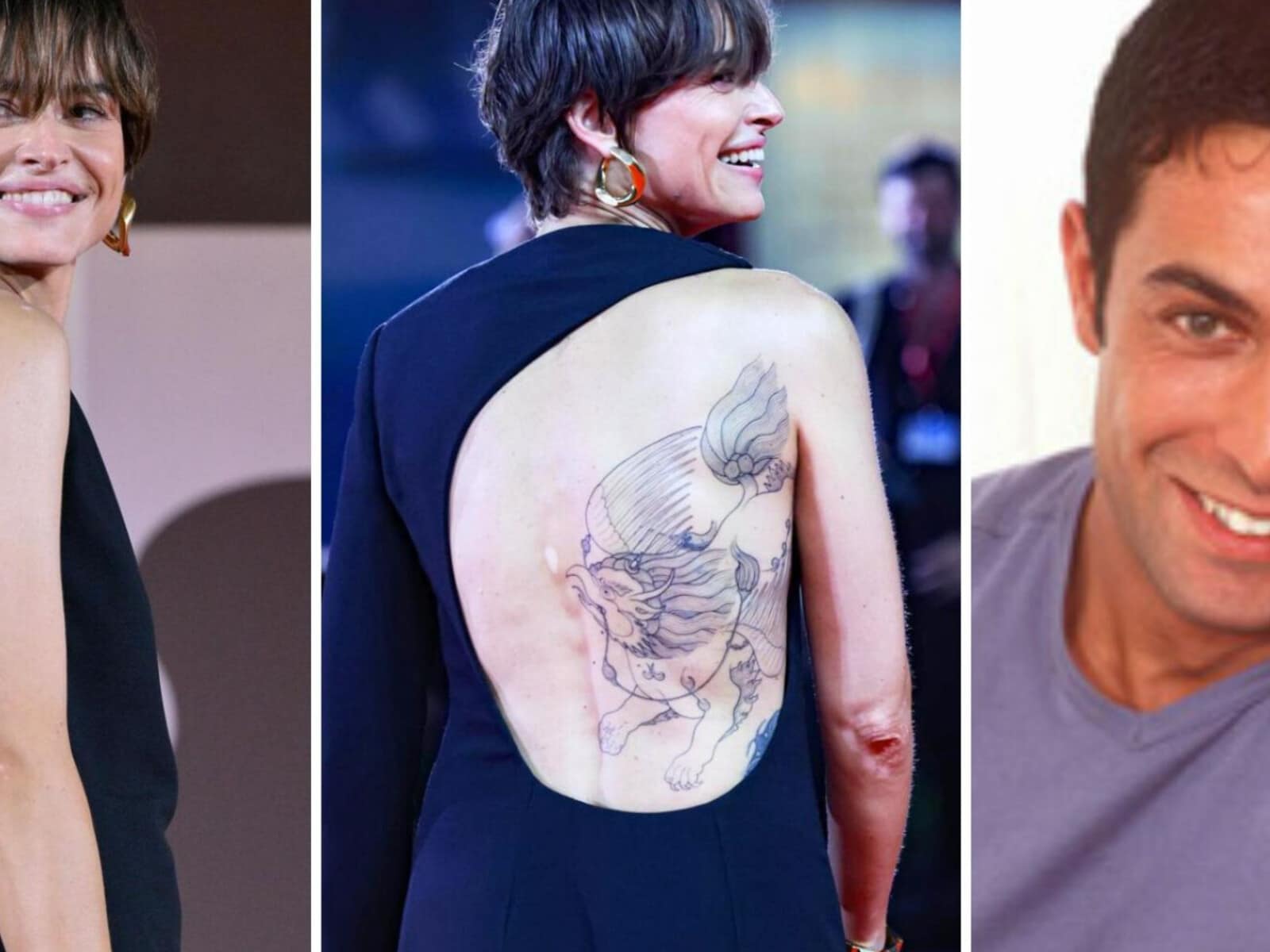
Kasia Smutniak’s tattoos can be easy to miss in a quick red-carpet photo. She often keeps them under simple, dark clothes, then lets them show in an open-back dress or a low side cut. There’s a lot to see when the ink is visible: an older neck tattoo, a personal line of writing, a butterfly and a large myth-inspired design across her back.
The newest piece draws the most attention, but it seems to have changed the story of the older tattoos too. It covers or reworks an earlier design, making the result feel like a new chapter rather than a random cover-up. Here’s what can be established from Kasia’s public photos and the reporting around them.
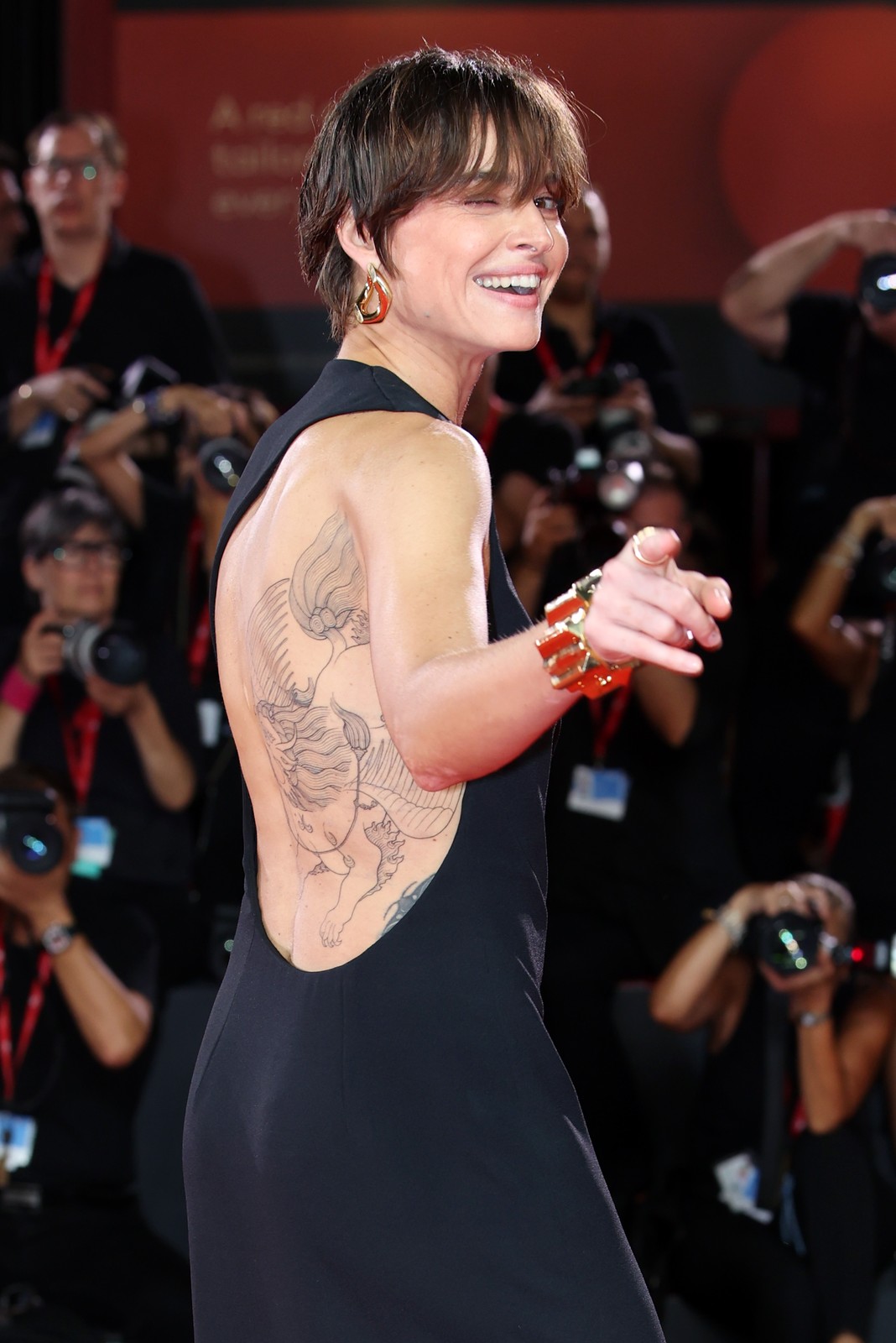
The big Garuda and Pixiu tattoo covers the right side of her back
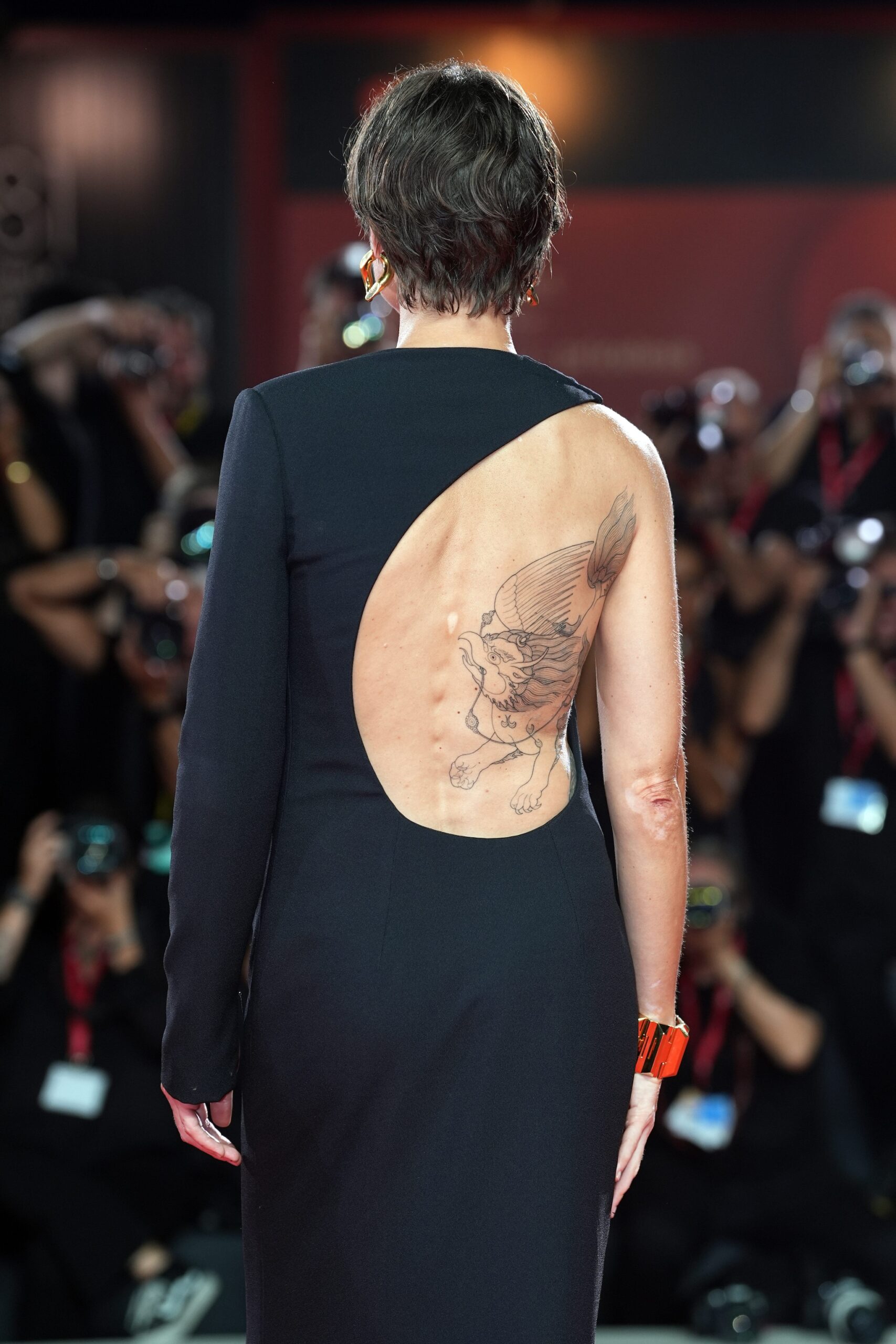
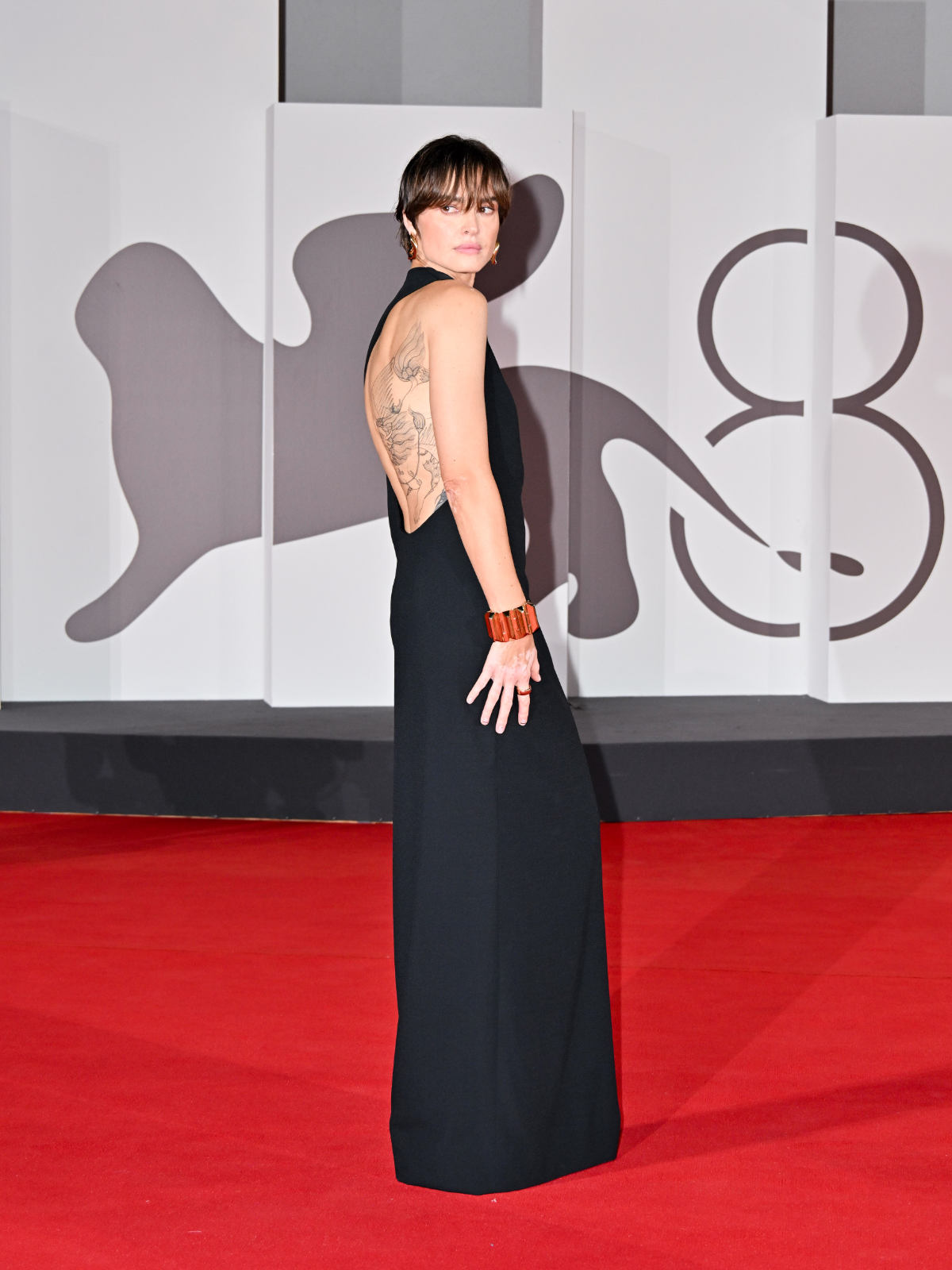
Kasia’s main tattoo is a large black-and-grey design that runs down the right side of her back and around toward her side. It has a winged shape, a strong animal head, sweeping lines and plenty of fine detail. Reports around the 2024 Venice Film Festival described it as a Pixiu, a Chinese mythological creature often shown with a lion-like body and a dragon’s head.
There’s another layer to the imagery. Kasia shared words connected to Garuda, the powerful bird-like figure in Hindu and Buddhist traditions, and wrote “il guerriero”, or “the warrior.” It’s safer to describe the tattoo as drawing on several references than give it one tidy label. Coverage points to the winged-lion and warrior ideas, but the design is personal and she hasn’t explained every symbol publicly.
The placement is part of the effect. A backless dress reveals the tattoo in one sweep, while an ordinary top hides it completely. In the Venice photos, the open gown almost makes the ink look like part of the dress. The lines follow the curve of her body instead of sitting in a small, separate patch.
What Pixiu means in the tattoo’s visual language
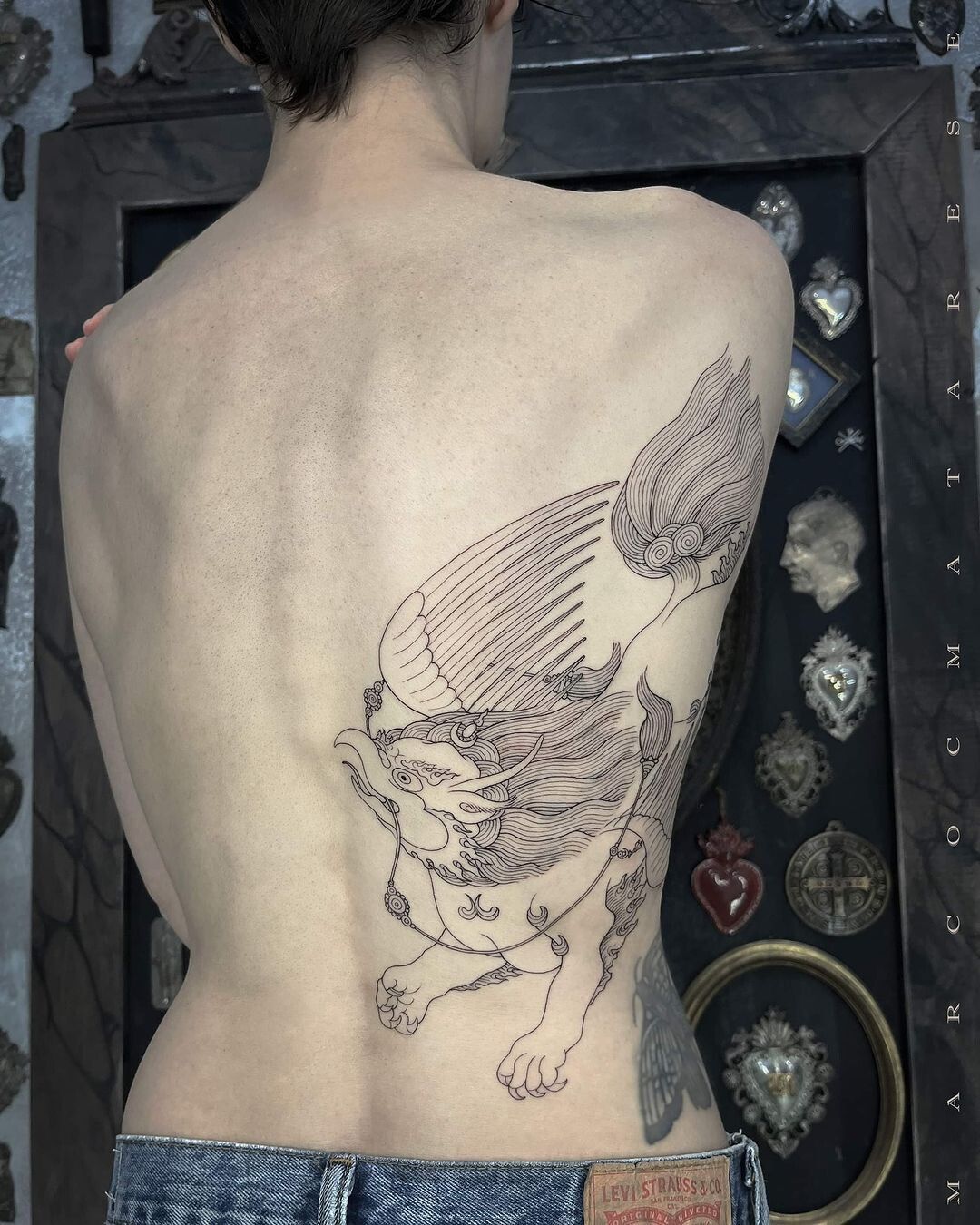
Pixiu is commonly associated with protection and good fortune, and is often described as a guardian. A tattoo of the creature can suggest strength or keeping bad energy away. That reading fits the way Kasia’s design looks: it isn’t delicate from a distance. The wings and heavy body give it a sense of movement and force.
Still, it’s best not to overstate the meaning. Kasia hasn’t shared a detailed official explanation of every part. The clearest public clues are the wording around the warrior and the descriptions that appeared at the time. Anything beyond that is interpretation, not a confirmed statement from her.
That distinction matters because the tattoo has attracted dramatic guesses. Some reports wondered whether it was connected to Pietro Taricone, Kasia’s former partner and the father of her daughter. The design may hold private memories, but the public record doesn’t establish a direct dedication. What we can say is that it replaced or covered earlier work, and Kasia chose to show it when the warrior imagery was easy to notice.
The tattoo was still being finished when she first showed it
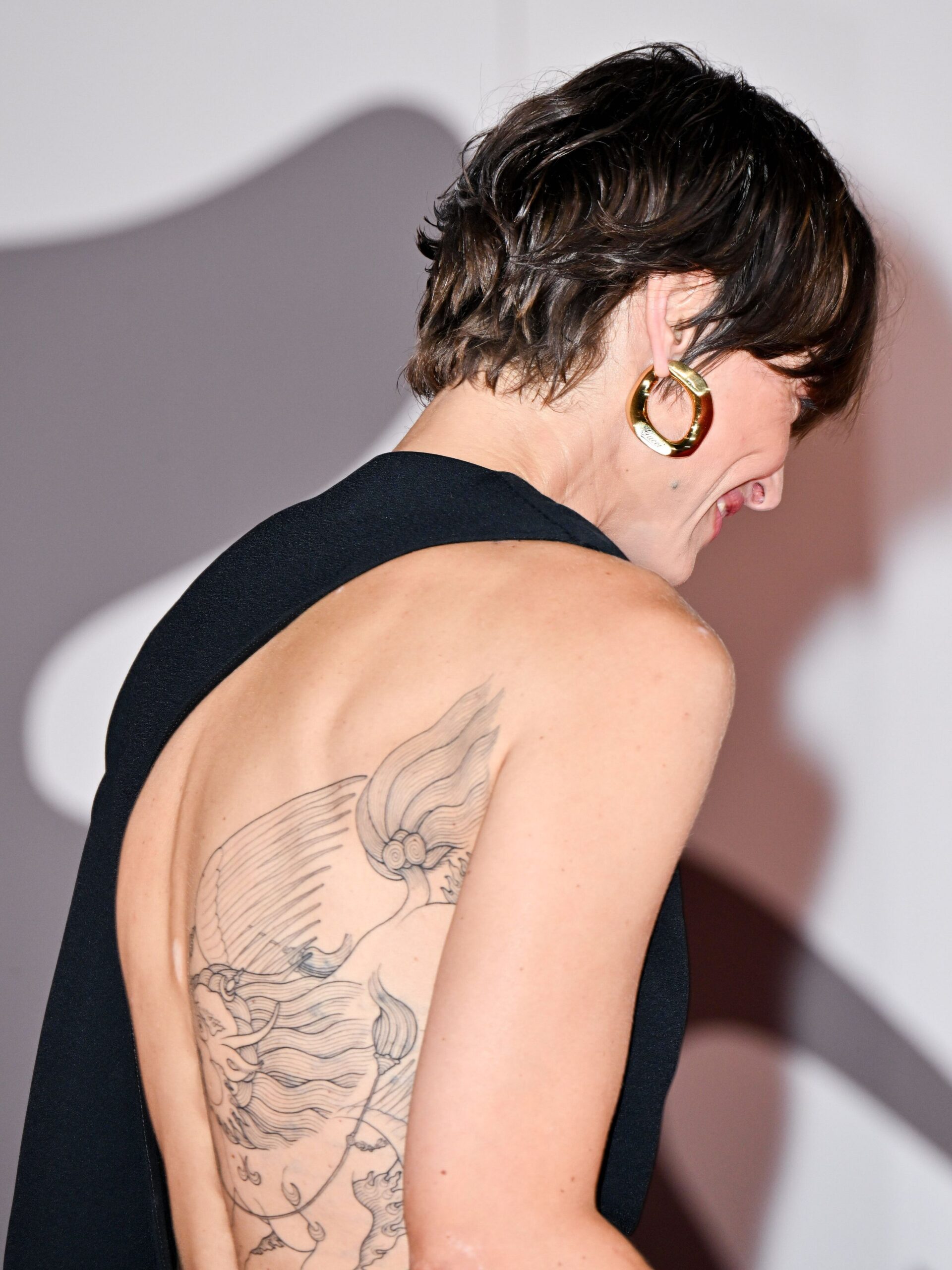
Photos from the reveal suggest the back piece was still in progress. The linework is already substantial, but some details appear sharper in one photo than another, partly because of lighting and partly because the images were taken at different stages. That’s normal for a large tattoo, which may take several sessions and look different as it heals.
Italian coverage named the artist as Marco C. Matarese, a Milan-based tattoo artist. Knowing who made the new piece helps explain its style, but it doesn’t mean he did every tattoo Kasia has. The older designs seem to belong to a different period and a simpler visual language.
The back and side also give an artist room to build one connected composition. Instead of a row of small designs, Kasia now has a broad image with wings, a creature’s body and long, flowing lines. Even when a photo shows only part of it, the tattoo reads as a single scene.
The old neck tattoo is a small tribal design
Before the large back piece, one of Kasia’s documented tattoos was a small tribal-style design behind her neck. It’s far more compact than the Pixiu and sits high enough to show when her hair is short or pulled back. A gallery article from 2018 identified it as her first tattoo.
“Tribal” is a broad description of the visual style, not a precise cultural identification. The public source uses the term for the shape and look; there’s no reliable explanation linking it to a particular people or tradition. The safest description is a small black tattoo behind the neck, made of curved, graphic lines.
The placement helps explain why it has stayed relatively private. Hair, a collar or a high neckline can cover it. Compared with the newer back piece, it feels almost like a signature: small, easy to hide and visible when Kasia wants it to be.
She has a line of writing across the upper body
Another older tattoo described in the public gallery is a line beginning “Se Dio mi regalasse…”, which translates as “If God were to give me…” The phrase is associated with a piece across her bust or upper torso; the gallery also describes a butterfly flying along her side.
The available descriptions leave the sentence unfinished, so it’s better not to turn it into a made-up quote. We can say the tattoo pairs handwritten text with a butterfly. That gives it a different mood from the heavy mythological creature on her back: the writing feels intimate and open-ended, while the butterfly adds a small sense of movement.
It also shows that Kasia’s tattoos haven’t followed one strict style. The older pieces are personal and relatively light; the new back design is dense, dark and expansive. They can look like they belong to different people, which is why the collection reads as a timeline rather than a matching set.
The butterfly and the writing are easy to miss
Most photos of Kasia focus on her face, clothes or film work, so the older torso tattoo isn’t as well documented as the newer back piece. It tends to appear only when a dress reveals the side of her body. That limited visibility may be why some online descriptions reduce her collection to one large back tattoo and leave out the earlier work.
The butterfly is worth including because it changes the feel of the design. Butterflies are familiar tattoo images, but here one sits beside a sentence rather than on its own. It almost works like punctuation at the edge of the writing. Without a clear, full view, its exact size and direction are hard to confirm.
The same caution applies to the older design that the new tattoo seems to cover. Some reports connect the change to a past relationship, but that remains speculation. What the photos show is enough: earlier work has been absorbed into a much larger composition, and the new image now carries most of the visual weight.
Every known Kasia Smutniak tattoo, at a glance
Based on the public documentation available, the collection includes:
- A tribal-style tattoo behind the neck, described as her first tattoo.
- Writing across the upper body beginning “Se Dio mi regalasse…”
- A butterfly near the side, visually connected to the writing.
- A large winged creature on the right back and side, described with Pixiu and Garuda references.
- The word or idea “guerriero”, meaning “the warrior,” associated with the newer design.
That’s the documented list, not proof that Kasia has no other private or rarely photographed tattoos. The available material shows a handful of clear pieces, but it doesn’t support a huge catalogue of small symbols. It’s better to leave uncertain areas out than to call every dark mark in a red-carpet photo permanent ink.
Why the collection feels personal instead of planned
Kasia’s tattoos look as if they were added at different points in her life. The neck design is compact; the writing and butterfly feel reflective. The new back tattoo is more confident and theatrical, but it still draws on a personal vocabulary of protection, strength, flight and the idea of a warrior.
That variety is what makes the collection interesting. The tattoos don’t all deliver the same message or share one polished studio style. Some are private reminders that disappear under clothes; one is a large statement that takes over a red carpet. The collection feels lived in, not designed for a single photo shoot.
A cover-up doesn’t erase the past entirely. Even when the old design is hard to see, it has shaped the size and placement of the new one. Kasia’s back tattoo is now the piece most people talk about, but the smaller neck and torso tattoos give the story its earlier chapters.
Watch Kasia talk about the tattoo
There’s no need to pretend every detail has been explained in a caption. In this tattoo-focused interview, Kasia discusses the large back piece and its story:
Kasia Smutniak’s ink is a good example of why tattoo coverage needs more than a cropped red-carpet photo. The Pixiu- and Garuda-inspired piece is the headline, but the older neck tattoo, unfinished line of writing and butterfly fill in the picture. Together, they show a collection that has changed over time without losing its personal edge.