Vanessa Hudgens’s tattoos are small, but they hold a lot of story. Her collection started with a butterfly at the back of her neck and grew to include fine-line lettering, flowers, friendship marks and symbols tied to people and projects she cares about. The pieces don’t look like a random mix; they feel chosen, with some easy to show and others easy to keep private.
Hudgens has talked about some of her tattoos, while others have appeared in photographs and close-up social posts. Together they point to freedom, friendship, personal courage and creative memories.
Tattoo lists don’t always agree on how to count the smallest marks or matching designs. This guide sticks to the pieces that are best documented and labels uncertain details carefully.
The butterfly was her first tattoo
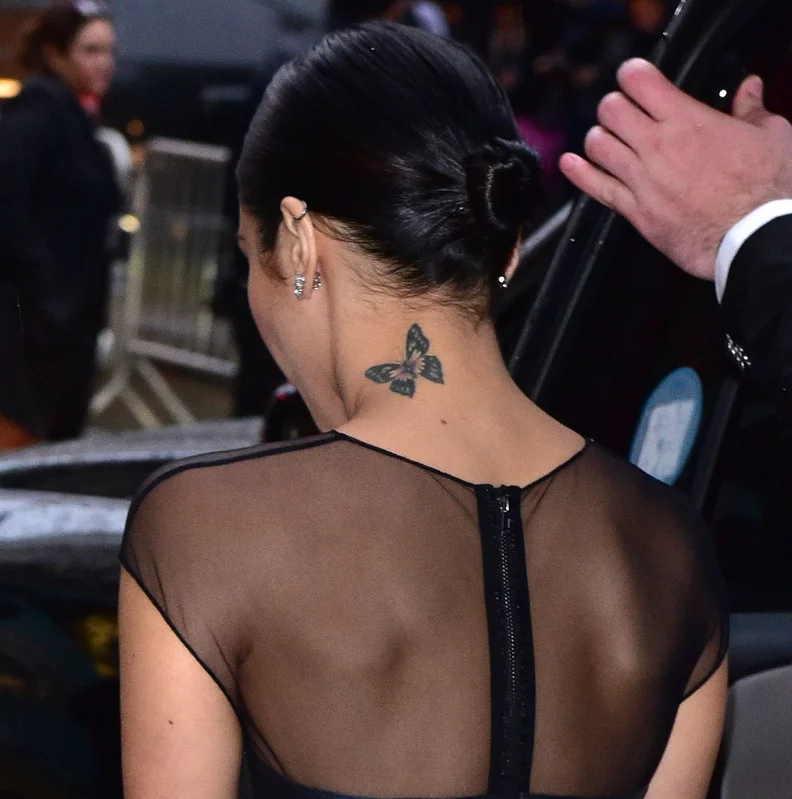
Hudgens’s first tattoo is the small butterfly on the back of her neck. She has said it felt personal because Vanessa is associated with the butterfly. The design is more than a pretty piece of nature imagery; it’s a visual connection to her name.
The placement lets her decide when it shows. The butterfly is visible when her hair is up and can disappear beneath her hair or clothing. That suits an actor whose look changes often, as well as a symbol associated with movement and change.
Photographs at premieres and events often catch the tattoo from behind. It can be easy to miss in a regular portrait, then clear when she turns her head. It’s a small signature that appears at just the right angle.
The butterfly is one of the easiest pieces to confirm: photos show the design and placement, and Hudgens has explained its connection to her name.
Cages or Wings turns a film lyric into ink
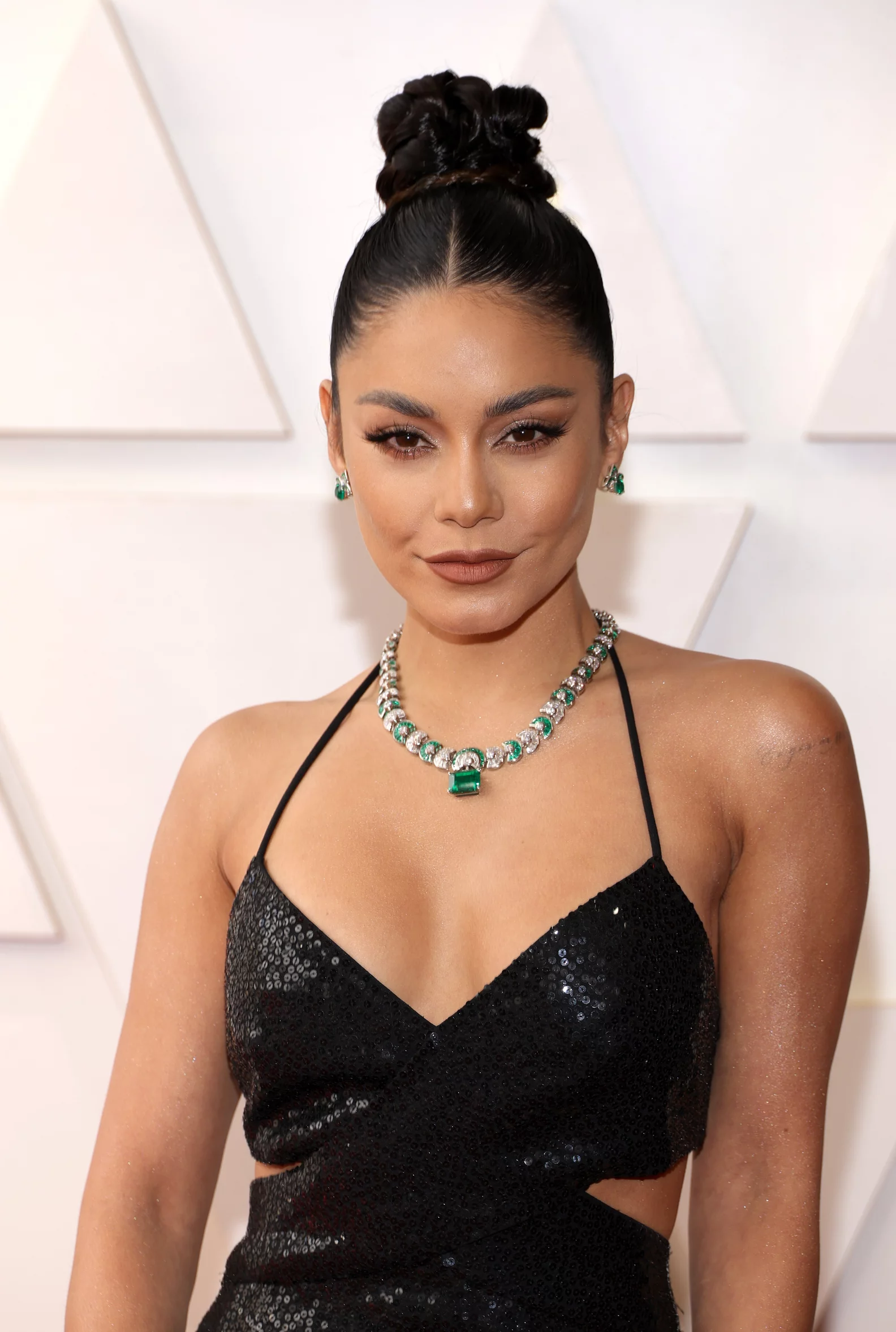
One of Hudgens’s most personal script tattoos reads “Cages or Wings”. The phrase comes from “Louder Than Words,” a song in the film Tick, Tick… Boom!, in which she played Karessa. It connects the tattoo to a creative project rather than a general quote.
The image of a cage suggests fear or restriction; wings bring to mind risk and freedom. Hudgens has described the line as meaningful to her. Placed on her upper arm, it’s more visible than the butterfly.
It also feels like more than a title stamped on skin. The phrase asks a question: are you choosing the cage, or the wings? That tension gives the words their force.
Fine-line script can fade or blur in photographs, so the letters may look different from one image to the next. The phrase, its link to the film and its upper-arm placement are the details most consistently documented.
The sunflower brought a burst of warmth
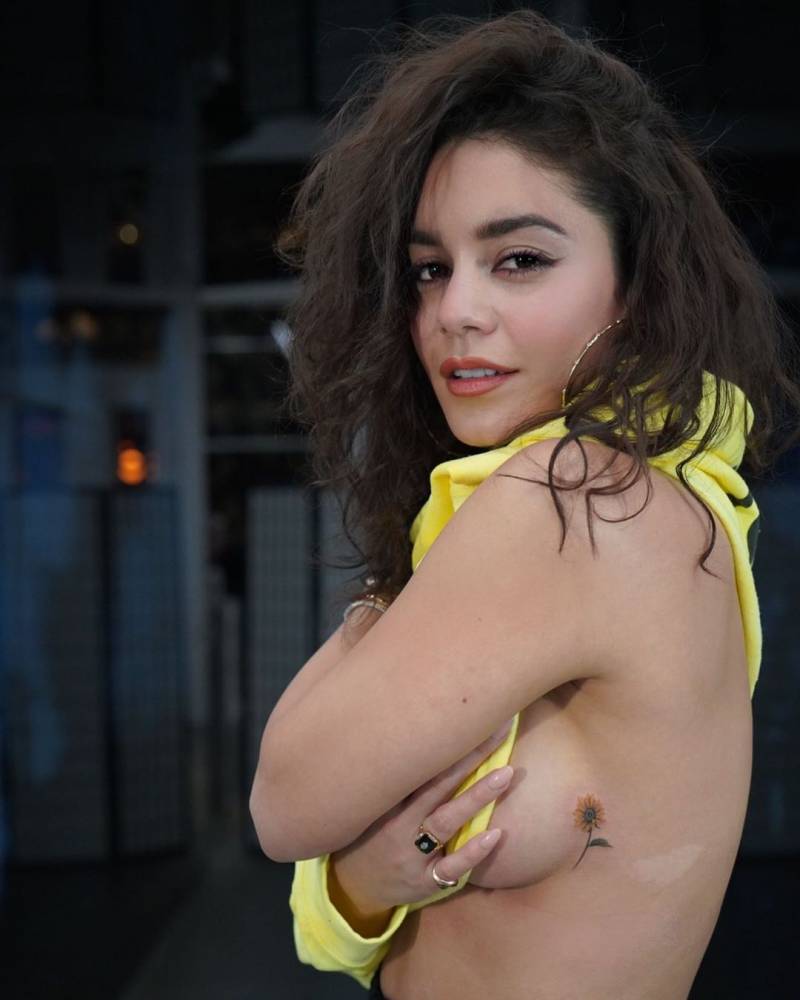
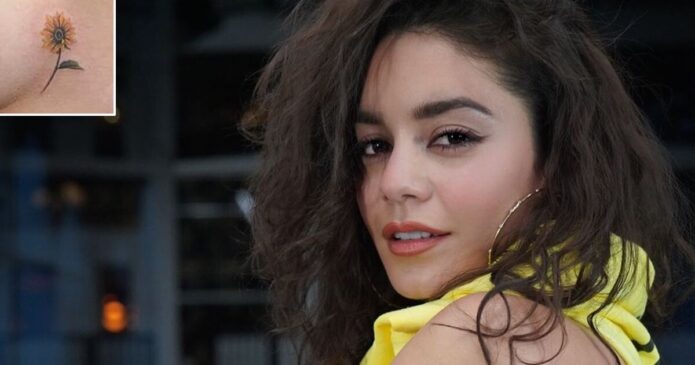
Hudgens also has a sunflower tattoo along her side. A photograph shows its placement, though the coverage most often repeated doesn’t give one definitive meaning from Hudgens herself. A tattoo can matter to its owner without coming with a public explanation.
Sunflowers often suggest brightness, growth or turning toward the light. Those are reasonable interpretations, but they remain interpretations unless Hudgens confirms them. The flower adds a warm, organic detail beside the fine lettering and butterfly.
The side placement keeps it relatively private. It may show in one outfit and remain hidden in another, much like the butterfly appears only when she turns her head.
The sunflower and “Cages or Wings” bring different things to mind: a flower associated with growth and a phrase about making a choice. Together, they give the collection a hopeful tone without making every tattoo say the same thing.
Matching friendship tattoos matter just as much
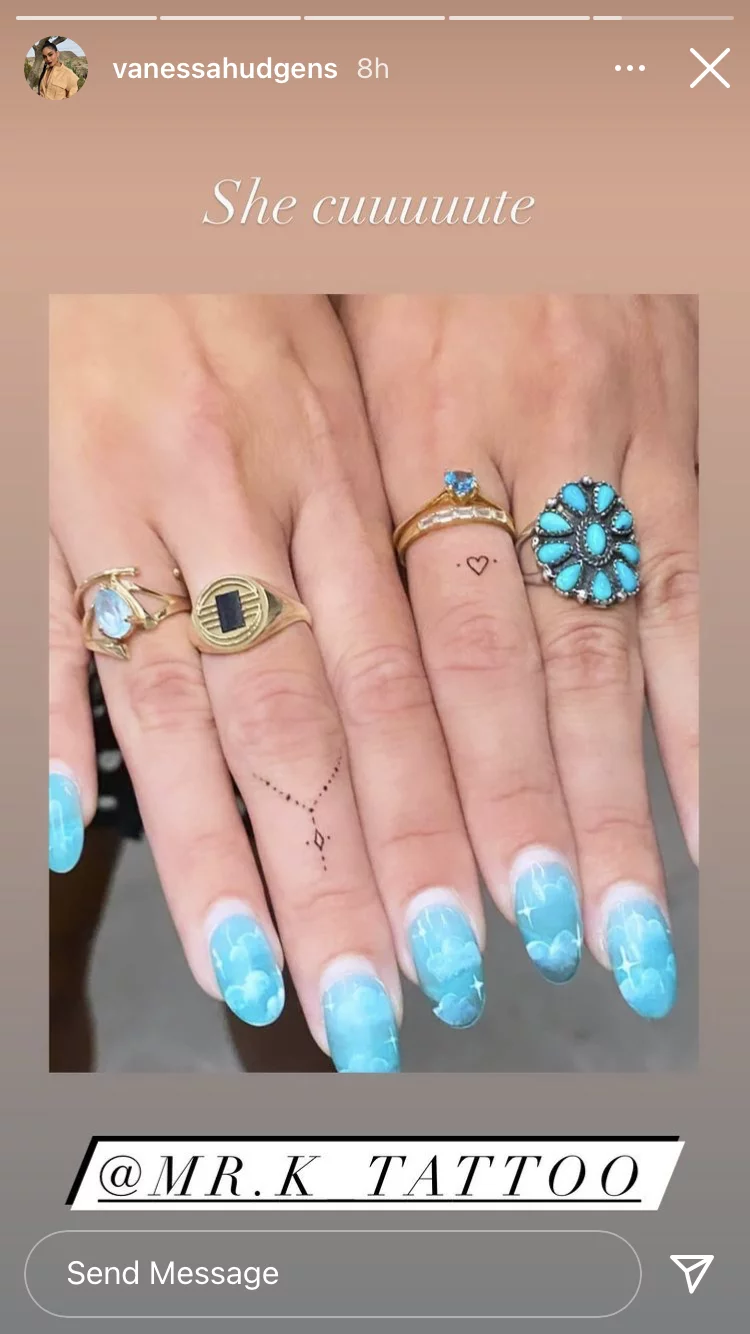
Some of Hudgens’s smaller tattoos are linked to friends and shared experiences. Matching designs may be as simple as a tiny heart or line, but their meaning comes from choosing them together. To other people, the mark may look small; to the friends, it carries the memory around it.
That helps explain why the collection doesn’t need one visual theme. A friendship tattoo can sit beside a film lyric because the connection between the designs is personal, not stylistic.
A matching tattoo can hold a promise without needing a speech. Hudgens has spoken warmly about getting tattoos with friends, and the small marks suit her preference for ink she can carry quietly.
The exact number is hard to pin down because photos don’t always show every matching partner or placement. What is well established is that friendship and shared memories are recurring reasons for her tattoos.
Small new tattoos expanded the collection
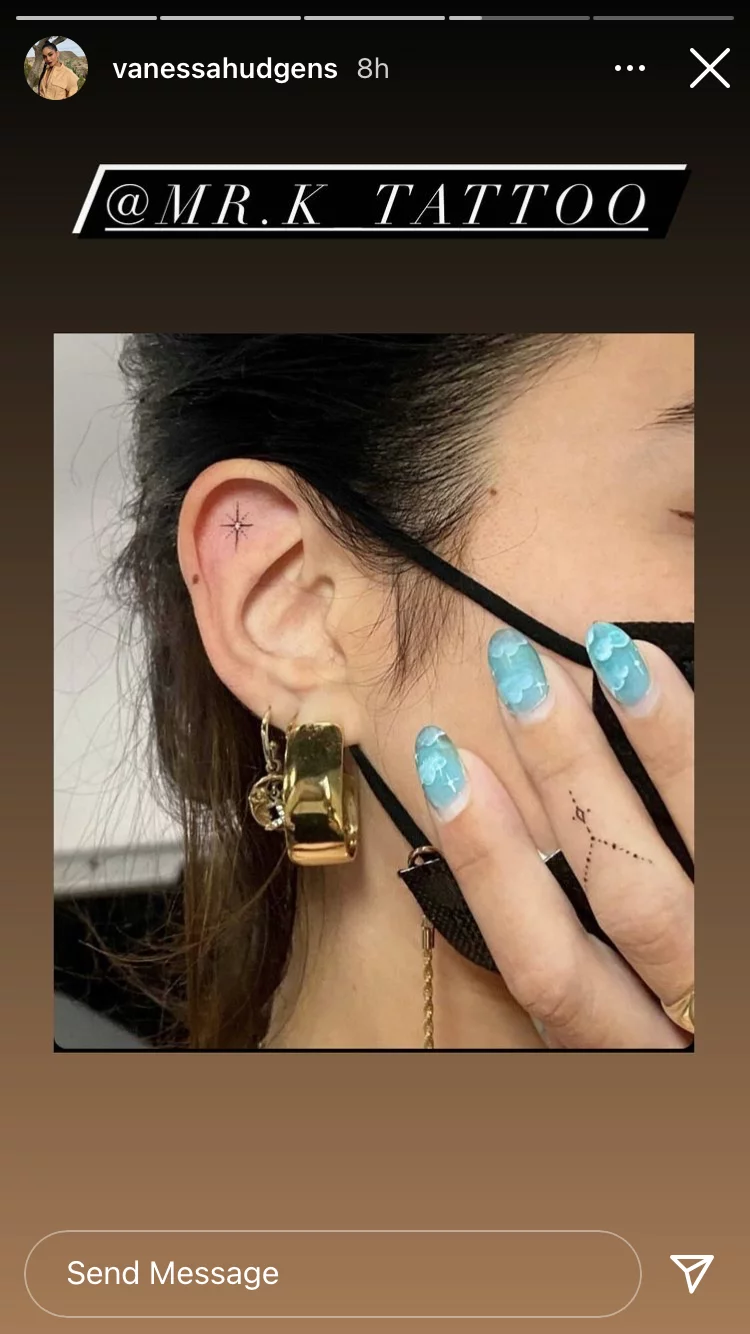
Over the years, Hudgens has added other delicate pieces, including small symbols and fine-line designs seen in social posts and event photos. Some are easy to identify; others appear too briefly or too small to describe with confidence. That’s common with fine-line tattoos.
Their value isn’t in their size. They may remind her of a person, place or creative project. The butterfly connects to her name; “Cages or Wings” to a film and a question about freedom; the sunflower adds a natural image; and the matching designs point to friendship.
A gallery that promises a complete list can make every dot look like a new tattoo. It’s better to compare photos and check whether the same design appears more than once. Two views of one tattoo don’t make two tattoos. This is especially useful with neck and arm pieces that look different under flash photography.
Some of the collection remains private. The tattoos Hudgens has explained tell us a lot; the others can stay unexplained.
Why her tattoos feel so connected to change
Hudgens’s tattoos form a loose timeline. The butterfly connects to her name and to transformation. The film lyric recalls a creative chapter and a choice between limits and freedom. The sunflower brings a warm image, while the matching tattoos hold onto friendships.
The designs don’t need to add up to one message. People change, and a tattoo can hold a memory from an earlier version of the same person. A design that felt right at twenty can still matter years later, even if the wearer sees it differently.
There’s a relaxed quality to the collection. Hudgens didn’t build a set of matching symbols from one catalogue; the pieces arrived through life, work and relationships. The ink is delicate, but the reasons behind it aren’t shallow.
Her tattoos look like small doors into memories. The design or lettering is visible, while the whole story still belongs to her.

A careful inventory of Vanessa Hudgens’s ink:
The clearest pieces include the butterfly at the back of her neck, the “Cages or Wings” script inspired by Tick, Tick… Boom!, the sunflower on her side, and several small friendship or matching tattoos. Other fine-line symbols appear in photos, but neither their exact number nor their meaning is always confirmed.
That’s enough to show a pattern: the tattoos connect to identity, creative work and people close to her. They aren’t just decorative additions for a passing trend.
For readers trying to identify them, start with placement: the butterfly behind her neck, the script on her upper arm, the sunflower at her side and smaller friendship designs on her arms and hands. Compare photos carefully, and don’t count a mirrored or cropped image twice.
Hudgens wears her memories lightly, but she does wear them. The tattoos are small enough to feel personal and clear enough to tell a story when she chooses to show them.
The butterfly still works as the starting point. It’s personal without being closed off, and later designs extend its themes of movement, affection and choosing what to carry forward. The collection feels thoughtful because the tattoos belong to Hudgens before they belong to an audience.
Watch Vanessa Hudgens explain her butterfly tattoo
This short interview focuses on the meaning behind her first tattoo and adds context to the butterfly that began the collection.