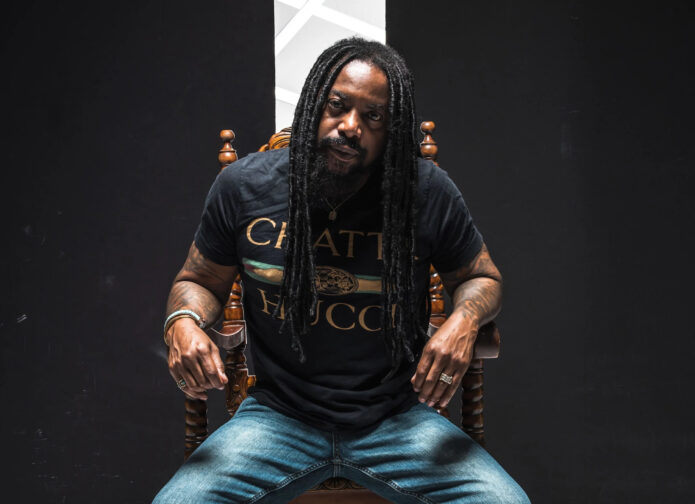
Lajon Witherspoon’s tattoos have been part of the Sevendust singer’s life for decades. He got a tribal band on his right arm at 17; later additions include family designs, religious imagery and a chest piece. A well-known cover-up replaced an older mermaid tattoo.
The collection has changed with him. Some tattoos mark where he started; others connect to his wife, children or faith. In an interview with Loudwire, he explained the religious cover-up. He also discussed his artists and family tattoos with Maytherockbewithyou. Those interviews help separate what he has said from what a concert photo can show.
The photos are useful for placement, but they do not identify every mark. A Rock Ink interview gives a closer look in his own voice.
His first tattoo was a tribal band on the right arm
Witherspoon has said his first tattoo was a tribal band around his right arm, done when he was 17. He remembered the point of making the choice: once it was inked, it was not coming out.
The band came before the family and religious designs that later became part of his collection. It is simple beside the larger pieces, but it set a starting point: every later tattoo would sit alongside that first mark.
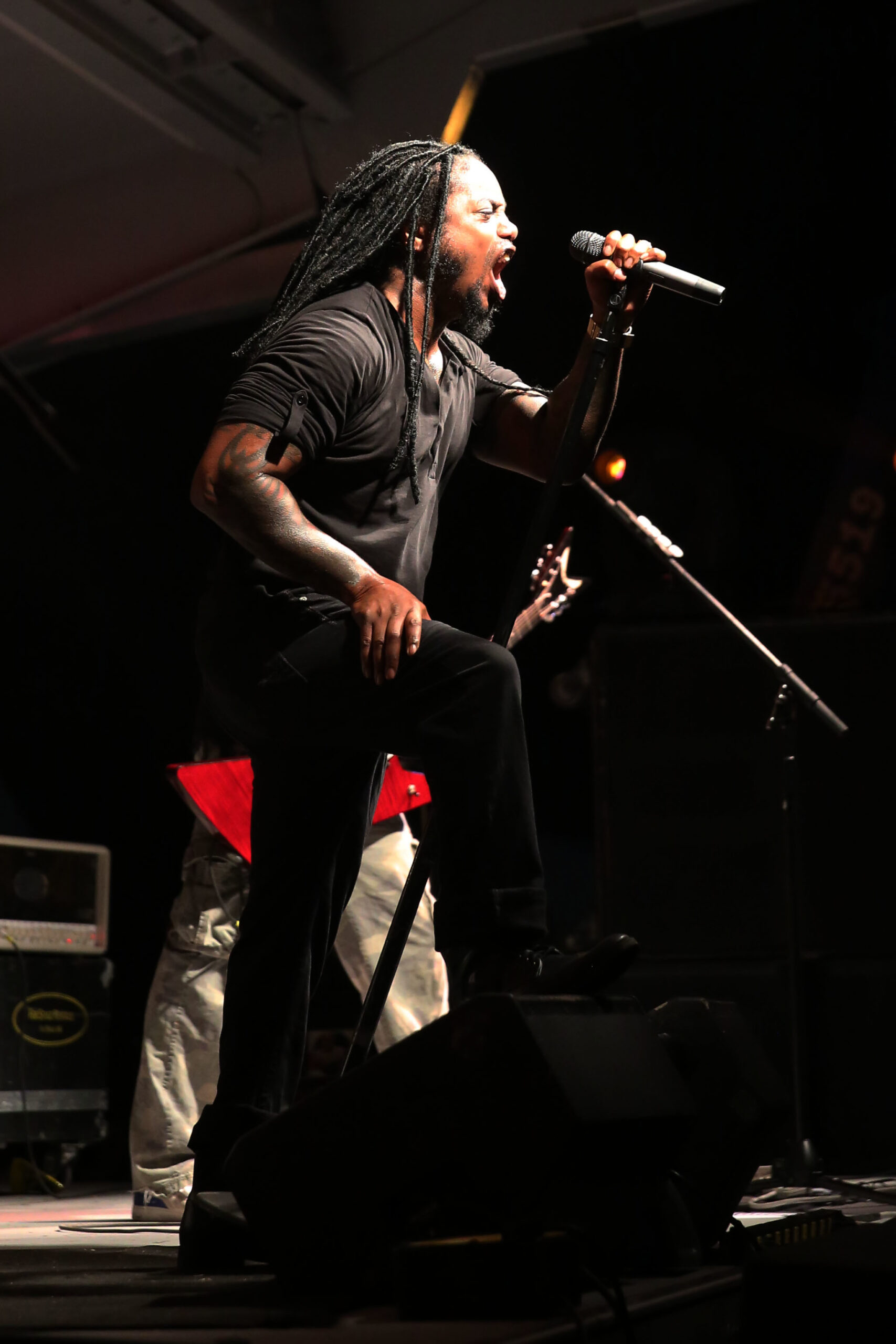
A band wraps around the arm, so it remains part of the picture when he raises a microphone or reaches across the stage. It also shows up in older Sevendust photos even when a shirt or dark lighting hides the rest of his ink.
The arm work is easiest to see when he performs
Most public photos show Witherspoon singing rather than sitting still for a tattoo portrait. That makes live shots useful for scale, though the angle can change from one frame to the next.
Sharper stage photos show extensive work on both arms. They do not offer a reliable inventory of every symbol, especially where shadows cover the skin. They do make the overall coverage clear: the tattoos are a visible part of his stage presence.
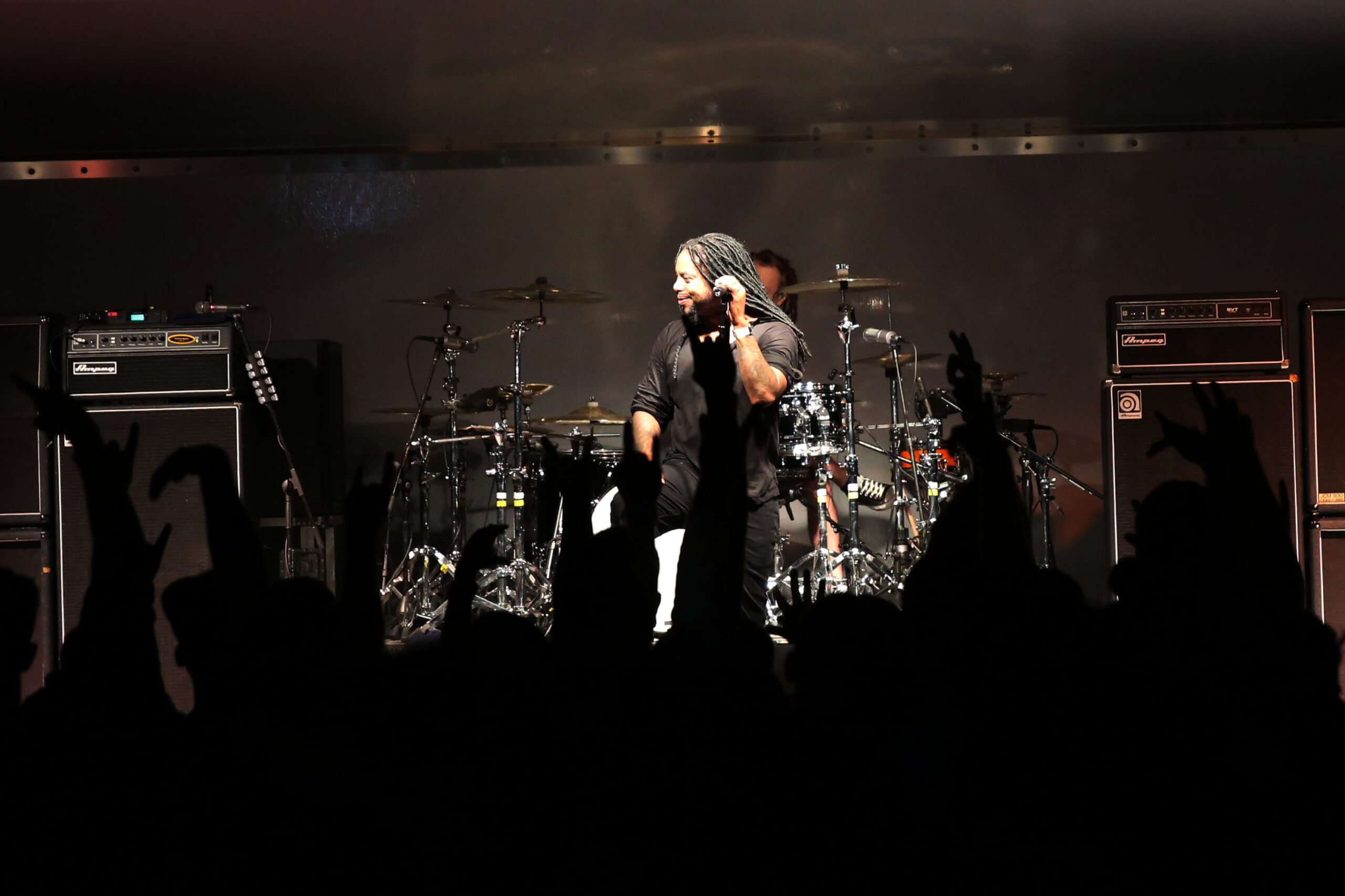
A face-focused publicity portrait may work as a featured photo, but it tells readers little about the tattoos. The useful images leave the arms, upper chest or shoulders visible long enough to show where the ink sits.
Clothing and light change what can be seen. A sleeveless top exposes more of the upper arm; a T-shirt can cover the chest. Daylight brings out linework, while a dark stage can make black ink blend into the background. Several views give a more honest account than one dramatic shot.
Family ink and the chest piece add a personal layer
In an interview with Maytherockbewithyou, Witherspoon said he had tattoos connected with his wife and children. He named Philip Lewis of New Zealand, Tony Levis in Miami, and Stu from Fort Wayne among the artists involved. Lewis worked on his chest piece; the newest tattoo at the time was for his wife and newborn child, placed on his arm.
Those comments add a timeline without asking a concert photo to supply names or dates. The family pieces connect the ink to people close to him rather than simply filling space.
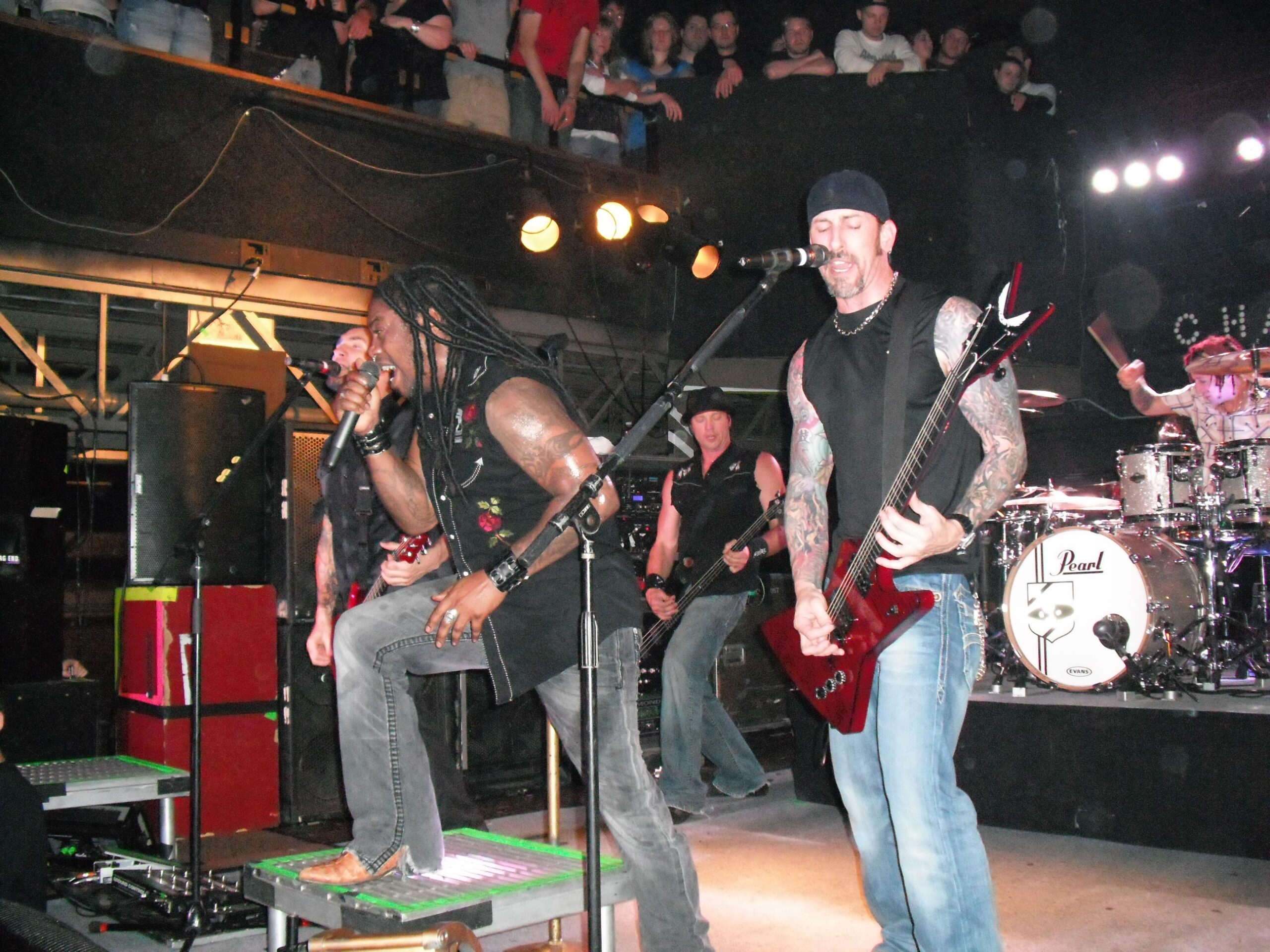
A family tattoo can matter even when a crowd cannot see it clearly. The public photos confirm that Witherspoon has talked about family-related designs; they do not let us assign a specific name or date to a blurred section of skin.
The chest piece is harder to document because a shirt hides it in most performance photos. The visible arms and neck may tell only part of the story, while interviews provide details the camera cannot show.
Religious tattoos cover an older mermaid image
The best-documented cover-up is on Witherspoon’s left forearm. Loudwire reported that portraits of Jesus and Mother Mary now cover an older mermaid tattoo. Witherspoon described the earlier image directly.
He said his life had changed: he was older, married and raising children, and no longer wanted the mermaid on his arm. The religious portraits gave the area a new meaning.

A cover-up changes what is visible, but it does not erase the older tattoo from someone’s history. In this case, the portraits mark a different point in Witherspoon’s life; the placement holds both chapters, even though only the newer design can be seen.
That context matters as much as the image itself. The forearm has religious art, but the story is also about why he chose to replace the mermaid. It is a change in priorities, not proof the earlier choice never happened.
Older photos show how the collection developed
Older Sevendust performances and appearances show the arm work at different angles. A close frame can make it look dense; a wider photo shows how the tattoos sit across his body.
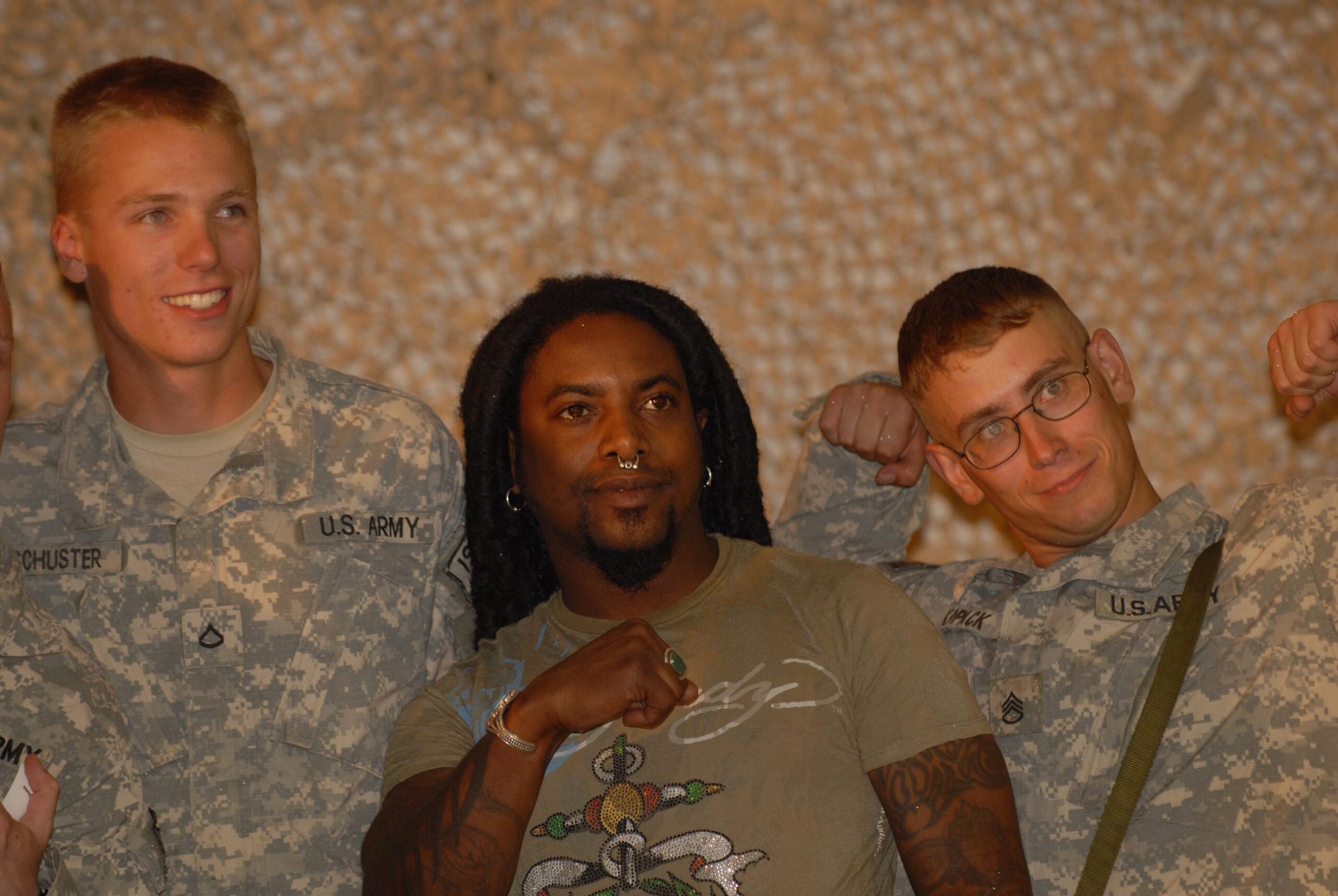
Photos from a Sevendust visit to Afghanistan are useful for placement: the arms are uncovered, the light is more even than in a dark club, and the images show how much of the visible skin is tattooed. They still do not identify every design, but they are better references than a cropped thumbnail or a publicity portrait.
For tattoo inspiration, the useful parts are the scale, placement and personal history. The first tribal band sits beside later family designs; religious portraits cover an image he no longer wanted. A cover-up changes the look of an arm without removing the earlier chapter from his story.
What the public record confirms
The main details Witherspoon has discussed or that are visible in the photographs are:
- His first tattoo was a tribal band around his right arm, received at 17.
- He has discussed tattoos connected with his wife and children.
- He has talked about a chest piece and named Philip Lewis, Tony Levis and Stu among the artists connected with his work.
- Portraits of Jesus and Mother Mary cover an older mermaid tattoo on his left forearm.
- His arm tattoos are extensive, but public photos do not provide a complete inventory of every design.
What remains uncertain matters too. A fan caption cannot identify a family member, and a dark stage photo cannot confirm a symbol that only looks familiar from a distance. The interviews establish the stories he has told; the photos show placement without filling in the gaps.
That approach lets readers see where the tattoos sit and which details Witherspoon has actually shared. For more documented ink from bands and artists, visit the musicians section.
Watch Lajon Witherspoon talk about his tattoos
The Rock Ink segment lets Witherspoon discuss the pieces himself and shows how the tattoos move with him. It is a useful companion to the interviews and photographs above.
Sources: Loudwire’s interview about the religious cover-up, Witherspoon’s artist and family tattoo comments, Tattoo the Earth interview, and Wikimedia Commons photographs.