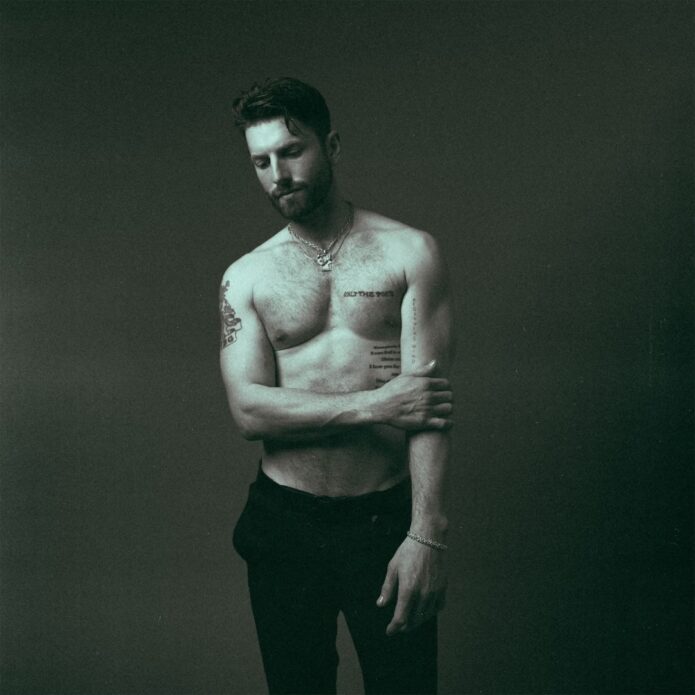
Marc E. Bassy’s tattoos make a pretty clear argument about what stays with him. They’re not random filler scattered over a body. The pieces point back to family, music, poetry, and the people who helped him find his voice. Some are bold enough to read from across a room. Others are small, personal marks that only make sense once he explains the story behind them.
That mix gives the collection a lived-in feel. Bassy has talked about getting his first tattoo young, before he had any polished idea of how everything would fit together. Then the designs started following the shape of his life. A move to Los Angeles brought a microphone. Discovering classic soul brought a set of lyrics to his ribs. His first solo project and a James Baldwin line eventually landed on his chest.
The useful thing about his tattoo tour is that he doesn’t pretend the decisions came from one grand plan. There’s a bit of teenage bravado, a bit of romance, and a lot of music history. It feels less like branding and more like a notebook he happened to keep on his skin.
The first piece was a Griffin with a family story behind it
Bassy says his first tattoo arrived around the time he turned 18. The mood was familiar: he was young, feeling a little fearless, and ready to prove he could handle some ink. A close friend had drawn a personalised family crest, and Bassy wanted something that carried the same kind of private mythology. The answer was a Griffin, the legendary creature that also connects to his name.
The image wasn’t chosen just because it looked dramatic. Bassy explained that his father had died a couple of years earlier, so the tattoo became a tribute. The design includes his dad’s initials, which turns the Griffin from a general fantasy symbol into something much more specific. It is a family marker first and a piece of body art second.
That distinction matters. Plenty of first tattoos are picked because they look good in a book or because a friend has one. Bassy’s first piece has that youthful energy, but it also carries grief and memory. The Griffin is the foundation of the whole collection: a little bold, a little theatrical, and tied to someone he wanted to keep close.
It also explains why his tattoos don’t read like a single matching sleeve. The collection grows through associations. One piece opens a door to a person, a record, or a moment, and the next one follows. The early tattoo is not trying to tell his entire story; it is where the story starts.
An old school microphone marked the move to Los Angeles
The next tattoo arrived after Bassy moved to Los Angeles. He says he was 18 or 19, had just committed to becoming a singer, and was looking for a design that matched the direction his life was taking. He spotted an old school microphone in a tattoo artist’s drawing book and decided to go for it.
There’s something almost refreshingly direct about that explanation. No complicated symbolism, no invented backstory added years later. He was starting to take singing seriously, and a microphone felt like the honest image for that decision. The tattoo captures the point where music shifted from something he enjoyed into something he was willing to build his life around.
It also fits the way Bassy talks about his work. His songs move between R&B, hip-hop, soul, and pop, but the common thread is the voice. The microphone is a simple emblem of that. It represents the actual tool of the job, the thing that turns private writing into something other people can hear.
Placed next to the Griffin in the timeline, it shows the collection moving from family history to creative identity. One tattoo looks back at his father; the next points toward the artist he was becoming. That is a small shift, but it gives the early pieces a natural rhythm.
The rib lyrics came from Sly and the Family Stone
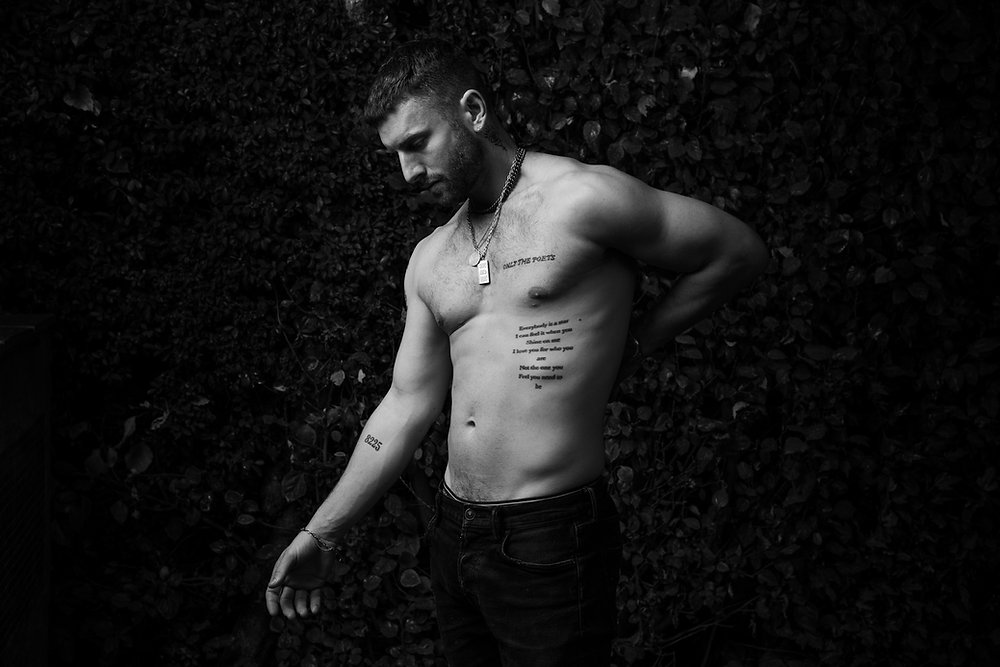
Bassy’s rib tattoo is the kind of piece that rewards a closer look. He got it while he was digging into older records and becoming fascinated by classic soul. The words come from Sly and the Family Stone’s Everybody Is a Star, a song he describes with real affection.
The line he chose is about accepting somebody as they are instead of asking them to perform a version of themselves. Bassy has explained that the message landed because it is simple and honest. It is the sort of sentence that sounds obvious until you need to hear it. He had the lyrics placed on his ribs while his girlfriend watched, adding a relationship memory to the music reference.
This is where his tattoo collection gets especially personal. He isn’t just naming a favourite artist. He is preserving a feeling he connected with at a particular point in his life. The words sit close to the body and stay mostly hidden unless he chooses to show them. That private placement suits a lyric about being seen clearly without having to put on a show.
The piece also shows how Bassy listens. He gravitates toward songs that say something plainly, then lets the emotion do the heavy lifting. The rib lettering is an homage to Sly, but it is also a reminder to Bassy himself. The design has the clean, deliberate quality of a note written in the margin of a favourite record.
Only the Poets ties his chest to his first album
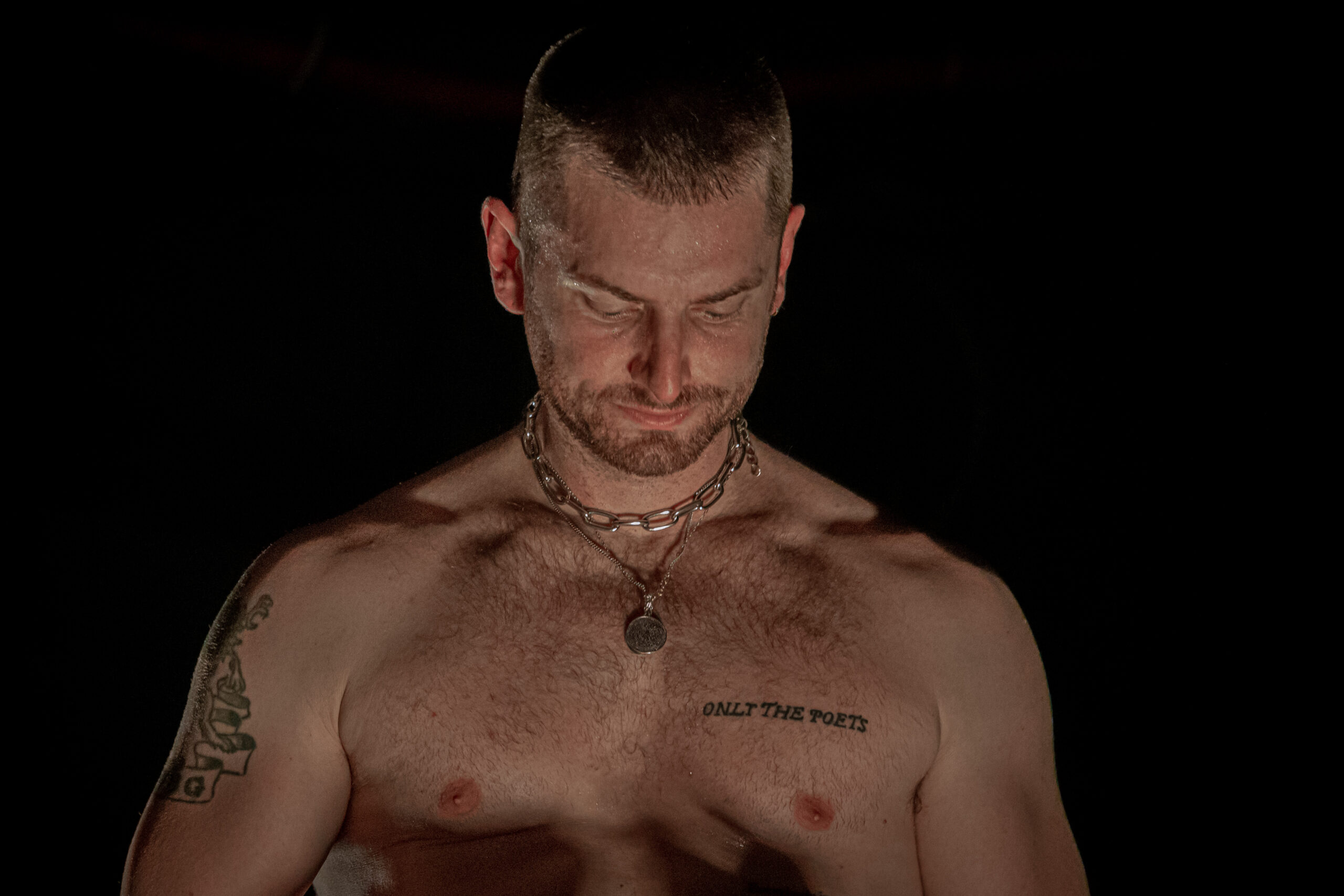
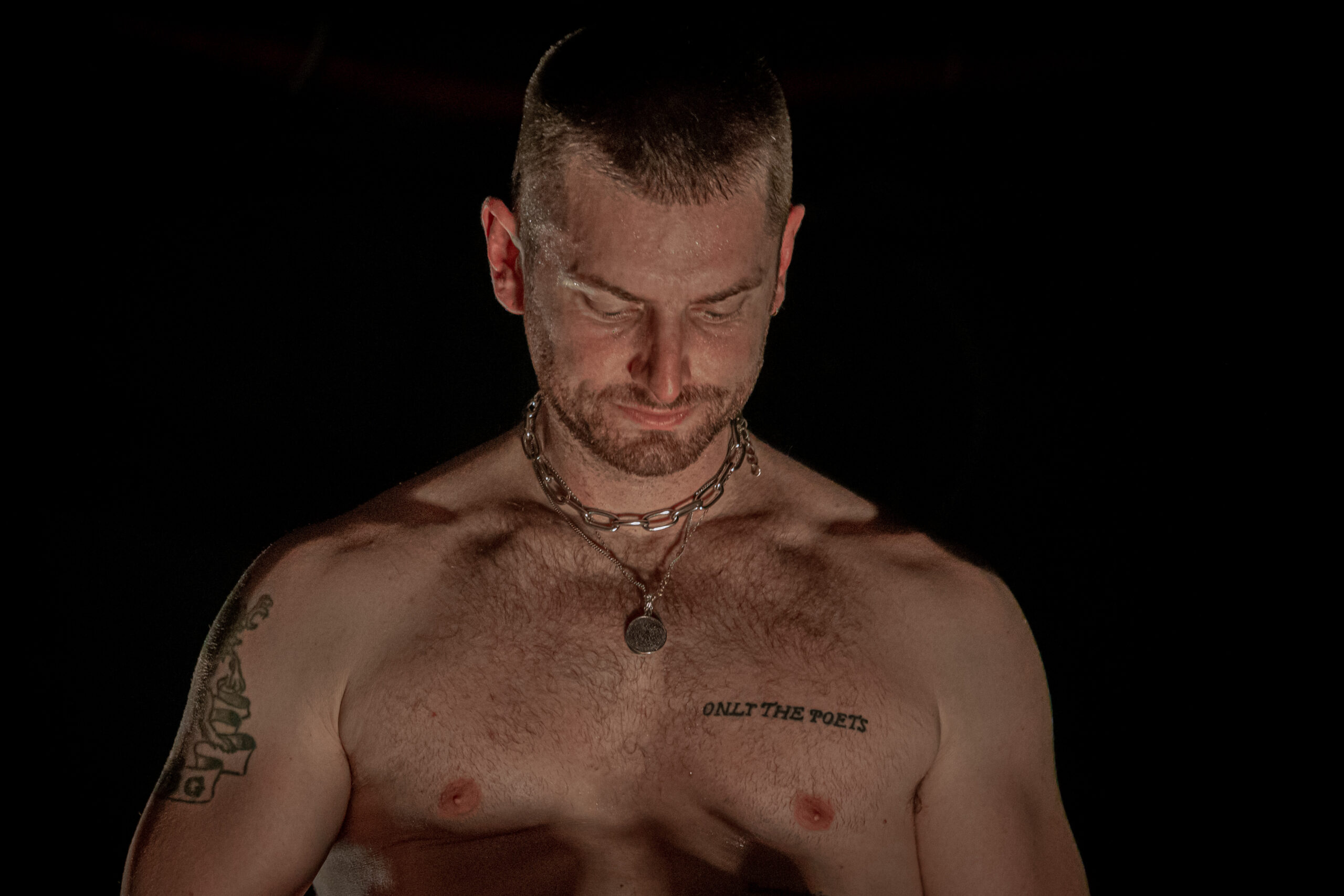
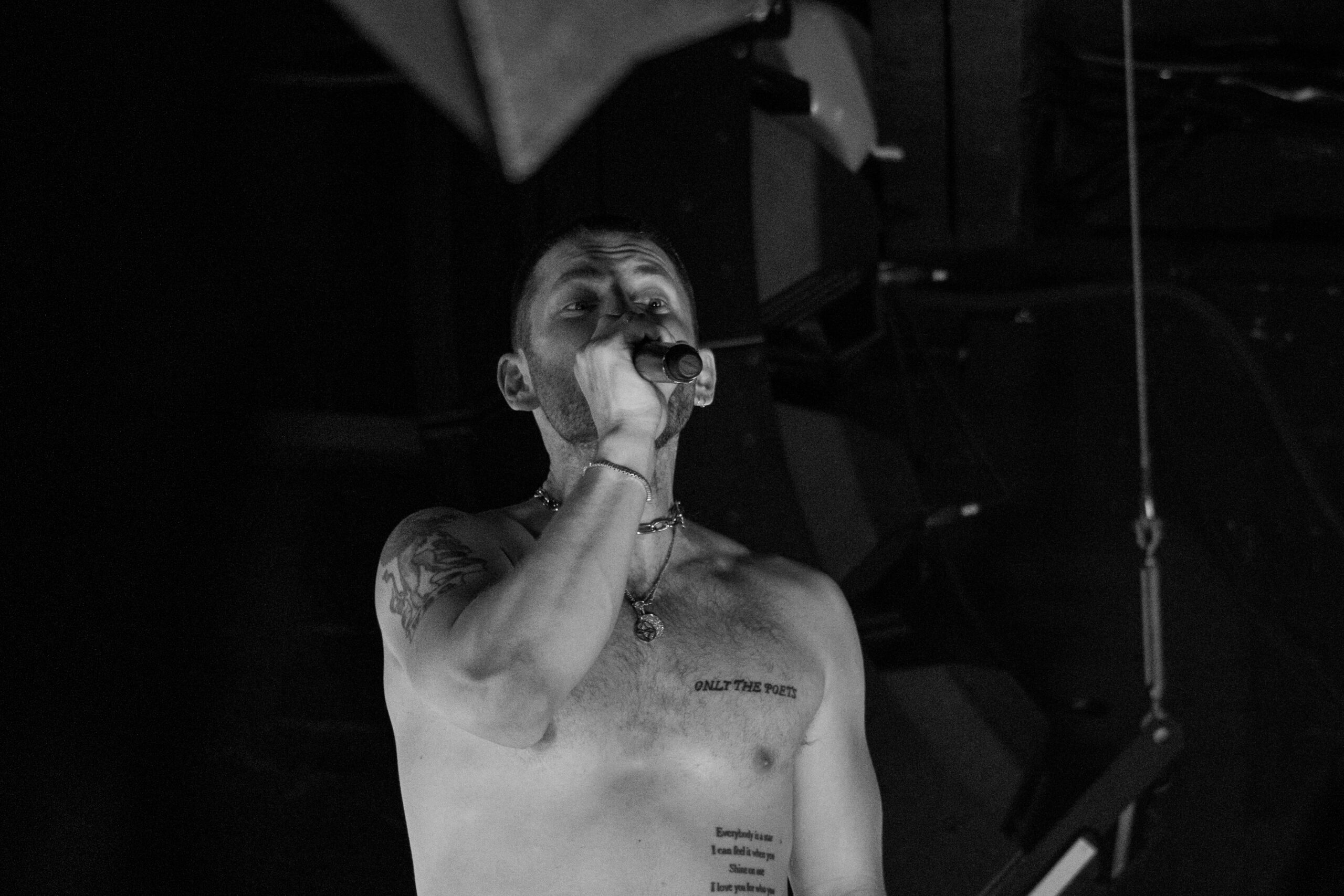
The most immediately recognisable phrase in Bassy’s collection is Only the Poets, laid across his chest. It refers to his first mixtape and to a line associated with James Baldwin, one of his favourite American writers. Baldwin spoke about poets knowing the truth about people, and Bassy said that idea stayed with him. Eventually, it became part of him in the most literal way.
The tattoo works on two levels. It is a time stamp for the start of his solo career, and it is a statement about the kind of artist he wants to be. The title suggests writing, observation, and emotional honesty rather than a quick slogan. It connects his music to the older tradition of poets who use personal experience to get at something wider.
Unlike the rib lettering, this one is hard to miss. The chest placement makes it part of his public image whenever he performs shirtless or appears in a stripped-back portrait. It is both album reference and artistic motto, which is why it carries more weight than simple release merch would.
There is a slightly funny tension in that. A mixtape title can belong to one era, while a tattoo stays around through every later era. Bassy has effectively turned an early project into a permanent signpost. The phrase keeps the younger songwriter visible, even as the catalogue moves on.
He has kept adding meaning instead of chasing a perfect layout
Photos from Bassy’s tattoo sessions make the process look as important as the finished designs. He is shown in the chair surrounded by flash sheets, with the room looking more like a working shop than a glossy campaign set. That matters because his collection feels built through decisions made in real time. The tattoos are connected, but they aren’t over-designed into one perfect composition.
The documented pieces give us a solid core: the Griffin and his father’s initials, the old school microphone, the Sly and the Family Stone lyrics on his ribs, and Only the Poets across his chest. Other marks are visible in photographs, including small numbers and additional linework, but the meanings are not all clearly explained in the tattoo tour. It is better to leave those details open than to turn a blurry shape into a confident-sounding story.
That restraint is part of what makes the collection interesting. Celebrity tattoo coverage often tries to decode every mark, even when the person wearing it has never given an explanation. Bassy’s known tattoos are already enough to show the pattern. His ink follows relationships, records, and turning points, not a pre-written aesthetic plan.
There is a relaxed quality to that approach. He can honour a parent, salute a musician, remember an album, and still leave space for whatever comes next. The collection feels finished only in the temporary sense that every tattoo is finished until life gives him another reason.
What Marc E. Bassy’s tattoos say as a group
Look at the pieces together and the theme is clear without forcing it. Bassy’s tattoos are about the people and art that gave his life shape. His father is present in the Griffin. His commitment to singing is present in the microphone. Sly and the Family Stone appear through the rib lyrics. James Baldwin and the beginning of his solo work sit across his chest.
That is a pretty good map of an artist’s influences. It is not just a list of favourite names. Each tattoo marks a moment when an idea became useful enough to keep. The designs are reminders first and decoration second. Even the more visible pieces have an intimate reason behind them.
The collection also shows why a tattoo does not need an elaborate explanation to matter. A microphone can be direct. A few lines of lettering can carry a whole record collection. A Griffin can hold family grief and teenage confidence in the same image. The best pieces are often the ones that still sound like the person who got them.
Bassy’s tattoos are still a work in progress, but the documented pieces already form a coherent archive. They preserve the route from a young man getting his first tribute tattoo to a songwriter putting poetry and music history on display. The marks are personal, a little rough around the edges, and easy to connect to the life he has described.
Watch Marc E. Bassy talk about his work
For a little more of Bassy’s voice and background, this interview is a useful companion to the tattoo tour.