
Mike Patton’s tattoo story changed in early 2026, when the Faith No More and Mr. Bungle frontman appeared in São Paulo with fresh black X marks on both hands. The reporting is unusually specific about the moment: tattoo artist Marcus Vinícius shared footage from the session, while music outlets connected the new work to Patton’s recent conversations about sobriety, anxiety and returning to live performance. The X is suggestive of straight-edge imagery, but Patton has not publicly confirmed a complete symbolic explanation, so this guide keeps that interpretation carefully attributed rather than turning it into a fact.
The visual record is broader than one repost. A finished-hands composite shows the scale of the new marks, a separate Instagram post captures the tattooing session, and TattooFilter preserves an older upper-arm piece with a completely different visual language. Those three tattoo-bearing originals are used first. Two high-resolution Wikimedia Commons performance photographs follow only as clearly labelled supplemental context, and a separate face-visible portrait is reserved for the featured image. The result is a source-led map of visible ink, not a claim to catalogue every tattoo Patton may have under clothing or outside the surviving image record. The guiding rule is “visible placement before speculation”.
The new X tattoos on both hands
The most recent addition is the pair of large black X tattoos on the backs of Patton’s hands. ThePRP reported on January 31, 2026 that footage shared by São Paulo tattoo artist Marcus Vinícius showed the marks newly applied, and that Mr. Bungle were due to play in the city that night. The finished-hands image makes the placement unmistakable: each X sits across the back of a hand, with the heavy black strokes reading immediately even at a distance.
The composition is intentionally blunt. The marks are not delicate micro-work tucked beside a knuckle; they are bold, symmetrical declarations that occupy the most visible plane of both hands. That gives them a visual relationship to the straight-edge tradition, where an X can function as a sign of abstinence and self-definition. Nacion Rock describes that connection as a plausible reading while also noting that Patton has not directly confirmed the meaning. The responsible description is therefore documented placement, attributed interpretation.
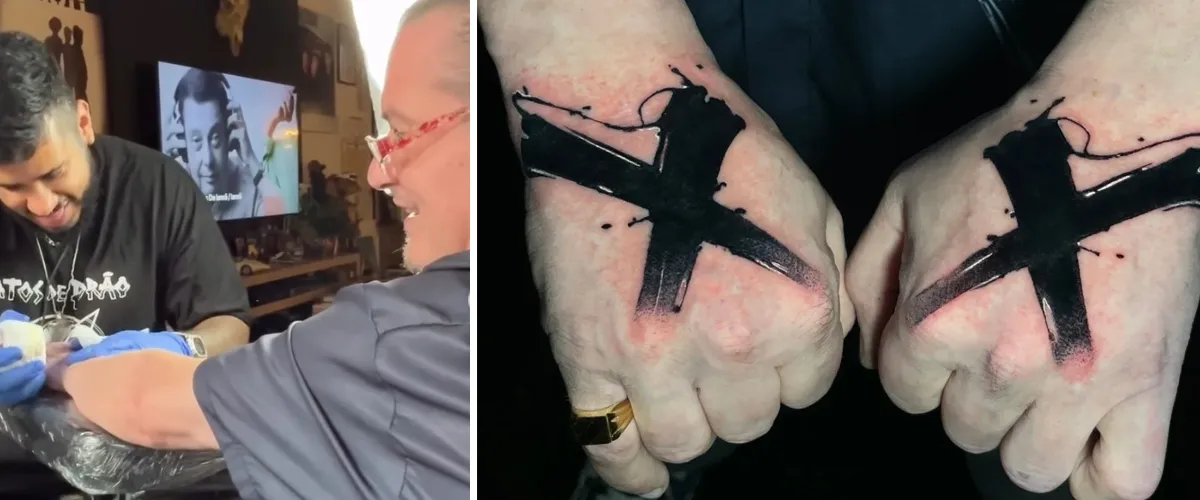
The paired arrangement also changes the way Patton’s gestures read. Hands are part of a singer’s performance vocabulary: they grip a microphone, cut through a phrase and punctuate a stage movement. A matching mark on each hand turns those gestures into a recurring visual motif. For a tattoo designer, the interesting lesson is not simply that the X is bold. It is that the design was placed where the body naturally communicates, making the ink visible whenever the performer reaches toward an audience.
The São Paulo tattooing session
The second tattoo image moves from the finished result to the process itself. The Instagram post reposted by ThePRP and discussed by Chaoszine shows Patton’s hand positioned for the artist while the session takes place in Brazil. It is a different original photograph and a different kind of evidence: the finished composite proves what the X looks like, while the session frame establishes that the mark is being made on Patton’s hand rather than being a fan edit or temporary graphic.
The setting matters because it connects the tattoo to a particular travel and performance window. Rock On Board’s Brazilian account identifies Marcus Vinícius as the artist and describes Patton’s first tattoo as a decision made on Brazilian soil. The English-language reports are more cautious about whether the X was his first ink, while the Brazilian interview gives the tattooing encounter a more personal narrative. Putting the accounts side by side supports the event without pretending every translated detail has the same level of certainty.
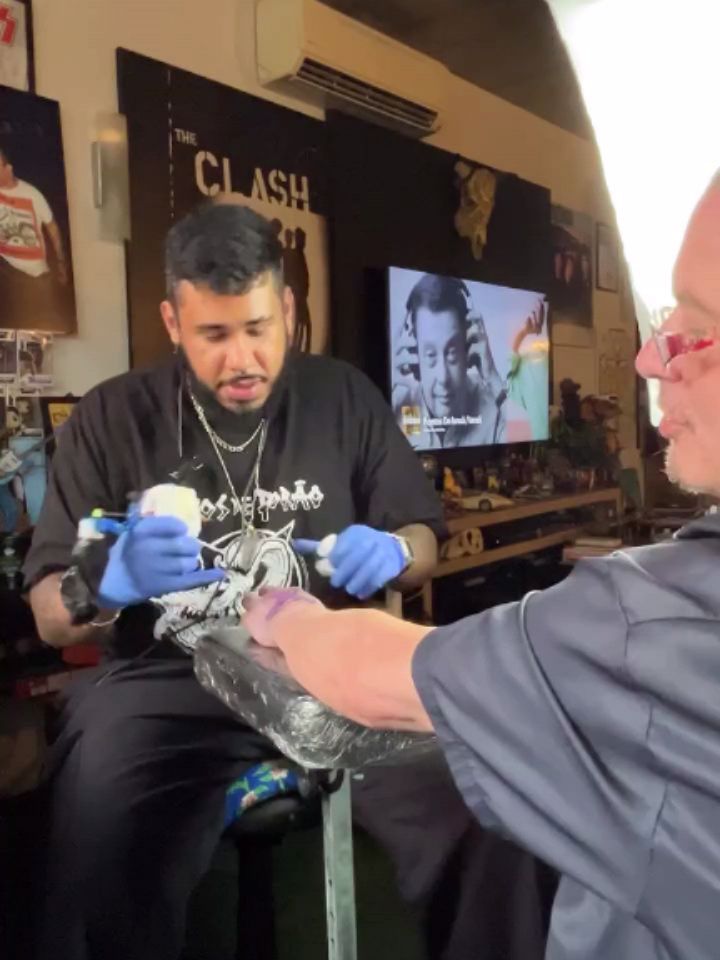
The visual difference between process and result is useful. During the session, the hand is part of a working scene: gloves, equipment and the artist’s posture make the body placement legible, but the design is still developing. After healing, the finished X becomes a clean graphic element. That transition is a reminder that tattoo coverage should not rely on a single dramatic reveal. Process evidence and finished-ink evidence answer different questions, and both deserve their own source and caption.
The older upper-arm tattoo archive
Patton’s older upper-arm tattoo gives the article a second visual chapter. TattooFilter’s archive image shows a dense black-and-grey composition built from a robot-like central figure, a film camera, clapperboard shapes, geometric fragments and small surrounding marks. It is not a repeated view of the new hand Xs. It is a separate piece with a different scale, placement and vocabulary, and it proves that the recent hand work did not arrive into an otherwise blank tattoo history.
The upper-arm design is packed but not shapeless. The camera and film references provide recognizable anchors, while the surrounding black areas create weight around the shoulder and biceps. In the image, the rounded upper arm gives the composition a natural frame, and the lighter skin breaks keep the dark blocks from becoming a single flat patch. The piece reads as a storyboard of working images: tools, motion and visual media folded into a wearable collage.
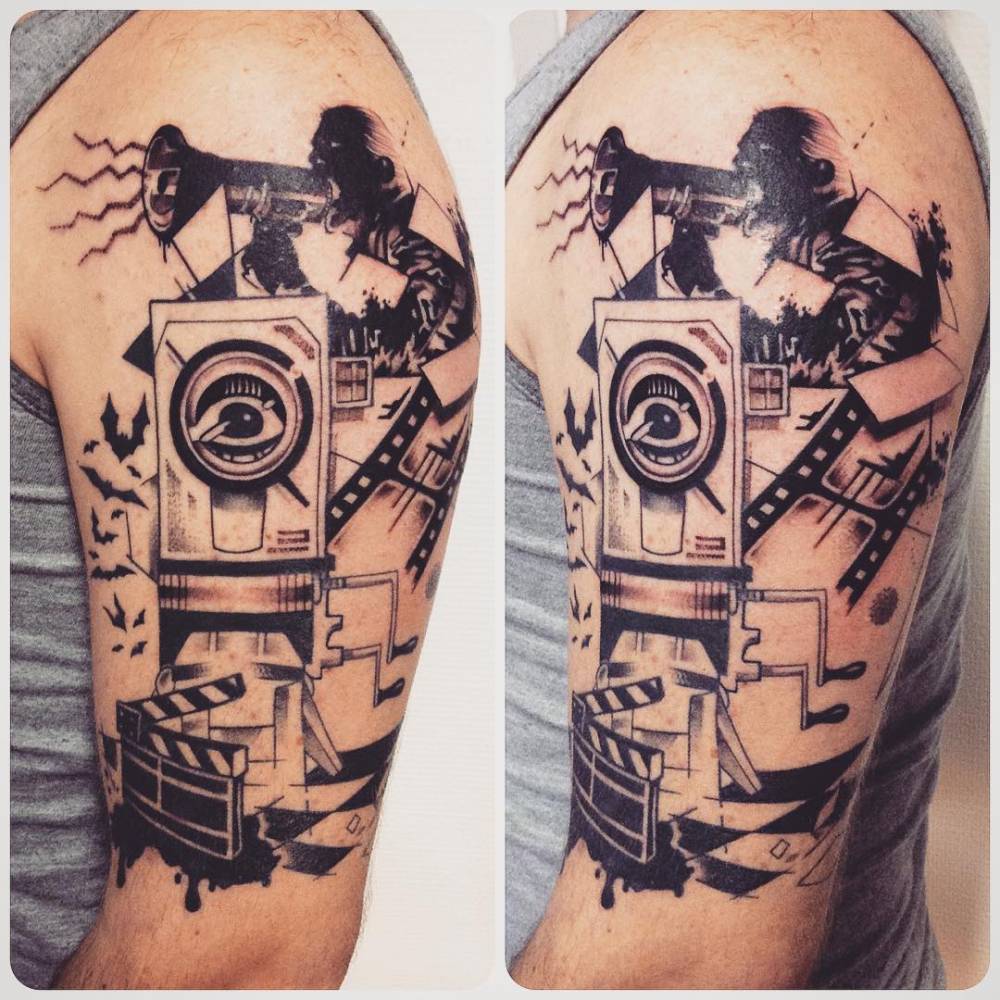
There is less public explanation attached to this older design than to the 2026 hand session, so the description should stop at what the archive shows. The photograph supports the subject, location and visible motifs. It does not establish the artist, appointment date or private meaning of each symbol. That boundary makes the image more useful for design study. Readers can examine the balance of the upper-arm composition without being handed a fictional backstory.
The person behind the microphone
The first supplemental portrait is a face-visible Wikimedia Commons photograph from a Mondo Cane performance. It appears after the tattoo-bearing images and is not used as tattoo proof. Its job is to give the reader a clean identity pause: Mike Patton is visible as the performer behind the name, while the article moves from close visual evidence back to the musical career that frames the tattoo story.
That separation is especially important when a celebrity has a strong stage image. Patton’s theatrical presence, vocal extremity and genre-hopping career can make every photograph feel like part of a costume. A neutral identity portrait prevents the article from treating performance styling as evidence of body art. The tattoo claims remain attached to the hand and upper-arm sources, while this image supplies face-visible context without speculative ink labels.
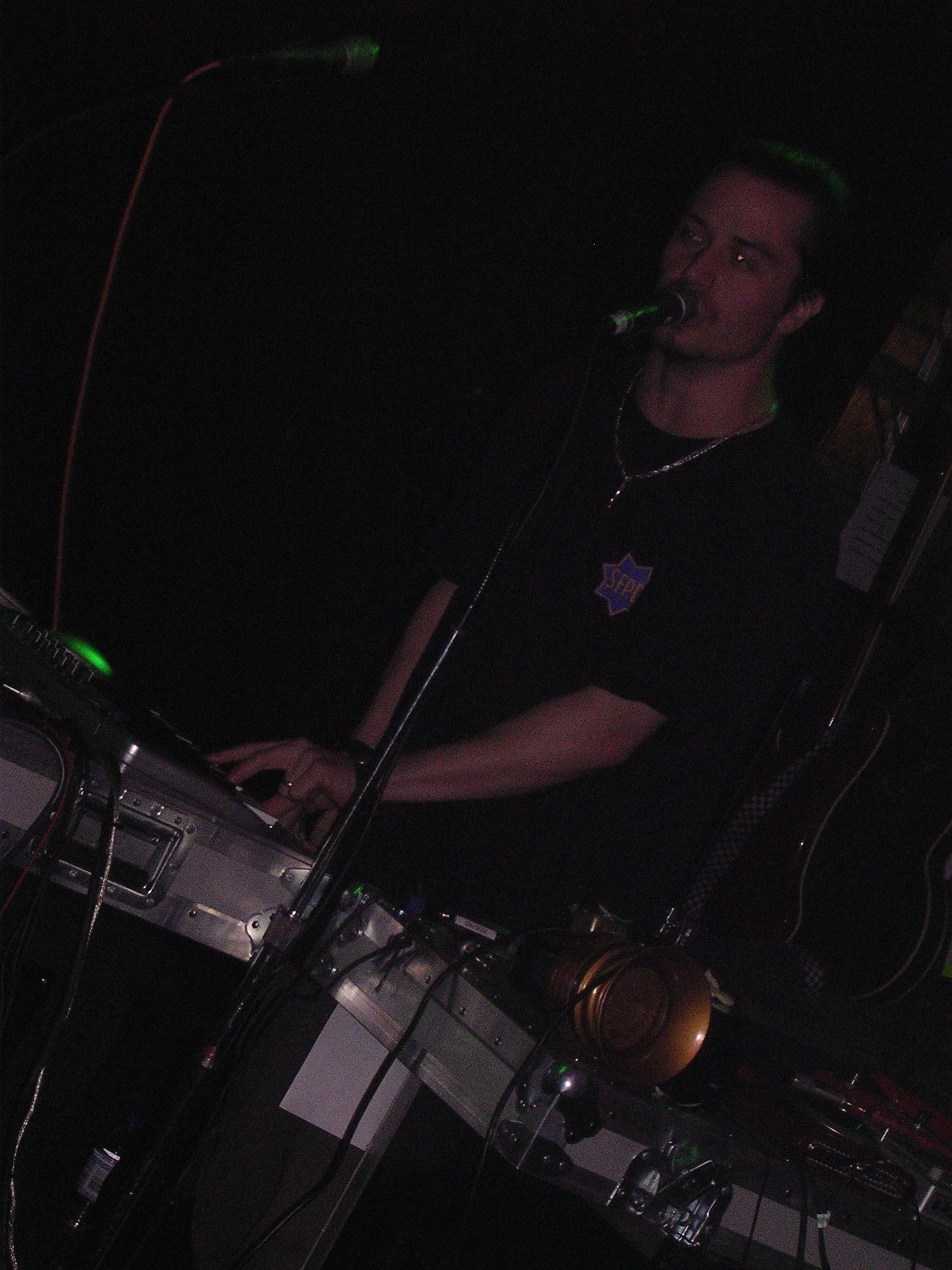
The career background is substantial enough to support a long-form guide. Patton co-founded Mr. Bungle, became the lead vocalist of Faith No More and continued through projects including Fantômas, Tomahawk, Peeping Tom and Dead Cross. Those facts explain why a new tattoo could attract attention across rock and metal outlets, but they do not change what can be read in the photographs. Biography supplies context; the images supply visible placement.
A concert frame from Faith No More
The final inline image is a separate Faith No More performance photograph from Wikimedia Commons. It is another face-visible stage original, included only after the tattoo-photo search was exhausted and clearly labelled as supplemental context. The shirt, microphone and stage lighting place Patton inside the public performance world that surrounds the new hand tattoos, but the frame is not presented as a close-up of any specific mark.
Seen after the hand and upper-arm images, the stage photograph helps explain why hand placement is such a consequential choice for Patton. A singer’s hands are rarely static. They carry the microphone, shape the rhythm of a lyric and become part of the silhouette captured by concert photographers. A bold mark across both hands therefore has a different public life from an upper-arm piece that may disappear beneath a sleeve. The difference is about movement and visibility, not about ranking one tattoo over another.
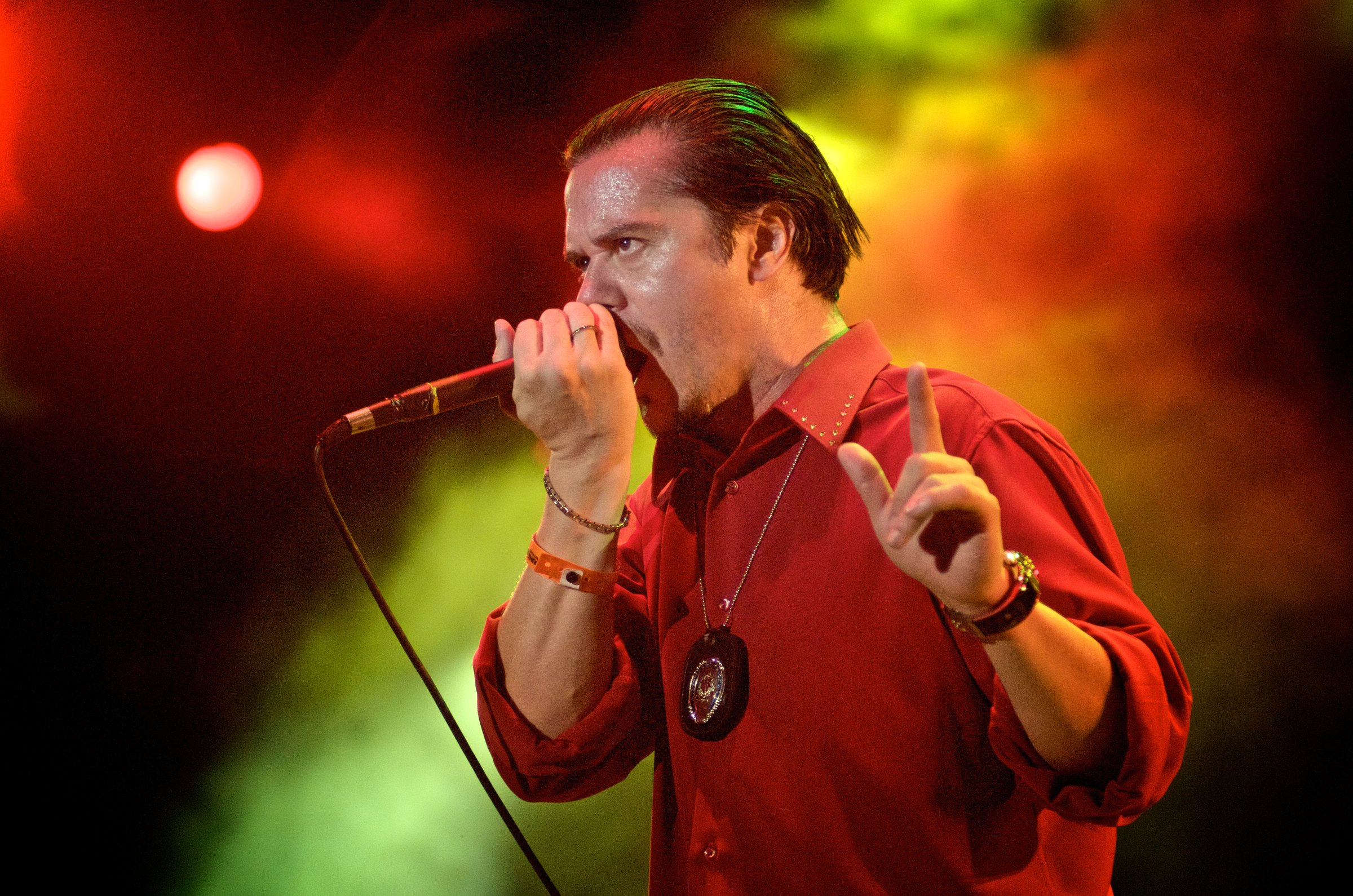
The evidence supports a bounded conclusion. Mike Patton has a documented 2026 pair of black X hand tattoos, a separately archived older upper-arm composition, and distinct photographs showing both the process and the finished work. The sources do not establish a complete body map or confirm every interpretation of the X. Keeping those limits visible is the strongest way to make the guide useful: readers can study bold symmetry, hand placement, layered blackwork and the contrast between new graphic marks and older narrative imagery without mistaking an image set for a complete inventory.
How the image set was assembled
The tattoo-first search covered ThePRP, Chaoszine, Nación Rock, Rock On Board, the original Instagram post embedded by the reporting, TattooFilter’s archive and Wikimedia Commons. The 2026 hand story was checked across multiple regional music outlets because the initial reports are based on social footage and each outlet describes the event with slightly different certainty. The retained hand images are distinct: one shows the finished pair, one shows the process and the older TattooFilter file shows a separate upper-arm composition.
The selection was visually inspected before any generic portrait was considered. Rock On Board’s page image was a logo rather than a useful Mike Patton tattoo photograph, and low-resolution or repeated social thumbnails were excluded. The retained three tattoo assets have different source paths, independent local files and independent hashes. Two Wikimedia Commons performance images were then added as supplemental context, and a separate face-visible Commons portrait was assigned to the featured-image slot.
The result is five interleaved inline assets rather than a media pile-up at the top. The first three sections answer tattoo-specific questions with tattoo-bearing images. The later two sections are explicitly about identity and stage context, so their portraits are not mislabelled as tattoo evidence. Prose appears before and after each placement, and the article never uses a generic portrait as tattoo-specific alt text.
What the photographs cannot prove
A photograph can prove that visible ink appears on a particular body area in a particular moment. It cannot automatically prove the exact appointment date, the complete hidden side of an arm, the artist for an older piece or the private meaning of every symbol. The X interpretation is therefore reported as a plausible straight-edge association, while the pair’s placement and recent application are described more firmly because those points are visible and documented.
The same discipline applies to the upper-arm archive. The robot, film and geometric motifs are visible design elements, but the image does not provide a caption from Patton explaining what each one means. The article describes the composition’s structure rather than inventing a personal narrative. That distinction protects both the subject and the reader, and it leaves room for a future interview or artist statement to add detail.
Taken together, the record is substantial without pretending to be total: three distinct tattoo-bearing originals, two separate performance portraits, one face-visible featured portrait, a documented São Paulo session and an older upper-arm archive. The story is strongest when it lets those sources do different jobs. The new hand Xs carry the immediate graphic impact; the upper-arm piece adds history; the portraits restore the person and the musical world around the ink.