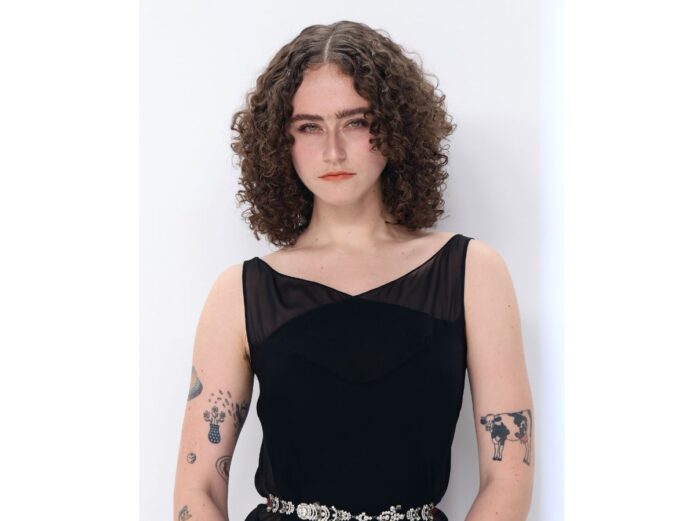
Ella Emhoff’s tattoos form a visual diary of a creative life that moves between textile work, fashion, art school and public appearances. Her collection is unusually easy to recognize because it combines small, playful color tattoos with a much larger black-and-white back piece. The result is not a single uniform sleeve. It is a changing set of illustrations that makes room for humor, handmade energy and a few dramatic compositions.
That variety also explains why photographs matter so much. The strongest record comes from comparing a close view of an arm with the wide photograph that reveals the swan across her back. Public reporting identifies several designs and dates, while the images show how those pieces sit on the body. Where Emhoff has not supplied a meaning, this article keeps the description visual rather than turning a guess into a fact.
The collection at a glance
Recent coverage has placed Emhoff’s count at roughly 18 tattoos, spread across her arms, legs and torso. The inventory includes a cow, a flower pot, bacon and eggs, a cake, an apple, a baby deer and a salmon with a flower. Those designs are not arranged like a conventional blackwork sleeve. Their scale, color and subject matter vary, which gives the collection the feel of a sketchbook that has been carried through different stages of her life.
The small illustrative pieces are especially effective in portraits because they appear as flashes of color or linework rather than as one solid block. A shoulder landscape, a food illustration and a cartoon figure can sit close to one another without losing their separate identities. That is a useful part of the visual story: Emhoff’s ink is allowed to remain idiosyncratic.
Where the first tattoos came from
RadarOnline’s reporting says Emhoff began collecting tattoos during the 2020 lockdowns. The first tattoo it identifies is a cow on her left arm, added in September of that year by a Brooklyn artist. The same report describes later additions including a blue flower pot, bacon and eggs, a birthday cake, an apple and a baby deer. Together, those details establish the early collection as a burst of small illustrative work rather than one carefully staged debut.
The timing fits the wider picture of Emhoff’s creative practice. She was studying at Parsons School of Design and working with textiles, so the tattoos appeared alongside a period of experimentation in which making things by hand became central to her identity. The ink is not presented as a formal brand system. It feels closer to a personal archive built in the same spirit as her knitwear.
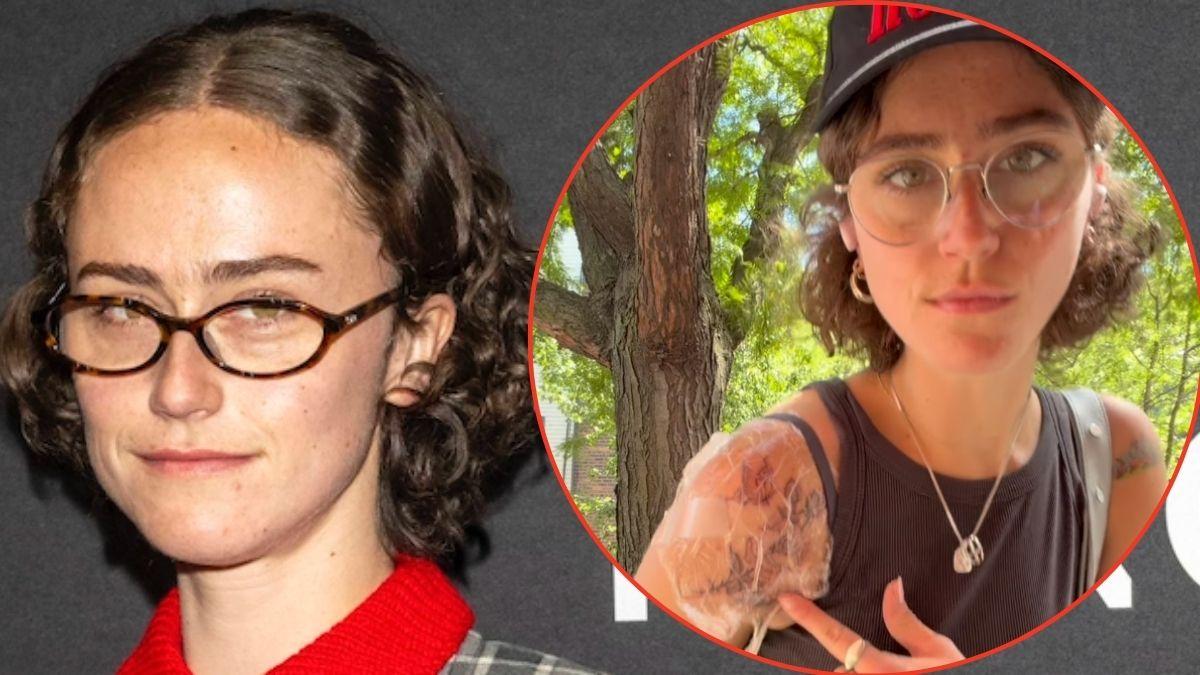
The arm photograph above shows that early language clearly. The visible pieces are compact, colorful and legible at a glance, while the surrounding skin keeps each one distinct. The image does not prove a meaning for every symbol, but it does document the collection’s playful scale and the way several small designs can make an arm feel visually active without becoming a solid sleeve.
The salmon tattoo and self-made pieces
In a 2020 Garage interview, Emhoff described doing some of her own body art during lockdown. The account quoted in later coverage includes a dog name, a small flower and her first big piece: a salmon fish with a flower hanging from its mouth. That story is one of the most useful pieces of evidence about her approach because it connects the subject matter to process. Some tattoos were not simply chosen from a catalogue. They were part of learning by doing.
The salmon is also a reminder that an unusual design does not need a public explanation to be memorable. Its appeal comes from the combination of an ordinary animal and an unexpected floral detail. The reported description is specific enough to identify the piece, but it does not assign a deeper symbolism that Emhoff has not stated.
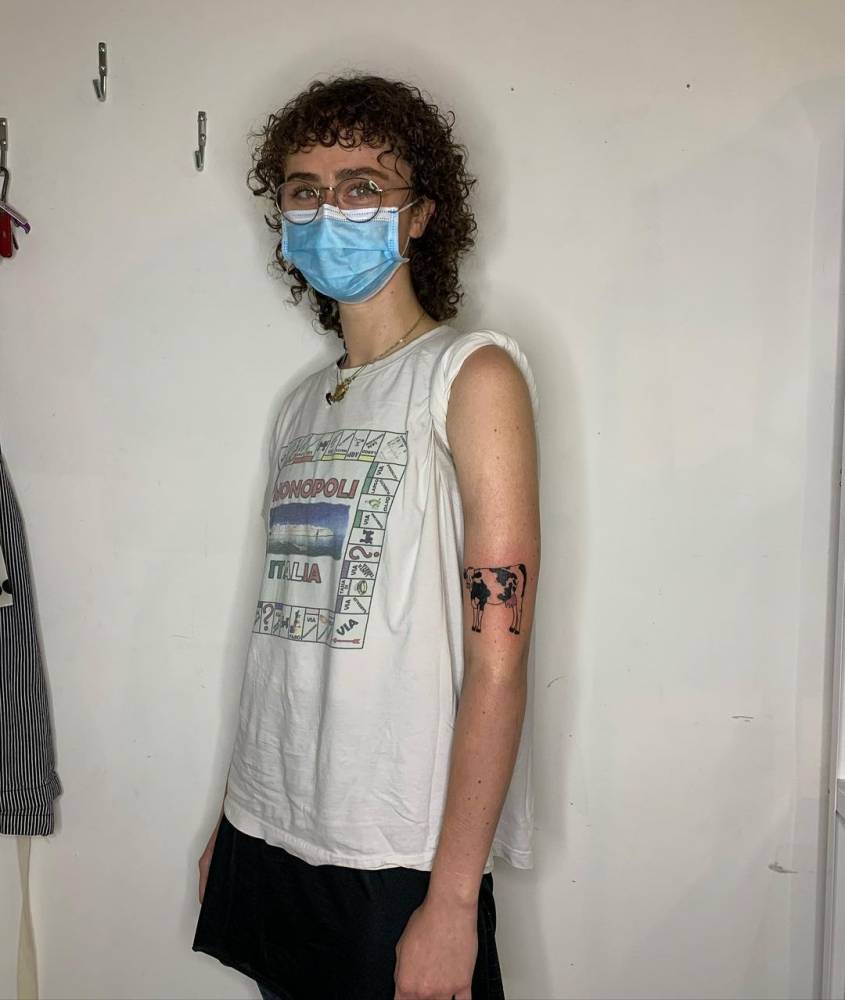
The breakfast-plate photograph gives a closer look at the kind of compact color work that defines this part of the collection. The raised arm makes the tattooed surface easy to see, and the pieces read as illustrations rather than as abstract marks. It is a different kind of evidence from the back photograph: intimate, cropped and focused on the small designs that give Emhoff’s overall tattoo story its personality.
The swan back piece
The largest visual change in the documented timeline is the back piece credited to tattoo artist Ruby May Quilter. Parade described a shaded black-and-white design stretching from the lower back toward the shoulders, with a large swan at its center and additional forms branching around it. TAG24’s photo coverage shows the scale of the work more directly than an arm portrait can. The piece is broad, layered and built to follow the shape of the back.
Emhoff’s own caption, as reported by Parade, emphasized how lucky she felt to have the piece and joked about the pain by tagging the location as OUCH. That is a documented reaction, not an interpretation of the swan’s symbolism. The available sources do not establish a personal meaning for the bird, so the strongest reading stays with the craft: sweeping wings, shaded feathers and a composition that turns the entire back into one connected field.
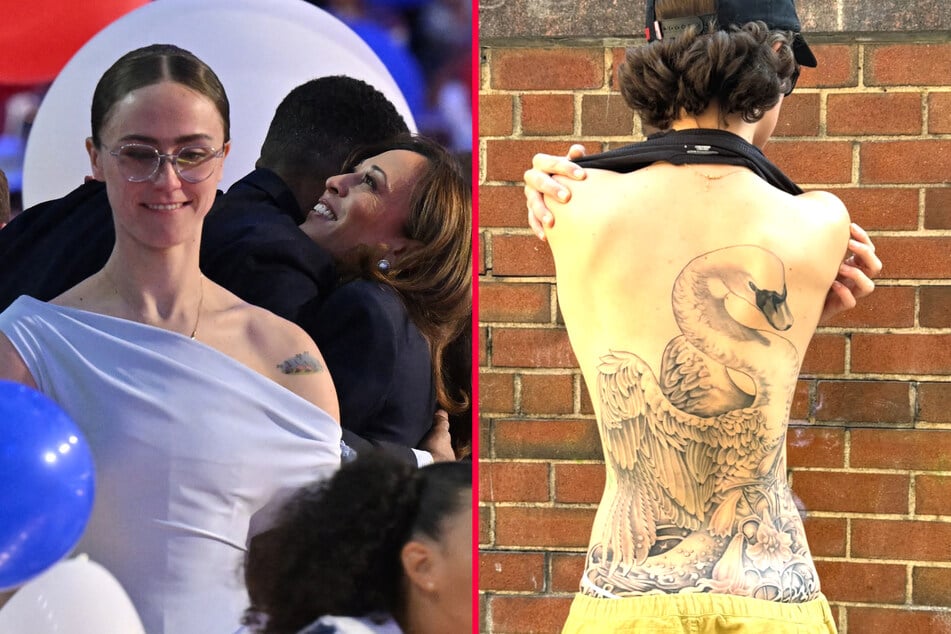
The wide swan photograph is the clearest single record of that transformation. It shows the central bird, the ornamental lower section and the way the surrounding lines travel toward the shoulders. It also demonstrates why a full-back tattoo should be documented with a wide original rather than reconstructed from cropped arm photographs. Scale is part of the design.
How the arm designs contrast with the back
The arm collection and the back piece speak different visual languages. The arms use small, colorful motifs that can be read one at a time. The back uses larger black-and-grey shading and a more continuous silhouette. One is conversational and episodic; the other is immersive. That contrast keeps the collection from becoming repetitive even though both areas are heavily tattooed. The result is a wide back composition balanced by small marks that retain their own edges.
A mirror photograph is useful here because it holds several arm designs in the same frame. The viewer can compare the compact illustrations, the gaps between them and the way the tattoos remain visible through a simple sleeveless outfit. It also shows how Emhoff’s face, hair and clothing remain part of the image. Her tattoos are not separated from her style; they sit inside the same visual choices that make her public image distinctive.
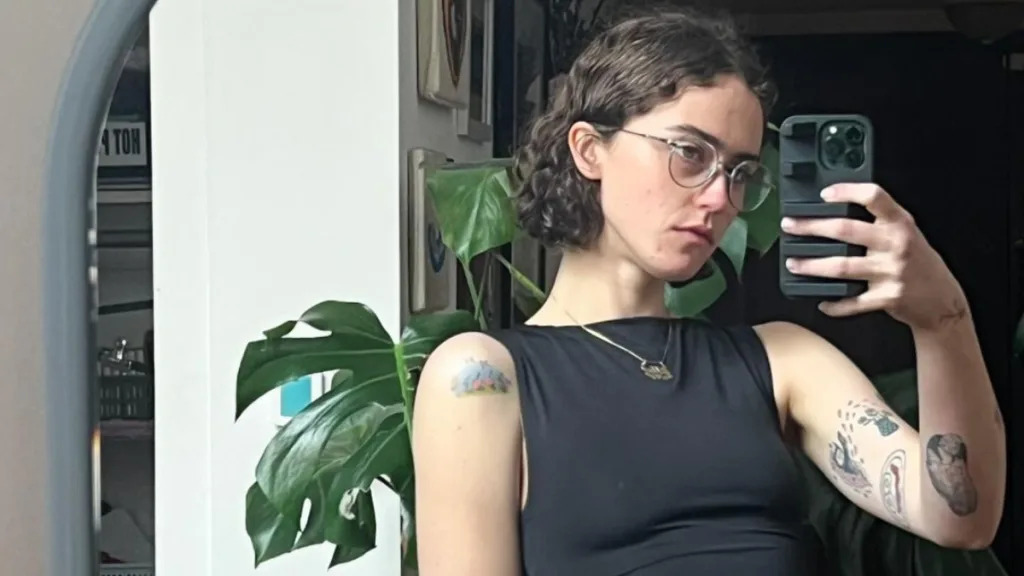
The mirror selfie makes the collection feel lived in rather than staged. The tattooed arms are visible because Emhoff is documenting herself, not because the photograph was made as a catalogue. The designs remain readable despite the casual angle, which supports the broader impression of an evolving archive. Different photographs reveal different portions of the same body without requiring every piece to be explained.
Colorful tattoos, humor and recognizable shapes
Several reported designs rely on instantly recognizable objects: a cow, a cake, eggs and bacon, an apple and a flower pot. Their humor is visual and direct. They do not need a long caption to communicate what they are, and their bright colors help them hold their place among smaller black-ink marks. This is part of why Emhoff’s tattoos photograph so well in fashion coverage. They interrupt a polished outfit with images that feel personal and handmade.
The collection also contains cartoon and animal imagery, including a baby deer and a Donald Duck design described in later coverage. Those pieces make the body read almost like a page of illustrated stickers, but the comparison should not be pushed too far. The designs vary in age, scale and execution. What connects them is a willingness to choose subjects because they are charming, funny or visually satisfying.
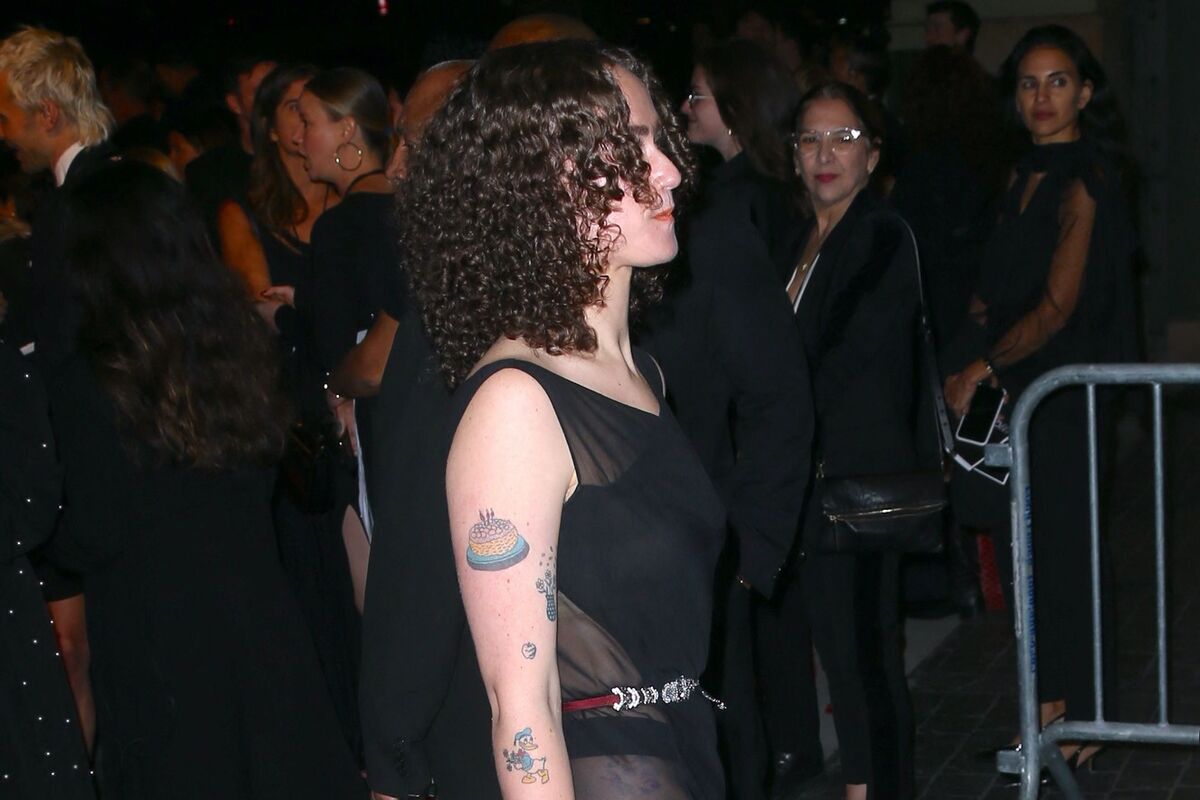
The CFDA event photograph shows that balance in a more formal setting. A colorful cake sits above other small pieces, while additional linework continues down the arm. The image confirms the subject and the tattoos, but it does not explain their private meanings. That boundary is important. The strongest account of this collection can celebrate its character without inventing a story for every object.
Fashion, art school and the body as a canvas
Emhoff graduated from Parsons School of Design in 2021 with a focus that included apparel and textiles. Vogue and the Los Angeles Times both described her as a designer and student who was already making knitwear before her public profile expanded. She later built Soft Hands around craft and community. That background gives useful context for the tattoos, not because it proves a direct symbolic link, but because it shows a consistent attraction to material, texture and making.
Her modeling career developed alongside that creative practice. Vogue reported that she met IMG Models president Ivan Bart before her appearance at the 2021 inauguration became a national style story. She then made her Proenza Schouler runway debut. In photographs from that period, the tattoos function as part of an unmistakable silhouette. They do not disappear when the clothing becomes editorial. They remain a visible layer of the person wearing it.
What is documented and what remains visual
The documented record is strong on chronology and selected designs. It identifies the lockdown period, the cow, the flower pot, food tattoos, the salmon, the approximate count and the later swan back piece. It also identifies Ruby May Quilter as the artist credited for the swan. Those facts give the collection a reliable spine.
Other details remain best treated as visual observations. The photographs show colors, placements, outlines and the relationship between separate pieces. They do not automatically reveal why Emhoff chose a particular object or whether one small design refers to a private memory. Keeping that distinction visible makes the article more accurate and preserves the personality of the collection without flattening it into a list of invented meanings.
Why the collection keeps changing
Emhoff’s tattoo history reads as an accumulation of experiments rather than a single declaration. Small pieces appeared during lockdown. A larger salmon marked a step up in scale. The back piece introduced a dramatically different composition. As her work moved between art, fashion and community craft, the body art kept expanding without losing its sense of play.
That evolution is what makes the photographs valuable as a group. A close portrait shows the color and line of one arm. A mirror selfie places several designs in everyday context. A wide back image records the scale of the swan. A red-carpet frame shows how the ink travels into formal fashion. Together they form a timeline of style and self-expression, with the photographs carrying evidence that no single frame could provide.
Closing context for the collection
Ella Emhoff’s tattoos are memorable because they refuse to choose between the intimate and the spectacular. The small objects are funny, colorful and sometimes self-made. The swan back piece is expansive, shaded and professionally composed. Between those poles sits a collection that feels unmistakably personal without needing every symbol to be decoded.
The most defensible account is therefore also the most interesting one. Emhoff’s ink began as a lockdown-era practice, grew through playful illustrations, and later expanded into a major back composition. Her fashion and textile work provide context for a body treated as another surface for texture and image, but the tattoos remain their own record. They are a visual diary: part joke, part experiment and part carefully crafted statement.