The Enigma tattoos are not a collection of unrelated flash pieces. They are a single body-wide idea built from thousands of blue jigsaw outlines, then extended through the scalp, face, neck, torso, arms, hands and legs. The performer behind the name is Paul Lawrence, a sideshow artist, musician and tattooer whose appearance became part of the act. This guide keeps the record specific: it separates the documented history of the puzzle pattern from what each photograph actually shows.
The central fact is unusually clear: Guinness World Records records 2,123 puzzle pieces on The Enigma’s body, counted in 2011. That number describes the pieces that had clear borders at the time of measurement. It does not mean every blue mark can be assigned a separate story, and it does not turn every later photograph into a complete inventory.
The Enigma’s head and torso puzzle tattoos
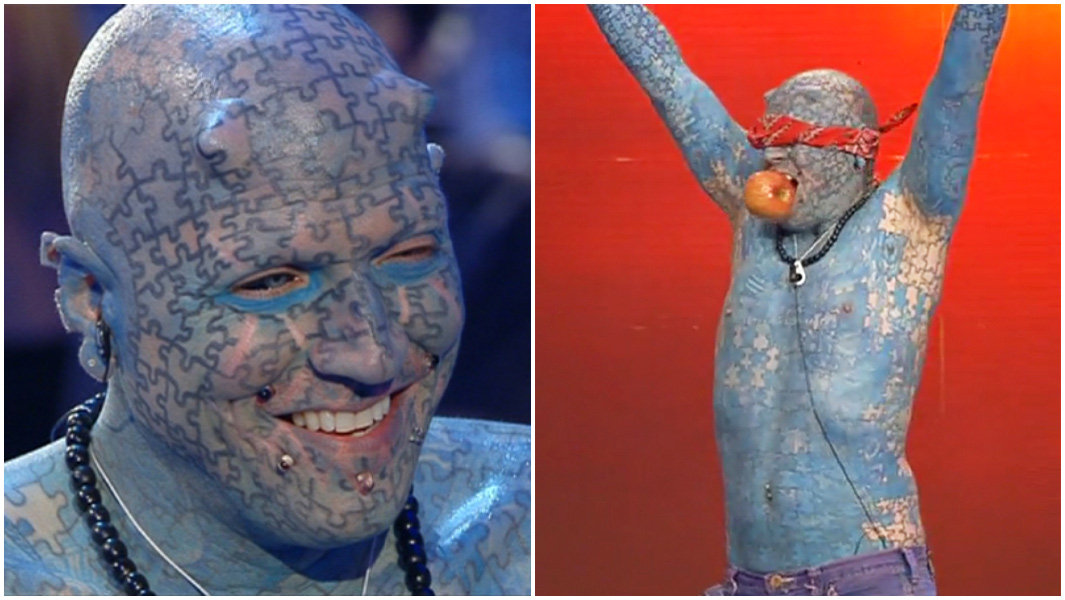
The split Guinness photograph gives the fastest visual explanation of the project. In the close portrait, the puzzle outlines move over the scalp, forehead, cheeks, nose, lips and chin. The blue fill is not a flat block of colour. It varies with age, lighting and the condition of the skin, while the darker borders keep the separate pieces readable.
The second panel widens the view to the chest and raised arms. The same language continues downward, which is why the work reads as a body suit rather than a face tattoo enlarged across the rest of the body. The torso is also where scale becomes easier to judge. A close-up makes one line look dominant; a wider frame shows that the line belongs to a repeated system.
Guinness describes the project as a full-body jigsaw tattoo, and The Enigma’s own account gives the beginning of the timeline. He conceived the idea in the early 1990s, started the main transformation in January 1993 and has since been tattooed by more than two hundred artists. That history matters because the design was not completed in one modern sitting or by one contemporary studio.
The Enigma’s body suit in a wider portrait
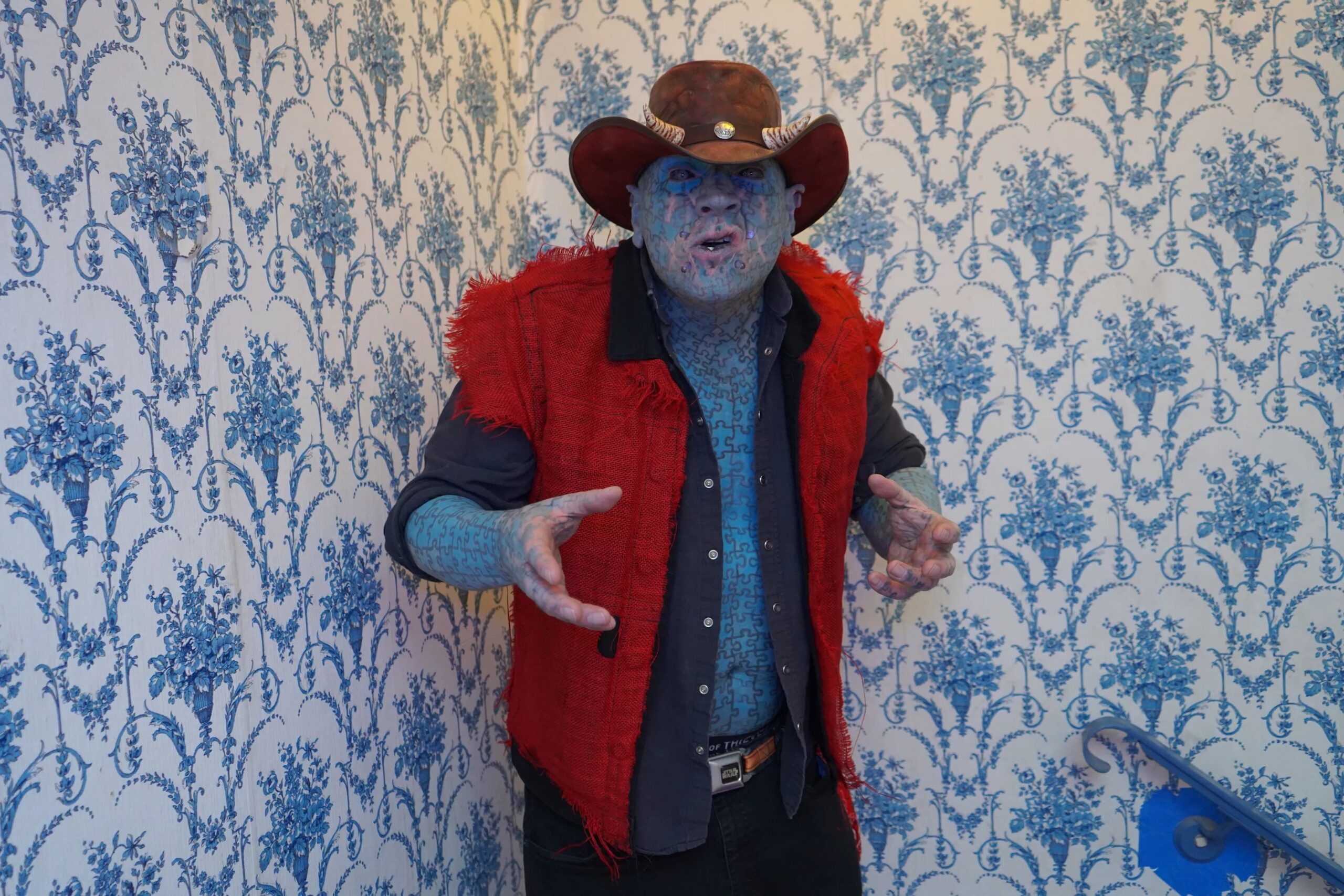
The Westword portrait shows how the puzzle pattern behaves when clothing leaves parts of the body open. The face remains the immediate focal point, but the neck, fingers, hands, forearms and chest carry the eye away from the face. A red vest and dark shirt create contrast without hiding the structure of the ink.
The blue colour is the visual anchor. It turns separate areas into a connected surface, even when the photograph only shows the upper half of the body. The puzzle pieces do not line up like a conventional geometric sleeve. Each one has its own shape, and the irregular gaps help the viewer understand that the pattern is meant to cover an entire human form.
That is also why a tattoo design inspired by The Enigma should borrow the principle, not trace the whole look. A full-body blue puzzle suit is a permanent identity project. A smaller idea might use three or four linked pieces, a single broken edge or a limited patch of colour. The reference is strongest when it keeps the sense of continuity while changing the scale and subject.
The Enigma forearm and hand puzzle tattoos
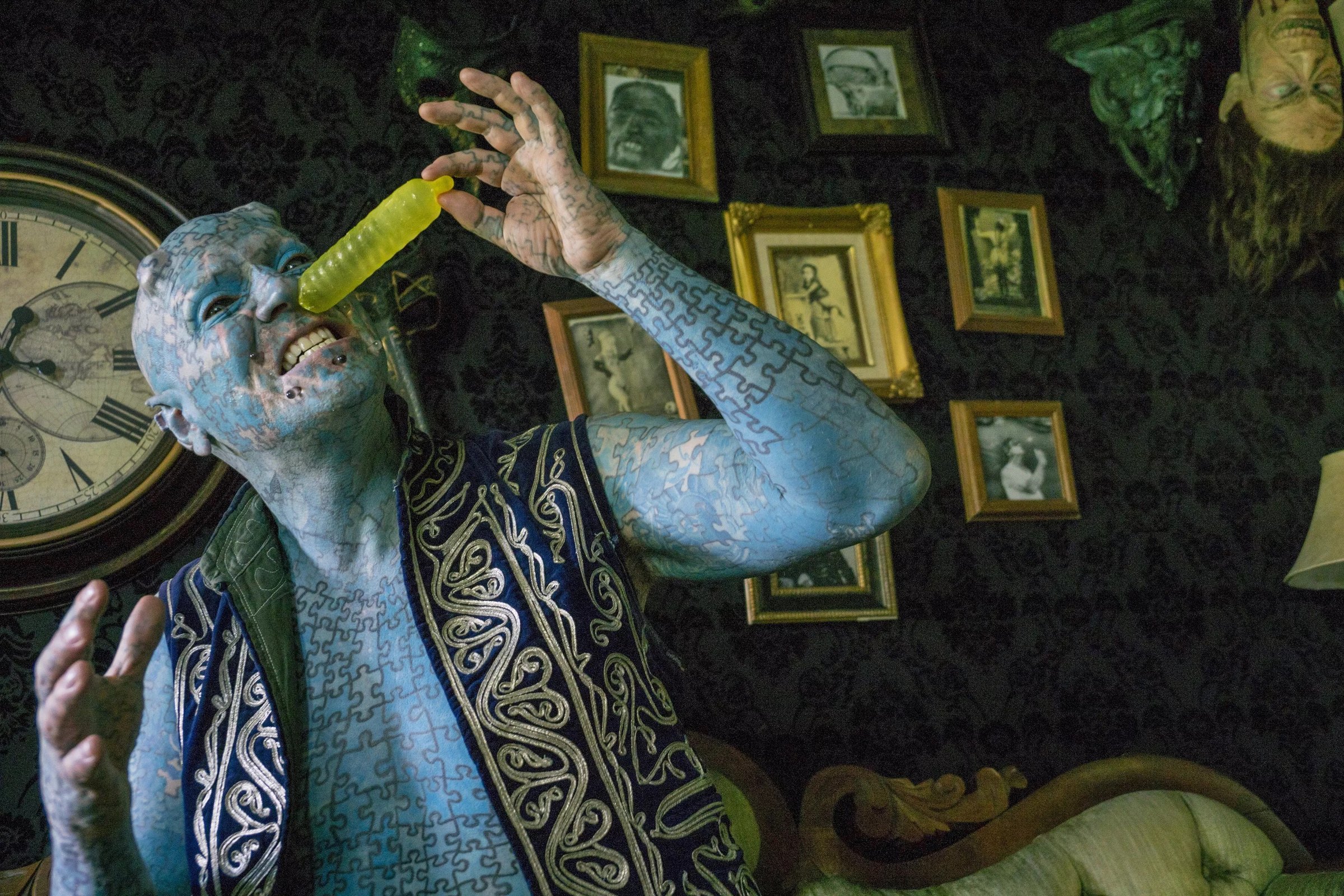
In the reclining Westword photograph, the hands and forearm are close enough to make the linework readable. The pieces cross joints and continue over the wrist, so the pattern changes shape as the hand bends. That movement is part of the design’s character. The tattoo is not presented like a framed illustration with a fixed border; it follows the body as the body moves.
The image also shows why it is risky to assign a private meaning to every visible piece. The documented record establishes the overall concept and the measurement, but it does not provide a separate explanation for each curve or filled section. The safest description is visual: blue jigsaw pieces, dark outlines, repeated across the hand and arm.
For a tattoo brief, the hand is a useful place to study density. Small pieces can create a busy field without needing a separate symbol in every gap. A designer can use that rhythm on a forearm while leaving a deliberate area of skin untouched. The contrast between filled shapes and open space keeps the pattern from becoming a solid blur.
The Enigma face and neck puzzle tattoos
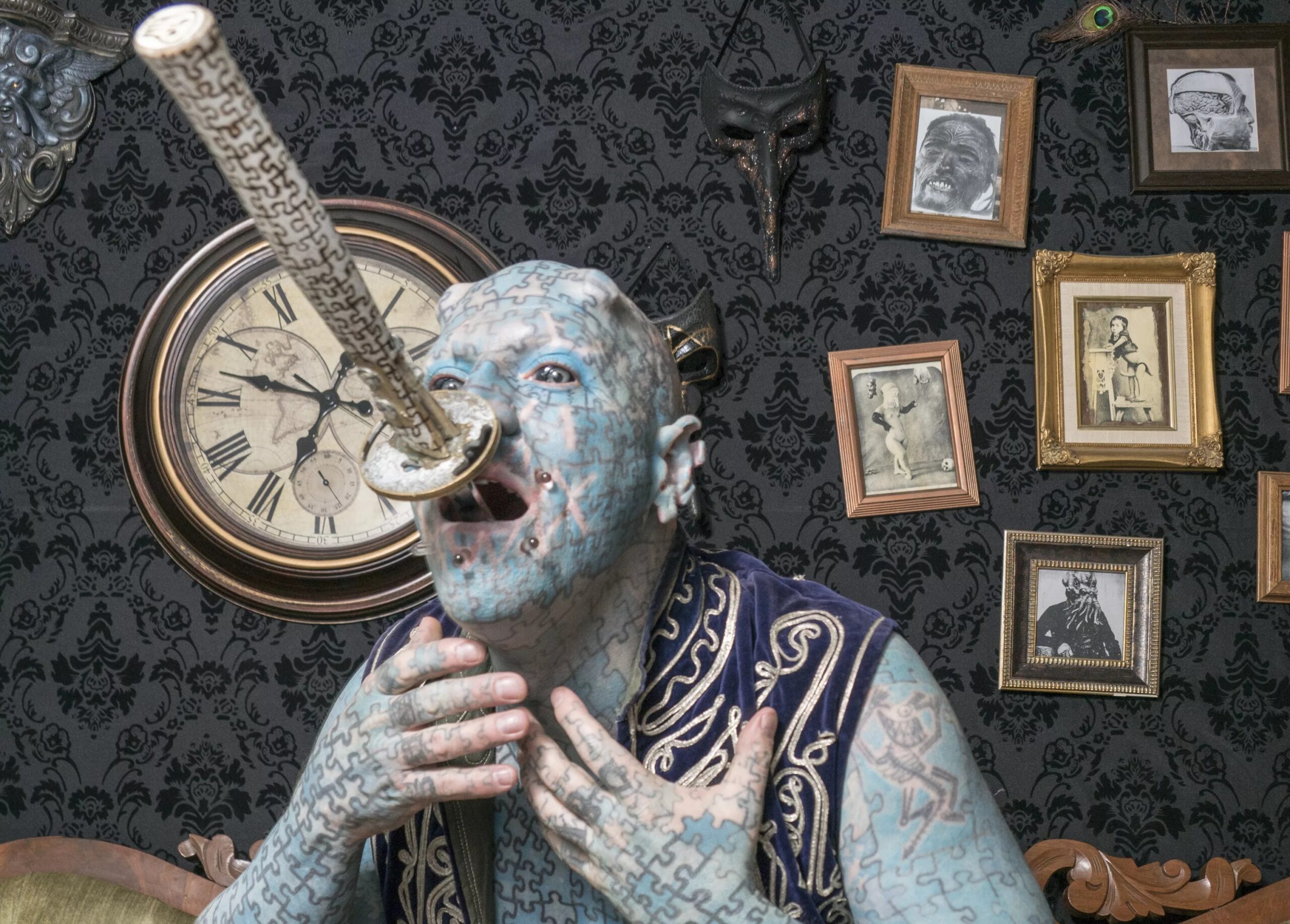
The sword photograph brings the face and neck back into focus. The camera is close, but the frame still contains enough of the shoulder and upper chest to show how the pattern continues below the jaw. The blackened eyes and facial piercings are body-modification details rather than puzzle pieces, so they should be described separately from the tattoo itself.
“The art is on the inside,” The Enigma told Guinness when explaining the idea behind the work. The line is useful because it describes the project as more than surface decoration, but it should not be stretched into a claim about every individual piece. His own statement supports the idea of a complete visual identity. It does not supply an official key for decoding the pattern.
Placement around the face also changes the emotional effect. A puzzle line across a cheek feels intimate because the viewer can read it at conversational distance. The same line on the upper arm feels graphic and architectural. The Enigma’s photographs make both readings visible, which is why a face reference and a body reference should not be treated as interchangeable.
The Enigma tattooing a guest
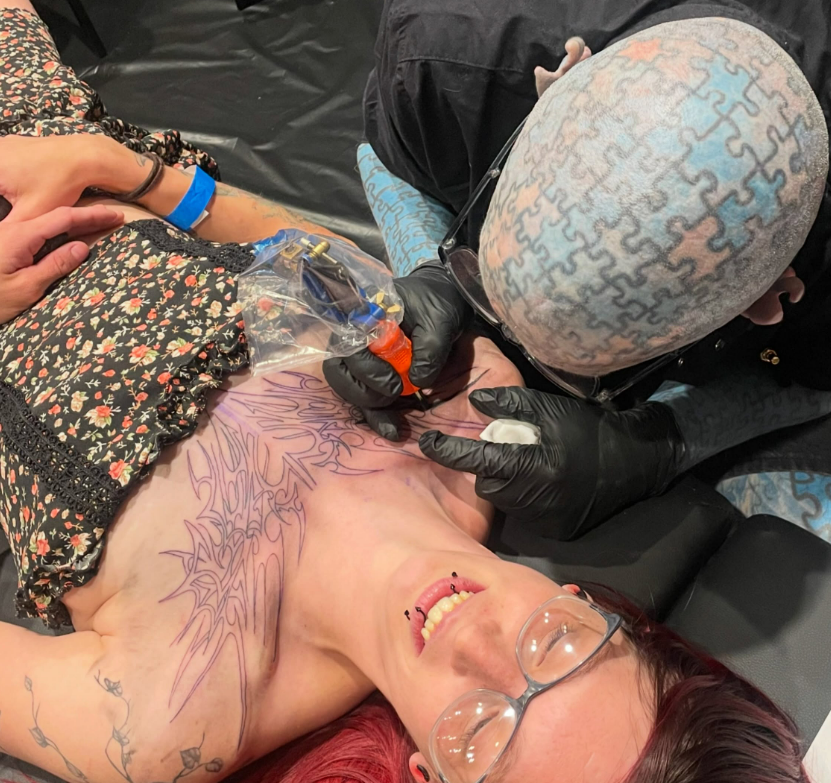
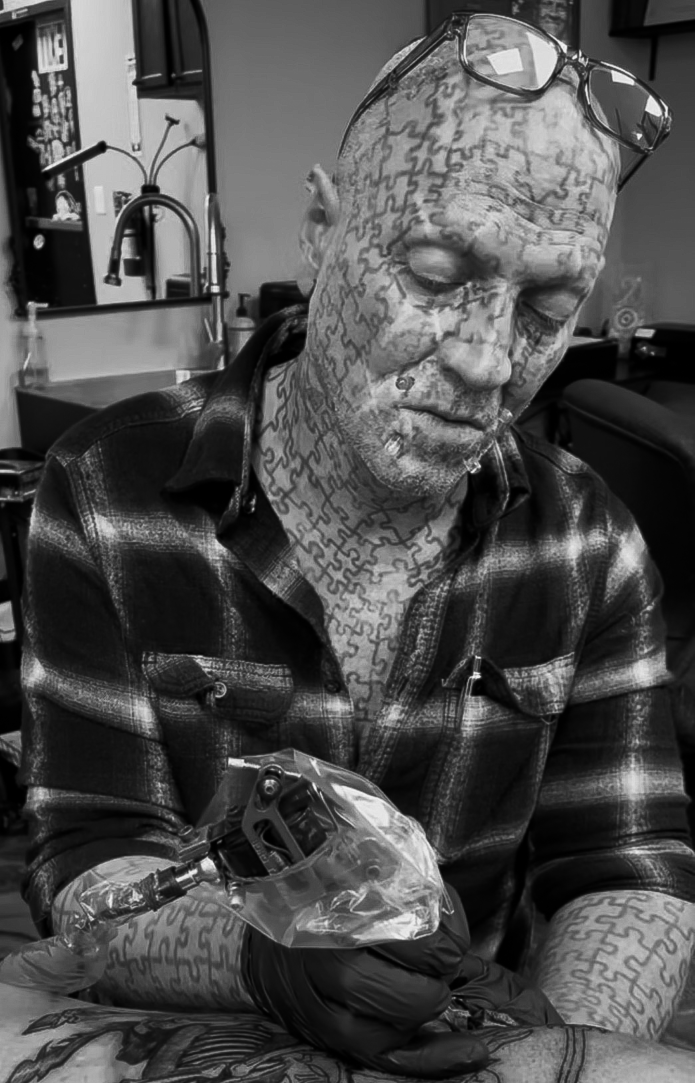
The Parlour Tricks photograph adds a different kind of evidence. It shows The Enigma tattooing a guest, with his own puzzle-covered scalp and arm visible while he works. That matters to the story because he is not only a subject whose body is photographed. He has also spent years tattooing puzzle pieces on other people and now works as a guest artist.
The working scene changes the way the tattoos are read. The blue pattern is still the first thing a viewer notices, but the machine, gloves and client place it inside a craft setting. His tattoos are both a performance identity and a professional reference point. The photographs do not ask the reader to choose between those roles; they show them operating at the same time.
The practical lesson is simple: if a design is built around a repeated motif, its meaning can come from consistency and placement rather than from a list of symbols. The Enigma’s puzzle pieces work because they keep returning across every visible surface.
The ear, eyes and the limits of the record
The close ear photograph is the most specialized image in the set. It shows puzzle pieces inside the ear, tying the tattoo pattern to the physical modification of the ear itself. This is a small area, but it changes the scale of the whole project. The pattern is not limited to easy, flat tattoo real estate such as the upper arm or back.
Guinness also records tattooed sclerae, horn-shaped implants and flesh tunnels around the mouth. Those details belong to the broader body-modification history, while the ear image gives direct visual evidence for one particular tattooed area. Keeping those categories separate makes the article more reliable and gives a designer more control over which reference is being used.
Not every photograph can prove the same thing. The old Guinness image is the clearest source for the face and torso at one point in time. The Westword photographs show a later stage in different poses. The Parlour Tricks images show the ear and a working setting. Together they make a strong visual record, but none of them should be described as a complete current map of every piece.
The chronology also helps explain why photographs from different decades can look different without contradicting one another. The colour may soften, the borders may fade, and the performer may pose in ways that reveal or conceal large areas of skin. A current image is not automatically a correction of an older one. It is a separate document of the project at a different moment.
There is a useful distinction between a tattoo map and a personal history. A map can describe the visible coverage of the scalp, arms, chest or ear. A history has to rely on what The Enigma has actually said about the decision to become a blue puzzle. The strongest article keeps those two layers together without inventing a meaning for a piece simply because it is easy to see.
A performance identity built over time
The Enigma’s tattoos are compelling because the idea is disciplined even when the surface is dense. The repeated puzzle shape, the blue field and the extension over the head and hands create a recognisable identity. The most useful reference is therefore not a claim that every part has one fixed meaning. It is the documented choice to turn the whole body into one connected puzzle.
How to use the reference responsibly
For anyone developing a related tattoo concept, the strongest starting points are the continuous outline, the controlled colour field and the way the motif changes with anatomy. A smaller design can keep those qualities without copying The Enigma’s exact body map. The photographs show the scale, the history explains the commitment, and the boundaries of the record keep the interpretation honest.