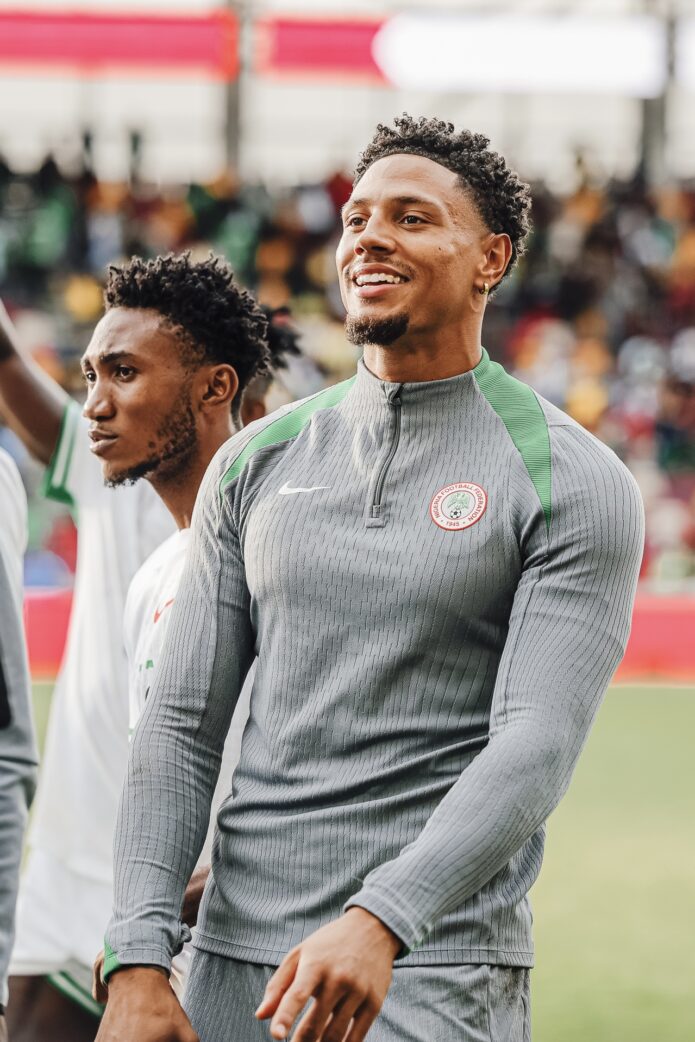
Maduka Okoye’s tattoo record is unusually easy to misread because most public football photographs show him in a goalkeeper kit. The strongest visual evidence comes from a small set of different contexts: a close gallery frame of an anime tattoo, a lifestyle photograph that exposes leg ink, and a matchday profile where a face-side tattoo is visible beside the ear.
This guide separates those tattoo-bearing originals from two supplemental portraits. The featured image identifies Okoye, while the five inline slots perform different editorial jobs. Three are tattoo photographs, and two are neutral portraits used only after the tattoo search was exhausted. No generic portrait is presented as tattoo proof, and no source image is reused under another heading.
The Itachi tattoo on the leg
The official gallery’s Itachi Tattoo frame is the clearest close-up in the set. It shows a large anime-style portrait on the lower leg, with linework and shading visible across the skin. The gallery itself supplies the name of the subject, while the inspected pixels establish that the image is a genuine tattoo photograph rather than a printed design, temporary transfer or film makeup.
The crop is useful because it gives the design its own visual space. The shoe, shorts and surrounding room remain secondary, so the eye can follow the face, hair and dark outline inside the tattoo. The image does not prove that this is Okoye’s only leg tattoo, and the article does not turn one close-up into a complete inventory. It records only what this original frame can support.
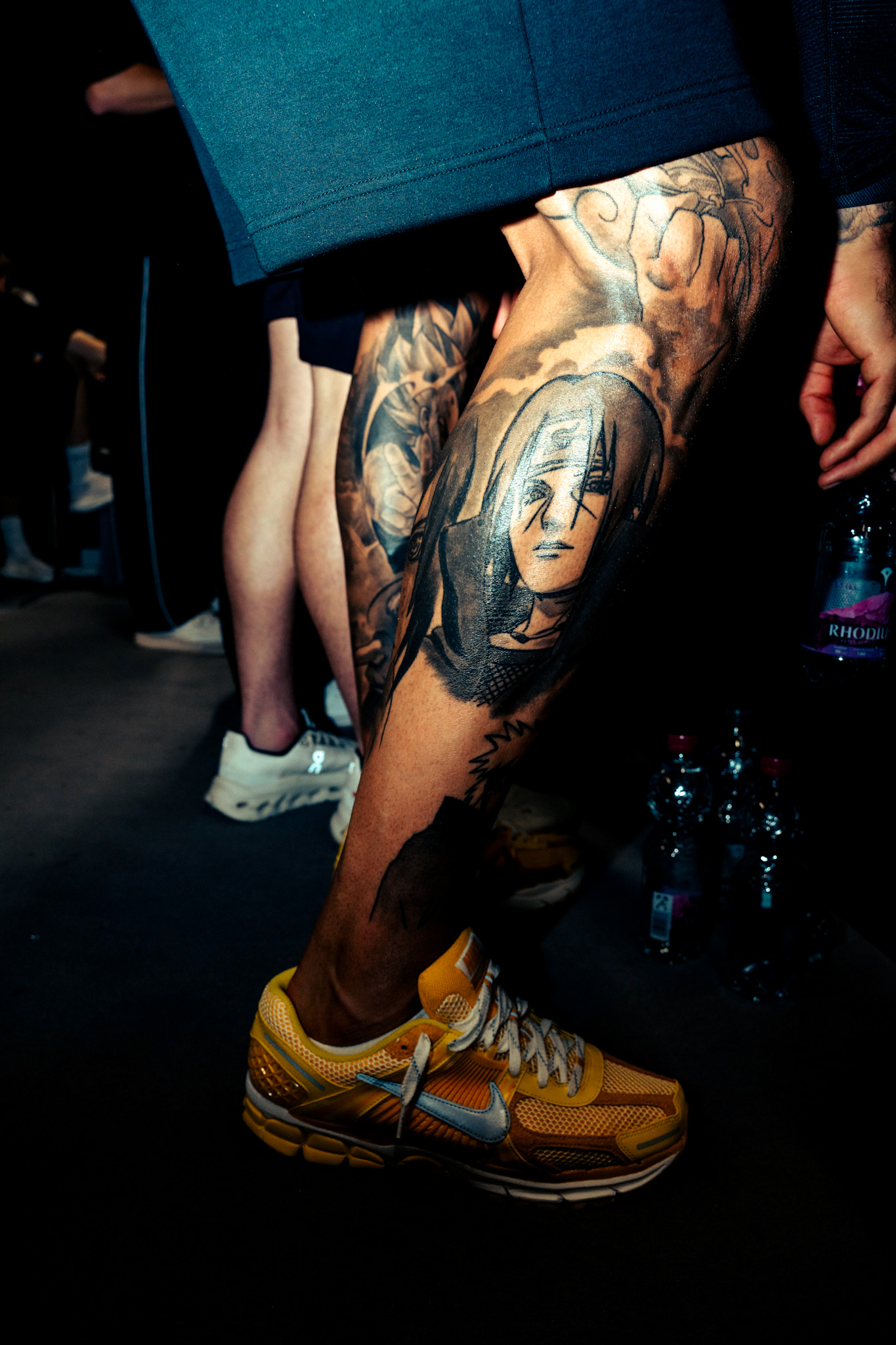
The tattoo’s anime reference also fits Okoye’s public profile. His official website describes him as a fan of Naruto and One Piece, but it does not claim that every anime image on his skin has one single meaning. The careful conclusion is narrower: the gallery labels this photograph as an Itachi tattoo, and the inspected artwork matches that label.
Leg tattoos in the lifestyle frame
The Never Done Club photograph widens the record beyond one close-up. Okoye stands in the centre of a lifestyle frame, and tattoos are visible below the shorts on his legs. The lower-leg ink is smaller in the composition than the Itachi portrait, but it establishes a separate setting and a different body area in a different original file.
That wider frame matters because it shows how clothing controls published coverage. In match photographs, the shorts and socks can hide much of the lower leg. In a lifestyle photograph, the legs become part of the styling, and separate pieces of ink can be seen without forcing the reader to treat the Itachi close-up as a universal image of every tattoo.
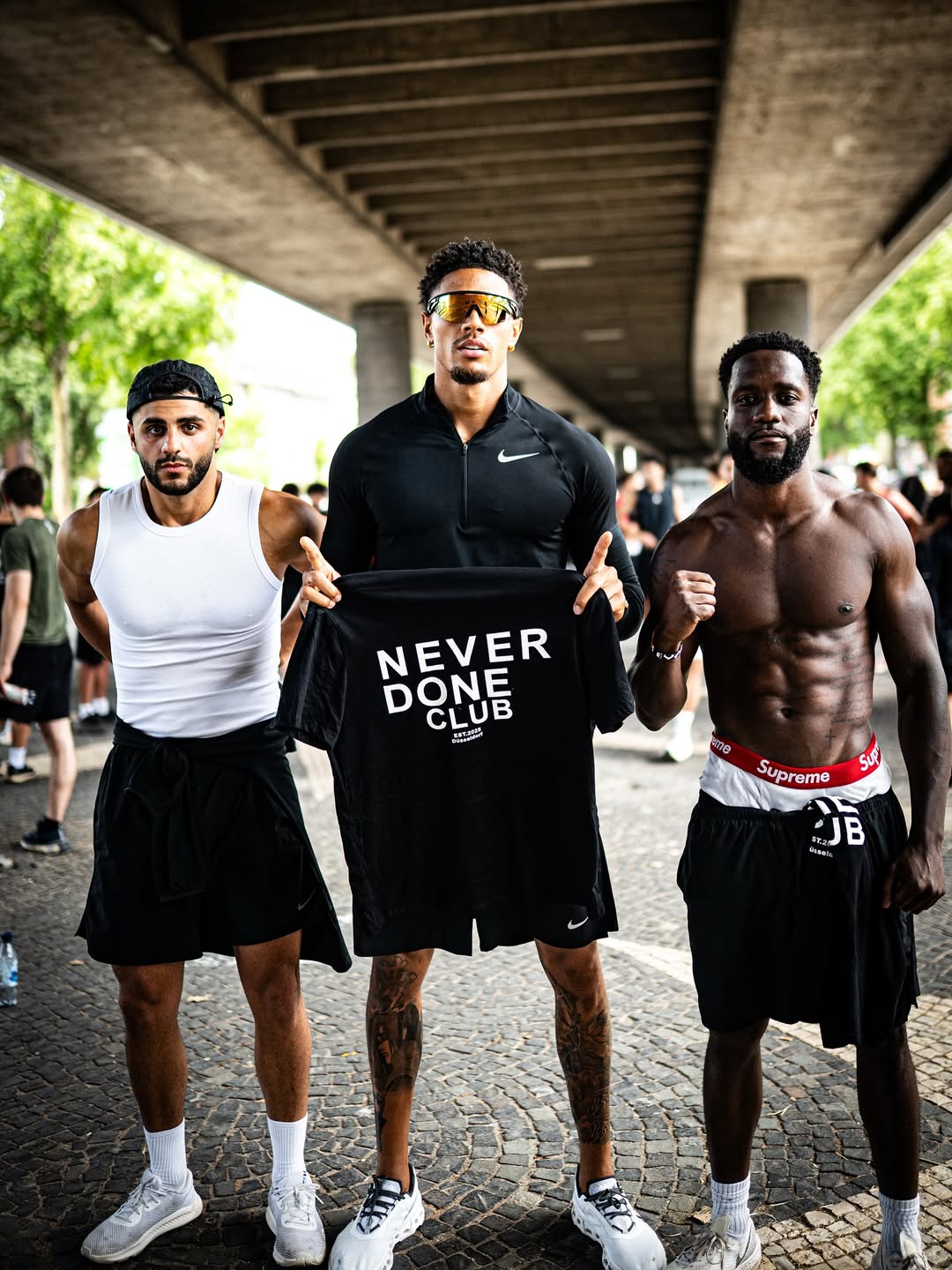
The photograph also keeps the subject anchored in his current identity as a goalkeeper and public figure. It is not a tattoo catalogue, and the other people in the frame are not part of the tattoo evidence. The mapped slot is used only for Okoye’s visible leg ink, with the caption and surrounding prose avoiding claims about the companions.
The face-side tattoo in profile
The Udinese matchday original supplies a different kind of evidence. Okoye is shown in profile from behind, and a vertical tattoo is visible beside the ear and cheek. The body is largely covered by the shirt, so this frame should not be used to describe the chest, arms or back. Its value is precise: it records the small face-side mark in a high-resolution sports photograph.
The side profile also helps distinguish ink from shadows. The mark stays attached to the skin beside the ear while the blurred stadium background changes around it. There is no need to attach a speculative meaning to the design. The photo establishes location, orientation and visibility, while the published sports context establishes the subject’s identity.
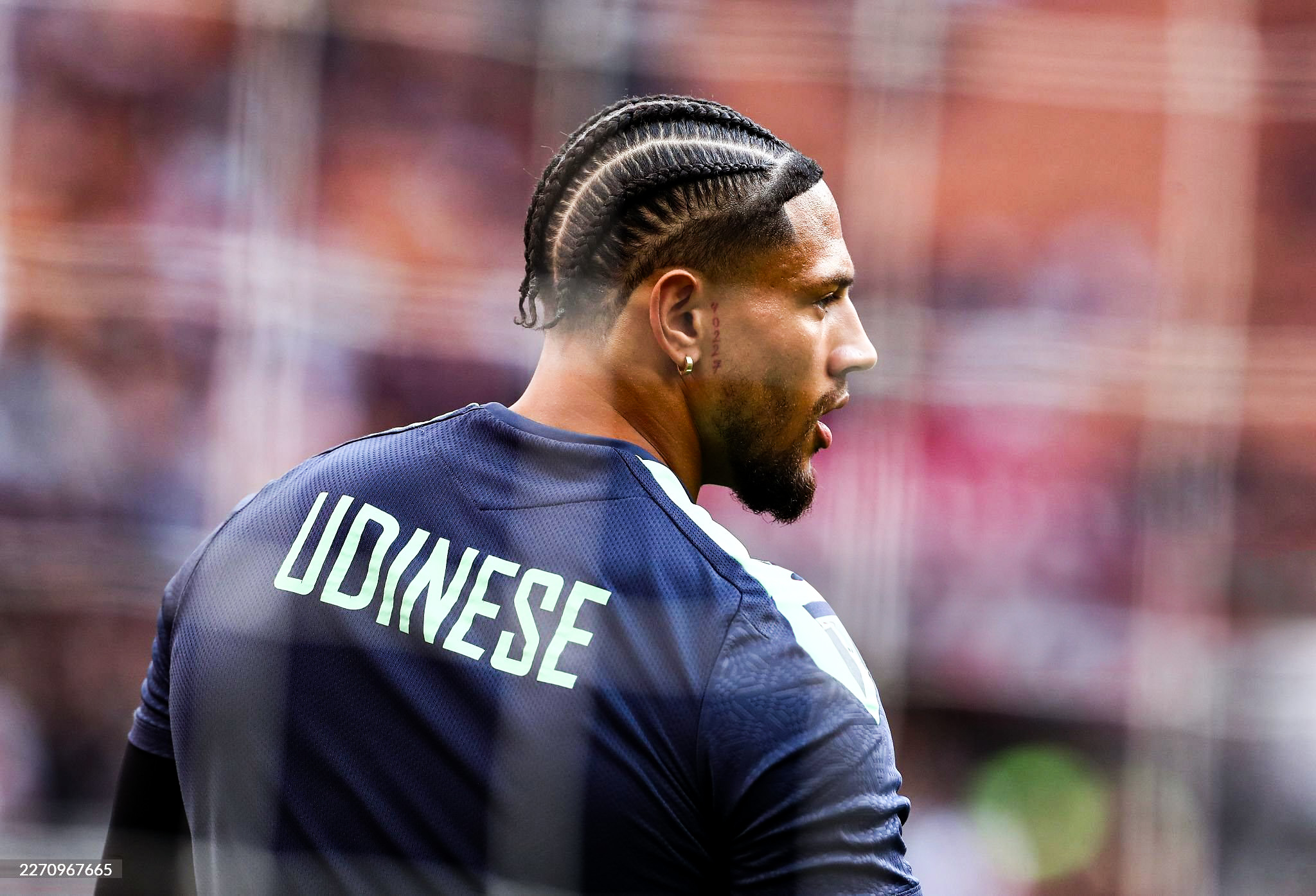
Face tattoos are particularly vulnerable to being missed in ordinary coverage because hair, camera angle and lighting can cover them. This frame is therefore kept separate from the leg sections. The article does not ask one photograph to prove two unrelated placements, and the image is not repeated in the featured position.
How the photographs fit together
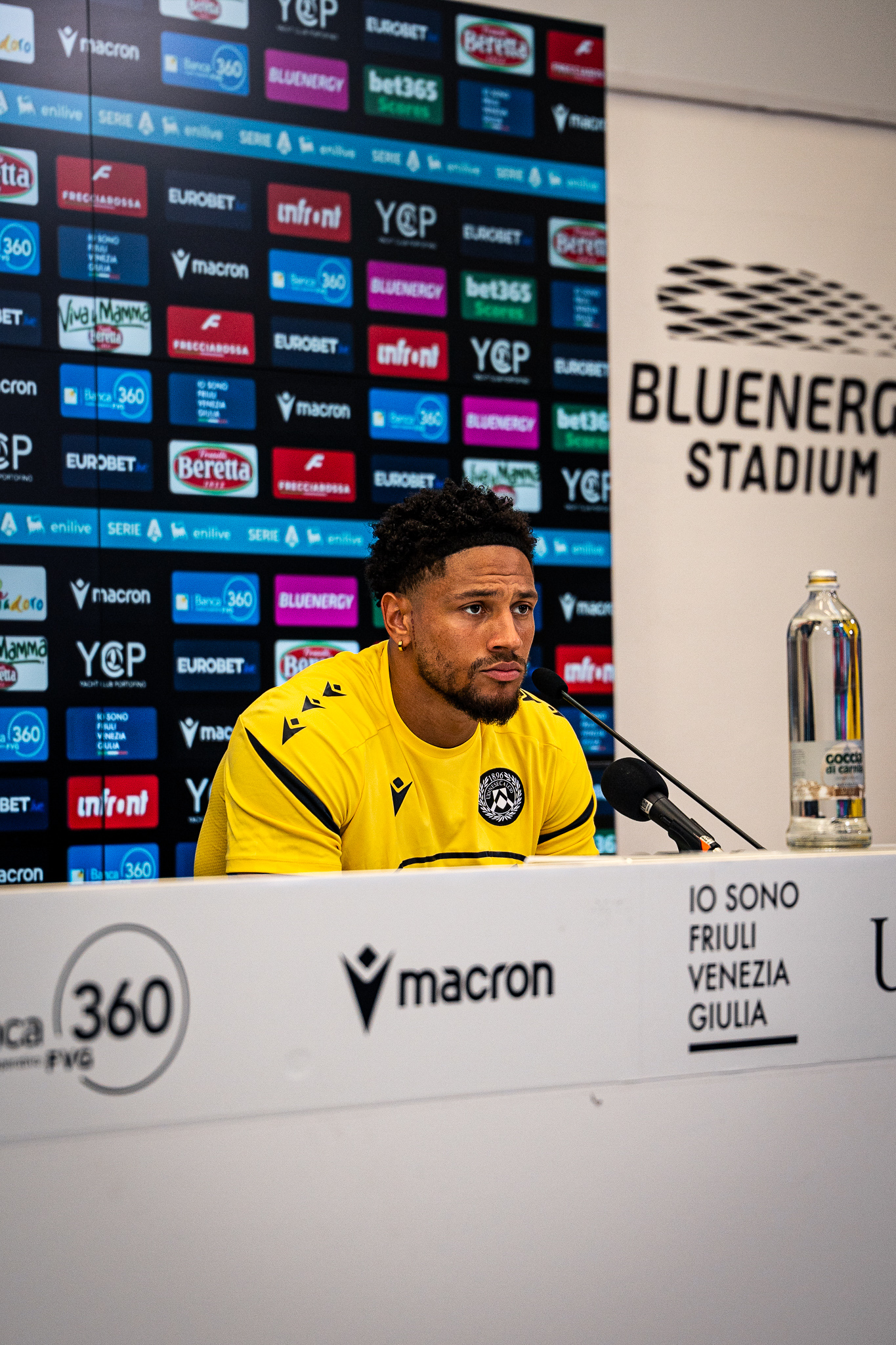
The article uses two additional official gallery photographs as supplemental portraits. The Icon League image is a face-visible interview frame, while the press-conference image places Okoye in a different professional setting. Neither is labelled as tattoo evidence. Their role is to provide visual context after the tattoo-bearing search has been exhausted.
That distinction keeps the evidence hierarchy clear. A portrait can confirm the face, hairstyle and public identity, but a jacket or goalkeeper shirt can hide the skin that a tattoo section is meant to document. The two portraits therefore sit under a neutral heading rather than beside a claim about the Itachi design, the leg ink or the face-side mark.
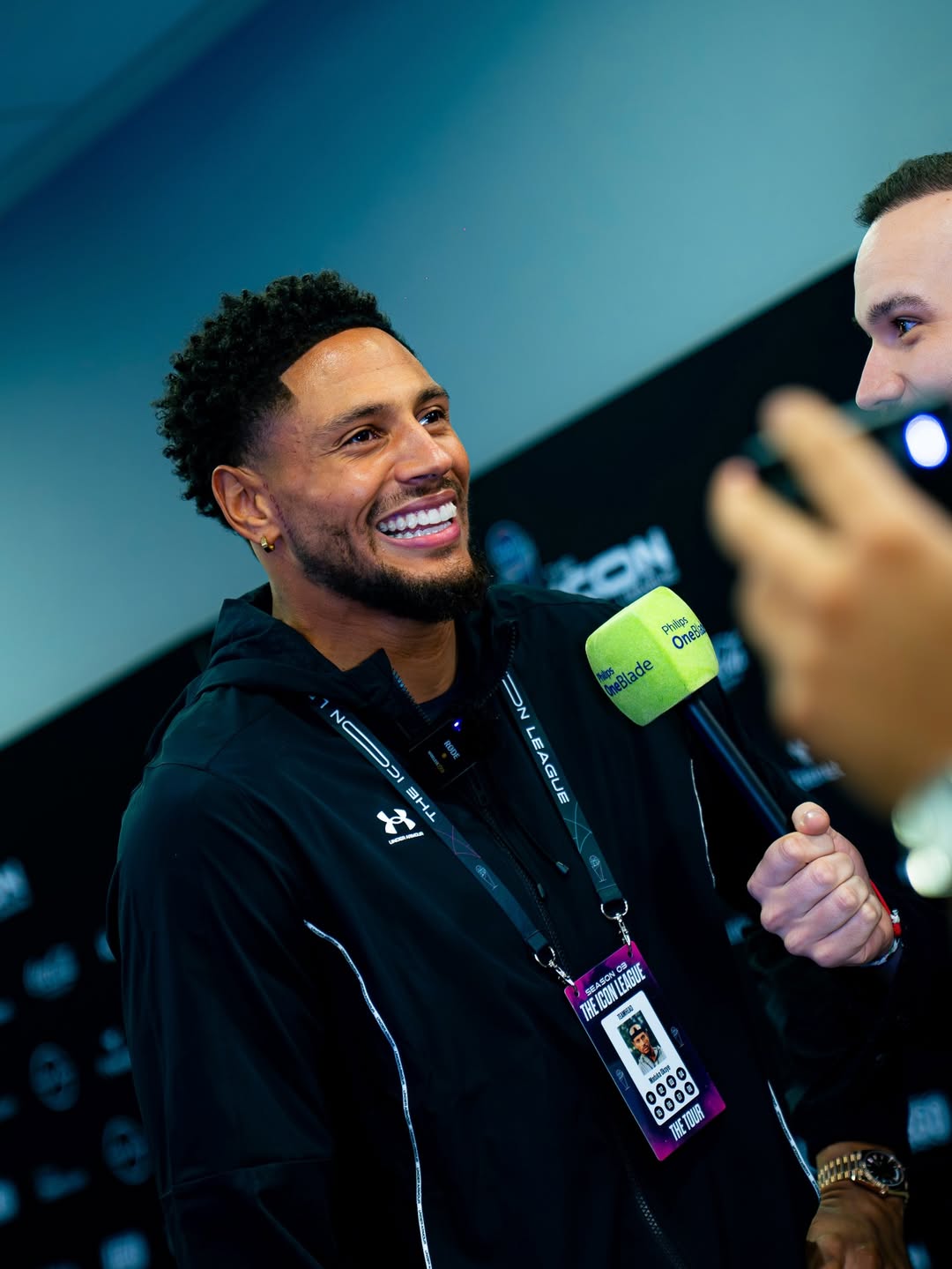
The sources are all different original files from the official gallery, and the media assets are not repeated. The tattoo photographs arrive first in the article. The supplemental images appear later, with prose between them, so the post does not create a pile of generic portraits at the top or pretend that every frame shows ink.
What remains uncertain
The available photographs establish three useful visual categories: an anime portrait tattoo on the leg, additional leg ink visible in a wider lifestyle frame, and a face-side tattoo visible in profile. They do not establish a definitive count for every design on Okoye’s arms, chest, back or hands. Public articles about his tattoos mention more extensive coverage, but the guide keeps those claims separate from what the selected originals visibly show.
Two published interviews add context. A 2024 NFF conversation is titled around Okoye’s special number 40 chest tattoo, and a 2025 Pulse Sports report documents a back tattoo reading Oberbilk, a reference to the Düsseldorf district where he was born. Those sources are useful for the dossier, but the article does not substitute their text for a photograph of the chest or back. The selected inline evidence remains limited to the inspected originals.
This boundary protects the reader from false precision. A tattoo can be genuine and well documented while its exact meaning remains unconfirmed. It is more accurate to describe the visible placement, the source label and the photographic context than to translate every symbol or assign a personal story that Okoye has not publicly confirmed.
How the visual record was assembled
The same-celebrity search covered the official gallery, the NFF interview route, the Pulse Sports back-tattoo report, regional sports coverage, image-search variants and profile photography. Tattoo-bearing options were examined before generic portraits were considered. The final set uses three tattoo photographs and two neutral supplemental portraits, with each original source path appearing once.
The official gallery was especially useful because it offered high-resolution originals rather than low-resolution reposts. The Itachi file is a close-up, the Never Done Club file is a lifestyle frame and the Udinese file is a matchday profile. Their compositions differ enough to serve separate sections, and their pixels remain large enough for inline display on desktop and mobile.
The source hierarchy also explains why the guide does not use every image found during discovery. Several regional articles reproduced the same outdoor frame or a collage containing an already-seen photograph. Those files were excluded as duplicates or near-duplicates. A visually attractive image is not automatically a new piece of evidence, especially when a collage repeats the same tattoo view.
The result is intentionally compact but not padded. The three tattoo images establish different placements and photographic jobs. The two portraits carry only identity and atmosphere. This keeps the post honest about the evidence while still giving the article enough visual rhythm to work as a complete tattoo guide.
What the record says about placement
Placement is the most stable information in the selected originals. The Itachi tattoo occupies the lower leg, the lifestyle frame shows more leg ink below the shorts, and the profile image places a separate mark beside the ear and cheek. These landmarks remain readable even when the camera angle, clothing and background change.
Meaning requires more caution. The official site connects Okoye with anime culture, the NFF interview title identifies a special 40 chest tattoo, and the Pulse Sports report connects Oberbilk with his Düsseldorf roots. Those are useful published details, but they should not be blended into a single invented story. Each design should remain attached to the source that actually documents it.
The article also avoids treating the body as a fixed diagram. A goalkeeper’s kit may conceal tattoos that appear in a personal or lifestyle photograph, and a profile can reveal a facial mark that a front-facing portrait hides. Changes in visibility are changes in photography and clothing, not proof that the ink has appeared or disappeared.
That is why every image is placed after explanatory prose and followed by more discussion. The reader can see the relevant original, compare its angle with the next section and understand what the photograph does not establish. The page becomes a visual record with limits, not a slideshow that asks one image to stand in for the entire body.
The embedded NFF conversation is included as contextual interview material. It supports the published background around Okoye’s number 40 chest tattoo, but the video is not used as a substitute for the selected original photographs.