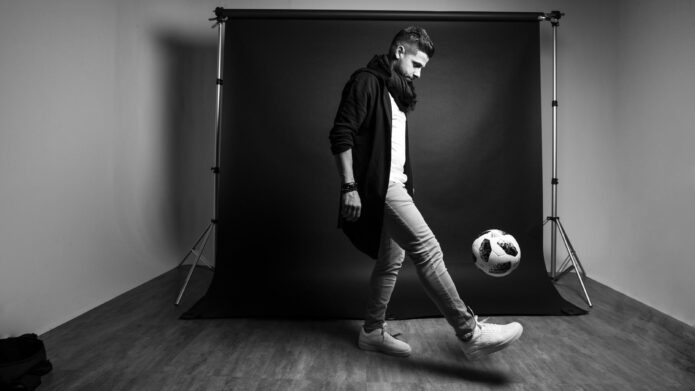
Cicinho tattoos are unusually well documented because the former Brazil, Real Madrid and Roma fullback has spoken about them with unusual honesty. The available reporting does not present a neat catalogue of symbols and dates. It presents a changing collection of arm, hand, wrist and neck work, seen across football photographs, later interviews and studio appearances. That makes the most responsible guide a visual record rather than a confident list of names that the photographs cannot prove.
The strongest written evidence comes from UOL, GloboEsporte, Gazzetta and Cicinho’s own interviews. GloboEsporte reported that he had more than 30 tattoos and that a large arm piece was made during the difficult Roma period. UOL later quoted his regret about tattoos made while drinking. More recent Italian reporting records his estimate of 33 tattoos, with only eight made sober. The photographs below add the visual side of that record. Every inline image is a different original photo, and the images are distributed through the relevant sections instead of being stacked above the article.
The full forearm composition in a studio portrait
The first useful view comes from a UOL photo essay rather than a match. Cicinho faces the camera while holding a football, and both forearms are exposed around the ball. The position is valuable because the left and right arms are visible at once. Dense black and grey work wraps around the forearms, with lighter skin breaks and smaller marks separating parts of the composition. The frame also gives a clear identity check through his face, rather than relying on a shirt or a caption.
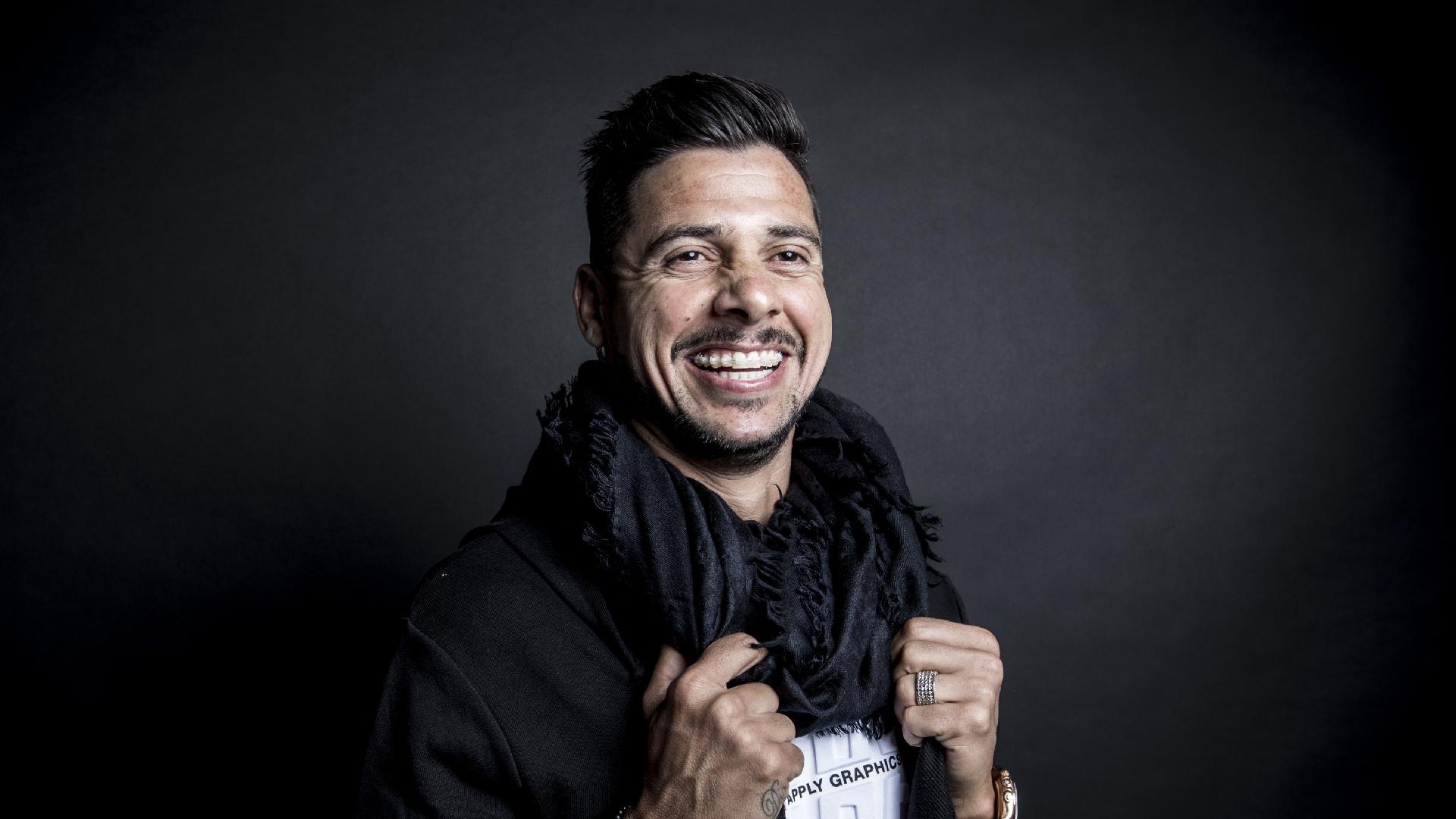
What the photograph establishes: Cicinho has substantial tattoo coverage across both forearms, and the work is not limited to one isolated emblem. The photo is detailed enough to show overlapping shapes and changes in density, but it does not make every small mark readable. The safest description is therefore one of layered forearm work, not a claim that each shape has a confirmed title.
The image also shows how body position changes the reading of a sleeve. When the arm bends around a football, the inner forearm turns toward the camera while the outer edge recedes. A tattoo that looks like one continuous band in a straight-on frame can reveal separate sections when the wrist rotates. This is a useful reference for anyone studying placement, because the visual effect comes from the anatomy as much as from the blackwork itself.
The football portrait with both hands and arms exposed
A second UOL frame was made during an earlier football period and shows Cicinho holding a ball in front of his body. The pose is different from the studio portrait, and the forearms sit lower in the composition. That change makes the hand and wrist areas easier to compare with the larger arm coverage. The photograph also captures the way bracelets, watches and movement can partially interrupt the visual line of a tattoo without changing the underlying placement.
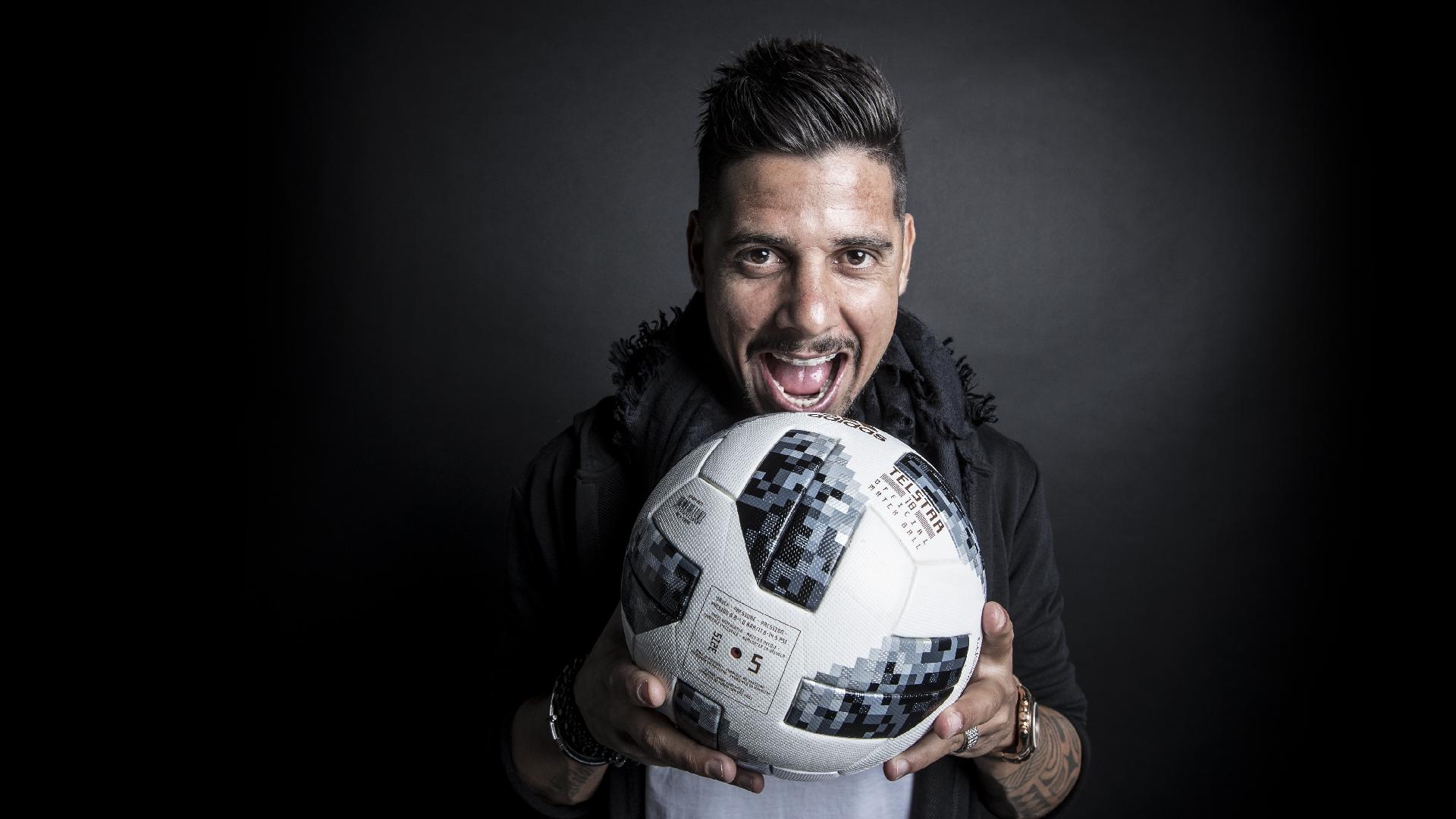
The visible pattern is broad rather than minimal: dark shapes fill significant sections of the forearms, while smaller lettering and linework appear closer to the wrists. The frame is not a tattoo studio close-up, so it cannot settle the exact meaning of each design. It does provide a second, independent view of the same subject and confirms that the ink remains visible outside the later television appearances.
That distinction matters in a source-led article. One photograph can show that a tattoo exists. Several photographs from different years and settings can show how the collection is arranged on the body. The comparison is strongest when the frames are not near duplicates. Here, the background, pose, clothing and camera position all change, so the image contributes a different visual angle instead of repeating the first asset.
The close studio view of the forearm and hand tattoos
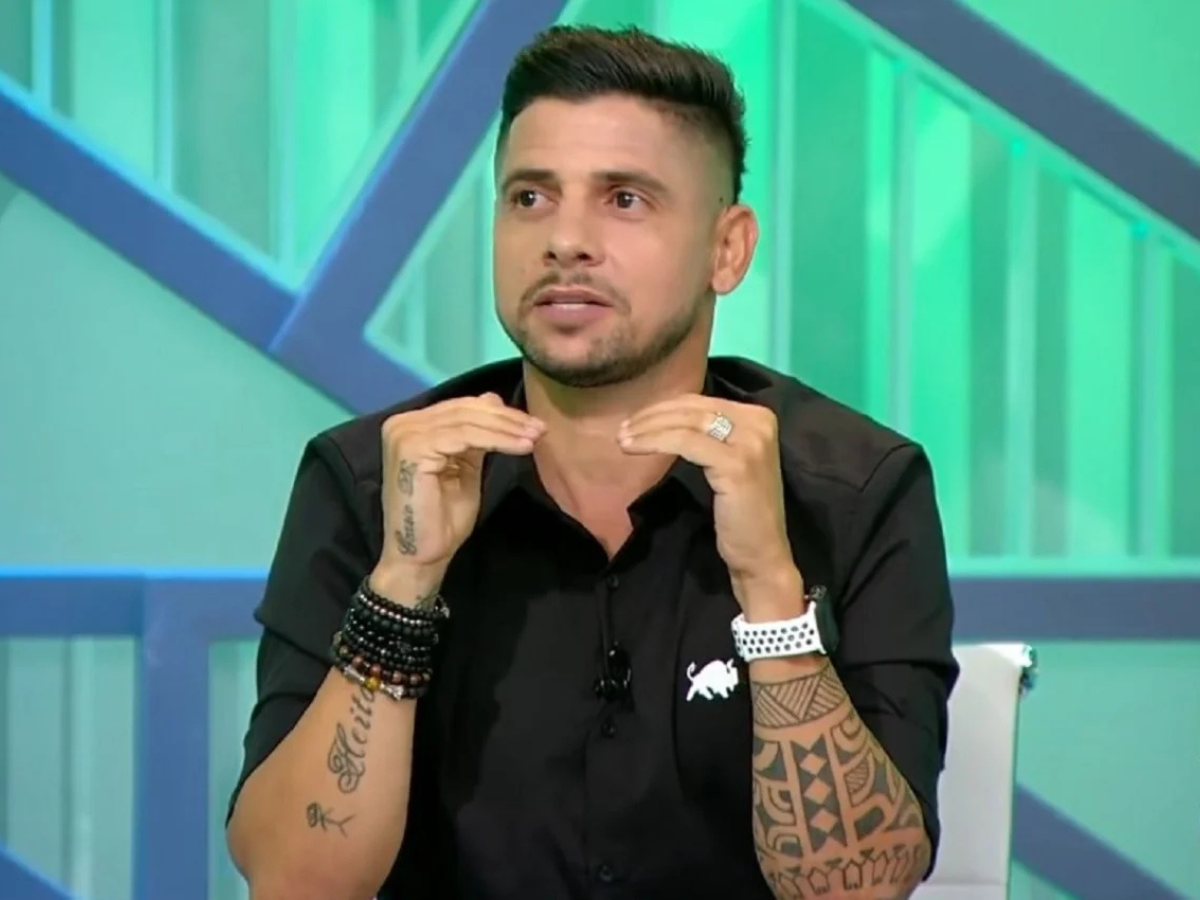
The third view comes from Cicinho’s later Flow Sport Club appearance. He is seated at a microphone in a light denim jacket, with one forearm held close to the camera. The tattoo work is easier to see than in a distant match photograph. Geometric and shaded forms run along the forearm, while a smaller mark is visible nearer the hand. The image is especially useful for readers who want to compare the scale of the linework with the wrist and fingers.
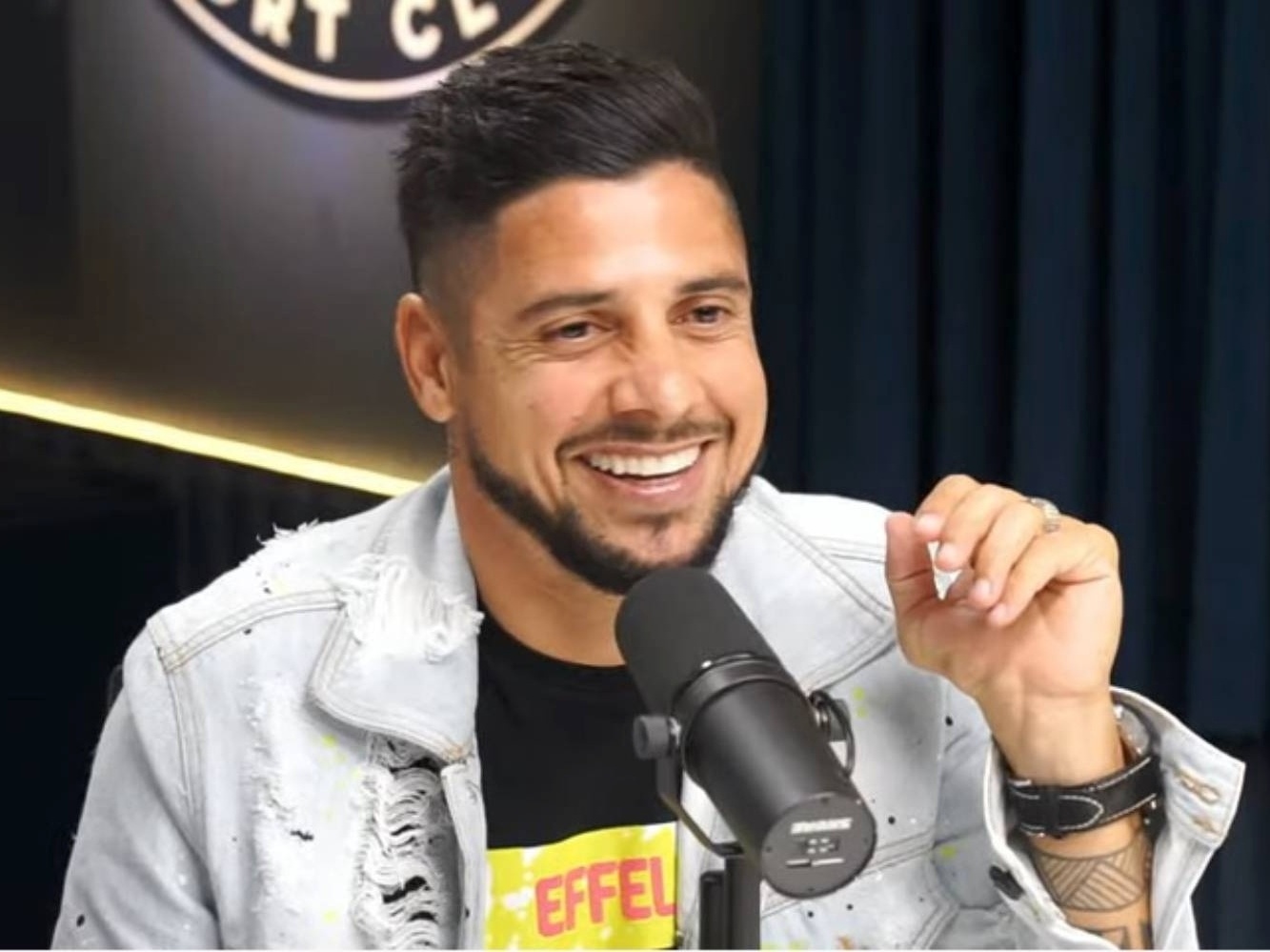
This is a tattoo photograph, not a generic celebrity portrait. The source shows Cicinho’s face, the interview setting and a tattooed forearm in the same frame. It does not prove the date or meaning of every element, and it should not be captioned as a complete map of all 33 tattoos. It is better treated as a close visual reference for the density, direction and contrast of the work that is actually visible.
The denim jacket also helps demonstrate a recurring problem in footballer tattoo photography. Clothing can hide the upper arm, while the forearm remains visible through a rolled sleeve or an open jacket. A reader looking for inspiration should not assume that the visible section is the entire design. In Cicinho’s case, the written record specifically describes tattoos across the body, so each photograph should be understood as one window into a much larger collection.
The Roma-era image with a visible neck mark
A fourth image comes from Gazzetta’s coverage of Cicinho’s Roma years. He is shown in a red Roma shirt during a match, shouting with one hand across his chest. Most of the arm ink is covered by the long sleeve, but a small mark on the side of the neck is clearly visible. It is a valuable counterpoint to the later exposed-arm photographs because it shows that the collection is not only about forearm coverage.

The narrow claim is the important one: this frame visibly supports a neck tattoo or tattoo-like mark on Cicinho, while the shirt prevents a reliable reading of the arms. The image should not be used to invent a detailed description of hidden work. It does show how a football action frame can document a different placement that would disappear in a studio photograph focused on the forearms.
The Roma context also fits the written timeline. GloboEsporte linked one of his largest arm pieces to the period when he played in Italy, and later interviews described the alcohol problems that surrounded the tattooing. Those sources explain why the period matters, but the photograph remains an independent piece of evidence. It shows the player, the kit, the neck area and the original match setting without asking the image to prove more than it can.
The UOL portrait with both forearms lifted
The fifth tattoo-bearing original is another UOL portrait from the same broader photo essay, but it is a separate frame with a different pose and composition. Cicinho grips a football close to his face, bringing both forearms upward. The position exposes a broad sweep of blackwork on the right arm and additional marks on the left. Because both elbows and wrists are bent, the frame is useful for studying how the collection moves across joints rather than sitting on a flat panel of skin.
Compared with the earlier studio view: the image reveals more of the side and underside of the arms, while the ball partly blocks the torso. That is exactly why it belongs in the article as a separate asset. It is not a resized copy, a crop or a repeated source file. The new pose changes which surfaces are readable and gives the reader another genuine view of the tattoo coverage.
The visual record still has limits. Neither this frame nor the others can establish a complete inventory of symbols, and the available reporting does not identify every artist or every date. Cicinho has described the collection as a consequence of a difficult period and has spoken about regret, pain and the hope that the tattoos would bring peace. Those words give the collection emotional context without turning an uncertain shape into a made-up design name.
What Cicinho has said about the collection
The most consistent documented theme is not a single symbol but the story of how the collection grew. GloboEsporte reported that Cicinho called a tattoo artist after drinking in Rome and later regretted the large arm piece. UOL quoted him saying that he drank because he hated the pain and wanted the tattooing to feel easier. In the same interview, he described himself as uncomfortable with the result and warned that tattoos did not cure depression.
Later reporting adds a numerical frame. Gazzetta recorded Cicinho saying that he has 33 tattoos and that only eight were made while sober. That number should be treated as his own reported estimate, not as a count that can be verified by one gallery. It does explain why photographs from different years show a mixture of dense arm coverage, smaller marks and areas that may be hidden by clothing.
The editorial lesson is simple: personal meaning belongs beside the photographs, not inside guesses about them. A source can confirm that Cicinho regretted the process, that he tried to hide the tattoos during matches and that his faith changed how he talked about his past. The images can show placement and style. Together, those two kinds of evidence produce a more accurate guide than a speculative list of symbols.
How the football timeline changes what is visible
Cicinho’s career moved through São Paulo, Real Madrid, Roma, Villarreal, Sivasspor and later sports broadcasting. Each period produced different clothing, lighting and photographic habits. Match shirts can cover the upper arm, long sleeves can hide nearly everything below the shoulder, and a television studio may expose the forearms while leaving the chest and back unseen. A tattoo article that uses only one era risks confusing limited visibility with limited coverage.
The Roma match image is a good example. It contributes a neck view and a strong historical setting, but the long red shirt hides most of the arms. The later studio and UOL portraits do the opposite. They show the forearms clearly but cannot prove what was present during every earlier season. Reading the photographs as dated windows keeps the chronology honest and helps explain why the collection can look different without assuming that every change is a new tattoo.
A collection shaped over time
Across the five tattoo-bearing images, three visual qualities stand out. First, the work is concentrated heavily on the arms and forearms, with dark areas broken by lighter skin and smaller marks. Second, the collection changes character with the pose. A bent arm makes the work feel compact, while a lifted arm opens the composition and reveals how it wraps around the body. Third, the collection is layered. It reads as tattoos accumulated over time rather than a single session designed as one seamless sleeve.
For design analysis: the photographs show how lines follow the forearm, how darker blocks balance smaller lettering and how the pieces remain readable when the wrist turns. An uncertain shape from a compressed match frame should not be treated as a confirmed design. Cicinho’s photographs are useful because they show real placement under real movement, not because they provide a printable stencil.
Why the source mix matters
The search for this article covered close-ups, wider views, alternate angles, different football periods, television interviews, regional sports reporting, image galleries, source-page variants and recent Italian coverage. That process found more than the first close-up. It also produced the UOL photo essay, the Flow interview frame, the Portal Leo studio source and the Terra press image as distinct routes for visible arm work. The final inline set therefore uses tattoo-bearing originals rather than padding the article with unrelated celebrity portraits.
A separate face-visible portrait is still useful for the featured image because readers need an immediate identity reference. It is kept separate from the tattoo sections and is not described as tattoo evidence. That distinction protects the article from the exact problem that often makes celebrity tattoo galleries misleading: a page can look full of images while only one picture actually shows the subject’s ink.
What remains unconfirmed
The public sources do not provide a complete artist list, a verified sequence for every addition or a reliable name for every shape visible on the arms. The photographs also vary in resolution and angle, so a small mark that appears in one frame may disappear in another. Those gaps are not a reason to discard the visual record. They are a reason to state the limits clearly.
The confirmed record is strong enough to discuss extensive body art, arm and forearm coverage, a visible neck mark, the Roma-era timing of some work and Cicinho’s own regret about tattoos made while drinking. It is not strong enough to claim that a particular geometric patch represents a named symbol unless a source identifies it. Keeping that boundary in place makes the guide more useful for readers who care about accuracy.
How the evidence fits together
Begin with the first and fifth UOL frames to compare the full forearm composition under two different poses. Use the Flow image for a closer look at the forearm and hand area. Then compare the Roma match photograph for the neck mark and the way clothing changes visibility. This sequence lets the reader move from broad composition to smaller placement without pretending that any one frame is a complete catalogue.
The written reporting should be read alongside those images. GloboEsporte explains the large arm tattoo and the attempt to cover the work during matches. UOL records Cicinho’s regret and his explanation that alcohol was tied to the tattooing process. Gazzetta supplies the later count of 33 tattoos and the distinction between sober and intoxicated sessions. The sources do different jobs, and the article keeps those jobs separate.
Final notes for readers and artists
Cicinho tattoos are best understood as a personal archive shaped by football, pain, regret, recovery and time. The photographs show genuine ink from different angles and periods, while the interviews explain why the collection carries more weight than a simple style gallery. The strongest visual evidence is on the forearms and hands, with the Roma frame adding a separate neck view and a useful reminder that clothing can hide most of the story.
Use the images responsibly: treat them as references for placement, scale and composition, not as permission to copy an uncertain design. Verify meanings through the original source, consult a professional artist and remember that a tattoo can change as the body moves. A careful guide is not the one with the most repeated photos. It is the one that shows distinct evidence, spaces the images through the explanation and tells the reader exactly what is confirmed.
Source note: the article uses UOL, GloboEsporte, Gazzetta, Terra and Portal Leo Dias reporting, with the inline photographs inspected individually for subject identity, visible tattoo coverage and distinct source files.