
Kirk Hammett’s tattoos are easiest to trace through photos taken in different settings. A water portrait shows the belly lettering, a studio shot catches work in progress on his chest, and stage images show the ink as he plays. Some designs are identified in published accounts; others remain unclear.
The lower-abdomen lettering in water photos
Alt Press identifies the curved lettering around Hammett’s navel as “Made in SF 11-18-62,” tying the words to San Francisco and his birth date. The water photo shows the placement from the waist up, without a shirt or guitar strap covering it.

His chest work is visible in the same frame, though the smaller details are harder to make out. The lettering is the clearest tattoo to identify in this image.
The chest work and the Amsterdam studio frame
A separate Amsterdam studio photograph shows Hammett during a chest tattoo session. The machine and the artist’s gloved hands make the process clear, while older designs around the new work show that the chest was built up over time.
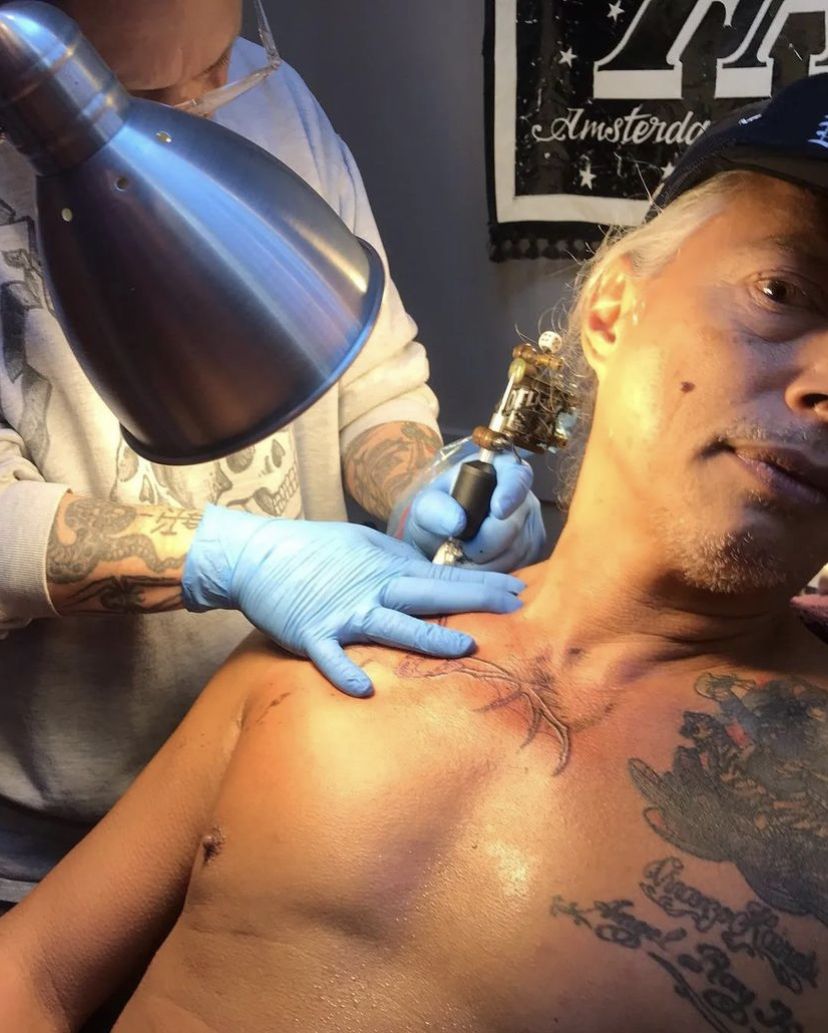
The lamp, arm and close crop hide part of the torso. The photo documents an active session and the location of the work; it doesn’t identify the artist, date or meaning of every design.
The early bathroom portrait and the visible waist designs
In the bathroom portrait, Hammett sits with a guitar and his torso and upper legs exposed. The frame reveals lower-waist designs that stage clothes usually cover, alongside the better-known navel lettering.
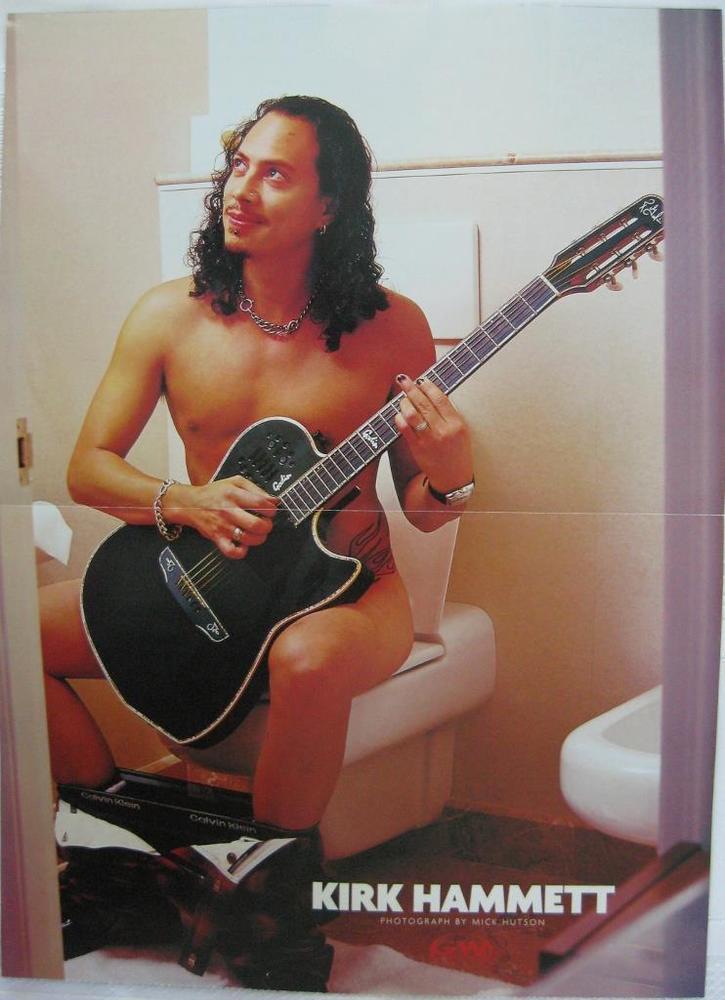
The photograph establishes that ink extends below the chest, but it doesn’t name each motif or show when it was added.
The live-stage tattoo frames that show the same collection moving
The live-performance composite shows Hammett shirtless with his guitar from several angles. The frames capture movement and make the lower-abdomen lettering visible more than once; together, they form one composite image, not four separate assets.
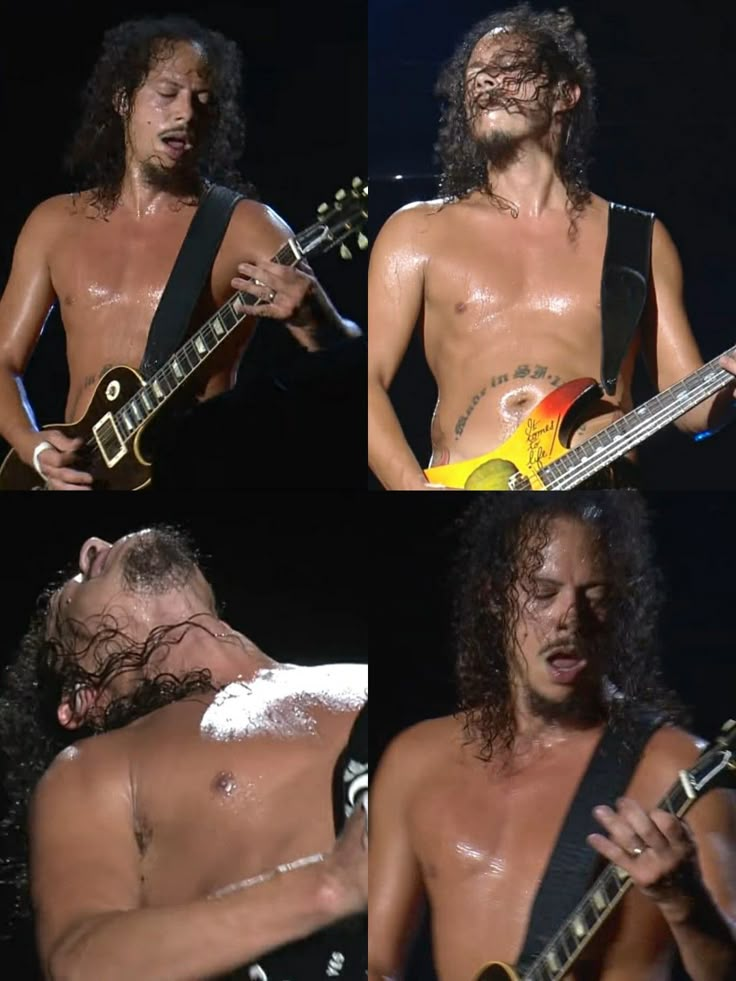
Stage lights and the guitar strap hide some details. These views confirm the tattoos during performances, while the water photo remains clearer for reading the words.
The musician behind the stage image
A separate portrait shows Hammett with a guitar in a studio setting. It helps identify him and gives the page a face-visible image; it doesn’t serve as evidence for a specific tattoo.

What the record can say with confidence
The published record identifies the navel lettering and shows additional chest and waist designs across the water, studio, bathroom and stage photos. It also includes the story of matching 666 tattoos with Anthrax guitarist Scott Ian.
Blabbermouth attributed that account to photographer Ross Halfin, who said Hammett insisted the number be photographed after the matching tattoos. Other outlets repeat the story. The images here don’t provide a close view of that design, so it remains a reported detail rather than an independently visible one.
How the photographs change the reading
Each setting answers a different question: the water portrait makes the wording readable, the studio photo shows an active session, the bathroom image reveals lower-waist ink, and the stage composite records the tattoos in motion. None shows the entire collection at once.
Hammett’s public image also includes horror culture, vintage instruments and heavy-metal theatre. Published sources don’t connect every tattoo to those interests, so they shouldn’t be used to assign meanings to designs that remain unexplained.
The Gibson conversation behind the images
The Gibson conversation below gives a separate look at Hammett in his professional setting. It complements the photographs, but it isn’t presented as evidence about any tattoo’s design or meaning.