
Caitlin Parker’s documented tattoo record centres on Olympic rings inked on her arm. The source-led article uses one verified tattoo photograph and four distinct boxing portraits for identity and career context. The supplemental images are not presented as additional tattoo evidence.
Caitlin Parker’s Olympic rings tattoo
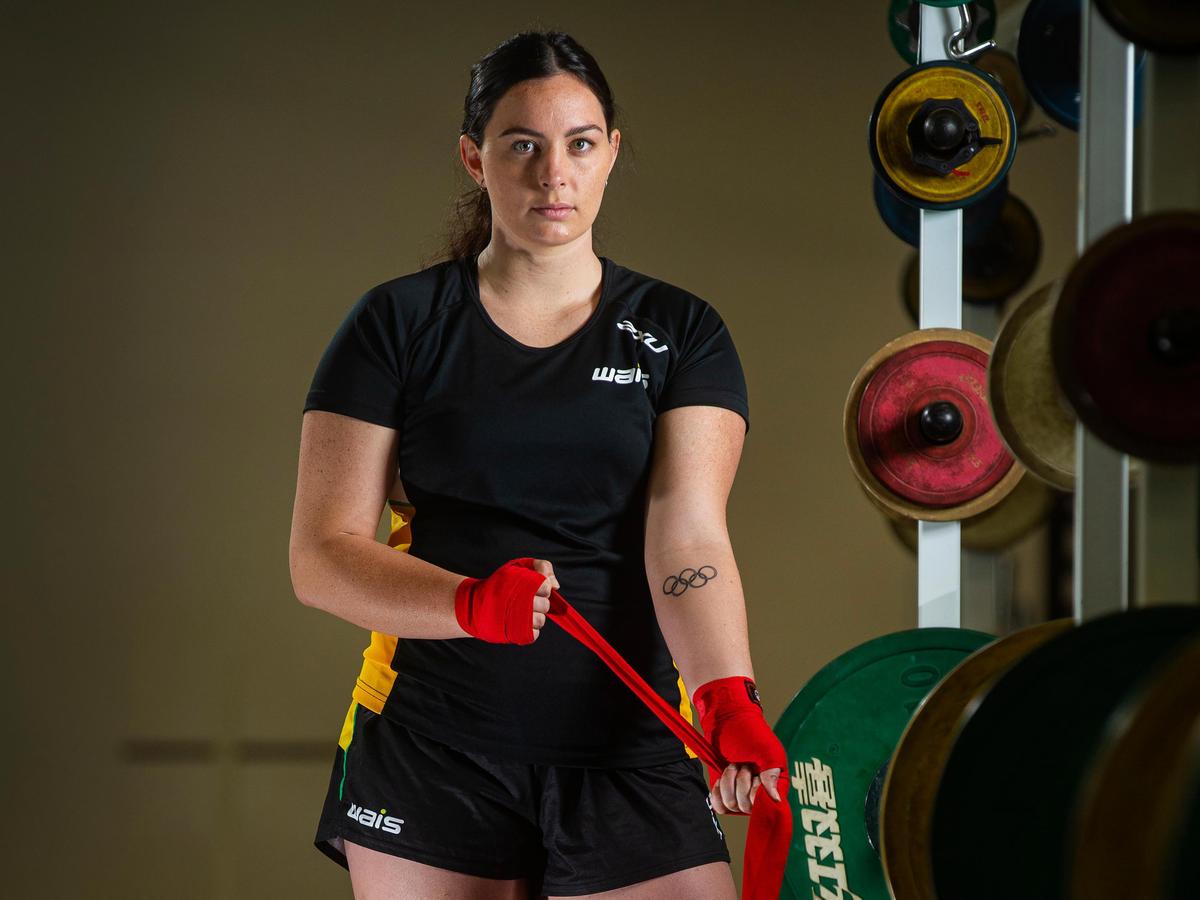
Caitlin Parker has one clearly documented tattoo in the source record used for this profile: Olympic rings inked on her arm. PerthNow’s feature on tattoo artist Jackson May identifies Parker by name, shows her with the design, and connects the work to her boxing journey. The inspected files below keep that genuine tattoo evidence separate from the portraits used for career context.
The same report explains that Parker wanted the rings after returning from the Tokyo Olympics. She described the design as a reminder of the hard work, blood, sweat and tears behind her journey, while also linking it to the push toward Paris. Those details give the tattoo a specific meaning grounded in her own reported explanation.
The first inspected frame is a tight crop of the Olympic rings on Parker’s forearm. The five interlocking circles are plainly visible on skin, and the medal and boxing setting reinforce the subject’s identity without being used as the proof. This is the image that carries the article’s central tattoo claim, not a generic event photograph or a logo on clothing.
What the published photograph shows
The inspected tattoo photograph shows the rings clearly on Parker’s forearm, with her face and boxing setting establishing the subject. That is enough to document the design and placement without treating alternate crops of the same file as separate photographs.
Why the evidence stays narrow
The image is useful because it separates the five interlocking circles from the Australian branding, gloves and equipment around them. The article keeps the claim narrow: one documented Olympic rings tattoo on the arm, not a larger inventory inferred from nearby sports photographs.
The visual record is unusually useful because the source is connected to the tattoo artist who made the work. PerthNow names Jackson May, identifies Parker as an Olympic boxer, and describes the rings as a piece representing her boxing path. That combination is stronger than an unsourced social post or a fan-made list of celebrity tattoos.
Early boxing training context
The page does not claim that Parker has a large collection of visible tattoos, and this dossier does not add one. It records the rings because the image and the reporting agree. Other marks that may appear in a distant boxing frame are left out unless a reliable source identifies them. A narrow inventory is more useful than a long list built from guesses.
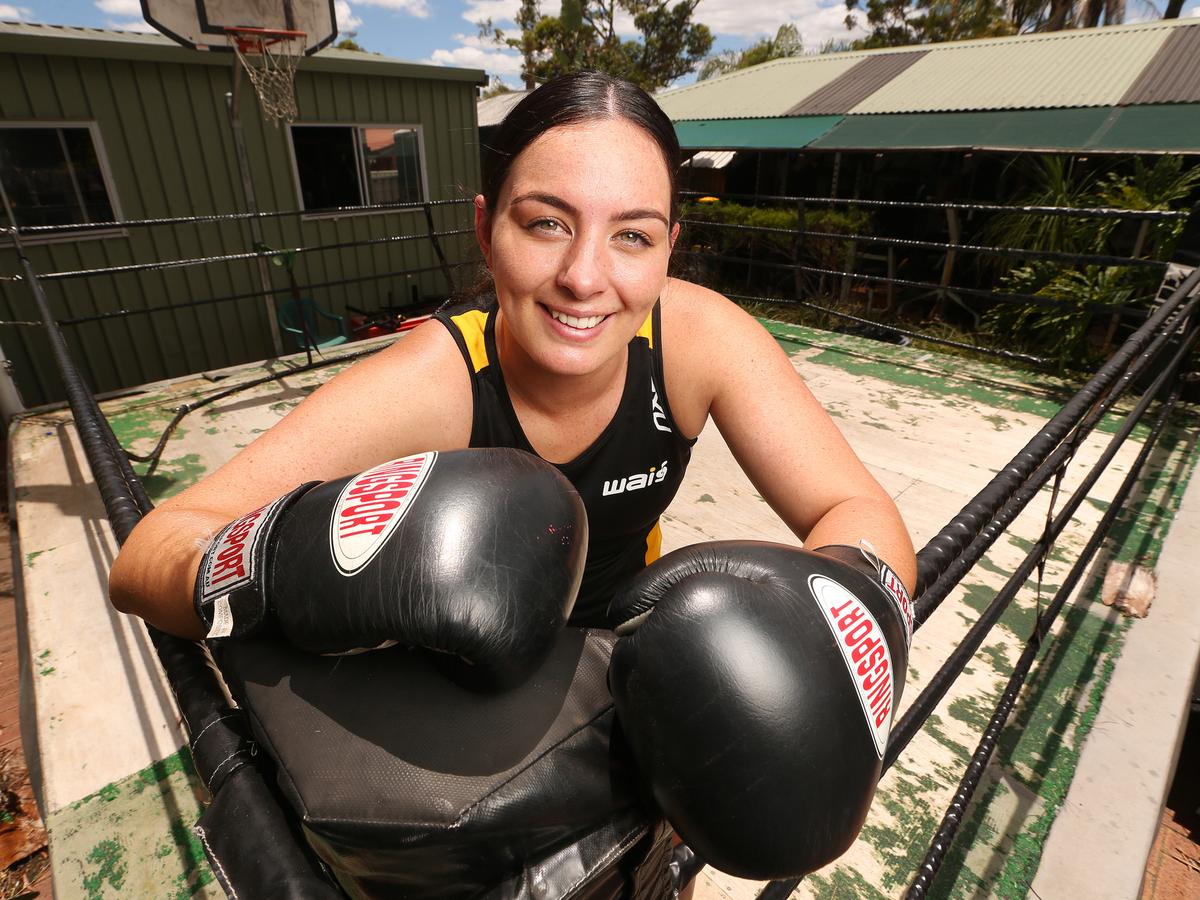
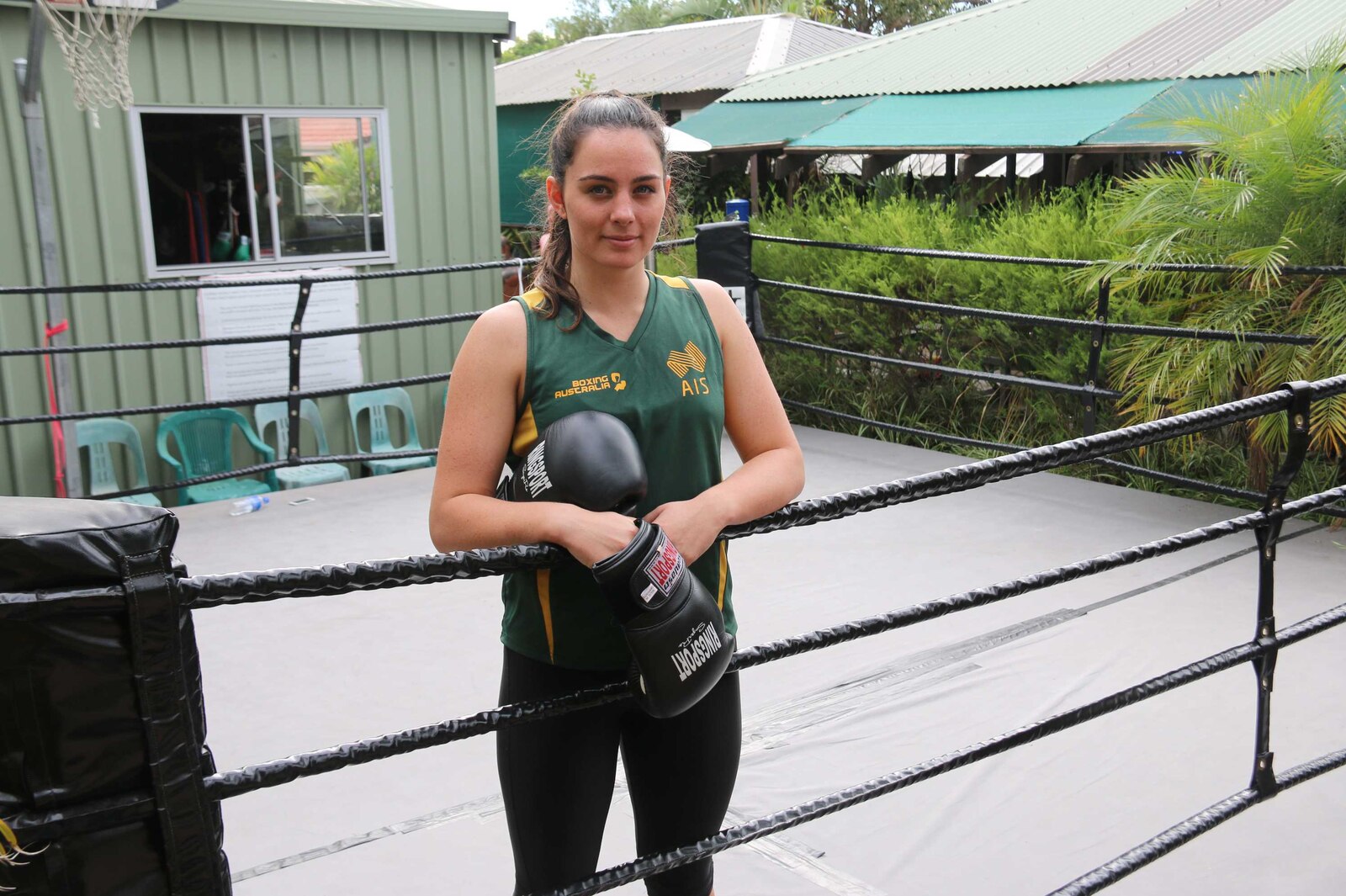
The supplemental ABC images show Parker in earlier boxing coverage. One places her in a backyard ring with coach Peter Wilkinson, and another shows her training with gloves. They help readers recognise the athlete and see the boxing environment that surrounds the tattoo story. They are labelled portraits or training references, never as additional tattoo evidence.
In the ABC group photograph, Parker’s face is clear and her green Australian boxing kit establishes the sport. The frame includes her coach and the ring, so it works as context for her early career. Nothing in that picture is mapped as showing the Olympic rings. The only tattoo-specific mapping remains tied to the PerthNow photographs.
Parker in the training ring

The second ABC photograph shows Parker alone in the ring with gloves and a direct, face-visible pose. Its role is identity and career context. It does not replace the close tattoo image because a training portrait and a tattoo close-up answer different editorial questions. Keeping those roles distinct prevents readers from being told that every image proves the same thing.
Parker’s career gives the tattoo a clear timeline. The Australian Olympic Committee records that she started combat sport at eleven, moved toward boxing, and competed at Tokyo 2020 before reaching Paris 2024. PerthNow’s account places the rings after Tokyo and before the later Olympic campaign. The dates can be described without inventing a separate design for each Games.
Parker became the first Australian woman to win an Olympic boxing medal when she took bronze in Paris. That achievement makes the rings especially resonant as a visual marker of the road she had already travelled. It does not prove that the medal caused a new tattoo, however. The article keeps the documented sequence intact and avoids turning a later result into an unsupported design update.
The source material also gives the tattoo a human scale. Parker said it reminds her of the people who helped and pushed her along the way, including coach Foxy. That explanation allows the article to discuss the design as a piece of motivation and memory. It still does not justify adding private details about the appointment, artist process or aftercare.
Parker’s route to two Olympic Games
The Olympic rings are a recognisable symbol, but Parker’s explanation matters more than a generic symbol dictionary. She connected the tattoo to her journey, her Olympic goal and the people around her. The documented meaning belongs to Parker’s account, while any wider interpretation about national pride or sporting identity should remain clearly framed as context.
The arm placement is part of why the tattoo can be seen in boxing coverage. Parker’s hands move through guard positions, training drills and medal moments, giving photographers occasional views of the forearm. A close crop remains the strongest evidence because it shows the design at a useful size. A distant action frame may establish the athlete but cannot automatically establish another tattoo.
The three PerthNow URLs are not treated as three photographs: they are alternate crops of one original frame. The article keeps only that original tattoo image and uses separate official and ABC portraits for visual variety. This prevents a single source photo from being counted repeatedly while preserving the evidence that genuinely documents the rings.
Parker’s story reaches beyond one image. The Australian Olympic Committee describes her early move from taekwondo into boxing, her national titles and her appearances at two Olympic Games. ABC reporting adds the training environment and the competitive drive that shaped her development. These sources support the career context, while PerthNow remains the key source for the documented ink.
Parker’s reported motivation
The training photos also show why clothing and equipment need careful handling. Gloves, singlets, ropes and Olympic branding can all look visually prominent. None of those objects is a tattoo. The article uses them to explain the setting and identify Parker as a boxer. The tattoo description stays with the marks that are visibly on her skin in the inspected PerthNow files.
The separate featured portrait shows Parker face visible in an early training frame with her coach. Its purpose is to identify the athlete and establish the boxing context. It is not mapped as tattoo evidence and its alt text does not describe a tattoo. The featured image and the inline tattoo views therefore perform different jobs on the page.
A careful record should also say what remains unknown. The sources identify Jackson May as the tattoo artist, but they do not supply a full session date, stencil process, ink brand or healing timeline. They explain why Parker wanted the rings and what the design represents to her. Those facts are enough for a useful article without filling gaps with imagined production details.
The inventory is deliberately one item: Olympic rings on the arm. The page does not claim that the rings are on the wrist, shoulder or another exact point when the available wording only supports an arm placement. The inspected images make the forearm location clear enough for visual description, but the written dossier avoids overstating precision that the source did not provide.
What the available images can and cannot prove
Parker’s own explanation also gives the design a forward-looking quality. She described the ink as a push toward Paris, so it was not only a souvenir of Tokyo. It marked work already completed and effort still ahead. That combination explains why a simple symbol could carry a large amount of personal weight without needing a complicated visual design.
The boxing context matters because the design is connected to a demanding route rather than a passing trend. Parker had spent years competing, training and trying to qualify for the Games. The source describes the rings as a reminder of that process. Readers can understand the meaning through the reported career history instead of relying on a generic claim that Olympic symbols always mean the same thing.
The images also preserve the difference between evidence and interpretation. Fact: Parker has an Olympic rings tattoo, and the PerthNow article shows it. Fact: the source reports her explanation about hard work, the people around her and the next Olympic goal. Interpretation: the design may also stand for resilience or national representation. Those ideas are reasonable context, but they are not presented as additional quotes from Parker.
The ABC portraits are retained because a tattoo page should still make the person easy to recognise. A face-visible training frame gives the reader a second identity check and shows Parker in the environment that shaped the meaning of the ink. It is a supplemental portrait, not a fallback claim. The page never labels the coach’s tattooed skin as belonging to Parker.
The boundaries of the documented record
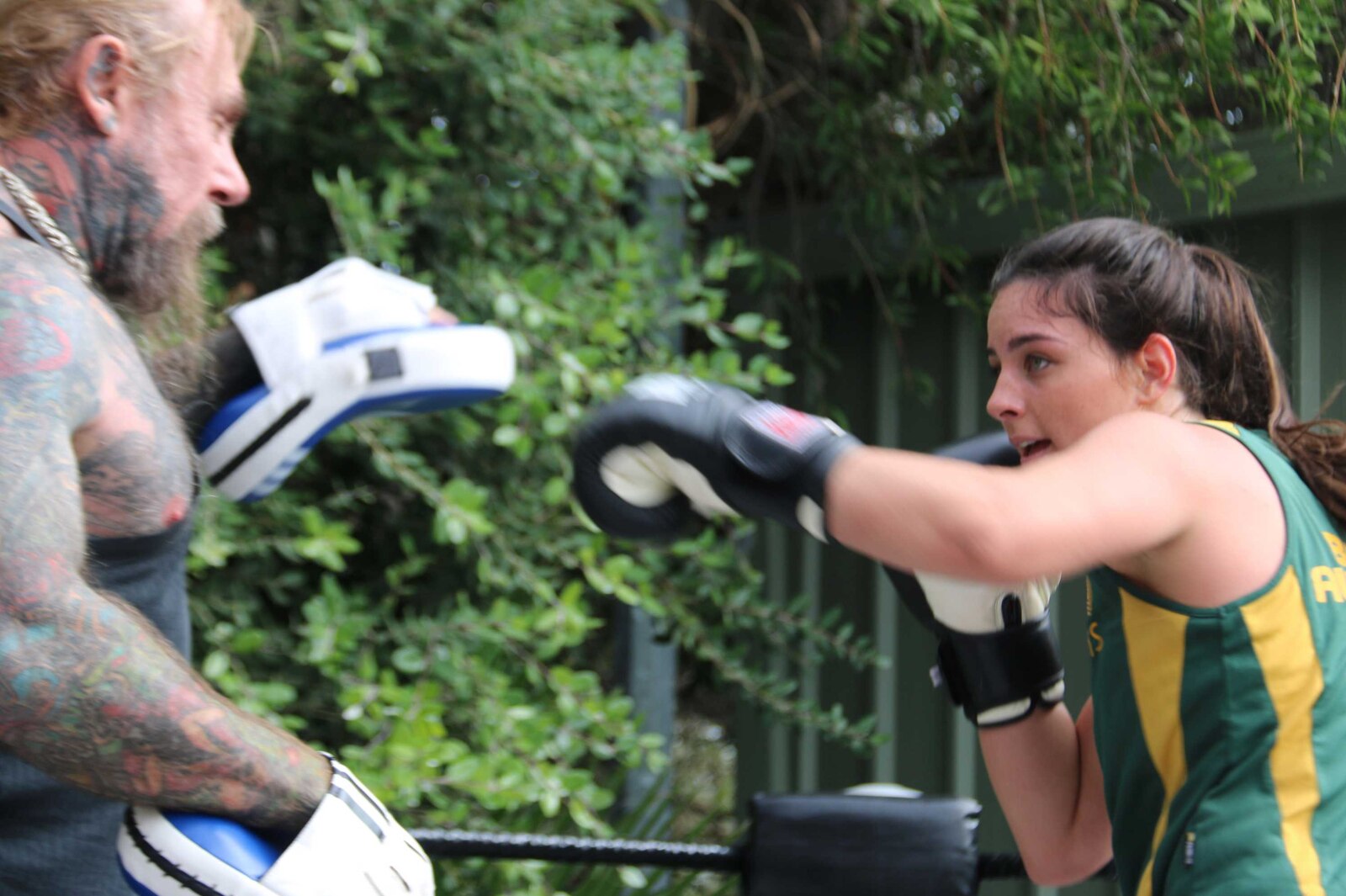
This distinction is especially important in a photo with multiple people. A coach, artist or teammate may have visible ink of their own. The article maps only Parker’s identified design to the tattoo section and describes the other people only when they are relevant to the source context. That prevents an image of someone else’s tattoo from being mistaken for Parker’s.
The strongest conclusion is simple. Caitlin Parker’s Olympic rings tattoo is documented in a named PerthNow feature, photographed on her arm and tied to a reported explanation about her Olympic journey. The additional portraits show the boxer across training and competition settings. One genuine tattoo image is the editorial anchor; every supplemental image is labelled for identity or context and makes no extra ink claim.
Parker’s tattoo is therefore best understood as a visible milestone marker. The circles connect her to the Olympic path she pursued from a young age, while her own explanation adds the people and effort behind that symbol. The known facts are strong enough to stand alone. The artist, the reported meaning and the inspected photographs give readers a focused, verifiable profile.