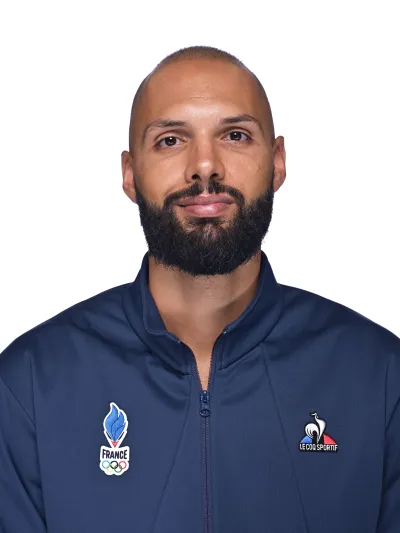
Evan Fournier’s tattoos range from two French words at his wrists to larger designs across his arms, leg and chest. Published accounts identify “Régularité,” “Intensité,” a Maori-inspired wrist band, a tree-and-geometry forearm piece, a wolf, a skeleton samurai and a partly seen chest design.
Fournier has linked the wrist words to advice from his father. Tattoo coverage describes several larger pieces, while game and warm-up photos show their placement. Some designs have reported meanings; the leg and chest work remain only partly documented.
The matching wrist words carry Fournier’s daily basketball philosophy
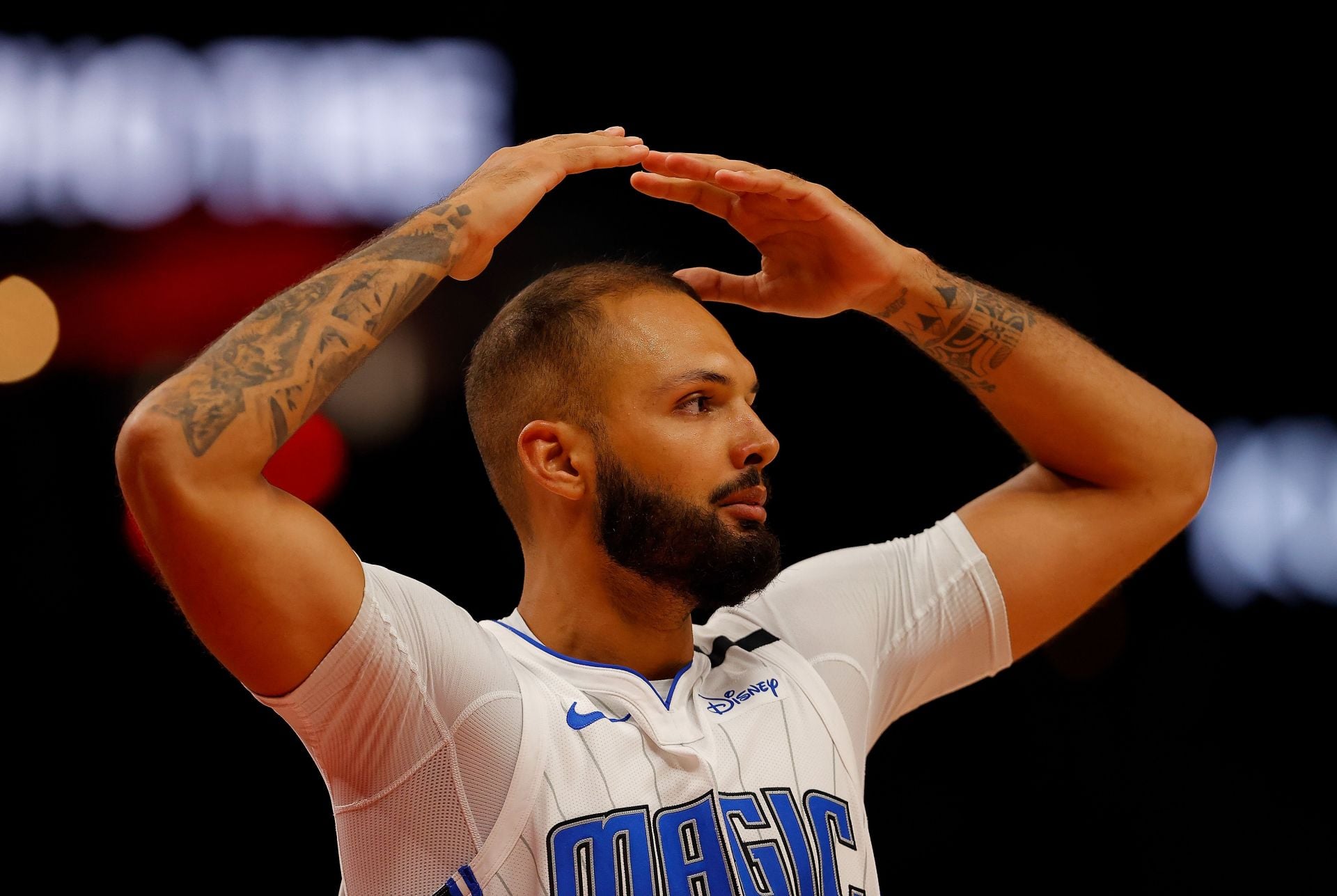
The words are on opposite wrists: “Régularité” (“consistency”) on the right and “Intensité” (“intensity”) on the left. NBA.com describes the script and connects both words to advice Fournier heard from his father while growing up in France.
Fox Sports reports that the pair also answered assumptions that European players were soft or limited to shooting. Fournier framed them as reminders to work hard and keep at it.
The Maori-inspired band and “Intensité” anchor the left wrist
Body Art Guru describes a patterned band around Fournier’s left wrist as inspired by Maori designs and associates it with power and prestige. The source presents this as an inspiration; it does not identify the band as one specific traditional motif.
The band sits beside “Intensité.” One is a continuous dark pattern, the other a word in script. Photos show the band’s placement clearly, while closer views reveal more of its design.
The forest tattoo turns the right forearm into a changing landscape
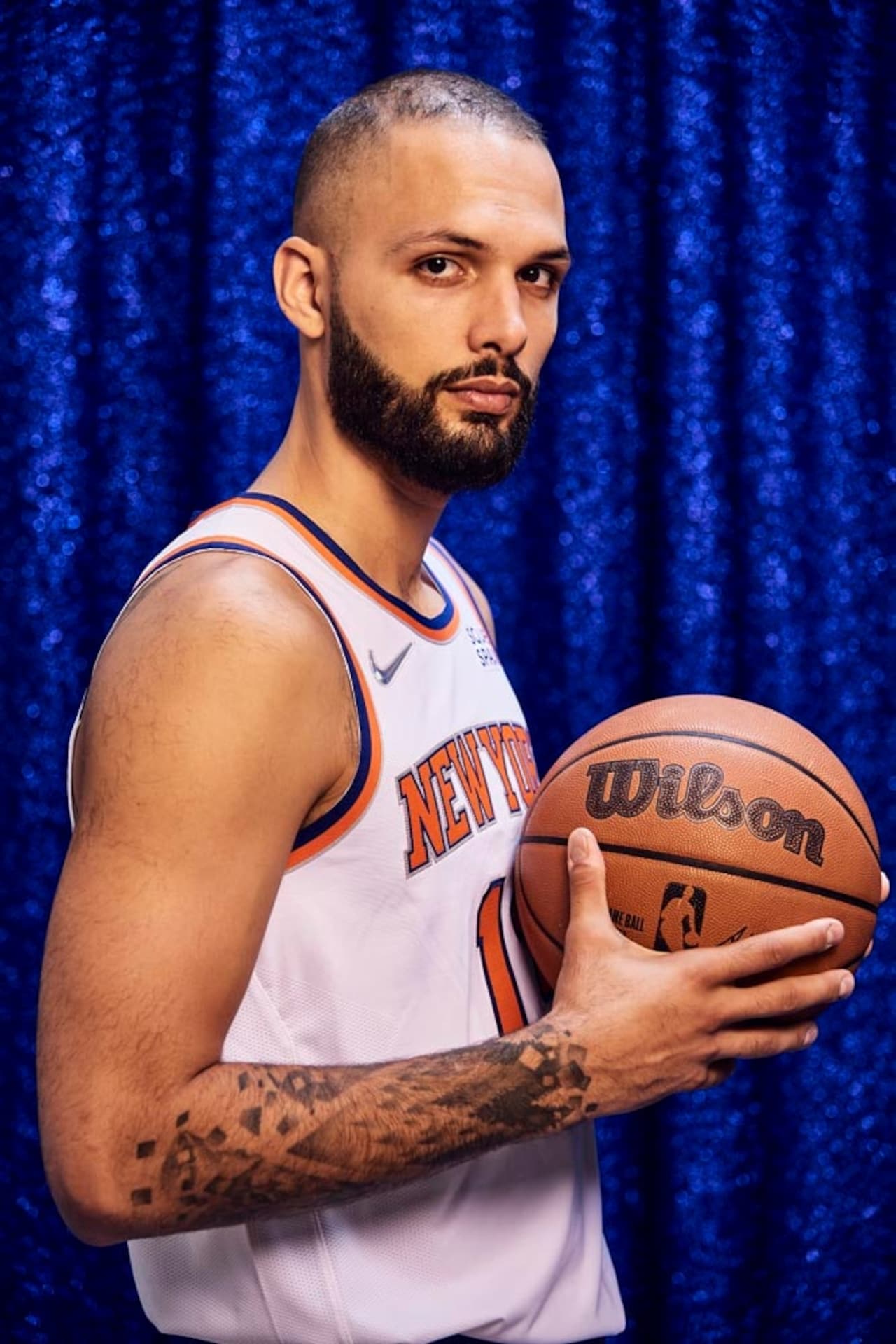
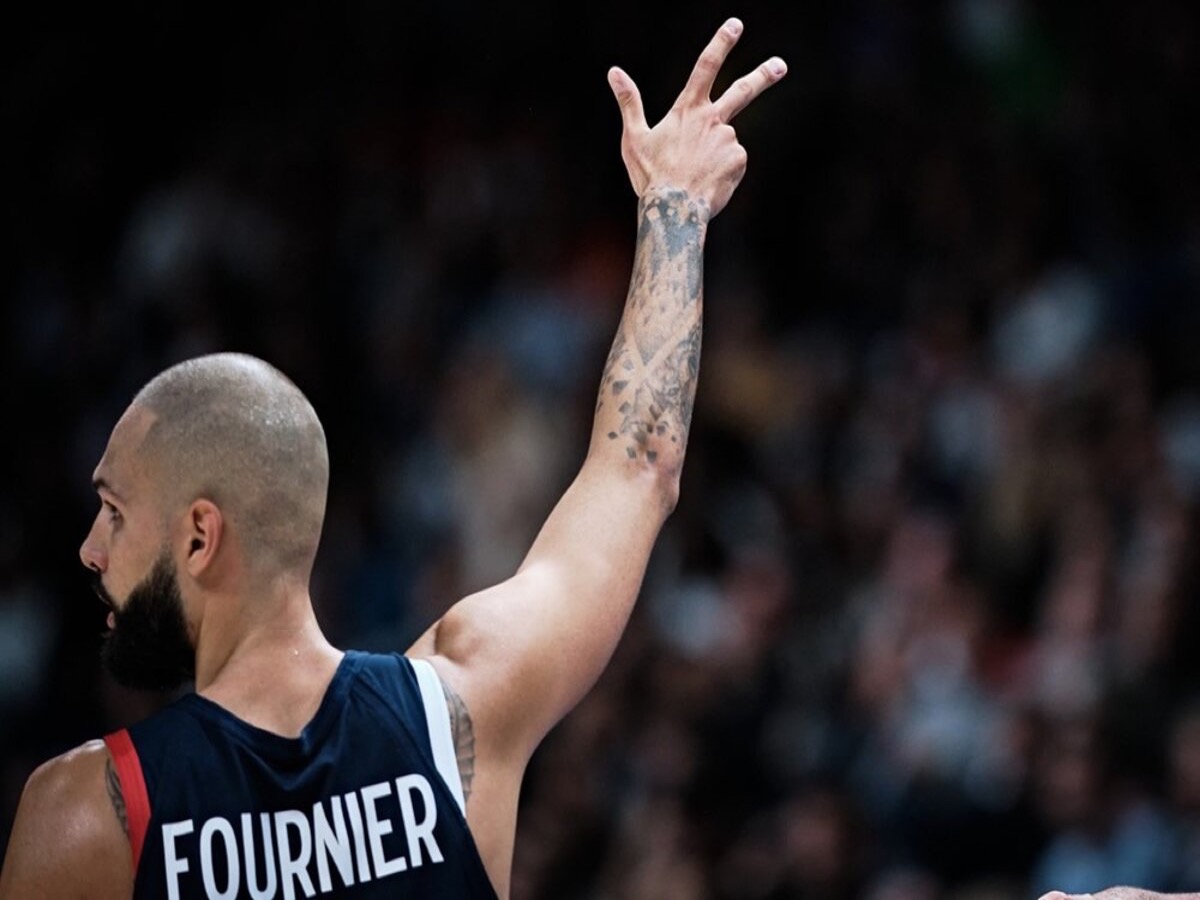
On Fournier’s right forearm, the tree design begins near the wrist and grows toward the elbow before fading into geometric boxes. The lower section reads more clearly as trees; higher up, the forms break into geometry.
Criss-cross gaps leave strips of skin between the dark shapes, giving the sleeve a layered look rather than one solid block of ink.
The wolf tattoo and leg work build Fournier’s larger visual map
Body Art Guru also identifies a growling wolf’s face on Fournier’s right wrist, framed by geometric boxes like those in the forest design. The source associates the wolf with strength, loyalty and protection, and links it to his family and team.
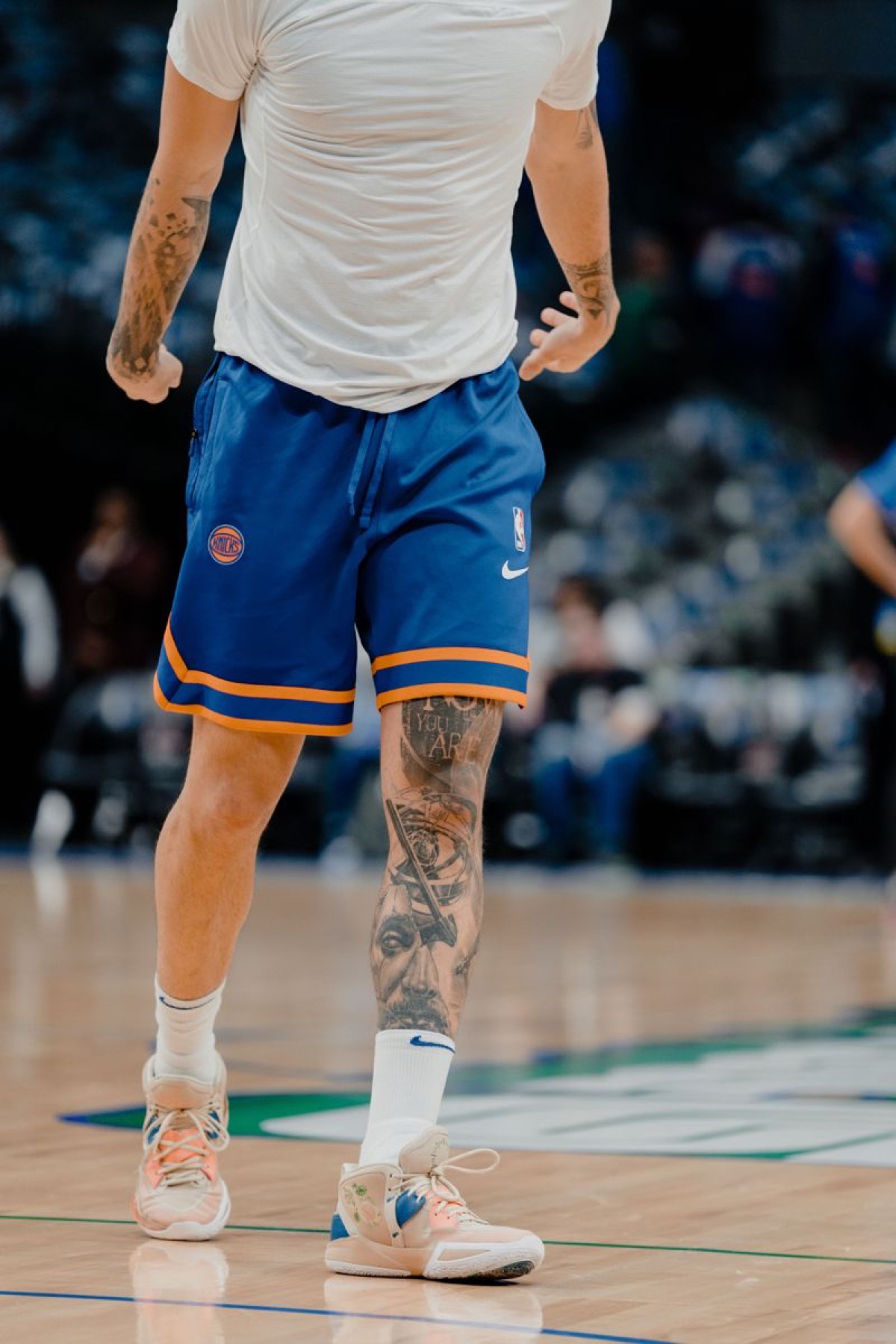
The full-length warm-up photo shows that the ink extends beyond his arms: broad, dark work covers part of a leg. Its smaller details are difficult to make out at this distance.
The skeleton samurai adds a figure to the right forearm
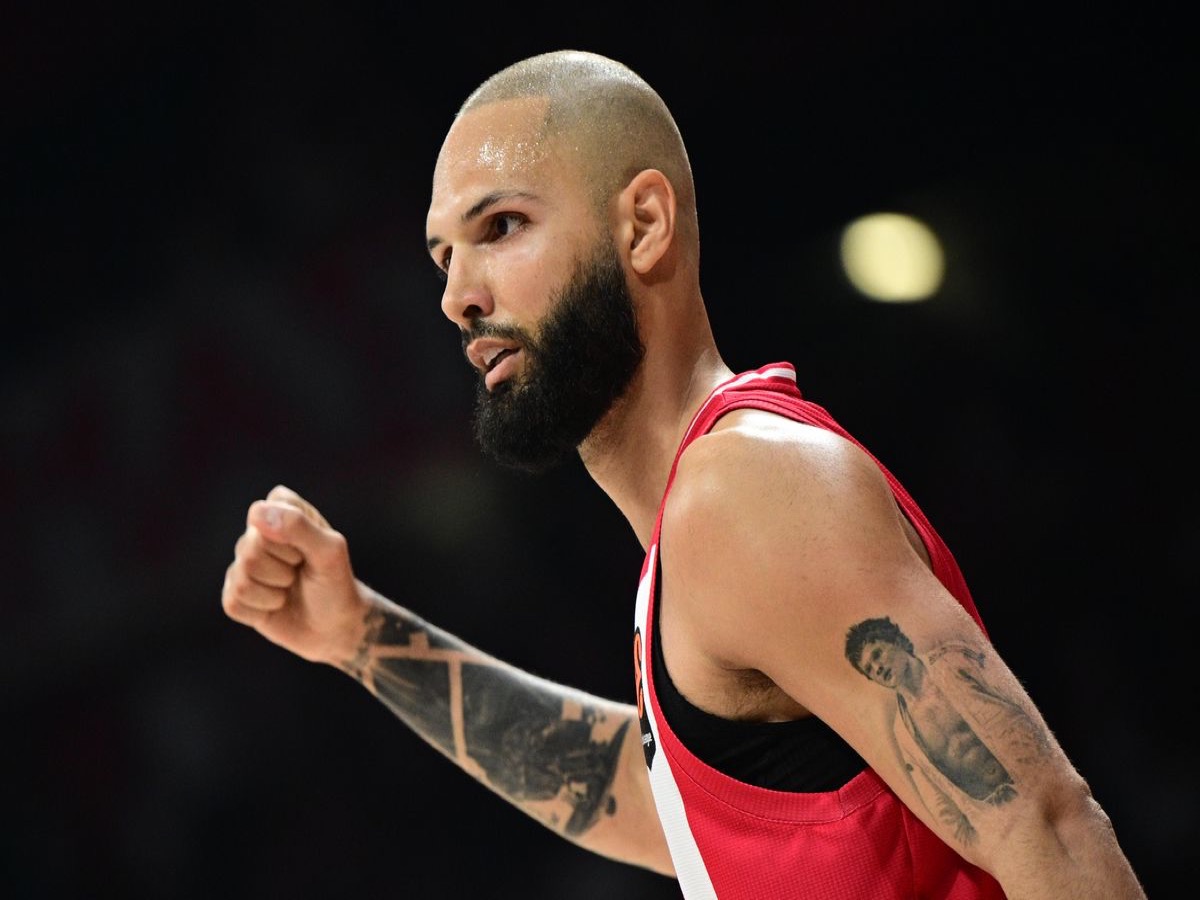
Body Art Guru describes a skeleton samurai on the inner right forearm, wearing a straw hat and kimono with its arms crossed. The same area carries “Cohérence,” or “consistency.” The source links the figure with overcoming adversity, but does not give a more specific story for it.
The samurai is one of the collection’s more fully described images, though photographs still show only the parts visible at each angle.
A later chapter expands the visual record
French basketball coverage says Fournier expanded the tattoos on his left leg after beginning the process around the Tokyo Olympics. The photographs show a large, dark composition; one includes a portrait-like image and the words “YOU ARE.” The reporting notes that the other elements are hard to identify from a distance.
The leg work is best described through what the sources show: its scale, placement and visible lettering. The available images do not support a complete inventory of the designs.
The visible record keeps some details deliberately open
Specialist coverage reports a large tattoo on the right side of Fournier’s chest, but says it has not been fully seen. It also reports that he planned to add meaningful work gradually across his arms and chest. The location is documented; the full imagery is not.
That leaves a clear difference between the named wrist and arm designs and the partly seen chest piece. There is no basis in the published account for describing details that remain hidden.
The collection’s broader visual arc
Fournier’s tattoo record brings together readable French script, patterned blackwork and larger images of trees, a wolf and a samurai. He has explained the personal roots of the wrist words; other meanings come from published tattoo coverage, and the sources leave parts of the leg and chest work unresolved.
The collection has grown from small, legible reminders into much larger areas of ink, but it is not fully catalogued. The clearest account sticks to Fournier’s own explanation and the designs the available sources can actually identify.