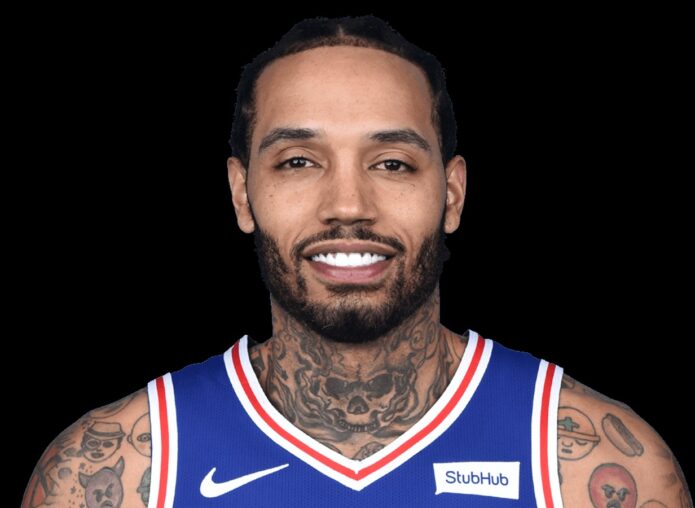
Mike Scott’s tattoo collection is best known for colorful emoji faces and objects across his arms and shoulders. Interviews, reporting and close photographs document several designs; many smaller marks have no published explanation.
Mike Scott’s emoji sleeve began with two shoulder faces
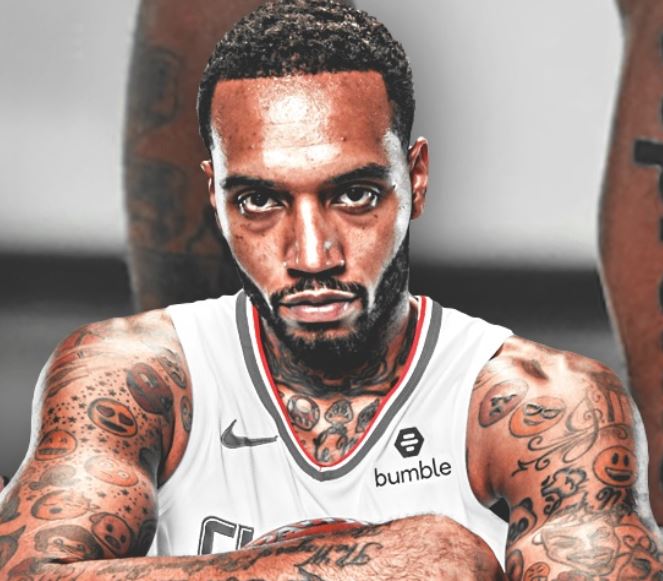
The Washington Post traced Scott’s first emoji tattoos to Atlanta in 2013, after his rookie season: a purple devil on his right shoulder and an orange angry face on his left. Each reportedly cost $30.
The right shoulder sequence adds a police officer, face, and car
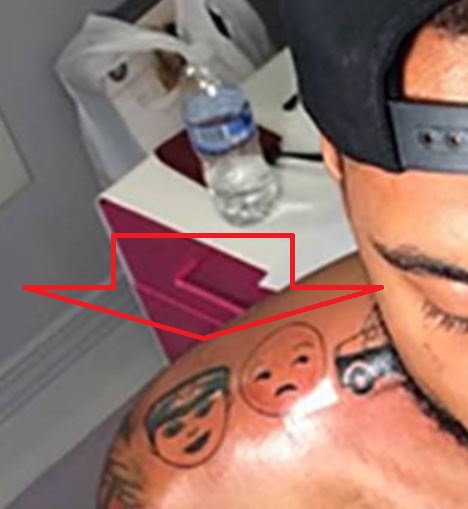
The Los Angeles Times identified a police officer emoji, an unamused face and a police car on Scott’s right shoulder in photos he posted to Instagram. Together, they form a small character-expression-car sequence.
The left arm carries families, objects, and initials
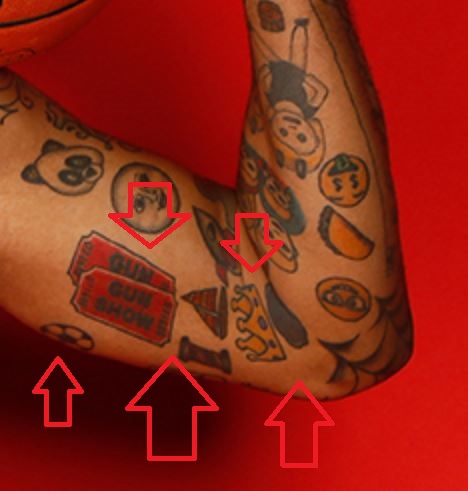
Body Art Guru’s catalog identifies a family group of two adults and two children on Scott’s left arm, along with a dancing figure, burger, frog, crown and other icons. Other sources describe a pizza slice, ladybird, remote control, money and telephone emojis, plus basketball and fire symbols. The catalog also notes crowned “JMS” initials and lettering, without a public meaning for every mark.
The eye, doughnut, and carrot forearm phrase
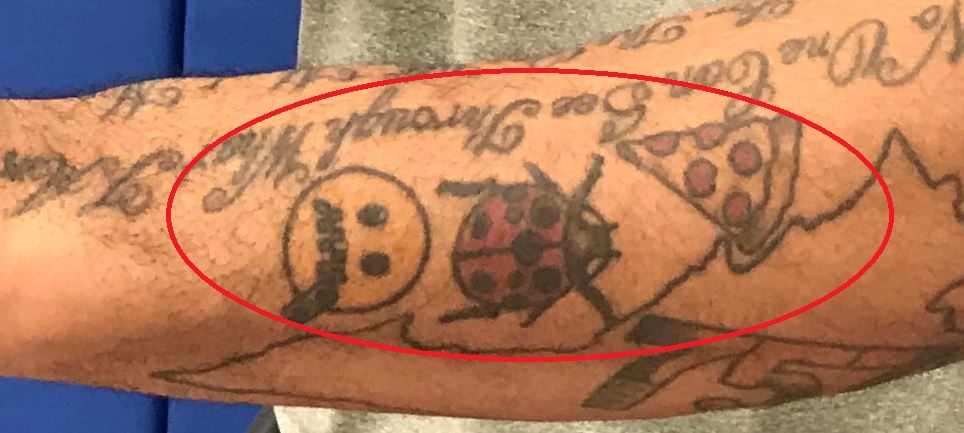
The Washington Post reported a teammate’s explanation of the three-image sequence: an eye, a doughnut and a carrot read as “I do not care at all.” It is one of the collection’s clearest documented phrases, formed with pictures rather than ordinary lettering.
Laugh Now Cry Later marks the tattoo history before the emojis
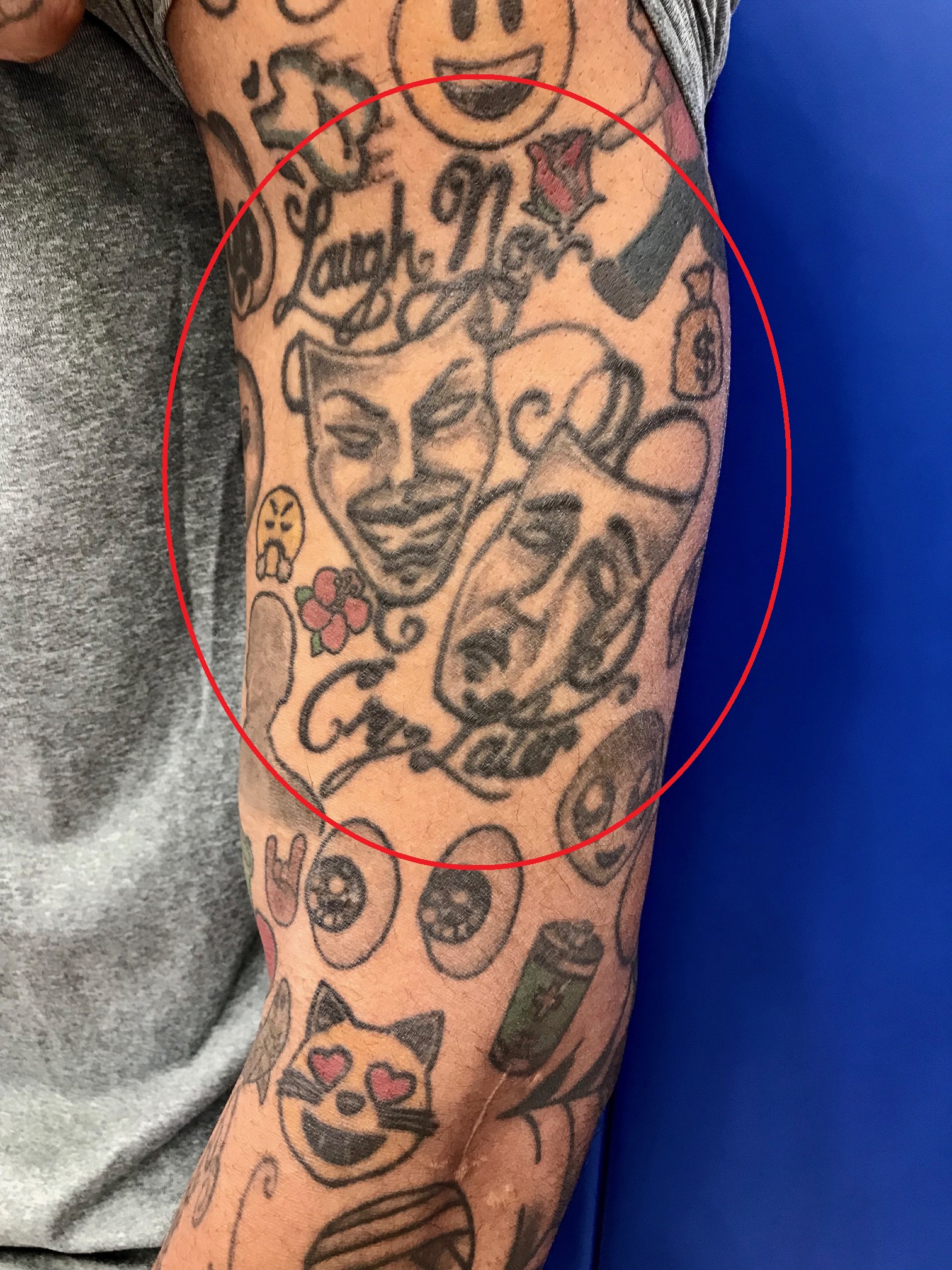
Before the emoji tattoos, Scott got “Laugh Now, Cry Later” on his left tricep while he was in college. Body Art Guru’s interview-based catalog says he liked the design, had seen friends with similar work and decided to get one himself.
How a phone-screen vocabulary became a signature
In Grantland, Scott described emojis as a way to express feelings and say things that could be difficult to put into words. The profile called him the “Emoji King” and reported that he kept adding designs as new emojis appeared. Basketball photos helped make the colorful faces and objects familiar; the collection also includes initials, words and traditional tattoo imagery.
How the sources separate evidence from interpretation
The Washington Post and Los Angeles Times document the early faces and right-shoulder sequence; Body Art Guru labels several other pieces visible in photographs. Published sources place tattoos across Scott’s arms, shoulders, wrists and hands, with additional work reported on his chest and neck. Where Scott or a source has not explained a design, its shape and placement are the reliable details.
One thought on “Mike Scott Tattoos: Emoji Sleeves, Shoulder Faces, and the Documented Collection”