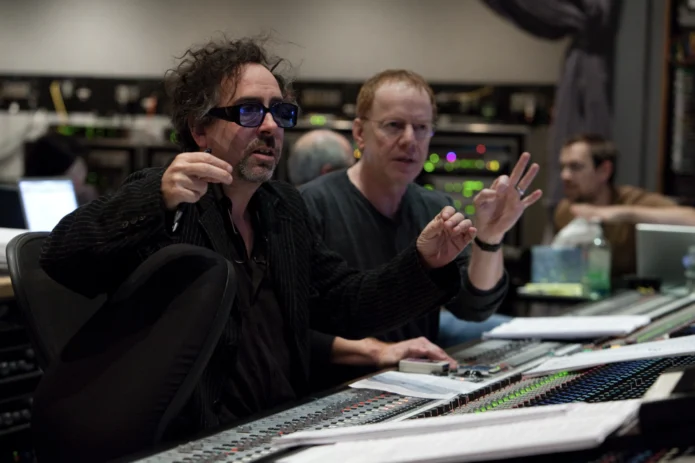
Danny Elfman’s tattoos cover his chest, stomach, arms, wrists and hands. Photos show skeletal figures, geometric bands and smaller illustrations in mostly black ink. In a Consequence interview, he discussed the pain of getting multiple tattoos; the images show their placement more clearly than their meaning.
The first tattoos arrived as a visual break from the score
Photos from different periods show the collection building over time, though the available reporting doesn’t date Elfman’s first tattoo or describe one plan for the work. Patterned bands sit beside loose, illustrated figures, across a career that has included Oingo Boingo, solo performance and film scoring.
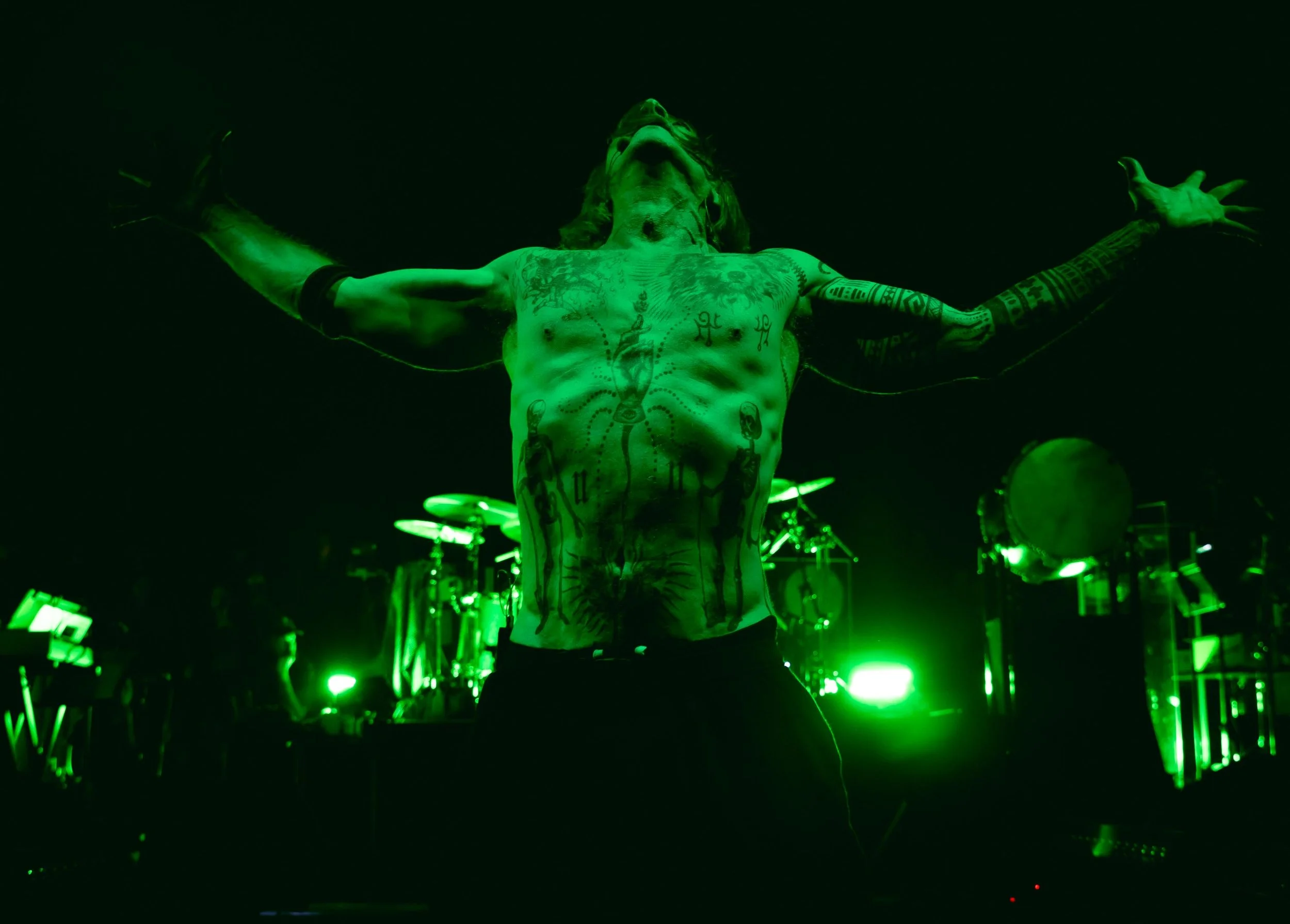
The chest carries the most theatrical figures
Shirtless photographs show a central chest composition surrounded by smaller characters, radiating marks and dark outlines. The figures spread toward the ribs and stomach rather than forming a symmetrical emblem. Some lines are fine and illustrative; heavier black areas make the larger shapes easier to pick out from a distance.
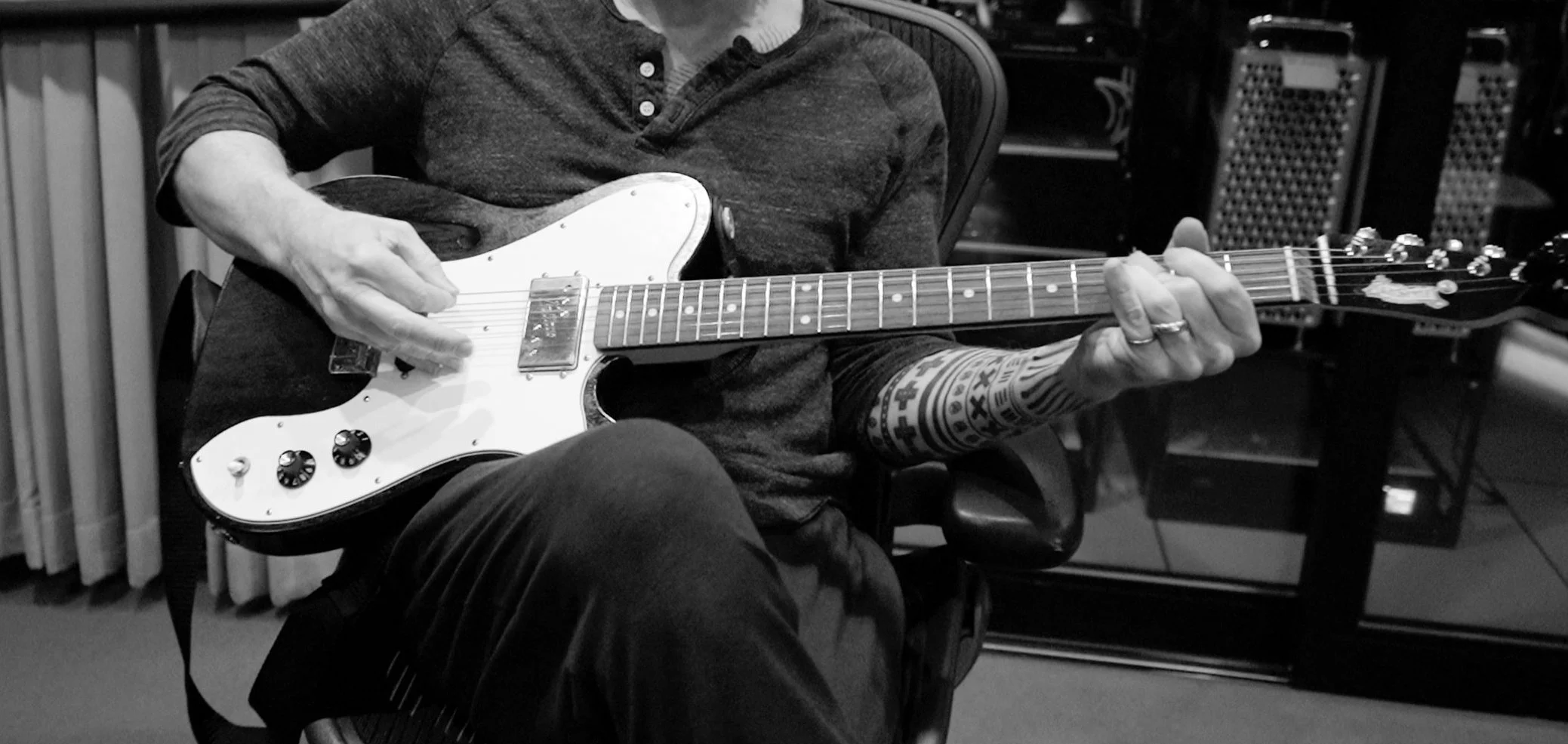
Geometric bands run along the forearm
One forearm has rows of triangles, crosses, dots, chevrons, narrow stripes and repeated blocks, running from the wrist toward the elbow. The stacked pattern is more regular than the figures on his torso, and remains visible in stage photos. The images show the design clearly, though they don’t explain the meaning of each shape.

Skeletons and organic shapes across the tattooed torso
Skeletons recur in Elfman’s torso tattoos. Photos show a long figure low on his abdomen and a smaller skeleton-like character near his side. An octopus-like form spreads across the stomach, among other drawings with limbs, eyes and radiating marks. The figures mix fine, cartoon-like outlines with dark areas; the available sources don’t tie each one to a particular film, song or character.
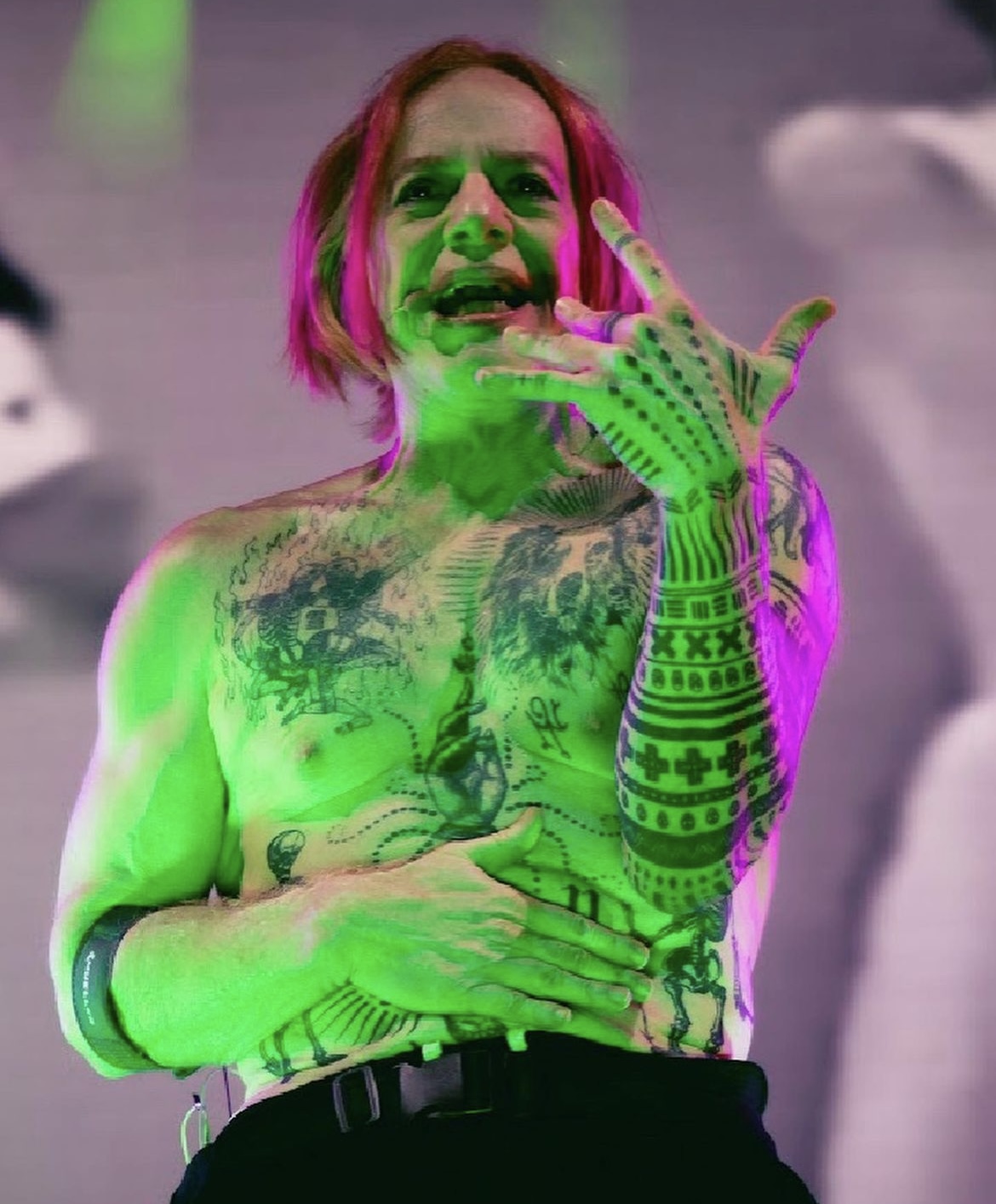
The wrist and hand markings sharpen the performance silhouette
Small marks appear on Elfman’s fingers and near his wrists, close to where the patterned forearm bands end. They’re easiest to see when he raises an arm, grips a microphone or plays guitar. Photos show their locations, but don’t identify every small symbol.

The collection grew through repetition and revision
In the Consequence interview, Elfman talked about the pain of getting multiple tattoos. His official photography archive and concert images show the finished work at different points, but don’t provide a complete chronology for each design.
A visual language of motion
Onstage, the tattoos shift in and out of view as Elfman sings, plays guitar and moves his arms. Green, purple or white lighting can change how heavy the black ink looks, while the broad outlines and forearm bands remain easy to recognize. The placement makes the designs part of what concert photographs capture, not just details in a still portrait.
What the documented images establish
The reporting and photographs establish the coverage, recurring skeletons, organic figures, geometric bands and small hand marks. They don’t offer a verified meaning for every design, so the visible details are the clearest account.