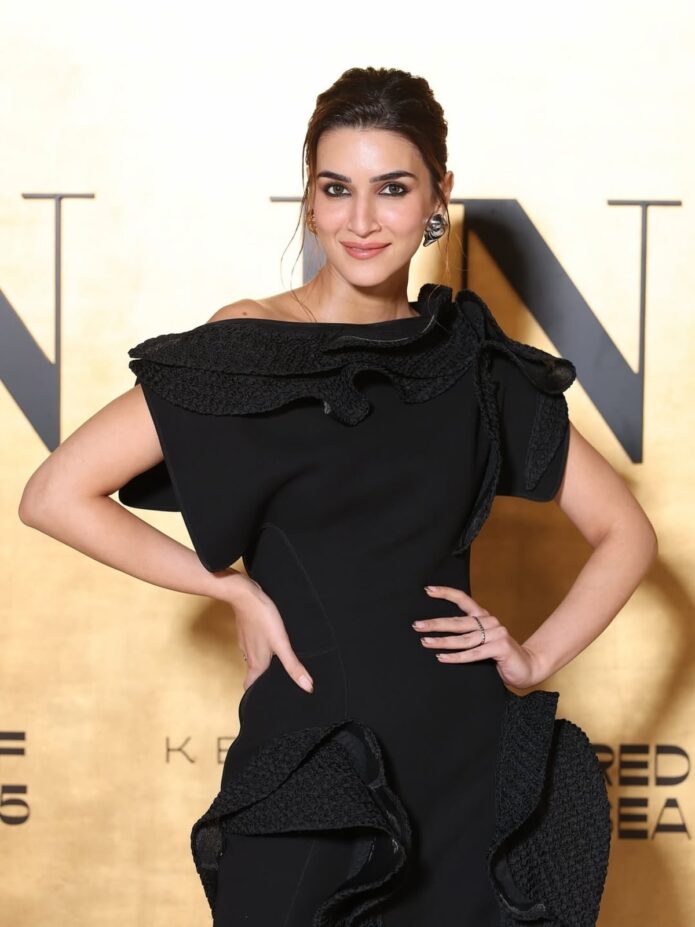
Kriti Sanon only had one tattoo for a long time: none. Then, in September 2025, she changed that with a small ankle piece built around a bird in flight. It’s delicate, easy to cover, and far more personal than a random bit of fine-line decoration.
The design came out of her connection to Mimi, the 2021 film that earned her a National Award and changed the way she saw her own career. The finished tattoo combines a bird, a dotted sun, and long lines that rise and curve around the ankle. Sanon described the reveal as a promise fulfilled and a reminder that she could fly higher.
That gives the tattoo a clear emotional center, but the ink still works as a piece of design. The bird has enough detail to feel alive, while the open space and thin tail keep the ankle from looking crowded. It’s a good example of how a meaningful tattoo can stay light on the skin.
The hummingbird ankle tattoo
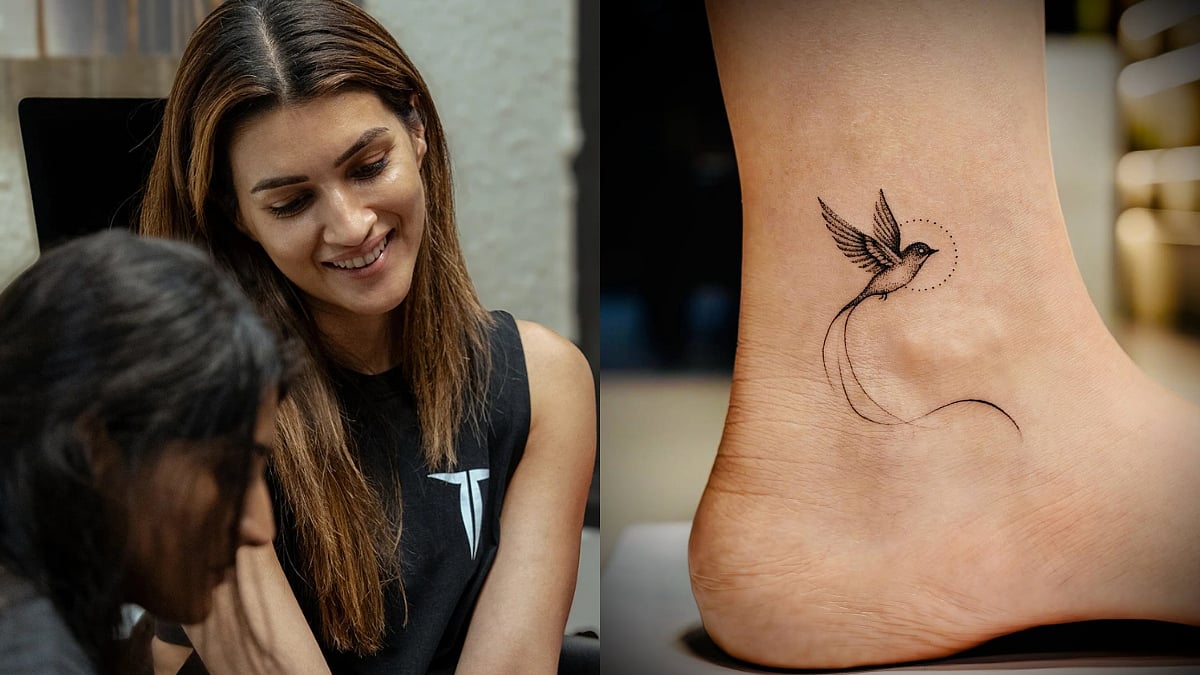
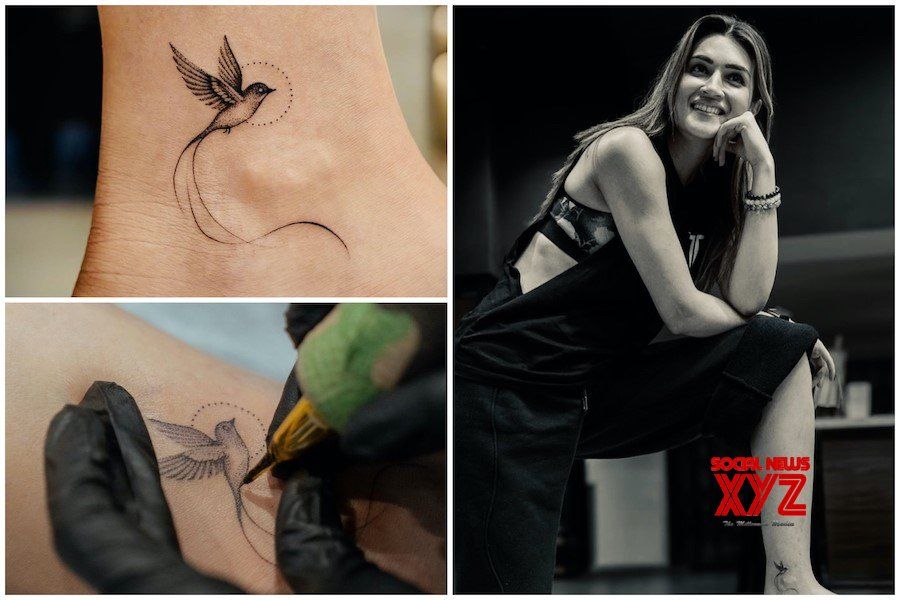
Sanon’s first tattoo sits on the inner side of her ankle. The main shape is a small bird with its wings open, angled as if it’s moving upward. A dotted circle or sun-like detail sits around the bird, and a long curved line trails below it. Some reports call the design a hummingbird, while other coverage simply describes a bird in flight. The latter is the safest description because the published photographs show the overall idea more clearly than the exact species.
The linework is fine without being empty. You can pick out the wing feathers, the little head, and the sweeping tail, but none of those details is pushed so hard that the tattoo becomes a dark patch. The dotted sun gives the piece a small burst of texture. It also helps the bird read as part of a larger scene rather than a lone silhouette floating above the ankle.
Placement does a lot of the work here. The inner ankle is a narrow, curved area, so a wide illustration could have looked cramped. Sanon’s design uses a vertical direction and lets the tail travel into the space below the bird. That creates movement without needing a much larger tattoo.
There’s a practical side to it too. An ankle tattoo can be visible with sandals, cropped trousers, or a short dress, then hidden under socks or a full-length outfit. That suits a first tattoo especially well. It feels personal when she wants it to, but it doesn’t dictate every look she wears.
Why the bird connects to Mimi
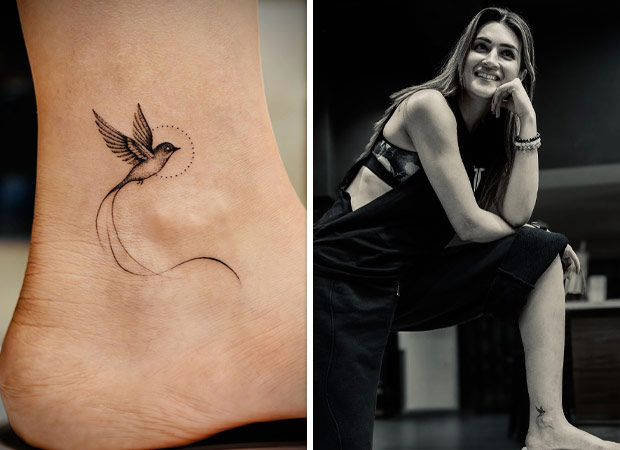
The tattoo’s meaning starts with the filming of Mimi. Sanon played a woman whose life is shaped by difficult choices, endurance, and the hope of building something better. During that period, she made herself a promise: if the film reached people, she would carry its impact with her.
The release didn’t happen in the way she expected. The pandemic changed the film’s path, and Mimi arrived on streaming instead of getting the big theatrical moment Sanon had imagined. The film still found its audience, and the National Award made the connection even more significant. The tattoo became a way to mark that whole stretch of uncertainty, work, recognition, and relief.
The bird also echoes the imagery associated with her character. That makes it more specific than a generic freedom symbol. It points back to a role that asked a lot from her and helped define an important chapter in her career. The tattoo doesn’t need the film title written across the ankle because the visual reference already does the job.
Sanon’s own caption kept the message simple. She wrote about never expecting to get tattooed, then described the design as a promise fulfilled and a reminder to fly higher toward the sunrise. She also encouraged people with dreams to take the leap, find their wings, and find their rhythm.
That tone matters. The tattoo isn’t presented as a trophy or a trend piece. It’s a private line she decided to make visible. The wording is hopeful, but it still leaves room for the harder parts of the story: fear, stalled plans, and the patience needed to see a promise through.
What the sun and flowing lines add to the tattoo design
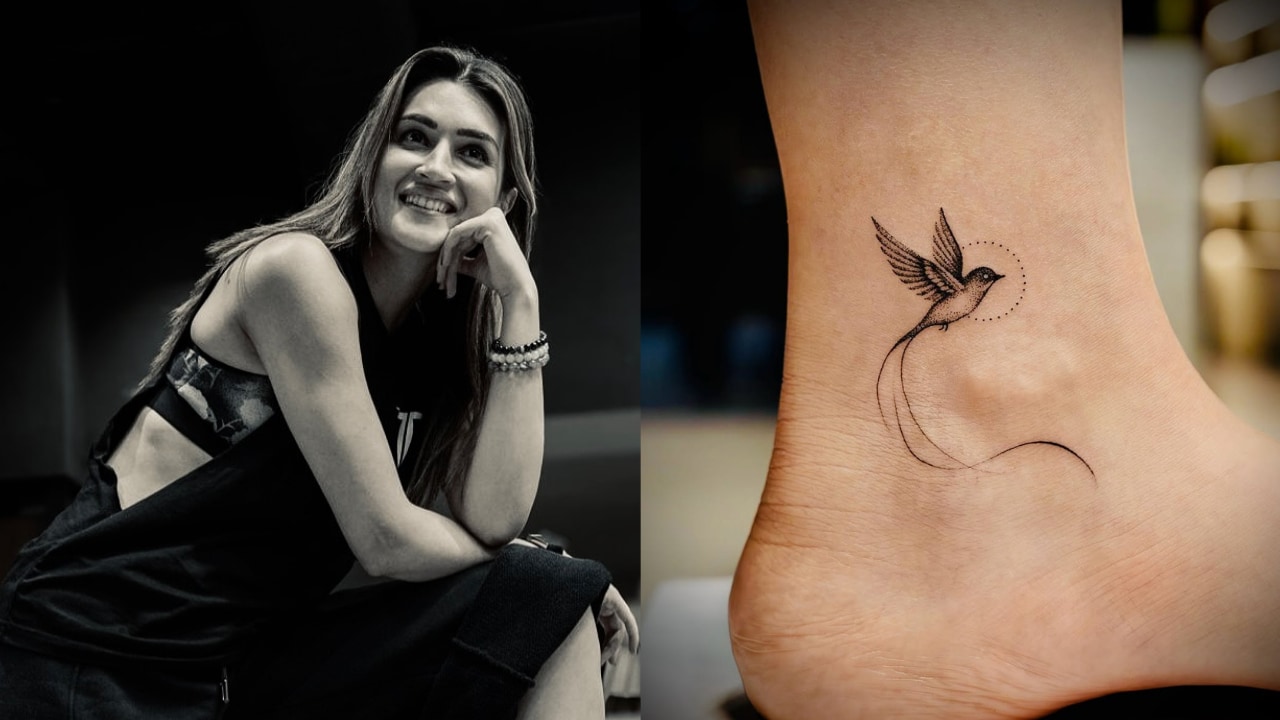
The bird gets most of the attention, but the smaller marks keep the design from feeling too obvious. The dotted sun sits close to the bird and gives the upper part of the tattoo a soft halo. It doesn’t look like a heavy, solid emblem. The gaps between the dots keep the image airy and let the skin remain part of the composition.
Below the bird, the flowing lines stretch out in a loose curve. They can be read as movement, a path, or the feeling of rising. Sanon and the studio have connected them to the stops, struggles, and eventual progress behind her story. That interpretation fits the shape without requiring the viewer to decode every inch of it.
This is where the tattoo’s scale is handled well. A fine-line bird can look lost if it has no supporting structure. Add too much around it, though, and the ankle becomes a crowded illustration. The dotted sun and curved tail give the eye somewhere to travel while keeping the central bird easy to recognise.
The design also has a nice balance between detail and breathing room. The wings are drawn with enough texture to show their direction. The tail is mostly open line. The sun is made from dots rather than a dark circle. Together, those choices keep the tattoo gentle even though the story behind it is substantial.
If you like the look but don’t want to copy the exact bird, the useful lesson is the layout. Start with one clear subject, add one small supporting mark, and let one line create movement through the empty space. That approach works for flowers, leaves, stars, insects, or a symbol connected to a person or place.
The tattoo session was planned carefully
Aliens Tattoo’s account says the design took more than a week of sketches and refinements before it was ready. That detail is easy to skip when the final piece looks simple, but it’s probably the reason the tattoo feels so settled. Small tattoos don’t always need a long appointment, yet the idea still has to be right before the needle starts.
Reporting from the Times of India identifies Sunny Bhanushali and the studio team, with Grishita bringing the final artwork to skin. The finished design was inked during a quiet late-night session. The coverage describes Sanon as calm and thoughtful while the artists worked through the final version.
A fine-line ankle tattoo leaves little room for sloppy decisions. The artist has to think about the curve of the ankle, how the bird will sit when the foot is relaxed, and how the tail will move when the leg changes position. A stencil that looks balanced on a flat screen may need small adjustments once it reaches the body.
The process also shows why “minimal” doesn’t mean automatic. There are fewer marks, so each one matters more. A wing that is too dark can overpower the whole design. A tail that is too short can remove the sense of lift. Dots that sit too close together can heal into a heavier patch. Planning protects the lightness that makes the reference appealing.
Sanon’s tattoo is a reminder to give a meaningful design time to develop. She didn’t rush toward the first bird sketch. She and the studio kept refining the shape until it could carry the film connection, the personal promise, and the visual idea of rising without becoming a crowded ankle illustration.
The quiet studio setting

The studio photographs add useful context, but they aren’t tattoo proof on their own. They show Sanon during the session, the artist working nearby, and the relaxed mood around the appointment. The close-up images are the evidence for the bird and the ankle placement. These wider photographs are better for understanding how the design came together.
That distinction is worth keeping in mind with celebrity ink. A red-carpet photo may show a shoulder but hide the ankle. A studio portrait may catch the wearer’s expression while the actual tattoo sits out of frame. A photo can be relevant to the story without proving the details of the tattoo itself.
Here, the surrounding images make the piece feel less like a sudden reveal and more like a considered decision. Sanon is smiling, looking down, and taking in the finished work. The mood is intimate rather than flashy. That fits the tattoo’s scale and the way she described its meaning.
Ideas to borrow without copying
The easiest thing to copy would be the bird, but that’s not the most useful part. The stronger idea is to choose one image that can hold several layers of meaning without needing a paragraph of text around it. Sanon’s bird connects to a character, a film, a career milestone, and a promise she made to herself.
Start by asking what you want the tattoo to remember. If the answer is a person, an animal, a place, or a piece of work, look for a visual that feels natural instead of forcing a literal label into the design. A bird can suggest freedom, but the reason it matters to Sanon is more specific than that. It carries the memory of Mimi and what happened around the film.
Then think about the movement of the design. The upward angle of the bird gives the tattoo energy. The tail keeps that motion going. If your symbol is naturally still, a curved stem, orbit, trail, or small group of dots can create the same feeling without adding clutter.
Placement should support the meaning too. An inner ankle tattoo can feel like a private promise that becomes visible in small moments. A wrist piece will be seen more often. A rib tattoo may be almost entirely for the wearer. There’s no universal best spot. The right location depends on how public or private you want the reminder to be.
Final thoughts
If you like Sanon’s clean, open style, there are a few directions worth exploring with an artist. A small swallow could carry the same sense of motion. A rising sun behind a leaf could connect growth with a more grounded image. A single star with a loose trail could mark a new chapter without looking like a full scene.
For a personal film reference, you could use one object from the story rather than a title or quote. That keeps the tattoo readable and leaves some privacy around the reason it matters. If the reference is to a family member or friend, a small object they loved can feel more natural than writing their name in tiny script.
Ask your artist to show the design at its actual size, not only as a large screen mock-up. Tiny details that look perfect on a phone can disappear when they’re reduced to ankle scale. You’ll also want to see the stencil against the curve of your own leg. That’s when spacing and direction become easier to judge.
Healing is part of the decision. Ankles rub against shoes and socks, swell easily, and see plenty of sun once the weather warms up. Follow the artist’s aftercare instructions, avoid picking at peeling skin, and protect the healed tattoo from strong sunlight. Fine lines can stay elegant, but they still need room and care.
Kriti Sanon’s first tattoo works because every part of it has a job. The bird carries the Mimi connection. The sun gives it warmth. The rising lines create motion. The ankle keeps the piece personal and easy to live with. It’s a small design, but it doesn’t feel slight. The meaning gives it weight, while the fine-line layout lets the skin breathe.
That’s the real takeaway: start with the memory, then build a design that can hold it comfortably. A tattoo doesn’t need to be huge or packed with symbols to matter. Sometimes a bird, a few dots, and one long curved line are enough to mark the moment you decided to keep moving.