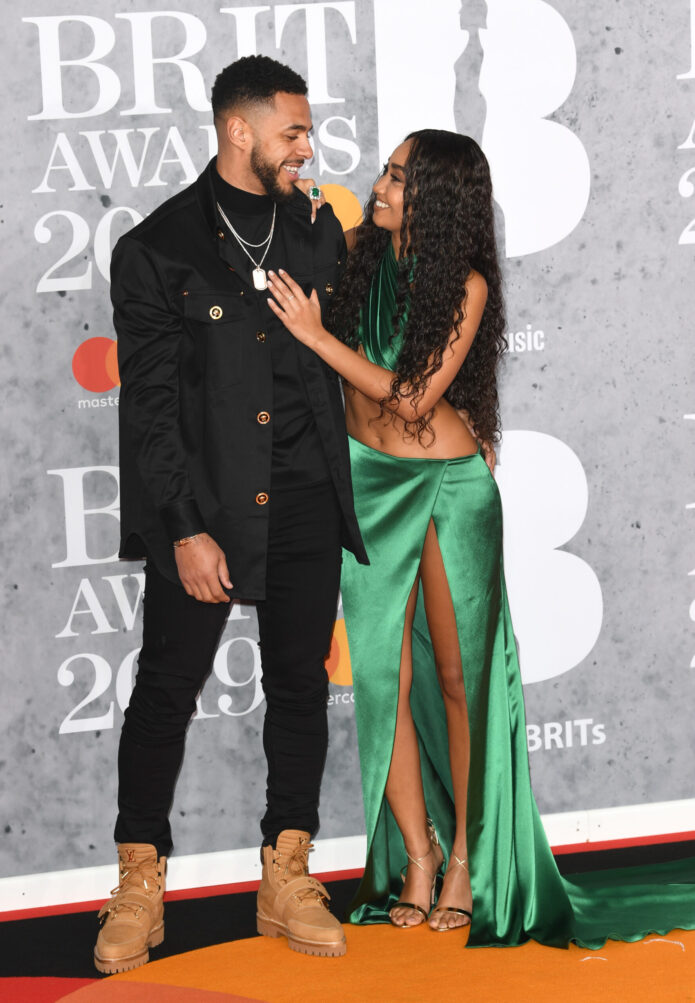
Leigh-Anne Pinnock’s tattoos are small in number, but they’re easy to connect to the parts of her life that have mattered most. The Little Mix singer has two well-documented pieces: a cursive “Believe” on the back of her neck and a larger design that runs across her upper back and onto her right shoulder blade. That second tattoo combines sheet music, a treble clef and four butterflies.
It isn’t a giant sleeve or a collection that takes over every photograph. Most of Leigh-Anne’s ink stays tucked around the back of her body, so it appears when she turns, wears an open-backed outfit or shares a close-up. That placement gives the tattoos a quiet quality. They’re there, but you have to look a little closer.
The butterfly design is often linked with Little Mix’s song Wings, although that connection is best treated as an informed reading rather than a confirmed explanation. Leigh-Anne has spoken about the design process and credited her friend Hannah Lisa with drawing it up. The shape, timing and four butterflies all make the group connection feel natural, but the tattoo still works as a piece of artwork even without a detailed explanation.
The “Believe” tattoo on Leigh-Anne’s neck
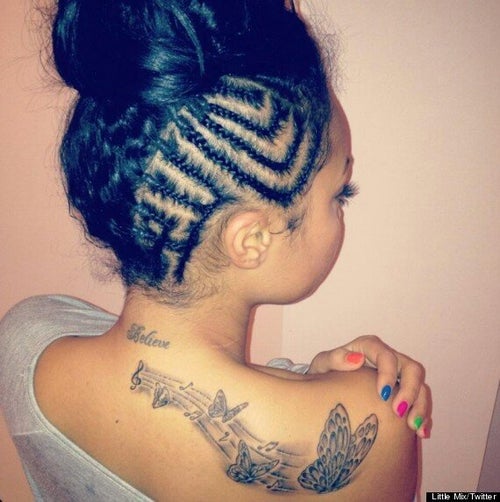
The first tattoo Leigh-Anne is widely reported to have got is the word “Believe” on the back of her neck. The lettering is cursive and slightly rounded, sitting just below the hairline. It’s dark enough to read in a photograph, but it doesn’t have the heavy, blocky look of a traditional neck piece. The word follows the small space neatly and remains separate from the larger design below it.
In a close-up, the tattoo looks soft around the edges rather than razor-sharp. That’s part of its appeal. Script this small can easily become too fussy, especially when the letters curl into one another. Leigh-Anne’s version is compact, with enough space between the main strokes for the word to stay legible as the ink ages.
“Believe” is also the kind of word that can sit comfortably beside other tattoos. It doesn’t need a frame, a banner or extra decoration to make sense. The placement does the work. When Leigh-Anne wears her hair up, the lettering becomes a small detail at the base of the neck. When her hair is down, it disappears almost completely.
That flexibility is useful inspiration if you’re considering a neck tattoo but don’t want something huge. A single word can feel personal without turning into a full statement piece. The key is choosing lettering that can survive the scale. Delicate script needs a tattooer who understands how much room each letter needs, and it’s worth checking the stencil from several angles before the needle starts.
There’s no reliable reason to attach a very specific life event to Leigh-Anne’s “Believe” tattoo. The word has obvious positive associations, but that doesn’t tell us whether it refers to confidence, music, family or a private moment. The honest description is the strongest one: a small cursive word placed high on the back of her neck.
The musical notes and butterflies across her back
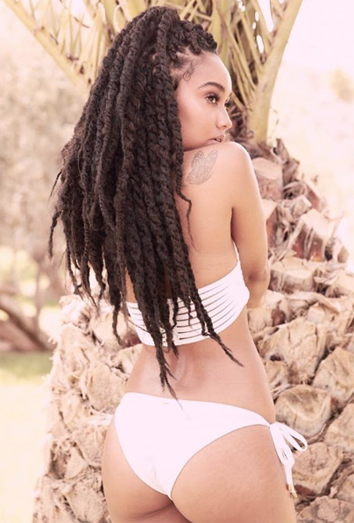
Leigh-Anne’s larger tattoo begins near the centre of her upper back and travels toward the right shoulder blade. The design includes a sheet of music, a treble clef and four butterflies arranged along the musical lines. The butterflies get progressively larger, which gives the tattoo a sense of movement as it spreads across the skin.
The treble clef sits toward the left side of the composition, acting as a visual starting point. From there, the notes lead the eye across the back before the butterflies take over. It isn’t a square design with everything packed into one even block. The open skin around the notes and the changing butterfly sizes let the piece stretch naturally with the body.
The wings aren’t drawn as identical symbols. Each butterfly has its own shape and amount of detail, so the line becomes more like a little sequence than a row of matching stickers. That matters on the back because the design needs some direction. The smaller forms near the beginning keep the piece light, while the larger butterfly toward the shoulder gives it a stronger finish.
Leigh-Anne has described the tattoo as something her friend Hannah Lisa designed. Hannah was studying fine art at Arts University Bournemouth at the time, and the design was shared as a new piece after the tattoo session. Leigh-Anne later joked that there had been a lot of squealing during the appointment. Anyone who has sat through a tattoo near the spine or shoulder blade probably won’t need much convincing.
The location makes sense for the artwork. A sheet of music has a horizontal pull, and the upper back gives it enough width to breathe. The shoulder blade adds a natural change of surface, so the larger butterfly can feel like it’s moving outward instead of stopping at a straight edge. This is the sort of placement that needs to be drawn on the body rather than copied from a flat sketch.
Photos from different angles also explain why the tattoo can look like two separate pieces in one image and a single flowing design in another. The back curves, the shoulder turns away and hair can cover the upper section. When all the elements are visible together, the music and butterflies read as one connected composition.
Are the butterflies part of the Little Mix story?
The four butterflies make the Little Mix connection hard to miss. The group had four members, and Wings was one of their best-known songs. The lyrics use butterfly imagery, and the song became part of the group’s early identity. That’s why tattoo coverage often describes Leigh-Anne’s design as being inspired by the track or by her bandmates.
Still, it’s better to leave a little room around that explanation. A tattoo can carry several ideas at once, and the available reporting doesn’t provide a neat official sentence saying that each butterfly represents one specific person. The design may have been influenced by the song, the group and Leigh-Anne’s own love of music without needing to be reduced to one fixed meaning.
That uncertainty doesn’t weaken it. If anything, it makes the tattoo more interesting. The visual link is clear enough for fans to recognize, while the personal part remains Leigh-Anne’s. A good tattoo doesn’t always need a press release attached to it. Sometimes the image, timing and people involved tell you enough.
Four butterflies are also a practical choice for a group-themed design. They can be placed along a line without crowding one another, and the gradual increase in size keeps the artwork from looking repetitive. If you like this idea for your own tattoo, you could use several related symbols rather than four identical ones. A good artist can make each piece different while keeping the whole design balanced.
If you’re after something with a similar music connection, the useful lesson isn’t to copy the treble clef. It’s the way Leigh-Anne combines a recognizable reference with softer imagery. The notes establish the subject, while the butterflies stop the piece from feeling like a piece of sheet music stamped onto the skin.
Leigh-Anne and the Little Mix years
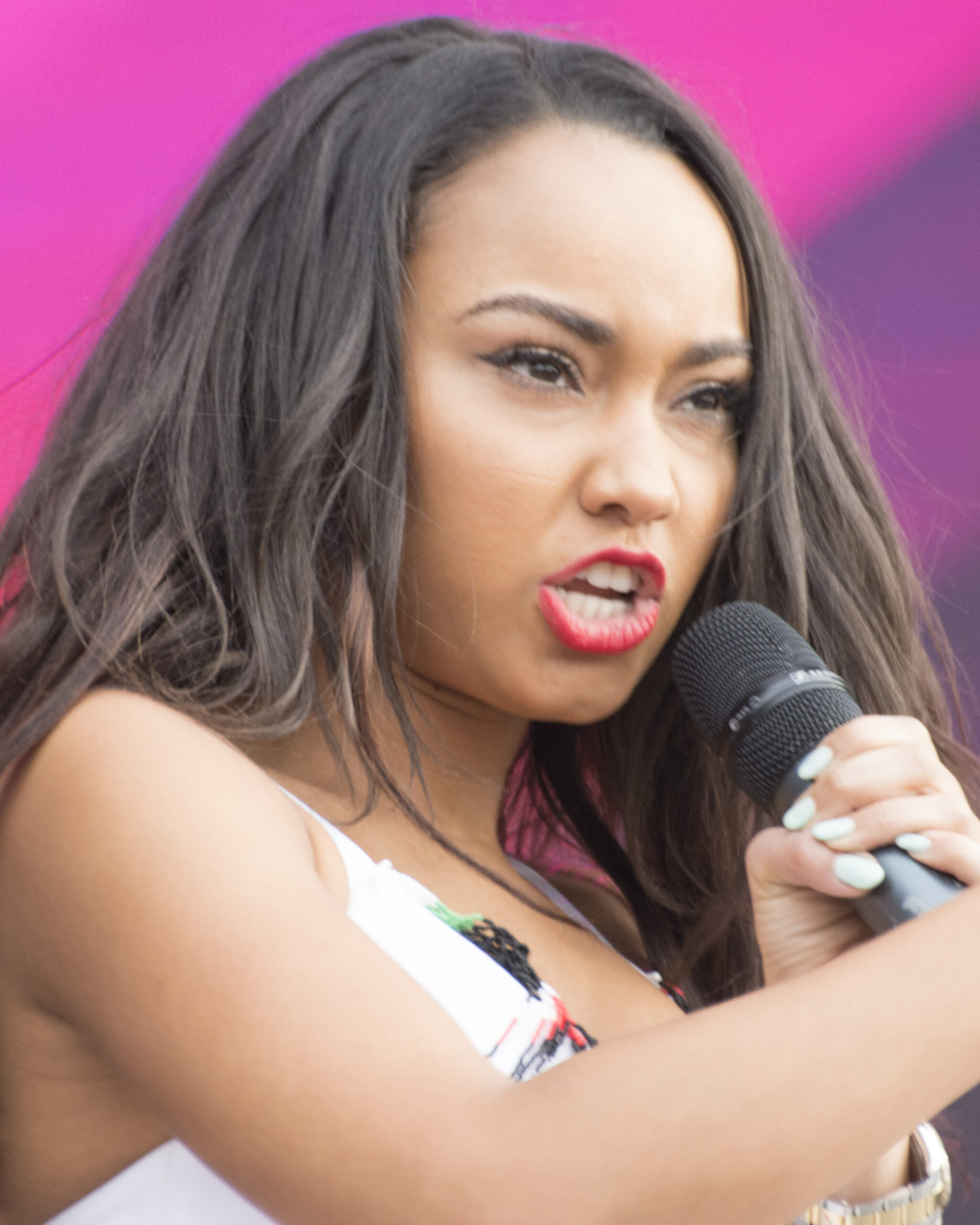
Leigh-Anne’s tattoos make more sense when you remember how central music has been to her public life. Little Mix formed on The X Factor in 2011 and went on to build a career around big choruses, sharp styling and a very close connection with their fans. The back tattoo appeared during those years, so its music and butterfly imagery landed at a meaningful point in the group’s story.
The tattoo isn’t loud in the way some performance styling can be loud. It doesn’t use a bright colour palette or cover the whole shoulder. Instead, it stays mostly in black and gray, with the open skin doing as much work as the ink. That gives it a different mood from a stage outfit. When Leigh-Anne is photographed in a dress or top that exposes her back, the design feels like a private detail that happens to be visible.
That contrast is part of what makes the collection appealing. The tattoo has a clear relationship with her career, but it doesn’t look like merchandise. There’s no giant band name or obvious logo. The music is represented through the staff, notes and clef, while the butterflies give the design a more personal shape.
For fans of Little Mix, there’s a natural comparison with Jade Thirlwall’s tattoos. Jade’s collection is more varied in placement and includes an Arabic spine tattoo, an ankle heart and a Little Mix tribute. Leigh-Anne’s pieces are more restrained, but both collections show how the group members have used small parts of their musical history without turning their bodies into a matching uniform.
The style Leigh-Anne carries into her solo era
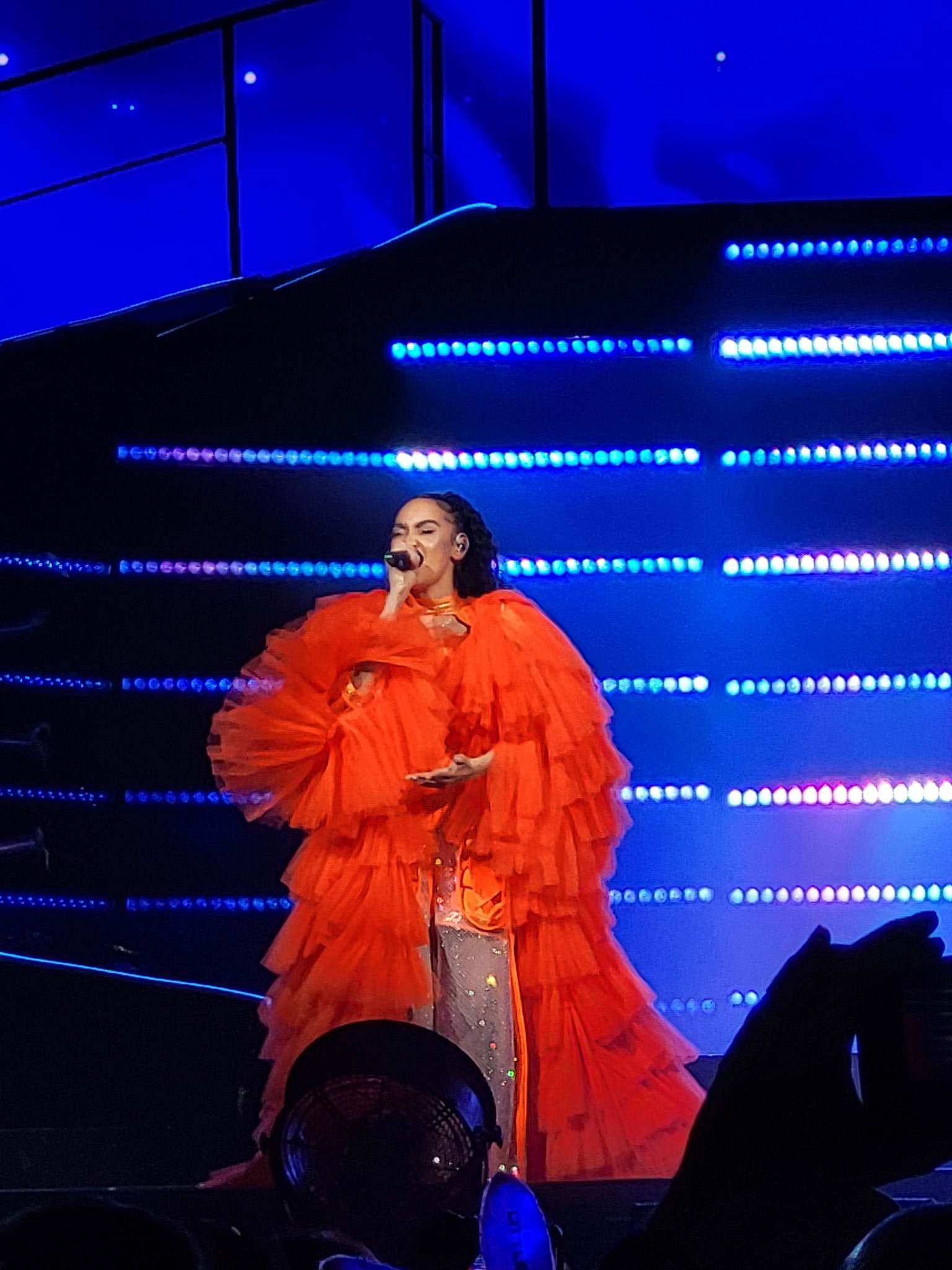
Leigh-Anne’s solo work has given her a new visual space, but the tattoos still feel consistent with the style she had in Little Mix. The pieces are personal, relatively delicate and easy to hide when an outfit calls for it. They don’t compete with her hair, makeup or clothes, which gives her plenty of room to change her look without having to design around a giant sleeve.
That doesn’t mean the tattoos are forgettable. The back design has enough movement to read in a photograph, and the “Believe” script has a simple shape people can recognize quickly. Good small tattoos often work this way. They don’t need a lot of black ink to have a clear silhouette.
There’s also a nice balance between words and pictures. The neck piece is a single idea written out. The back piece is an illustrated scene built from several smaller elements. Together, they give Leigh-Anne a collection that doesn’t feel repetitive. One tattoo is direct; the other invites you to follow it across the skin.
If you’re building a collection with a similar feel, think about how each piece will look on its own before worrying about whether everything matches. A word tattoo can stand alone on the neck. A larger image can use the shoulder blade as a canvas. The shared thread can be your line weight, your colour choice or simply the fact that each tattoo means something to you.
Placement is just as important as subject. The neck is a small, curved area that works well for short lettering. The upper back is wide enough for a design that grows as it moves. Those are different problems for a tattoo artist, and the best result comes when the drawing is adjusted to the body rather than forced onto it.
Design lessons from Leigh-Anne’s layout
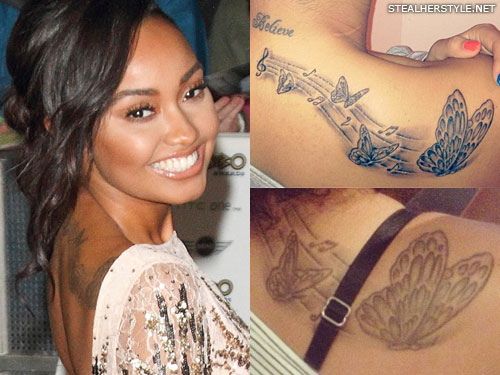
The strongest idea in Leigh-Anne’s collection is probably the way the back tattoo uses progression. The butterflies don’t all arrive at the same size, and the musical lines create a path between them. That gives the piece a beginning, middle and end without needing a heavy background or a solid outline around the entire shape.
It’s a useful approach for anyone planning a shoulder or upper-back tattoo. Start with the part you want people to notice first, then decide how the design should move away from it. A larger subject can anchor the shoulder while smaller details pull the eye toward the spine. Or a line of symbols can grow across the body in the same way Leigh-Anne’s butterflies grow across hers.
Don’t rush the stencil stage. Back tattoos can look balanced when you’re standing straight and then tilt when you relax one shoulder. Ask your artist to check the placement while you move your arms. A design that follows the shoulder blade should still look intentional when the arm is lifted, lowered or turned toward the camera.
And don’t feel pressured to invent a complicated meaning. Leigh-Anne’s tattoo has an obvious musical connection, but it’s still attractive as a piece of linework. A tattoo can be meaningful because of who designed it, when you got it or how it makes you feel. You don’t need a dramatic explanation for every butterfly.
A small collection, plenty of personality
Leigh-Anne Pinnock’s tattoos are a good example of a small collection that still feels specific. The “Believe” lettering sits quietly at the back of her neck, while the music-and-butterfly design opens across the upper back and right shoulder. One is simple script. The other is a flowing illustration tied closely to music and the Little Mix era.
The details are easy to describe without guessing: a cursive word, sheet music, a treble clef and four butterflies that get larger across the back. The connection with Wings makes sense, but it can stay a thoughtful interpretation rather than a fact that needs to be overstated. That balance keeps the story honest and lets the artwork speak for itself.
For tattoo inspiration, the collection offers two very different routes. You can keep things tiny and direct with a word that matters to you, or let a larger design travel across the body using repeated shapes and a clear sense of movement. Either way, the best part is the same: start with something personal, then let the artist turn it into a design that fits your skin.