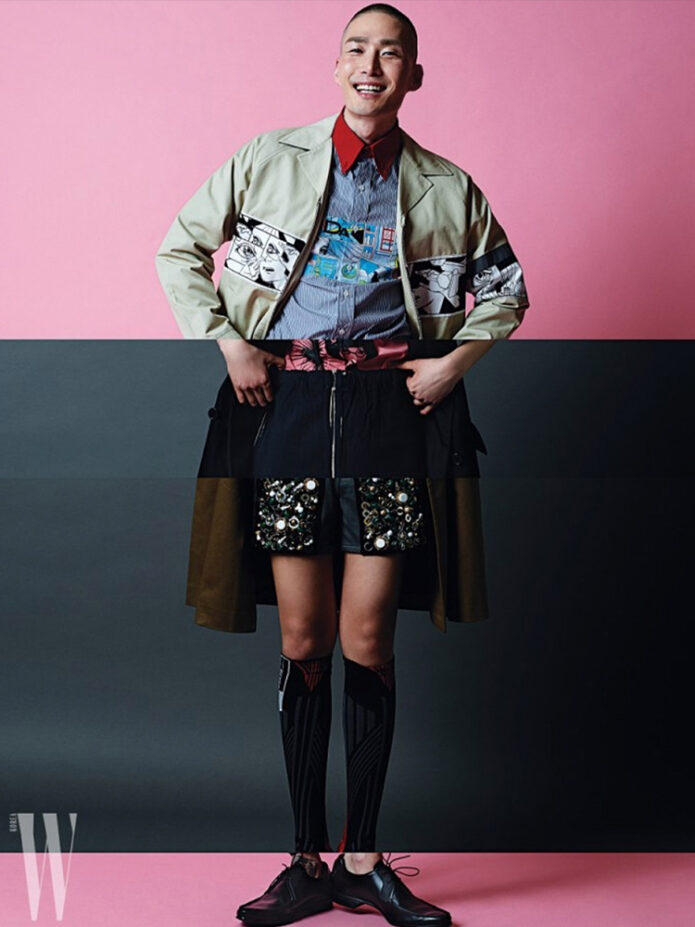
Noma Han trained as a tattoo artist in New York while building a career as a model. W Magazine described him as a South Korean model who also worked at Black Fish Tattoo in Koreatown, and reported that he had more than 50 tattoos in his twenties. His collection moves between portraits, pop-culture references, blackwork, lettering and a large Buddhist figure.
“If it’s cool in their eyes, then it’s cool.” The line fits a body of work shaped by different interests instead of one matching plan.
The Kate Moss portrait tattoo
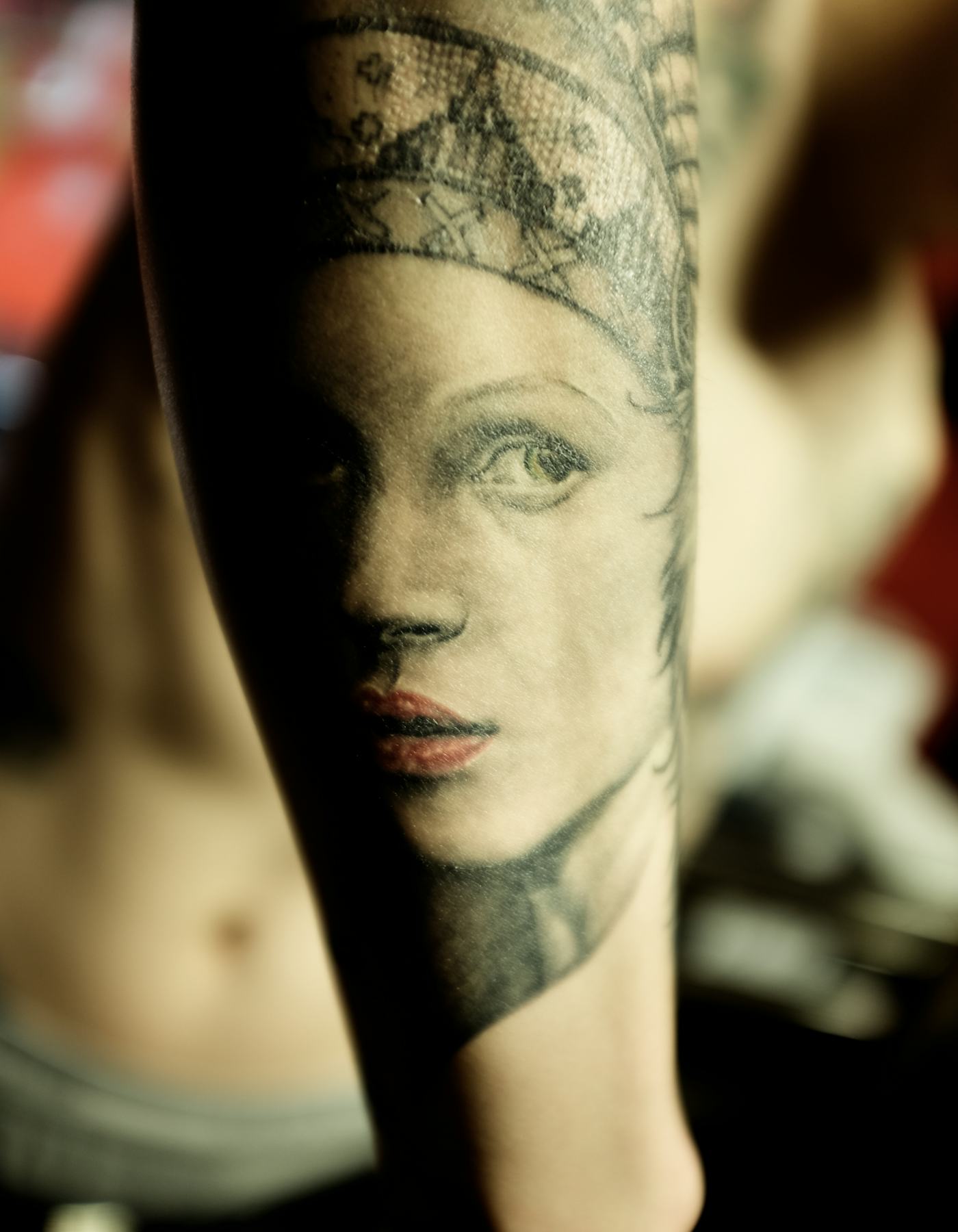
Vogue has described Han’s Kate Moss portrait on his forearm. In the close-up, the face is cropped tightly and softened by warm light, more like an old photograph than glossy colour realism.
The expression remains easy to read among the other marks on his arm. For a portrait reference, bring a clear photograph and let the artist adapt the crop to the curve of the forearm instead of forcing a rectangle onto it.
Why Noma Han’s sleeves feel collected, not planned
This editorial image isn’t a close record of a particular tattoo; the sleeve is only visible at the edge of the frame. It does show how Han’s ink can sit within a simple look without taking over the photograph.
His collection mixes portraits and playful characters with fine lines and heavier blackwork. The pieces don’t all share one size or finish, and the open skin between them keeps the arm from reading as one solid block. A sleeve can grow gradually; there’s no need to fill every gap at once.
The Buddhist figure on his back
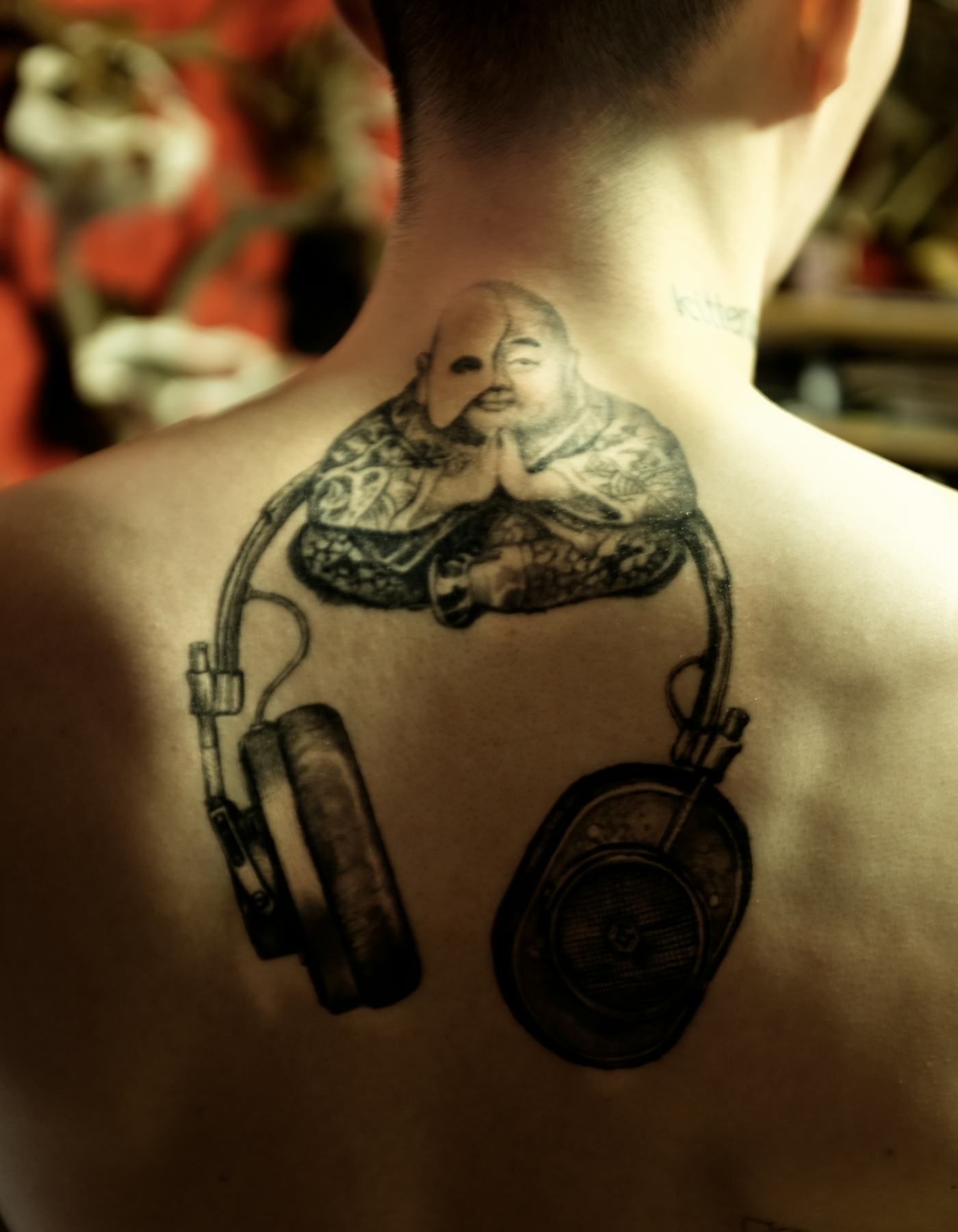
A W Magazine photograph shows a large seated Buddhist figure on Han’s upper back, surrounded by black-and-grey linework and a rounded element lower down. The composition is dense, but the central figure stays clear.
The scale gives the artist room to build around that subject. Before settling a back piece, check how it sits as the shoulders move and where its edges meet the spine and shoulder blades.
The mixed sleeve: portraits, pop culture, and texture
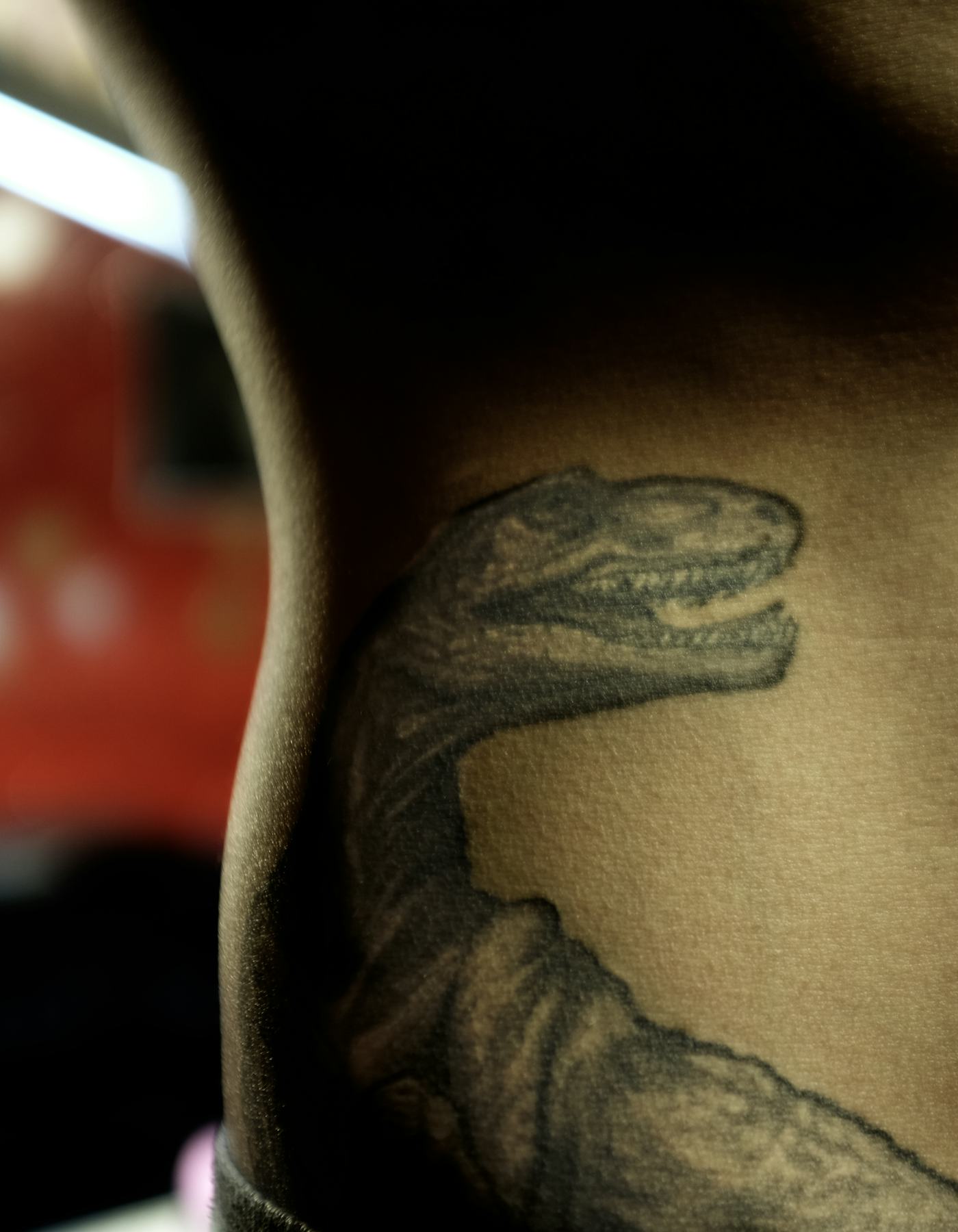
The sleeve close-up puts a portrait, heavy outlines and graphic marks beside one another. W Magazine has also noted Banksy and Totoro references on the same arm as the Kate Moss portrait.
The subjects differ, but black ink, soft grey shading and a slightly rough treatment give them common ground. A collection can feel connected through a repeated line or texture without making every tattoo match.
The work behind the look
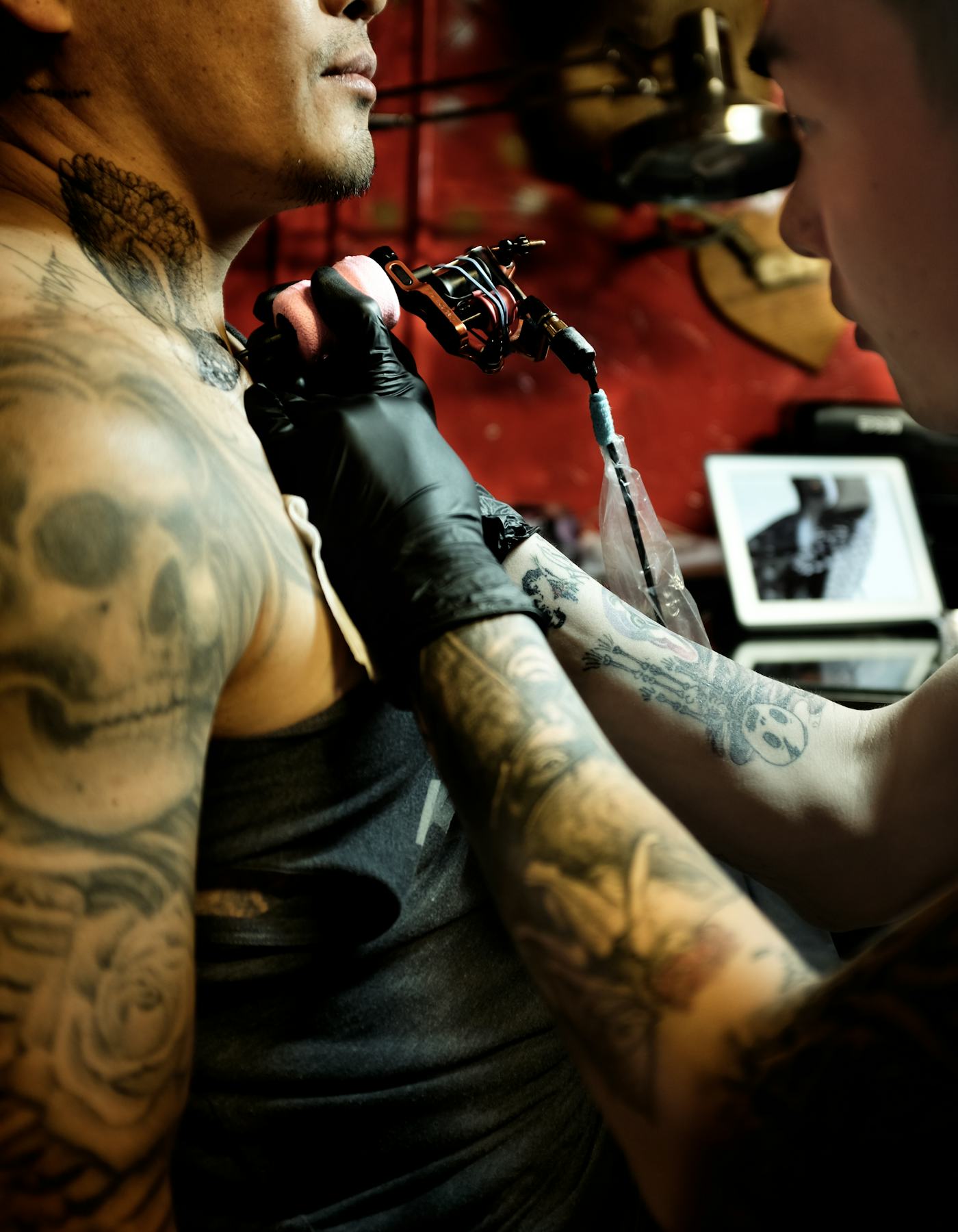
Another W Magazine photograph catches Han tattooing: machine and gloves in the foreground, with a client in the chair. It shows him at work rather than presenting a finished sleeve.
Working as an artist gives him a close view of how lines wrap around moving skin and where contrast gets lost. His own collection also looks like a record of that curiosity: portraits, symbols and experiments chosen at different times. A tattoo that feels rougher than expected can still hold a memory of why you chose it.
Modeling and the same visual instinct
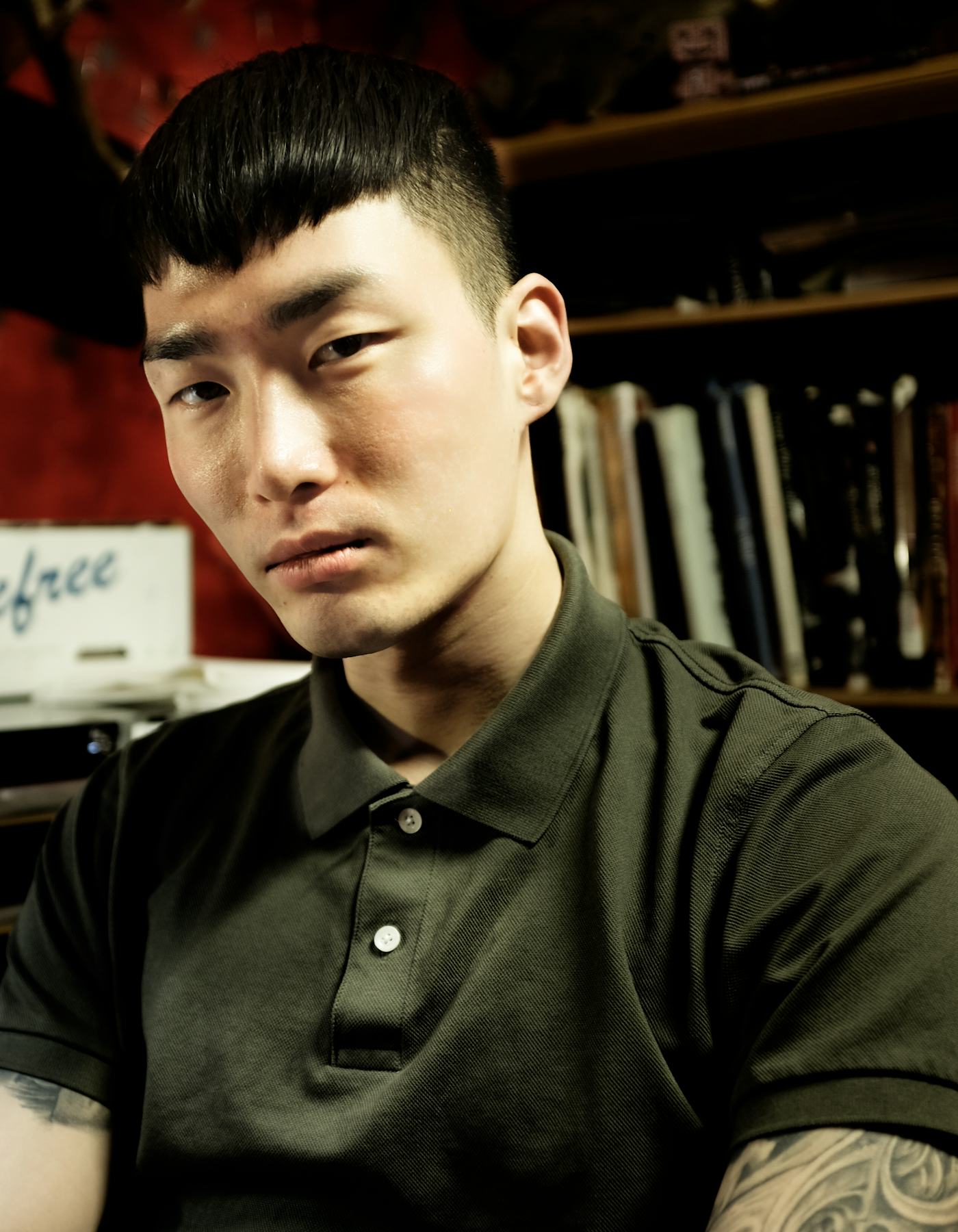
Modeling and tattooing both depend on how the body moves. A portrait on the forearm changes the silhouette; a back piece can affect how a jacket sits. The editorial photo here offers style context, not close evidence of a tattoo.
Visibility and contrast are worth considering before an appointment. A large black design reads differently beside a pale shirt than fine lettering does, while a hand tattoo will be more exposed than one on the thigh. Those effects can help with placement, even if they don’t decide the subject.
What to borrow from Noma Han’s approach
Han’s collection draws on fashion, art, pop culture and tattoo craft without forcing them into one style. Start with the image or phrase you keep returning to, then find an artist who works well in that medium. A portrait, a character silhouette and fine lettering call for different skills.
You can let the rest of a sleeve develop over time. If you want more examples, browse our tattoo ideas and notice the choices behind each piece: scale, line weight, placement and open skin.