Kai Kara-France has a broad, symmetrical black design across his back and curved work on his right forearm. A rear-facing fight photo shows the back piece spreading across the shoulders and narrowing into long points lower down. Training photos reveal the forearm. The dates matter: they show different areas at different times.
The symmetrical black design across his back
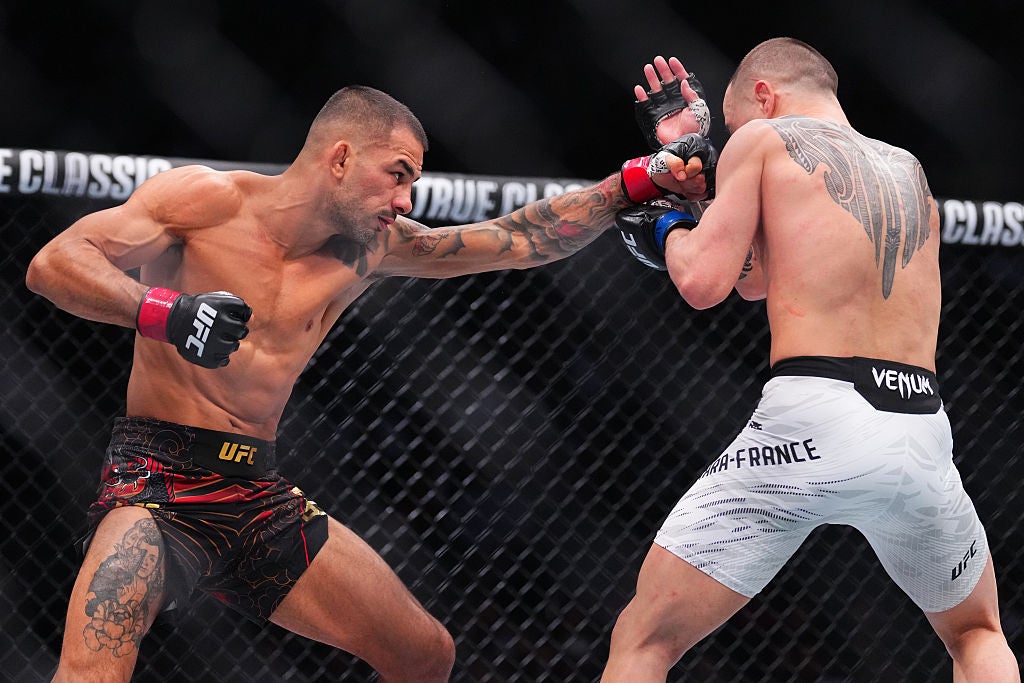
In this frame, Kara-France is on the right in white shorts with blue glove tape. Alexandre Pantoja is on the left in black, red and gold shorts; the arm and thigh tattoos visible there belong to Pantoja.
Kara-France’s design spreads over both shoulder blades, with curved bands drawing inward toward the spine and pointed shapes tapering down his back. Dark sections alternate with narrow gaps of bare skin and finer lines. The overall layout is symmetrical, though the photo shows it on a moving body with his shoulders raised.
EssentiallySports’ August 2024 profile connected the tattoo with Kara-France’s heritage and cited a caption from his reveal post. That reported connection doesn’t identify the meaning of every curve. The same report described the back piece as his only tattoo; June 2025 training photos also show forearm work, so that older count shouldn’t be treated as current.
The curved work on his right forearm
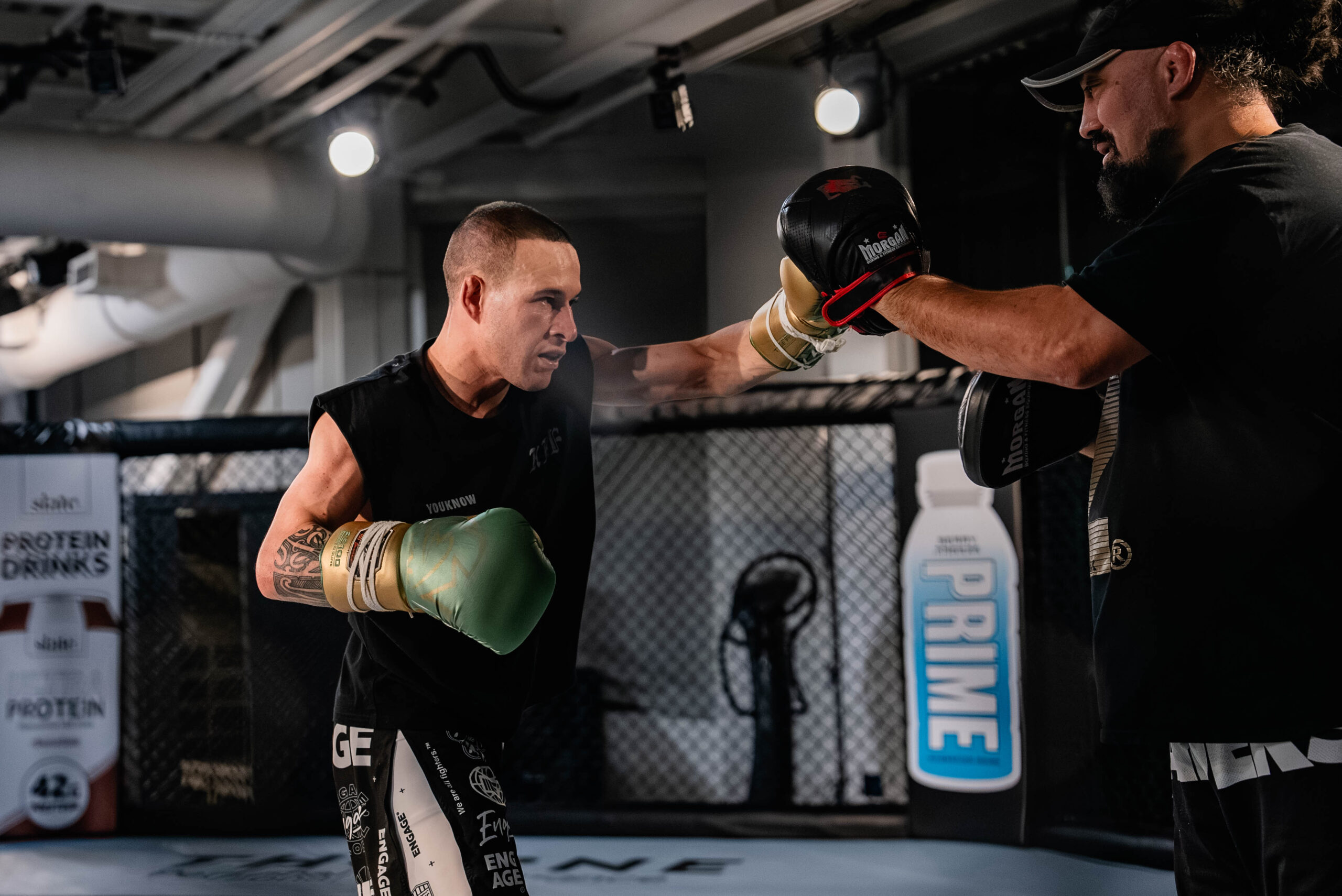
In this training photo, Kara-France is on the left in a black sleeveless top and green-and-gold gloves. The right forearm nearest the camera has bold curved lines and a narrower patterned band. His glove cuff covers part of the wrist, so the tattoo’s full lower edge isn’t visible.
The curves wrap around the arm, a narrower surface than the back. The photo shows their visible side but doesn’t tell us when he got them, who made them or what they mean. For another kind of arm coverage, see Alessio Sakara’s tattoo collection.
Heavy-bag training at the Performance Institute
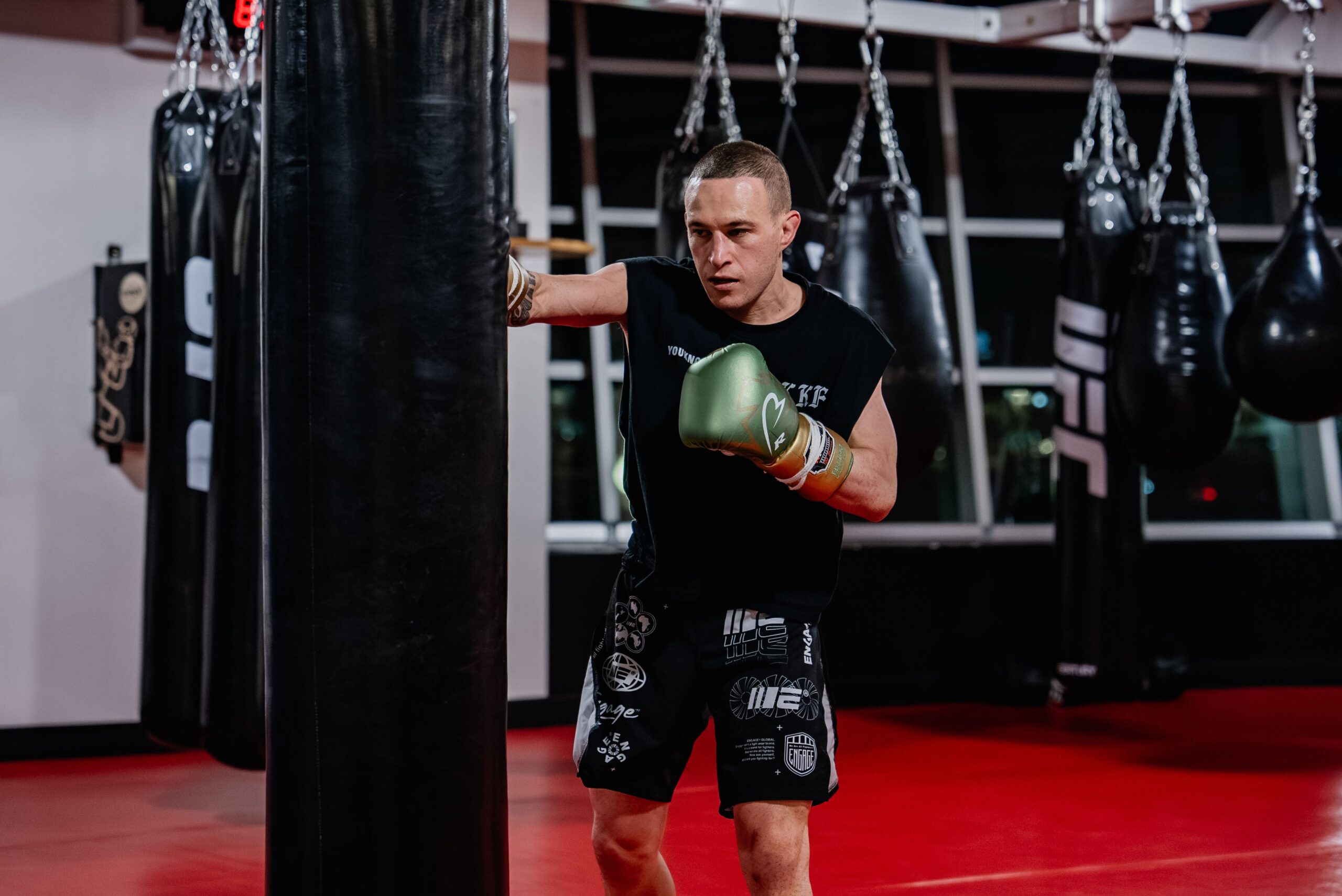
Kara-France works a heavy bag at the UFC Performance Institute. The bag fills much of the left side of the image and blocks part of his extended arm; his shirt covers the back design. His green-and-gold gloves stand out in the darker room.
The shorts have printed symbols and lettering, which belong to the fabric, not his skin. This photo shows the training setting, but the equipment and clothing limit what it can reveal about the tattoos.
A wide view of pad work
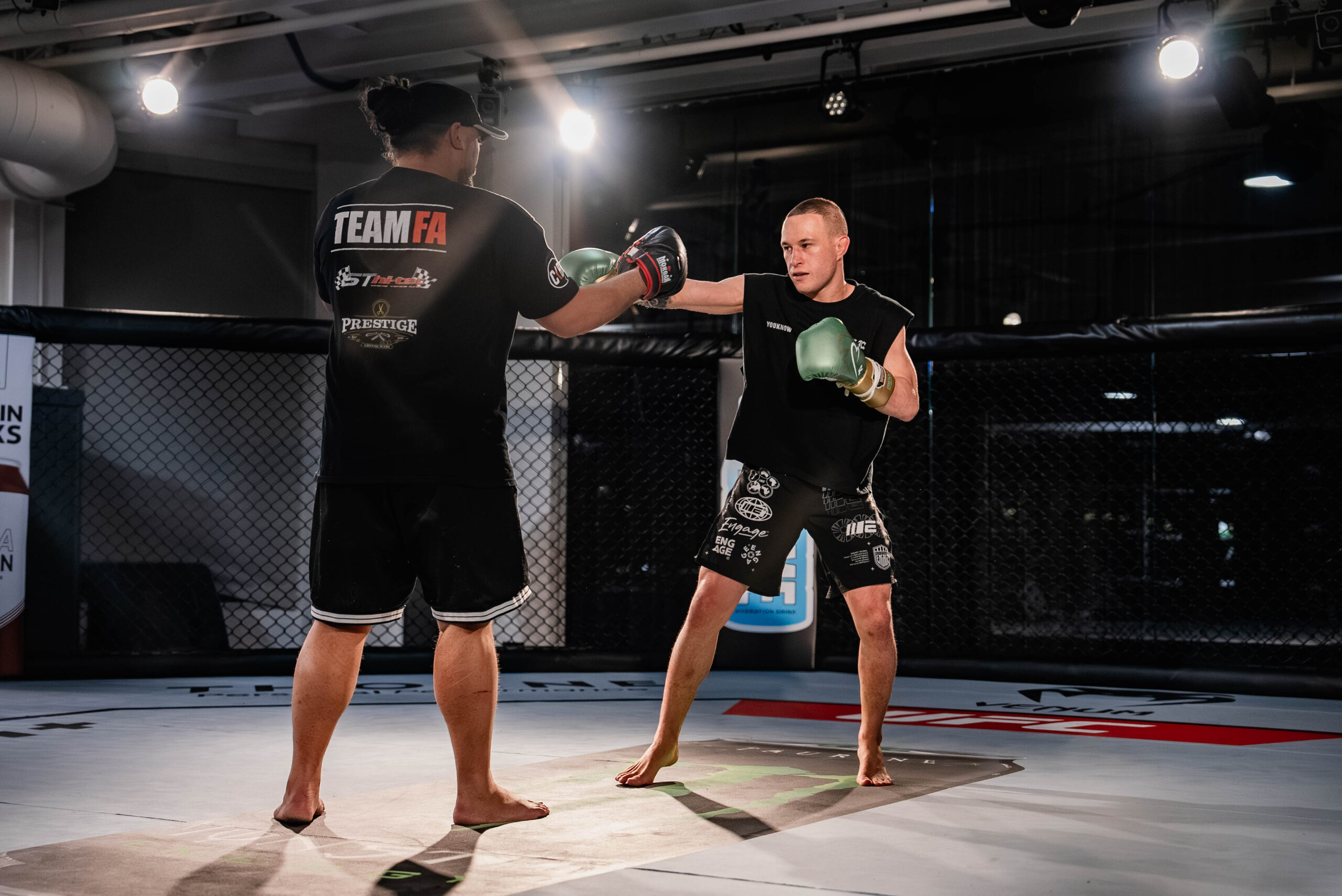
The wide pad-work photo shows Kara-France on the right and the pad holder on the left, both barefoot inside the training cage. Kara-France extends one glove toward the target while keeping the other close. The frame gives a sense of the room and their distance, not a detailed view of either tattoo.
His top hides the back piece, while the short sleeves leave part of the arm visible. Light and shadow also change how dark the ink appears. The edges and placement are more reliable clues than comparing darkness across different photos.
A full-length training photograph
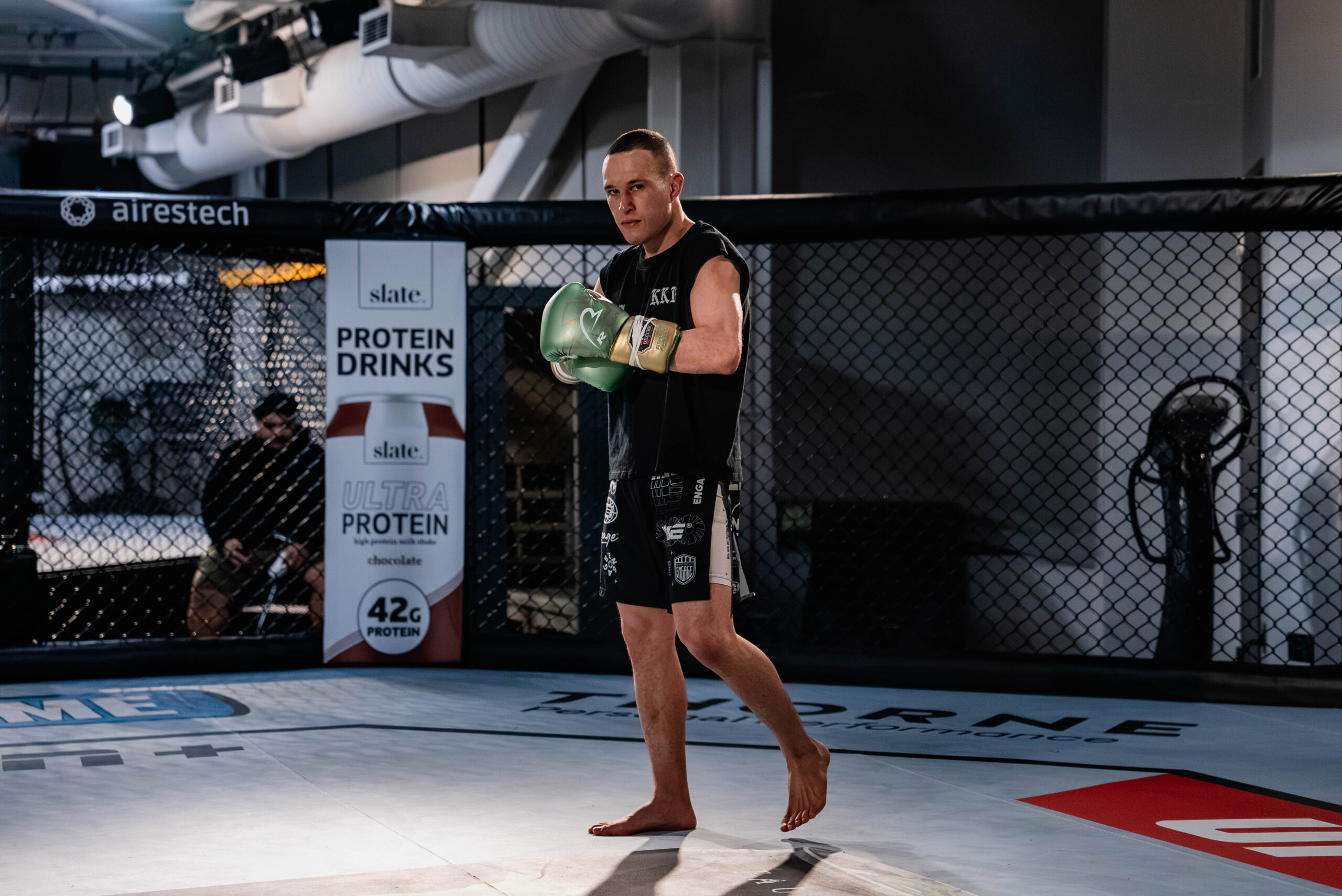
The last photo shows Kara-France alone in the same training setting, gloves raised and the cage behind him. The shirt covers his back, and the gloves cross his torso, so this full-length view is mainly about his stance and the setting.
The official UFC 305 Octagon interview below is a fight conversation, not an explanation of his tattoos. The photos show the back and forearm in different contexts; the reported heritage connection belongs to the back design, and the forearm’s meaning remains unconfirmed.