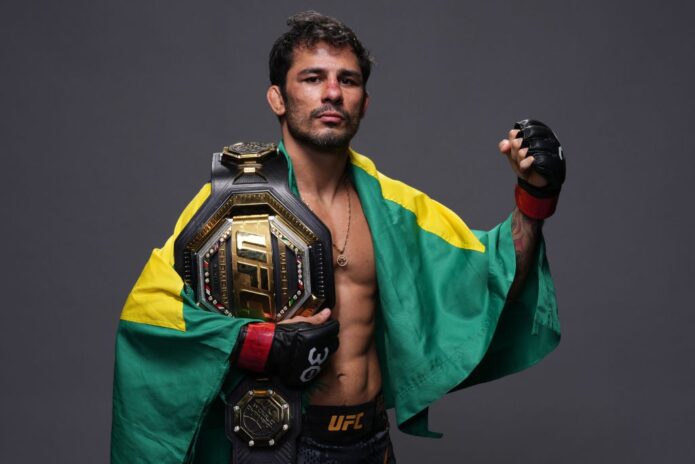
Alexandre Pantoja’s left arm is covered by a dense sleeve of dark shapes, curved lines and red accents. His opposite arm is much more open, while a separate portrait with flowers sits on his right thigh. The uneven coverage gives the collection a clear shape, but the photos don’t explain what each design means to him.
The dragon-themed sleeve on his left arm
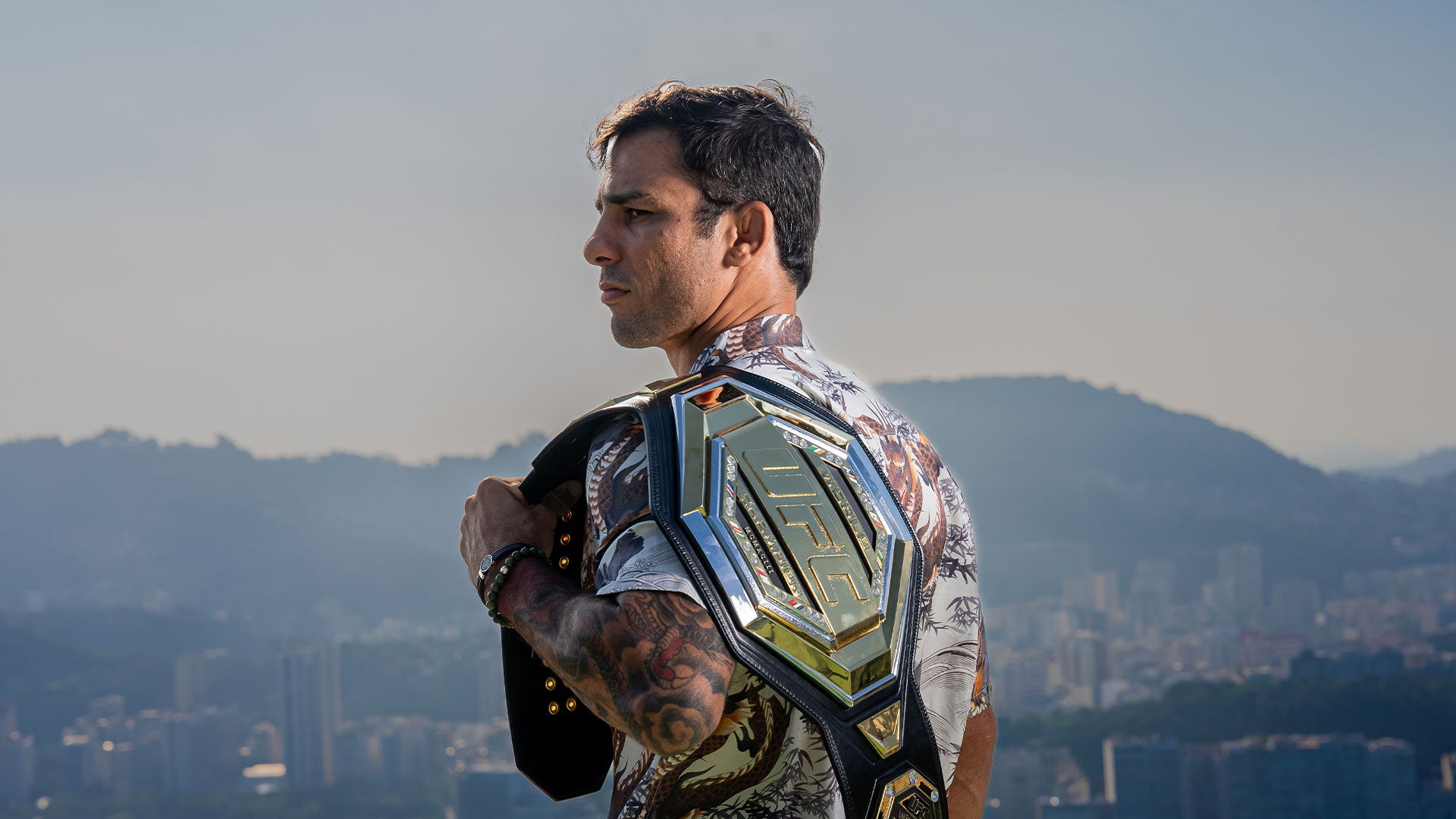
A side view shows the tattooed arm bent across Pantoja’s body as he carries the physical UFC belt over his shoulder. The shirt covers part of the upper arm, but the elbow and forearm are visible. Scale-like details and red accents sit within darker, swirling forms.
EssentiallySports described the sleeve in May 2024 as Japanese-themed work with a dragon, clouds and flames. The report said Pantoja hadn’t explained its personal meaning. The imagery can be identified without assigning it a reason he hasn’t given. A patterned shirt in the photo has its own dragon and tiger print; that artwork is on the fabric, not his skin.
The sleeve wraps around the arm, so one angle can’t show it all. A round motif sits near the outer elbow, with longer lines continuing above and below. For another example of connected coverage, see Alessio Sakara’s tattoo collection.
A second view of the sleeve during a fight
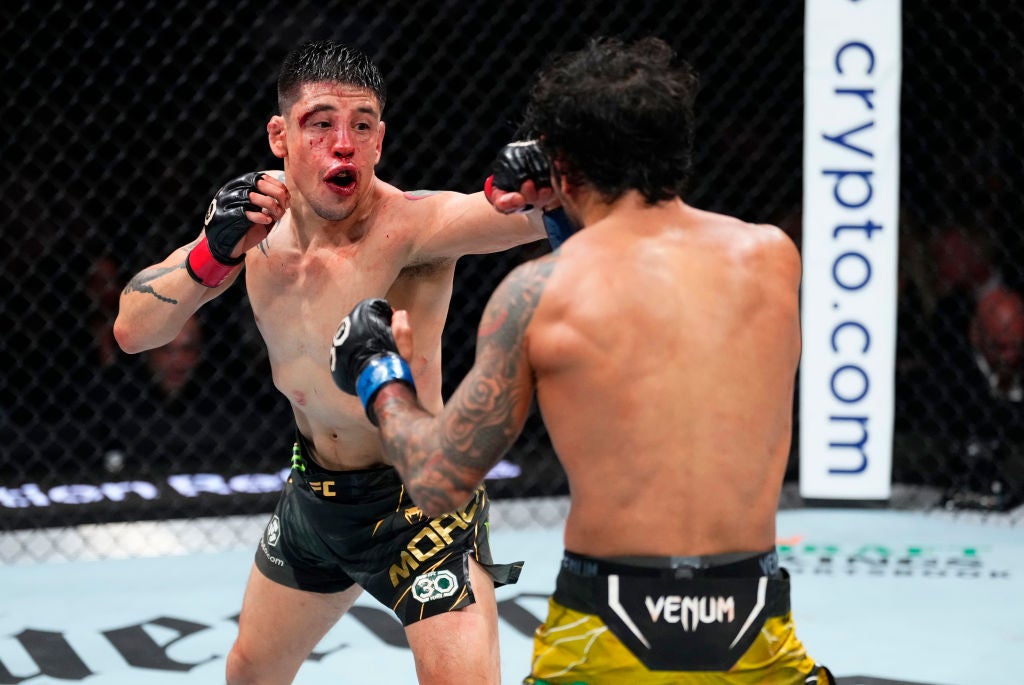
In this fight photo, Pantoja is on the right with his back toward the camera, wearing yellow shorts and blue glove tape. Brandon Moreno faces the lens on the left. The long tattooed arm nearest the viewer belongs to Pantoja; Moreno’s arm ink is separate.
This angle shows more of the sleeve’s length and how the dark outlines sit beside lighter spaces. Pantoja’s back remains comparatively open, giving the sleeve a clear edge. The photo helps show placement, though the opponent and cage make it harder to identify fine details.
The woman and flowers on his right thigh
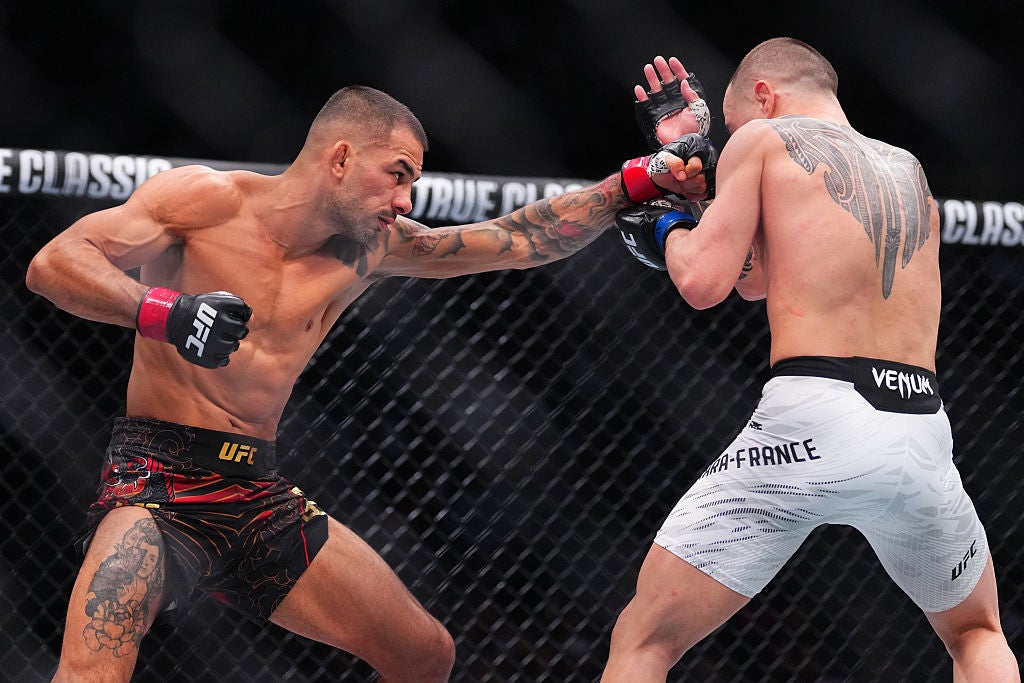
A woman’s face and flowers cover part of Pantoja’s right thigh. The portrait has dark hair and lighter facial shading, with outlined petals below. In the exchange with Kai Kara-France, Pantoja is on the left in black, red and gold shorts; Kara-France is on the right in white. The large tattoo across Kara-France’s back is his, not Pantoja’s.
EssentiallySports identified the woman as a geisha, but that doesn’t tell us why Pantoja chose the image. His shorts cover the top of the tattoo, and a dragon printed on the fabric is separate from the ink on his exposed thigh.
A promotional photograph in Rio
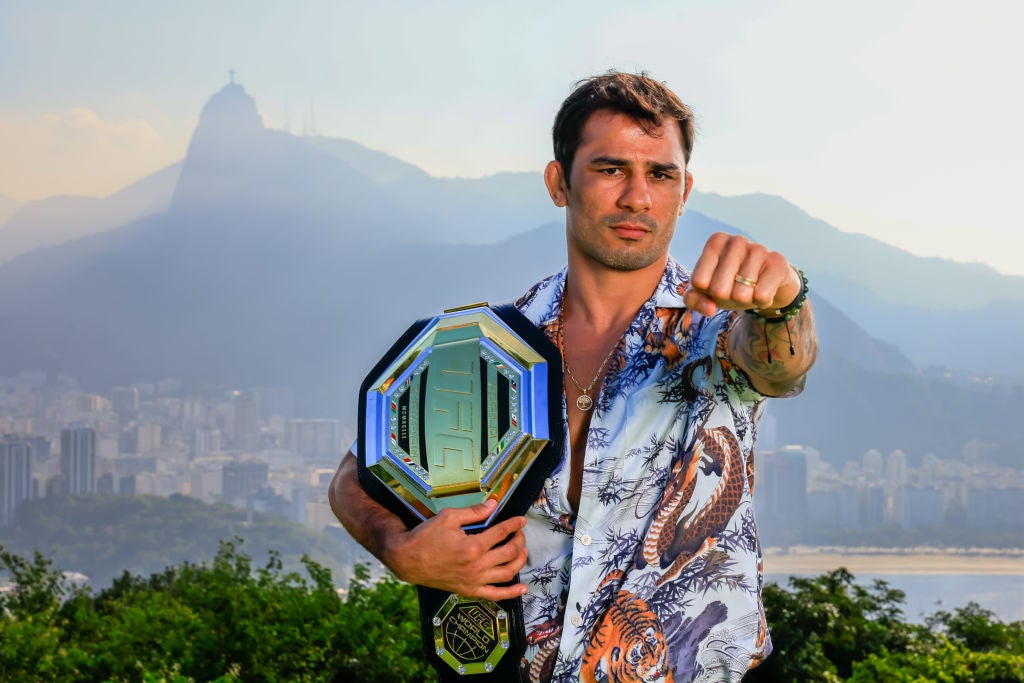
This promotional photo shows Pantoja at a Rio overlook, holding the belt against his body and extending a fist toward the camera. His patterned shirt has its own dragon and tiger illustrations. The pose foreshortens the arm and the shirt covers the shoulder, so the image gives broader context than tattoo detail.
The belt, bracelet and printed fabric also draw attention away from the skin. A clearer exposed-arm photo is more useful for studying the sleeve.
Competition context at UFC 317
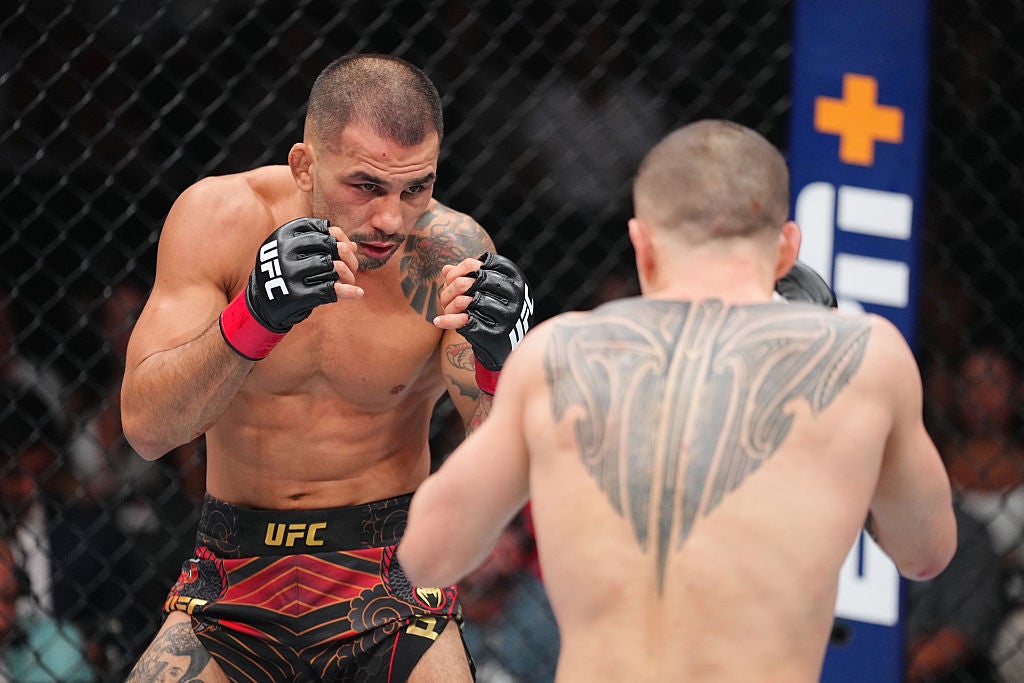
In this UFC 317 photo, Pantoja faces the camera with both gloves raised while Kara-France’s back fills the foreground. That back tattoo belongs to Kara-France. Pantoja’s gloves and turned shoulder obscure part of his sleeve, making it look shorter than in the other view.
The official UFC 301 Octagon interview below is a post-fight conversation, not a tattoo tour. The photos show a dense left sleeve and a separate portrait on Pantoja’s right thigh; his personal reasons for the designs remain his to explain.