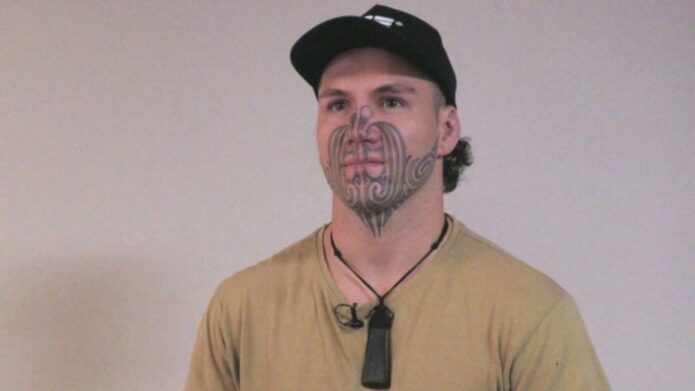
Aaron Tau’s mataora is the most prominent part of his tattoo collection. Curved lines frame his nose and mouth, with spirals across the cheeks and darker patterning beneath his chin. Smaller pieces include “Dylan” on his left chest and a short inscription at the back of his neck. Tau has spoken about the mataora as part of his Māori identity, so the cultural context belongs alongside what the photographs show.
His mataora face tattoo
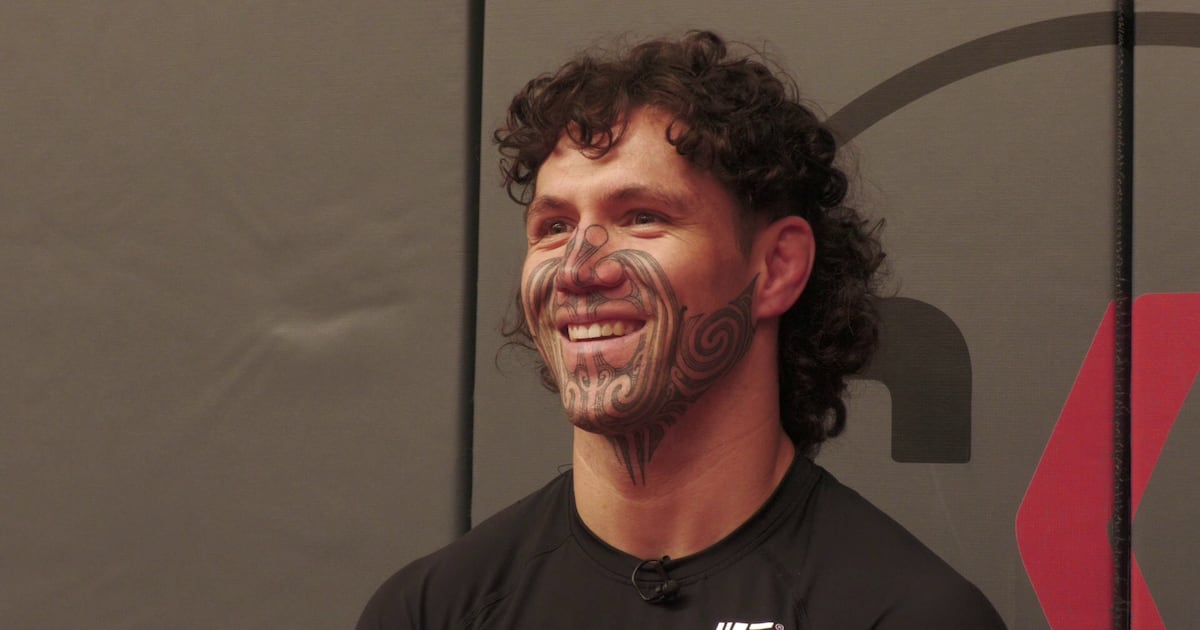
In this smiling interview photo, Tau turns slightly toward the camera. The angle brings one cheek spiral forward while leaving the central lines around his nose and mouth clear. Rounded forms cross the chin, with tapered marks continuing below it. Bare skin between the lines keeps the pattern distinct rather than merging into a solid dark area.
Te Ao Māori News reported in May 2023 that Tau received his mataora at the end of March in Kaitāia, surrounded by whānau and friends. The artist was Anikaaro Harawira. Tau described the tattoo as a way to carry his whānau, hapū, iwi and te ao Māori with him. The report identifies his Ngāpuhi and Ngāti Toro descent and connects the design with his whakapapa through Rāhiri, Āhuaiti and Whakaruru.
Those details give the mataora a specific context. A photograph shows where the curves sit on Tau’s face, but it can’t decode each one as a separate label. The full-body view later in the article makes the chest lettering and open space easier to compare; the smiling interview photo shows how the mataora moves with his expression.
The Dylan chest tattoo
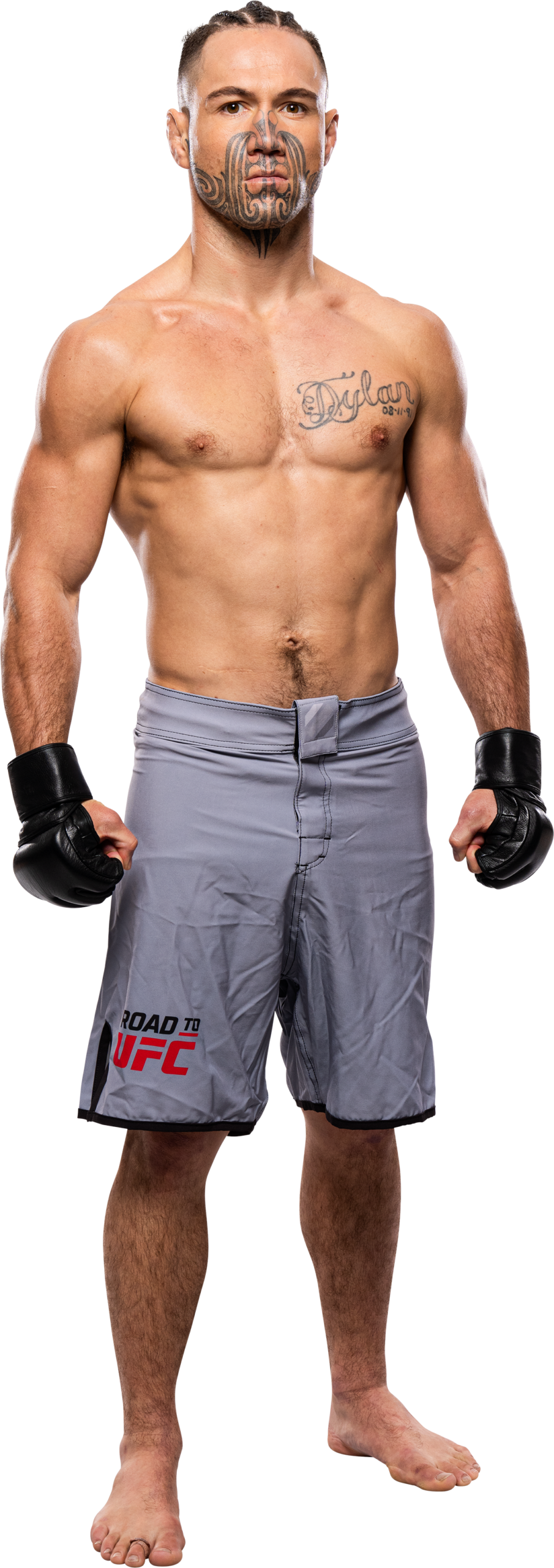
The name “Dylan” is written in large cursive on Tau’s left chest, with a smaller date beneath it. The full-body photo shows it above the left nipple, on its own patch of skin. The name stands out before the small numbers do.
The image doesn’t identify who Dylan is or why the date matters. It’s safer to describe it as name-and-date lettering than to guess at a memorial or family connection. Its flowing script also has a different visual language from the curves and spirals of the mataora. For a contrast in overall coverage, see Alessio Sakara’s tattoos.
The small neck tattoo
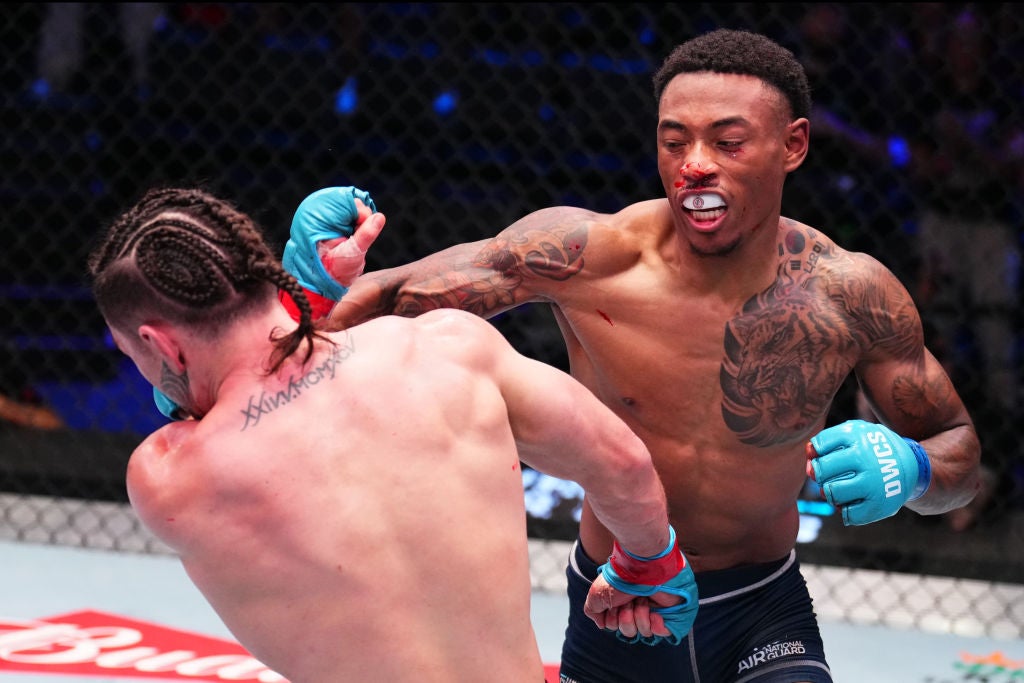
A Contender Series fight photo shows the back of Tau’s neck beneath his braided hair. A short line of Roman-numeral-style marks runs across the nape. The letters are too angled and small in this moving shot for a reliable transcription; a single unclear stroke could change the reading.
Tau is the braided-haired fighter in the foreground, turned away. Elijah Smith faces the camera, and the larger tattoos on Smith’s arms and chest belong to him. The nape inscription is usually hidden in front-facing photos, so this is a useful view of its placement even without a readable date.
Competing with the same identity
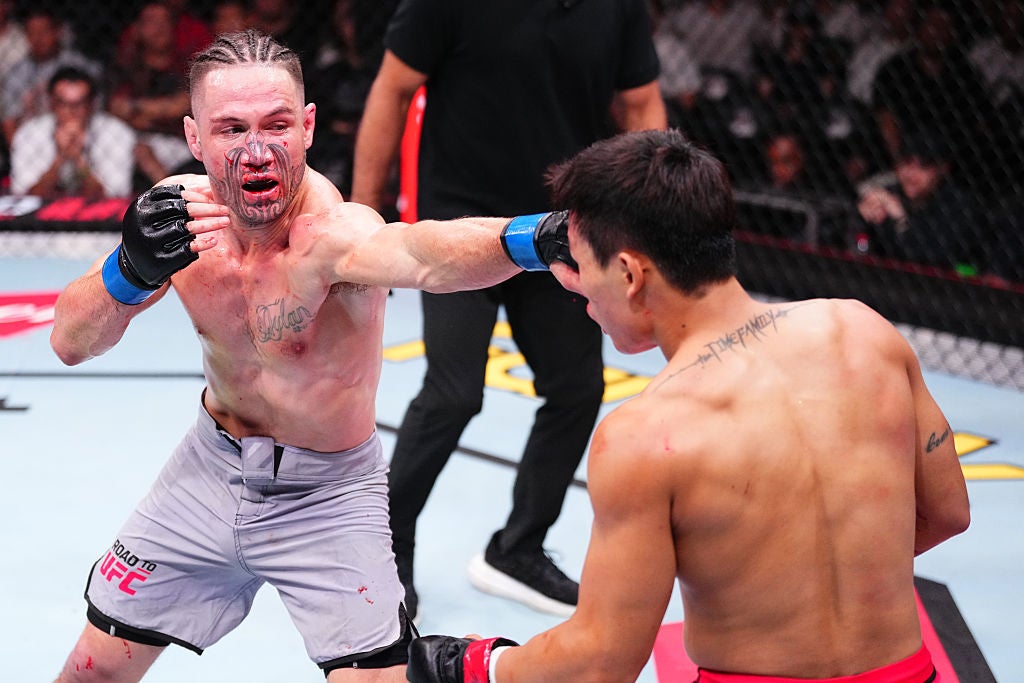
In this Road to UFC photo, Tau throws a punch at Yin Shuai. His mataora and chest lettering are visible, though the gloves and action make it a different view from a studio portrait. UFC recorded Tau’s decision win over Yin in Shanghai in August 2025. Earlier in the tournament, he stopped Rio Tirto in the first round.
Those appearances followed a September 2024 decision loss to Elijah Smith on Dana White’s Contender Series. The events mark different stages of Tau’s route through the sport; they don’t change what the mataora represents to him.
In a June 2024 interview with Te Ao Māori News, Tau spoke about the values his grandparents taught him and carrying those values after moving to Australia as a teenager. He also wanted public appearances to make room for a broader understanding of Māori culture. The mataora is present in both public and competition settings, but its significance comes from Tau’s own account.
A wider view of Tau
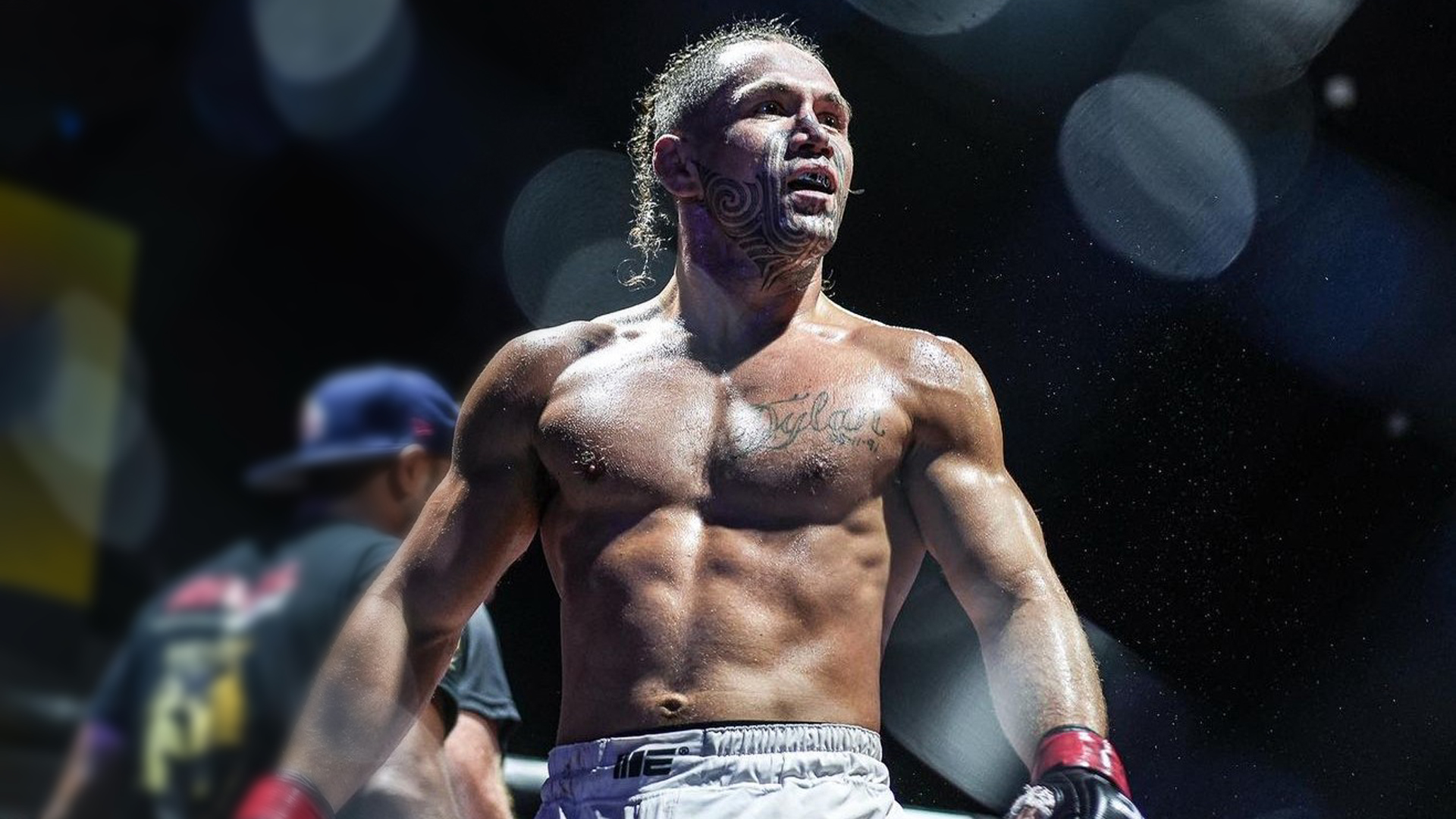
A wider competition photo shows Tau under strong overhead lights, with his hair tied back and gray shorts visible. He looks away from the camera, and the lighting throws some of the facial lines into shadow. The chest lettering remains visible, but less evenly than in the full-body view.
The Te Ao Māori News video below adds Tau’s voice alongside photographs from different settings.