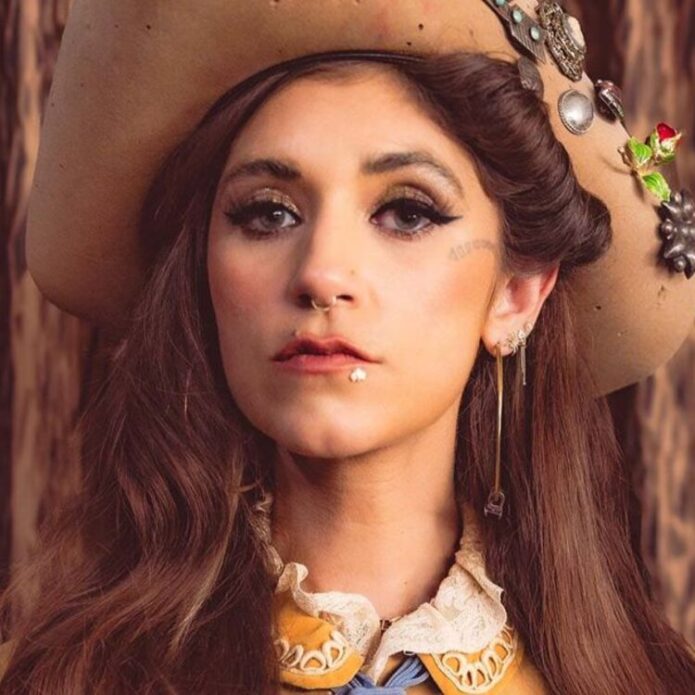
Sierra Ferrell’s tattoos fit her music because they feel a little wild, a little homespun and never too polished. Her ink turns up on her hands, arms, face and shoulders, often peeking out from underneath a hat, a sleeve or a pile of jewelry. The designs are mostly black linework, but the overall effect is warm rather than severe. There is a flower on the hand, leafy work along the arm, small lettering near the eye and larger pieces that sit comfortably with her old-timey stage clothes.
Ferrell’s look is easy to recognise without feeling like a costume. She might appear in a cowboy hat and a vintage blouse, then the next photo catches a small cheek tattoo or a busy forearm. That contrast is part of the charm. Her body art does not seem designed to match one strict flash style. It has grown in pieces, and the collection keeps the little surprises that make a tattoo feel like someone’s own.
The photos below focus on what can actually be seen clearly. Some images show a single detail, while others give a better sense of how the tattoos sit together across her arms and hands. The useful lesson is not to copy a single drawing, but to notice how small personal marks can build a strong visual identity over time.
Sierra Ferrell’s face tattoo is small, clear and instantly recognisable
One of Ferrell’s most noticeable tattoos sits beside her eye. The tiny block lettering is close to the cheekbone and stays visible even when the rest of her face is framed by curls or a wide hat. It is a bold placement for such a compact mark. Because the letters are simple, the design reads quickly in a portrait instead of disappearing into fine detail.
Face tattoos need a little extra thought because they become part of every expression and every photograph. Ferrell’s mark works because it is short, dark and placed with enough breathing room around it. The surrounding makeup and hair change from shoot to shoot, but the tattoo still holds its shape. That is a good reminder that a small design can carry plenty of personality when the placement is doing some of the work.
A short word or number can have the same direct feel without copying the exact lettering. Keep the idea personal and the shape uncomplicated. A tattoo artist can help balance the scale against your features, especially if the design will sit near the eye, temple or cheek. It is also worth remembering that face ink affects work, photography and future cover-up options in a way that an ankle or upper-arm tattoo does not.
Her floral hand tattoos bring a soft detail to a working musician’s look
The close-up concert photo shows Ferrell’s hand wrapped around her instrument, with flowers and a strawberry-like motif visible across the skin. The placement feels natural for a performer. Her hands are always moving, so the ink appears as part of the action rather than as a posed detail. Rings and bracelets add another layer, but the tattoo still reads clearly through the warm stage light.
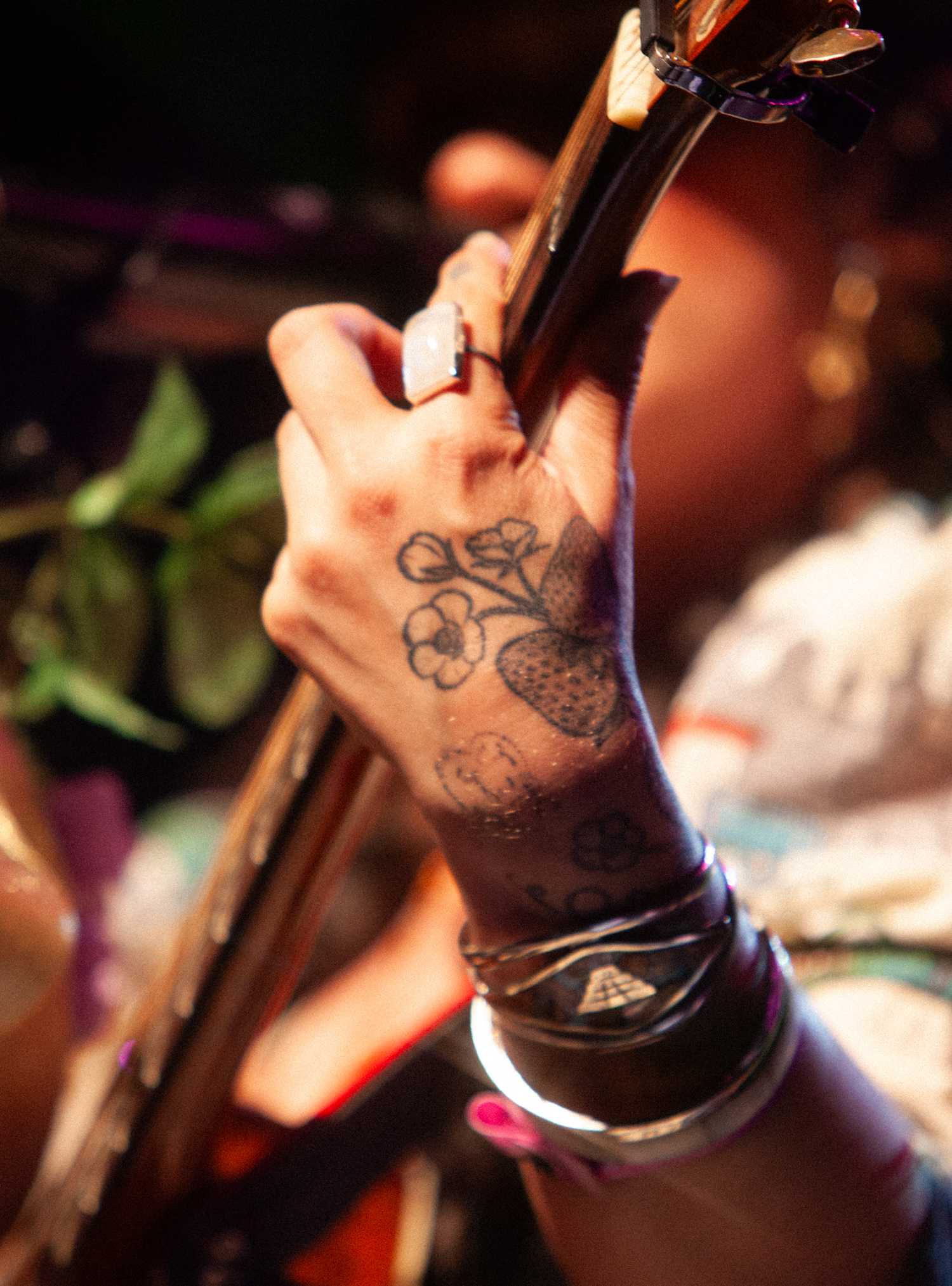
Floral hand tattoos can look delicate without being fragile in spirit. Ferrell’s designs use simple outlines and rounded shapes, which gives them a folk-art feeling. The small forms sit together like pieces from a sketchbook. That makes the collection feel connected even though every mark does not have the same size or density.
Hands are a demanding place for ink. Soap, sun, friction and constant movement can soften small lines faster than many people expect. If you like this direction, ask about a design that keeps its strongest shapes easy to read. Simple petals, leaves and fruit can age more gracefully than a tiny drawing packed with micro-detail. A short healing period can also be awkward for anyone who plays an instrument, works with tools or washes their hands often.
Loose arm linework gives her tattoos an old-timey botanical mood
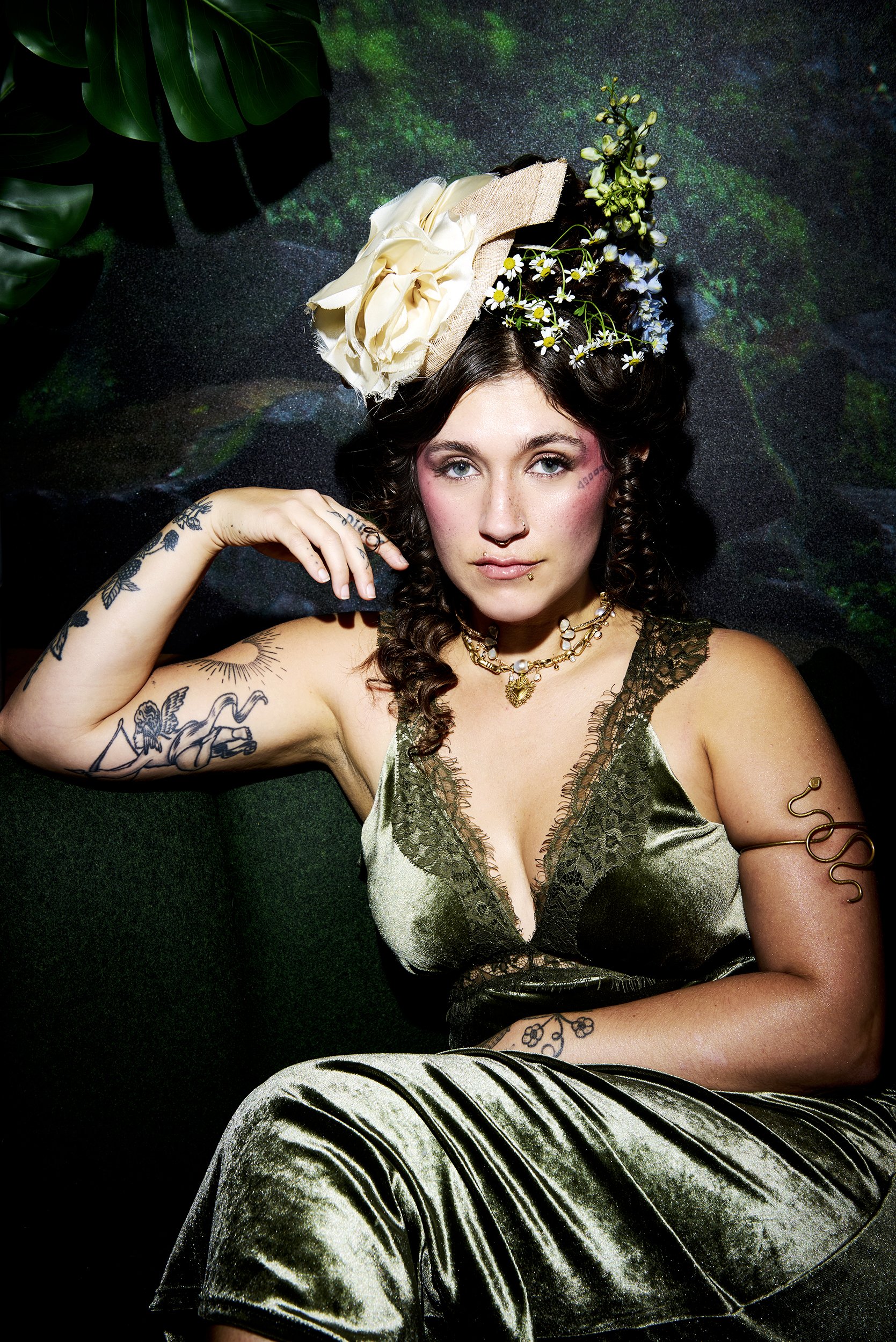
In the portrait with the flower crown, Ferrell’s arms carry a mix of leaves, blooms and open linework. The pieces do not form one solid sleeve, and that is exactly why they feel relaxed. Skin remains visible between the designs, so the tattoos have room to breathe. The result is closer to a collection of small illustrations than a single wall of ink.
The botanical shapes suit Ferrell’s vintage country styling, but they would also work with a plain T-shirt or a denim jacket. That versatility matters. A tattoo can belong to a certain stage look without being trapped inside it. The arm is a useful place for this kind of gradual collection because new pieces can be added later without needing to force every gap into a matching background.
Open space is doing a lot of work in this arrangement. If you are planning several nature-inspired tattoos, leaving skin between them can keep the group light. Bring references that show the mood you like, then let the artist redraw the idea for your body. Matching every line exactly is less important than keeping a consistent sense of movement, scale and contrast.
Her hand lettering adds a little attitude without taking over the design
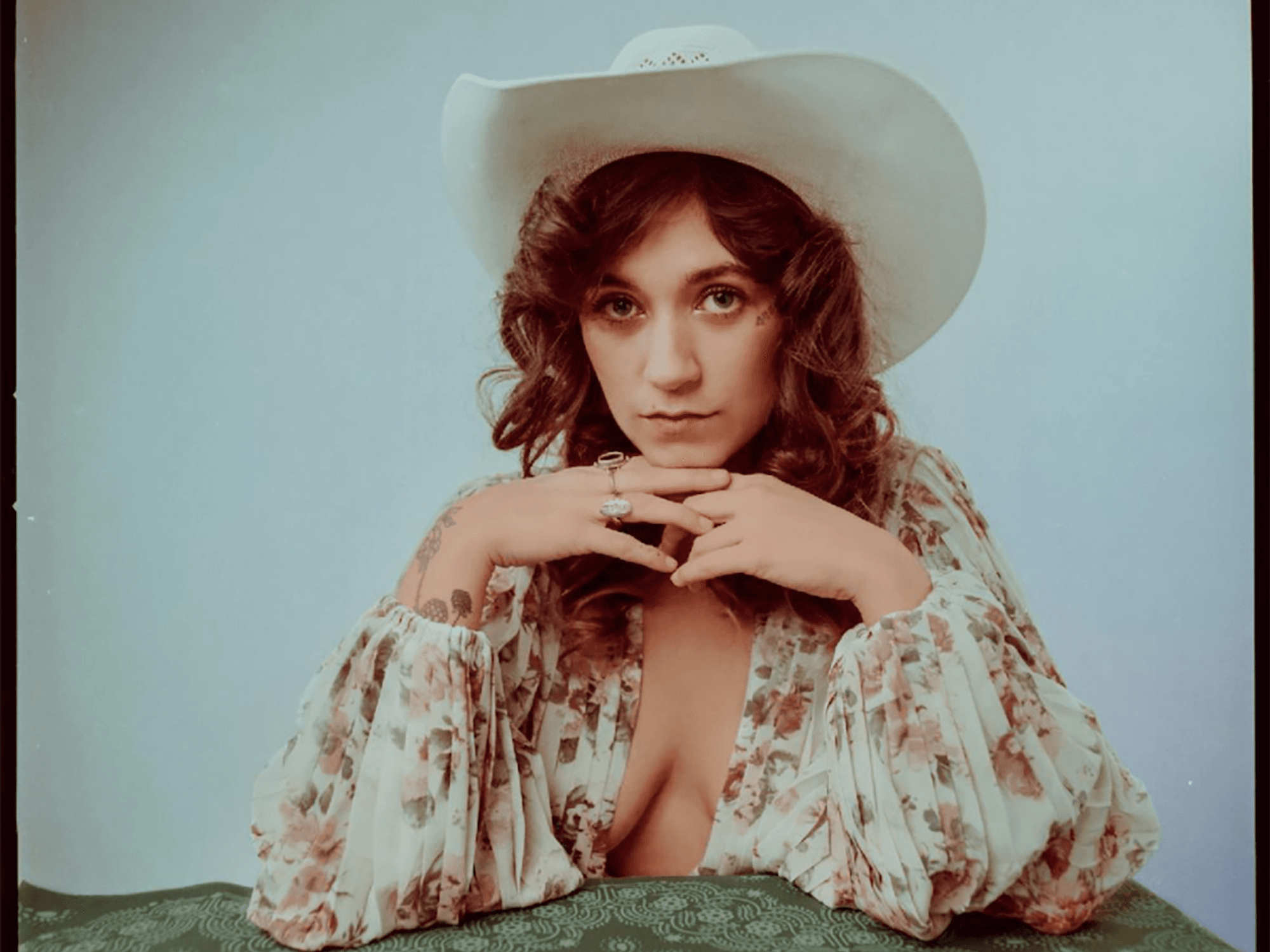
Another close view catches lettering across Ferrell’s fingers while her hand frames her face. The text is compact and slightly rough around the edges, which keeps it from looking like a formal logo. Finger lettering often becomes the first thing people notice when someone reaches for a microphone, adjusts a hat or gestures during a conversation. It can be tiny and still change the whole impression of a hand.
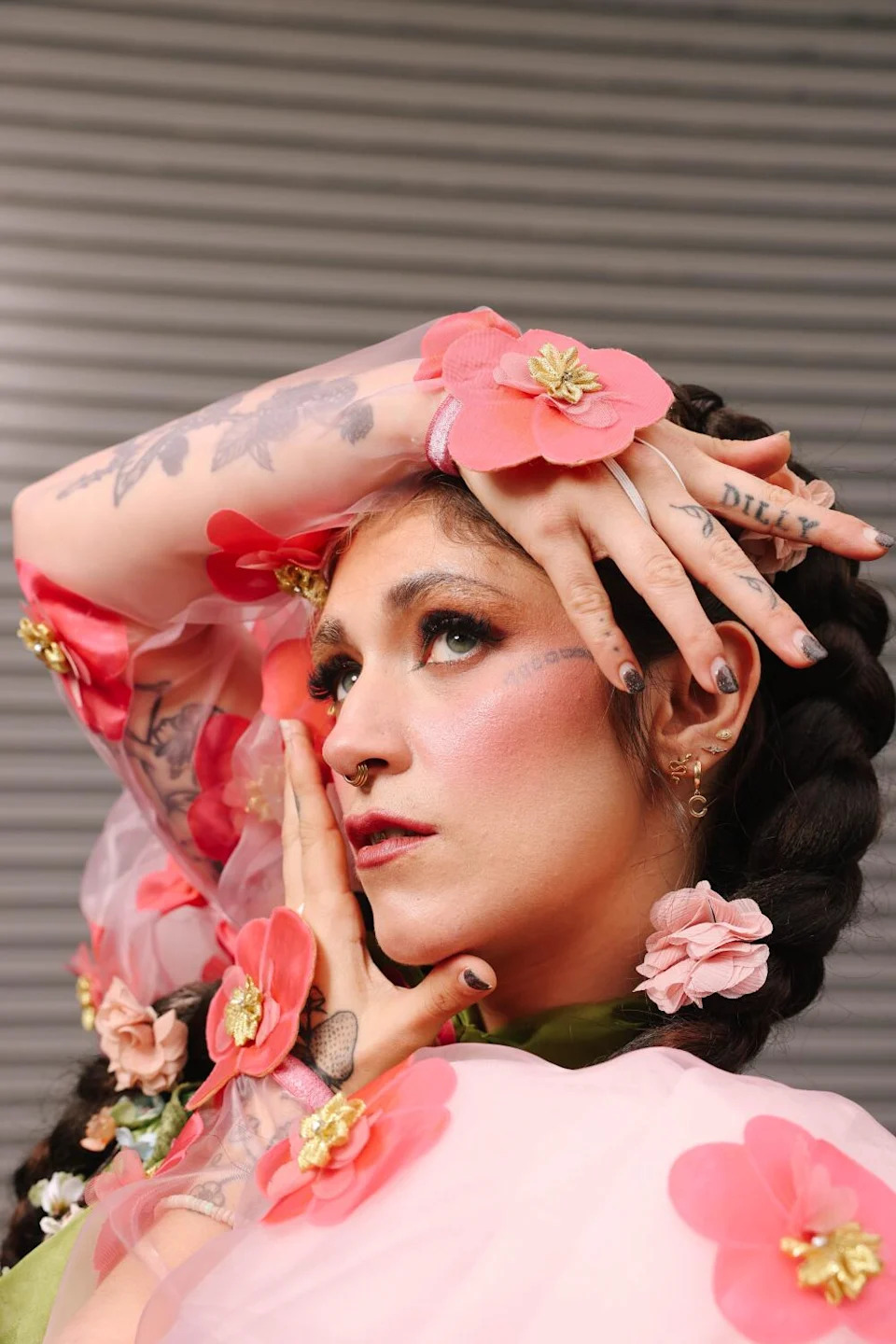
There is a nice balance between the words and the nearby floral pieces. The lettering brings a little attitude, while the flowers keep the hand from feeling too hard or heavy. This is a useful combination for anyone who likes script but wants the result to feel more personal than a single quote floating on its own.
Finger tattoos fade and blur more quickly than ink in protected areas, so a clean typeface and strong spacing are practical choices. Think about whether the word will still look good when your fingers bend. A good artist can suggest a placement that follows the movement of your hand rather than fighting it. Shorter text usually gives the design a better chance of staying readable.
The face, hand and arm pieces work because they share a loose line quality
The wide portrait with the black hat brings the collection together. The face mark is visible, the hands show smaller shapes and the arms carry more open artwork. None of those areas looks like it was forced into a matching sleeve. Instead, the repeated use of simple black lines gives the tattoos a quiet link.
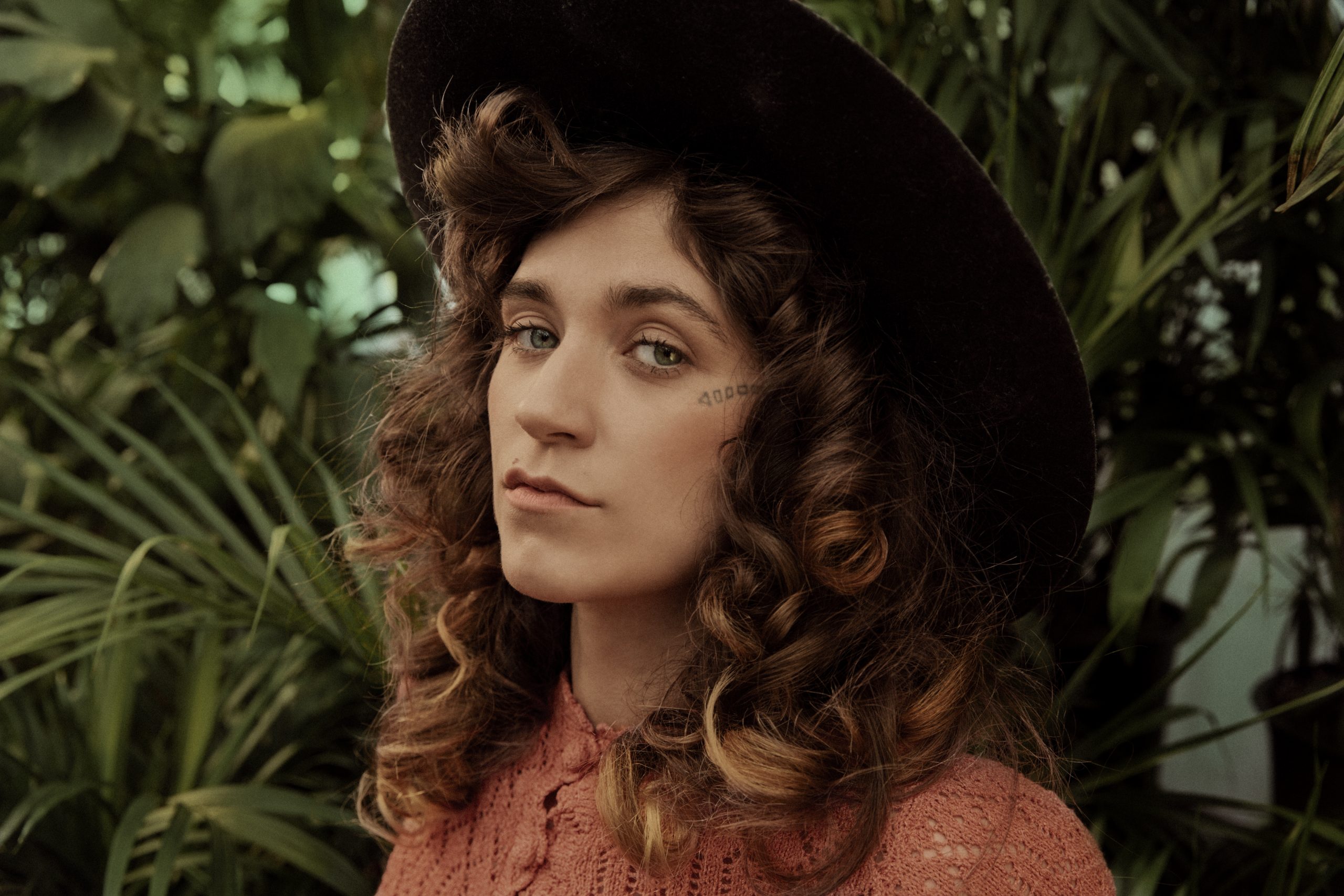
This kind of collection can grow naturally. One person might start with a small hand symbol, add a flower later and eventually choose a bolder arm design. The pieces do not need to tell one neat story. They only need to feel honest when they sit next to each other. Ferrell’s tattoos have that lived-in quality, which is why they fit both her stage clothes and her everyday photographs.
If you are drawn to the same mood, collect references by feeling rather than by celebrity. Look for line weight, spacing and the way a design follows the body. Then choose a subject that belongs to your own life. A flower from a family garden, a small animal, a favourite instrument or a word that still matters years later will always make the result more personal than a direct copy. Give yourself time between ideas instead of booking every piece at once. A collection usually looks more natural when each decision has room to settle, and the artist can respond to the shapes already on your skin. That slower pace also makes it easier to notice which ideas still feel right after the excitement of a new photo or performance has passed.
A relaxed way to build a personal collection
Ferrell’s ink is a good example of how a collection can stay expressive without becoming overly planned. A face mark creates a sharp focal point. Floral hand pieces soften the look. Arm designs add movement, while small lettering brings a little humour and edge. The pieces feel connected through their relaxed linework rather than through one rigid theme.
That is the part worth borrowing: the confidence to let different ideas share the same body. Start with a design you genuinely want, choose an artist whose linework suits it and leave room for the collection to change. Ask about placement, ageing and healing before the needle starts. Once the practical decisions are right, the style can stay loose. That is what makes Ferrell’s collection memorable in the first place.
Take a moment to compare these placements with your own work, wardrobe and comfort before committing to a permanent design.
Watch a relevant tattoo tour at the bottom of the guide for more context on how musicians talk about their ink.