
Mac Miller’s tattoos appear across his hands, arms, neck, and fingers. Photos show a mix of lettering, symbols, portraits, and floral work, with pieces added at different times rather than one matching sleeve.
Some meanings are clear from Mac’s public comments or the words themselves; other details are harder to identify in old stage photos. Where a design hasn’t been explained, it is better to describe what can be seen than guess at its meaning.
Mac Miller’s tattooed hands and finger ink
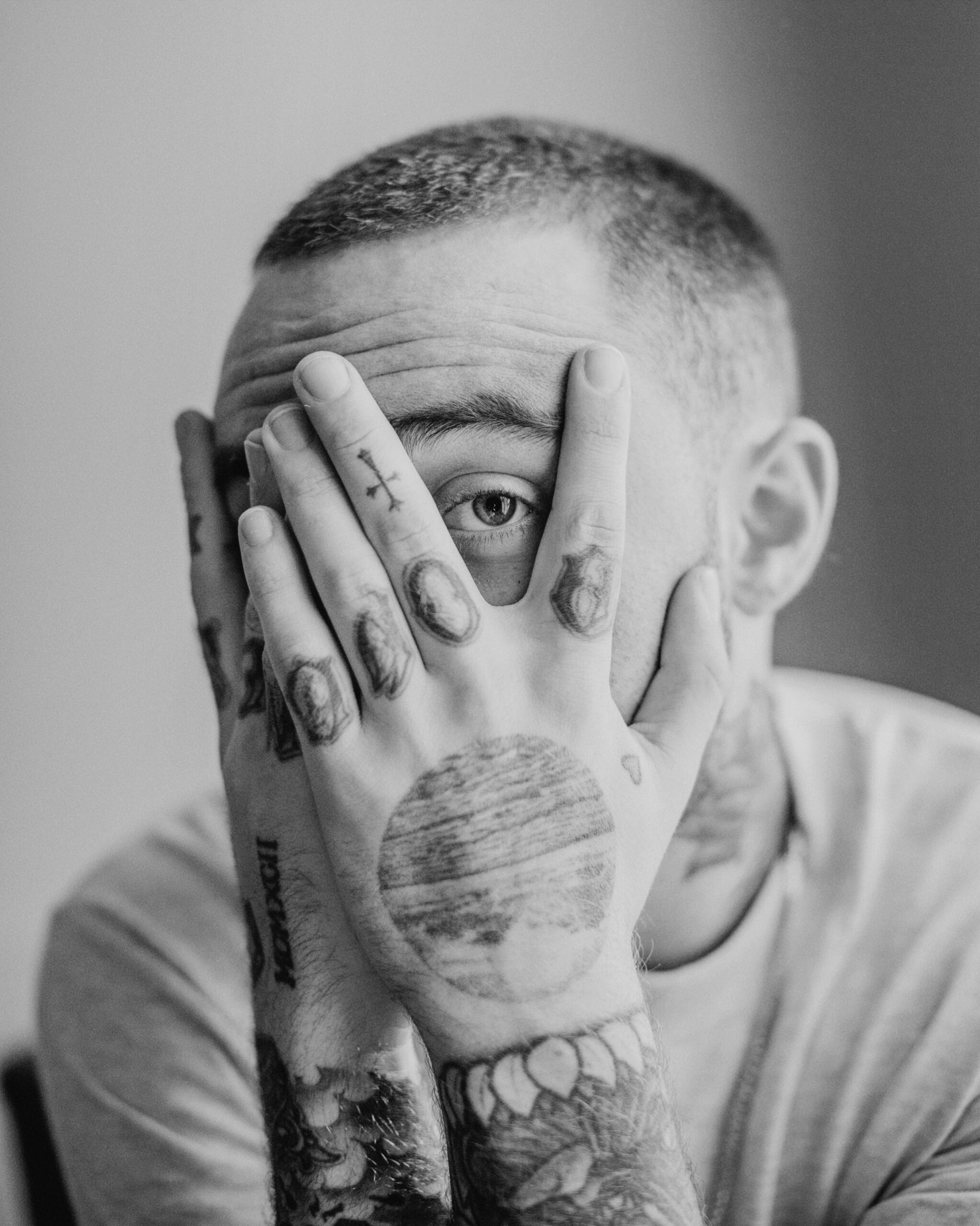
Mac’s hands are among the most visible parts of his collection. Small finger marks, lettering, and symbols show up when he holds a microphone or brings his hands near his face.
His hands were part of the performance photos and everyday images, so the tattoos moved with the gestures. They changed the look without needing one large image at the centre.
Finger skin has little room and sees regular friction. A short word or simple shape is easier to read at that size than a detailed picture. Placement across the fingers, side of the hand, or wrist changes how visible it is.
Mac Miller’s arm sleeves and floral tattoos

Mac’s arms hold the largest group of tattoos. Photos show layers across the upper arms and forearms, with some finer designs beside heavier outlines and blackwork.
Flowers add a softer shape among the other pieces. They can frame lettering or sit between larger designs, but the specific meaning depends on the person wearing them.
The sleeve appears to have grown over time rather than coming from one session. Some pieces share a palette or line weight; others differ. The styles don’t all need to match for the arm to feel personal.
Mac Miller’s neck and hand tattoos

Neck tattoos sit close to the face, so even a small mark changes the way a portrait looks. Mac’s neck ink appears alongside his hand and arm tattoos in photos, linking the visible areas without forming one uniform design.
Neck placement is hard to cover with ordinary clothes. The shape also changes as the head turns, so a stencil should be checked from more than one angle. A clear outline can remain readable without filling the whole area.
The hand and neck pieces appear together in some photos, but that doesn’t mean every tattoo has to share a theme. Scale and spacing can help separate designs while keeping them balanced in one frame.
Mac Miller’s MOST DOPE knuckle tattoos

“MOST DOPE” across Mac’s knuckles is one of his best-known tattoos. The phrase connects with the language around his music and public identity. In photos, the letters stand out when his hands are near his face or microphone.
Knuckles offer little room, so short words are easier to read than longer phrases. The spacing and letter style need to suit the size of the hand; thicker lettering can look more direct, while thinner script may need extra room.
The phrase doesn’t need a complicated explanation. It is a compact piece of lettering that fits Mac’s vocabulary. Words feel more natural as tattoos when they sound like the person wearing them.
Mac Miller’s forearm lettering and portrait ink
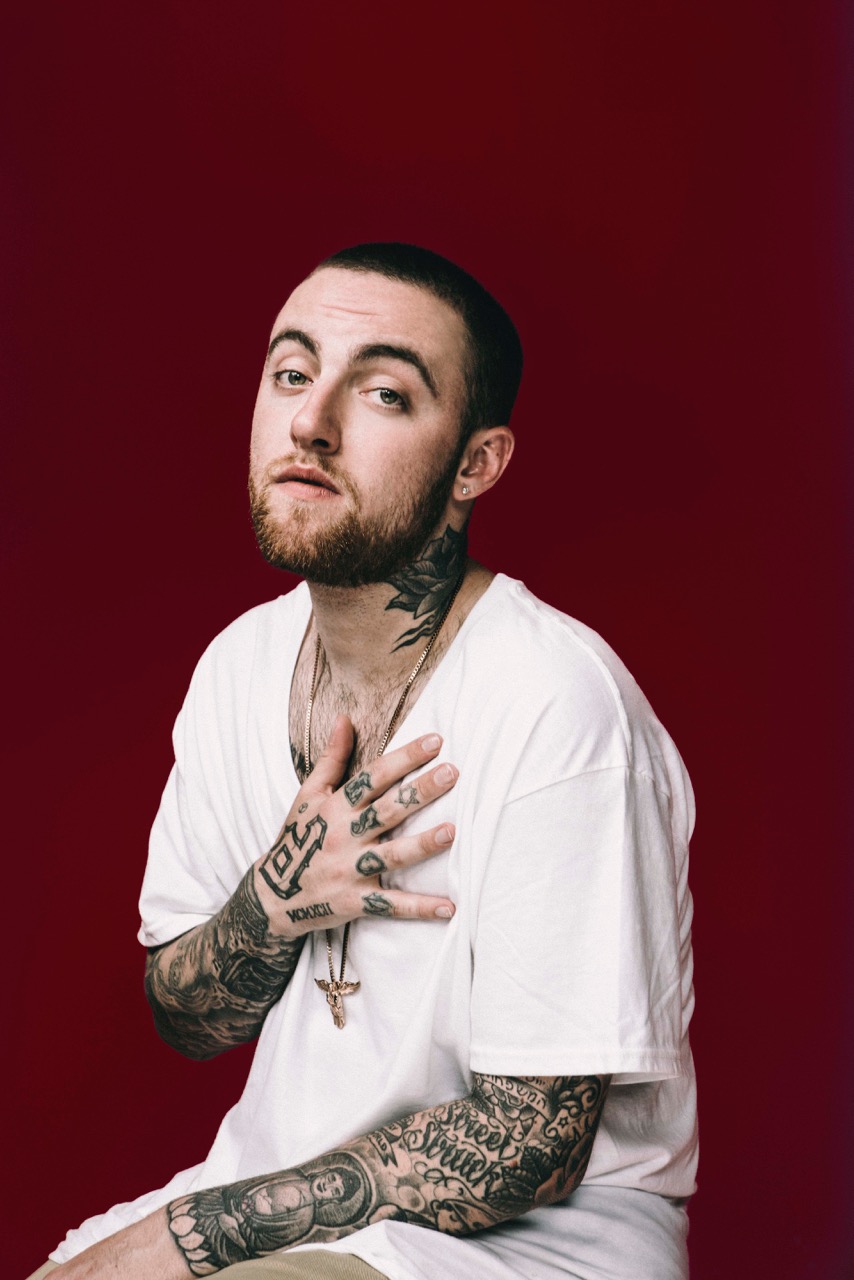
Photos show portraits and lettering together on Mac’s forearms. The portraits draw the eye; the words add smaller details around them. The pieces read as parts of a collection rather than one continuous image.
A portrait depends on a clear reference and an artist who can keep the expression recognizable. For a forearm piece, the inside and outside offer different levels of visibility: the inside is easier to see yourself, while the outer arm appears more in photos.
The forearm offers more room than the fingers for a phrase or a detailed image. One portrait or line of text can act as a focal point, with smaller designs added around it later. Leaving space can make each piece easier to see.
Making the idea yours
Mac’s collection includes visible hand lettering, layered arm work, portraits, and smaller symbols. Those are different ways to build a personal group of tattoos; the images themselves belong to his story.
Start with one design you expect to care about over time. For lettering, live with the phrase for a while. For a portrait, choose a clear reference. If you like the mixed-sleeve look, show the artist several examples and discuss how they could fit together.
Consider how visible the placement will be and how it will sit beside existing tattoos. Hands and neck are difficult to cover; arms offer more room and can be hidden by sleeves. Ask about size, healing, and how the design may change over time.
Mac’s tattoos appear to have been added at different points in his life. A collection can develop the same way: choose a first piece carefully, then give future designs a reason to be there.