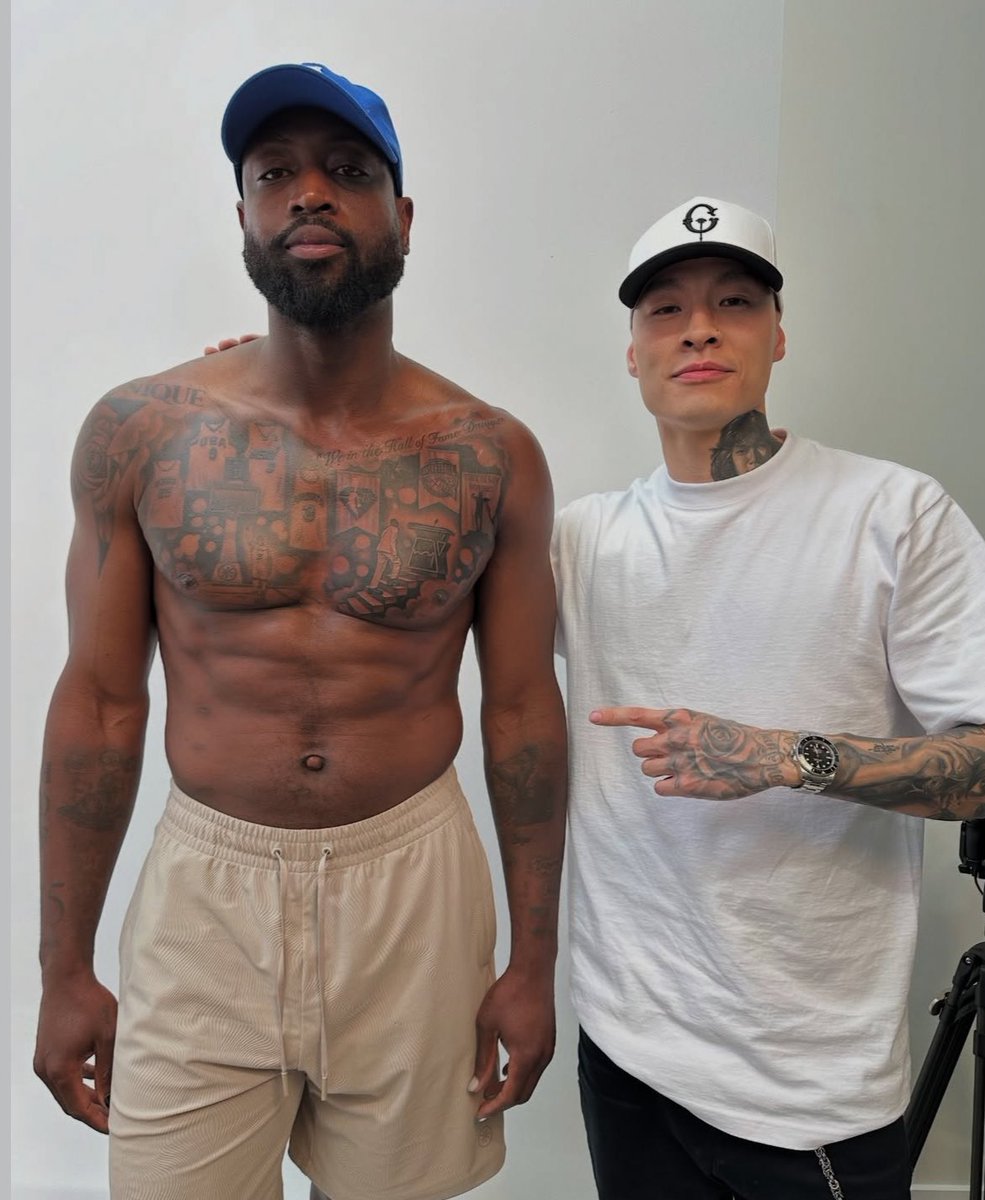
Dwyane Wade’s tattoos trace the people, teams and moments that shaped his basketball career. The newest chest piece brings much of that history together: jerseys, banners, a podium and the words “This Is My House” sit in a black-and-gray scene. It is a personal record of his career, built from details that belong to him.
The collection moves between large and small pieces. The chest mural takes up space, while shoulder and arm tattoos show in certain portraits or sleeveless clothes. That difference keeps the ink from reading as one uninterrupted design; each area has room to stand on its own.
This guide looks at the tattoos visible in the photos, where they sit and what the designs reference. The images below focus on the ink; the separate featured portrait shows Wade’s face.
Dwyane Wade’s career timeline chest tattoo
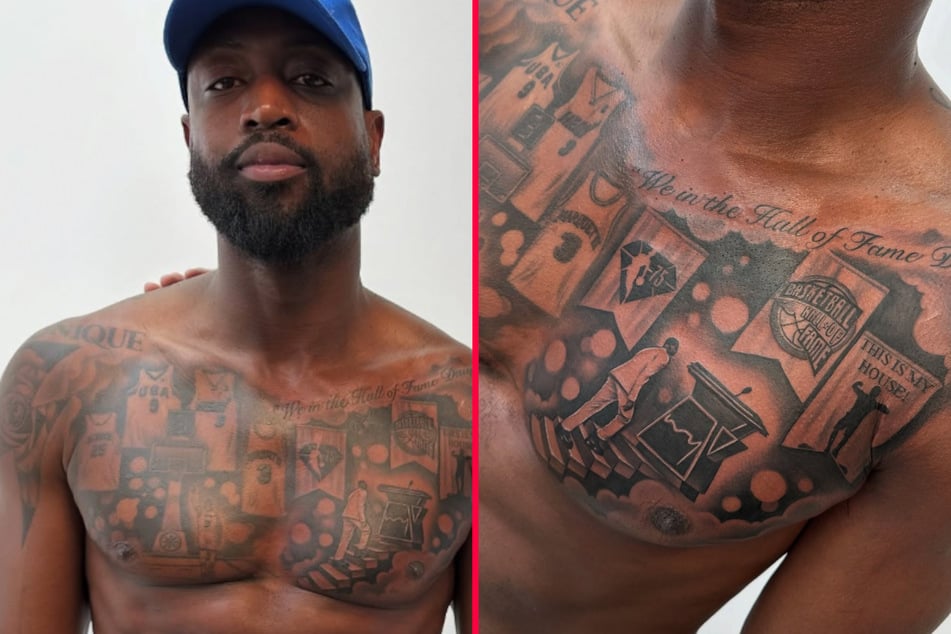
Wade’s chest tattoo turns his playing career into one connected scene. The black-and-gray work includes jerseys from Richards High School, Marquette, Team USA and the Miami Heat. Each one marks a different stage, so the arrangement reads more like a timeline than a row of logos.
A hoop, staircase, podium and championship details lead the eye across the piece. Together they suggest a player moving through stages of a career: from his early years to the NBA, success in Miami and the history that came with it.
The lettering carries its own references. “BASKETBALL HALL OF FAME” sits beside “THIS IS MY HOUSE,” a line associated with Wade’s confidence and connection with the Heat crowd. Another phrase recalls his Hall of Fame speech, giving the chest piece the feel of a caption in his own words.
Progression ties the chest tattoo together. The jerseys sit as milestones, with steps and banners linking one chapter to the next. Several symbols can tell one larger story when their relationship is clear.
Artist Clifford Chen, known online as Cliffink_art, made the design. It is dense, but the repeated black-and-gray treatment makes the different scenes feel connected. Open skin around some details helps the smaller references remain distinct.
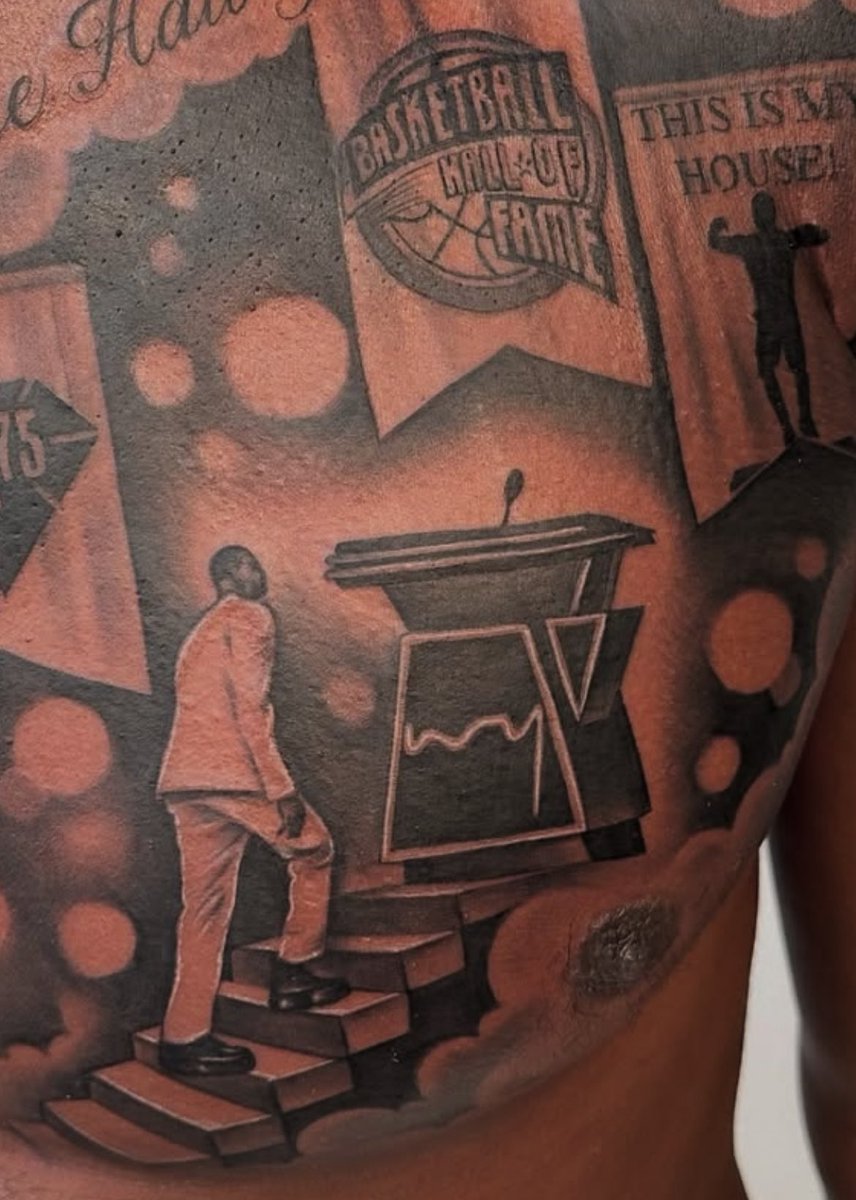
Dwyane Wade’s jerseys and Hall of Fame tattoo details
The smaller references reward a closer look. Jerseys from Wade’s school and college years point to the path before Miami; the Team USA section refers to his Olympic career, while the Heat jersey marks the years many fans know best.
Sports imagery makes the composition legible from a distance: basketballs, hoops and jerseys establish the subject, while the lettering draws the eye closer. Rather than relying on one large portrait, the design borrows from banners and career displays.
Wade is known for his style, but the chest piece is rooted in specific places and achievements. Its references are tied to his own career, so the idea would read differently on another player.
“This is my house” gives the design a short, unmistakable line. Beside the Hall of Fame wording, it adds Wade’s voice and points back to the Miami crowd that heard the phrase so often.
A career tattoo works best when its symbols belong together. Wade could have chosen one team number or championship mark; instead, the jerseys and other references form a record of his time in basketball.
The arm and shoulder tattoos that show in portraits
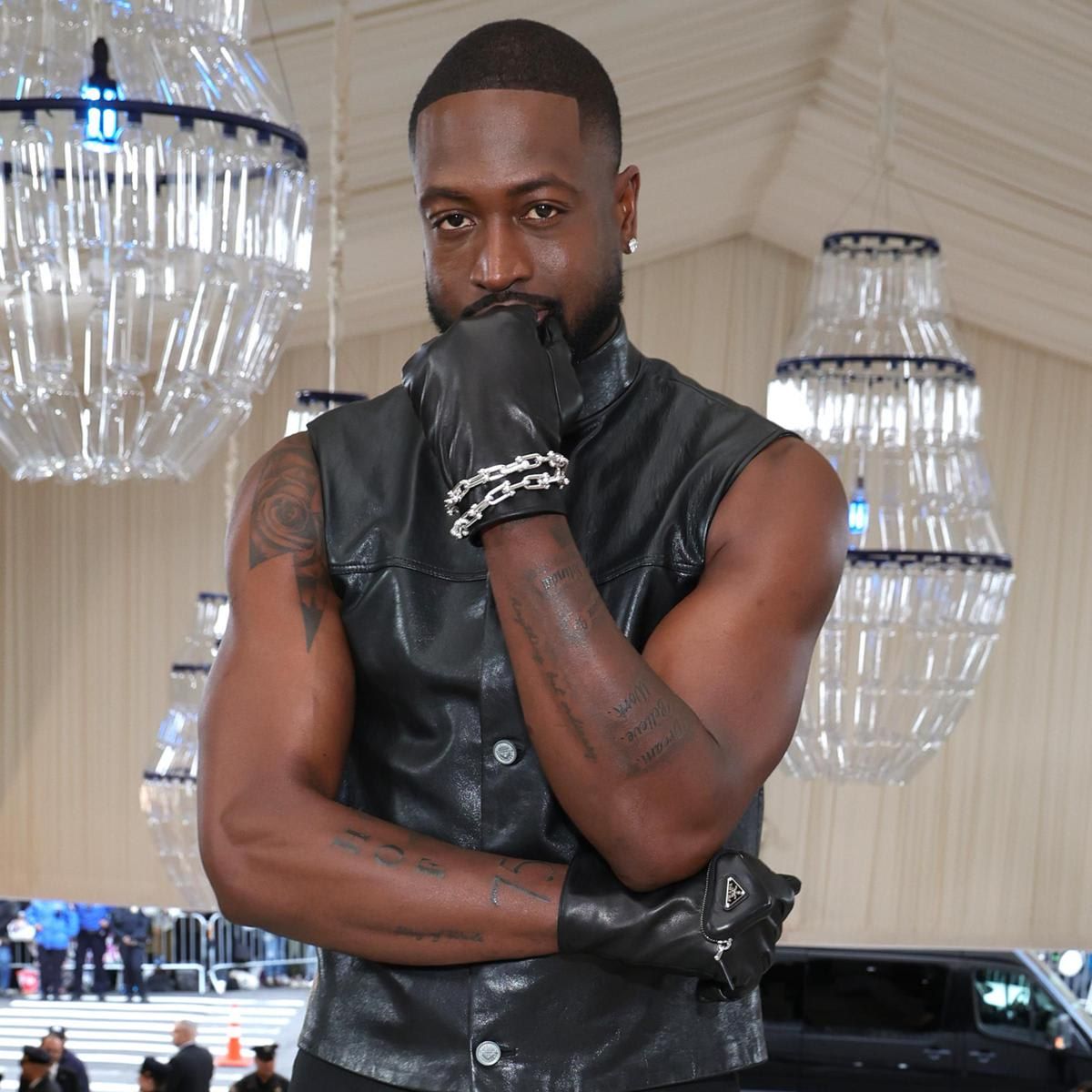
The chest mural gets the most attention, but Wade’s shoulder and upper-arm tattoos show up more often in everyday portraits. They sit closer to the face and move with the body, so their visibility changes with clothing and pose.
In an ESPN portrait, Wade is shirtless and turned in profile, leaving the shoulder tattoo clear against his skin. With little else competing in the frame, the image shows where the ink sits.
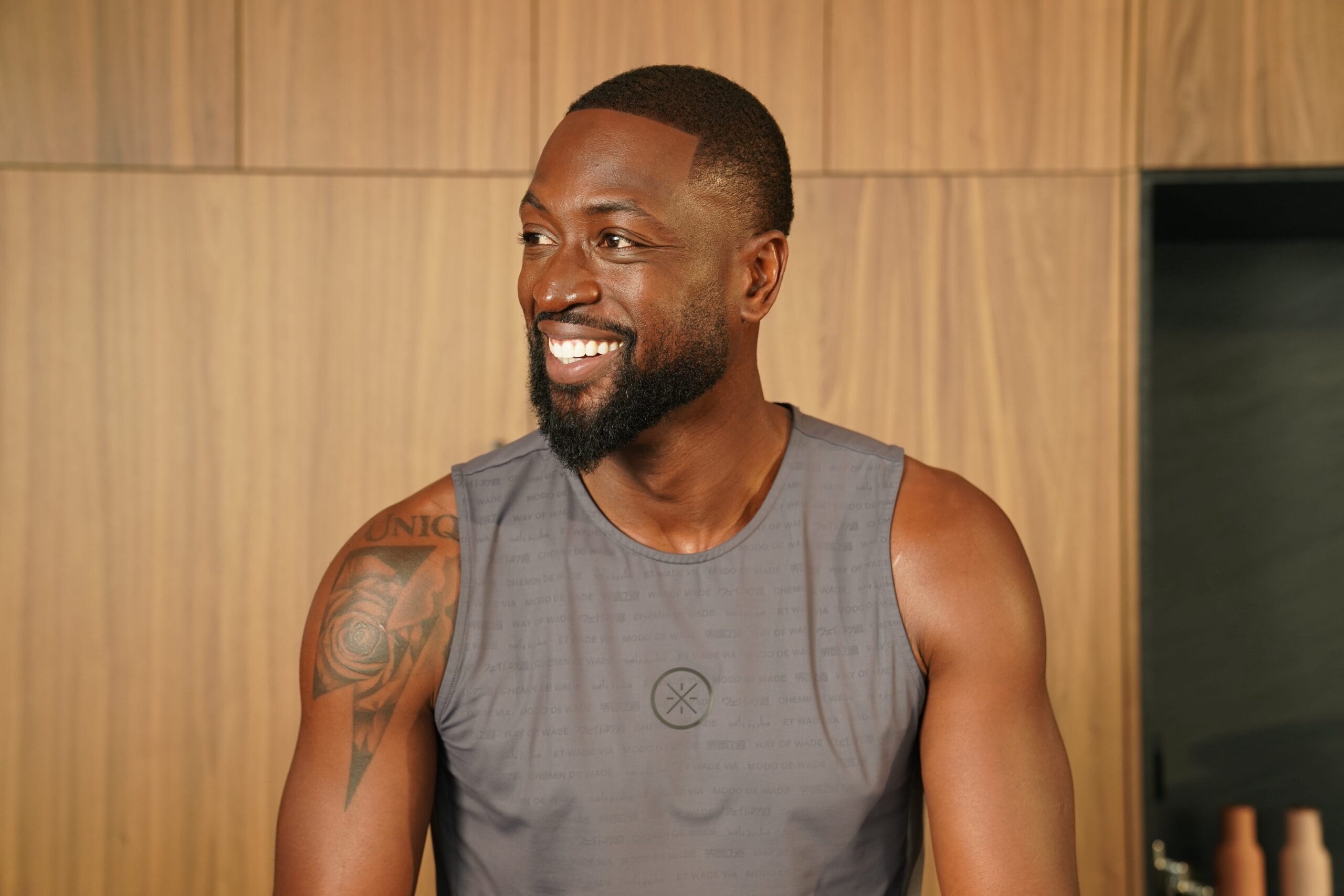
A Men’s Health portrait gives another view: Wade smiles in a gray tank top, with the shoulder and upper-arm work visible. The relaxed pose makes the tattoos look like part of his regular style.
Placement changes how a tattoo appears. A T-shirt covers much of the shoulder; a tank top or open jacket brings it forward. The upper arm also leaves room for detail without making the ink visible in every outfit.
The shoulder pieces sit alongside the larger chest story without competing with it. They add detail to the collection and can be covered easily. A shoulder design is one option for someone who wants visible ink in some settings and a simpler outline under a T-shirt.
The black-and-gray look across his tattoo collection
Wade’s recent tattoo photos rely on black-and-gray shading, clear outlines and lettering that can be read from a distance. The limited palette gives the chest scene a documentary feel.
A single palette helps the many subjects hold together. Jerseys, stairs, a podium, a basketball and text might compete if each had a separate colour scheme. Shading links the sections, while lighter skin breaks keep the work from becoming one dark mass.
In close-up, texture does much of the work. Lines around the lettering give it a worn banner quality, and shading makes the basketball look rounded. The smaller figures and podium details stay visible because the contrast separates them from the background.
The monochrome look suits the sports references, from school jerseys to an Olympic medal. Some details resemble archival illustrations or images from a team history display.
The subjects change, but the visual treatment stays consistent. When planning several tattoos, a shared line weight, shading approach or palette can help separate pieces sit comfortably together.
How the new chest tattoo fits Wade’s personal style
The chest piece is large, but its mood comes from memory and gratitude. It refers to the schools, teams and moments behind Wade’s career. Even “This Is My House” points to the place where he became closely associated with the game.
The sports imagery is easy to recognise, but the piece reads as more than a fan tribute. Wade is marking a career while choosing how its history appears on his body. The jersey and banner references are specific to his route through the sport.
A person climbing steps toward a podium gives the scene a sense of effort as well as arrival. The tattoo includes more than trophies: it also points to the work that led to Wade’s Hall of Fame moment.
Scale should match the story a tattoo needs to carry. A full chest scene can hold a broad life chapter; a smaller design may suit a private memory. Wade’s collection uses both sizes.
Wade’s ink reads as a record of his life rather than a costume. In the photos, the designs feel personal because the references belong to his career and the places he played.
For a career tattoo, begin with the story you want to keep. Wade’s jerseys, stairs, banners and podium all point back to basketball and his path through it. That gives an artist a clear set of ideas to shape into one composition.
The body can guide the layout. Wade’s chest gives a broad area for a scene that crosses both sides, while the shoulder and arm pieces follow smaller contours and show as he moves.
A controlled palette can also help varied subjects sit together. Black-and-gray shading handles text, symbols and architecture without adding several competing colours, which is useful when a collection grows over time.
A tattoo guide should focus on the ink itself. Wade’s face provides context, but the close chest details and shoulder portraits are the references that show the designs clearly enough to study.
If you want more examples, browse our athlete tattoo guides for other sports figures and the symbols they chose. Use the ideas that fit your own life and leave the rest.
Wade’s chest tattoo looks back at a completed career, but it also shows how he wants that history remembered. Jerseys, lettering, steps and a podium turn the collection into a personal account of his time in basketball.