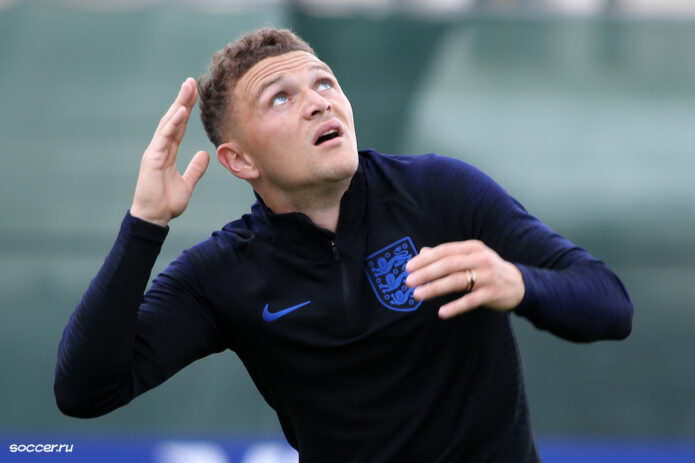
Kieran Trippier’s tattoos are easy to spot during a match, but a single action photo rarely shows the whole collection. His arms carry flowers, clouds, lettering, portraits and geometric filler; a diamond with wings and roses spreads across his chest. The different pieces look as though they were added over time, rather than planned as one matching sleeve.
Each photo gives a different view. A shirt can cover the chest, a crossed-arm pose hides part of the inner forearm, and stadium lights flatten color. The notes below stick to what is visible and keep reported meanings separate from guesses. A portrait can show a face or a word; it cannot supply a private reason by itself.
For another example of large, high-contrast work, see our Davey Havok tattoos guide. The subjects are different, but placement and a clear photo matter in both cases.
The chest diamond gives the sleeves a strong centre
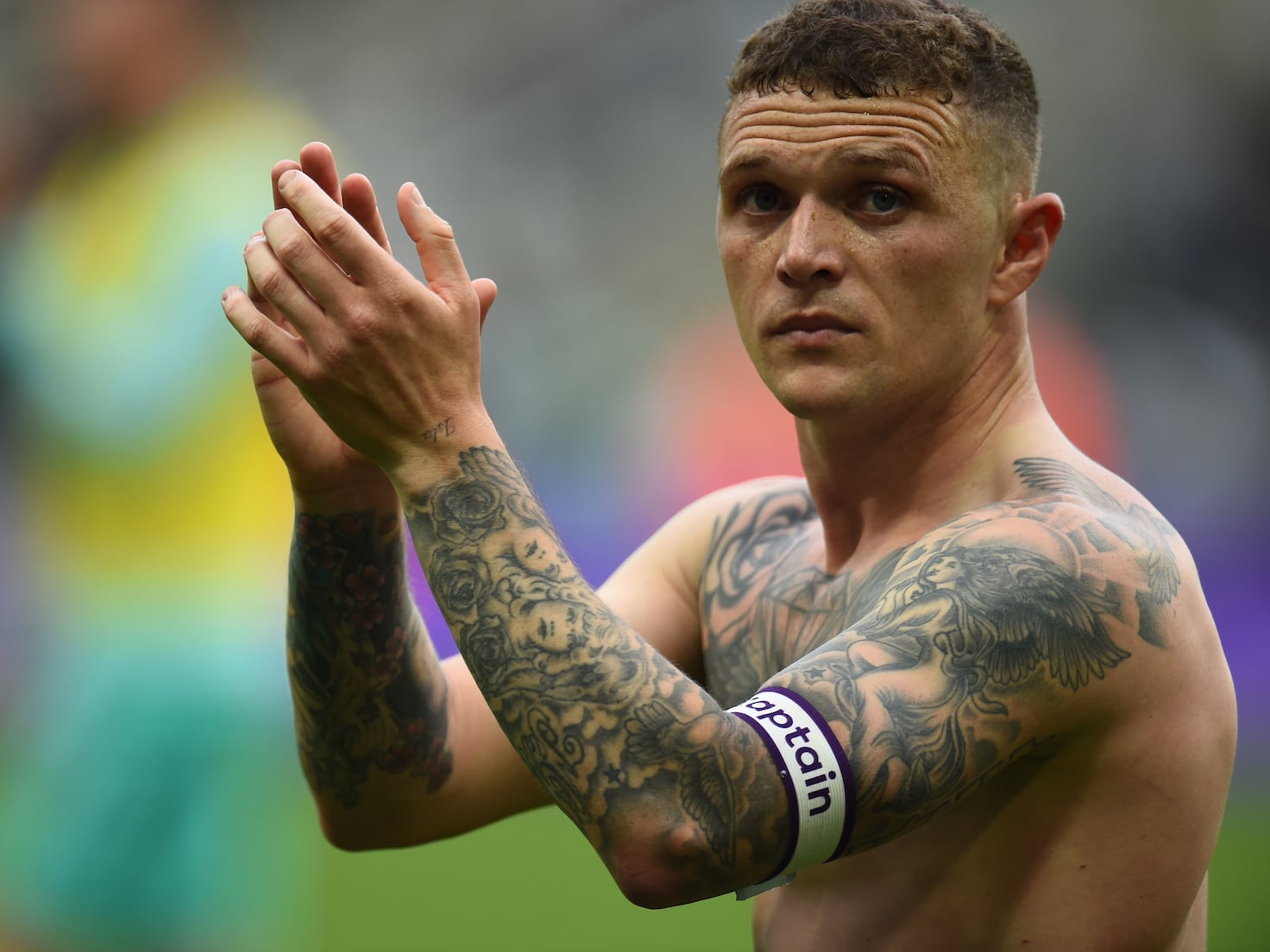
The chest piece is the largest single design. A diamond sits in the center, with wings stretching across the upper body and roses around the main shape. In a shirtless photo, it gives the surrounding arm tattoos a place for the eye to land.
Body Art Guru connects the diamond and wings to Trippier’s relationship with his wife, Charlotte. The roses soften the bold outline. In the photo, the wings and diamond make a strong shape, while the flowers break up the symmetry with curved lines and color.
Posture changes how it looks. In an applauding photo with his shoulders turned, one wing can appear larger. A straight-on view makes the central diamond easier to place; a side angle shows how the design crosses the pectoral muscles. Those differences matter when using a photograph as a reference.
The crossed-arm view shows how the sleeves are layered
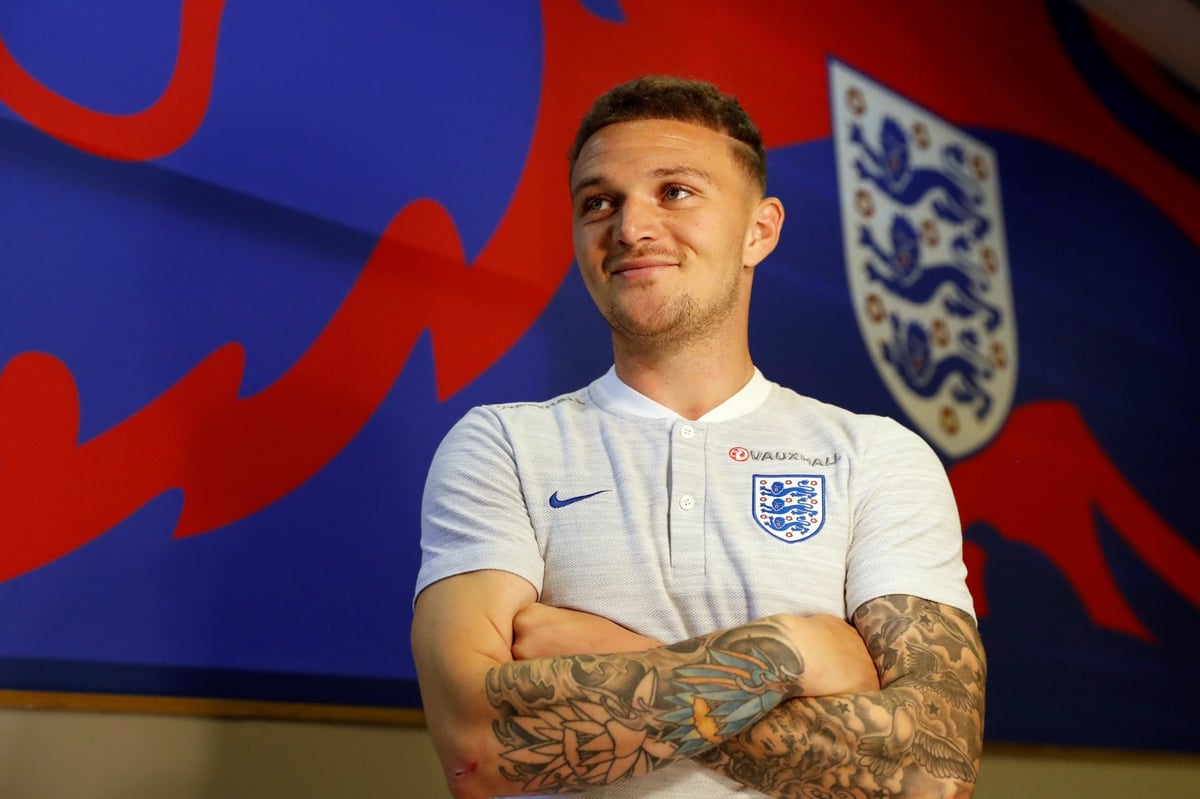
His arms are not two plain black sleeves. Separate illustrations sit among filler, and the crossed-arm photo shows more of the layering than a distant match shot. Flowers, leaves, water imagery and darker shading sit beside larger portrait-like pieces. Some designs have open skin around them; others run close enough to read as nearly continuous from a distance.
The right forearm is reported to have two flowers, one colored and one closer to an outline, with water imagery nearby. The color makes the petals stand out against the darker linework. When his arm bends, the flowers are easier to pick out.
The other arm includes clouds, birds and an angel figure. The subjects differ, but soft shading helps the pieces sit together. A sleeve can combine different images when the texture behind them gives the arm a shared feel.
The raised arm makes the colour and geometry easier to read
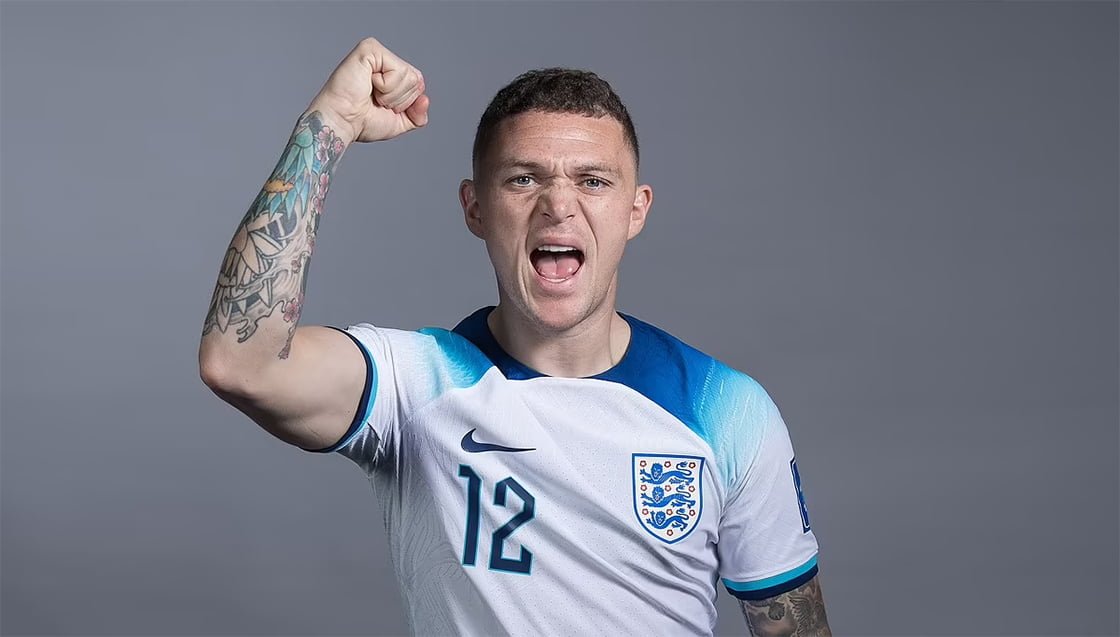
With the arm raised, you can follow the design from the wrist toward the elbow. Color near the lower arm, dark outlines in the middle and geometric sections keep the sleeve from blending into one grey shape.
One guide describes an angel beneath a sun on Trippier’s left upper arm, surrounded by clouds, stars and birds, with a clarinet included in the image. That makes the tattoo more specific than a simple angel outline: the sky and music details turn it into a small scene.
Doves and puzzle pieces are also reported on the same arm. The puzzle pieces sit on the back of the upper arm, with clouds filling the gaps. They are easier to make out in a close photo than a wide one. The contrast between hard edges and softer background helps explain why the sleeve feels dense without repeating a single pattern.
Roses, birds, clouds, portraits and lettering all appear in the collection. If you are gathering references, it is more useful to choose one part—the color, framing or placement—than to ask an artist to reproduce an entire arm.
The training portrait separates the two arm stories
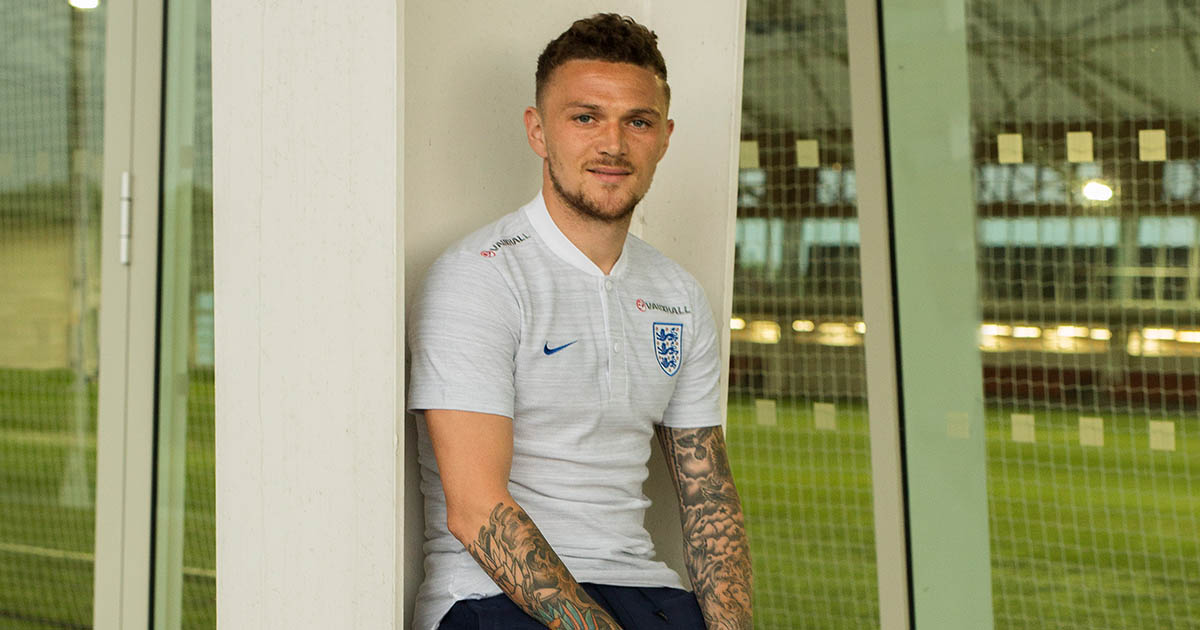
This seated training portrait shows both forearms at once. One side has heavier shading and portrait-style work; the other carries flowers and brighter sections. Seen together, the arms feel personal rather than like a pair of sleeves taken from a catalogue.
The guide also identifies a portrait of Charlotte on the inner right forearm, with bright eyes and small red flowers around her face. Another section is associated with Trippier’s children, with roses and a small heart. Close photos give a better chance of distinguishing a face from nearby flowers and clouds than match shots do.
Words add another kind of detail. Trippier has lettering for his parents on the left bicep, with “Mother” below the elbow. A portrait asks the viewer to study its features; a word invites them to read. The two types of work can sit together because they draw attention in different ways.
The sleeves also read like a timeline, with family, faith and style appearing in different places. The photos do not establish the order of every session, so it is best to describe the designs and keep personal explanations tied to the sources that reported them.
The match photograph shows how the ink reads in motion

In a match photo, the tattoos move with Trippier. His arm bends, the shirt pulls at the shoulder and the crowd fills the background. The darker forearm work remains easy to notice; a closer look brings out flowers, faces and smaller marks.
A posed portrait is better for a small word or the edge of a face. An action photo shows how the sleeve moves with the body. Both are useful because the tattoo has to look right with the arm relaxed and while it is working.
Body Art Guru describes a prayer design on the inner left forearm: joined hands, a beaded necklace, a cross, clouds and stars. The cross sits behind the hands, and the clouds connect it to other sky imagery in the sleeve. A low-resolution crop can make the scene look crowded; a closer photo gives its parts room to show.
The chest and arms work as a group without repeating the same image. The diamond and wings give the torso a center. The sleeves gather family portraits, words, flowers, birds and religious designs. Color appears in selected areas while darker sections keep the collection readable.
Our Jason Statham tattoos guide offers a much more minimal comparison. Trippier’s collection is layered and full of separate scenes. A useful brief can focus on one placement or subject rather than copying the whole arm.
Detailed sleeves need room for skin to breathe, and the design has to bend around the elbow, wrist and shoulder. A flower can stay open on the forearm while cloud or geometric filler handles the tighter space near a joint.
Start with the part that actually catches your eye—the flower, chest diamond, family lettering or angel scene. Bring a few reference photos and explain what you want to borrow. Trippier’s tattoos look connected because they follow the shape of his arms and chest, not because every design is the same.
Study the structure before the celebrity. Notice the main design’s size, how much skin stays open, how filler links separate images and how much contrast you like. A small flower or short word can carry a personal meaning without requiring a full sleeve.
These photos show the tattoos at particular moments; later images may show additions or changes. For another reference, compare this collection with our Ville Valo tattoos guide. Trippier’s designs are visible across photos, but a good artist still needs to adapt any idea to your body and movement.
The interview below offers another look at Trippier. Afterward, the photos can help you decide which placement or detail you want to discuss with an artist.