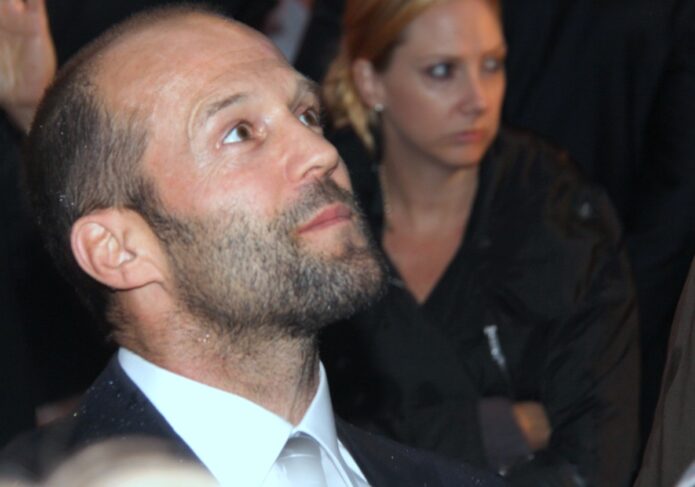
Photos of Jason Statham in Death Race often show him covered in dark prison-style tattoos. The ink belongs to Jensen Ames, the character he plays in the 2008 film, and was applied as makeup for the role. A convincing transfer can look permanent in a close still, especially when it follows the actor’s shoulders and catches the same light as the costume.
The designs are still worth looking at as screen tattoo references. They run across Ames’s back, neck and arms, fitting the mask, jumpsuit and industrial setting. But the film images are not evidence that Statham kept the same tattoos afterward. For more stories about actors’ ink, see the actor tattoo archive.
The distinction matters because the most familiar “Jason Statham tattoos” are production makeup, not a confirmed personal collection. The behind-the-scenes images show how the designs were applied and help separate the actor’s real skin from his character’s look.
The Death Race prison tattoos are the designs most people remember
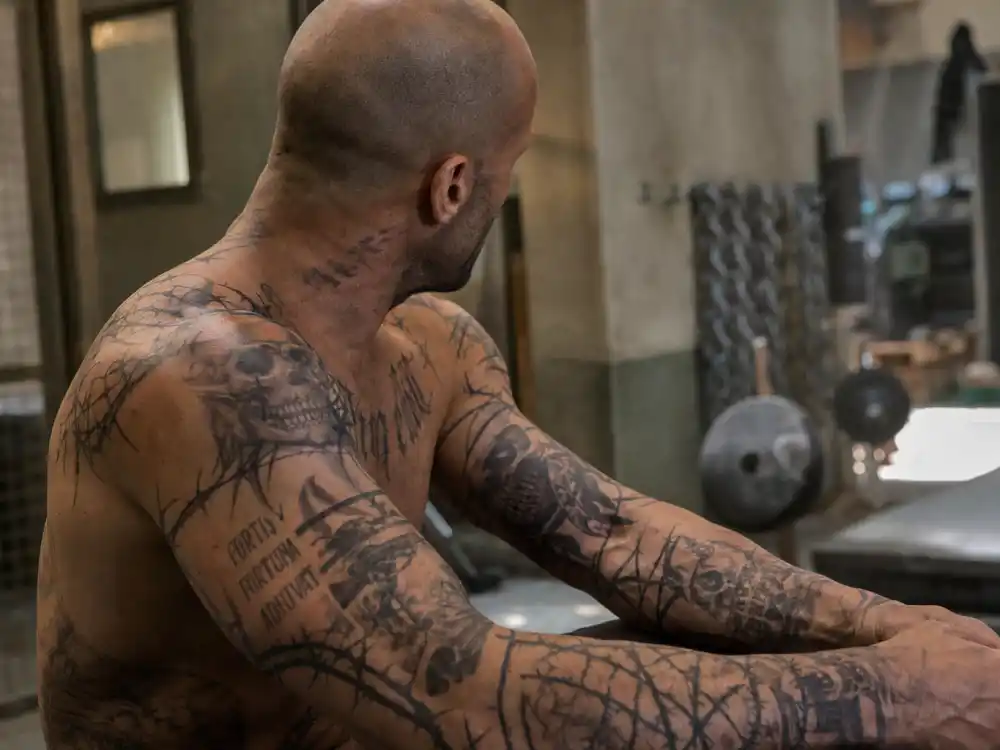
The dark tribal-style makeup in Death Race is the look most often mistaken for Statham’s own body art. In this still, broad shapes cover the shoulders and upper arms, with more marks around the neck and chest. The pattern is rough and heavy, giving Jensen Ames a prison history before the film explains much about him.
The large shapes stay visible through the driving and fight scenes. The character moves quickly and is often shown under hard light, so the tattoo design relies on bold lines and dark areas rather than delicate details. In a still, those shapes hold their place against the metal, dust and movement around him.
These should be described as tattoo makeup made for the film. The designs are real in the sense that the production applied them to Statham for the scenes, but they are not confirmed permanent tattoos on the actor. They belong to Jensen Ames.
The Frankenstein mask scene shows how the ink worked with the character
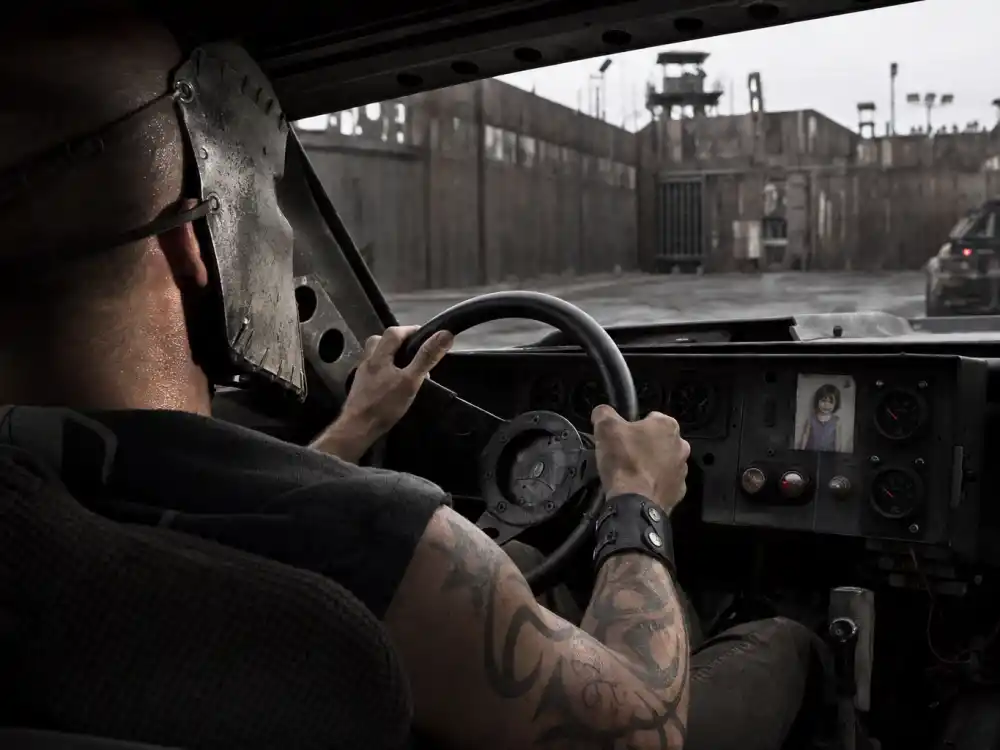
In the Frankenstein mask scene, Statham’s forearms are visible on the steering wheel. The ink continues the crowded, hard-edged look across his shoulders. With much of his face hidden, the arms and neck carry more of the character’s story, making the driver look as if he has already lived through a violent world.
The placement works in motion as well as in a still. The forearm designs stay visible while he drives, and their dark lines survive the quick cuts. Rather than a neat sleeve with open spaces between pieces, the coverage suggests prison-style marks crowded across the skin.
A viewer who sees only this scene could easily assume the tattoos are permanent. The skin, sweat, shadows and costume all help sell that effect. The realism shows that the makeup worked; it does not prove Statham got a tattoo.
The makeup department built the back design in layers
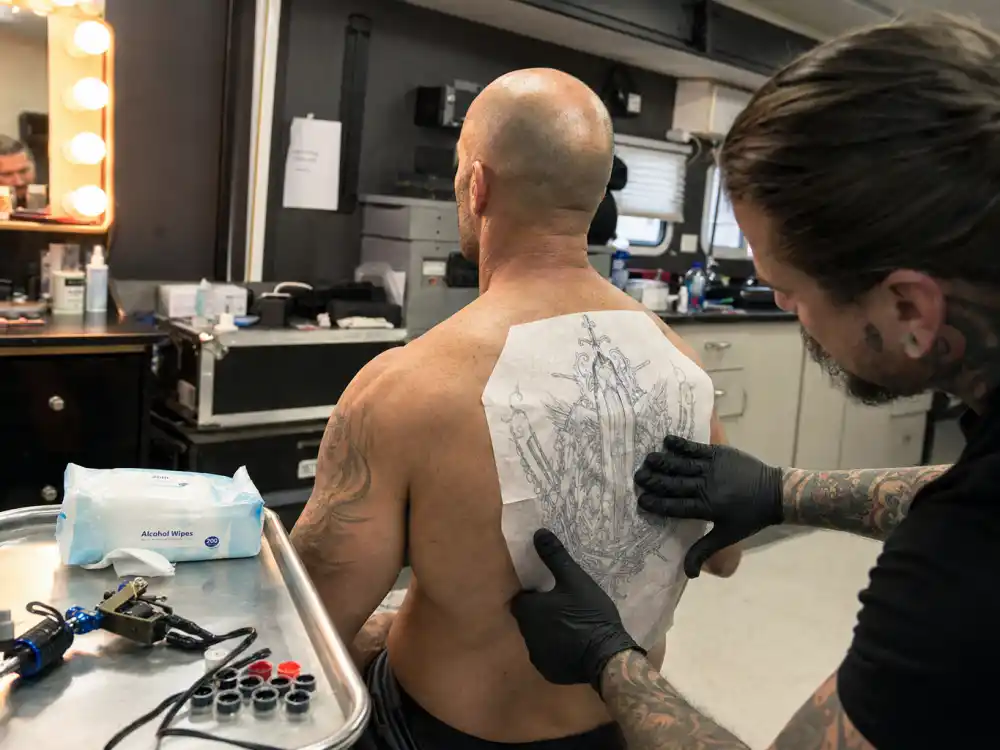
The behind-the-scenes photo shows a makeup artist positioning a large transfer across Statham’s back. The outline is held against the skin before the design is blended and finished. It captures the process that the film itself hides: the tattoo image was applied for the character.
A back design has to sit across the shoulder blades and still move with the actor. It also needs to line up with openings in the costume. A small shift can make the pattern look crooked when he bends or turns, so a transfer like this takes more care than the finished scene might suggest.
The close and wide views show different things. A close shot brings out the texture and dark lines; a wider view shows how the back piece connects to the shoulders and arms. Both help explain the makeup, but neither makes it permanent. The department created a consistent look for the character, not an addition to Statham’s real tattoos.
The film-versus-real comparison settles the permanent tattoo question
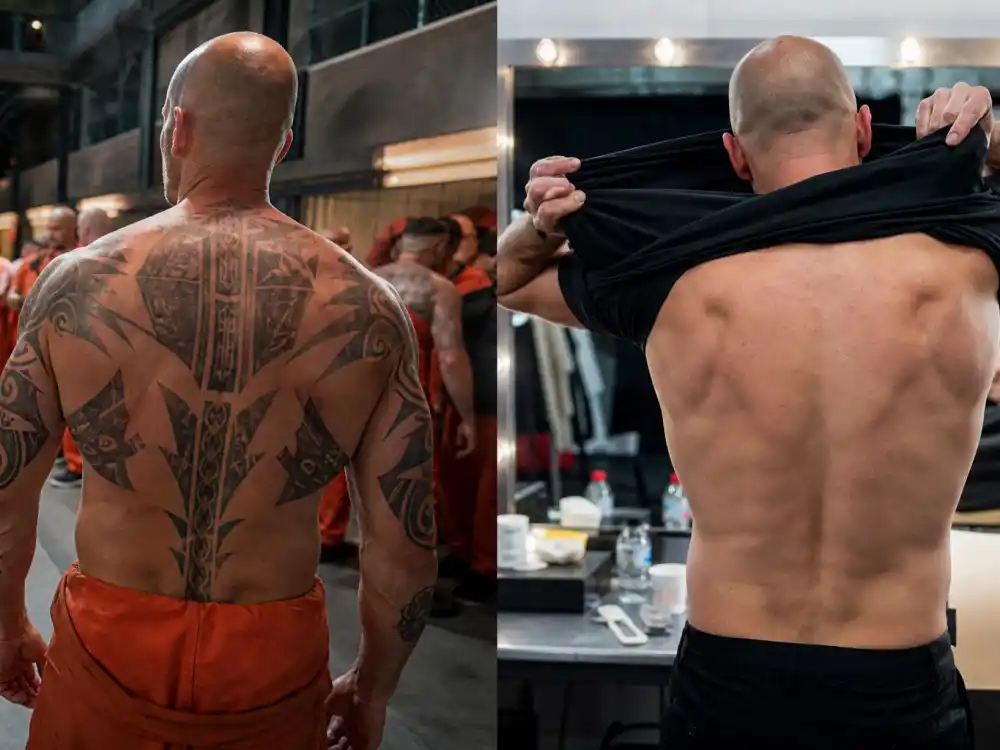
The side-by-side image gives the clearest answer. One panel shows Statham with the large makeup design across his back; the other shows the same area without it. The center shape, barbed lines and broad dark sections disappear when the production ink is gone.
That comparison is more useful than a repeated claim that he has a hidden sleeve. It shows the same area in two conditions and keeps the discussion tied to photographs. His tattooed screen appearances are associated with roles that call for a specific look; the Death Race designs are the best-known example.
The film stills are genuine production photos. What they show is temporary character ink. A real photograph of a tattoo does not establish that it is permanent. That distinction is easy to lose when convincing costume makeup is copied into celebrity galleries without the scene’s context.
The wide back view explains why the designs looked permanent on screen
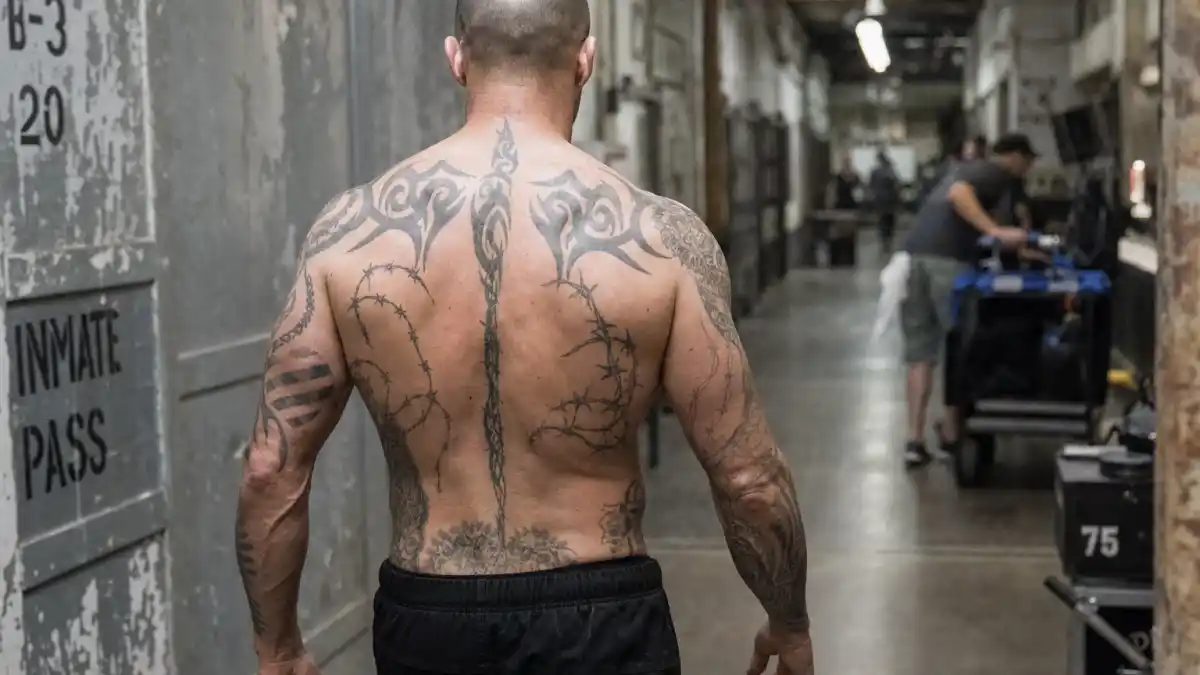
The wide view brings the pattern together. A central tribal shape runs down the back, with sweeping lines reaching toward the shoulders and arms. The bare skin and hard lighting give the design room to fill the frame, which is why the image is so often used in searches for Statham’s tattoos. It resembles a finished back piece, even though it was made for the role.
The design fits the world of Jensen Ames. Death Race surrounds him with metal, concrete, cages and machinery; the heavy lines and sharp geometry echo that setting. The pattern was made for the character rather than placed randomly on the actor.
There are useful design ideas here without copying the film pattern: the center line, the spread across the shoulders and the way the arm shapes keep the composition readable when the body moves. A tattoo artist can use those broad principles to create original work suited to someone’s own body.
Statham’s action roles make the mix-up understandable. He often appears in scenes where bare arms or a back are part of the character’s look, and the ink fits the hard-edged image. Still, the clearest evidence comes from the application and comparison photos: the most recognizable designs were makeup for Jensen Ames.
The clean-skin view is part of the story too. It separates the actor from the character and shows why a gallery of similar film stills can give the wrong impression. Film makeup, body paint, digital effects and transfers can all look convincing; context helps identify what is actually on screen.
If you are looking to the Death Race tattoos for inspiration, study their scale and placement rather than copying the character’s exact design. The central back shape, shoulder spread and arm coverage were built to move with the actor. Original work can draw on those choices without turning a film transfer into someone else’s personal tattoo.
The short answer: the tattoos most often associated with Jason Statham are the prison-style designs he wore as Jensen Ames in Death Race. They are memorable because of their placement and production work, but they should be labeled as role makeup—not permanent ink on the actor.
Watch the production reference, then compare the film design with Statham’s skin:
One thought on “Jason Statham Tattoos: Real Ink, Film Makeup and the Death Race Designs”