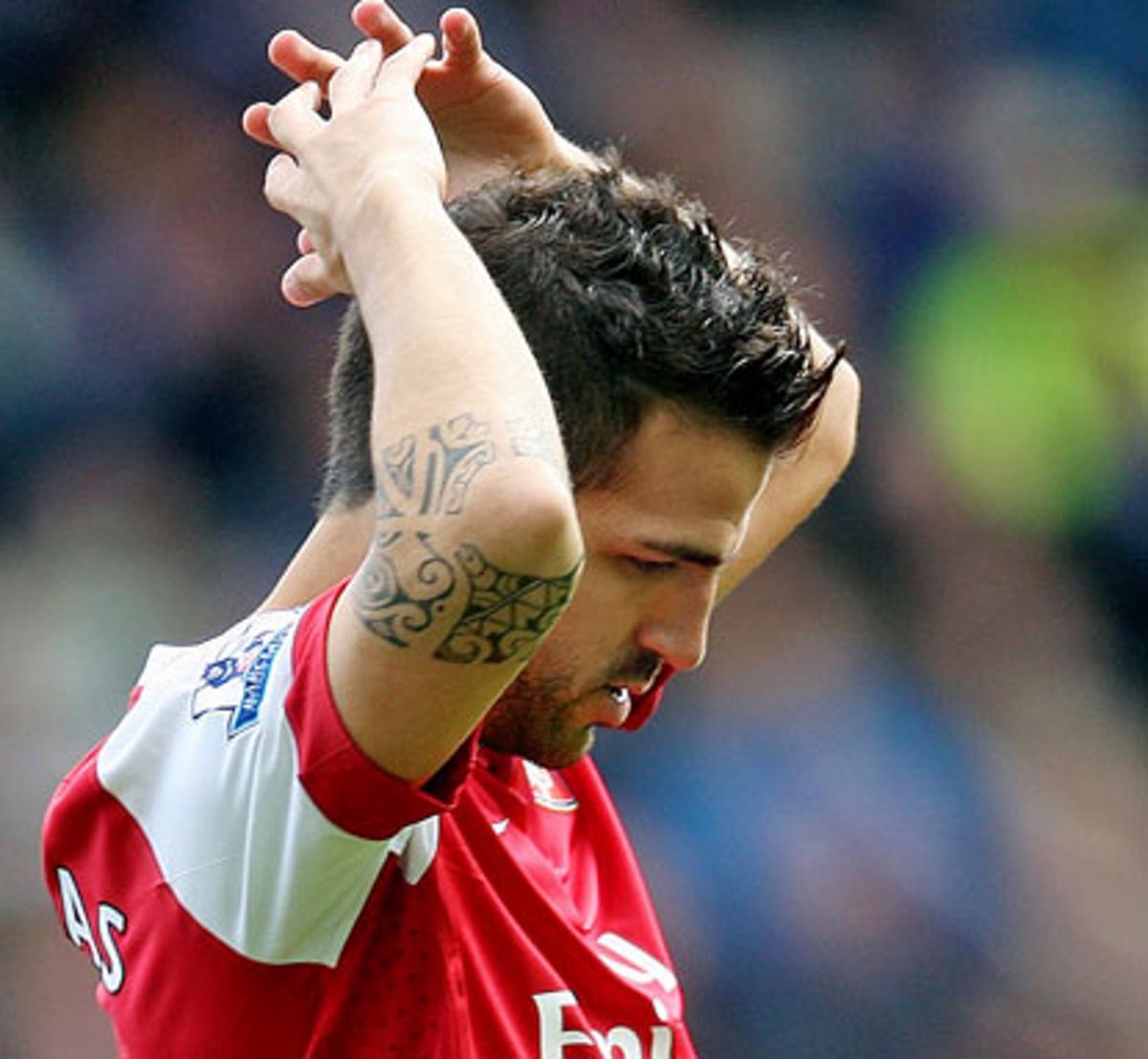
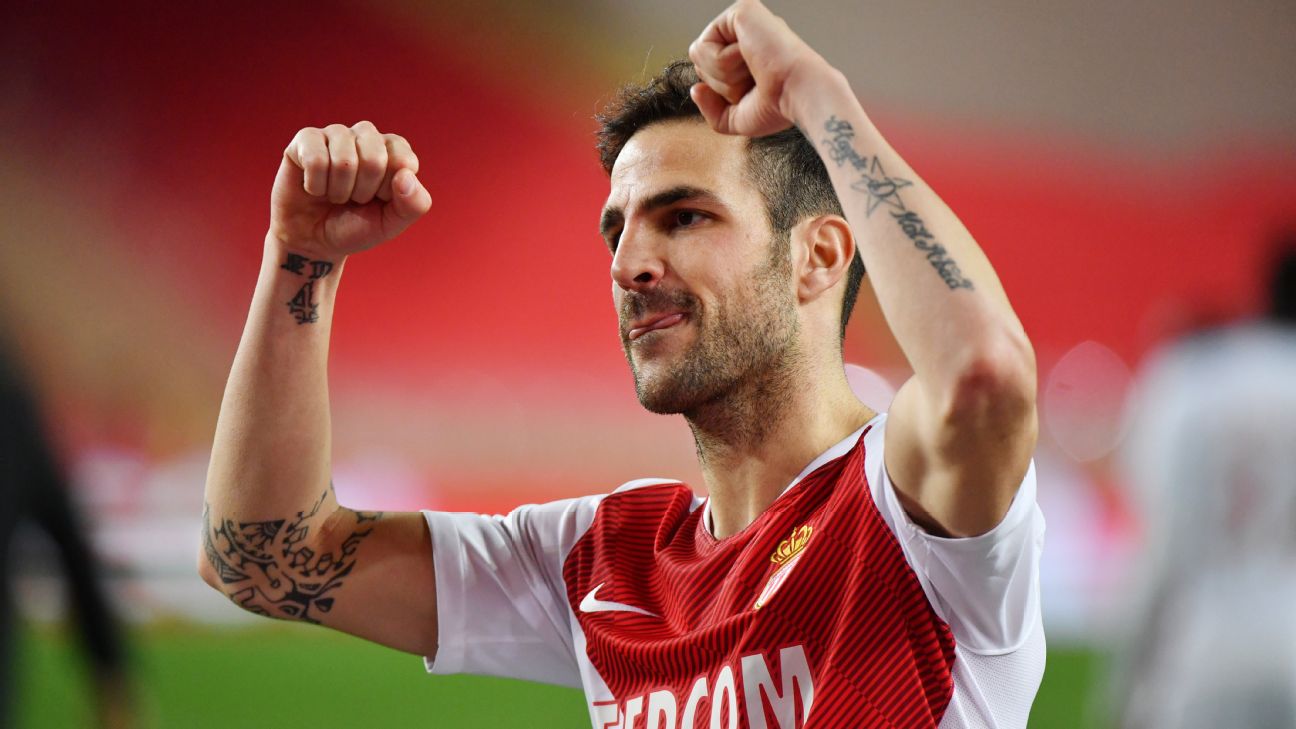
Cesc Fabregas’ tattoos can be hard to see until he rolls up his sleeves. The former Arsenal, Barcelona and Chelsea midfielder, who also played for Spain, has black pattern work, small lettering and personal symbols across his arms. In match photos, the ink is often visible when he raises his arms to celebrate.
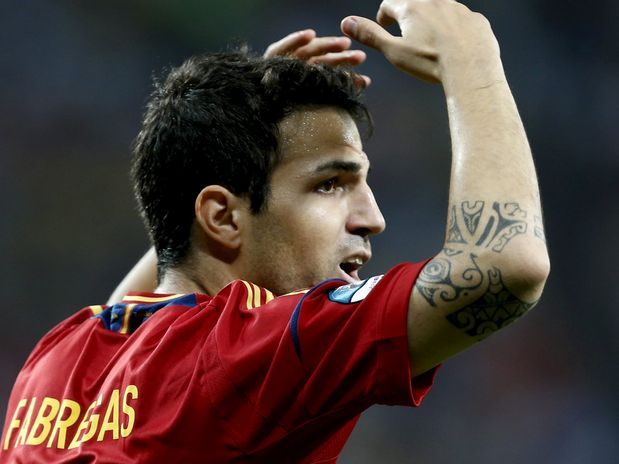
The large design around his right elbow draws the eye first. Curved shapes and dark blocks wrap around the joint. On the other arm, a long line of script is usually identified as Arabic, with smaller marks and initials nearby. Photos show the placement, but they do not explain the story behind every symbol.
What tattoos does Cesc Fabregas have?
Fabregas has visible tattoos on both arms. The largest is a dense black design around his right elbow and upper forearm. He also has small lettering on his wrists and forearms, initials near the elbow, and a long script tattoo along the other forearm.
People often call the large piece Maori, but a photograph cannot confirm its cultural origin or the meaning of each pattern. Published descriptions call it Polynesian-inspired or Maori-inspired; a Spanish football tattoo roundup identifies the initials near his right elbow as CF. “Tribal-inspired elbow tattoo” is the clearest general description without claiming more than the images show.
The five tattoo photos in this guide show different views of the same pieces. They are not five separate tattoos. The angles help make out the elbow pattern, lettering and smaller details.
The large tribal-inspired elbow piece
The design around Fabregas’ right elbow is the one most people recognise. From the side, the black shapes can look like a shield or mask. Curves and pointed sections give the pattern movement, while the filled areas make it easy to see against his skin.
The elbow’s rounded shape changes how the tattoo looks. In one photo, the design appears compact and almost circular; from another angle, it stretches down the forearm like an armband. The pattern bends with the joint, so no single view shows the whole piece.
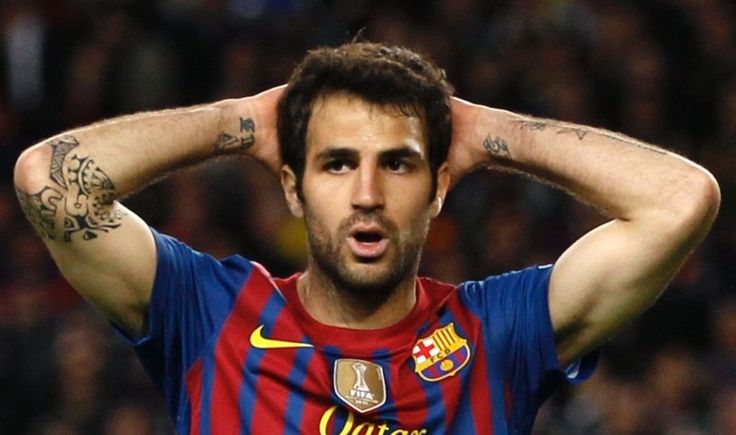
The elbow piece often appears in match photos when Fabregas puts his hands behind his head, raises his arms after a goal or reacts to a missed chance. Its placement makes it easy to see during a game, unlike a tattoo usually covered by a shirt.
Initials and smaller symbols
The letters “CF” have been identified near Fabregas’ right elbow, matching his initials. Other photos show smaller marks near his wrists and inner forearms. Their meanings are not consistently explained, so there is no firm basis for assigning a story to each one.
The arm looks like it was filled in over time, with the larger elbow design as its main anchor. The smaller pieces sit around it without turning the whole arm into one connected sleeve.

The Arabic lettering on his forearm
A long line of script runs along Fabregas’ left forearm. A Spanish roundup of tattoos worn by Spain internationals gives the phrase as “Hayete Hal Abad” and translates it as “life is eternal.” It is a reported reading, not an official translation: short Arabic phrases can be transliterated in different ways, and a moving match photo is not easy to read.
The script looks quite different from the dense black elbow pattern. Its lines follow the length of the forearm, leaving more open space. The two arms therefore read differently in photos: one is dominated by a dark graphic pattern, the other by lettering.
Anyone considering script like this should check the wording with a native speaker and an experienced tattoo artist. A low-resolution football photo is not a reliable stencil; the translation and lettering need to be checked before they go on skin.
What his tattoo style says about him
The elbow pattern reads clearly from the stands, while the script takes a closer look. The lettering adds a personal detail beside the larger, darker design.
As a midfielder, he spent games pointing, turning and gesturing to teammates. Those movements regularly brought his forearms into view. Photos show the tattoos as he directed play for Arsenal, celebrated with Barcelona or lifted a trophy with Spain.
Are the tattoos Maori, Polynesian, or tribal?
The most careful description is “tribal-inspired.” People often compare the large elbow tattoo to Polynesian or Maori designs, but that does not establish that it is a traditional Maori moko or that any particular motif has a cultural meaning. A celebrity photograph alone cannot tell us that.
If you are drawn to similar patterns, learn about their cultural background and speak with a tattooist who understands the difference between a traditional practice and a modern design influenced by it. Sacred symbols should not be copied as decoration. An artist can make bold geometric work around your own story without presenting it as part of a tradition that is not yours.
How Fabregas compares with other footballers
Fabregas’ arm tattoos are visible, but they do not form one large sleeve. His collection sits between the simple lettering seen on many players and the more heavily tattooed look common in football. The main focus stays around his elbows and forearms, where it is easy to follow in photographs.
For a much larger set of family names, portraits and religious imagery, compare his ink with David Beckham’s tattoos. Mario Balotelli’s tattoos make use of bolder symbols and statement pieces, giving a very different impression.
Final take
Fabregas’ arms carry a bold pattern around the right elbow, the initials CF and smaller marks, plus a long line of script on the left forearm. The phrase has been reported as “Hayete Hal Abad,” or “life is eternal.” The large pattern is often called tribal-inspired, or described as influenced by Polynesian or Maori designs, but the photos do not establish its exact origin.
A match photo shows where the ink sits and how the shapes look; it cannot settle the meaning of every mark. Those details are best left qualified.