
Tina Pisnik’s tattoos form one of the most recognisable visual details in the Slovenian athlete’s transition from professional tennis to professional pickleball. Her ink is not limited to one discreet mark. The photographs show a full arm sleeve, substantial work on both legs and smaller pieces that become visible when she raises a paddle, pumps a fist or moves across the court.
In an April 2025 interview with Pickleball.com, Pisnik said she stopped counting after reaching 15 tattoos and estimated that roughly one third of her body is covered. She described the collection as an unfinished story, a phrase that fits the way the designs appear across her skin. The visible work includes words, a dragon, a lotus flower, a cross, a clock and nature-related symbols. The interview also gives the collection a clear beginning: her first tattoo was a Chinese sign on her ankle, added when she was 15.
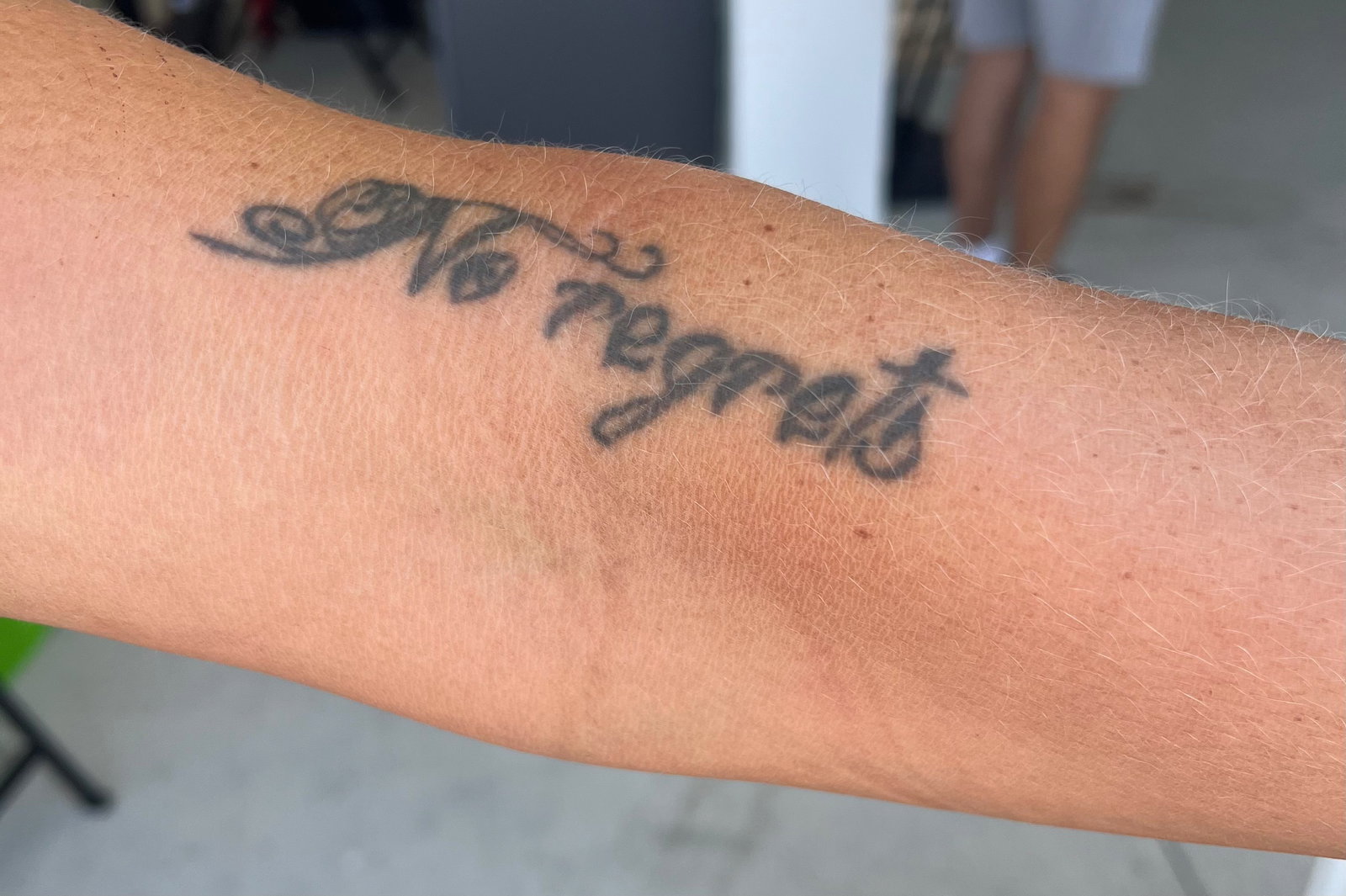
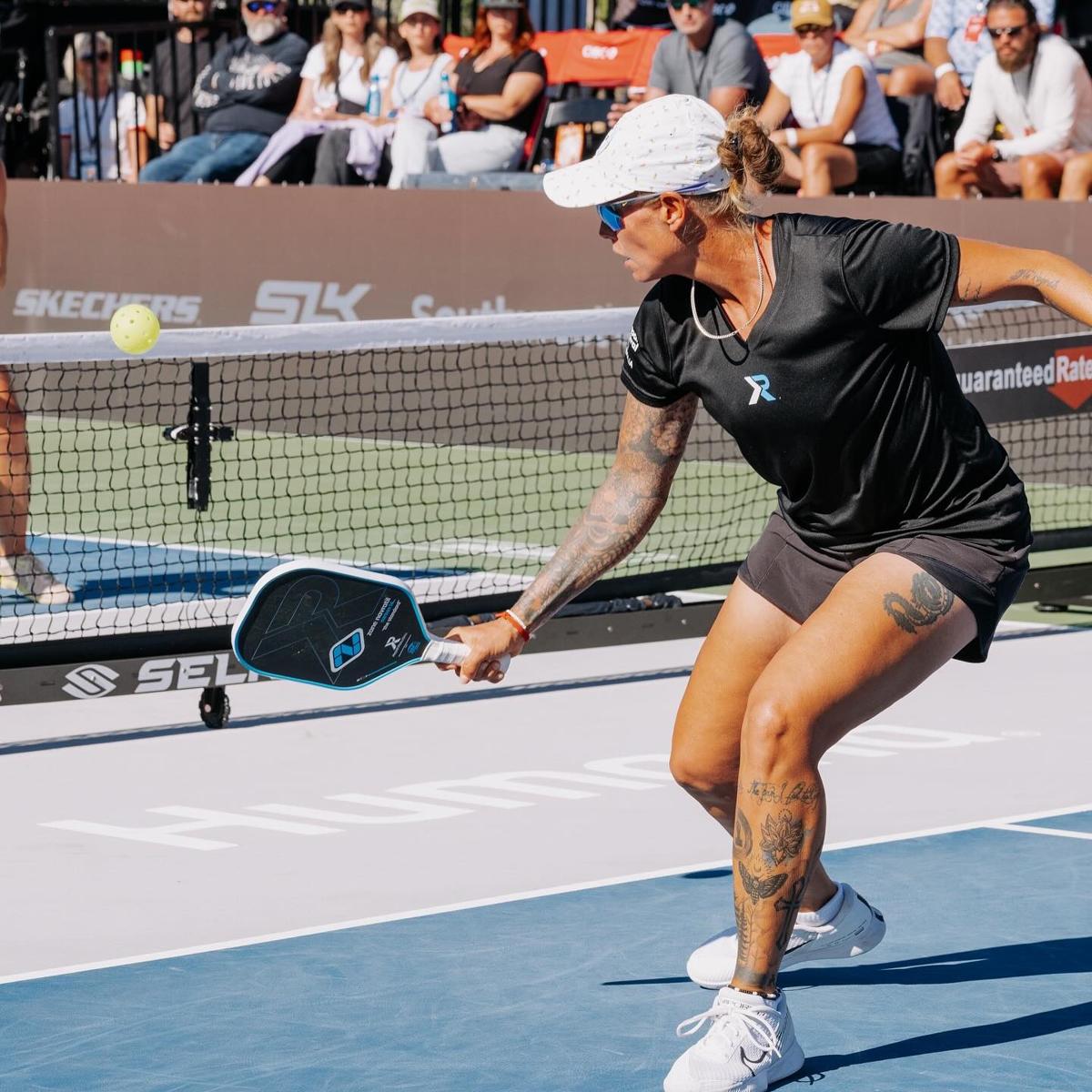
The photographs are valuable because they show the tattoos in motion rather than as isolated studio samples. A court portrait catches the full sleeve and the leg coverage at once. A closer action image makes the arm texture easier to read. A separate photograph isolates the No regrets lettering on her forearm. Taken together, the images show a collection built from memories, visual symbols and the ordinary movement of an athlete’s body.
Tina Pisnik’s full arm sleeve
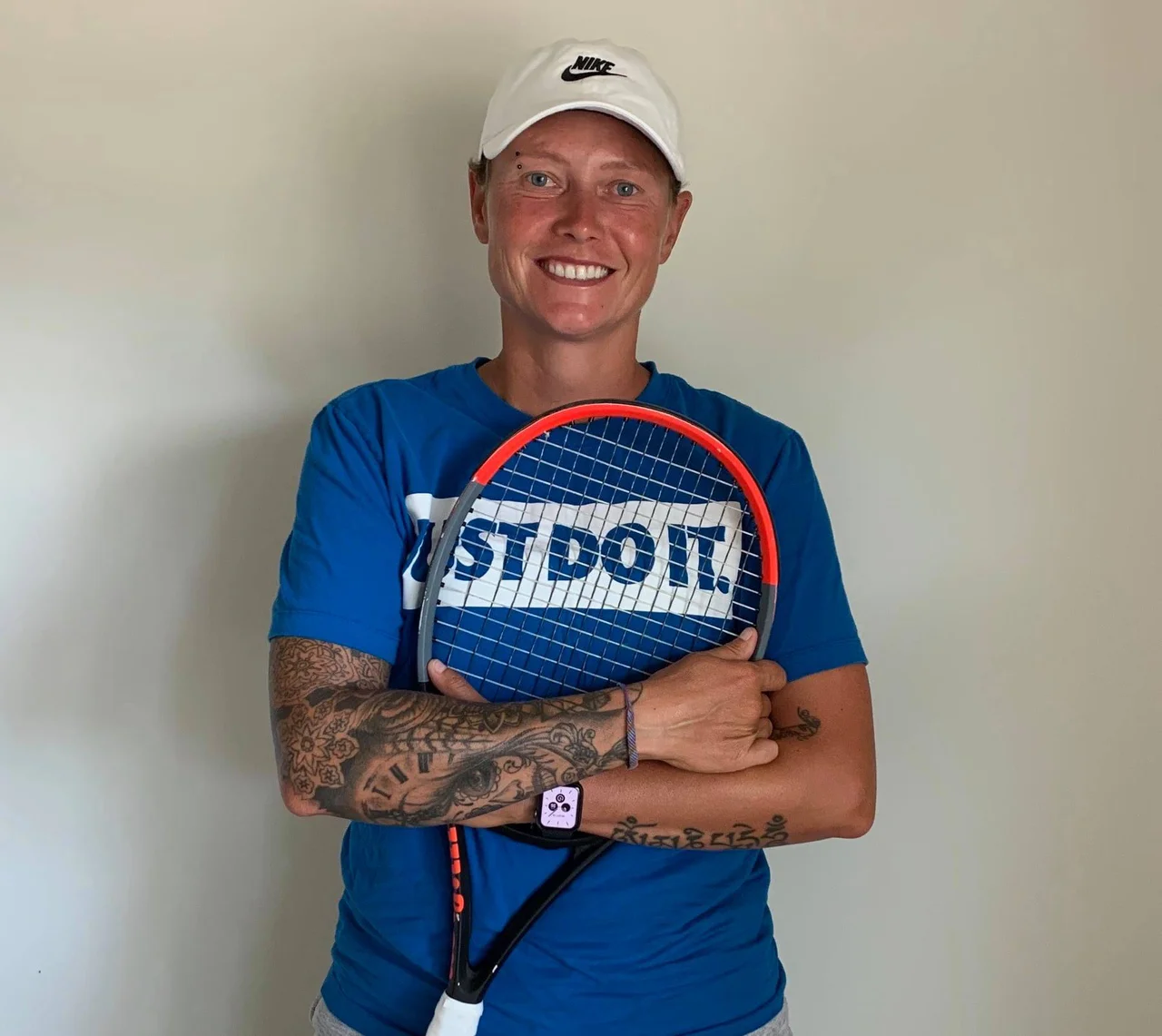
The dominant feature of Pisnik’s tattoo collection is the sleeve covering one arm from the upper arm through the forearm. In the action photographs, the work reads as dense black-and-grey coverage with several different textures inside it. Some sections are made from fine lines and repeated shapes, while other areas are darker and more solid. The sleeve has enough contrast to remain visible even when her arm is partly turned away from the camera.
The sleeve also changes character with her movement. When Pisnik raises a clenched fist, the forearm rotates and the patterning on the outside of the arm becomes more prominent. When she bends over a shot, the shoulder and upper arm sit closer to the centre of the frame. This makes the tattoo look like a continuous surface rather than a fixed illustration that only works from one angle.
The arm work carries the collection’s visual weight. It is the first detail that appears in a tournament portrait, but it is not visually flat. Open skin, soft shading and darker motifs create separate zones. The article does not identify every small symbol, and the available evidence does not support assigning private meanings to shapes that Pisnik has not explained. The sleeve is best understood through its documented density, movement and placement.
The dragon and nature symbols on her arms
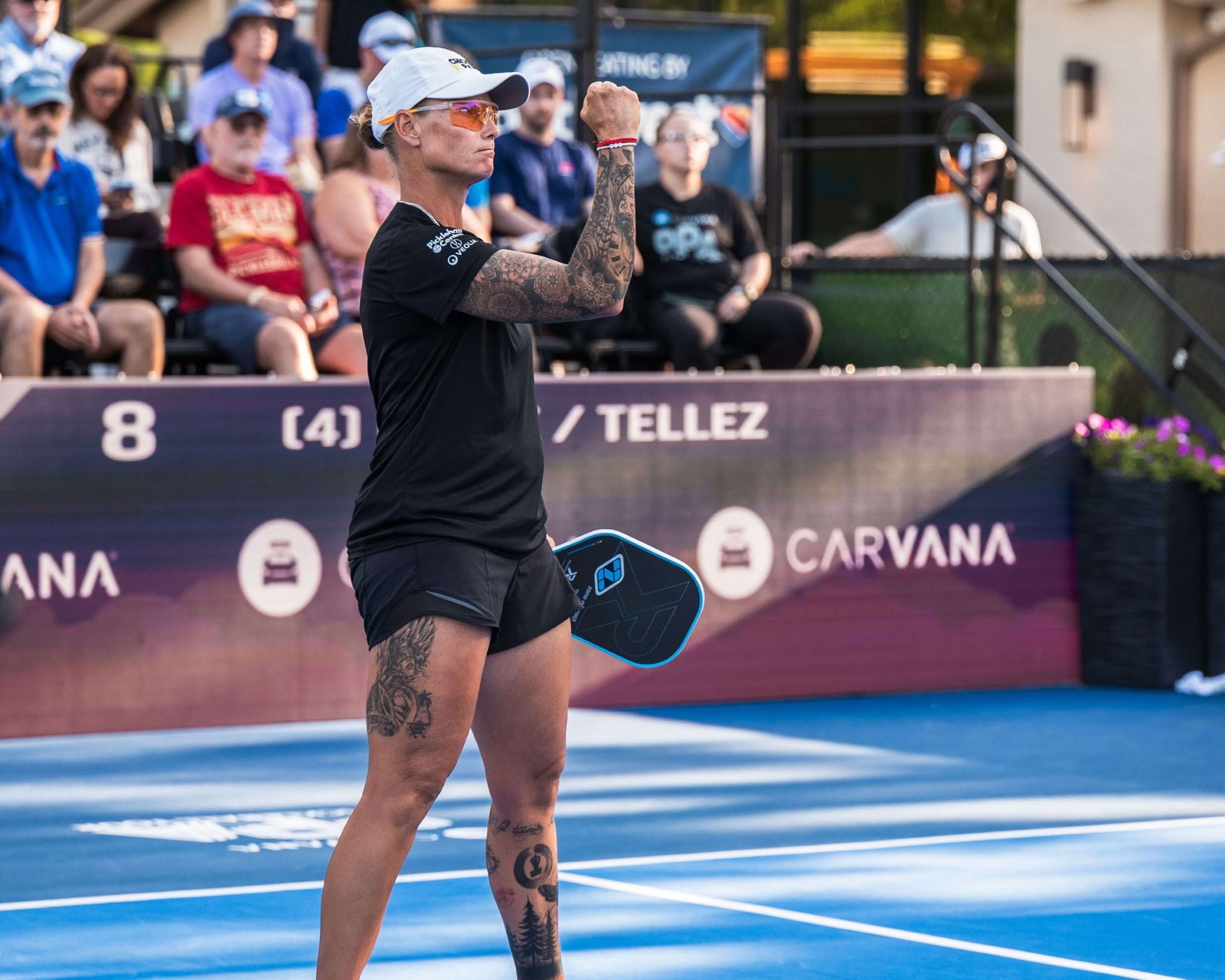
Pickleball.com identifies a dragon among Pisnik’s tattoos, alongside several nature-related symbols. The court photographs support that broader description. Her arm contains curved and organic forms that sit beside more compact marks, giving the sleeve a mixture of flowing and contained shapes. The design language does not look like one single block of colour. It has a layered quality, with outlines, black shading and small spaces of skin separating the motifs.
The dragon is important in the reported inventory because it provides a recognisable subject inside a much larger sleeve. It also adds a sense of movement to the arm. The same visual impression changes as the elbow bends or the wrist turns, which is especially clear in the fist-pumping photograph. The image shows the work as part of an active body rather than as a static flat panel.
Other natural forms are harder to name with certainty from the available photographs. That uncertainty is part of the story rather than a gap to fill with guesses. Pisnik has said that her tattoos mark meaningful moments, including memories of dogs and good vacations, but she has not published a full symbol-by-symbol explanation. The reliable description is therefore visual: organic forms, dark linework and a sleeve that remains readable around the arm.
Words, the lotus and the cross
Pisnik’s collection includes several kinds of lettering and symbolic imagery. The interview specifically mentions words, a lotus flower and a cross. Those elements give the arm and leg tattoos a different rhythm from the larger shaded sections. Lettering creates a horizontal or vertical line that the eye can follow, while the lotus and cross introduce compact silhouettes that can stand apart from the surrounding work.
The lotus is one of the clearest named designs in the source material, but its personal meaning is not stated in detail. The same is true of the cross. Pisnik’s broader explanation is that her tattoos preserve good moments and memories, yet the interview does not attach a single public interpretation to every symbol. The designs can be described accurately without turning a general statement about memory into a specific claim about one flower or one religious mark.
In the action images, those smaller elements help the tattooed areas hold together. The arm does not read as a single dark silhouette because words and symbols interrupt the larger shaded passages. The result is a collection with different visual speeds: a broad sleeve section, a small emblem, a line of lettering and open skin that lets the surrounding work remain legible.
The clock and the leg tattoos
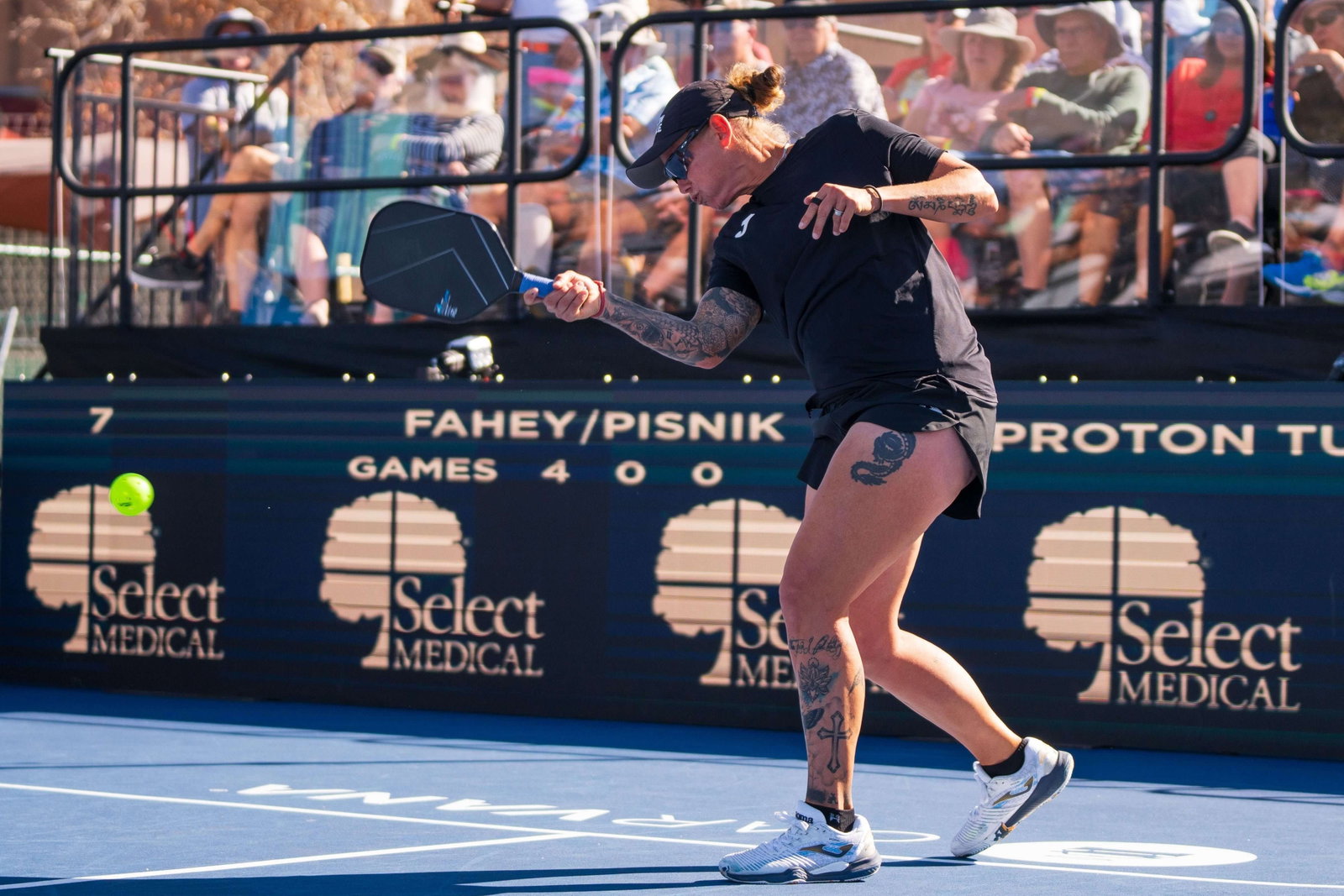
The tattoos do not stop at the arms. Pisnik told Pickleball.com that she has additional ink along her legs, and the photographs show several pieces on the thighs and lower legs. A clock is included in the documented inventory. In a sport portrait, the leg designs appear as separate visual anchors beneath the shorts, giving the collection a wider footprint than a sleeve alone would provide.
Leg placement also changes the scale of the collection. The upper leg can hold a larger image, while the calf and lower leg make room for words or narrower symbols. Pisnik’s photographs show both kinds of treatment. Some marks are large enough to be recognised from across the court. Others become clearer only when the camera moves closer or her stance exposes the front or side of the leg.
The clock belongs to the collection’s memory-driven side, but the interview does not publish a confirmed explanation for its face, hands or date. It is safer to keep the description tied to the documented object and placement. The surrounding leg tattoos include organic forms and lettering, creating a visual connection with the arm sleeve without making the legs look like a simple copy of it.
Tina Pisnik’s Never forget where you come from calf tattoo
One of Pisnik’s clearest documented phrases is Never forget where you come from, placed on the back of her right calf. The wording is reported directly in the Pickleball.com profile, which makes it one of the strongest examples of a tattoo with a confirmed text and location. It also connects naturally to Pisnik’s biography as a Slovenian athlete who moved from elite tennis into a new professional chapter in pickleball.
The phrase is visually different from the dense arm sleeve. Lettering needs open space around it to remain readable, and the back of the calf provides a long, narrow surface that suits a line of text. In the action photographs, the calf lettering appears alongside other leg designs rather than being swallowed by them. The placement allows the words to function as a separate statement inside a larger collection.
This is the tattoo most closely tied to a public piece of text. Pisnik has also described her tattoos as reminders of important moments, but the article does not claim that every symbol has an equally public story. The calf phrase can be discussed with confidence because both its wording and location are documented. Other leg designs remain identifiable by their shapes and placement without requiring a private explanation.
A visual record built from memories
Pisnik’s explanation of her collection gives the photographs a clear through-line. She said she adds meaningful things to her body to remember good moments, including her dogs and good vacations. That does not turn every tattoo into a literal diary entry. It does show that the collection is connected to lived experiences rather than being presented as a single planned theme.
The first tattoo, a Chinese sign on her ankle, came when she was 15. She remembered hiding it under high socks before her parents found out. That early story sits at the opposite end of the timeline from the full sleeve and leg coverage visible in her current court portraits. The scale changed, but the basic connection between ink and memory remained part of how she described the tattoos.
The photographs also show the collection as an active, changing surface. The phrase unfinished story is especially revealing because Pisnik does not describe the collection as closed or perfectly symmetrical. The arm sleeve, leg pieces, words, dragon, lotus, cross and clock can be read as chapters that accumulated over time. The photographs show the result of that accumulation: several tattoo styles and sizes sharing the same body while remaining individually visible.
The story she keeps adding to
There is a strong contrast between the seriousness of a full sleeve and the casual way Pisnik talks about adding ink. She says she does not plan far ahead and instead responds to what inspires her as time passes. That approach helps explain why the collection includes both large shaded work and small, direct pieces such as the forearm lettering.
Her comment that she has no regrets is also supported by a specific tattoo. The words on her forearm are not presented as a slogan for the entire collection. They are one visible mark within a body of work that includes family memories, nature symbols, a dragon, a lotus, a cross, a clock and the calf phrase about origins. Each piece contributes a different shape or line to the overall picture.
Pisnik currently competes on the PPA Tour after a professional tennis career that reached the top 30 in singles. Her tattoos now appear in photographs made for a different sport, but their identity remains personal. The arm sleeve catches attention during a match, the leg pieces appear in motion and the words stay connected to the memories she has described. The unfinished quality is not a flaw. It is the most accurate summary of a collection that she continues to see as part of her life.
Tina Pisnik’s tattoos are documented across her arm, forearms, thighs and calves, with a full sleeve as the visual centre. The strongest confirmed details are the dragon, lotus, cross, clock, nature symbols, the No regrets lettering and Never forget where you come from on the back of her right calf. Her own description keeps the emphasis on memories and meaningful moments, while the photographs show how those designs move with her on the pickleball court.
Here is a Tina Pisnik video feature for a closer look at the athlete behind the tattoos.