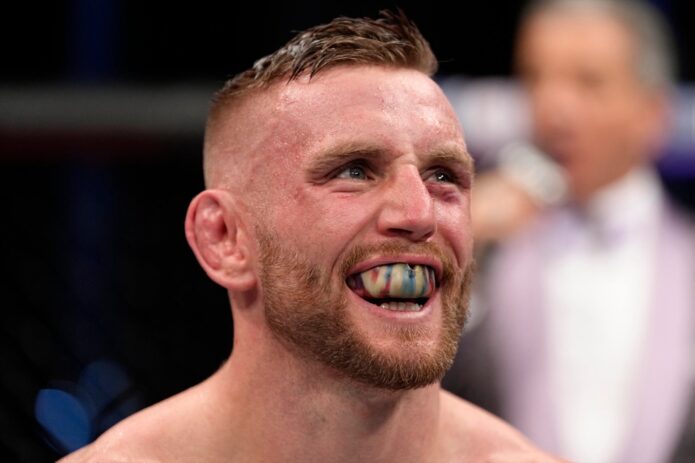
Tim Elliott’s best-known tattoo is a raised fist high on his left chest. Its outline is easy to pick out in fight photos, while the irregular dark patches inside it draw the eye closer. Elliott has described a connection to a Rage Against the Machine poster, though the story of getting the tattoo was more spontaneous than planned. A branching tree and smaller designs cover part of his left forearm, giving that arm a busier look than his chest.
His account gives the fist a starting point. The other visible shapes are easier to describe than explain; without a statement from Elliott, assigning them a family tribute or personal message would be guesswork.
The raised fist on his chest
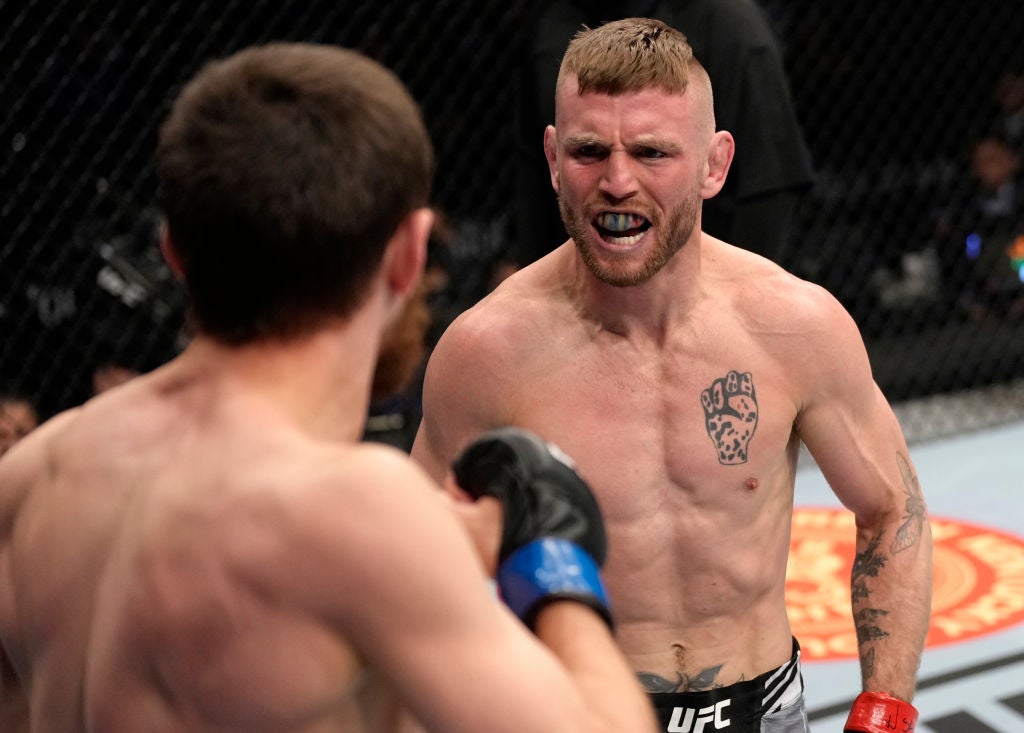
The fist sits high on Elliott’s anatomical left pectoral, above the nipple. In a front-facing photo, that places it on the viewer’s right. Its short wrist points down, with the curled fingers across the top. Irregular dark patches break up the hand, leaving the skin visible between them.
An Octagon photograph gives a clear view of the design against Elliott’s otherwise mostly bare upper torso. The outline makes the fist readable at a distance; up close, the uneven patches stand out. There’s no banner or frame around it, so the tattoo reads as a single graphic. The contrast is easier to see beside Alessio Sakara’s tattoo collection, whose collection has a denser overall look.
The patches can invite guesses about an animal pattern, but a photograph doesn’t confirm one. “A raised fist with irregular dark patches” is enough to describe what’s visible.
How Elliott explains the fist tattoo
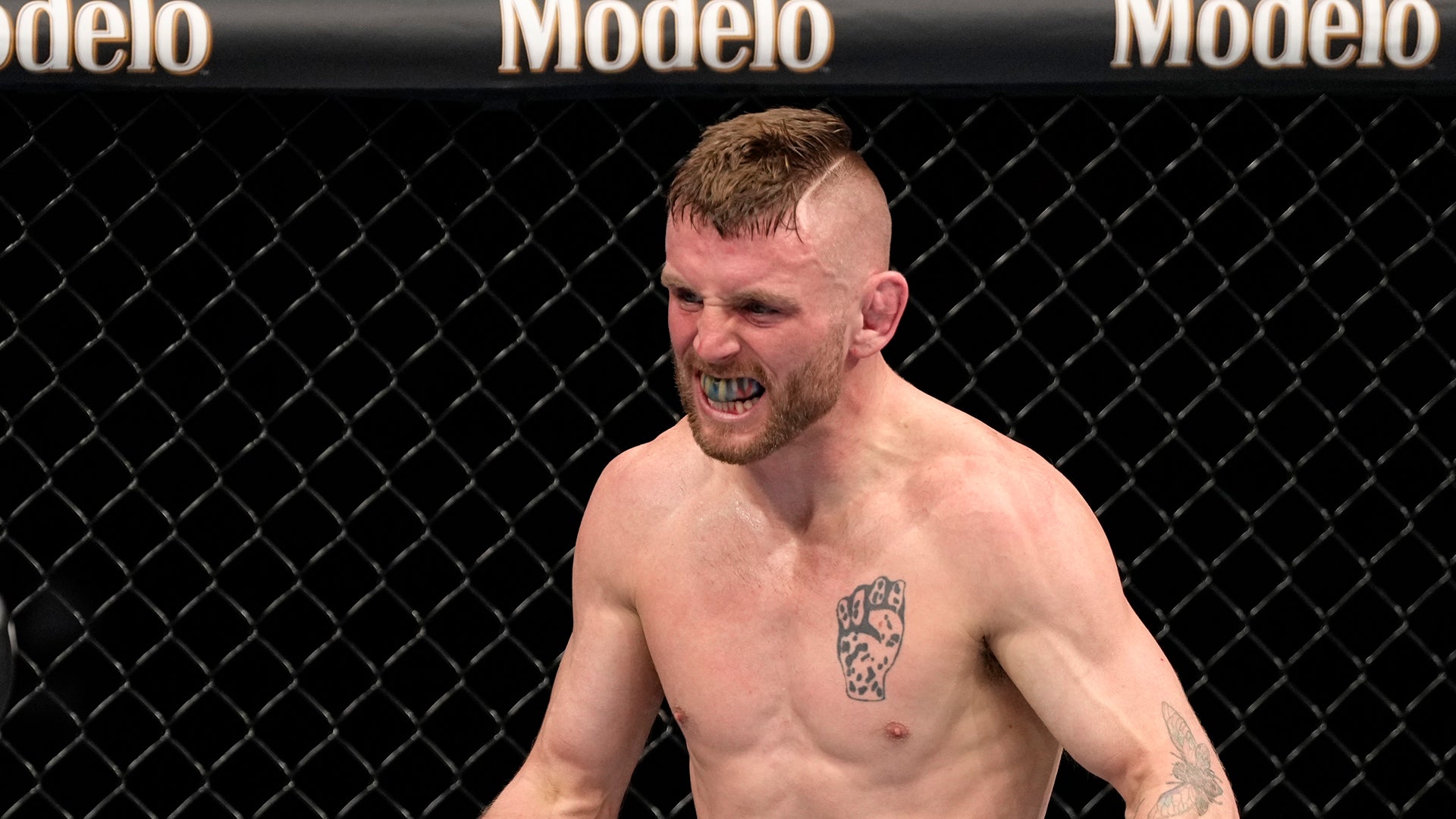
On the JAXXON Podcast, Elliott connected the image to a Rage Against the Machine poster and called it a “rise up fist,” according to Calfkicker’s October 2025 report of the conversation.
He also recalled how he got it: a college friend was tattooing, Elliott had been drinking and talking with him, and he woke the next morning with his shirt stuck to his chest. At first, he thought he’d been in a fight. That’s Elliott’s recollection; it doesn’t identify the poster’s edition, the friend, or when the tattoo was done.
A raised fist carries different associations for different people. Elliott’s account gives the poster reference, but it doesn’t spell out everything the tattoo has meant to him since. It’s best to keep that distinction clear rather than treat a viewer’s interpretation as his explanation.
The tree on his left forearm
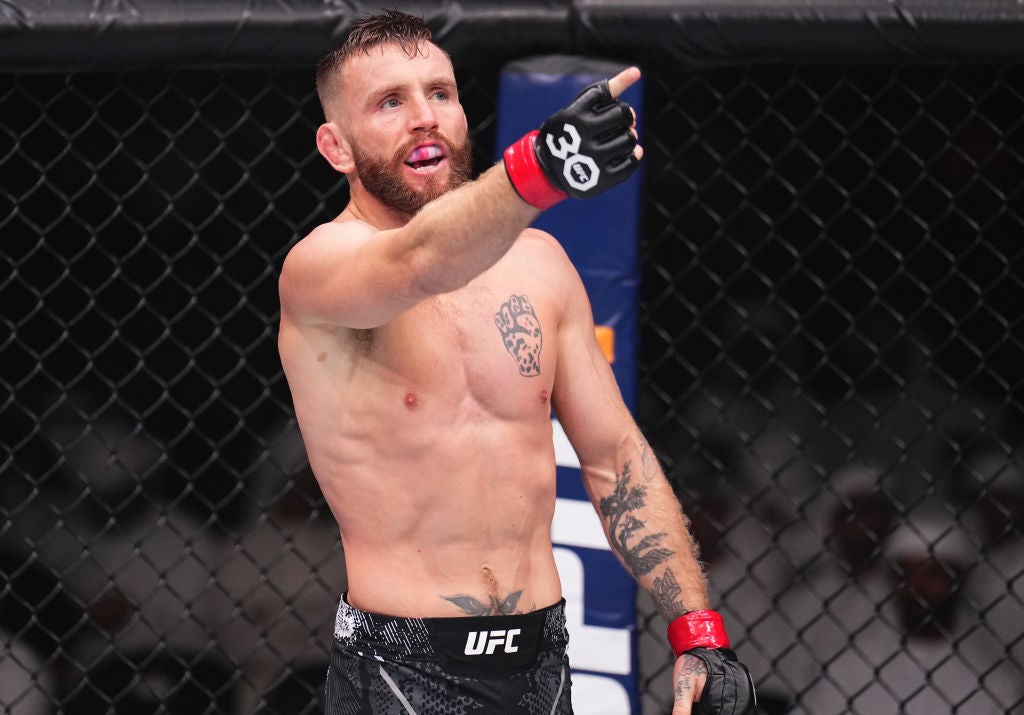
The dark tree runs lengthwise along Elliott’s left forearm, with a central trunk and branches spreading outward. In the pointing photo, his right arm is raised and his left hangs at his side, leaving the tree facing the camera.
Other designs share the arm: lighter petal- or leaf-like linework sits near the elbow, and a compact angular mark appears closer to the wrist. Their different shapes and shading keep the forearm from reading as one solid strip of ink. The photograph doesn’t establish what the designs mean, who made them, or the order in which Elliott got them.
Competition context
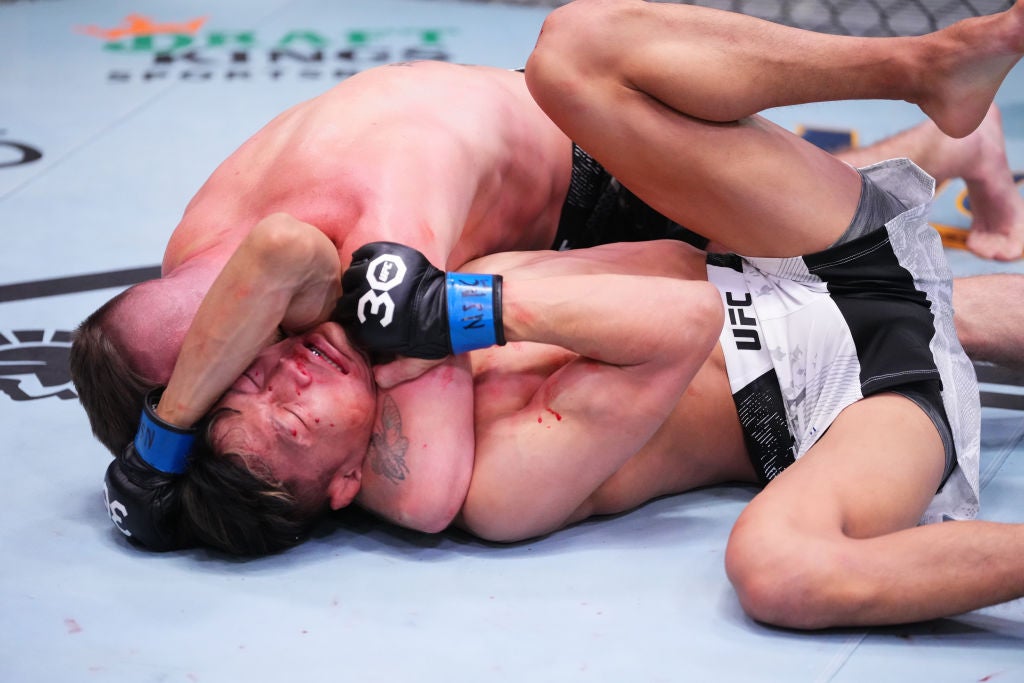
The grappling photo shows Elliott in competition, but it’s a poor reference for small tattoo details. Bodies are pressed together, arms cross the frame and the lighting changes across the skin. A mark partly hidden near a glove may belong to the other fighter. Those conditions can obscure a tattoo; they don’t show that it has faded or changed.
The standing chest photos are clearer for the fist, while the pointing image gives a better look at the forearm. The bout image adds context about how the tattoos appear during a fight, not a close-up of the artwork.
A studio view and a longer conversation
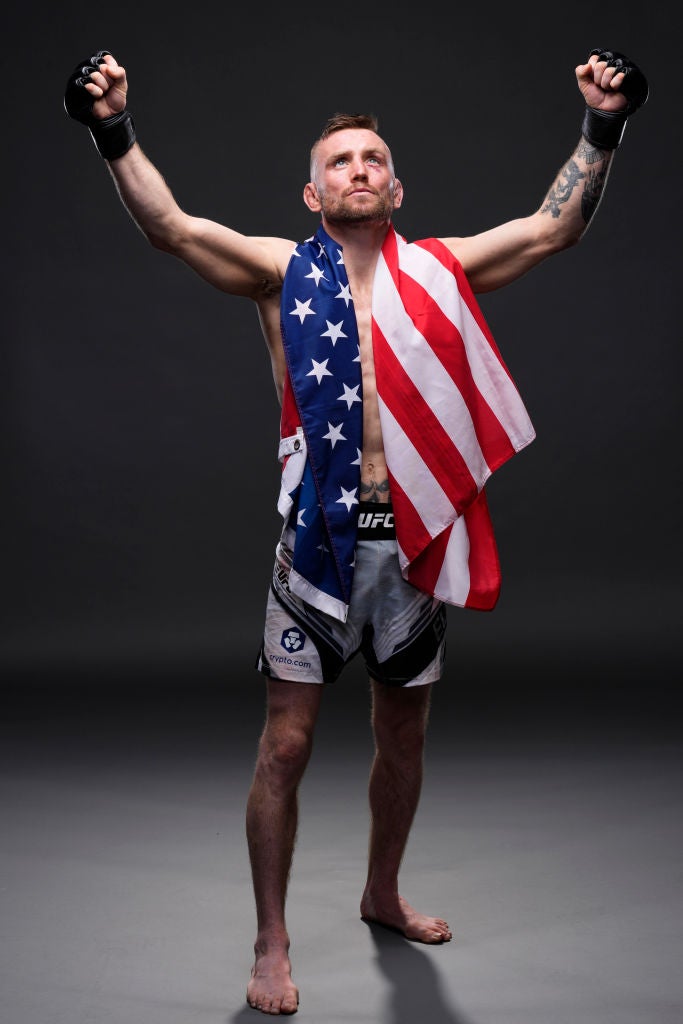
The studio portrait shows Elliott standing with both gloves raised, an American flag draped over his shoulders and torso. It covers much of his chest in this image; the flag is clothing, not a tattoo. His gray shorts, bare feet and the plain dark background make this a full-length portrait rather than a close view of the ink.
The JAXXON episode ranges across Elliott’s career, The Ultimate Fighter and the flyweight division. His tattoo story comes up as part of that wider conversation, not as a tour of every design. The episode is embedded below.