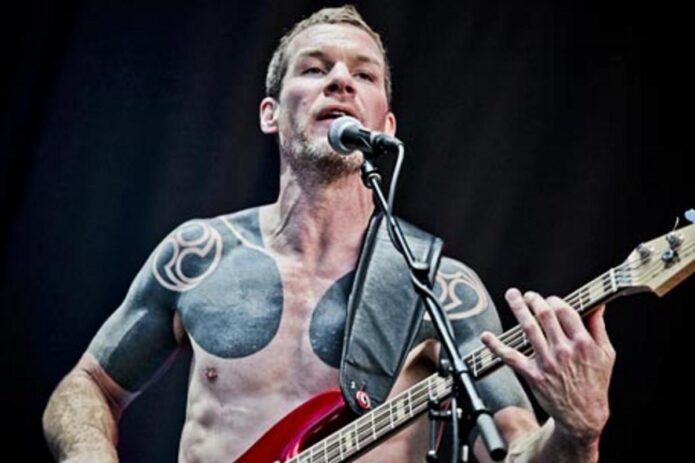
Tim Commerford’s tattoos are hard to miss. When he plays shirtless, the black shapes across his chest and shoulders stand out first. He also has extensive ink on his arms and back, plus a large design on his left leg. Together, the tattoos can look like one connected collection.
Photos from the Rage Against the Machine and Audioslave years vary. Lighting, aging ink and the bass can change or hide what you see. This article focuses on details that show clearly, and treats stories repeated without strong evidence with care.
The huge black shapes across his chest
Two large rounded shapes cover Tim’s chest, with lighter lines and curved details around his shoulders. The design has a tribal or Polynesian-inspired look, though the photos don’t identify a more specific style. It covers a broad area and shifts as he moves, so it doesn’t read like a small, separate flash tattoo.
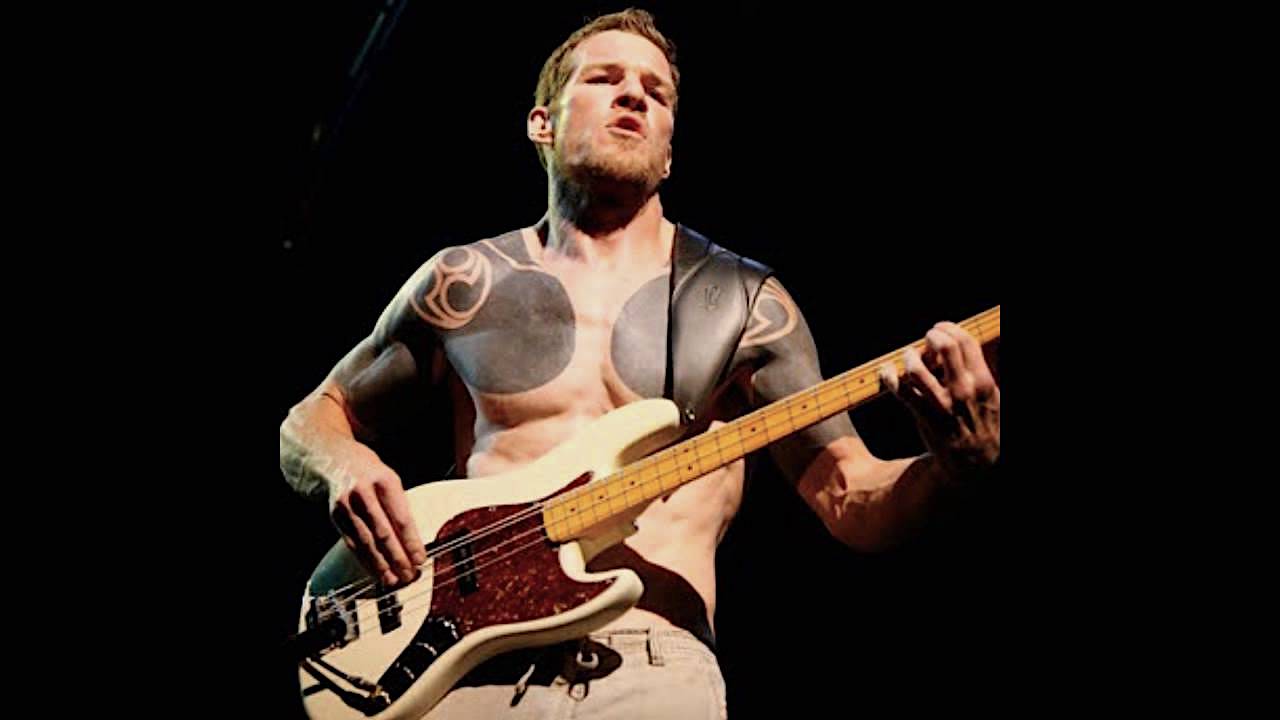
Stage lights can make the chest ink look silver, while a darker image can turn it into one black block. The main pattern remains clear: a broad chest design with matching details over the shoulders.
Shoulder bands, arms, and the early ink
Tim’s arms use the same rounded shapes as his chest. The shoulder pieces are easy to spot, and dark bands run along parts of his upper arms. Several public biographies report that one black band was a tribute to his mother; the meaning of his later designs is harder to confirm.
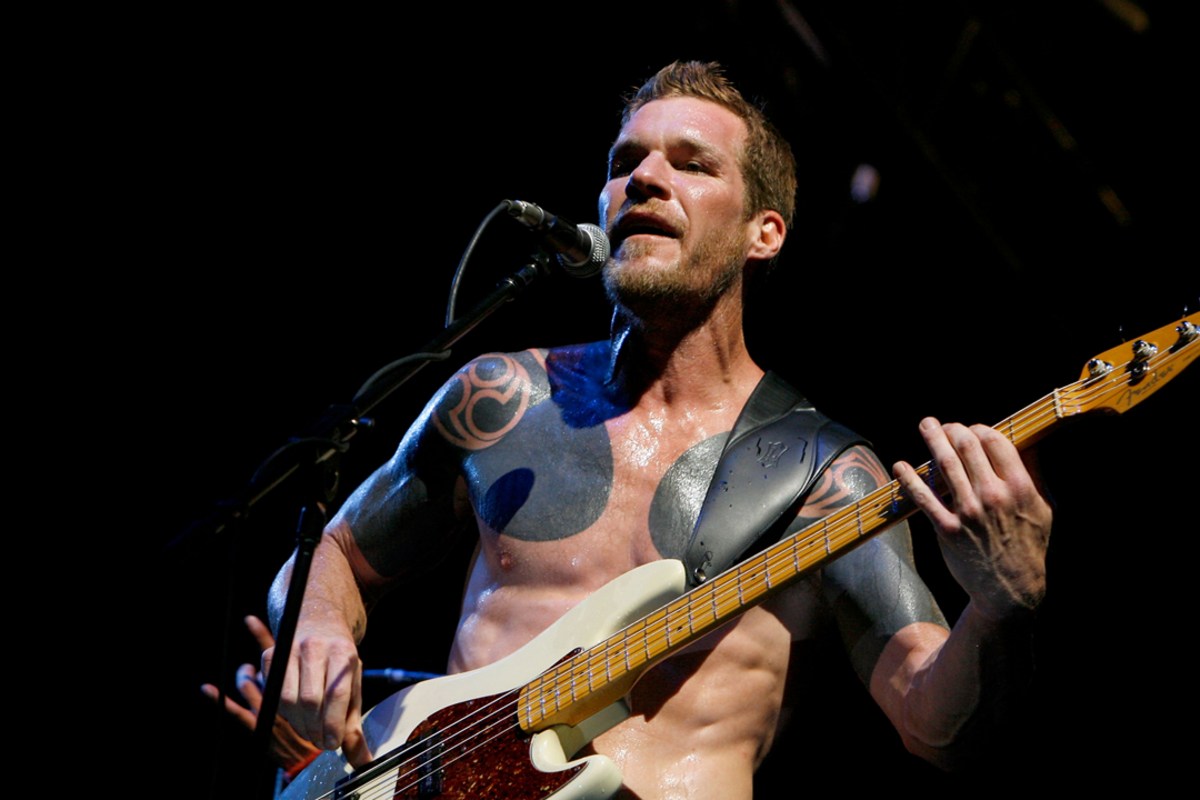
The arms aren’t covered by one solid sleeve. Gaps, curved lines and lighter sections break up the blackwork. From a distance it can look as if both arms are painted black, but close-up photos show separate shapes and their edges.
The large shapes read clearly from across a festival crowd, while closer photos show the smaller breaks inside the blackwork. Tim doesn’t rely on a bright logo or lettering for the tattoos to stand out.
How the tattoos look onstage
Tim often played in a tank top or shirtless, so live photos catch the tattoos as he leans into the bass or stands at the microphone. His pose can make his chest look wider, and the bass strap may cover a section. One concert photo rarely shows the full layout.
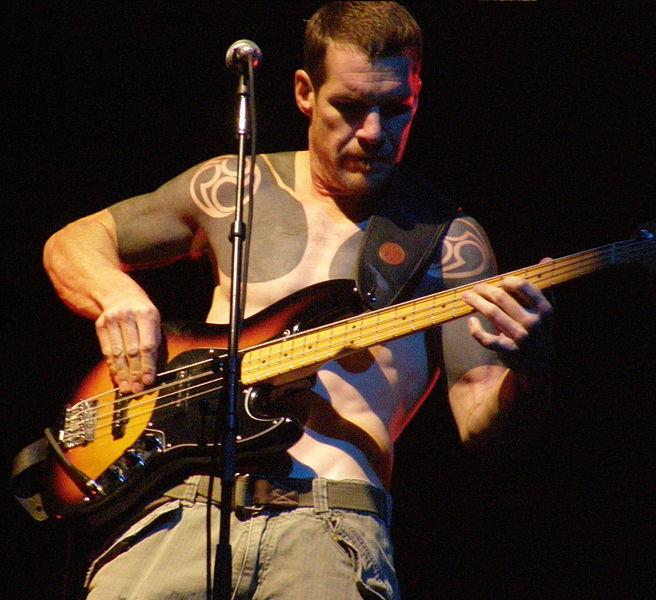
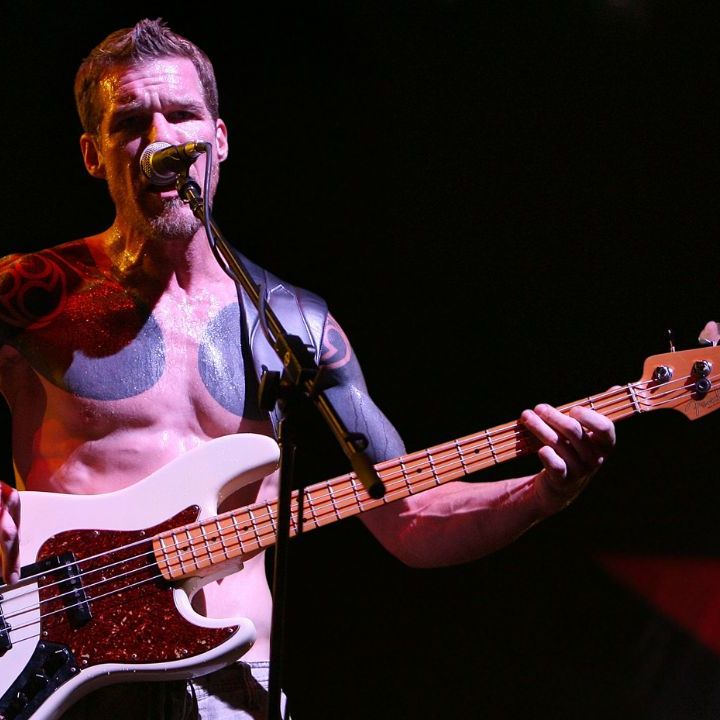
This older performance shot shows the rounded shoulder designs above the chest panels, with ink continuing down both arms. The microphone, bass strap and stage lights can create shadows that look like tattoo edges. Comparing more than one photo helps separate the ink from those shadows.
The back and leg work people don’t always see
His tattoos extend beyond his chest and arms. Public descriptions mention work on his back and a large design on his left leg. Waist-up music photos often miss those areas; shorts and a sleeveless top show more of the full-body layout.
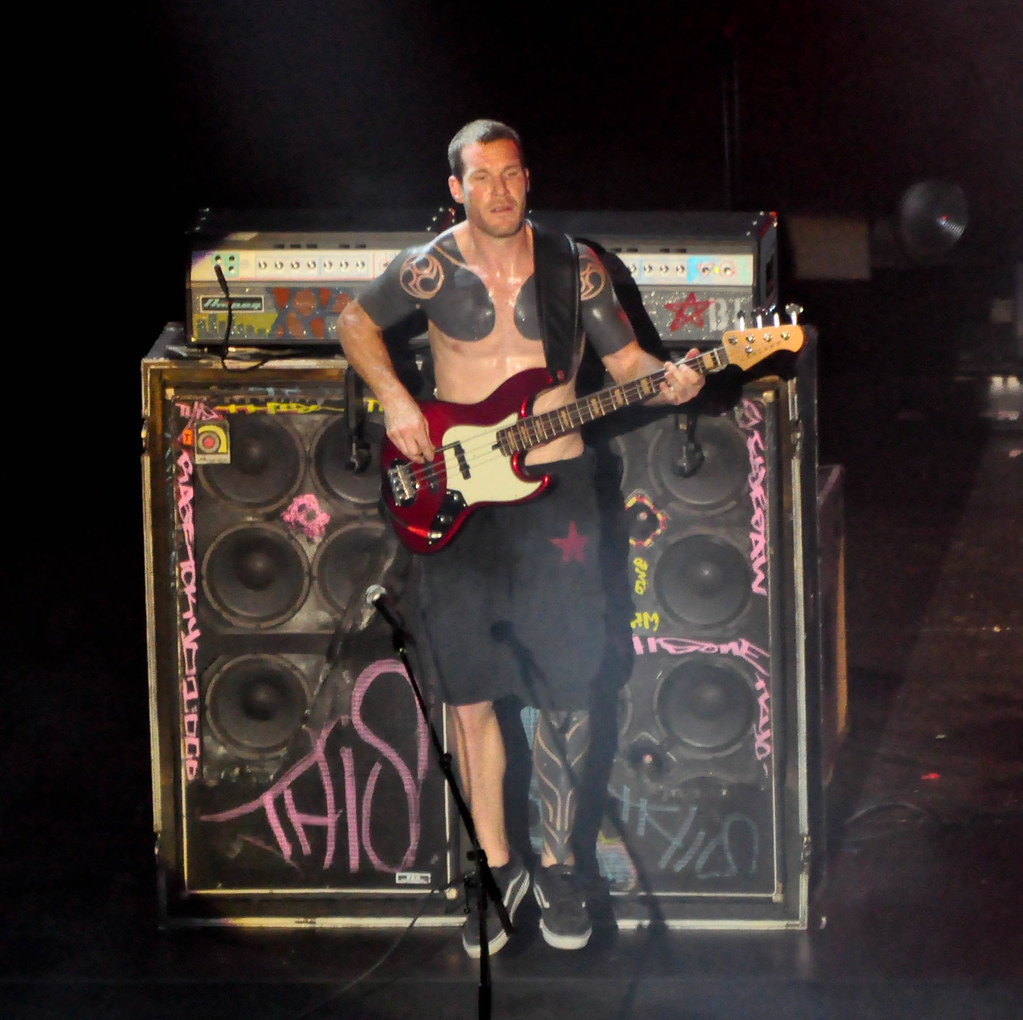
A full-body photo makes the scale easier to see. The tattoos continue over his arms and leg, with dark sections broken by open skin and curved lines; other descriptions also mention work on his back. Online guesses about meaning are common, but the photos show broad blackwork and rounded motifs.
The ink has changed with each era
Photos from the early Rage Against the Machine years, Audioslave and later returns show Tim at different points. The blackwork remains recognizable, though age, lighting and later additions change how it looks. Sharp edges can soften, and separate tattoos may blend into the larger pattern.
His tattoos weren’t built around one small symbol. They grew into a large blackwork design, and photos capture that process in pieces. The chest is the anchor; the arms, back and leg carry the work farther.
Old music photos can change how the ink’s color appears. Warm stage lights may make black tattoos look brown, while flash can bring out gray shading that’s hard to see in normal light. The same shoulder design can look softer or sharper from one photo to another without any new work.
Photos and public profiles consistently show large black tattoos across his chest, shoulders and both arms, with additional work reported on his back and left leg. Many biographies also repeat that an early black armband was a tribute to his mother.
The meaning of individual curves and shapes is less certain. Fans have attached explanations to them, but not every guess comes from Tim. The visible details are enough to describe the collection without repeating speculation as fact.
Describe what the photo shows and leave the rest open unless Tim has explained it himself.
The short video below looks back at Tim’s career and the Rage Against the Machine years, when his tattoos were a familiar part of his stage look.
One thought on “Tim Commerford Tattoos: Huge Chest and Blackwork”