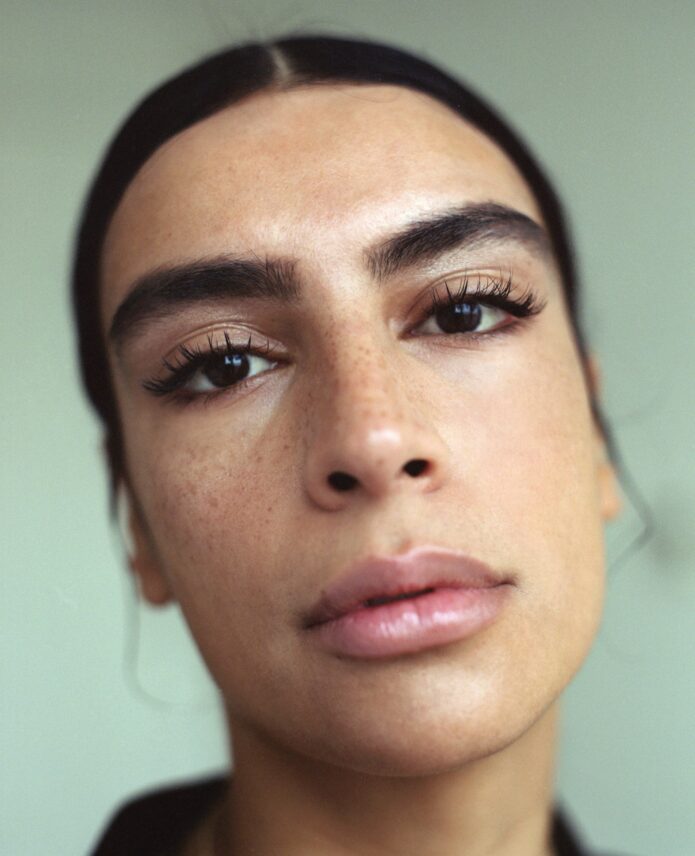
Sevdaliza is an Iranian-Dutch singer whose tattoos appear across her back, neck, hip, thigh and torso. In interviews, she has called them self-portraits made at important moments in her life. She describes the collection as a living diary, with each image holding a different face, period or state of mind, and as a reminder of where she came from.
The photographs show several styles: geometric black-and-gray work, fine portrait lines and short script. The larger pieces are easy to spot in editorial portraits; smaller marks appear when her hair or clothing shifts. No one image shows everything. A rear view gives the layout of the back piece, while a closer portrait brings out individual lines.
The Geometric Upper-Back Tattoo
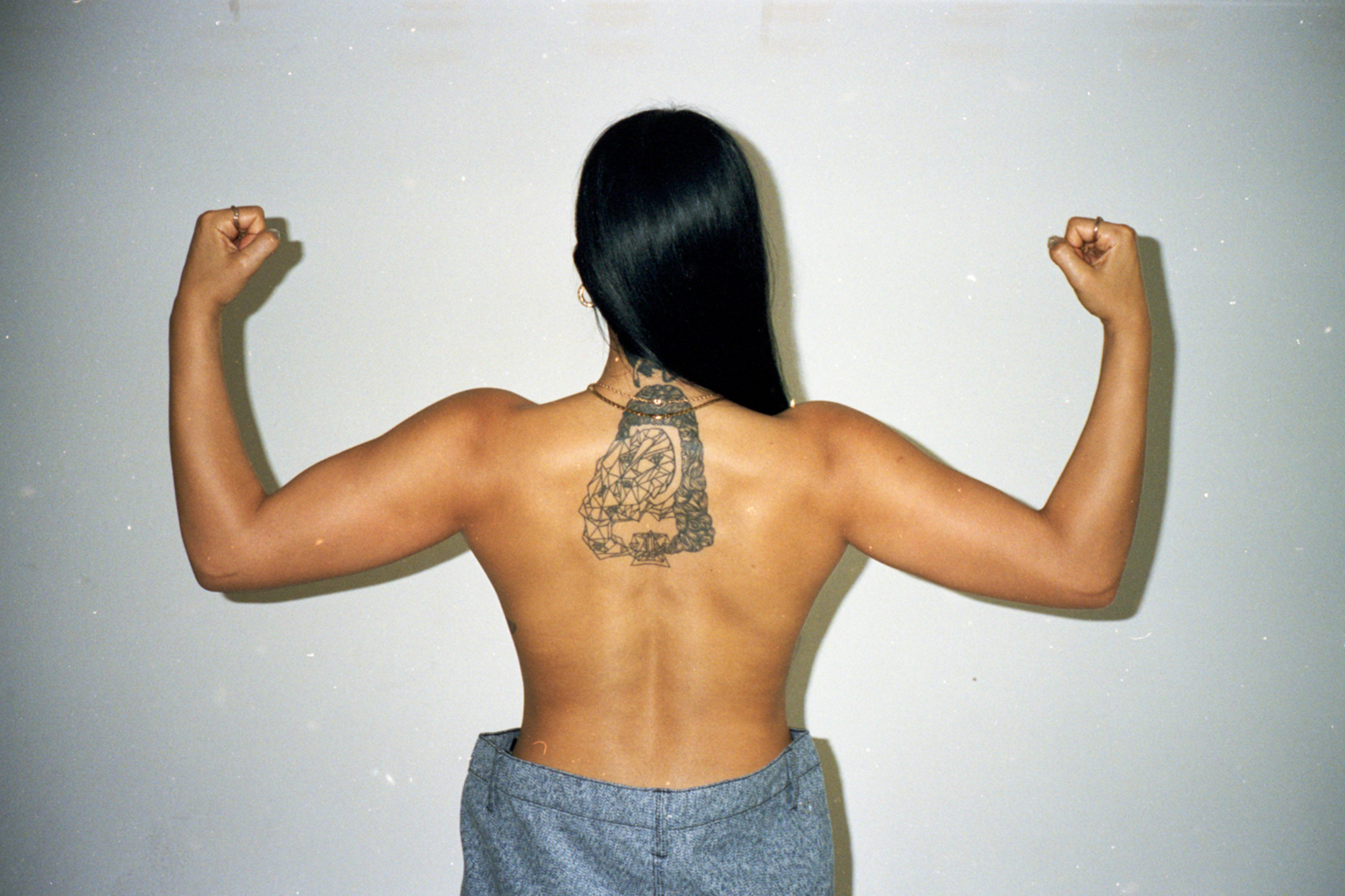
The largest design sits high on Sevdaliza’s back, beginning below the neck and running between her shoulder blades. Crack Magazine’s wide portrait shows a rounded upper form around a face-like central figure. Angular lines interlock below it. The piece is black and gray, with a small separate mark near the base of the neck.
Fine straight lines divide the central figure into facets. Darker outlines hold those shapes together, and the shading thickens near the neck. Lower down, open triangles and sharp intersections leave more skin visible between the lines. The upper and lower sections have different weights, so the design reads as a vertical composition along her spine.
A rear portrait shows the whole arrangement. FADER’s closer photograph makes the upper contours easier to see, including lines that merge when the tattoo is viewed from farther away. The wider view explains the scale and placement; the close-up shows how much detail is packed into the central form.
Sevdaliza has described her tattoos generally as self-portraits, but the interviews do not name the face-like figure on her back or tie it to a particular period. The photo supports a description of its position, geometry and shading. Any more specific identification would go beyond what she has said about this piece.
The Side-Neck Linework
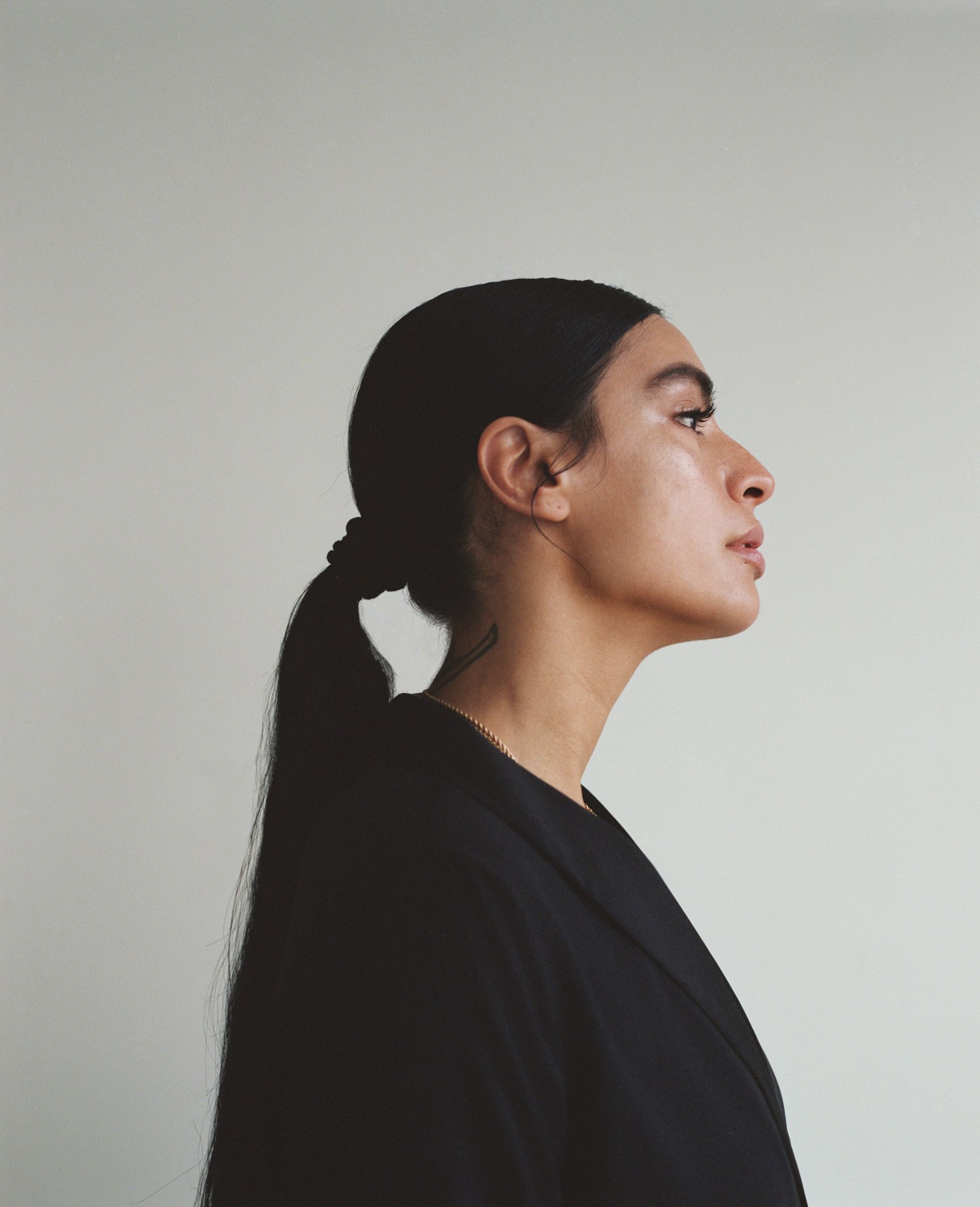
A FADER portrait also shows a narrow black tattoo beneath Sevdaliza’s ear, along the side and back of her neck. A dark stroke runs through the design, with finer marks beside it. It takes up little space compared with the back piece, and the skin around it stays mostly open.
The line follows the length of her neck. In profile, it sits as a small vertical mark; from the front, her hair or a shadow can cover it. The FADER image is useful because her head is turned and the hair lifts away from the tattooed side.
In other photographs the mark may look shorter or darker. Head angle, light and focus change what the camera catches, so those differences do not establish a new design. The cited interviews do not give the neck tattoo a phrase or symbol. Sevdaliza’s diary description explains her approach to tattoos overall, not the private reference for this line.
The Thigh Portrait and Lettering
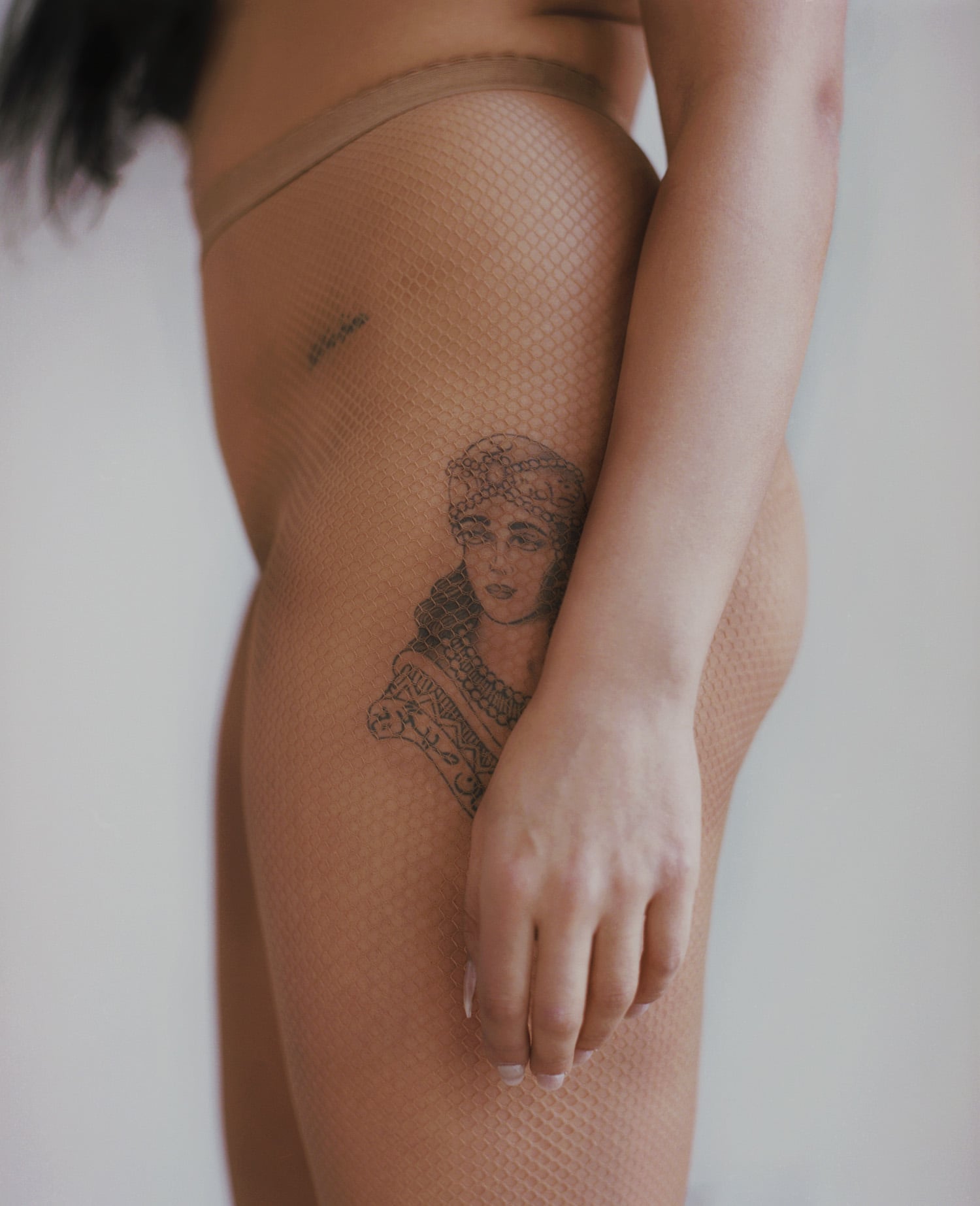
Another FADER photograph shows a portrait tattoo across Sevdaliza’s upper thigh and hip. The figure has long hair and ornamental clothing, with a band across the chest that looks like a necklace. Fine black outlines trace the face and garments. Darker shading gathers around the hair and lower edges, and lettering sits close to the portrait.
This design uses a finer, more figurative style than the geometry on her back. The face, hair and clothing remain readable without filling the whole area with black. The figure runs down the upper thigh, where open skin around the outline keeps the detail distinct.
The photograph does not identify the figure or show that it is a literal likeness of Sevdaliza. She has described her tattoos as self-portraits, but she has not said who this image depicts. That leaves the drawing’s visible details clear while its exact subject remains unknown.
Glamcult’s wider seated portrait shows the tattoo lower in the frame and a smaller mark near the hip. The FADER close-up is better for the portrait’s lines; Glamcult gives a broader view of how the image sits across the thigh and hip. The two photographs also show how pose and clothing can reveal different parts of the same area.
The Chest Script and Dense Lettering
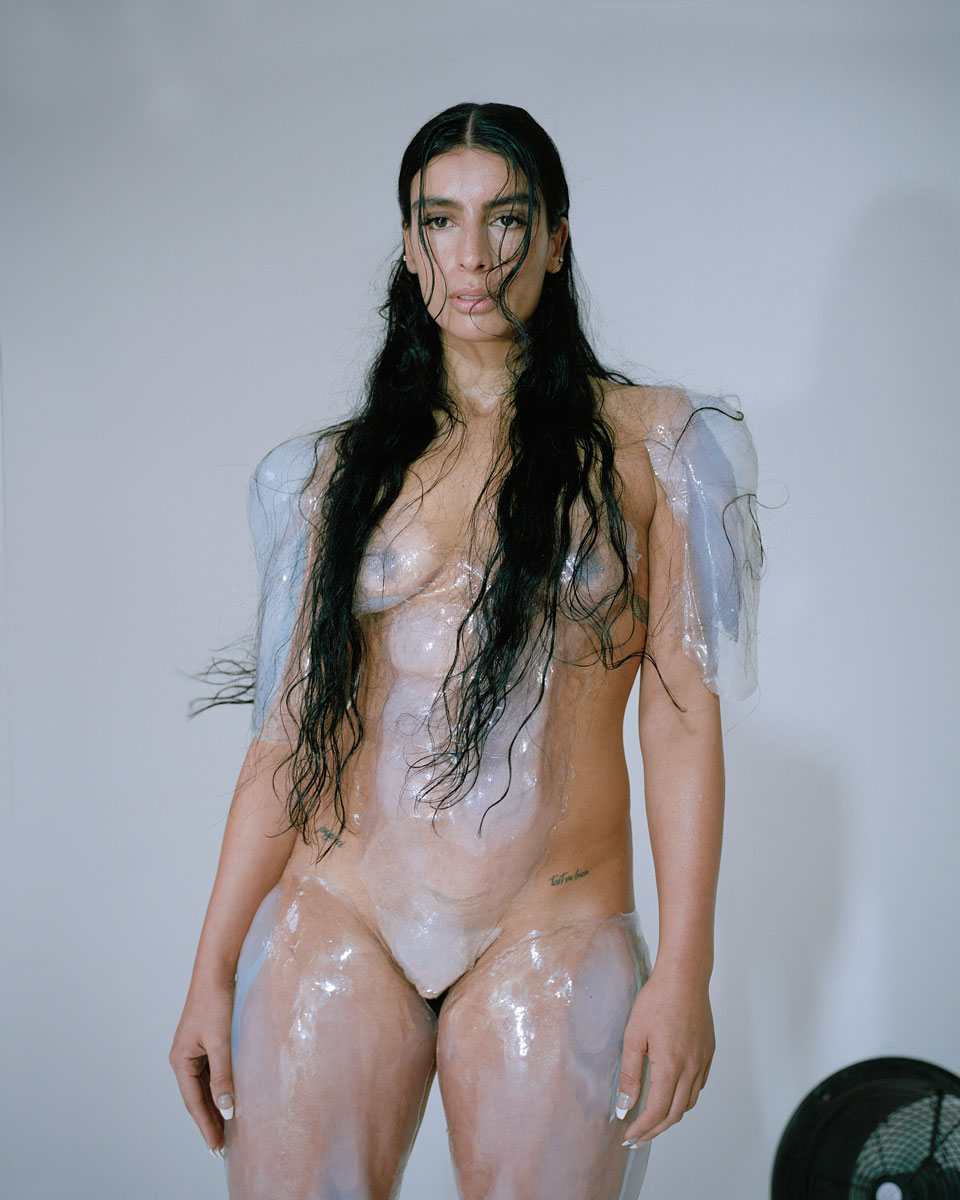
Glamcult and Attitude show short script near Sevdaliza’s lower torso and hip. In Glamcult’s side view, a compact black mark sits near the hip under translucent styling. Attitude shows another short, greenish line on the lower side of her torso. Both are much smaller than the back and thigh designs.
The lettering appears as a brief line against open skin. Its position makes it easy to miss when clothing covers the lower torso or her posture turns the mark away from the camera. The color also reads differently across the photographs: one looks black, while the other has a greenish cast.
The images show the shape and placement, but not every character clearly enough for a reliable transcription. A closer authenticated image or Sevdaliza’s own wording would be needed to identify the text. Her comments about a living diary give the collection a broad context; they do not tell us what these words say.
These small pieces have a different scale from the portrait and the geometry. The short lines sit close to the hip and torso, with space around them. They can appear or disappear as the styling and pose change, while the larger tattoos remain easier to notice in a wide photograph.
The Smaller Back and Shoulder Marks
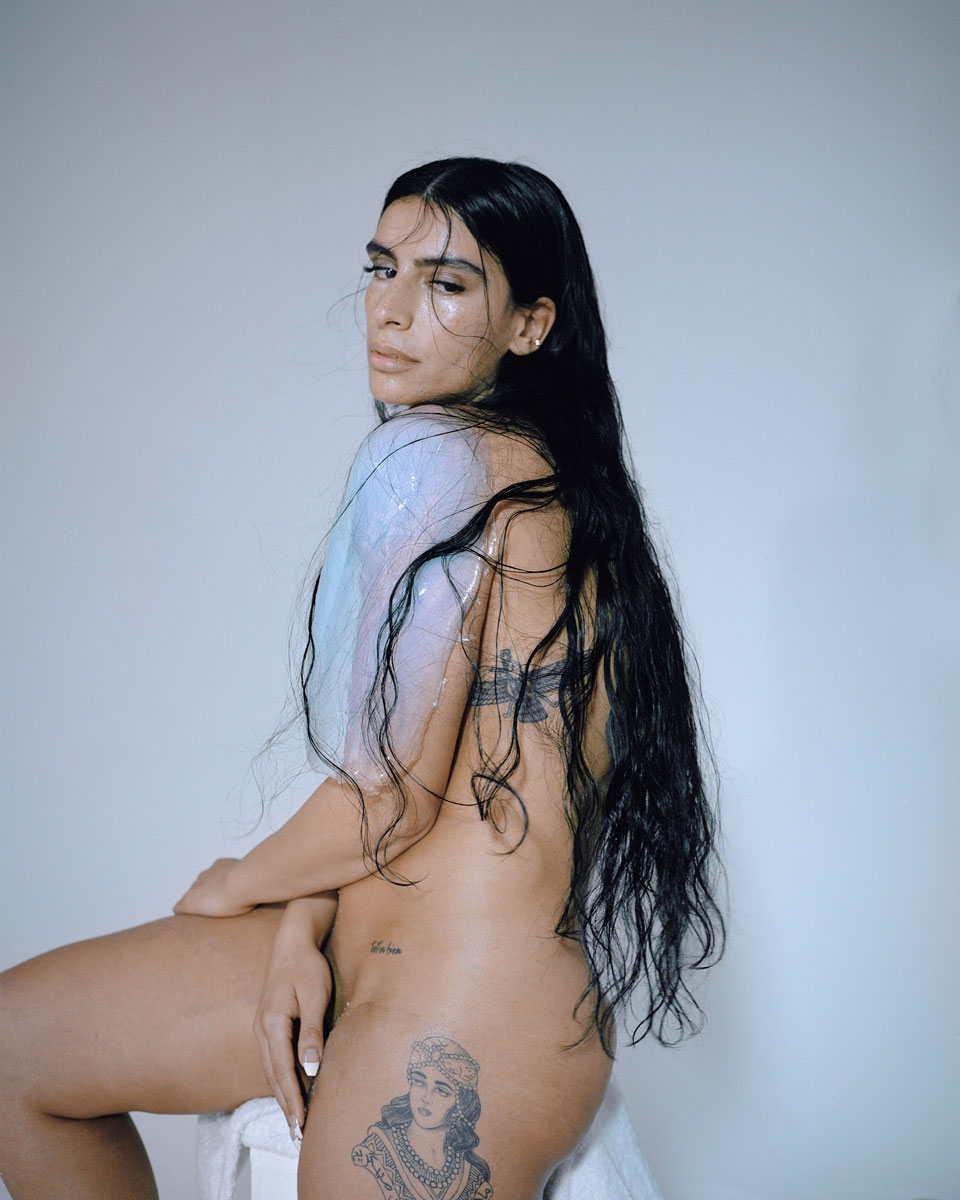
In Glamcult’s seated portrait, Sevdaliza faces the camera with her shoulder and upper back exposed. A compact dark mark sits beneath her hair near the shoulder blade. The top of the thigh portrait appears in the same frame, so the photograph gives a sense of two separate placements at once.
The shoulder mark is denser and smaller than the neck linework, and far smaller than the central back tattoo. Hair crosses part of it, while translucent fabric covers other areas. The photograph shows where it sits, but it does not expose enough of the design to identify every shape.
Glamcult’s portrait is styled and shows only part of her back. It still helps locate the small mark near the shoulder blade, apart from the large design between the shoulder blades and the portrait on her thigh. The photo does not show those tattoos joined into one composition.
Her smaller marks can stay in the background until a pose brings them forward. The back piece dominates a rear view; in the seated Glamcult image, the face, shoulder, hip and thigh share the frame. It takes more than one photograph to see how the collection is spread across her body.
What Sevdaliza Says About Her Body Art
Sevdaliza has described her tattoos as self-portraits and as a living diary on her skin. She connects each portrait with a different period or state of mind, and says the marks remind her where she came from. That is the clearest explanation she has given for the collection.
Her comments give the tattoos a shared idea without explaining every figure or line. She has not named the face on her back, assigned a phrase to the neck mark or provided a reading of each small script tattoo. The visible designs can be described; their more personal references remain hers.
The photographs show different drawing styles. The back piece uses angles and facets, the thigh tattoo is a fine-lined portrait, and the smaller marks are short strokes of lettering. Sevdaliza links them through memory and moments in her life, rather than through one repeated symbol.
Her other visual work often uses transformation, repetition and altered perspectives. The official video for HUMAN is part of that wider imagery and places the body within the video’s visual narrative. It is context for her work, not evidence about any particular tattoo.
The Visual Archive Around Sevdaliza’s Work
Each photo catches a different part of the collection. A rear portrait makes the upper-back design easy to follow; FADER’s closer views bring out the neck line and thigh portrait; Glamcult’s seated image shows the shoulder and hip marks together. Attitude provides another look at the short torso script. Hair, clothing and pose decide which ink is visible in each frame.
Crack Magazine’s wide image helps with the back tattoo’s overall shape. The closer FADER photographs show finer lines that the wide view can lose. The Glamcult and Attitude pictures are useful for placement, but the styling and angles leave some smaller marks partly covered. These are editorial portraits, not a complete inventory made for documenting tattoos.
The photos establish a geometric black-and-gray back piece, a narrow neck line, a detailed thigh portrait, short lettering and smaller dark marks near the shoulder and hip. They do not give a full reading of every symbol or word. The sources also do not provide an artist credit or date for each design, so those details are best left open.
Sevdaliza has supplied the broad meaning herself: the tattoos are self-portraits and a diary of different moments. The photographs show how the designs sit on her body and how their scale, lines and shading vary. Her account leaves the individual stories with her.
For comparison with other musicians’ collections, see Derek Luh’s tattoos and Dorian Electra’s tattoos.