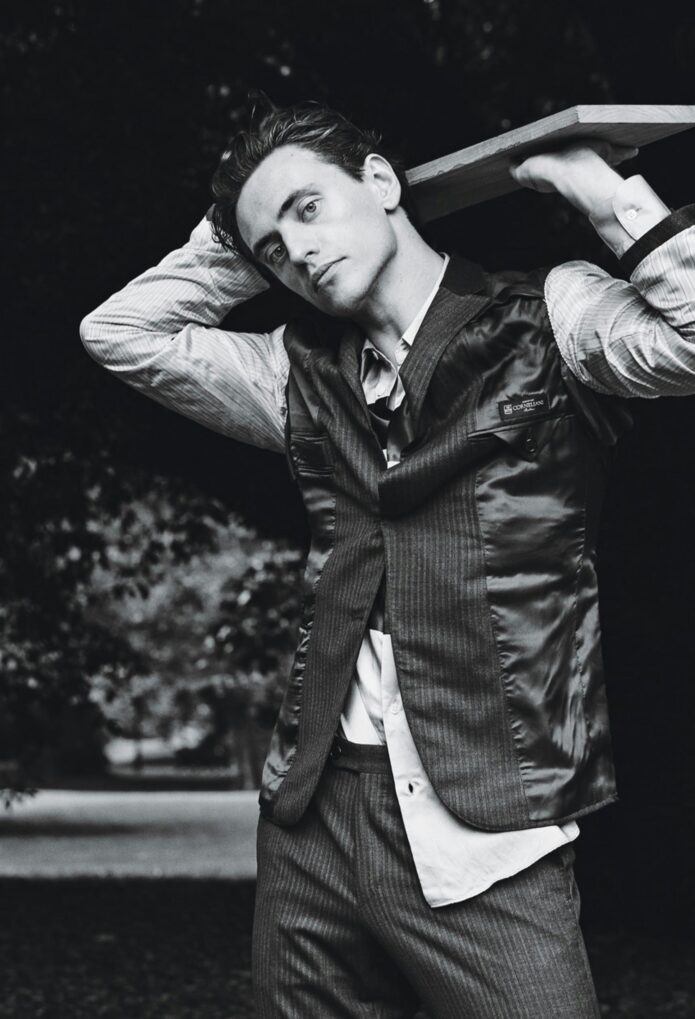
Sergei Polunin’s tattoos appear across his chest, shoulder, upper arm, abdomen, hands and wrists. The view changes with his pose: a turn can hide a side mark, while an extended torso stretches the abdominal pattern. Editorial photographs and interviews document different parts of the collection over time.
W Magazine portraits show how the ink sits on Polunin’s body. Earlier Guardian coverage mentions tiger-scratch imagery, and its 2019 interview records his explanation of the Vladimir Putin portrait on his chest. The featured portrait identifies him; the tattoo evidence comes from the five inline photos.
Sergei Polunin’s shoulder and upper-arm tattoos
In the W Magazine photographs, dark, illustrative ink crosses Polunin’s shoulder and upper arm. The design follows the rounded shoulder into the arm, so it looks broader when he turns toward the camera and narrower when his body angles away. Scars and other marks also appear in the frame, making the shoulder’s texture part of the portrait.
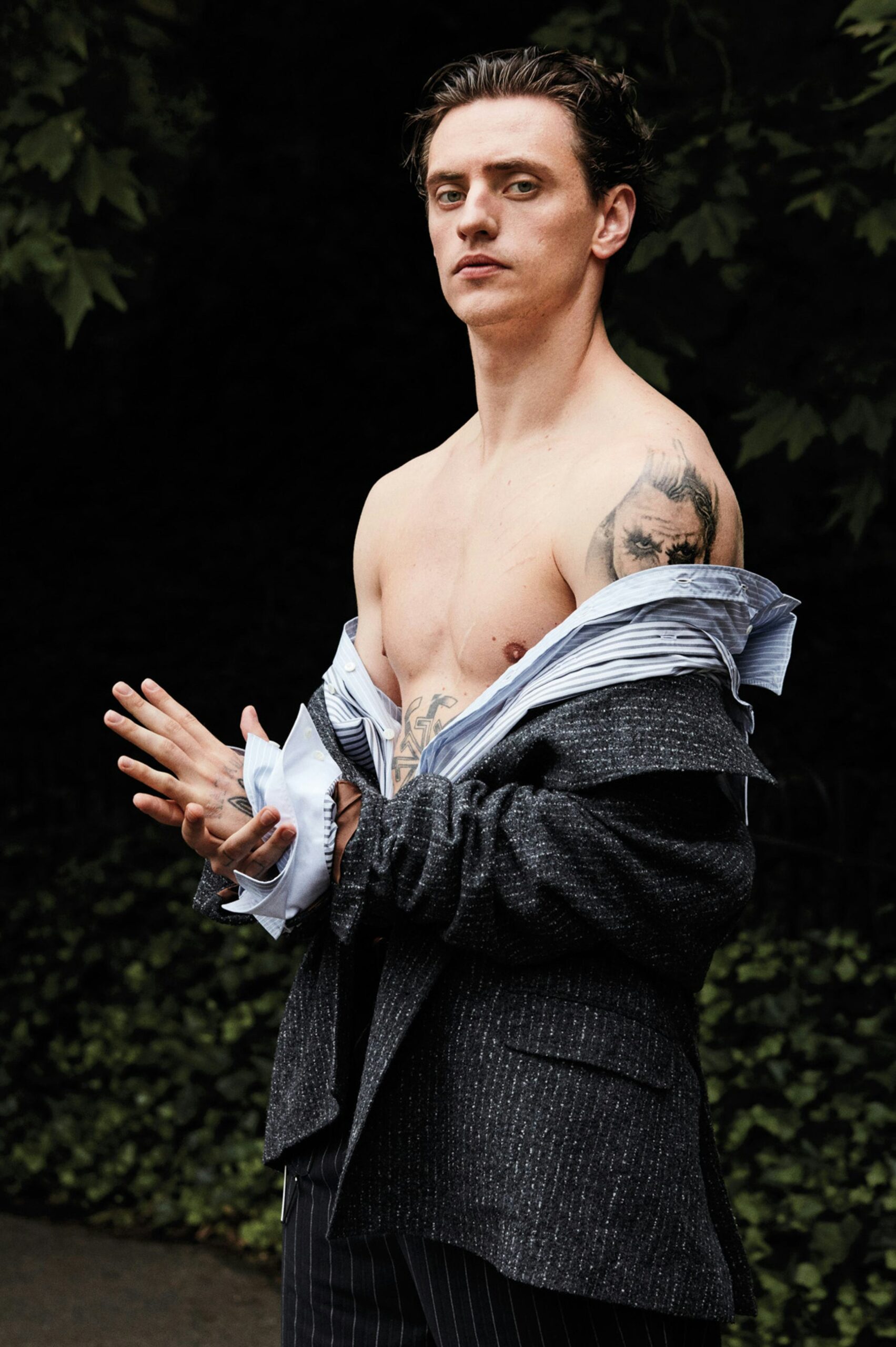
These images show dark ink across the shoulder and upper arm, following the curve into the deltoid. They don’t name an artist or date, and no source explains the surrounding marks. His posture and the light change how broad the design looks from frame to frame. The W Magazine view keeps enough of the arm and torso in frame to show where the shoulder work sits in relation to the rest of his upper body. A tight crop would lose that scale. Scars and skin texture remain visible around the ink, so the photograph is best read by the tattoo’s outline and placement instead of treating every dark mark as part of one design.
The geometric symbols across his abdomen
Several fashion photographs show geometric marks across Polunin’s abdomen. In the shirt-open frame, the central shapes sit below the chest and extend toward the side of the torso. From a distance they form a bold, dark composition; closer in, separate angles and blocks become easier to distinguish.
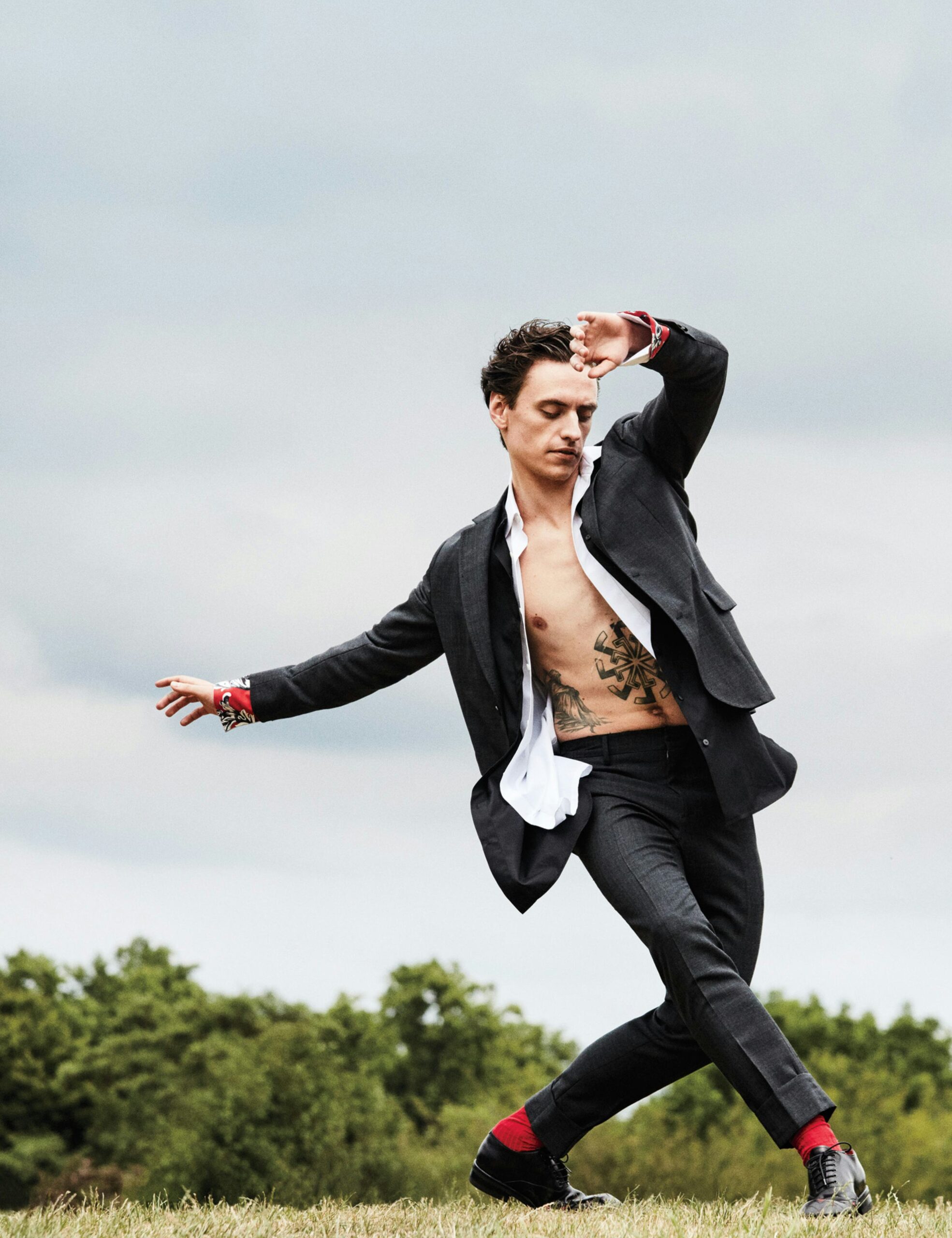
No published source gives the pattern an official title or explains every component. The central shapes form a dark, angular group below the chest and spread toward the side. As Polunin leans, the lower edge appears compressed; when his back and ribs extend, more of the same work is visible across the waist. Comparing the frames gives a better sense of its proportions than a tight crop on the central marks.
Hand and wrist tattoos in the fashion portraits
A seated W Magazine portrait keeps Polunin’s face, hand and wrist in the same frame. Smaller marks near the joints are easy to overlook in performance photos, where the fingers may be folded, extended or partly hidden by clothing. Here the hand is close enough to see as a separate tattooed area.
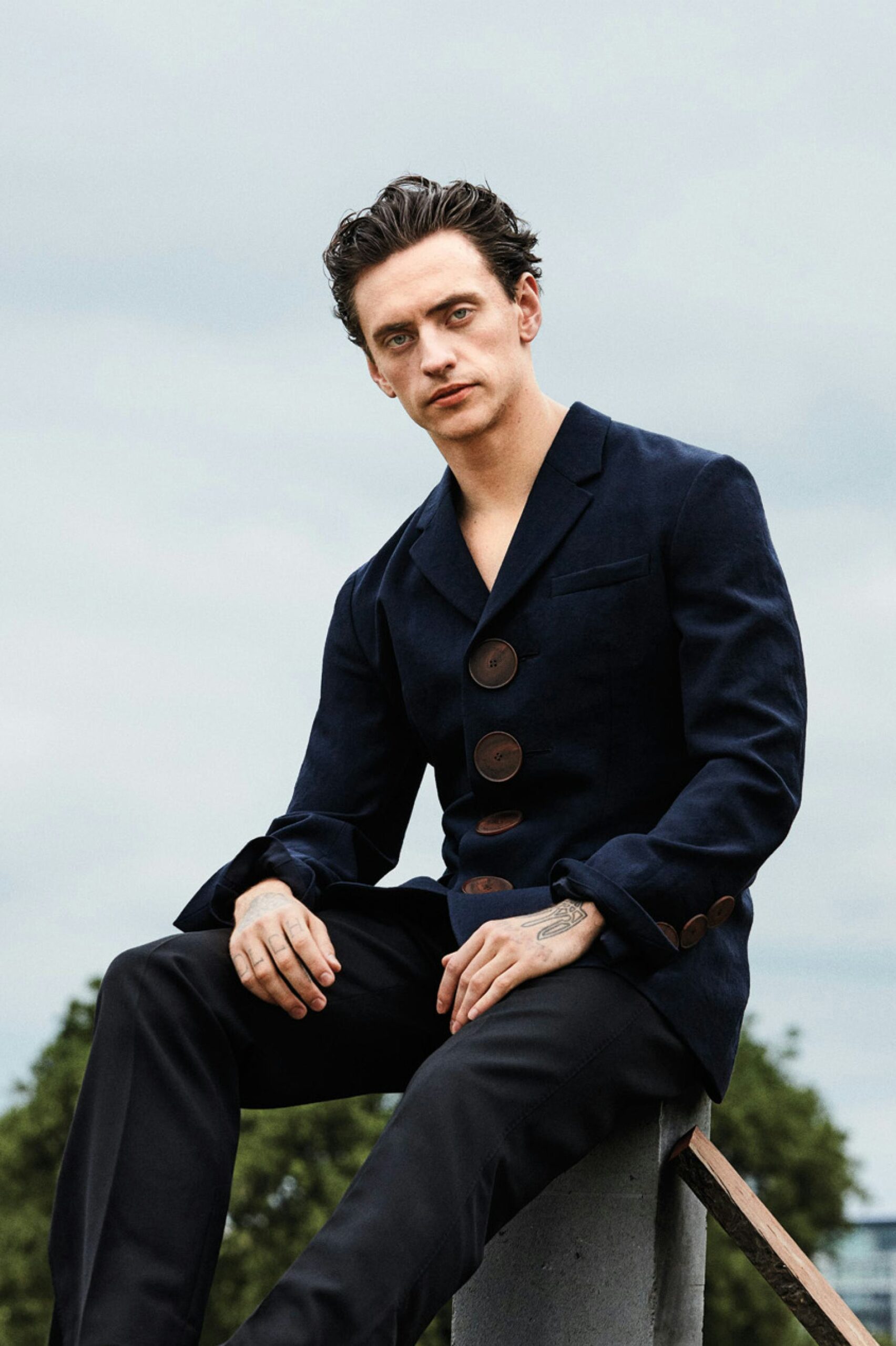
The hand and wrist marks are smaller than the chest and abdominal work. A slight turn changes what the seated portrait reveals, but no source gives the marks a personal story. The fingers bend and fold close to these tattoos, so some lines disappear when Polunin gestures or rests his hand against clothing. The seated W Magazine photograph keeps his face, hand and wrist together, which gives a clearer sense of scale than a cropped image of the marks alone. At screen size, some lines are too fine to transcribe.
The torso coverage and side tattoos
A shirtless outdoor photograph gives a wider view of Polunin’s torso. Shoulder ink, chest marks, the abdominal geometry and additional work near his side appear in one frame. The frame shows separate work at the shoulder, chest, abdomen and side at once.
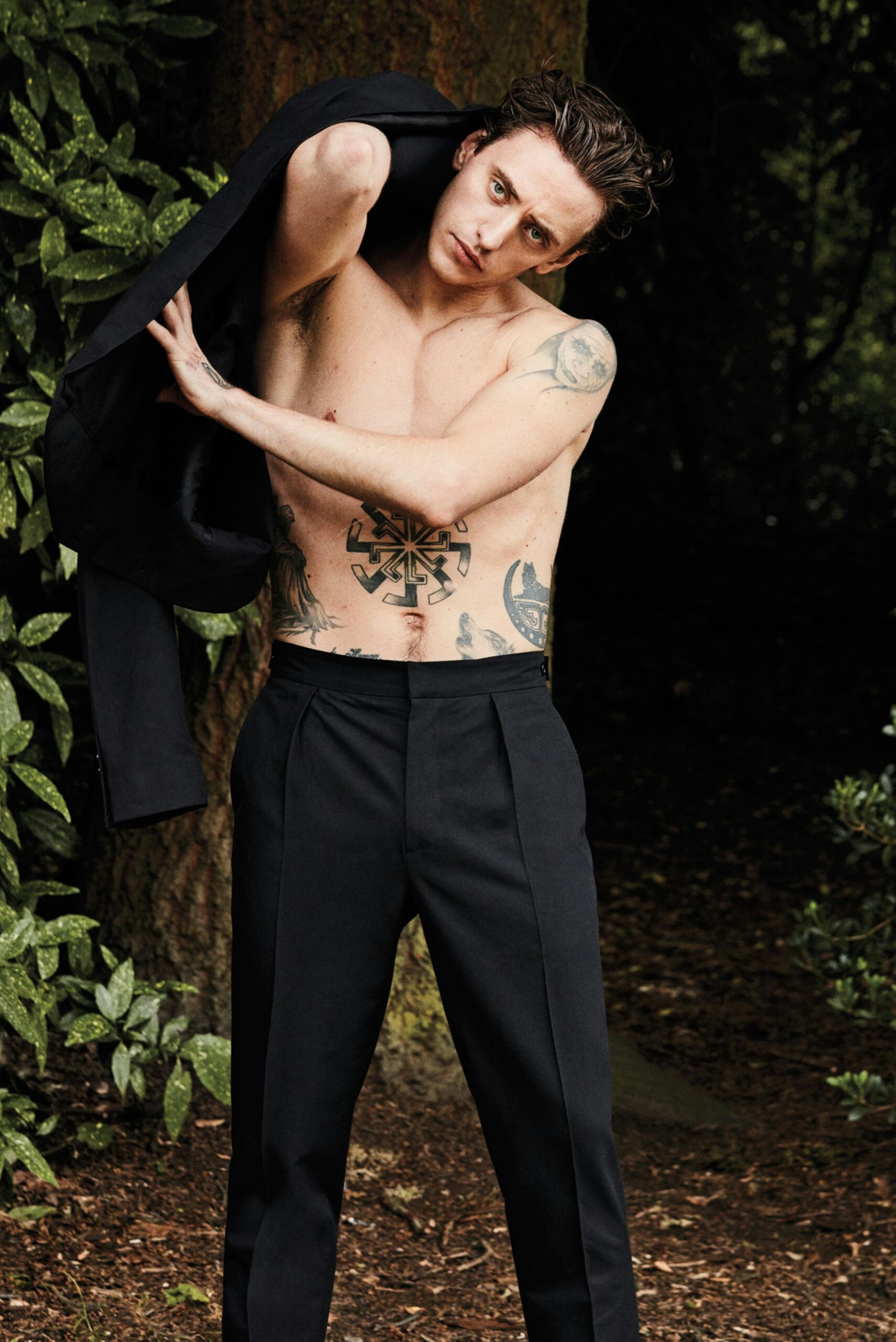
Shadows and scars make some edges hard to read. When Polunin twists, a rib mark slips out of view while chest ink catches the light. The photograph maps the visible areas without showing exactly where every design begins or ends. Its wider composition is useful beside the closer fashion portraits: it keeps shoulder, chest, abdomen and side in view at once. That makes it easier to see how several tattooed areas sit together without assuming that all of the dark work forms one continuous piece.
The Putin portrait and the public story around it
Polunin’s chest portrait of Vladimir Putin is the most widely discussed design in his tattoo record. The Guardian’s 2019 interview reports that he chose to have the portrait placed on his chest and connects it to his public statements about Russia and Putin.
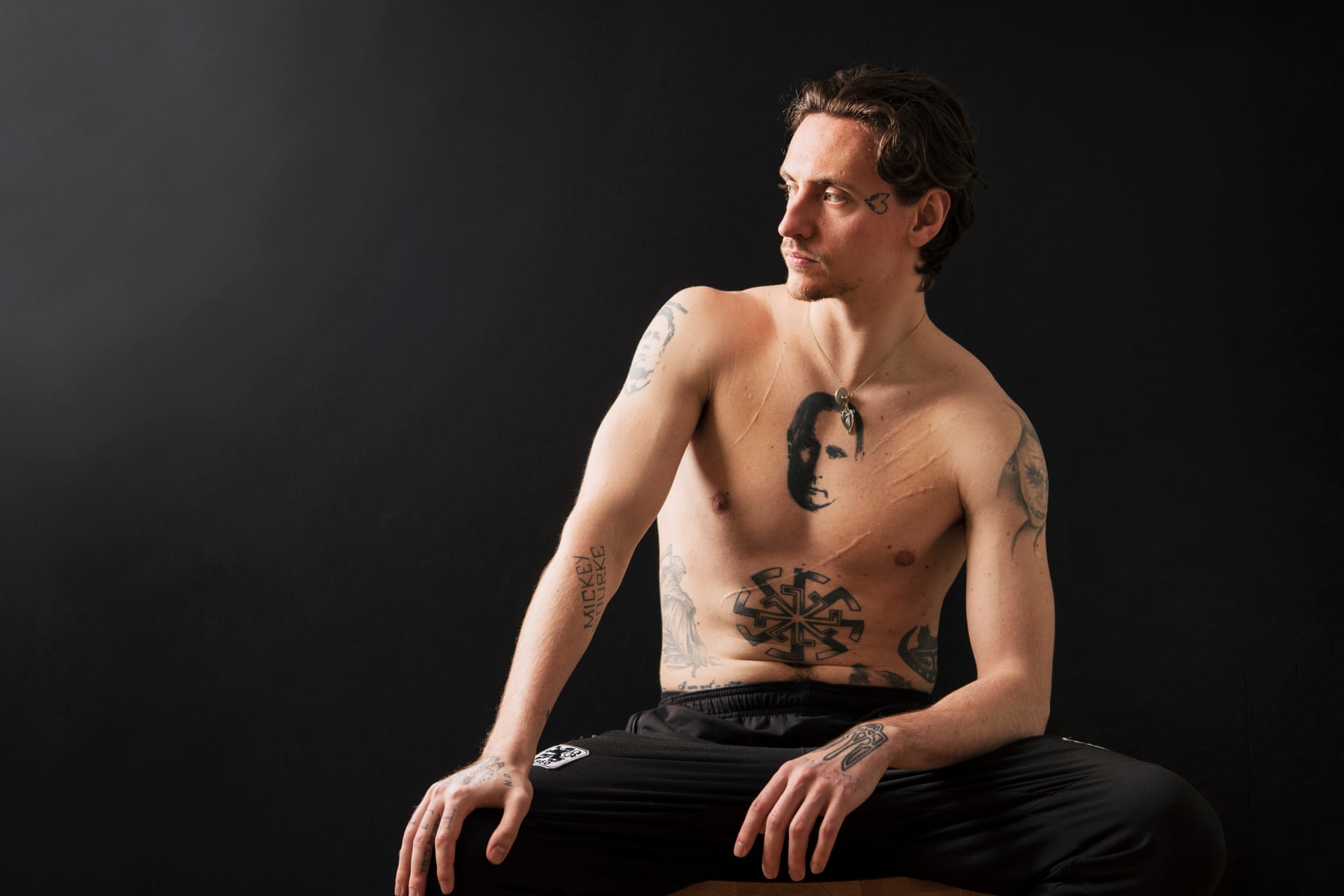
The interview records the reason Polunin gave for the portrait, and the photograph places it within a broader chest composition. It says nothing about the meaning of nearby marks. The portrait is the named design in this part of the record; nearby ink remains separate unless Polunin or a source identifies it.
The portrait drew attention as part of public discussion about Polunin’s views on Russia and Putin. The photograph shows the chest design; The Guardian interview records his explanation for choosing it.
Tiger scratches, scars and older visual references
Earlier Guardian coverage described Polunin as having numerous tattoos, including tiger-scratch imagery on his torso. That phrase is the source’s description; the photographs do not show every line clearly enough to map the whole motif.
Older photographs also differ in light, angle and crop. Tattoos can look different as skin and bodies change, and a historical description does not guarantee that every detail appears the same in a later image. It does establish that the torso imagery was part of the public record before these newer editorial portraits. The phrase “tiger scratches” supplies a useful historical reference, while the photographs remain the better guide to where the ink sits. Their resolution and lighting do not make every line easy to follow.
How the photographs show movement through the body
Each frame brings a different area forward. In one, Polunin’s hand is near the camera; in another, a dance-like pose stretches his abdomen; elsewhere, his chest turns toward the light. The designs may overlap in the wider body map, but these are distinct photographs and they do not all show the same placement.
W Magazine reveals shoulder texture and hand marks; the Guardian material shows the chest portrait and abdomen, while the outdoor photograph keeps more of the torso and side in frame. Each angle fills a gap left by the others. Some views overlap in the areas they show, but the pose, crop and lighting change what can be read. The seated hand portrait, for example, preserves the fingers and wrist in the same frame; the torso images make the abdominal pattern easier to compare with the chest and side.
What the published sources confirm and what they cannot
W Magazine shows shoulder and upper-arm coverage, a fashion frame reveals geometric abdominal marks, and a seated portrait shows hand and wrist ink. The Guardian interview names the Putin chest portrait; earlier Guardian coverage refers to tiger-scratch imagery.
No source in this group gives a complete tattoo count, a verified artist list or meanings for every symbol. Pose, distance and light obscure some marks. Their meaning stays open where the interviews give no explanation.
How to use the images as responsible body-art references
The photographs are useful for comparing scale and placement. The shoulder design follows the deltoid into the upper arm; the geometric work sits below the chest and runs toward the side; the hand and wrist marks lie close to moving joints. Those positions explain why each design looks different as Polunin turns or gestures.
The images show dark ink, but changing light and photo processing do not establish a complete color palette. Anyone using them for tattoo reference can study the deltoid placement, the geometry’s relation to the waist and the hand marks near moving joints. A tattoo artist would still need a clear original image and a discussion of scale and line clarity before adapting any design. Crops can hide the hand, the edge of a chest portrait or how abdominal shapes continue around the torso. The five separate photographs preserve more of that context.
Polunin’s wider performance identity
In ballet, line and extension shape how a body reads on stage. When a costume exposes Polunin’s shoulders, chest or arms, the ink becomes part of the silhouette. Dark illustrative work stands out against the clean lines of a performance pose.
His posture helps explain why the same designs shift across portrait and performance photography. A still frame can flatten the shoulder or compress the abdomen; movement shows how the body changes position. In a dancer’s pose, an extended back can make the abdominal geometry read wider, while a twist puts one side of the torso into shadow. The stage silhouette also changes with costume, so some tattoos appear only in frames where the shoulders, chest or arms are exposed.
Performance clip and closing notes
The clip below shows Polunin performing to “Take Me to Church” for TheEllenShow. It gives a moving view of his performance; the photographs remain the clearer record of tattoo placement.
Across the five photographs, the clearest named work is the geometric abdominal pattern and the Putin portrait discussed in the Guardian interview. The shoulder, upper arm, hands, wrists and side show additional coverage, while older tiger-scratch references help place the collection in its longer public history. Many individual marks remain unnamed.