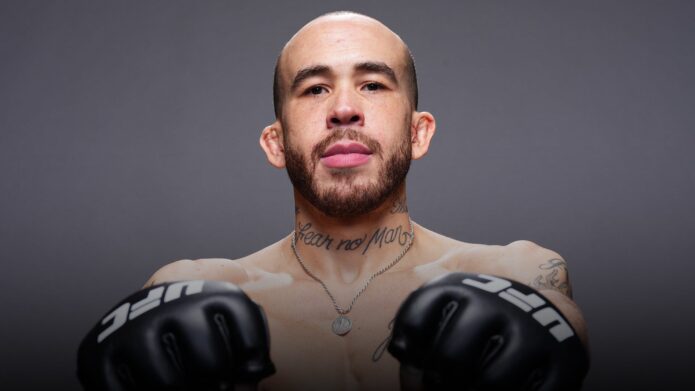
Sean Woodson’s largest tattoo stretches across his lower abdomen: a St. Louis skyline with the Gateway Arch behind the buildings and script above it. Higher up, “Fear no Man” runs across his neck, while shaded portraits and other designs sit on his arms. The skyline anchors the collection, with clear skin separating it from the smaller pieces.
The St. Louis skyline tattoo across his stomach
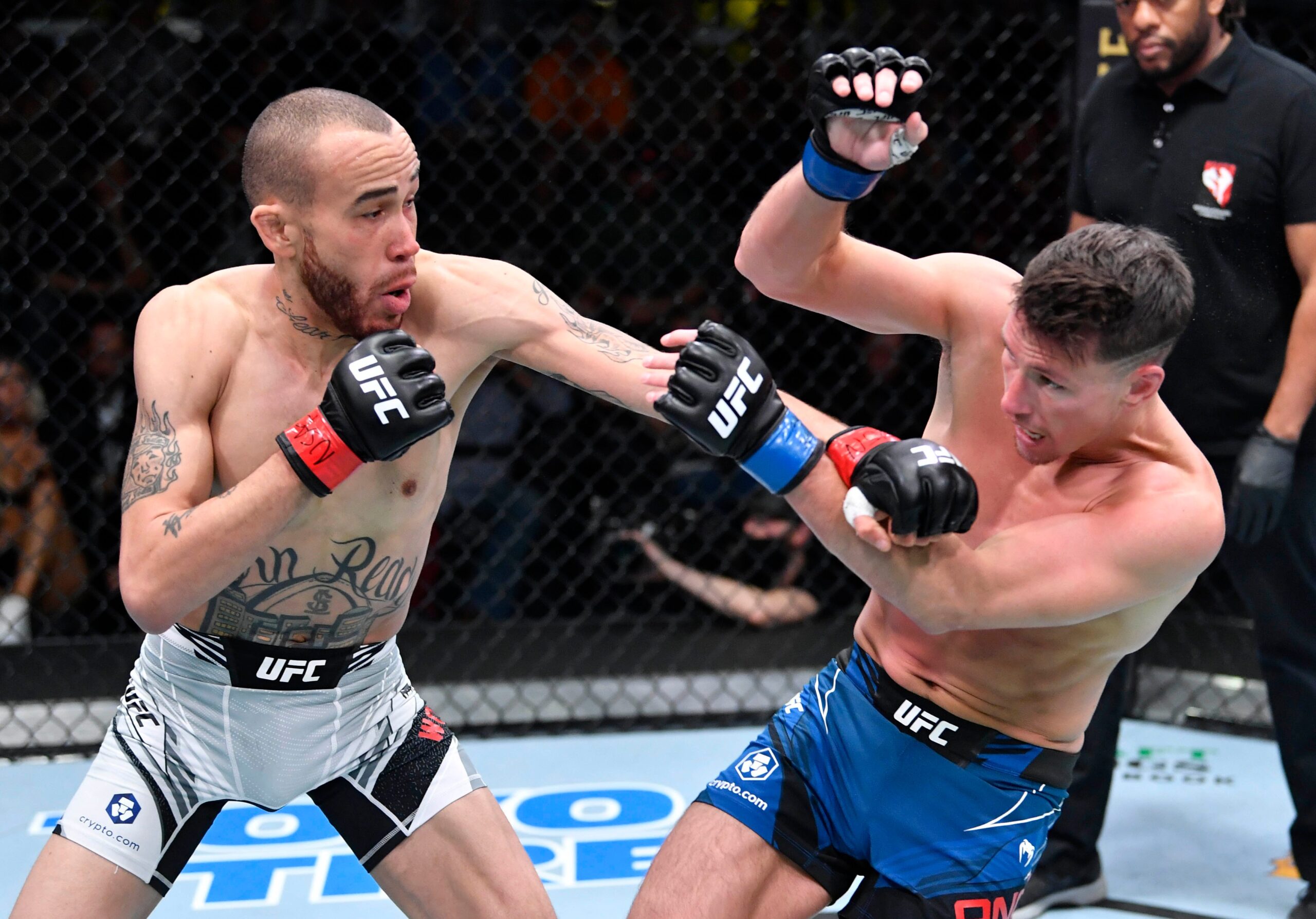
A fight photo with Collin Anglin gives the clearest view. Woodson is on the left in white shorts with red tape around his gloves; the city scene runs horizontally above his waistband. Rectangular buildings, small window marks and the Arch’s broad curve make up the skyline.
The large, flowing cursive above it appears to read “Born Ready.” They follow the same wide band as the buildings, rather than climbing toward his chest. The Arch makes the St. Louis reference clear; the smaller marks inside it aren’t distinct enough here to identify as other landmarks.
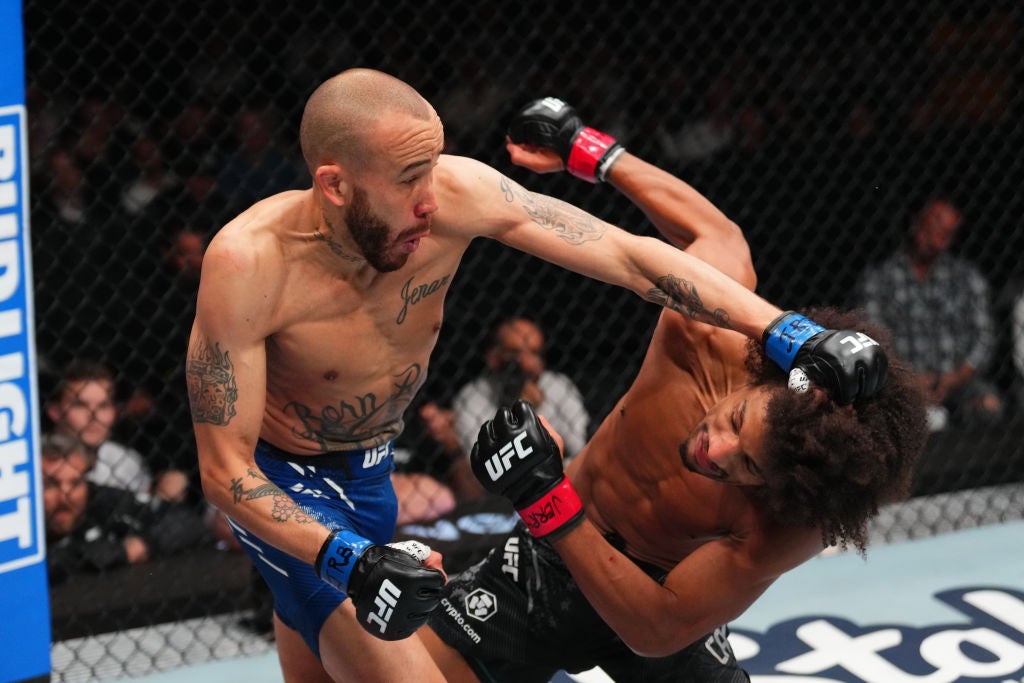
A May 2024 fight photo with Alex Caceres shows the design from an angle as Woodson reaches across the frame in blue shorts. The curve of his torso compresses the skyline, but its placement and overall shape remain easy to follow.
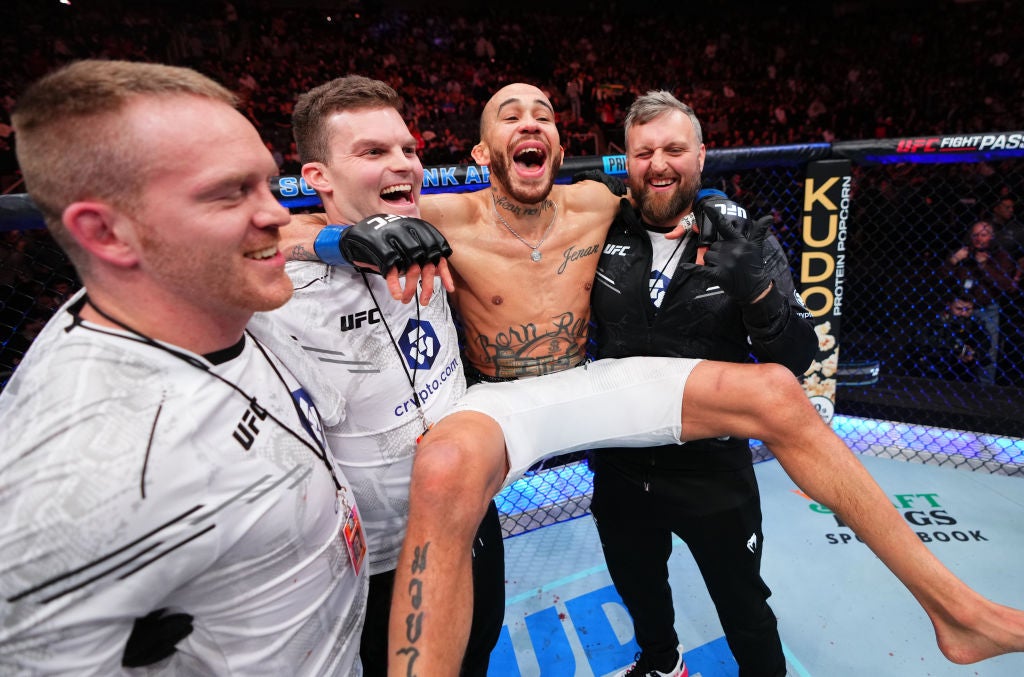
After UFC 297, a celebration photo shows Woodson smiling as his team carries him. The letters and Arch are still recognizable above his white shorts, though the busy scene makes this a less direct view than the Anglin photo.
The neck script and upper-arm tattoos
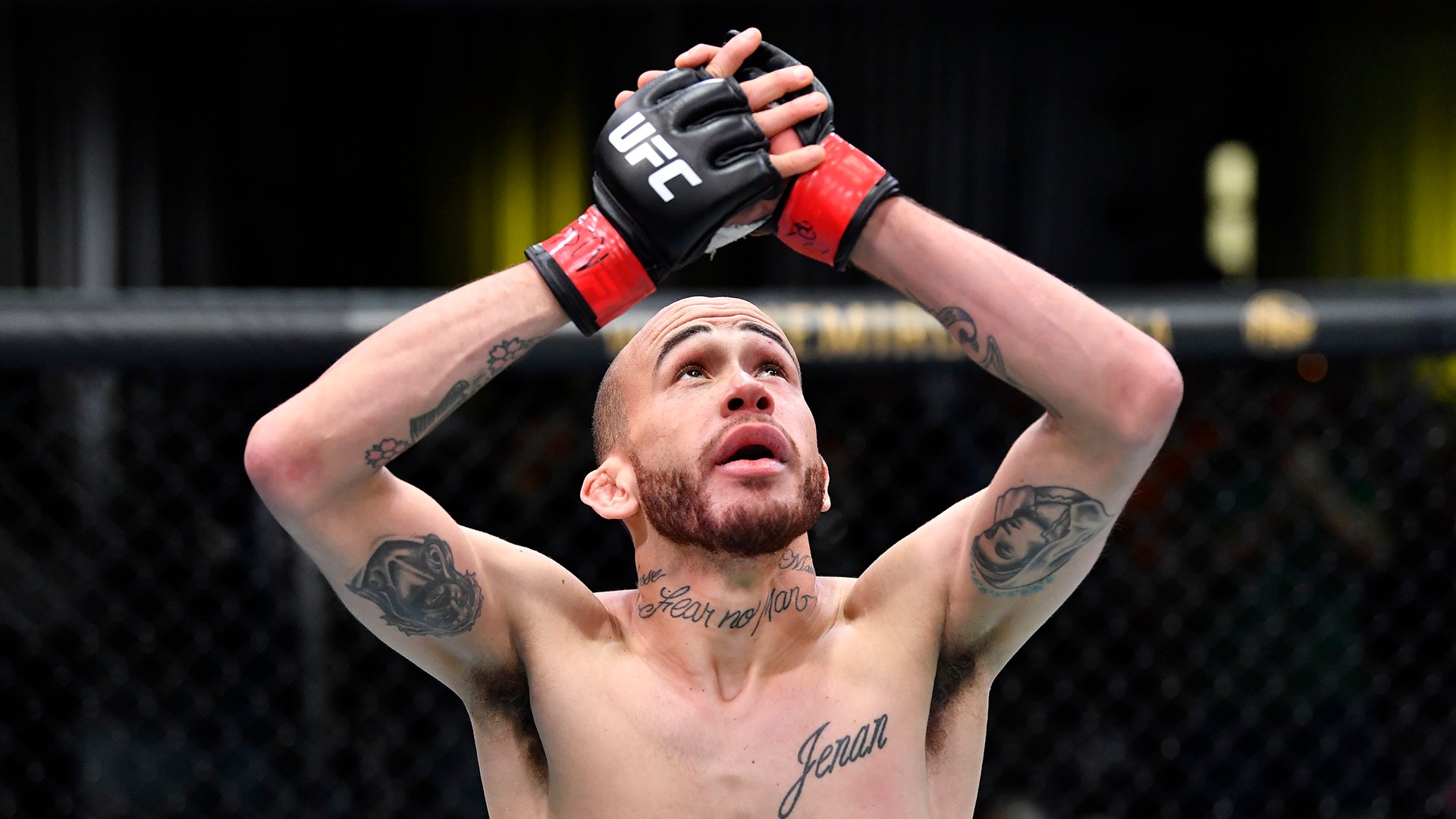
The script across the front of Woodson’s neck reads “Fear no Man.” In the raised-arm photo, the phrase is fairly level; when he tilts his head in the celebration image, more of it shows beneath his beard. The words are clear, but the photos don’t give a date or explain why he chose them.
His raised arms also reveal separate designs on the inner upper arms: a dark horned face on the right and a hooded female portrait on the left. They’re shaded illustrations, not a connected sleeve. Their contrast may prompt religious or good-versus-evil readings, but the images alone don’t establish that’s what Woodson intended. Script on his left chest and additional forearm work are partly hidden in these angles.
Hometown context: fighting in St. Louis
Woodson fought Caceres at St. Louis’s Enterprise Center in May 2024, putting the city pictured on his abdomen into a hometown setting. In an April 2025 UFC interview, he recalled attending a UFC event there in 2018 and hoping he’d one day compete in that arena. When the promotion returned in 2024, he was on the card.
The skyline is a clear St. Louis reference. The photos and interviews don’t say which personal memories Woodson connects with it, so the city’s meaning beyond home remains his to explain.
Life inside the preparation room
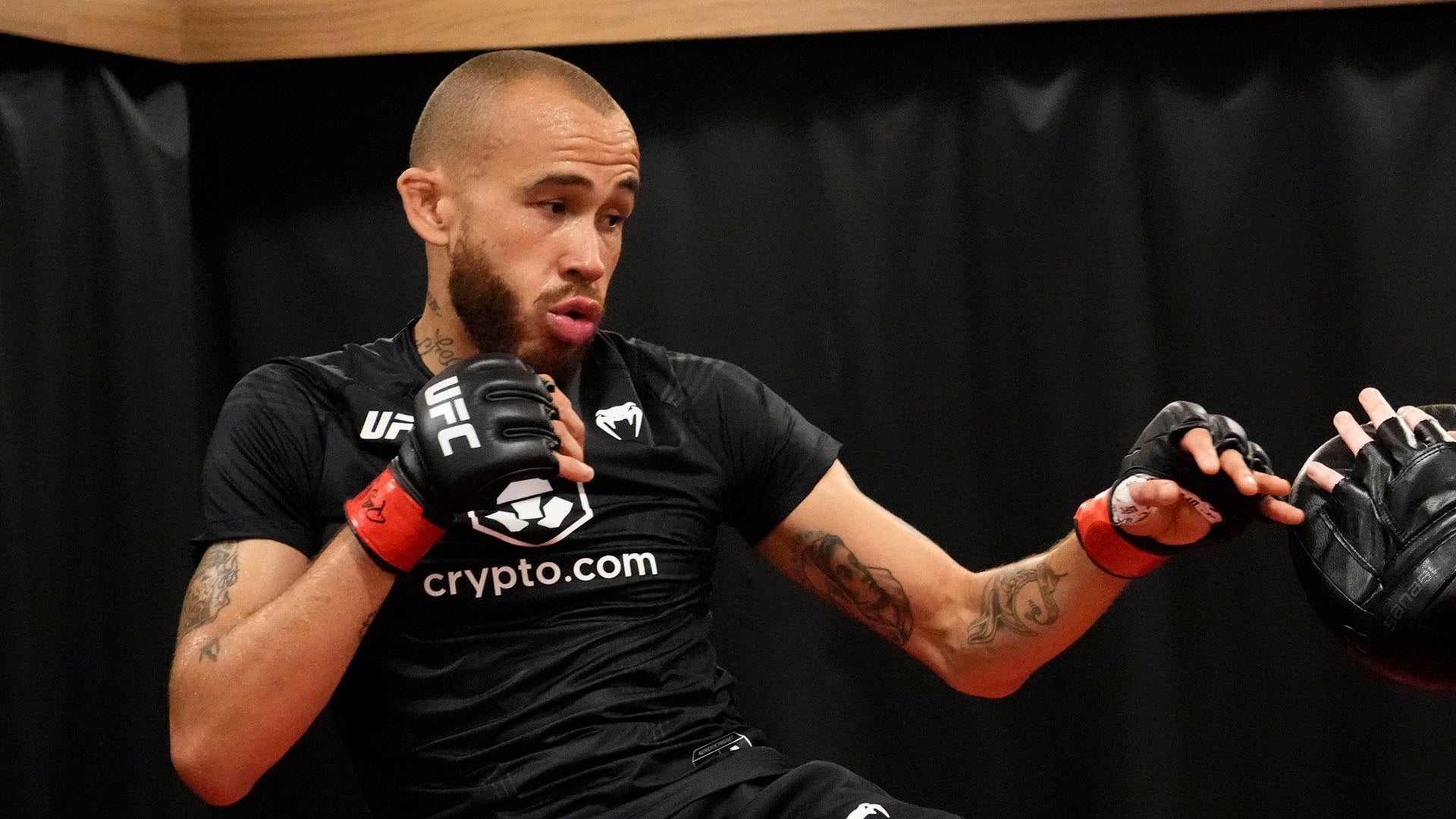
A backstage photo from UFC 278 in August 2022 shows Woodson warming up toward a pad in a black UFC shirt. His torso is covered, while parts of the arm tattoos remain visible. It’s a view of his preparation, not a close look at the skyline. A separate weigh-in portrait shows him making a heart with his hands, his face visible.
Woodson’s UFC profile says he started training and had his first boxing match at eight. It also says people at his gyms called him “The Sniper” because of how he picked his shots. Those details describe his sporting background without turning the tattoos into explanations of his fighting style.
How Woodson’s collection fits together
Woodson’s larger pieces use different shapes: long, sweeping lettering at the neck, a wide architectural band on the abdomen and shaded figures on the arms. Clear skin separates them, so the portrait work doesn’t merge with the chest or throat lettering.
For a contrast in placement, see Alessio Sakara’s tattoos. Sakara’s fuller coverage creates a more continuous surface, while Woodson’s designs sit in distinct areas. The official UFC Shanghai interview below gives a moving view of Woodson in August 2026, with his posture and the camera changing how the tattoos appear.