JoJo’s tattoos are easy to miss in a red-carpet photo, but several have stories she’s shared herself. She started getting ink as a teenager and has talked about choosing designs around music, travel, family and home, including at casual tattoo parties.
Most of the pieces sit on her wrists, forearms, hands, fingers, neck or behind an ear. There’s no giant sleeve or dramatic back piece; the collection is mostly fine script, small symbols and designs that come into view when she moves.
JoJo’s illustrated forearm tattoos

The illustrated design on JoJo’s forearm shows clearly when she raises her arms. It’s more illustrative than the small wrist script, and stands out among the darker pieces.
Other lines and shapes share the arm, some near the elbow and others lower down. They look as if they were added at different times, giving the forearm a collected feel.
JoJo has said her tattoos connect to different moments in her life. The design is visible in this photo; she hasn’t given its meaning in every interview, so there’s no need to fill in the gaps.
The ear and finger tattoos are tiny but easy to see up close
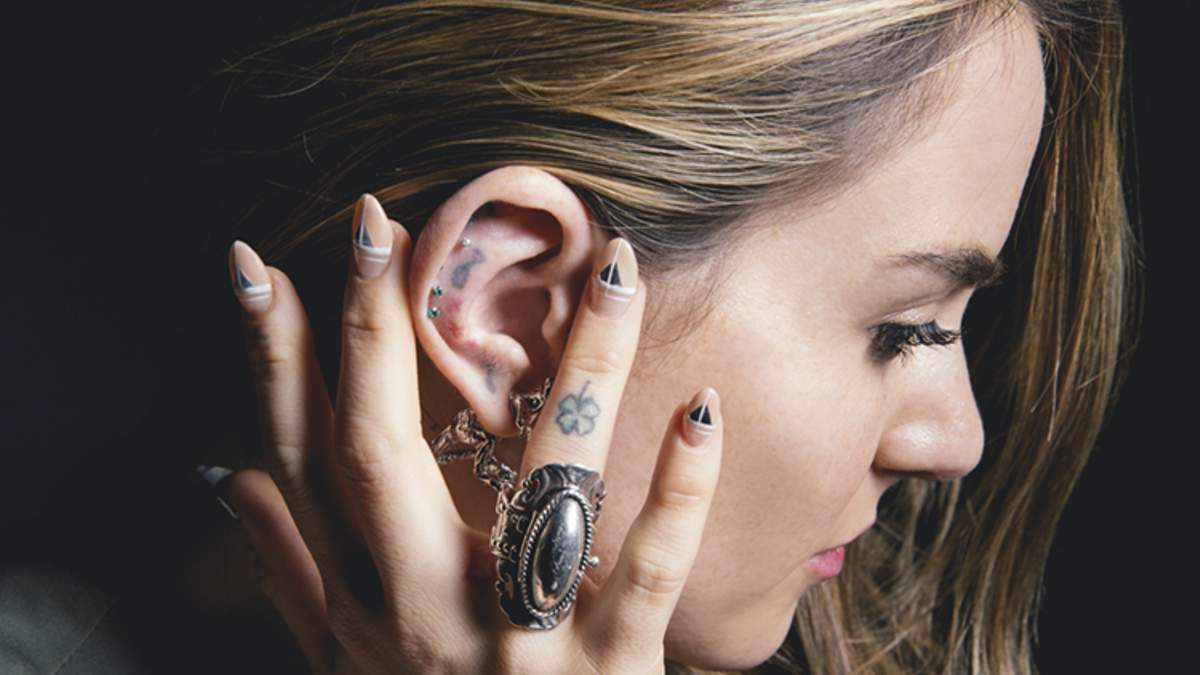
A close-up from her tattoo interview shows music notes near the ear, small finger tattoos and a shamrock on her hand. Rings and piercings crowd the same area, but the ink is still clear.
The music notes fit with what JoJo has said about music being central to her life. Placed behind the ear, they’re a quiet reference that can still show in a portrait.
Event photos don’t show everything. Hair, makeup and jewelry can hide tiny finger and ear pieces; a close portrait makes them easier to see.
Her forearm carries script, symbols and a few personal reminders

Her forearms carry some of the most legible tattoos: cursive script, small symbols and fine-line designs. A T-Rex skeleton has also been noted among the pieces, along with the playful designs elsewhere in her collection.
JoJo has said she got her first tattoo at 17. The collection has grown over time: some marks are neat and delicate, others more spontaneous, and they weren’t planned as one sleeve.
With short sleeves, the forearm ink is visible without taking over her look.
The wrist map tattoo was made to look a little imperfect
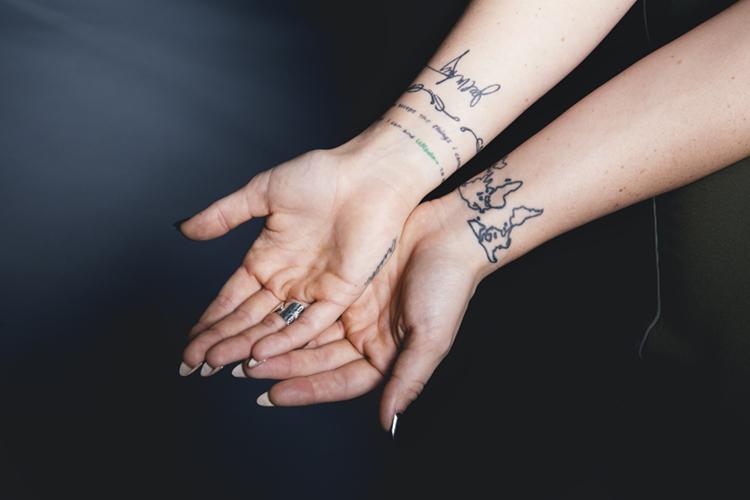
One standout is a hand-drawn map on her wrist. JoJo says it came from a casual tattoo party in an apartment. Its loose lines aren’t meant to be a perfect atlas; that’s part of the idea.
She has talked about loving travel and spontaneity, and said the map fits both. On her wrist, it can stay under a sleeve or show when she wants it to.
Script and other small marks sit on both wrists too. From a distance they can resemble bracelets; up close, the separate lines and words come into focus.
JoJo’s arm and hand tattoos include music references

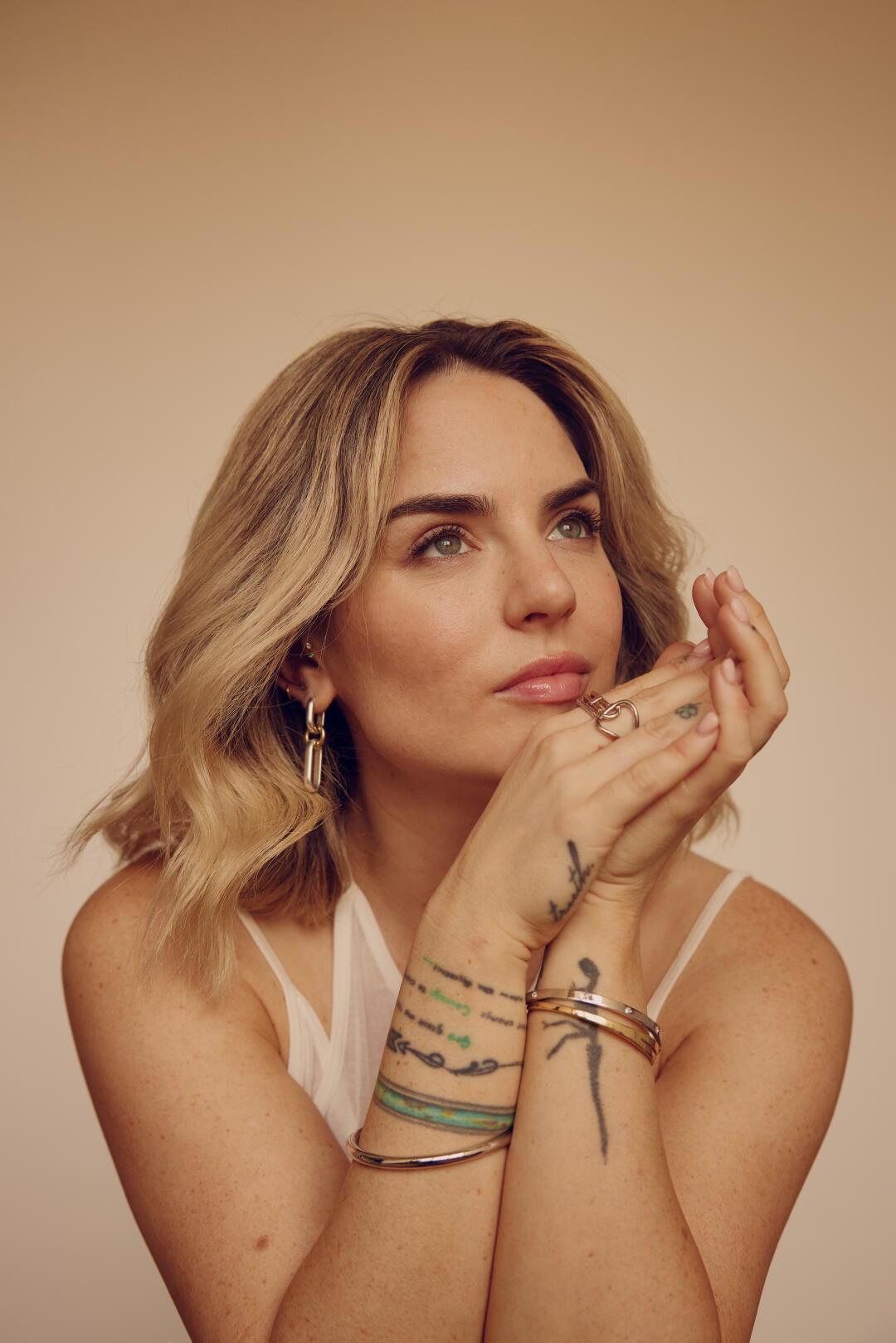
JoJo’s arm tattoos run from her wrists toward her forearms, where script and symbols are separated by open skin. Some marks reach onto her hands and fingers, where they’re harder to cover.
She has mentioned the phrase “married to music.” It fits the songs and performance references in her collection, along with the people who shaped her life. The tattoos are personal; they aren’t presented as a puzzle for fans to solve.
With rings, bracelets and sleeveless clothes, the arm pieces show in portraits without turning every photo into a tattoo shoot.
A relaxed portrait shows how JoJo wears her ink

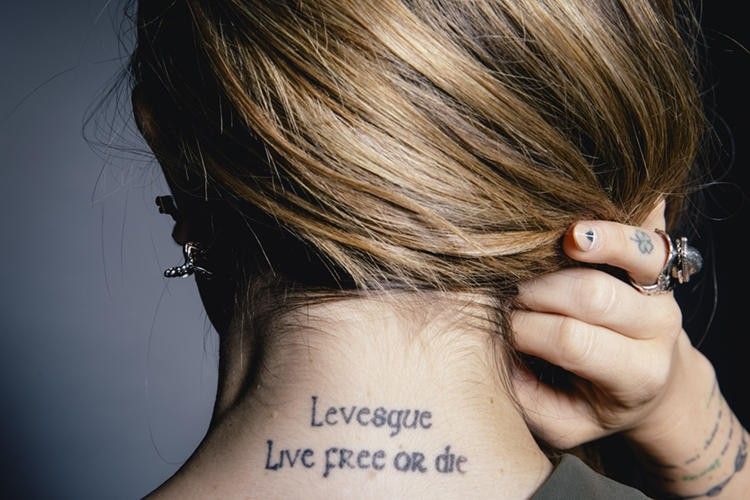
“Levesque” and “Live Free or Die” run along the back of JoJo’s neck, pointing to New Hampshire, the state referenced by the motto. It’s a direct link between the tattoo and home.
Hair can cover the lettering or leave it visible when she wears it up. Wrist pieces may show in a casual photo; the neck tattoo often needs a close crop or a deliberate pose.
Most of the visible detail sits on her forearms and hands, while the neck piece connects the collection to home. Her tattoos lean toward small memories and everyday identity, not one giant statement.
What JoJo has actually said about her tattoos
JoJo has shared plenty about her tattoos. In her iHeartRadio interview, she talked about her first tattoo, the wrist map, music notes, the T-Rex and the Serenity Prayer. She also discussed a piece connected to her late father’s signature.
That first-person detail is more useful than guessing from an Instagram photo. The smaller designs are easier to read when you separate what JoJo has explained from what a picture only seems to show.
Her designs range from clean lettering to rough sketches, with music and home in the stories she’s shared. To compare her ink with other singers, browse the musician tattoos category.
The first music clef and her father’s signature
In her 2016 iHeartRadio interview, JoJo said the music clef on her finger was her first tattoo, which she got at 17. She also explained that, after her father died, she took a written statement of his to an artist to have his signature copied onto her wrist.
The same interview covers her T-Rex skeleton, wrist map, Serenity Prayer and ear notes. These are stories she shared herself, which gives them a firmer basis than a meaning inferred from a photograph.
The Truth lettering on her hand
In its 2016 interview with JoJo, The FADER noted cursive Truth lettering on her right hand. That identifies a visible word without assigning it an additional private meaning.
Read JoJo’s iHeartRadio tattoo interview and The FADER’s interview.
More musician tattoo guides
More photographs of JoJo’s tattoos