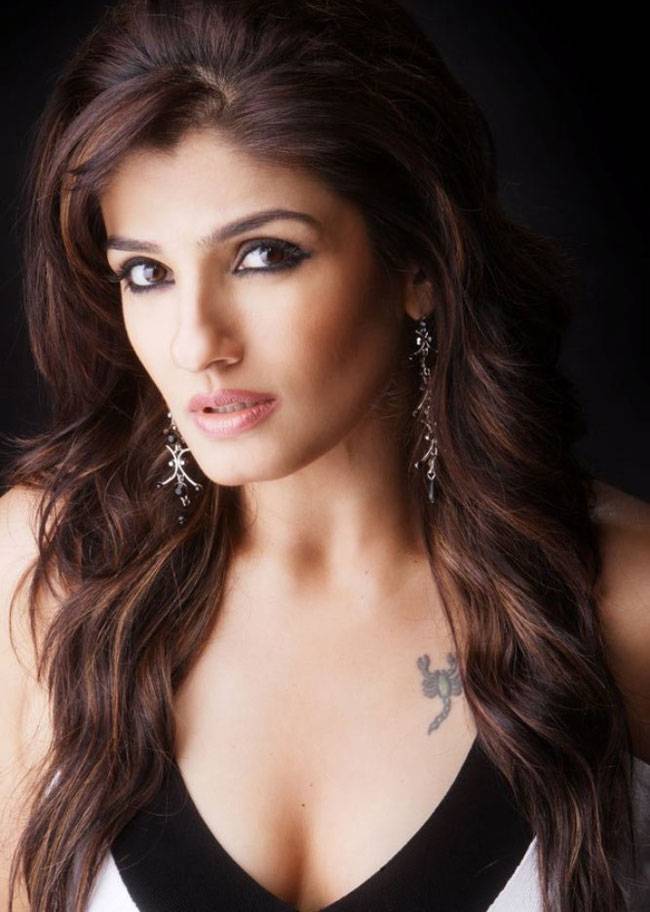
Raveena Tandon has never treated tattoos like random decoration. Her ink is small, personal, and tied to the people and animals she cares about. That makes her collection more interesting than a wall of flashy pieces. You can actually see a point of view in it: a scorpion close to her heart, her children’s names across her back, and paw prints connected to her love of animals. The result is small symbols with real emotional weight, not a display built for attention.
She recently talked about all three while discussing her daughter Rasha’s own tattoo. The conversation also brought back the funny story of how Raveena first tried to get her scorpion design copied from a newspaper. The tattoo has been around for decades, but the story behind it is still wonderfully messy. She took the sketch to a parlour that mostly did eyebrow tattoos, and the artist apparently mistook the scorpion for a prawn. Raveena had to explain, very firmly, that it was a bichhu, not a zhinga.
That mix of sentiment and humor is the best way to look at Raveena Tandon’s tattoos. They aren’t presented as a perfect, carefully branded collection. They’re memories that happened to stay on her skin. The story matters as much as the drawing.
The scorpion near her heart
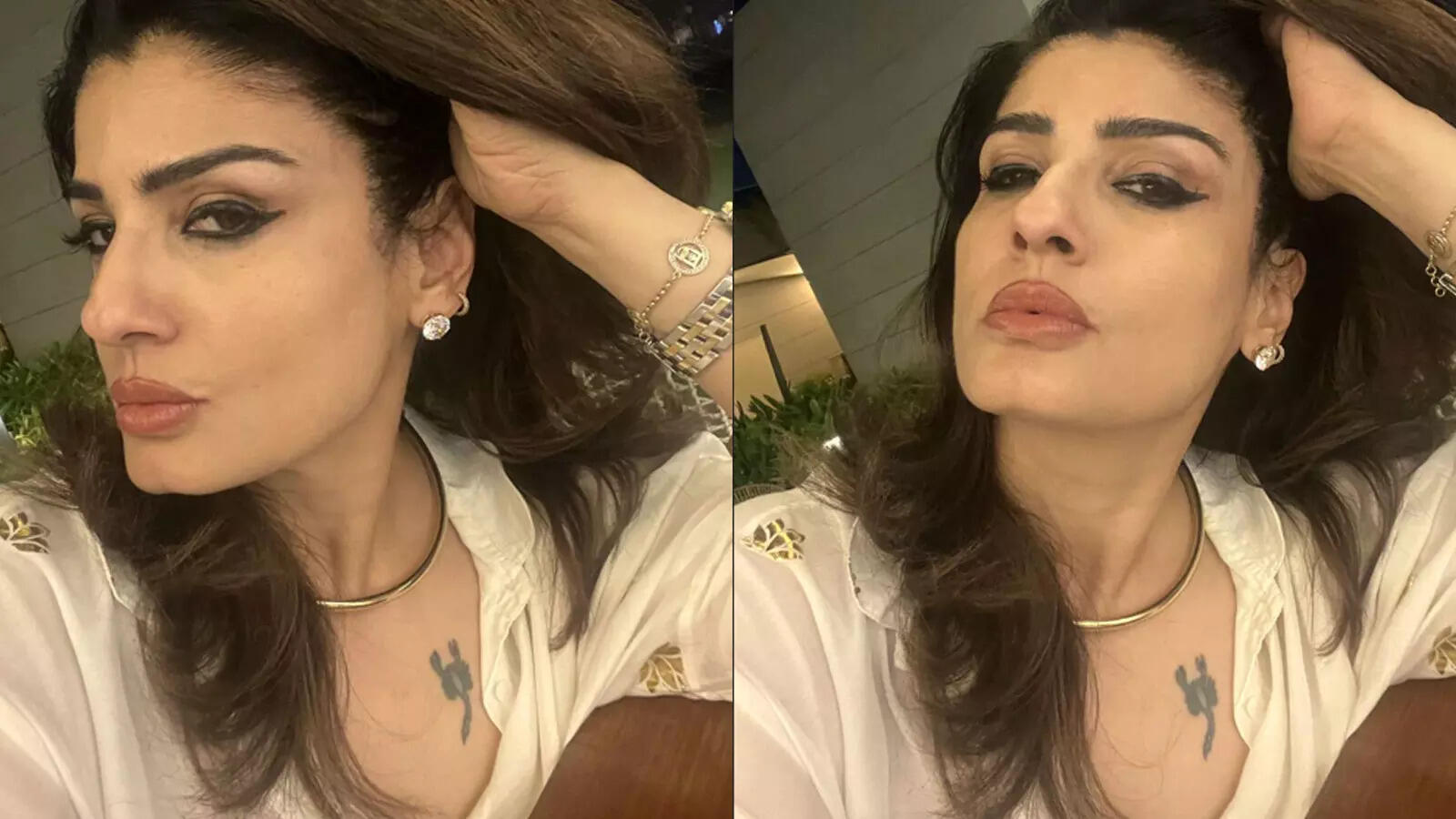
The clearest piece in Raveena’s collection is the scorpion on the upper left side of her chest. It sits close to the heart, just below the collarbone, and it’s easy to spot in the photos she shared. The design is compact and dark, with a recognizable body, raised pincers, and a tail that gives the little figure its movement.
Raveena has said the scorpion is connected to her Scorpio sign, but she doesn’t describe it as a disposable fashion choice. She has called the tattoo emotional. That distinction matters. A zodiac tattoo can be a quick, familiar symbol, or it can become a personal marker that follows someone for years. In her case, the story around getting it is part of the tattoo’s meaning.
She recalled taking a scorpion picture from a newspaper to a tattoo parlour. The place was known for eyebrow work, so when she asked where she should have the design placed, the artist misunderstood the request. The exchange became funny in hindsight, but it also shows how different the tattoo scene was when Raveena got the piece. She eventually had it done properly in Los Angeles in 1992.
Visually, the placement works because the scorpion has a little breathing room. It isn’t buried in a large chest composition or surrounded by lettering. The open skin around it lets the shape read immediately, while the location keeps it intimate. You notice it when the neckline drops, but it isn’t the first thing you see in every outfit.
That’s a useful lesson if you’re thinking about a zodiac tattoo. The symbol doesn’t need to be huge to feel deliberate. A small animal can carry plenty of character if the linework is clean and the placement gives it room. The important choice is deciding whether you want the sign to work as a public emblem or a private reminder. Raveena’s version leans personal, with the placement doing quiet work.
The names on her back
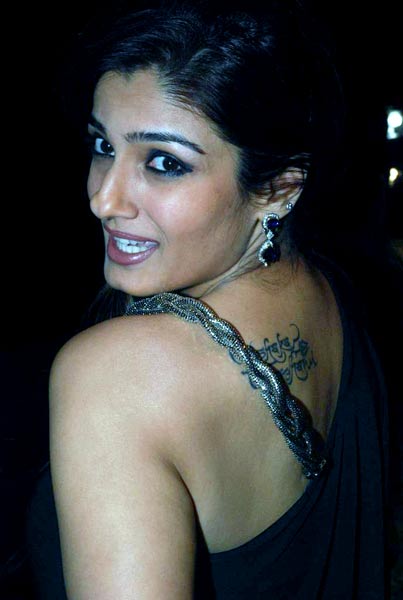
Raveena has also said that her children’s names are tattooed across her back. The older photograph gives a glimpse of script lettering high on the back, close to the shoulder line. It isn’t a giant graphic piece. The words sit in a more discreet area, which makes the tattoo feel like something chosen for family rather than for a red-carpet reveal.
Name tattoos can be very simple, but the details still matter. Script has to be readable without becoming stiff, and the size has to suit the curve of the back. Letters that look graceful on paper can bunch together once they move across skin. Raveena’s tattoo has a light, handwritten feel in the visible photograph, and the placement lets the text follow the body instead of fighting it.
There’s also a difference between putting one name on your skin and building a small family record. Raveena has spoken about the names of her children together, so the design isn’t just a single tribute. It’s a way of keeping the family group close. The back is a good spot for that kind of piece because it gives the lettering space while staying easy to cover.
If you like the idea but don’t want a literal copy, think about what part of the concept matters most. It could be a name, a shared nickname, a date, or a line of handwriting that only your family uses. The strongest version won’t be the one with the fanciest font. It’ll be the one that still means something when the trend has moved on.
Paw prints for the animals she loves
The third part of Raveena’s collection is made up of paw prints. She has described them as a tribute to the four-legged animals she loves, and that fits with the way she talks about pets in general. The tattoo is less about one specific dog or cat and more about the place animals have in her life.
A paw-print tattoo can be very literal, but it can also be a surprisingly flexible design. You can make it tiny and delicate, stack several prints, or use a single print as the centre of a larger tribute. Raveena’s explanation keeps the idea open. It doesn’t have to represent one pet forever. It can stand for animal companionship as a whole.
That’s why the piece works beside the scorpion and the names on her back. All three tattoos are simple enough to read quickly, but none of them feels generic once you know the reason behind it. The scorpion marks her sign and a moment in her life. The names point to family. The paws reflect a long-running love of animals. They’re small symbols with very different emotional jobs.
If you’re considering a pet tattoo, take a little time before settling on a stock paw print. A tattooer can redraw the pad shape from a real photograph, turn a collar tag into a small line-art design, or build a print into a larger piece. You don’t need a portrait to make the tribute specific. Sometimes one unusual toe shape or a tiny scar is enough for the design to belong to one animal and no other.
A family conversation
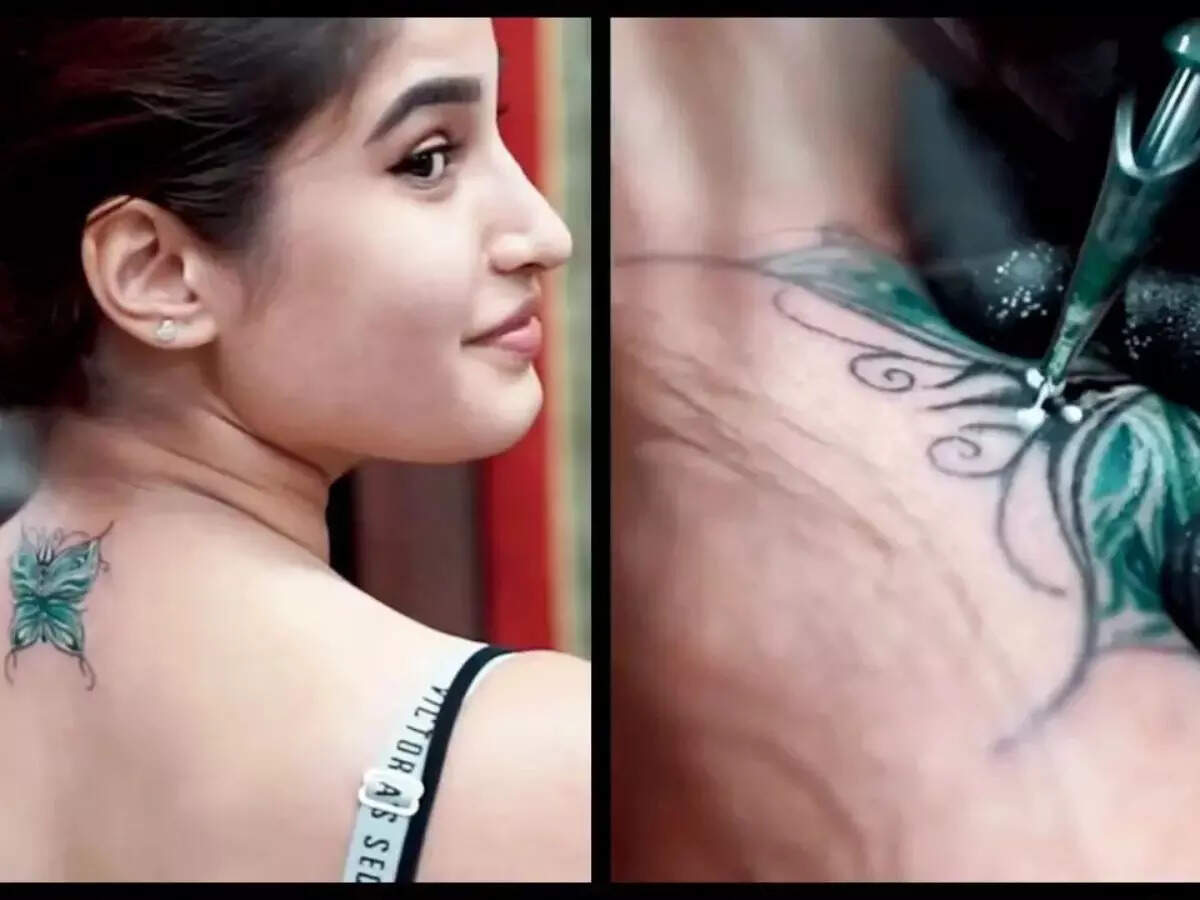
Rasha Thadani’s butterfly tattoo isn’t part of Raveena’s own collection, but it helps explain how tattoos are discussed in their family. Rasha’s design was shown as a butterfly with a trident at its centre, and Raveena described the meaning behind it in an emotional television conversation. The butterfly was connected to the memory of Rasha’s grandfather, while the colours and symbols carried religious meaning for her.
The mother-daughter connection is easy to see without pretending that they have matching tattoos. Raveena’s own ink is built around family, animals, and a zodiac symbol. Rasha’s design is more elaborate and spiritually specific. They’re different tattoos, but both treat the body as a place for memory rather than a blank canvas for whatever is popular that week.
That’s a good reminder for parents and children thinking about getting tattooed together. Matching doesn’t have to mean identical. Two people can share a subject, a colour, or a private reference while choosing designs that fit their own personalities. A family tattoo feels more natural when everyone gets something they actually want to wear.
A second look at the family story
Raveena has also appeared in photos with detailed mehendi on her hands, including patterns that reference her family. Those designs make a useful contrast with her permanent tattoos. Henna can be festive, temporary, and tied to a particular celebration. A tattoo stays with you through ordinary days, different jobs, changing clothes, and years when the original moment feels far away.
The visual language can overlap, especially when a tattoo uses fine lines or traditional motifs, but the commitment is different. Raveena’s comments about tattoos being emotional come back to that point. A design doesn’t have to be large or dramatic to be permanent. The small scorpion on her chest has lasted because it means something to her, not because it takes up half her body.
If you like the look of mehendi, you can borrow the rhythm of the patterns without turning a temporary celebration into a direct copy. Ask an artist about fine-line vines, geometric borders, or a symbolic shape that can be simplified for long-term clarity. The tattoo should be redrawn for skin and time. Mehendi is a useful reference, but it isn’t a stencil.
Why the collection feels connected
Raveena’s tattoos don’t use one obvious style. The scorpion is a small figurative image. The names are script. The paw prints are simple symbols. That variety could feel scattered, but the meanings keep the collection together. Each tattoo points toward something real in her life, and none of them seems to exist only to fill empty space.
There’s a quiet confidence in that approach. A lot of celebrity tattoo coverage focuses on the biggest, darkest, most visible pieces. Raveena’s collection works in the opposite direction. You have to look a little closer. The designs are easy to cover, but they aren’t vague. Once she explains them, the reasons are direct: family, animals, and a personal sign.
That’s also why it’s better to describe these tattoos plainly instead of inventing a deeper meaning for every line. The scorpion is linked to Scorpio and a long-ago tattoo story. The back lettering carries her children’s names. The paw prints represent her love for animals. Those facts are enough. A tattoo doesn’t become more meaningful because someone assigns it a dramatic symbol it was never meant to carry.
Making the idea yours
Raveena’s collection offers a few solid design ideas without asking anyone to copy it. Start with the subject that still matters when nobody else is watching. Family names, a pet’s paw, or a zodiac animal can all work, but only if the connection is yours. If the only reason you like a design is that it appeared in a celebrity photo, give it more time.
Think about placement early. A chest tattoo can stay private and still be easy to show. Back lettering gives words room to breathe. A hand or wrist design is visible often, which can be comforting or annoying depending on your work and your tolerance for questions. The best location is the one that matches how you actually want to live with the tattoo.
Bring references, but don’t bring a screenshot and ask for an exact duplicate. The scorpion photo, the older back image, and the paw-print idea can show an artist what you mean, but your proportions and skin are different. Let the tattooer adjust the line weight, size, and angle. Good tattoo design is a conversation, not a photocopy.
And remember that small tattoos still need care. Fine lines can soften, delicate script can blur, and hands or other high-use areas can fade faster. Ask how the design will age before the needle starts. A slightly larger, clearer version will usually look better years later than a tiny piece that only looked sharp in the first week. Clarity is part of the design.
The short version
Raveena Tandon’s tattoos are personal without being overworked. The scorpion near her heart carries a funny origin story and a connection to her Scorpio sign. The names on her back keep her children close. The paw prints reflect a love of animals that shows up in her life away from the screen.
The collection is a nice example of how tattoos can stay meaningful without becoming loud. A small symbol, a line of script, or a few simple prints can hold up when the reason behind them is real. If you’re looking for inspiration, borrow that part of Raveena’s approach: choose something you’ll still care about when the photo, the trend, and the conversation have all moved on.