
Phil Foden’s tattoos are a compact visual record of family, ambition and the football identity he has built in Manchester. The photographs do not show a random collection of isolated marks. They show two ideas returning again and again: the number 47, tied to his grandfather, and the phrase Sky is the limit, a statement of drive placed high on the neck. Reading the images together gives the collection a clear emotional centre.
Foden’s public profile makes the tattoos unusually easy to place in time. He came through Manchester City’s academy, established himself in the first team and became an England regular while still young. The ink appears in match-day photographs, training imagery and close-up tattoo coverage, so the record can be discussed without inventing meanings that have never been reported.
The 47 tattoo as a family tribute
The number 47 is the most recognisable element in Foden’s tattoo record. It is associated with his late grandfather, Ronnie, whose memory has been part of the player’s public story. Foden has explained that the number was chosen as a tribute, giving the mark a specific personal meaning rather than leaving it as an unexplained piece of football branding. The family connection is the key documented fact.
In the wider photographs, the 47 sits behind the ear and high on the neck. That placement matters because it lets the number appear in ordinary football images without becoming a full chest or sleeve composition. A side profile during a match can reveal it clearly, while a straight-on portrait may hide it beneath the angle of the jaw.
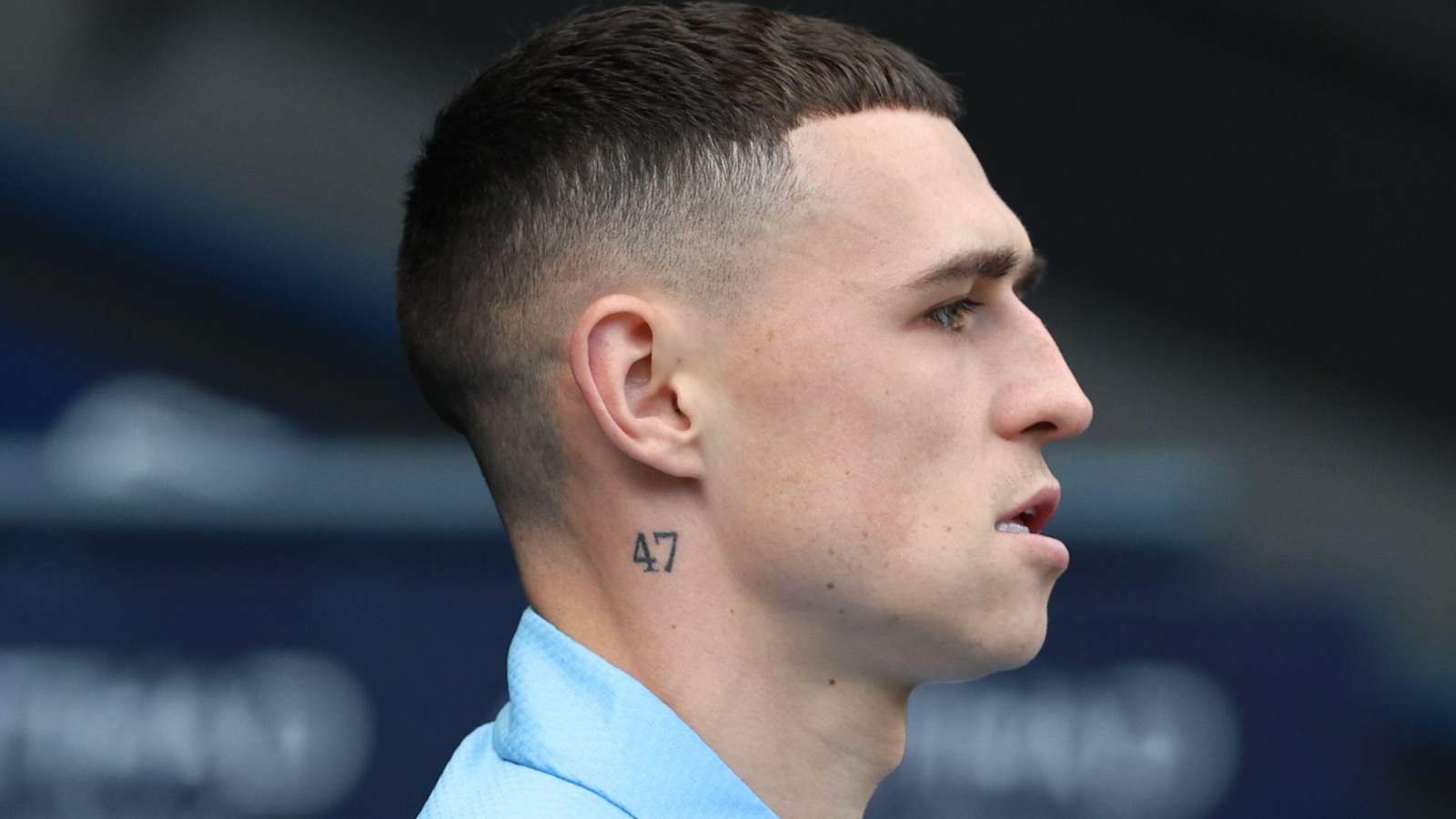
The F365 match photograph is useful because it shows the number in the same visual environment in which supporters usually encounter it. Foden is identifiable, the neck is unobstructed and the tattoo reads as a small, deliberate mark rather than as an indistinct dark patch. The image also separates the family tribute from the lettering lower down the neck.
That distinction is important when comparing photographs. The 47 is a concise numeric symbol. It communicates remembrance through a familiar family number, while its position keeps the reference close to Foden’s face. The design does not need an elaborate illustration to carry weight; the documented story supplies the meaning.
The 47 tattoo placement behind the ear
Behind-the-ear and upper-neck tattoos are often visible only when a subject turns slightly. Foden’s match and interview photographs repeatedly provide that angle. The placement makes the 47 easy to miss in a front-facing image, which explains why some casual galleries show his neck as clear even though the tattoo is present.
The Hayters photograph offers a different setting from the F365 image. It is a distinct England match frame rather than a near-repeat, and Foden’s profile turns the same area of skin toward the camera. The tattoo can therefore be compared across dates and kit contexts without treating one crop as several photographs.
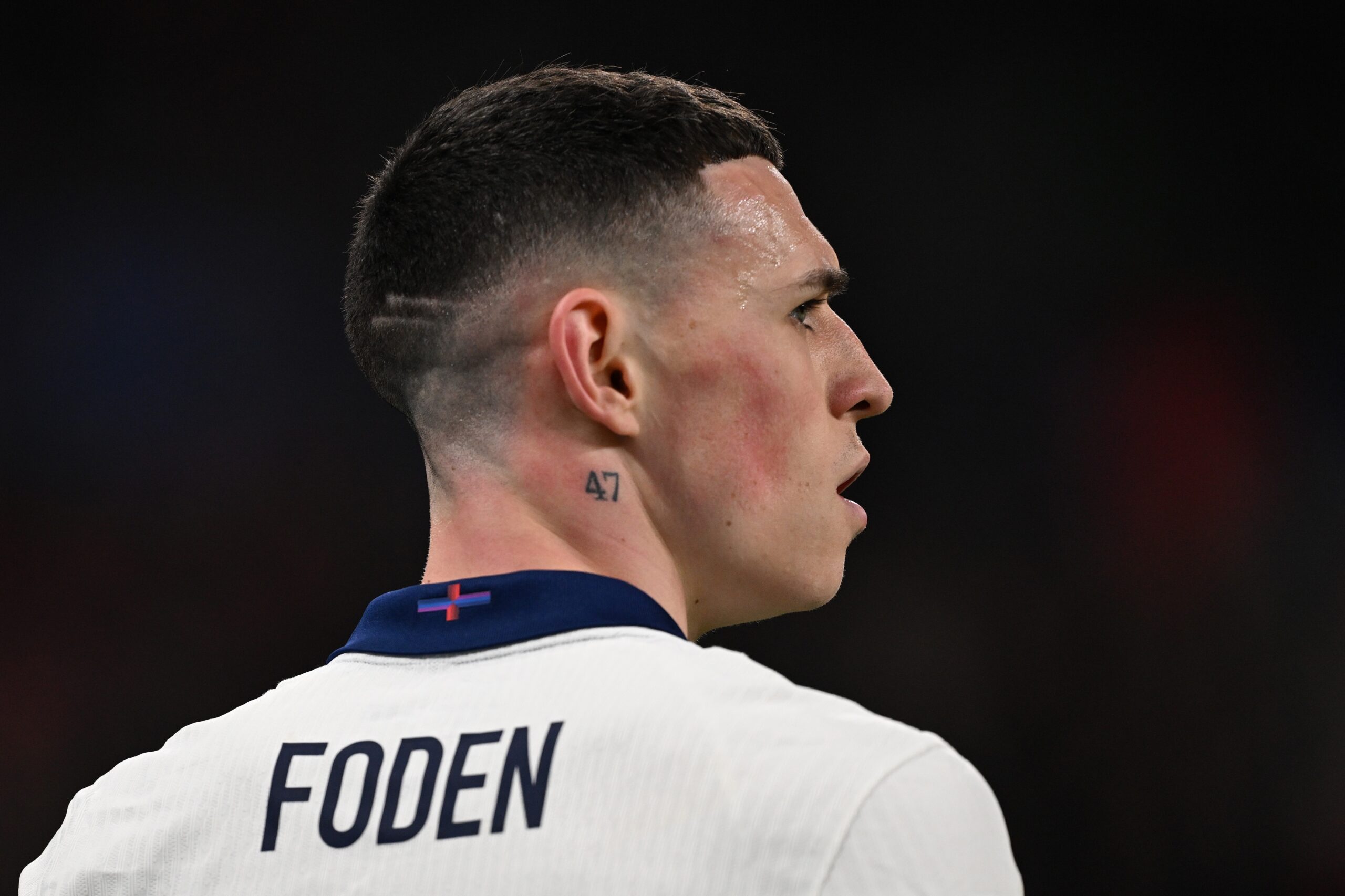
What remains consistent is the relationship between the number and the hairline. The design is positioned where a haircut, collar or camera angle can change its visibility. That is why source-page originals matter: a small web crop can erase the placement, while a wider native image shows how the number sits within the natural outline of the head and neck. The upper-neck placement is stable across the inspected photographs.
Placement also gives the tattoo a quiet quality. It is visible to teammates, family and supporters close to the pitch, but it is not the first thing a portrait announces. The choice supports the documented family meaning without turning the tribute into a theatrical centrepiece.
The Sky is the limit lettering
The phrase Sky is the limit is the larger and more overtly motivational element in the collection. Tattooed Images’ close-up photographs show the words running across the upper neck in a bold, readable treatment. Unlike the small 47, the lettering is designed to be read by anyone looking directly at the image.
The phrase also fits the public arc of Foden’s career. He has been described as a Manchester City academy graduate who moved into senior football and international competition at a young age. The tattoo does not prove a private thought at a particular moment, but its wording makes ambition a reasonable documented theme when paired with his career record.
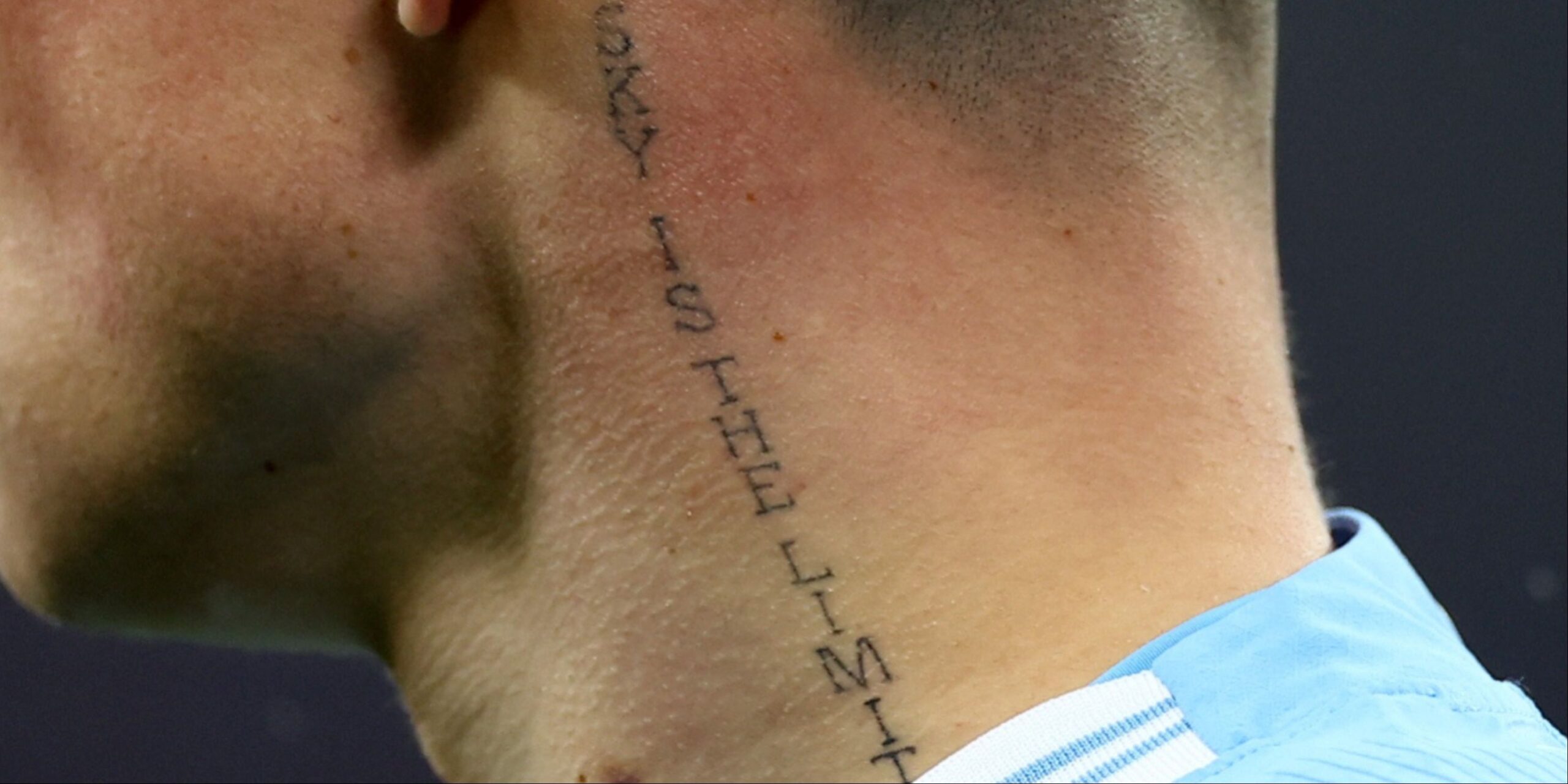
The first close-up presents the lettering as a complete phrase, allowing the viewer to see the scale and spacing. The photograph is not a generic portrait: it is a source-page tattoo image made to show the design itself. That makes it stronger evidence for the wording than a distant match frame where only a few dark lines are visible. The phrase is legible at native resolution.
Lettering on the neck is also sensitive to perspective. A turned head can compress the words, while a front view can flatten the curve of the skin. The close-up preserves enough resolution to read the letters and to see that the phrase is separate from the numeric tribute above it.
How the two neck tattoos read together
Seen together, the tattoos create a simple contrast. The 47 looks inward, pointing to family memory and a specific person. Sky is the limit looks outward, expressing a forward-facing ambition that suits the language of elite sport. One is a number with a documented personal story; the other is a sentence whose meaning is communicated directly by its words.
The close-up from Tattooed Images and the Manchester City News photograph are valuable for different reasons. The close-up gives the lettering priority, while the wider football frame places the upper-neck marks in a natural public setting. They should not be collapsed into one image, because they answer different questions about scale, placement and visibility.
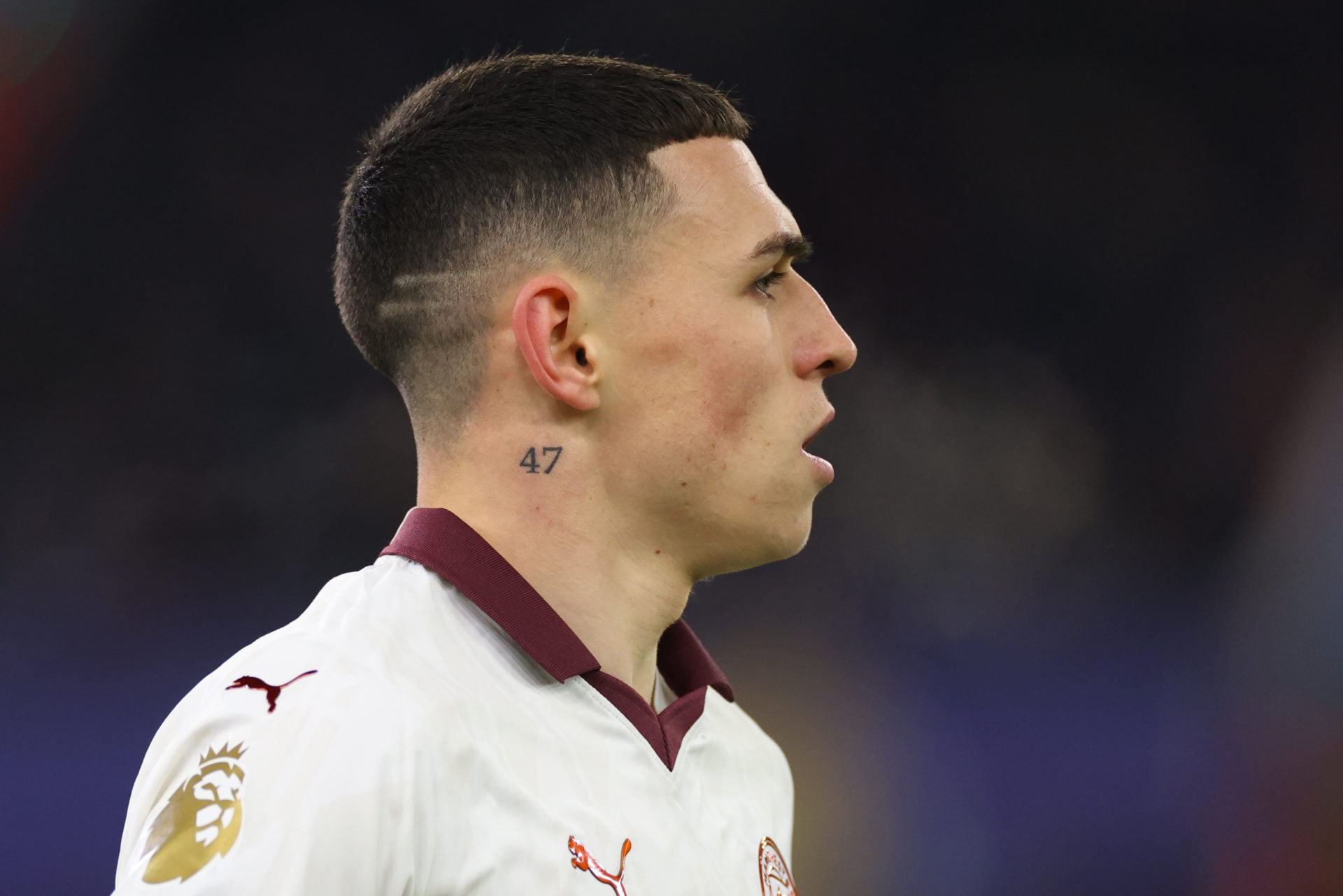
The wider frame also shows how quickly the two designs can be separated by posture. A slight turn exposes the 47, while a lower camera position may favour the lettering. This is a photographic fact rather than a change in the tattoos. Comparing multiple angles avoids the common mistake of assuming that a mark has disappeared simply because the subject has moved.
There is no reliable basis for adding a more elaborate hidden symbolism to either design. The family connection is documented for the 47, and the lettering is plainly legible. A careful account can describe the visual relationship while keeping speculation out of the record.
What the tattoo photographs establish about the collection
The available images establish two genuine neck tattoos and show them across distinct editorial and match settings. They also establish that the marks are not confined to one promotional shoot. Foden’s 47 appears in football photography, while the phrase is preserved in dedicated close-ups. That variety supports a stable identification of the designs.
It is useful to separate visual evidence from biography. A photograph can establish where a tattoo sits and how it looks. A reported interview or profile can establish why a number was chosen. Neither type of source should be stretched to answer the other question. The result is a more accurate portrait of Foden’s collection.

The final Tattooed Images photograph is especially strong for checking the lettering at native resolution. The letters remain distinct, the source path is separate from the other tattoo images and the framing is not a repeated crop of the 15-scaled close-up. It broadens the visual record while keeping the same design focus. Distinct source paths matter when the images are compared.
The featured Manchester City portrait has a different job. It provides a clean, face-visible identification image for the article, while the five inline photographs remain tattoo-first. Keeping that role separate avoids using a generic face shot as if it were proof of a design.
Why the 47 remains the emotional centre
Among the documented details, the 47 carries the clearest personal explanation. It links Foden’s public image to a family member and gives the small neck mark a place in his life beyond football fashion. The tattoo is modest in scale, but the story attached to it is specific.
That specificity changes how the image should be read. In a crowded match gallery, the number might look like a style detail. Once the tribute is known, the same photograph becomes a record of remembrance carried into the player’s working life. The meaning comes from the reported connection, not from the size of the design.
The placement reinforces that balance. The number is visible enough to be documented, yet it remains close to the head and away from the centre of the torso. It behaves like a personal sign that happens to appear in public, rather than a branding exercise designed for every camera.
Foden’s other tattoo does not cancel that reading. The motivational lettering adds a forward-looking sentence, but the two pieces can coexist without a forced narrative. Family memory and professional ambition are separate themes, and the photographs support both.
How Foden’s record is best understood
Foden’s tattoo record is best understood through restraint. The documented material supports the 47 tribute, the upper-neck Sky is the limit lettering and their repeated visibility in distinct photographs. It does not support a complete catalogue of every possible mark, a private account of the tattoo sessions or invented explanations for details that the sources do not identify.
The strongest account therefore stays close to the images. Match photographs show how the number appears in real life. Close-ups show the lettering clearly. A separate face-visible portrait confirms the subject without displacing tattoo evidence. Together, those roles make the collection legible while preserving the limits of what has actually been reported.
That combination gives the tattoos their character. The 47 is intimate and concise. The lettering is public and declarative. Both sit high on the neck, where a turn of the head can reveal or conceal them. The collection is small enough to read as a set of deliberate statements, and specific enough to discuss without filling gaps with guesswork.
For Foden, the tattoos sit alongside an evolving football career rather than replacing it. They are visible in the same photographs that document matches, training and public appearances. The result is a record that connects family, ambition and place while remaining grounded in the images available for inspection.