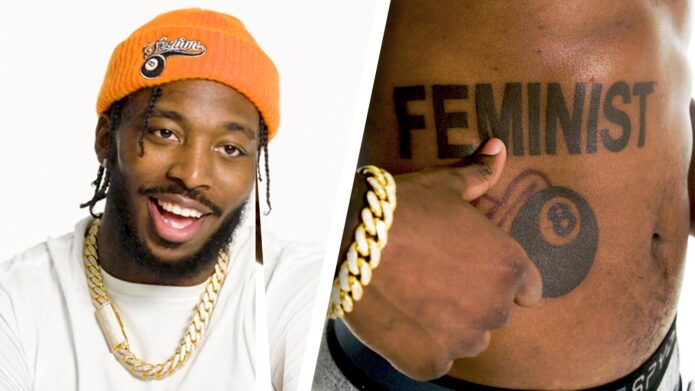
Pardison Fontaine has the kind of tattoo collection that rewards a closer look. The big picture is a heavily inked rapper with full arms, chest work, a broad back piece and plenty of lettering. The details are more personal. His tattoos point back to family, Newburgh, his daughter, his ideas about feminism, his African heritage and the pressure that shaped him.
Fontaine has explained many of the pieces himself in GQ’s Tattoo Tour. That makes this a much better collection to study than a random gallery of stage photos. You can see where the tattoos sit, which ones connect, and why certain symbols keep coming back. Here are the main Pardison Fontaine tattoos that stand out.
The chest lettering and broken heart
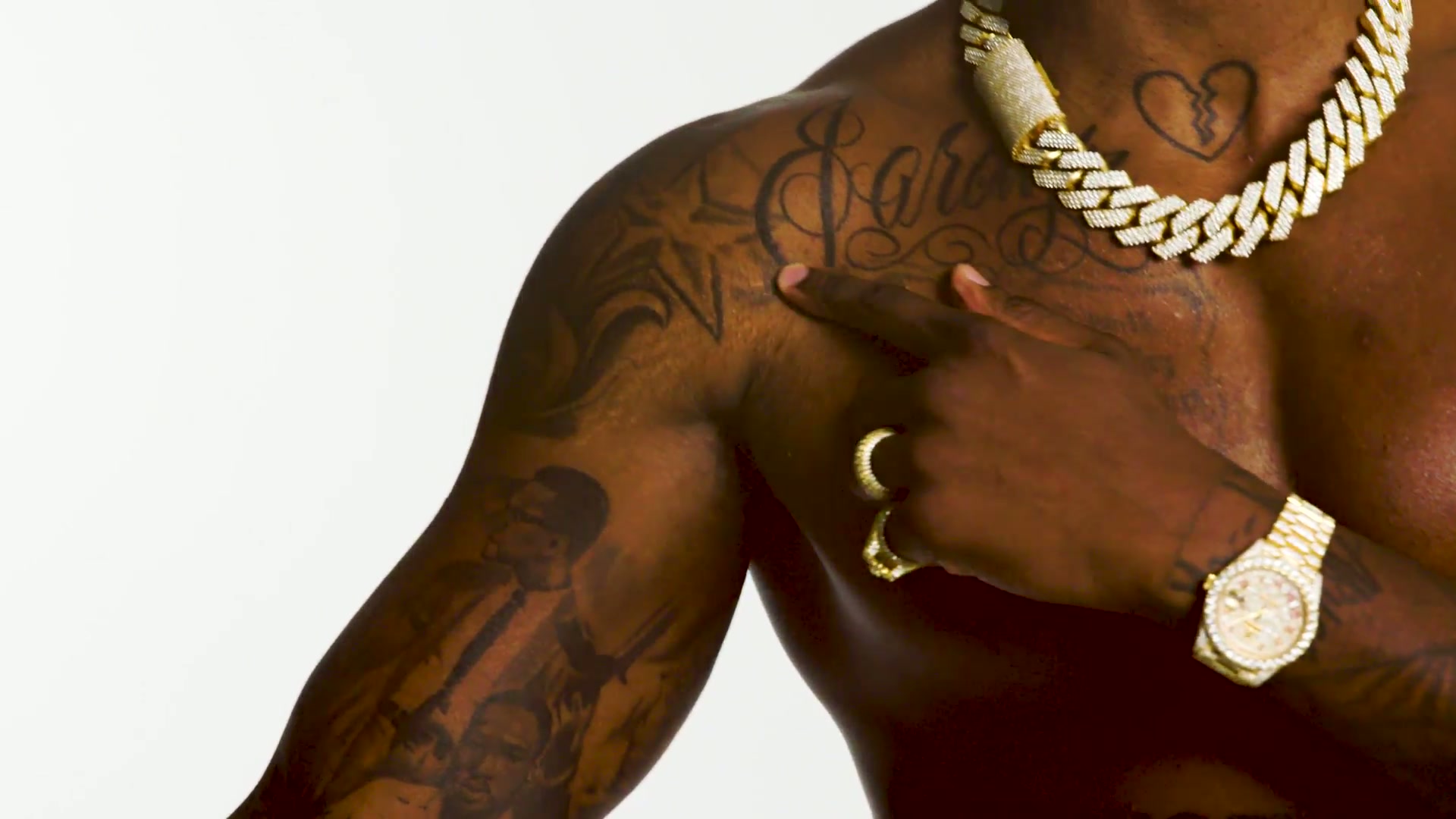
Fontaine’s chest is packed with large script lettering, portrait work and a broken heart near the collarbone. It has the feel of an old-school tattoo collection that grew over time instead of being planned as one matching chest panel. The lines overlap, the lettering takes up serious space and the separate images still read as individual memories.
The broken heart is one of the simpler tattoos in the set, but it has an important place because it sits high on the chest and stays visible even when the rest of the work disappears under a shirt. It also gives the heavier portraits and text a small, clean symbol to sit beside. This is a good example of how Fontaine leaves room for different styles without trying to make every tattoo look identical.
The FEMINIST ribcage tattoo
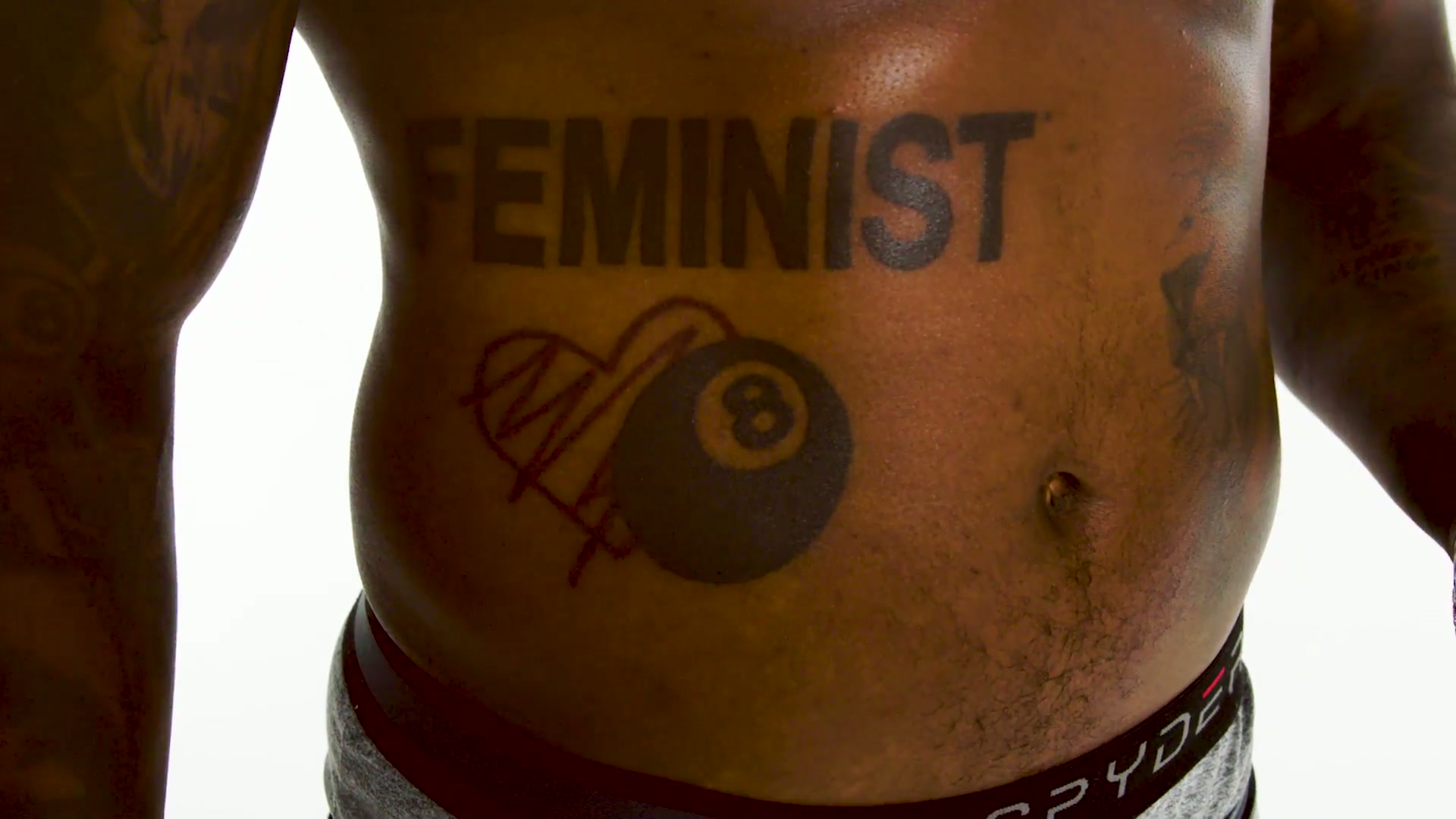
The FEMINIST tattoo is one of Fontaine’s most recognisable pieces. It runs across the upper ribcage in heavy block letters and sits above a heart crossed with a line, next to a large eight ball. The tattoo is direct, easy to read and deliberately hard to miss.
Fontaine has said the tattoo is about standing up for women and for human rights more broadly. He also described it as one of the most painful tattoos he has had, which makes sense given the placement. Rib tattoos already have a reputation for being rough, and this one uses a large area with bold lettering instead of a tiny design that could be finished quickly.
Visually, the piece works because the thick letters contrast with the round eight ball and the looser heart shape underneath. It looks like a message first and a decoration second.
Why the eight ball keeps coming back
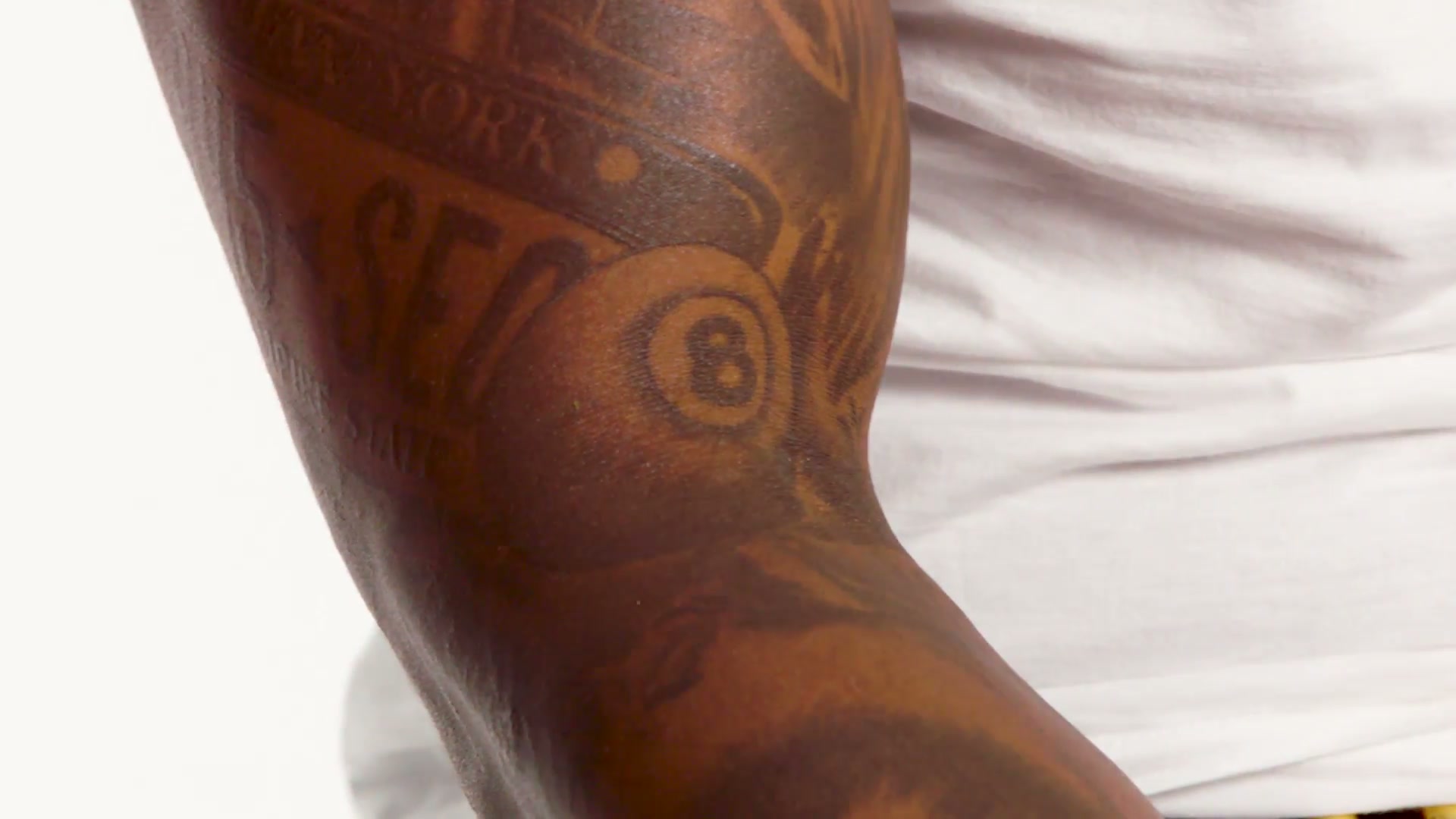
The eight ball is a repeated idea in Fontaine’s tattoos. He has explained that it connects to Section 8, to the phrase “behind the eight ball,” and to the feeling of being under pressure. That gives the symbol more weight than a simple pool reference.
You can see the eight ball on the ribcage, in the large back design and in other parts of the collection. Repeating one symbol is a smart way to tie a very busy tattoo set together. The ball becomes a visual marker that links different parts of the body, even when the surrounding work changes from lettering to portraits or heavier shaded pieces.
The Section 8 back tattoo
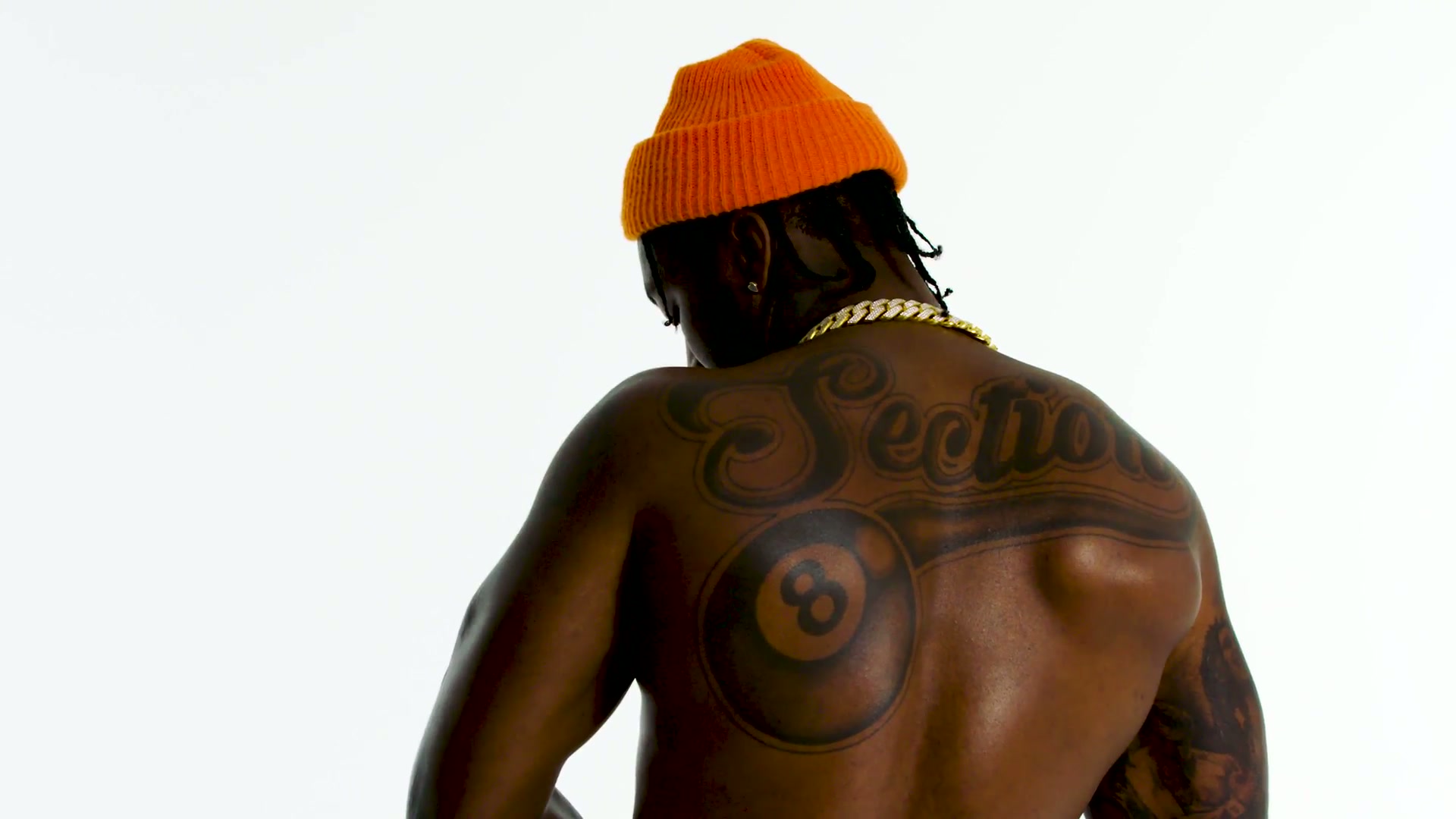
Fontaine’s back is one of the largest tattoo areas he has shown. The word Section stretches across the upper back, with a large eight ball set below it. The placement makes the back piece feel like a sign or a title rather than a small hidden tattoo.
He has connected the work to the pressure and instability associated with Section 8 housing and to the wider idea of being behind the eight ball. The piece is also part of a bigger collection of references to where he came from. It is not polished into a neat luxury tattoo concept. It is blunt, personal and built to be read from a distance.
Portrait tattoos across the upper arm
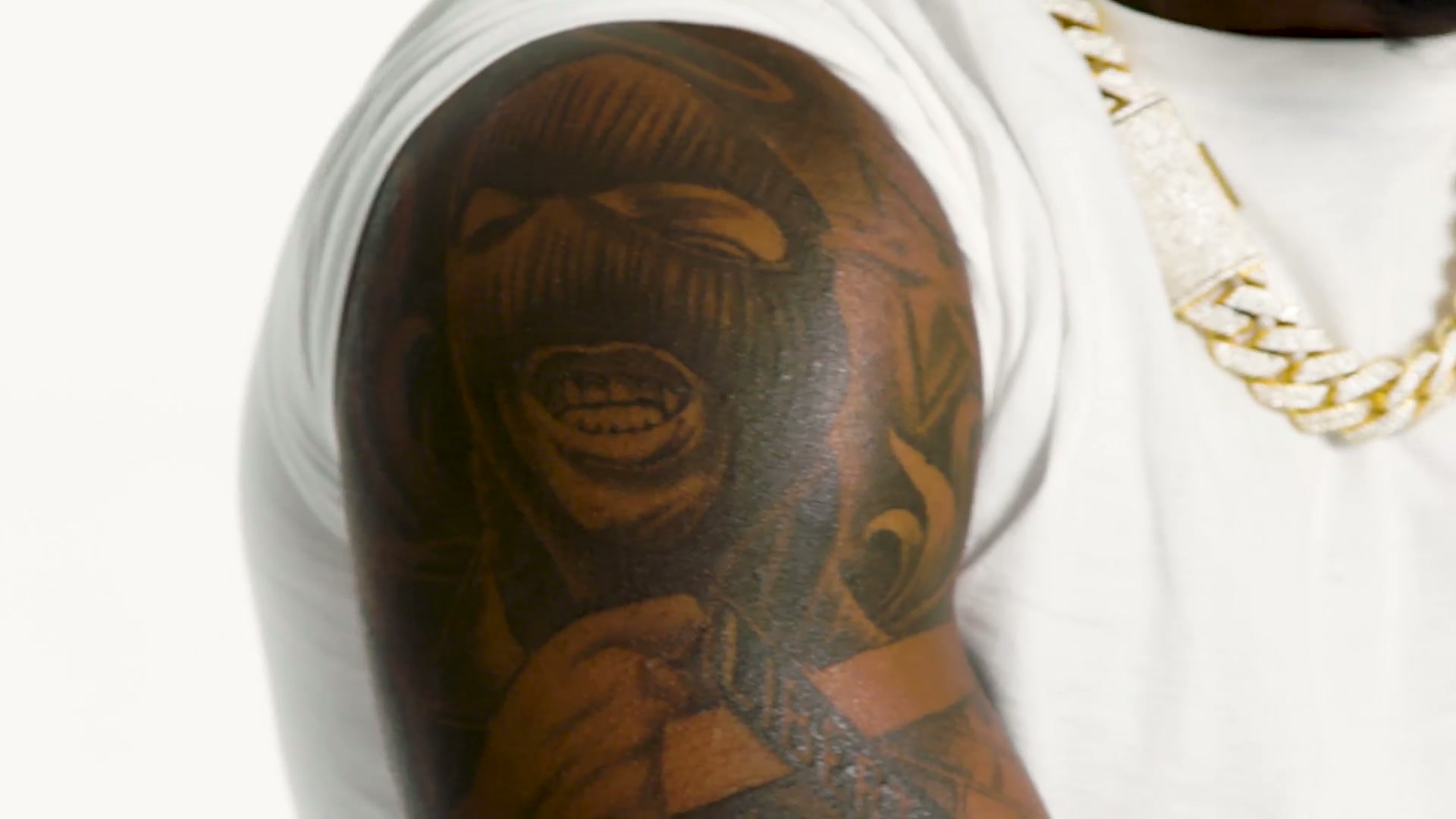
One of Fontaine’s arms carries several portrait-style tattoos. In his tattoo tour, he points out figures including Malcolm X, Martin Luther King Jr. and Tupac, with Nipsey Hussle also represented in the same general area. These tattoos give the arm a mural-like quality, with faces and shaded shapes taking up most of the available space.
Portrait tattoos can lose their detail when they are shown in a wide stage photo. This close-up is much more useful because you can see how the faces are layered into the sleeve. The work is dark and dense, so the expressions come through by contrast instead of bright colour.
The 845 and SEC forearm lettering
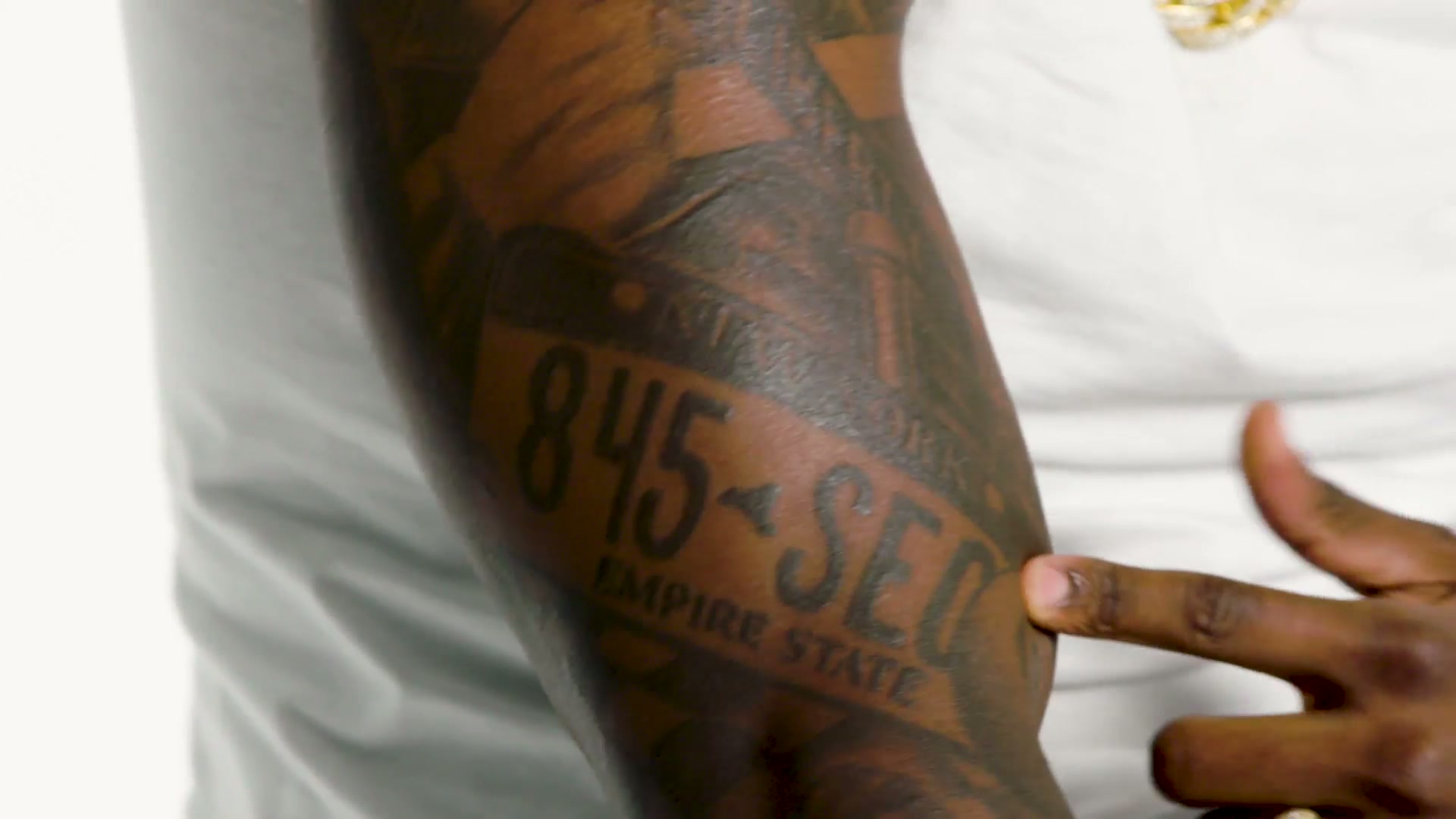
The 845 and SEC lettering on Fontaine’s forearm ties the tattoos to place and identity. The 845 is the area code associated with the Hudson Valley, including Newburgh, while the SEC lettering sits beside it as part of the larger local story he has described.
It is a very different choice from the portraits on the upper arm. A face asks you to recognise a person. Numbers and block letters ask you to recognise a place. Putting both styles on the same arm is part of what makes the sleeve feel like a personal wall of references rather than one single theme.
The Nefertiti and Africa-inspired arm tattoo
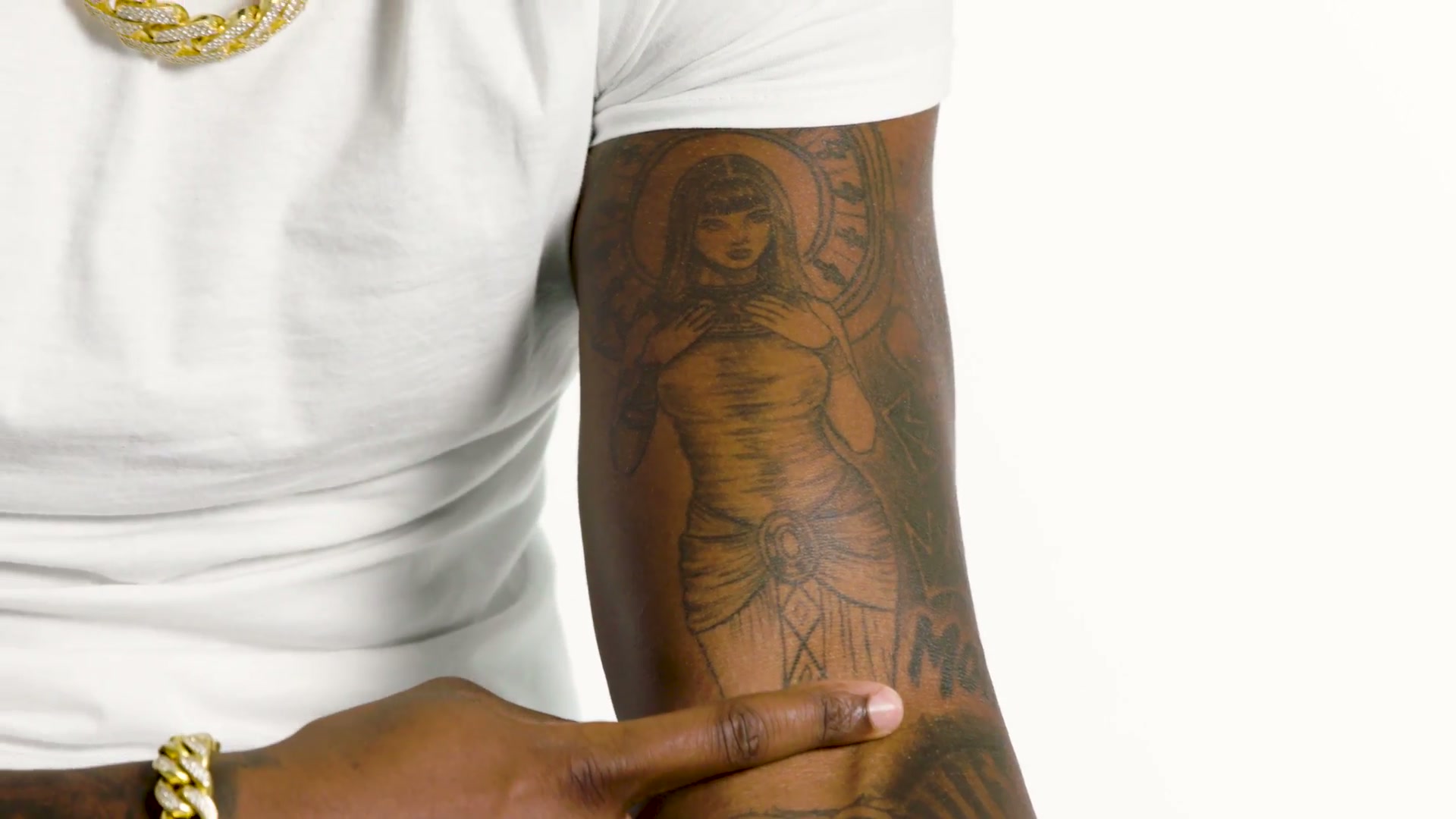
Fontaine has also shown an arm tattoo built around African history and heritage. The piece includes a woman with a crown-like headdress that he identifies with Nefertiti, surrounded by ornamental lines and larger shaded shapes. He has described one arm as a place for that side of his identity.
The design has a different mood from the hard lettering and the eight ball. The face gives the tattoo a calm centre, while the surrounding lines fill the arm without turning it into a flat block of black ink. It is the sort of design that looks better when the image is close enough to show the smaller lines around the main figure.
The lower arm is a full collage
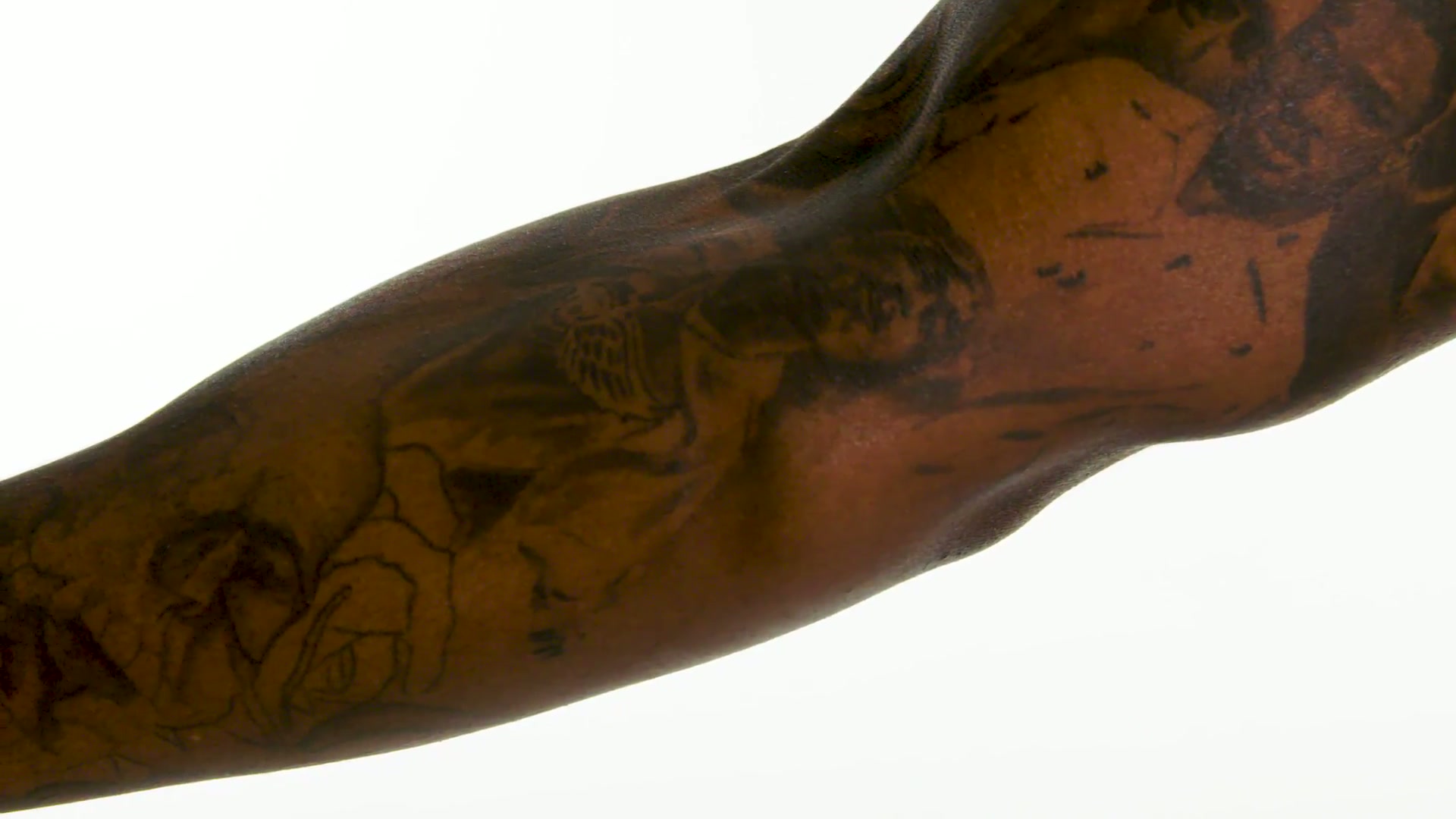
Fontaine’s lower arms are filled with overlapping images rather than one giant empty space. You can see faces, script, small symbols and shaded sections running into one another. Some areas are clearer than others, which is normal for tattoos collected across different years and different sessions.
That collage effect is part of the appeal. He has said he does not want to cover everything up or make the whole body look frozen in one style. Instead, he adds around the tattoos he already has. The result is a sleeve with visible history. The older pieces remain part of the story, even as new work fills the gaps.
Lettering, portraits and the family side of the sleeve
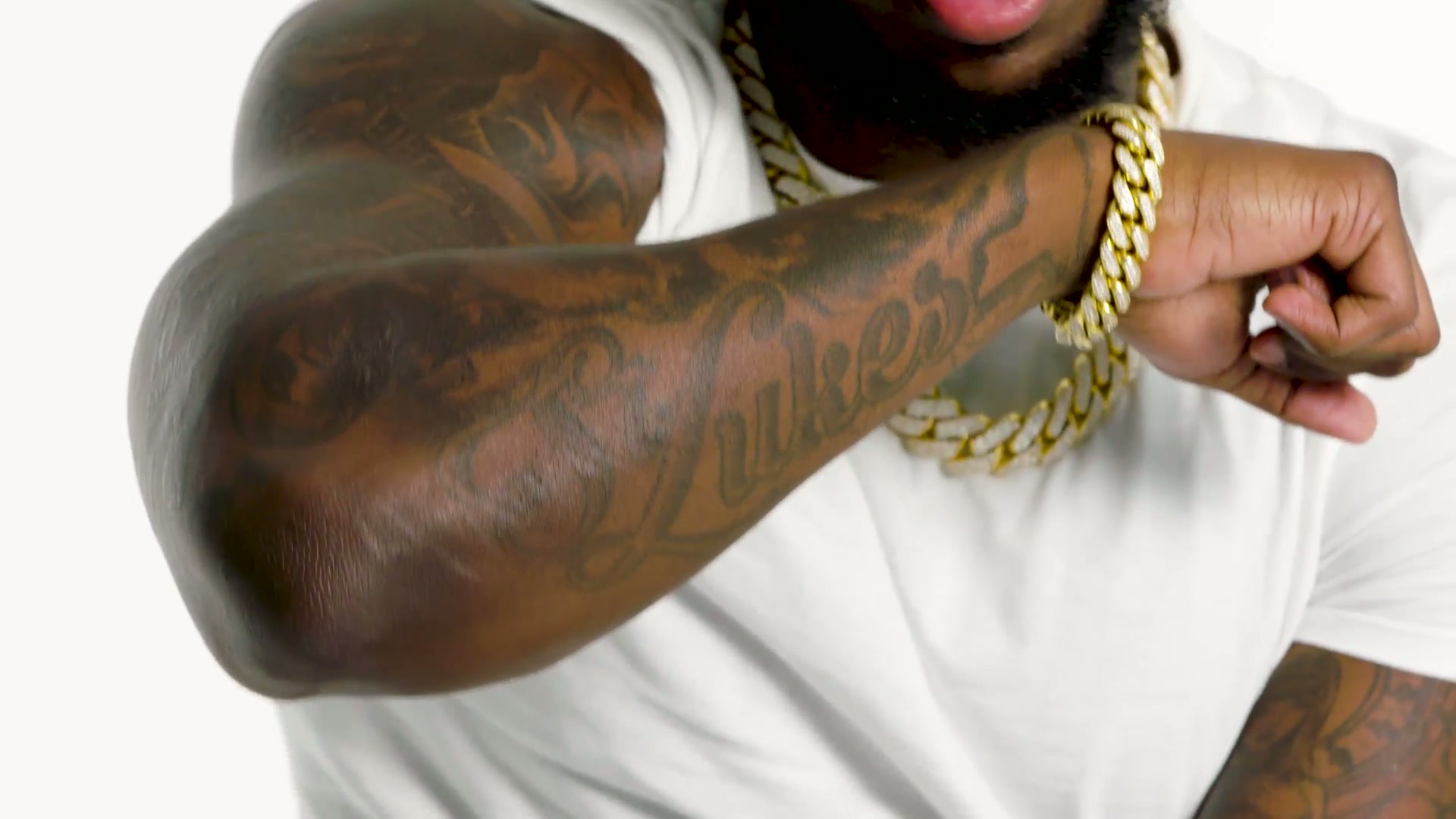
Close-up views of the forearm show how much of Fontaine’s collection depends on lettering. The script and block words sit beside portrait work, making the arm readable in fragments. His daughter’s name and other family references are part of the personal layer beneath the larger public symbols.
That mix is why the sleeve does not feel like a catalogue of random celebrity tattoos. The portraits point to people he respects. The numbers point to home. The words point to beliefs or family. Even when the ink is crowded, the choices are not empty.
The layered upper-arm work
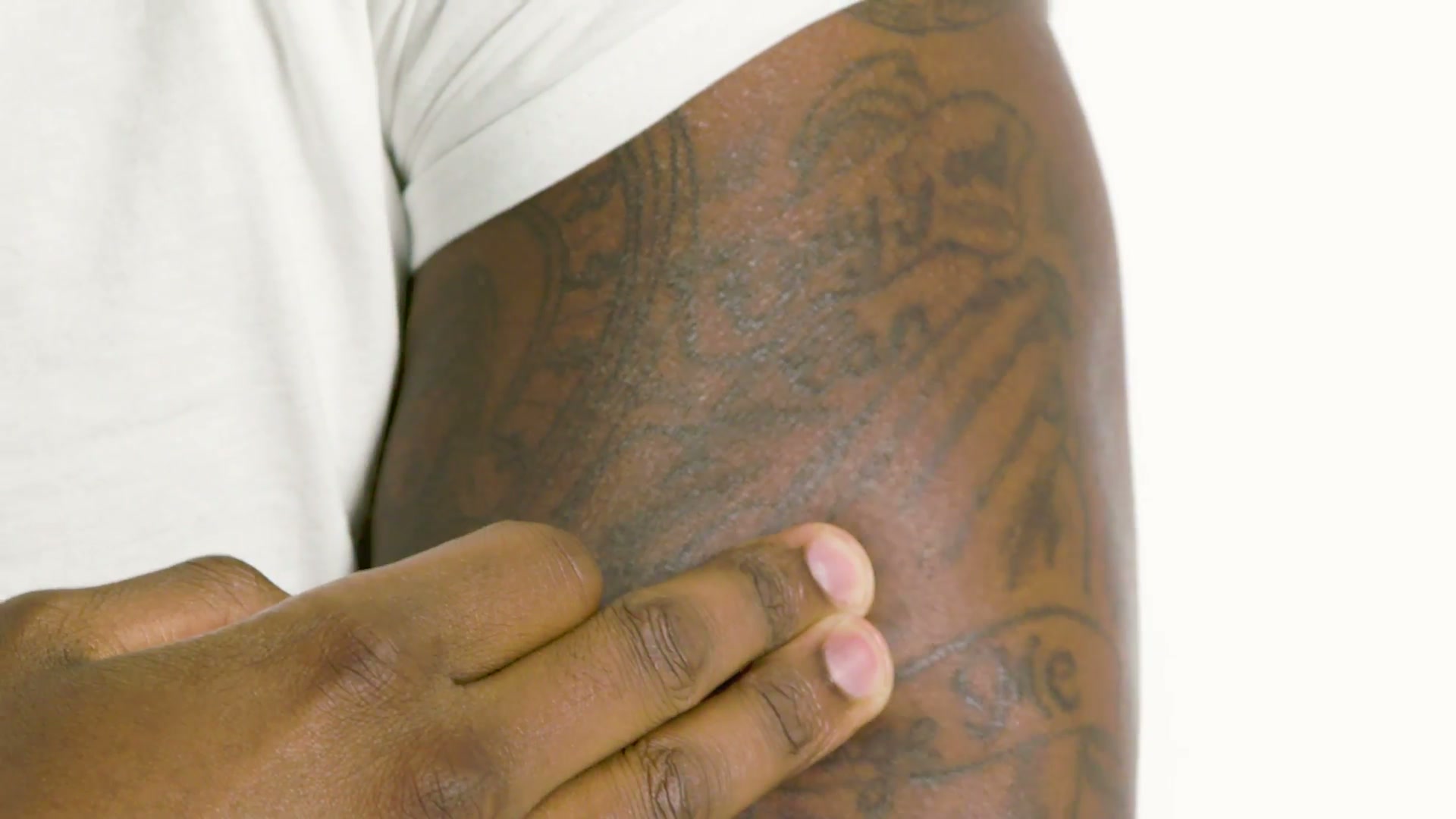
The upper-arm close-up shows another important part of the overall style: older and newer tattoos sitting next to each other without a forced cover-up. The shading is deep, the outlines have softened in places and several pieces share the same dark visual weight.
Fontaine has spoken about tattoos as something therapeutic. That comes through in the way he talks about keeping space and continuing to add. He is not trying to finish his body in one clean session. He is letting the collection change as his life changes.
What makes Pardison Fontaine’s tattoos stand out
The strongest thread is repetition with a reason. Eight balls appear in different places because the symbol connects to pressure and Section 8. Portraits appear because certain people matter to him. Numbers and local references keep the work tied to Newburgh and the Hudson Valley. The FEMINIST tattoo makes his politics impossible to miss, while the family pieces keep the collection close to home.
There are also plenty of rough edges, and that is part of the look. Fontaine has admitted that not every early tattoo is a favourite. He does not hide that. He builds around the work he already has, leaves some prime real estate open and keeps adding when a new idea feels right.
If you want to study the collection for tattoo inspiration, the useful lesson is not to copy one symbol. It is to notice how the pieces connect. A sleeve can hold portraits, dates, lettering, symbols and family names without looking like a random pile if each tattoo has a real reason to be there.
Watch Pardison Fontaine explain his tattoos
Fontaine breaks down the designs in GQ’s Tattoo Tour video, including the FEMINIST rib tattoo, the eight ball pieces, his back tattoo and the portraits across his arms.